Europe Pistachio Market Size, Share, Trends & Growth Forecast Report – Segmented By Form, End Use, Product Type, Distribution Channel, and Country (UK, France, Spain, Germany, Italy, Russia, Sweden, Denmark, Switzerland, Netherlands, Turkey, Czech Republic & Rest of Europe), Industry Analysis From 2026 to 2034
Market Size, 2025
$1.27 BnMarket Estimate, 2026
$1.31 BnMarket Forecast, 2034
$1.74 BnCAGR, 2026–2034
3.57%Europe Pistachio Market Report Summary
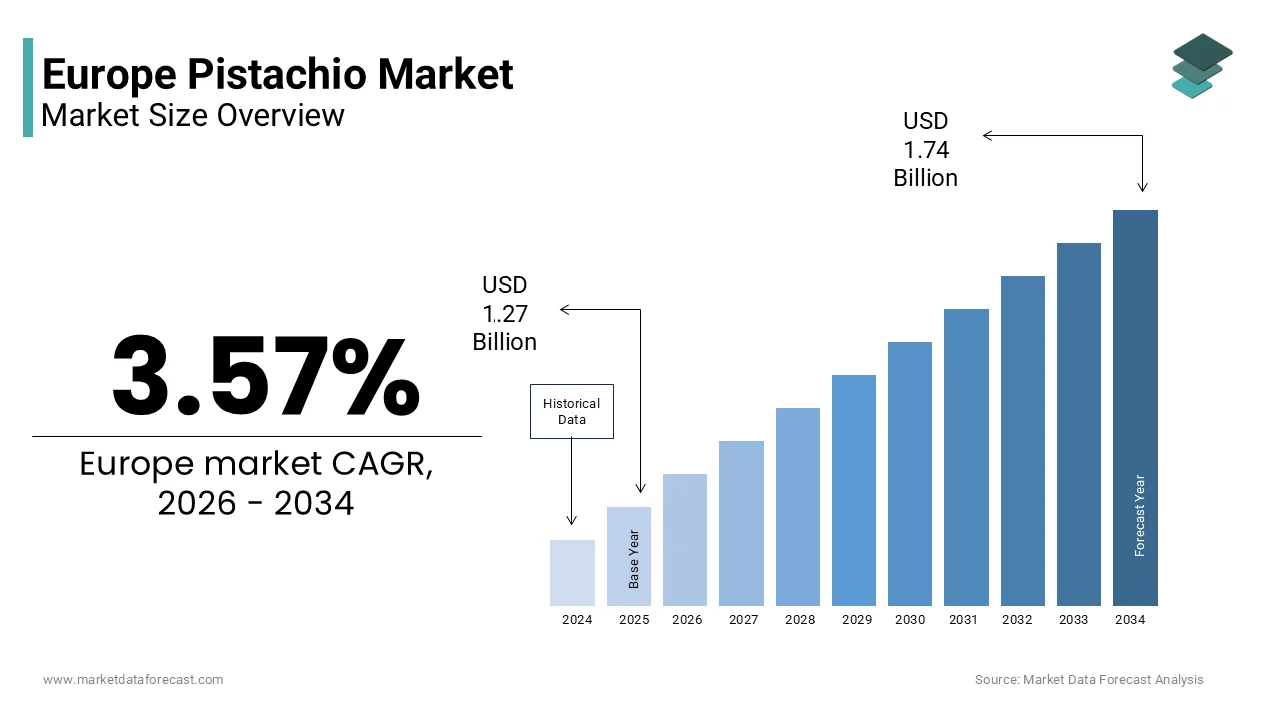
The Europe pistachio market was valued at USD 1.27 billion in 2025, is estimated to reach USD 1.31 billion in 2026, and is projected to reach USD 1.74 billion by 2034, growing at a CAGR of 3.57% during the forecast period. The growth of the European pistachio market is driven by increasing demand for healthy snack options, rising awareness of the nutritional benefits of nuts, and growing consumption of plant based and protein rich foods. Expanding use of pistachios in confectionery, bakery, and dairy products is further supporting market growth. Additionally, the rising popularity of premium and flavored nut products along with increasing availability through modern retail channels is creating new growth opportunities across Europe.
Key Market Trends
- Rising demand for pistachios as a healthy snack driven by high protein, fiber, and antioxidant content
- Growing use of pistachios in bakery, confectionery, and dairy applications supporting market expansion
- Increasing preference for flavored and roasted pistachio products among consumers
- Strong expansion of modern retail channels improving product accessibility and visibility
- Emergence of premium and value added pistachio products targeting health conscious consumers
Segmental Insights
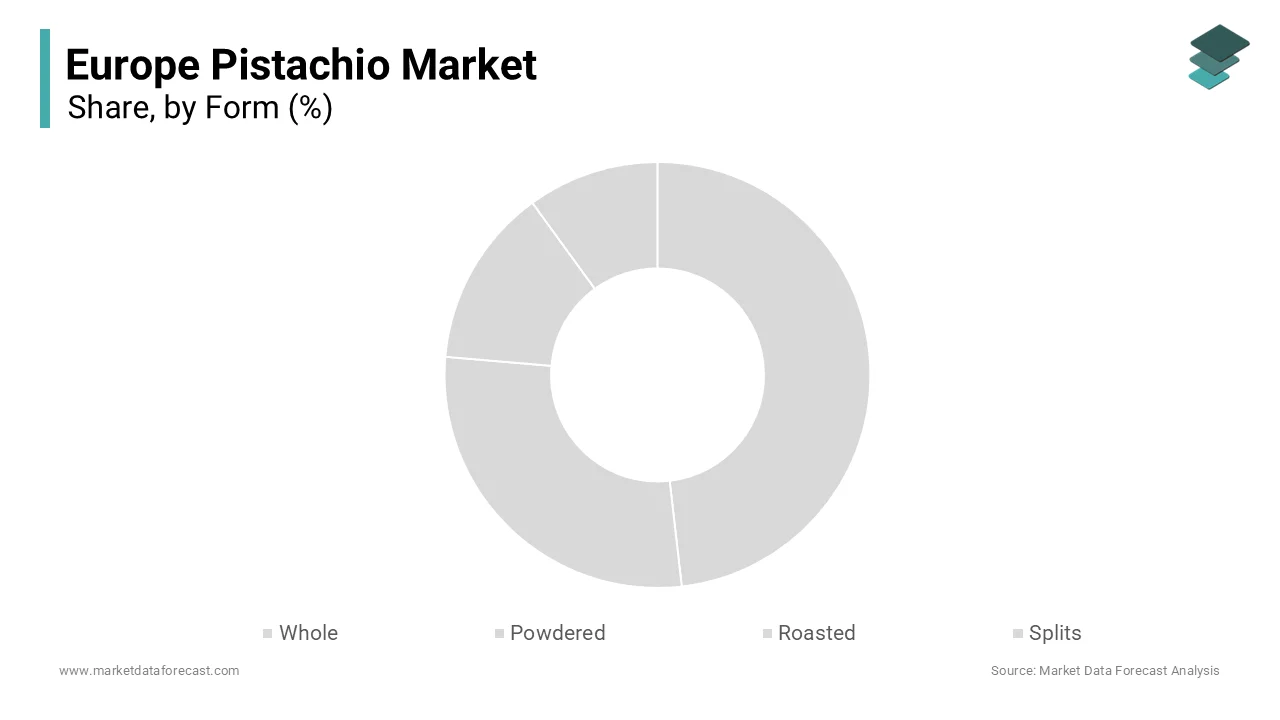
- Based on form, the whole pistachio segment accounted for 52.3% of the Europe pistachio market share in 2025 due to strong consumer preference for natural and minimally processed nuts
- Based on end use, the snacks segment was the largest, accounting for 46.3% of the market share in 2025 driven by rising on the go consumption and healthy snacking trends
- Based on distribution channel, the modern trade segment held 58.3% of the market share in 2025 supported by wide availability, organized retail infrastructure, and convenience
Regional Insights
- The Europe pistachio market is witnessing steady growth across key countries supported by rising nut consumption and demand for functional foods
- Turkey was the leading contributor, accounting for 32.1% of the market share in 2025 due to strong domestic production, export capabilities, and established supply chains
- Other European countries are also experiencing consistent growth driven by increasing consumer awareness and expanding applications in the food industry
Competitive Landscape
The Europe pistachio market is characterized by the presence of key players focusing on product quality, supply chain efficiency, and expansion of value added offerings. Companies are investing in processing technologies, flavor innovation, and packaging solutions to enhance consumer appeal. Strategic partnerships, geographic expansion, and product diversification remain key competitive strategies. Prominent players in the Europe pistachio market include Jupiter Pistachios GmbH, Barry Callebaut, The Pistachio Co, Setton Farms, Wonderful Pistachios LLC, Horizon Growers, Paramount Farms, Besana Group, Makin Nuts, GÜNTAC Tarım Ürünleri, Daco Bello, D.A.R. S.R.L., DOSicily, FMM Nature, and La Morella Nuts.
Europe Pistachio Market Size
The Europe pistachio market size was valued at USD 1.27 billion in 2025 and is projected to reach USD 1.74 billion by 2034 from USD 1.31 billion in 2026, growing at a CAGR of 3.57%.
The pistachio are entirely dependent on complex global supply chains originating from the United States, Iran, and Turkey. The nut is valued for its distinct green kernel, unique flavor profile, and high nutritional density, positioning it as a premium ingredient in both savory and sweet applications. As per Eurostat, the European Union imported approximately 285000 tons of pistachios in 2023, reflecting a steady upward trajectory in demand despite logistical hurdles. The region's food safety framework is particularly rigorous, with the European Food Safety Authority enforcing strict limits on contaminants such as aflatoxins, which significantly influences sourcing decisions and trade flows. Data from the International Nut and Dried Fruit Council indicates that per capita consumption of tree nuts in Europe has risen by 12% over the last five years, with pistachios leading this growth due to their versatility in gastronomy.
MARKET DRIVERS
Rising Consumer Preference for Heart-Healthy Snacking Options
The escalating awareness of cardiovascular health and the nutritional benefits of tree nuts is leveraging the growth of Europe pistachio market. Consumers are increasingly replacing processed, high-sodium snacks with nutrient-dense alternatives that offer healthy fats, protein, and fiber. According to the European Heart Network, cardiovascular diseases remain the leading cause of death in the region, prompting public health campaigns that advocate for the inclusion of unsalted nuts in daily diets. Pistachios are uniquely positioned in this narrative due to their lower calorie count per nut compared to other tree nuts and their high content of phytosterols which help lower cholesterol. The "hand-to-mouth" eating experience of in-shell pistachios also serves as a behavioral cue that slows down consumption, aiding in portion control and weight management, a key concern for many Europeans.
Expansion of Plant-Based Diets and Culinary Innovation
The surging popularity of plant-based lifestyles and the culinary renaissance of Mediterranean and Middle Eastern cuisines is additionally escalating the growth of Europe pistachio market. As Europeans reduce their intake of animal products, pistachios serve as a crucial source of protein and texture in vegan cheeses, milks, and meat analogues. Chefs and food manufacturers are increasingly utilizing pistachio paste and butter to create rich, dairy-free desserts and savory sauces that mimic the mouthfeel of traditional dairy products. The vibrant green color of the kernel also makes it a natural food coloring agent, appealing to consumers seeking clean label products without artificial dyes. Furthermore, the rise of home baking and gourmet cooking shows has educated consumers on using pistachios in diverse recipes, from crusts for fish to toppings for ice cream. This culinary versatility ensures that pistachios penetrate multiple dayparts and meal occasions, solidifying their status as an essential ingredient in the modern European kitchen.
MARKET RESTRAINTS
Stringent Regulatory Limits on Aflatoxin Contamination
The strict regulatory framework governing aflatoxin levels in the European Union, frequently leading to shipment rejections and supply disruptions is limiting the growth of Europe pistachio market. Aflatoxins, toxic compounds produced by molds, are a natural risk in nut crops, and the EU maintains some of the lowest permissible limits globally to protect public health. According to the European Food Safety Authority, pistachios consistently rank among the top commodities flagged for potential aflatoxin exceedances, resulting in heightened scrutiny at border control points. Data from the Rapid Alert System for Food and Feed indicates that in 2023, over 120 notifications were issued regarding pistachio shipments from major producing countries due to non-compliance with EU safety standards. These rejections not only cause immediate financial losses for exporters but also lead to increased testing costs and delays that disrupt the supply chain continuity. The requirement for extensive documentation and sampling protocols adds layers of complexity and expense for importers, who must invest in advanced sorting technologies and rigorous pre-shipment testing to ensure compliance. Statistics from the International Nut and Dried Fruit Council reveal that compliance costs related to mycotoxin testing have increased by 18% for European importers in the last two years. This regulatory pressure limits the pool of eligible suppliers, often forcing buyers to rely on a narrower range of certified sources, which can drive up prices and reduce market fluidity.
High Price Volatility and Climate-Induced Supply Instability
The inherent volatility of global supply conditions, driven by climate change impacts in key growing regions and geopolitical instability is additionally degrading the growth of Europe pistachio market. Since Europe relies almost entirely on imports, any disruption in major producing countries like the United States, Iran, or Turkey immediately affects availability and pricing. This supply shock forces European retailers to either absorb higher costs, squeezing margins, or pass them on to consumers, potentially dampening demand. Geopolitical tensions further complicate the landscape, with sanctions and trade restrictions limiting access to Iranian pistachios, which traditionally offer a competitive price point. The dependency on long-distance maritime logistics also exposes the market to freight rate fluctuations and port congestion, adding another layer of cost unpredictability. This combination of climatic vulnerability and geopolitical friction creates a volatile pricing environment that makes it difficult for manufacturers to maintain stable product formulations and retail pricing, thereby restraining consistent market growth.
MARKET OPPORTUNITIES
Development of Value-Added Flavored and Convenience Formats
The introduction of innovative flavored varieties and convenient ready-to-eat is significantly boosting the growth of Europe pistachio market. European consumers, particularly millennials and Gen Z, are seeking exciting flavor experiences and on-the-go snacking solutions that align with their busy lifestyles. According to the Mintel Global New Products Database, launches of flavored pistachio products in Europe, such as chili-lime, truffle, and wasabi varieties, increased by 28% in 2024, reflecting a strong appetite for culinary experimentation. Manufacturers can leverage this trend by developing single-serve packs and resealable pouches that offer portion control and freshness, addressing the convenience factor that drives impulse purchases. Furthermore, the integration of pistachios into hybrid snacks, such as nut-fruit blends or chocolate-covered clusters, opens new usage occasions ranging from mid-morning energy boosts to evening indulgences. By focusing on sensory innovation and packaging convenience, brands can command higher price points and foster brand loyalty among adventurous eaters. This strategy effectively transforms the pistachio from a commodity item into a lifestyle product, which is driving volume growth through repeated trial and adoption in diverse social and personal contexts.
Utilization of Pistachio By-Products for Sustainable Applications
The growing emphasis on sustainability and the circular economy to innovate through the utilization of by-products such as shells and hulls is additionally bolstering the growth of Europe pistachio market. Traditionally considered waste, these materials are now being explored for their potential in biofuels, animal feed, and even cosmetic applications, aligning with the European Green Deal objectives. According to the European Commission's Circular Economy Action Plan, the food processing industry is under increasing pressure to minimize waste, prompting investors to fund technologies that convert pistachio shells into activated carbon or biochar. Data from the European Biomass Association suggests that the market for agricultural residue-based bioenergy could grow annually, providing a viable outlet for the tons of shells generated during pistachio processing. Additionally, pistachio hulls are rich in antioxidants and pigments by making them valuable ingredients for natural dyes and skincare formulations. By adopting zero-waste processing models, companies can not only reduce disposal costs but also create new revenue streams that enhance overall profitability. This approach resonates strongly with environmentally conscious European consumers who prioritise brands with sustainable practices. Leveraging the full potential of the pistachio fruit allows the industry to improve its environmental footprint while unlocking hidden economic value, positioning sustainability as a core competitive advantage in the marketplace.
MARKET CHALLENGES
Intense Competition from Alternative Tree Nuts and Seeds
The other tree nuts like almonds and hazelnuts, as well as seeds, such as sunflower and pumpkin, which often offer more attractive price points and local sourcing advantages is one of the challenges for the growth of Europe pistachio market. Almonds, benefit from significant production within Southern Europe, specifically in Spain and Italy by reducing logistics costs and carbon footprints compared to imported pistachios. As per the European Nut Growers Association, almond production in the EU increased by 10% in 2023, providing a steady and cost-competitive supply that challenges the dominance of imported pistachios in the snack and ingredient sectors. Consumers facing economic pressures due to inflation are increasingly trading down to cheaper alternatives, viewing pistachios as a luxury item rather than a staple. Data from the European Consumer Organisation reveals that 55% of shoppers have switched to alternative nuts or seeds in the past year due to rising prices, directly impacting pistachio sales volumes. Furthermore, the versatility of sunflower and pumpkin seeds, which are widely cultivated across Eastern and Central Europe, offers a locally sourced, allergen-friendly option that appeals to budget-conscious buyers. This intense rivalry forces pistachio marketers to constantly justify the premium price through superior nutritional narratives and unique flavor profiles, yet the price gap remains a persistent barrier to mass market penetration, limiting the category's ability to expand beyond niche and affluent consumer segments.
Complex Logistics and Cold Chain Requirements for Quality Preservation
The quality and freshness of pistachios throughout the extended supply chain from origin to European shelves that impacts costs and product integrity is another challenge for the growth of Europe pistachio market. Pistachios are highly susceptible to oxidation and rancidity if not stored under controlled temperature and humidity conditions, necessitating robust cold chain infrastructure that is not always available or cost-effective. The long transit times from major producing regions like the Western United States or Central Asia exacerbate the risk of quality degradation, requiring sophisticated monitoring systems to ensure compliance with EU freshness standards. Furthermore, the fragmentation of the European distribution network, involving multiple handlers and cross-border transfers, increases the points of potential failure in the cold chain. Statistics from the International Freight Forwarders Federation highlight that delays at major European ports due to congestion can expose cargo to unfavorable temperature fluctuations, compromising the sensory qualities of the nuts. These logistical complexities force importers to invest heavily in quality assurance and insurance, squeezing margins and creating a barrier to entry for smaller players who lack the resources to manage such intricate supply chain requirements effectively.
REPORT COVERAGE
| REPORT METRIC | DETAILS |
| Market Size Available | 2025 to 2034 |
| Base Year | 2025 |
| Forecast Period | 2026 to 2034 |
| CAGR | 3.57% |
| Segments Covered | By Form, End Use, Product Type, Distribution Channel, and Region |
| Various Analyses Covered | Global, Regional, & Country Level Analysis; Segment-Level Analysis; DROC, PESTLE Analysis; Porter’s Five Forces Analysis; Competitive Landscape; Analyst Overview of Investment Opportunities |
| Regions Covered | UK, France, Spain, Germany, Italy, Russia, Sweden, Denmark, Switzerland, Netherlands, Turkey, and the Czech Republic |
| Market Leaders Profiled | Jupiter Pistachios GmbH, Barry Callebaut, The Pistachio Co, Setton Farms, Wonderful Pistachios LLC, Horizon Growers, Paramount Farms, Besana Group, Makin Nuts, GÜNTAC Tarım Ürünleri, Daco Bello, D.A.R. S.R.L., DOSicily, FMM Nature, and La Morella Nuts. |
SEGMENTAL ANALYSIS
By Form Insights
The whole pistachio segment was accounted in holding 52.3% of the Europe pistachio market share in 2025 owing to the strong consumer preference for snacking in its most natural and unprocessed form, as well as the visual appeal of the intact kernel which signals freshness and quality to buyers. The unique "pistachio principle", where the act of shelling the nut slows down consumption, aiding in portion control and satiety, a key concern for health-conscious Europeans. The tactile experience of opening the shell also extends the duration of the snacking event, providing psychological satisfaction that pre-shelled options lack. Furthermore, the presence of the shell acts as a natural barrier against oxidation, preserving the flavor and nutritional integrity of the kernel longer than exposed forms. Statistics from the European Snack Association reveal that many nut purchases for home consumption are in-shell formats, driven by the perception of higher purity and lower processing.
The powdered pistachio segment is expected to expand at a CAGR of 8.2% from 2026 to 2034 owing to the surge in powdered pistachios is the booming plant-based dairy and beverage sector, which requires fine nut powders to create smooth, creamy textures without the grittiness of larger particles. Manufacturers of almond milk alternatives and vegan yogurts are increasingly turning to pistachio powder to offer unique flavor profiles and superior emulsification properties. The fine particle size of powdered pistachios allows for seamless integration into liquid matrices, preventing sedimentation and ensuring a uniform color distribution that appeals to consumers. Furthermore, the efficiency of using powder reduces waste and simplifies industrial mixing processes compared to handling whole or split nuts. This industrial shift toward smooth, homogenous plant-based solutions positions powdered pistachios as a critical enabler of innovation in the rapidly expanding alternative dairy landscape.
By End Use Insights
The snacks segment was the largest by accounting for 46.3% of the Europe pistachio market share in 2025 owing to the intensifying consumer focus on health and wellness, leading to a massive shift toward nutrient-dense, functional snack options. Europeans are increasingly aware of the benefits of tree nuts for heart health and weight management, making pistachios a staple in daily diets. Data from the Global Nutrition Report indicates that 69% of European consumers actively seek snacks with high protein and fiber content that pistachios meet exceptionally well. The "hand-to-mouth" eating mechanism of in-shell pistachios is widely recognized as a tool for mindful eating, helping individuals control portion sizes and reduce overall calorie intake. Furthermore, the rise of active lifestyles has created demand for portable energy sources, and pistachios fit perfectly into gym bags and office desks. The extensive availability of pistachio snacks across diverse retail channels, supported by innovative packaging that enhances convenience and preserves freshness is greatly influencing the growth of the segment. Supermarkets, convenience stores, and vending machines now stock a wide variety of pistachio snack formats, from single-serve pouches to large family tins, catering to different consumption occasions. Brands have invested heavily in resealable and nitrogen-flushed packaging to maintain crunch and prevent rancidity, addressing key consumer complaints about quality.
The dairy products segment is projected to grow at a CAGR of 7.9% through 2030. The relentless premiumization of the ice cream and frozen dessert market, where pistachio is revered as a flagship flavor denoting quality and sophistication. European consumers are willing to pay a premium for artisanal gelato and ice creams featuring real pistachio paste or chunks, viewing them as a treat worth indulging in. Data from the Gelato Artisans Guild indicates that artisanal shops in Italy and France now offer at least one pistachio variant, where the origin of the nuts to justify higher price points. The rich, creamy texture of pistachio complements dairy bases perfectly, creating a sensory experience that synthetic flavors cannot replicate. Furthermore, the vibrant green color of natural pistachio serves as a powerful marketing tool, signaling authenticity to consumers who avoid artificial dyes. This deep integration of pistachio into the fabric of European dessert culture ensures sustained double-digit growth as manufacturers continue to launch new limited editions and permanent lines centered around this beloved nut.
By Distribution Channel Insights
The modern trade segment was the largest by holding 58.3% of the Europe pistachio market share in 2025 owing to the vast shelf space allocated to nuts and dried fruits, allowing retailers to showcase a wide range of pistachio brands, flavors, and pack sizes under one roof. Large chains leverage their bargaining power to secure favorable terms from suppliers, enabling them to offer competitive prices that attract price-sensitive consumers. Data from the Private Label Manufacturers Association indicates that retailer-owned brand pistachios, offering high-quality options at lower price points than national brands. This strategy draws customers who seek value without compromising on quality. Furthermore, the strategic placement of pistachios in both the snack aisle and the baking ingredient section increases cross-category visibility and impulse purchases. The ability of modern trade to run frequent promotions and loyalty programs further cements its position as the preferred channel for bulk and regular purchases of pistachios.
The online sales segment is esteemed to witness a fastest CAGR of 9.5% from 2026 to 2034 owing to the proliferation of direct-to-consumer (DTC) brands and subscription services that offer curated nut boxes and bulk quantities directly to households. These models bypass traditional retail margins, allowing companies to offer competitive pricing and fresher products while building direct relationships with customers. Data from the Digital Commerce Association indicates that 45% of millennials prefer subscribing to regular deliveries of healthy snacks by ensuring a steady revenue stream for online pistachio vendors. The ability to purchase large bulk packs online appeals to cost-conscious consumers and families, overcoming the size limitations often found in physical retail. Furthermore, DTC brands can easily educate consumers about the origin and benefits of their pistachios through detailed product pages and storytelling, enhancing brand loyalty. Statistics from the Subscription Economy Index show that retention rates for food subscription boxes are 30% higher than one-time purchases.
REGIONAL ANALYSIS
Turkey Pistachio Market Analysis
Turkey was the top performer of the Europe pistachio market by capturing 32.1% of share in 2025. The government's strong support for the pistachio sector through subsidies, research initiatives, and geographical indication protections that safeguard the reputation of Turkish pistachios globally. According to the Turkish Statistical Institute, domestic pistachio production reached 280000 tons in 2024, with a significant portion designated for export to EU markets. The cultural significance of pistachios in Turkish cuisine, used extensively in baklava, ice cream, and savory dishes, ensures a robust baseline of local demand that stabilizes the market. Furthermore, the development of advanced processing facilities within Turkey allows for value-added exports such as roasted, salted, and shelled kernels, capturing higher margins. The combination of abundant supply, cultural integration, and strategic export orientation secures Turkey's position as the central pillar of the European pistachio supply chain.
Germany Pistachio Market Analysis
Germany pistachio market held 19.3% of the share in 2025. Germany is heavily influenced by the dominance of the discount supermarket model, which has democratized access to premium nuts like pistachios, making them a staple snack for the mass market. The rigorous focus on food safety and quality certification, with German importers setting high standards for aflatoxin levels and sustainability that influence sourcing decisions, across the continent. The country's large confectionery and bakery industries utilize significant volumes of pistachios for high-end chocolate pralines and festive baked goods, driving industrial demand. Furthermore, the presence of major trading fairs like Anuga in Cologne establishes Germany as a trendsetter for nut innovations, influencing buying patterns across Europe.
Italy Pistachio Market Analysis
Italy pistachio market is likely to have a significant growth opportunities in coming years with its deep culinary heritage and the exceptional quality of its native pistachio production in Sicily. The integral role of pistachios in iconic Italian desserts such as cannoli, granita, and artisanal gelato by creating a consistent and inelastic demand from the hospitality and tourism sectors. The local production in Sicily, though limited in volume compared to Turkey, sets a benchmark for quality that influences consumer expectations nationwide. Furthermore, Italian chefs and food artisans continuously innovate with pistachio applications, from savory pasta sauces to gourmet spreads, expanding the usage occasions beyond traditional sweets. This dedication to culinary excellence and the protection of regional specialties ensures Italy remains a high-value market where quality trumps quantity.
France Pistachio Market Analysis
France pistachio market growth is undergoing a transformation where pistachios are increasingly seen as a versatile ingredient beyond the traditional macaron, finding their way into breads, savory dishes, and health-focused snacks. Another major driving factor is the enduring popularity of French patisserie, where pistachio cream and crushed kernels are essential components of many signature items, ensuring steady demand from professional bakers. The French consumer's willingness to pay for premium, organic, and ethically sourced products aligns well with the positioning of high-quality pistachios. Furthermore, the influence of celebrity chefs and food media has elevated the status of pistachios in home cooking, encouraging experimentation with new recipes.
Spain Pistachio Market Analysis
Spain pistachio market growth is slightly growing by evolving rapidly as new orchards planted in regions like Castilla-La Mancha begin to bear fruit, positioning Spain as a future self-sufficient producer within the EU. This domestic growth supports the local food industry, particularly the burgeoning craft ice cream and gourmet snack sectors. Data from the Spanish Nut Growers Association reveals that domestic production is projected to double by 2027, potentially altering the import dynamics of the region. Furthermore, Spain's extensive port infrastructure facilitates the efficient import and redistribution of pistachios to other European markets, maintaining its role as a logistics hub. The rising popularity of healthy snacking among the Spanish population, coupled with the integration of nuts into the Mediterranean diet, drives consistent retail growth. The combination of emerging local production and strategic logistical advantages positions Spain as a dynamic and increasingly important player in the European pistachio landscape.
COMPETITIVE LANDSCAPE
The competition in the Europe pistachio market is characterized by a dynamic rivalry between global giants controlling vast orchards and specialized regional exporters offering unique varietals. Large multinational corporations leverage their scale to dominate bulk supply contracts with major retailers and industrial food manufacturers while smaller niche players compete on quality, origin stories, and artisanal appeal. The market sees intense pressure on pricing due to fluctuating global yields and currency exchange rates which forces all participants to optimize operational efficiency. Differentiation is achieved through strict adherence to food safety protocols, particularly regarding aflatoxin limits, which acts as a significant barrier to entry for non-compliant suppliers. Consumers are increasingly demanding transparency and sustainability, prompting companies to invest in traceability systems and eco-friendly packaging to build brand loyalty. The rise of private label offerings from major supermarket chains adds another layer of complexity by challenging branded products on cost. This competitive environment drives continuous innovation in product formats, flavor profiles, and marketing strategies as companies strive to capture the attention of health-conscious and gourmet-focused European consumers.
KEY MARKET PLAYERS
Some of the notable key players in the Europe pistachio market are
- Jupiter Pistachios GmbH
- Barry Callebaut
- The Pistachio Co
- Setton Farms
- Wonderful Pistachios LLC
- Horizon Growers
- Paramount Farms
- Besana Group
- Makin Nuts
- GÜNTAC Tarım Ürünleri
- Daco Bello
- D.A.R. S.R.L.
- DOSicily
- FMM Nature
- La Morella Nuts
Top Players in the Market
- Setton Farms operates as a leading global supplier of premium pistachios with a significant footprint in the European market through its extensive distribution network and commitment to quality. The company specializes in providing naturally opened in-shell nuts and value-added kernels that meet the rigorous food safety standards of the European Union. Recently Setton Farms has strengthened its position by investing in advanced optical sorting technology to ensure superior product consistency and minimize defects. They have also expanded their sustainable farming initiatives in California to guarantee a reliable supply chain for European importers facing global volatility. Their active participation in major European trade shows allows them to build direct relationships with key confectionery manufacturers and retail buyers.
- Paramount Farms stands as a dominant force in the worldwide pistachio industry and serves as a critical partner for many large-scale European food processors and retailers. The company leverages its vast agricultural resources to offer a diverse portfolio ranging from raw ingredients to ready-to-eat flavored snacks tailored to local tastes. In recent developments Paramount Farms has launched innovative packaging solutions designed to extend shelf life and enhance convenience for the busy European lifestyle. They have also forged strategic alliances with local distributors to streamline logistics and reduce lead times across the continent. Their dedication to research and development has led to the creation of new pistachio varieties that offer improved yield and flavor profiles suitable for gourmet applications.
- GÜNTAC Tarım Ürünleri is a prominent Turkish exporter that plays a pivotal role in supplying the European market with high-quality Antep pistachios known for their distinct green color and intense flavor. The company capitalizes on its geographical proximity to Europe to offer fresh products with shorter transit times compared to transatlantic competitors. Recently GÜNTAC has invested heavily in modern processing facilities to increase capacity for shelled and roasted kernels that cater to the industrial bakery and confectionery sectors. They have also obtained various international certifications to comply with stringent European regulations regarding aflatoxin levels and sustainability. Their strategy involves direct engagement with artisanal gelato makers and chocolate producers in Italy and France to promote the unique culinary attributes of Turkish pistachios.
Top Strategies Used by Key Market Participants
Key players in the Europe pistachio market primarily focus on vertical integration to control quality and secure supply chains from orchard to consumer. Companies frequently invest in advanced processing technologies such as optical sorters and automated shelling lines to ensure product consistency and meet strict European food safety standards. Another vital strategy involves obtaining sustainability certifications and geographical indication labels to differentiate products and justify premium pricing among discerning buyers. Major participants also expand their distribution networks by forming strategic partnerships with local importers and retailers to improve market penetration and reduce logistics costs. Furthermore, brands develop innovative flavored and convenience-oriented product formats to attract younger demographics and capture impulse purchase opportunities. Diversifying sourcing origins helps mitigate risks associated with climate variability and geopolitical tensions while ensuring year-round availability.
MARKET SEGMENTATION
This research report on the European pistachio market has been segmented and sub-segmented based on categories.
By Form
- Whole
- Powdered
- Roasted
- Splits
By End Use
- Bakery and Confectionery
- Flavored Drink
- Breakfast Cereals
- Snacks
- Butter and Spread
- Dairy Products
- Others
By Product Type
- In shelled
- Shelled
By Distribution Channel
- Wholesaler or Distributor
- Modern Trade
- Convenience Stores
- Online Sales
- Other Sales Channel
By Country
- UK
- France
- Spain
- Germany
- Italy
- Russia
- Sweden
- Denmark
- Switzerland
- Netherlands
- Turkey
- Czech Republic
- Rest of Europe
Frequently Asked Questions
1.What is the Europe pistachio market?
The Europe pistachio market refers to the import, distribution, and consumption of pistachios across European countries.
2.What is driving the growth of the Europe pistachio market?
Increasing demand for healthy snacks, rising awareness of nutritional benefits, and growing use in confectionery and bakery products are key growth drivers.
3.What are pistachios?
Pistachios are nutrient rich edible seeds known for their high protein, fiber, and healthy fat content.
4.Which countries are major consumers in the Europe pistachio market?
Germany, France, Italy, Spain, and the United Kingdom are major consumers due to high demand for premium snacks.
5.What are the key application segments of pistachios in Europe?
Key applications include snacks, bakery and confectionery, dairy products, and culinary uses.
6.Which segment dominates the Europe pistachio market?
The snacks segment dominates due to increasing preference for convenient and healthy food options.
7.What are the main distribution channels in this market?
Major distribution channels include supermarkets, hypermarkets, specialty stores, and online retail platforms.
8.What challenges are faced by the Europe pistachio market?
Price volatility, supply chain constraints, and dependence on imports are major challenges.
9.What trends are shaping the Europe pistachio market?
Growing demand for flavored pistachios, organic variants, and plant based diets are key trends.
10.Who are the key suppliers of pistachios to Europe?
The United States, Iran, and Turkey are the primary suppliers of pistachios to the European market.
Related Reports
Access the study in MULTIPLE FORMATS
Purchase options starting from
$ 2000
Didn’t find what you’re looking for?
TALK TO OUR ANALYST TEAM
Need something within your budget?
NO WORRIES! WE GOT YOU COVERED!
Call us on: +1 888 702 9696 (U.S Toll Free)
Write to us: sales@marketdataforecast.com