- Product Description Description
- Table of Contents TOC
- List of Table & Figure LOT
- Get Free Sample PDF Sample PDF
Market Size, 2025
$0.73 BnMarket Estimate, 2026
$0.77 BnMarket Forecast, 2034
$1.14 BnCAGR, 2026–2034
5.15%Executive Summary: Europe Portable Air Conditioner Market Report (2026–2034)
- Market Scope: Comprehensive analysis of the European portable air conditioner market covering product types, energy efficiency categories, regional performance, and compliance with EU Ecodesign and F-Gas regulations.
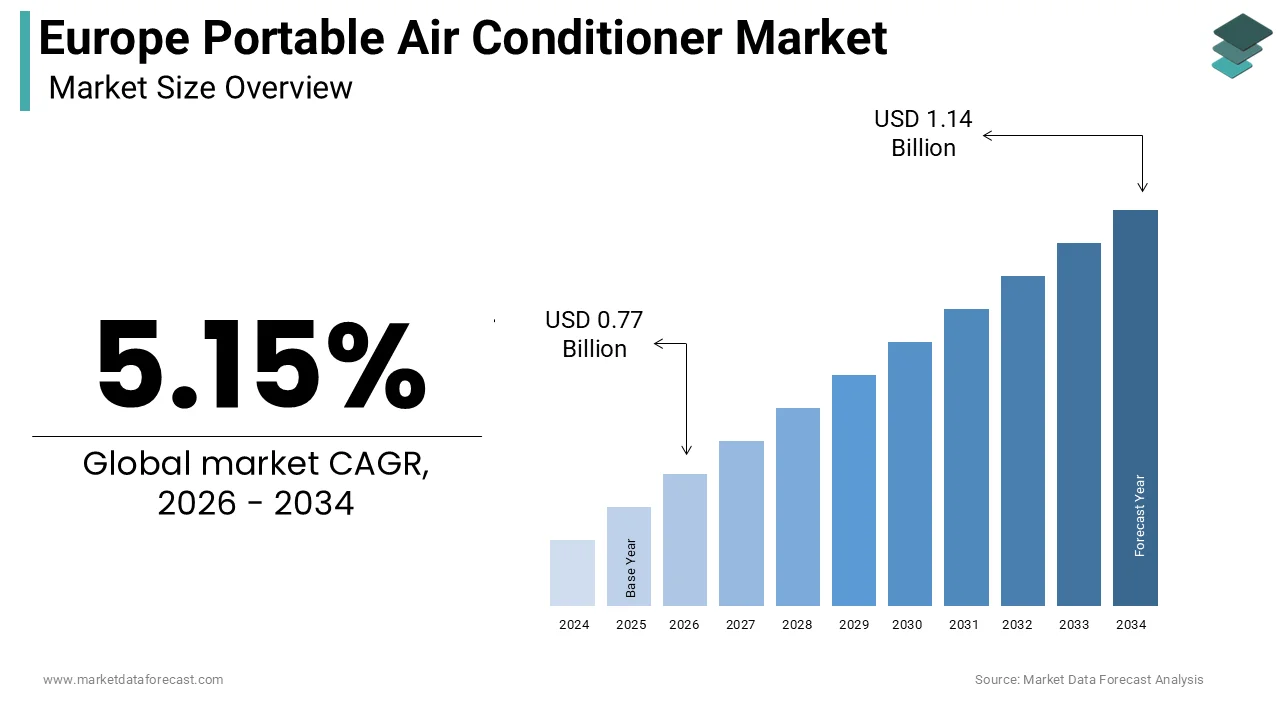
- Market Valuation: Valued at USD 0.73 billion (2025), estimated at USD 0.77 billion (2026), and projected to reach USD 1.14 billion by 2034, registering a stable CAGR of 5.15% (2026–2034).
- Primary Growth Drivers: Increasing frequency and intensity of summer heatwaves across Europe, coupled with rental housing dynamics and strict architectural preservation laws favoring non-permanent cooling solutions.
Key Europe Portable Air Conditioner Market Segment Metrics (2026–2034)
| Category | Leading Segment (2025 Position) | Fastest-Growing Segment |
|---|---|---|
| By Type | Floor-standing units (largest share in 2025 due to mobility and plug-and-play design) | Window units (projected at an 8.5% CAGR from 2026 to 2034) |
| By Energy Efficiency | Non-ENERGY STAR certified units (held 55.6% majority share in 2025) | ENERGY STAR certified units (predicted at an 11.2% CAGR) |
| By Region | Germany (dominated with a 22.8% market share in 2025) | UK, France, Spain, and Italy PAC markets |
Major Industry Players & Market Structure
Market Structure: Highly competitive and evolving environment shaped by strict European Union efficiency standards, refrigerant phase-downs (R290 adoption), and the rising demand for smart home connectivity.
Key Market Leaders: De'Longhi S.p.A., Whirlpool Corporation, Electrolux AB, LG Electronics, Samsung Electronics, Haier Group Corporation, Midea Group, Daikin Industries, Ltd., Panasonic Corporation, and Honeywell International Inc.
Europe Portable Air Conditioner Market Size
The Europe portable air conditioner market size was calculated to be USD 0.73 billion in 2025 and is anticipated to be worth USD 1.14 billion by 2034, from USD 0.77 billion in 2026, growing at a CAGR of 5.15% during the forecast period.
A portable air conditioner (PAC) is a self-contained, mobile cooling system designed to be used in a single room. Unlike fixed split systems, these devices require no permanent installation and utilize a flexible exhaust hose to vent hot air through a window or wall opening. This market is increasingly vital as European consumers seek flexible solutions to combat rising temperatures without the structural modifications required by traditional air conditioning. According to the Copernicus Climate Change Service, while the globe experienced its warmest summer on record in 2023, Europe recorded its fifth-warmest summer, with average temperatures exceeding the 1991–2020 baseline by 0.83°C. This climatic shift has altered consumer behavior, particularly in Northern and Central European countries, where air conditioning was historically uncommon. Data cited by the European Environment Agency (originating from the WHO/WMO) indicates that heat-related mortality in Europe has increased by around 30% over the past two decades, underscoring the critical need for effective heat adaptation strategies. Furthermore, the region’s diverse architectural heritage often restricts the installation of external condenser units,
making portable alternatives a practical choice for renters and residents of historic buildings. As per Eurostat, 32% of the EU population lived in rented accommodation in 2024, creating a sustained market for non-permanent and portable appliances suited for tenants. The market is also influenced by energy efficiency regulations under the Ecodesign Direct,ive which mandate stricter performance standards for cooling appliances. Manufacturers are responding by developing dual hose models and inverter technologies to improve energy performance. These factors collectively define a market driven by climatic necessity, regulatory compliance, and the need for adaptable home comfort solutions in an evolving environmental landscape.
MARKET DRIVERS
Increasing Frequency and Intensity of Heatwaves Drive Urgent Consumer Demand
The escalating frequency and intensity of heatwaves across the region serve as a key growth factor for the Europe portable air conditioner market. Historical climate norms are shifting rapidly, with Southern and Central European countries experiencing prolonged periods of extreme heat that exceed human comfort thresholds. According to the World Meteorological Organization (WMO), Europe is warming at a rate twice the global average since the 1980s, with 2023 confirmed as one of the warmest years on record. This trend has created an urgent need for immediate cooling solutions, particularly in regions where infrastructure was not originally designed for high temperatures. For instance, in Germany, where summer temperatures frequently surpassed 35 degrees Celsius in recent years, sales of cooling appliances surged as households sought relief from oppressive heat. The German Weather Service reported that heat stress events have become more common, leading to increased health risks for vulnerable populations such as the elderly and young children. Portable air conditioners offer a rapid deployment solution that does not require professional installation, allowing consumers to respond quickly to sudden temperature spikes. Research involving France's National Institute of Health and Medical Research (Inserm) indicates that heatwaves can increase hospital admissions by approximately 19–20% (specifically for respiratory and metabolic conditions) rather than cooling reducing them by that margin. This health imperative drives consumers to purchase portable units as a preventive measure. Additionally, the psychological comfort provided by controlled indoor environments enhances productivity and sleep quality, further motivating purchases. Hence, the direct correlation between rising ambient temperatures and consumer willingness to invest in personal cooling technologies sustains robust demand for portable air conditioners across the continent.
Rental Housing Dynamics and Architectural Constraints: Non-Permanent Solutions
The prevalence of rental housing and strict architectural preservation laws in many cities in the region significantly fuels the demand for PACs and boosts the expansion of the European portable air conditioner market. A substantial portion of the European population resides in rented accommodations where tenants are often prohibited from making permanent alterations to the property, such as drilling holes for split system installations. Eurostat data from 2024 reveals that 32% of the EU population are tenants. However, in Germany and Switzerland, the rental market dominates, with tenant shares exceeding 50% (approx. 53% and 58%, respectively). This demographic relies on flexible appliances that can be easily installed and removed without damaging walls or windows. Portable air conditioners meet this need by requiring only a temporary window kit for exhaust ventilation. Furthermore, many European cities possess historic centers with protected facades where the installation of external condenser units is strictly regulated or banned. The United Nations Educational, Scientific, and Cultural Organization notes that Europe has the highest density of World Heritage sites globally, many of which impose stringent aesthetic guidelines. In cities like Rome, Prague, and Edinburgh, property owners must adhere to these regulations, limiting their options for traditional air conditioning. Portable units offer a compliant alternative that maintains the architectural integrity of historic buildings while providing necessary comfort. The ease of mobility also appeals to students and young professionals who frequently relocate. Data on the European Higher Education Area highlights a stable mobile demographic, with 8.4% of students in the EU coming from abroad, fostering a consumer base that prioritizes flexible and portable services. Therefore, the structural and legal constraints of the European housing market make portable air conditioners the preferred choice for a significant segment of the population.
MARKET RESTRAINTS
High Energy Consumption and Rising Electricity Costs Deter Purchase Decisions
The high energy consumption associated with PACs is a limitation to the growth of the Europe portable air conditioner market. This issue is particularly critical given the rapid rise in European electricity prices. Portable units are generally less energy efficient than fixed split systems due to heat leakage from the exhaust hose and the presence of the compressor within the conditioned space. According to IEA price analysis, wholesale electricity prices in the European Union declined by more than 50 percent in 2023 from record 2022 levels, though they remained roughly double 2019 levels. Consumers are increasingly aware of the energy label ratings of appliances, and many portable models fall into lower efficiency categories such as F or G on the new EU scale. The European Commission’s Ecodesign Working Plan emphasizes the need to eliminate the least efficient products from the market, which may limit the availability of affordable entry-level models. For example, a typical portable air conditioner can consume between 1000 and 1500 watts per hour, leading to substantial electricity bills during prolonged use. UK energy usage calculators indicate that running a 1.2kW portable air conditioner for eight hours a day adds approximately £75 to monthly energy bills during the summer. This financial burden discourages price-sensitive consumers from purchasing these devices despite the discomfort of heat. Additionally, the ongoing energy crisis has prompted many households to adopt energy-saving measures such as using fans instead of compressors. Research suggests that energy saving is a major consideration for consumers, but BEUC position papers highlight that current labels often fail to help consumers clearly prioritize efficiency over cooling performance. So, the high operational cost and poor energy efficiency of portable units restrain widespread adoption among budget-conscious buyers.
Noise Levels and Limited Cooling Capacity Reduce User Satisfaction
Excessive noise levels and limited cooling capacity are critical technical barriers that restrain the broader acceptance of PACs in the European portable air conditioner market. Unlike split systems, where the noisy compressor is located, portable units house all mechanical components inside the living space, resulting in higher decibel levels during operation. According to the European Noise Directive, prolonged exposure to noise levels above 55 decibels can cause annoyance and sleep disturbance, which is a common complaint among users of portable air conditioners. Most standard models operate between 50 and 65 decibels, making them unsuitable for bedrooms or quiet office environments. This limitation reduces their utility for nighttime cooling, which is often when relief from heat is most needed. Furthermore, portable air conditioners typically have a lower British Thermal Unit BTU output compared to fixed systems, limiting their effectiveness to small rooms. The European Committee for Standardization notes that many consumers underestimate the cooling requirements of their spaces, leading to dissatisfaction with performance. For instance, a unit rated for 10 square meters may struggle to cool a room of 15 square meters effectively, especially if there is significant solar gain. This mismatch between expectation and reality results in negative reviews and reduced repeat purchases. Additionally, the single-hose design of many basic models creates negative pressure in the room, drawing in warm air from outside, which further diminishes cooling efficiency. Data from consumer protection agencies in France and Italy indicate that noise and inefficiency are the top reasons for product returns in this category. Consequently, these functional drawbacks hinder the market potential of portable air conditioners as a primary cooling solution.
MARKET OPPORTUNITIES
Integration of Smart Home Technology and Energy Management Systems
The integration of smart home technology and advanced energy management systems creates a pathway for growth in the Europe portable air conditioner market. Modern consumers are increasingly seeking connected devices that can be controlled remotely via smartphones and integrated into existing home automation ecosystems. According to studies, the European smart home landscape grew at a steady rate in the 2023–2025 period, primarily driven by rising demand for home automation and energy optimization. Portable air conditioners equipped with Wi Fi connectivity and voice control compatibility allow users to adjust settings, pre-cool rooms before arrival, and monitor energy usage in real time. This capability aligns with the growing emphasis on energy efficiency, as users can schedule operations during off-peak hours when electricity rates are lower. For example, manufacturers like DeLonghi and Dyson have introduced models with app-based controls that provide detailed insights into power consumption. The European Commission’s Digital Decade policy aims to ensure that 75 percent of EU enterprises use cloud computing and big data by 2030, fostering an environment conducive to smart appliance adoption. Additionally, the integration of artificial intelligence enables these units to learn user preferences and adjust cooling patterns automatically, enhancing comfort and reducing waste. The ability to integrate with smart meters further empowers consumers to manage their carbon footprint. The VDE (German Association for Electric, Electronic, nic and Information Technologies) indicates that the use of smart technologies and digitalization can reduce energy consumption in buildings by up to 65 percent. So, the development of intelligent portable air conditioners offers a compelling value proposition that addresses both comfort and sustainability concerns, driving market expansion.
Development of Eco-Friendly Refrigerants and Sustainable Design Practices
The shift towards eco-friendly refrigerants and sustainable design practices offers a lucrative opportunity for manufacturers in the Europe portable air conditioner market. Regulatory pressure under the European Union’s F-Gas Regulation mandates a phasedown of hydrofluorocarbons HFCs which have high global warming potential. This regulatory framework encourages the adoption of natural refrigerants such as R290 propane, which has a negligible impact on climate change. According to research, the R290 air conditioner landscape is projected to grow significantly through 2032 as manufacturers shift away from high-GWP refrigerants. Manufacturers that pioneer the use of these environmentally benign refrigerants can differentiate their products and appeal to environmentally conscious consumers. Additionally, the implementation of circular economy principles, such as designing for disassembly and using recycled materials, enhances brand reputation. The European Circular Economy Action Plan targets a doubling of the circular material use rate by 2030, creating incentives for sustainable product design. For instance, companies are exploring the use of bio-based plastics for casing and components, reducing the carbon footprint of production. The French Agency for Ecological Transition provides grants for companies developing low-impact cooling technologies, fostering innovation in this area. Furthermore, the introduction of energy recovery systems that reuse waste heat for water heating adds value to the product. While the Swedish Environmental Protection Agency tracks the impact of sustainable consumption, specific data on consumer premiums is more commonly found in private market research, which suggests increasing consumer willingness to pay for verified eco-friendly products. Therefore, the transition to green refrigerants and sustainable manufacturing processes opens new market segments and strengthens competitive advantage.
MARKET CHALLENGES
Stringent Regulatory Compliance and Ecodesign Requirements Increase Production Costs
Navigating the complex and evolving regulatory landscape poses a significant challenge for manufacturers in the Europe portable air conditioner market. The European Union’s Ecodesign for Energy Related Products Directive imposes strict energy efficiency and performance standards that require continuous technological innovation and compliance testing. According to the European Commission, new regulations implemented in 2024 mandate higher seasonal energy efficiency ratios for air conditioning units, forcing manufacturers to redesign products and incorporate more expensive components. These compliance requirements increase research and development costs as well as production expenses, which are often passed on to consumers. For example, the transition to R290 refrigerant requires specialized safety features and handling procedures due to its flammability, adding to manufacturing complexity. The European Committee for Electrotechnical Standardization notes that certification processes for new models can take up to six months, delaying market entry. Additionally, the upcoming Energy Labeling Regulation introduces stricter criteria for classification, potentially relegating many existing models to lower efficiency bands. This reclassification can negatively impact consumer perception and sales volume. Small and medium-sized enterprises face particular difficulties in absorbing these costs compared to larger multinational corporations. According to APPLiA, the cumulative burden of overlapping EU environmental and safety regulations has increased industry compliance costs by approximately 18 percent over the last three years. Furthermore, varying national interpretations of EU directives can create additional bureaucratic hurdles. Hence, the burden of regulatory compliance constrains profit margins and slows the pace of product innovation in the market.
Supply Chain Volatility and Raw Material Scarcity Disrupt Manufacturing
Supply chain volatility and the scarcity of critical raw materials further hinder the stability of the Europe portable air conditioner market. The production of these appliances relies on components such as cop, aluminum, numerous semiconductors, and rare earth metals, which are subject to global price fluctuations and supply disruptions. According to the European Raw Materials Alliance, the EU depends heavily on imports for 98 percent of its rare earth needs, making the supply chain vulnerable to geopolitical tensions. Recent conflicts and trade restrictions have led to delays in the delivery of essential components such as microchips used in smart control systems. The European Automobile Manufacturers Association reported that semiconductor shortages affected various industrial sectors, including home appliances, leading to production bottlenecks. A study shows that manufacturers faced extreme lead times of 40 to 52 weeks for critical electronic components, though these began to stabilize late in the year. Additionally, the volatility in copper prices, which are essential for motors and heat exchange, impacts production costs. The London Metal Exchange noted that copper prices fluctuated by 15 percent in 2023, affecting budgeting and pricing strategies. These disruptions force manufacturers to hold higher inventory levels, tying up capital and increasing storage costs. The German Logistics Association highlights that freight costs remain elevated due to capacity constraints and fuel price instability. Furthermore, the push for nearshoring production to reduce dependency on Asian suppliers requires significant investment in new facilities. Thus, the unpredictability of supply chains and raw material availability hinders consistent production and market responsiveness.
REPORT COVERAGE
| REPORT METRIC | DETAILS |
| Market Size Available | 2025 to 2034 |
| Base Year | 2025 |
| Forecast Period | 2026 to 2034 |
| CAGR | 5.15% |
| Segments Covered | By Type, Energy Efficiency, And Region |
| Various Analyses Covered | Global, Regional & Country Level Analysis; Segment-Level Analysis; DROC, PESTLE Analysis; Porter’s Five Forces Analysis; Competitive Landscape; Analyst Overview of Investment Opportunities |
| Regions Covered | UK, France, Spain, Germany, Italy, Russia, Sweden, Denmark, Switzerland, Netherlands, Turkey, and the Czech Republic |
| Market Leaders Profiled | De'Longhi S.p.A., Whirlpool Corporation, Electrolux AB, LG Electronics, Samsung Electronics, Haier Group Corporation, Midea Group, Daikin Industries, Ltd., Panasonic Corporation, Honeywell International Inc. |
SEGMENTAL ANALYSIS
By Type Insights
The floor-standing units segment was the largest segment in the Europe portable air conditioner market and occupied a substantial share in 2025. This prominence of the segment is mainly supported by its plug-and-play nature, which requires no permanent installation or structural modifications to the building. According to Eurostat, approximately 32 percent of Europeans live in rented accommodations as of 2024, where tenants are typically restricted from making permanent structural alterations for fixed cooling systems. Floor-standing units address this constraint by utilizing a flexible exhaust hose that can be temporarily fitted to a window or door, making them ideal for renters and students. Sources suggest that urban mobility is a primary driver for appliance selection, with a growing segment of renters preferring portable systems that facilitate frequent moves between urban residences. Additionally, these units offer dual functionality as many models include dehumidifier and fan modes, providing year-round utility. The German Consumer Organization (vzbv) emphasizes that consumers increasingly seek high-efficiency, multi-functional appliances, though 75 percent of EU buyers explicitly cite energy labels as their primary purchase influencer. The ability to roll the unit on casters allows users to target cooling specifically where it is needed,, enhancing energy efficiency by avoiding cooling unused spaces. Furthermore, the aesthetic design of modern floor-standing units has improved significantly, allowing them to blend seamlessly with contemporary interior decor. Manufacturers like DeLonghi and Dyson have invested heavily in sleek designs that appeal to style-conscious consumers. Consequently, the combination of installation flexibility, mobility, and multifunctionality ensures that floor-standing units remain the preferred choice for European consumers. The extensive availability and robust retail distribution networks for floor-standing units further reinforce their market leadership. Unlike window or wall units, which may require specialized sizing or custom installation, floor-standing models are standardized and readily available in major electronics retailers and online platforms across Europe. According to the European Consumer Electronics Association, over 80 percent of portable cooling appliances sold in Europe are floor-standing models due to their universal compatibility with standard window kits. Major retailers such as MediaMarkt, Saturn, and Fnac dedicate significant shelf space to these units, particularly during the summer months, ensuring high visibility and accessibility for consumers. While total European e-commerce grew steadily in 2023, the appliance sector specifically benefited from digital-first shopping trends, making floor-standing units one of the most frequently shipped heavy-duty home items. Consumers benefit from easy comparison of features, prices, and user reviews, which drives informed purchasing decisions. Additionally, the logistics of delivering floor-standing units are simpler compared to heavier central or wall-mounted systems, reducing shipping costs and delivery times. The French Logistics Federation highlights that last-mile delivery efficiency for compact appliances has improved by 15 percent, enhancing customer satisfaction. Furthermore, the availability of spare parts and service support for popular floor-standing models is widespread, reducing maintenance concerns. So, the ease of purchase and strong after-sales support infrastructure sustain the dominance of floor-standing units in the European market.
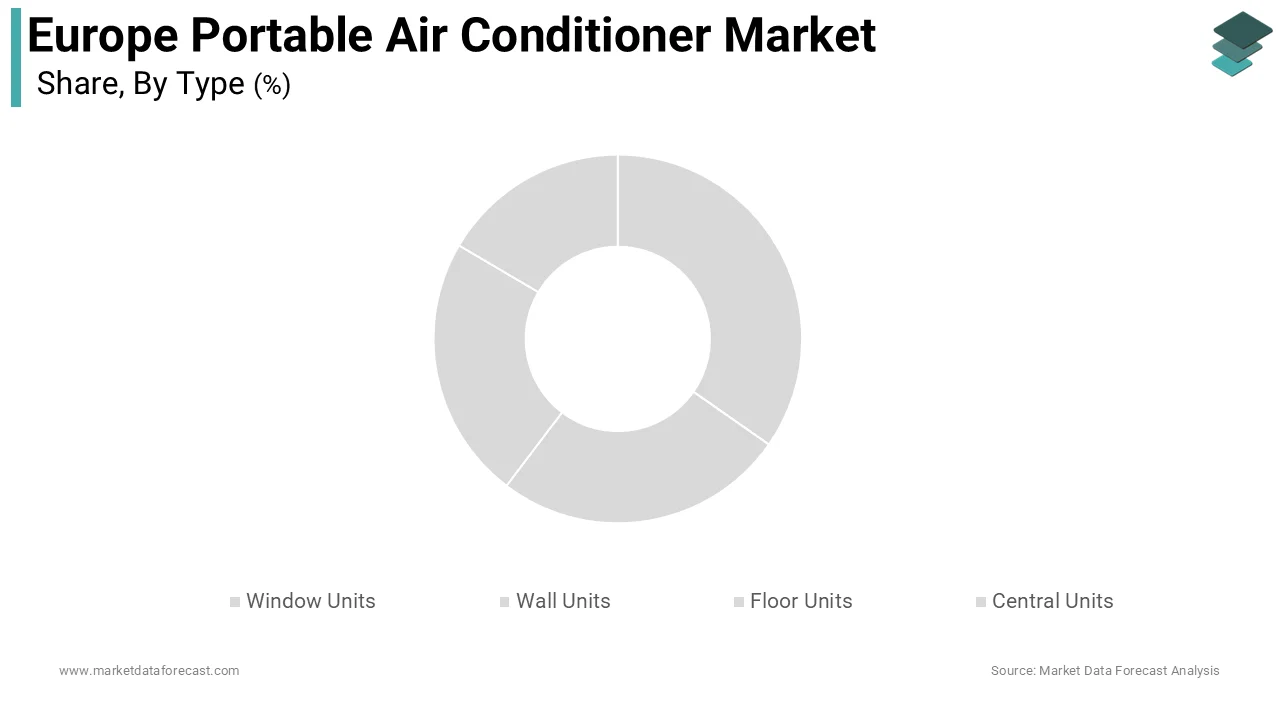
However, the window units segment is expected to exhibit a noteworthy CAGR of 8.5% from 2026 to 2034 due to advancements in technology that have significantly improved the energy efficiency of window-mounted systems, addressing previous consumer concerns about high operational costs. According to the European Commission, new Ecodesign regulations implemented in 2024 mandate stricter seasonal energy efficiency ratios for all air conditioning equipment. Modern window units equipped with inverter compressors and smart thermostats comply with these standards, offering superior performance compared to older models. According to IEA energy analysis, inverter technology can reduce energy consumption by 30 percent to 50 percent compared to traditional non-inverter units, as it avoids the energy-intensive on/off cycles of fixed-speed compressors. This efficiency gain makes window units more attractive to cost-conscious consumers who are mindful of rising electricity prices. For instance, in the United Kingdom, where energy costs remain high, the residential cooling market is expanding primarily through split-system air conditioners, which currently account for 65 percent of room air conditioner sales. Additionally, window units generally provide better insulation and sealing than portable floor-standing units, which suffer from heat leakage through the exhaust hose. The UK Energy Saving Trust notes that properly installed window units can be up to 20 percent more efficient than single-hose portable units. This performance advantage is gaining recognition among consumers and energy auditors. Furthermore, government rebates for energy-efficient appliances in countries like France and Germany incentivize the purchase of compliant window models. Consequently, the regulatory push for sustainability and the technological efficiency improvements drive the rapid growth of the window units segment. The high density of urban living and the prevalence of apartment buildings in Europe further accelerate the adoption of window units. In densely populated cities such as Paris, Berlin, and Amsterdam, space is at a premium, and residents often lack the floor space required for bulky floor-standing units. Window units offer a space-saving alternative as they are mounted directly in the window frame, freeing up valuable interior real estate. According to the European Urban Planning Institute, over 70 percent of Europeans live in urban areas where apartment living is the norm. This demographic trend creates a natural demand for compact and unobtrusive cooling solutions. Window units also provide a more permanent and secure installation compared to portable units, which must be stored during the winter months. In dense markets like the Netherlands, apartment dwellers increasingly seek low-maintenance cooling solutions, though industry trends suggest a broader preference for retrofit split systems that offer year-round heating and cooling. Additionally, modern window units are designed with slim profiles and quiet operation, making them suitable for small bedrooms and home offices. Noise levels have been reduced to below 50 decibels in premium models, addressing previous complaints about disturbance. The Swedish Environmental Protection Agency highlights that noise pollution is a growing concern in urban environments, driving demand for quieter appliances. Furthermore, the aesthetic integration of window units into building facades has improved with manufacturers offering customizable panels. Consequently, the spatial constraints of urban living and the desire for convenient, low-maintenance solutions fuel the rapid growth of window units.
By Energy Efficiency Insights
The Non ENERGY STAR certified units segment held the majority share of 55.6% of the Europe portable air conditioner market in 2025. This supremacy of the segment is largely attributed to its lower initial purchase price, which appeals to budget-conscious consumers. Non-certified models are typically lower than their ENERGY STAR-certified counterparts, making them accessible to a wider demographic. This price sensitivity is particularly acute in Southern and Eastern European countries, where disposable income levels are lower. For instance, in Spain and Italy, economic pressures have led to a preference for affordable cooling solutions despite higher long-term operating costs. Additionally, many consumers view portable air conditioners as temporary or supplementary devices rather than primary cooling systems, reducing their willingness to invest in premium, efficient models. The perception that portable units are used only occasionally during extreme heat waves further justifies the purchase of cheaper alternatives. Furthermore, the availability of non-certified models in discount retailers and online marketplaces enhances their visibility and accessibility. The European Discount Retailers Association notes that portable air conditioners are among the top-selling seasonal items in budget stores. Consequently, the lower upfront cost and broad availability sustain the leadership of non ENERGY STAR certified units in the market. Limited consumer awareness regarding the long-term financial benefits of energy-efficient appliances hinders the growth of the ENERGY STAR-certified segment. Many buyers do not fully understand the relationship between energy efficiency ratings and electricity bills, leading them to prioritize initial cost over operational savings. The knowledge gap results in the undervaluation of ENERGY STAR-certified products, which offer significant savings over their lifespan. Besides, a study notes that educational campaigns on energy efficiency have had limited reach among younger demographics who are primary buyers of portable units. Additionally, the complexity of calculating return on investment discourages consumers from performing detailed cost-benefit analyses. Retail staff often lack the training to effectively communicate these long-term benefits, further exacerbating the issue. The European Retail Roundtable highlights that sales personnel focus primarily on features and price rather than efficiency metrics. Consequently, the lack of informed decision-making and insufficient education on energy savings maintains the dominance of lower-cost non-certified units.
On the other hand, the ENERGY STAR certified units segment is predicted to witness the highest CAGR of 11.2% over the forecast period, owing to stringent government regulations and financial incentives aimed at promoting energy efficiency. The European Union’s Ecodesign Directive mandates progressively higher efficiency standards for cooling appliances, effectively phasing out the least efficient models from the market. This regulatory pressure forces manufacturers to focus their production on certified models, thereby increasing their availability. Additionally, several European governments offer rebates and tax credits for the purchase of energy-efficient appliances. Similarly, the German Federal Office for Economic Affairs and Export Control offers grants for energy-efficient home improvements, including cooling systems. These financial incentives reduce the price gap between certified and non-certified models, making the former more attractive. Furthermore, corporate sustainability goals are driving businesses to purchase certified units for office spaces. Thus, the regulatory framework and financial support mechanisms drive the accelerated adoption of ENERGY STAR-certified units. Increasing environmental consciousness among European consumers significantly contributes to the rapid growth of the ENERGY STAR certified segment. As awareness of climate change and carbon footprints rises, more individuals are making purchasing decisions based on sustainability criteria. ENERGY STAR certified units consume less electricity, thereby reducing greenhouse gas emissions associated with power generation. This alignment with personal values drives consumers to pay a premium for eco-friendly products. Additionally, social media and influencer campaigns promoting sustainable living have amplified the message of energy conservation. Younger generations, particularly Millennials and Gen Z, are willing to invest in technologies that support their ethical stance. Furthermore, the transparency provided by energy labels allows consumers to easily identify and choose efficient models. The European Consumer Centre highlights that clear labeling has increased trust in energy claims. Therefore, the shift towards values-based consumption and the desire to reduce environmental impact fuel the rapid expansion of the ENERGY STAR certified segment.
REGIONAL ANALYSIS
Germany Portable Air Conditioner Market Analysis
Germany dominated the Europe portable air conditioner market and accounted for a 22.8% share in 2025. This leading position of the German market is driven by its large population, high disposable income, and increasing frequency of heatwaves. According to the German Weather Service (DWD), average temperatures in Germany have risen by approximately 1.5 degrees Celsius since 1881, with heatwaves becoming significantly more frequent in recent decades. This climatic shift has altered consumer behavior, leading to greater acceptance of air conditioning in residential settings. The German rental market, which comprises over 50 percent of households, favors portable units due to restrictions on permanent installations. Research indicates that demand for flexible cooling solutions in Germany has grown substantially over the last five years, driven by record-breaking summer temperatures. Additionally, Germany’s strong emphasis on energy efficiency drives the adoption of high-quality ENERGY STAR certified models. The German Federal Ministry for Economic Affairs and Climate Action promotes energy-efficient appliances through subsidies and awareness campaigns. The presence of leading retailers such as MediaMarkt and Saturn ensures wide availability and competitive pricing. Furthermore, the country’s robust manufacturing base supports the development of innovative and durable products. The German Engineering Federation notes that local brands are increasingly focusing on smart and eco-friendly features. Consequently, the combination of climatic necessity, regulatory support, and market infrastructure solidifies Germany’s position as the dominant market for portable air conditioners in Europe.
United Kingdom Portable Air Conditioner Market Analysis
The United Kingdom followed closely behind in the Europe portable air conditioner market and secured a share of 18.5% in 2025. This growth of the UK market is credited to a surge in demand driven by record-breaking summer temperatures and an aging housing stock. According to the UK Met Office, the summer of 2022 was the hottest on record, with temperatures exceeding 40 degrees Celsius for the first time. This event served as a wake-up call for many households, leading to a spike in air conditioner purchases. While the ONS noted significant shifts in consumer spending during 2023 heatwaves, specific retail data suggest a surge in demand for cooling products, though exact unit sales growth varies by retailer. The prevalence of rented accommodation and listed buildings where structural changes are prohibited further boosts the demand for portable units. The English Heritage organization notes that strict preservation laws limit the installation of fixed systems in historic properties. Additionally, the high cost of energy has made consumers cautious, leading to a preference for units with good energy ratings. The UK Energy Saving Trust provides guidance on efficient cooling, helping consumers make informed choices. The strong e-commerce sector facilitates easy access to a wide range of products. Data from the IMRG indicates that online sales of cooling appliances saw triple-digit spikes during specific heatwave weeks in 2023, though year-round growth was more moderate. Thus, the combination of extreme weather events, housing constraints, and digital retail strength maintains the United Kingdom’s strong position in the market.
France Portable Air Conditioner Market Analysis
France plays a major role in the Europe portable air conditioner market due to increasing summer heatwaves and government initiatives promoting energy efficiency. According to Météo France, the number of heatwave days has tripled since the 1980s, affecting both urban and rural areas. This trend has increased the perceived necessity of air conditioning among French consumers. The French government’s MaPrimeRénov scheme provides financial aid for energy-efficient home improvements, including the purchase of high-performance cooling devices. While ADEME promotes energy-efficient cooling, government incentives like MaPrimeRénov' have primarily driven a 20 percent increase in the adoption of fixed air-to-air heat pumps. Additionally, the large population of apartment dwellers in cities like Paris and Lyon favors portable solutions due to space constraints and rental agreements. According to INSEE, while houses remain the majority nationwide, approximately 44 percent of French households live in apartments, a figure that rises significantly in dense urban areas. The presence of major retail chains such as Fnac Darty ensures broad distribution and consumer access. Furthermore, there is a growing awareness of health risks associated with extreme heat, particularly for the elderly. The French Ministry of Health emphasizes the importance of cooling for vulnerable populations. So, the interplay of climate change policy support and urban living dynamics drives the robust market for portable air conditioners in France.
Italy Portable Air Conditioner Market Analysis
Italy expanded steadily in the Europe portable air conditioner market owing to its hot Mediterranean climate and tourism industry. The country experiences some of the highest summer temperatures in Europe, making cooling an essential commodity. According to sources, average summer temperatures in Italy have risen over the past three decades. This warming trend has extended the cooling season, increasing the duration of appliance usage. The tourism sector, which is vital to the Italian economy, relies heavily on air conditioning to ensure guest comfort in hotels and vacation rentals. Portable units are particularly popular in historic city centers where heritage protection laws restrict external installations. The Italian Ministry of Cultural Heritage notes that thousands of buildings in cities like Rome and Florence are protected, limiting modification options. Additionally, the economic situation has led many consumers to opt for portable units as a cost-effective alternative to central air conditioning. The Italian Consumer Confederation highlights that affordability is a key driver for appliance purchases. Furthermore, the availability of local manufacturing and distribution networks supports market growth. Consequently, the combination of intense heat tourism demand and architectural constraints sustains Italy’s significant presence in the European market.
Spain Portable Air Conditioner Market Analysis
Spain is predicted to grow notably in the Europe portable air conditioner market during the forecast period due to high demand, extreme heat, and a large rental sector. The country frequently experiences heatwaves with temperatures often exceeding 40 degrees Celsius. In addition, the high proportion of rented housing in urban areas such as Madrid and Barcelona drives the preference for portable units. Additionally, the tourism industry in coastal regions requires flexible cooling options for short-term rentals. The Spanish Confederation of Hotels and Tourist Accommodations indicates that portable air conditioners are widely used in apartments and guest houses. Economic factors also play a role, with many consumers seeking affordable cooling options amidst inflation. The Spanish Consumer Organization notes that price sensitivity remains high, influencing purchase decisions. However, there is a growing trend towards energy-efficient models due to rising electricity costs. The Spanish Institute for Diversification and Saving of Energy promotes efficient appliances through awareness campaigns. Furthermore, the expansion of online retail channels has improved access to a variety of products. Consequently, the convergence of climatic conditions, housing dynamics, and economic factors supports the steady growth of the portable air conditioner market in Spain.
COMPETITION OVERVIEW
The competition in the Europe portable air conditioner market is intense, characterized by a mix of established global brands and emerging regional players. Leading companies differentiate themselves through technological innovation, particularly in energy efficiency and smart home integration. The shift towards sustainable cooling solutions drives manufacturers to develop products using low global warming potential refrigerants. Price competition remains significant but is often balanced by factors such as brand reputation, design aesthetics, and after-sales support. Brands with strong distribution networks and comprehensive warranty services gain a competitive edge by ensuring customer satisfaction and loyalty. The rise of e-commerce influences market dynamics as online platforms offer consumers easy access to a wide variety of options and comparative reviews. Smaller manufacturers focus on niche segments such as ultra-quiet or compact units to capture specific customer needs. Intellectual property protection and patenting of new technologies are critical for maintaining competitive advantages. Collaboration with technology firms enhances the value proposition through improved connectivity and user experience. The market witnesses the continuous entry of new players offering innovative designs, which pressures incumbents to accelerate product development cycles. Overall, the competitive landscape is shaped by the ability to balance performance, sustainability, and cost-effectiveness while adapting to evolving consumer preferences and regulatory requirements in the European region.
KEY MARKET PLAYERS
A few major players of the Europe portable air conditioner market include
- De'Longhi S.p.A
- Whirlpool Corporation
- Electrolux AB
- LG Electronics
- Samsung Electronics
- Haier Group Corporation
- Midea Group
- Daikin Industries, Ltd
- Panasonic Corporation
- Honeywell International Inc
Top Strategies Used by the Key Market Participants
Key players in the Europe portable air conditioner market primarily focus on product innovation and energy efficiency to maintain a competitive advantage. Companies invest heavily in research and development to create units that utilize eco-friendly refrigerants and consume less electricity. Strategic partnerships with local distributors and retailers enhance market penetration and ensure widespread availability. Manufacturers also emphasize smart connectivity features, allowing users to control devices via mobile applications. Brand differentiation through sleek design and multifunctionality, such as combining cooling with air purification is common. Additionally, companies adopt sustainable manufacturing practices to align with European environmental regulations. Pricing strategies vary, with premium brands focusing on quality and budget brands competing on affordability. After-sales service and warranty offerings are crucial for building consumer trust. These strategies collectively drive growth and ensure long-term viability in the dynamic European climate control landscape.
Leading Players in the Europe Portable Air Conditioner Market
- DeLonghi S.p.A. stands as a dominant force in the Europe portable air conditioner market, leveraging its strong brand reputation for quality and design innovation. The company offers a diverse portfolio of portable cooling solutions that emphasize energy efficiency and user-friendly features such as smart connectivity and quiet operation. DeLonghi strengthens its market position by continuously investing in research and development to create products that align with stringent European environmental regulations. Recent actions include the launch of new models utilizing R290 refrigerant, which significantly reduces global warming potential. The company also enhances its digital presence through integrated mobile applications that allow users to control settings remotely. DeLonghi’s extensive distribution network across major European retailers ensures broad market accessibility. DeLonghi maintains a competitive edge and influences global trends by focusing on premium design and sustainable technology. This approach directly addresses the specific needs of European consumers who value both aesthetics and performance.
- Dyson Ltd contributes significantly to the Europe portable air conditioner market through its innovative approach to air treatment and purification. Although primarily known for bladeless fans, Dyson has expanded its offerings to include advanced cooling technologies that integrate heating and air purification functions. The company’s commitment to engineering excellence drives the development of highly efficient and aesthetically distinct products that appeal to discerning consumers. Dyson strengthens its market position by emphasizing superior air quality management alongside temperature control, which resonates with health-conscious Europeans. Recent initiatives include the introduction of models with enhanced filtration systems capable of capturing ultrafine particles. The company invests heavily in proprietary motor technology to achieve high performance with lower energy consumption. Dyson’s direct-to-consumer sales model and strong online presence allow it to maintain premium pricing and brand loyalty. Dyson is setting new standards for multifunctional air treatment devices. In doing so, they influence the broader market and encourage competitors to prioritize innovation and holistic indoor environmental quality.
- Midea Group Co. Ltd. plays a pivotal role in the Europe portable air conditioner market as a leading global manufacturer of HVAC appliances. The company provides a wide range of affordable and reliable portable air conditioning units that cater to various consumer segments across Europe. Midea strengthens its market position through strategic partnerships with European brands and retailers, enabling it to leverage local distribution channels effectively. The company focuses on scaling production efficiency and integrating smart home capabilities into its products to meet evolving consumer demands. Recent actions include the expansion of its manufacturing facilities in Europe to reduce supply chain risks and improve delivery times. Midea also prioritizes sustainability by developing energy-efficient models that comply with European Ecodesign directives. By offering a balance of cost-effectiveness and technological advancement, Midea captures a significant volume of sales. Its ability to innovate rapidly and adapt to regional preferences ensures its continued relevance and growth in the competitive European landscape while supporting its global leadership in the appliance industry.
MARKET SEGMENTATION
This research report on the Europe portable air conditioner market has been segmented and sub-segmented based on type, energy efficiency & region.
By Type
- Window Units
- Wall Units
- Floor Units
- Central Units
By Energy Efficiency
- ENERGY STAR Certified
- Non-ENERGY STAR Certified
By Region
- UK
- France
- Spain
- Germany
- Italy
- Russia
- Sweden
- Denmark
- Switzerland
- Netherlands
- Turkey
- Czech Republic
- Rest of Europe