Europe Potato Chips Market Size, Share, Trends & Growth Forecast Report – Segmented By Product Type, Flavor, Packaging Type, Distribution Channel, and Country (UK, France, Spain, Germany, Italy, Russia, Sweden, Denmark, Switzerland, Netherlands, Turkey, Czech Republic & Rest of Europe), Industry Analysis From 2026 to 2034
Market Size, 2025
$17.14 BnMarket Estimate, 2026
$18.14 BnMarket Forecast, 2034
$28.62 BnCAGR, 2026–2034
5.86%Europe Potato Chips Market Report Summary
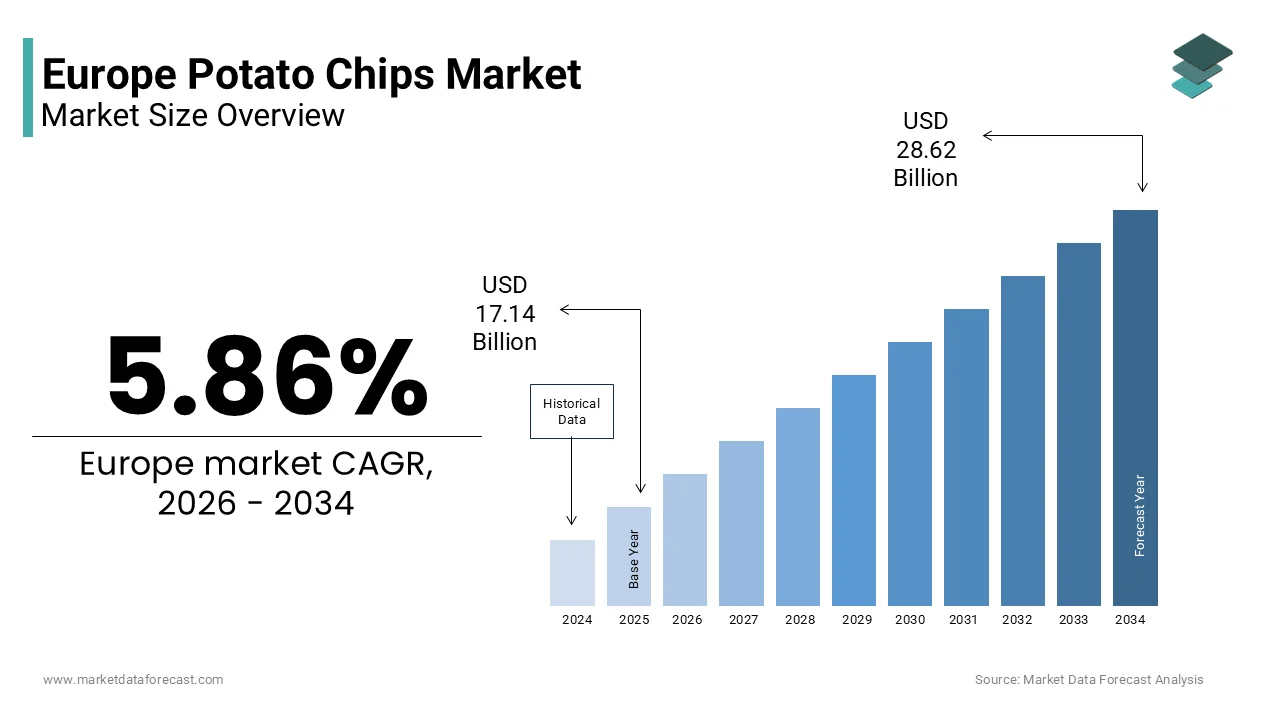
The Europe potato chips market was valued at USD 17.14 billion in 2025, is estimated to reach USD 18.14 billion in 2026, and is projected to reach USD 28.62 billion by 2034, growing at a CAGR of 5.86% during the forecast period. The growth of the European potato chips market is driven by increasing demand for convenient snack foods, changing consumer lifestyles, and rising preference for ready to eat products. The expansion of flavored and premium snack varieties, along with continuous product innovation, is further supporting market growth. Additionally, the growing presence of organized retail and increasing consumption of on the go snacks are creating new growth opportunities across Europe.
Key Market Trends
- Rising demand for convenient and ready to eat snack products driven by busy lifestyles
- Growing popularity of flavored and premium potato chips enhancing consumer appeal
- Increasing innovation in healthier alternatives such as baked and low fat chips
- Strong expansion of supermarkets and hypermarkets improving product accessibility
- Emergence of large pack sizes and family packs catering to group consumption
Segmental Insights
- Based on product type, the fried potato chips segment held a prominent share of the Europe potato chips market in 2025 due to its distinctive taste, texture, and consumer preference for traditional snack formats
- Based on packaging type, the family and bulk packs segment accounted for 55.4% of the market share in 2025 driven by value pricing and higher consumption in households and group settings
- Based on distribution channel, the supermarkets and hypermarkets segment dominated the market due to wide product availability, strong retail presence, and consumer convenience
Regional Insights
- The Europe potato chips market is witnessing consistent growth across major countries supported by strong snack consumption patterns and retail expansion
- The United Kingdom was the leading contributor, accounting for 22.6% of the market share in 2025 due to high consumption of packaged snacks, strong brand presence, and well established retail infrastructure
- Other European countries are also experiencing steady growth driven by increasing demand for innovative snack products and expanding distribution networks
Competitive Landscape
The Europe potato chips market is characterized by intense competition among leading snack manufacturers focusing on product innovation, flavor diversification, and brand positioning. Companies are investing in healthier product formulations, sustainable packaging, and expansion of distribution channels to strengthen their market presence. Strategic partnerships, acquisitions, and new product launches remain key strategies in the competitive landscape. Prominent players in the Europe potato chips market include PepsiCo, Inc., Intersnack Group GmbH & Co. KG, Calbee, Inc., Utz Brands, Inc., The Campbell Soup Company, Mondelez International, Inc., Lorenz Snack World, Herr Foods Inc., KP Snacks Limited, and Orkla ASA.
Europe Potato Chips Market Size
The Europe potato chips market size was valued at USD 17.14 billion in 2025 and is projected to reach USD 28.62 billion by 2034 from USD 18.14 billion in 2026, growing at a CAGR of 5.86%.
The potato chips is a diverse array of sliced, fried, or baked potato products ranging from mass-produced standardized snacks to artisanal kettle-cooked varieties, serving as a cornerstone of the regional savory snack industry. As per Eurostat, the European Union harvested approximately 46 million tons of potatoes in 2023, providing a robust agricultural foundation for domestic chip production and reducing reliance on imported raw materials in key regions. The cultural significance of the potato is further underscored by data from the European Commission, which notes that the average European consumes nearly 85 kilograms of potatoes annually, ensuring a consistent supply chain for processing industries. Consumer behavior is shifting toward premiumization, with a growing segment seeking locally sourced varieties and unique flavor profiles that reflect regional culinary traditions. The industry is also responding to heightened scrutiny regarding acrylamide levels, a natural byproduct of frying, prompting manufacturers to invest in advanced processing technologies. This dynamic landscape balances traditional indulgence with modern demands for quality, safety, and increasingly, nutritional mindfulness, defining the current trajectory of the European potato chip sector.
MARKET DRIVERS
Culinary Exploration and Regional Gastronomy Drive Demand for Gourmet Variants
The escalating consumer desire for sophisticated and regionally inspired flavor experiences is driving the growth of the Europe potato chips market. Modern European shoppers are increasingly treating snacks as a form of culinary exploration, moving beyond standard salted options to seek out gourmet flavors that mirror fine dining trends. According to the European Specialty Food Association, sales of artisanal and premium snack products grew by 11% in 2024, with potato chips featuring exotic ingredients like truffle, sea salt from specific coastal regions, and heritage herbs leading this surge. This trend is particularly pronounced in countries with strong food cultures such as France, Italy, and Spain, where consumers view snacks as an extension of their gastronomic identity. Data from the Mintel Global New Products Database indicates that 34% of new potato chip launches in Europe during 2024 featured limited edition or chef-inspired flavor profiles, reflecting a strategy to capture the attention of adventurous eaters. The rise of food tourism and social media influence has further accelerated this demand, as consumers seek to replicate restaurant-quality tastes at home. This shift transforms the potato chip from a commodity into a differentiated experience, driving volume growth through repeated trials of novel varieties and fostering brand loyalty among discerning palates.
Expansion of Convenience Retail and On-the-Go Consumption
The rapid pace of urban life and the corresponding increase in on-the-go consumption patterns for convenient, portable snack options is additionally propelling the growth of Europe potato chips market. According to the European Convenience Store Convention, the convenience retail sector in Europe expanded by 7% in 2024, with savory snacks accounting for over 40% of total impulse purchases at checkout counters. This channel expansion provides critical visibility and accessibility for potato chip brands, placing products directly in the path of busy consumers. The format of single-serve bags addresses portion control concerns while offering immediate gratification, appealing to both individual consumers and parents seeking easy lunchbox solutions. Furthermore, the integration of contactless payment systems in micro-retail outlets has streamlined the purchasing process by reducing friction and encouraging spontaneous buys.
MARKET RESTRAINTS
Intensifying Health Consciousness and Clean Label Demands
The growing pervasive health consciousness among consumers forcing manufacturers to reformulate products or face declining sales in certain demographics is limiting the growth of Europe potato chips market. Increasing awareness of the links between high sodium intake, saturated fats, and chronic diseases has led many individuals to reduce their consumption of fried snacks or switch to perceived healthier alternatives. According to the European Heart Network, cardiovascular diseases remain the leading cause of death in the region, prompting public health campaigns that specifically target processed food consumption. This health narrative drives a shift toward baked chips, vegetable crisps, and legume-based snacks that offer similar textures with improved nutritional profiles. The demand for "clean label" products means that traditional chips containing synthetic preservatives, artificial colors, or flavor enhancers face awareness and potential rejection. This behavioral change compels manufacturers to invest heavily in research and development to create healthier versions without compromising taste, a technical challenge that can slow down product launches and increase costs.
Regulatory Pressure on Acrylamide Levels and Processing Standards
The stringent regulatory environment regarding acrylamide, a chemical compound formed when starchy foods are cooked at high temperatures is also limiting the growth of Europe potato chips market. The European Union has established benchmark levels for acrylamide in potato chips to minimize cancer risks, requiring manufacturers to implement rigorous mitigation strategies that can limit processing options and increase operational complexity. According to the European Food Safety Authority, compliance with Regulation EU 2017/2158 mandates continuous monitoring and optimization of cooking times, temperatures, and potato varieties, which can restrict the ability to produce certain traditional textures or flavors. Data from the Food Drink Europe association indicates that the cost of implementing acrylamide mitigation technologies and testing protocols has risen by 18% for small and medium-sized enterprises in the last three years. These financial burdens can be particularly challenging for artisanal producers who lack the economies of scale to absorb such expenses. Furthermore, the requirement for detailed documentation and traceability adds an administrative layer that slows down production cycles. Statistics from the European Commission show that non-compliance can lead to product recalls and reputational damage, creating a climate of caution among manufacturers.
MARKET OPPORTUNITIES
Innovation in Sustainable Packaging and Circular Economy Models
The urgent global imperative for sustainability to differentiate itself through innovative packaging solutions that align with the European Green Deal objectives is creating new opportunities for the growth of Europe potato chips market. Consumers are increasingly demanding environmentally friendly packaging, pushing manufacturers to transition from conventional multi-layer plastics to compostable, biodegradable, or mono-material recyclable films. According to the European Commission's Circular Economy Action Plan, the food packaging sector is under pressure to reduce plastic waste, creating a favorable policy environment for companies that pioneer sustainable alternatives. Data from the European Bioplastics Association suggests that the market for biodegradable packaging in the food sector could grow by 20% annually, offering a significant avenue for chip brands to capture eco-conscious market share. Manufacturers can leverage this opportunity by launching limited edition runs in fully compostable bags or adopting paper-based structures that maintain product freshness while minimizing environmental impact. Statistics from the Consumer Sustainability Survey indicate that 64% of European buyers are willing to switch brands if the packaging is more sustainable, highlighting the commercial viability of such initiatives. Furthermore, partnerships with waste management organizations to establish take-back schemes or recycling programs can enhance brand reputation and customer loyalty.
Development of Plant-Based and Functional Snack Fortifications
The emergence of the snacking trend with the functional food movement to evolve beyond basic sustenance into vehicles for enhanced nutrition is additionally to escalate the growth of Europe potato chips market. Manufacturers can capitalize on this by fortifying potato chips with superfoods, vitamins, proteins, or fiber to address specific health needs, such as immune support, digestion, or energy boosting. The consumers increasingly seeking snacks that provide tangible health benefits alongside enjoyment is also prompting the growth of the market. Data from the European Food Safety Authority shows a rising approval rate for health claims related to added fibers and plant sterols by enabling brands to legally communicate these benefits on packaging. The incorporation of ingredients like seaweed, quinoa flour, or probiotic coatings can transform standard potato chips into functional delights that appeal to health-oriented demographics without sacrificing taste. Statistics from the Mintel Innovation Group reveal that many European consumers are interested in snacks that offer additional nutritional value, such as improved gut health or sustained energy. This trend allows manufacturers to command premium price points and access new distribution channels, including gyms, health food stores, and office wellness programs.
MARKET CHALLENGES
Volatility in Raw Material Prices and Energy Costs
The volatility of raw material prices for potatoes and cooking oils, exacerbated by fluctuating energy costs essential for the frying and drying processes is posing a new challenge for the growth of Europe potato chips market. The industry is highly sensitive to agricultural yield variations caused by extreme weather events, pests, and diseases, which can lead to sudden spikes in potato prices and supply shortages. These cost increases force manufacturers to either absorb the expenses, thereby squeezing already thin profit margins, or pass them on to consumers, risking a decline in sales volume in a price-sensitive market. Data from the European Potato Processors Association indicates that energy costs account for approximately 30% of total production expenses for fried snacks, making the sector particularly vulnerable to electricity and gas price fluctuations. The dependency on consistent energy supplies for continuous frying operations means that any disruption or price hike directly impacts operational viability. This economic instability complicates long-term planning and pricing strategies, creating a precarious environment, where maintaining affordability while ensuring quality becomes an increasingly difficult balancing act for market participants.
Intense Competition from Alternative Snack Categories
The fierce competition from a widening array of alternative snack categories that offer perceived health benefits or novel taste experiences, threatening to erode traditional is additionally to decline the growth of Europe potato chips market. Consumers today have access to a vast selection of snacks including vegetable crisps, popped grains, nut mixes, and protein bars, all vying for the same snack occasion and wallet share. The rise of "free-from" trends, such as gluten-free, grain-free, and low-carb diets, has fueled the popularity of snacks made from lentils, chickpeas, and root vegetables like beetroot and parsnip, which directly compete with potato-based products. Data from the International Nut and Dried Fruit Council shows that nut and seed snack consumption has increased, appealing to consumers seeking high-protein options. Furthermore, the entry of private label brands offering high-quality alternative snacks at lower price points intensifies the pressure on established potato chip manufacturers. This fragmented competitive landscape forces potato chip brands to constantly innovate and justify their relevance, yet the sheer variety of substitutes available makes it challenging to retain loyal customers who are eager to explore new and seemingly healthier options.
REPORT COVERAGE
| REPORT METRIC | DETAILS |
| Market Size Available | 2025 to 2034 |
| Base Year | 2025 |
| Forecast Period | 2026 to 2034 |
| CAGR | 5.86% |
| Segments Covered | By Product Type, Flavor, Packaging Type, Distribution Channel, and Region |
| Various Analyses Covered | Global, Regional, & Country Level Analysis; Segment-Level Analysis; DROC, PESTLE Analysis; Porter’s Five Forces Analysis; Competitive Landscape; Analyst Overview of Investment Opportunities |
| Regions Covered | UK, France, Spain, Germany, Italy, Russia, Sweden, Denmark, Switzerland, Netherlands, Turkey, and the Czech Republic |
| Market Leaders Profiled | PepsiCo, Inc., Intersnack Group GmbH & Co. KG, Calbee, Inc., Utz Brands, Inc., The Campbell Soup Company, Mondelez International, Inc., Lorenz Snack World, Herr Foods Inc., KP Snacks Limited, and Orkla ASA |
SEGMENTAL ANALYSIS
By Product Type Insights
The fried potato chips segment was accounted in holding a prominent share of the Europe potato chips market in 2025 with a specific crunch and oil content that baked alternatives struggle to replicate perfectly. European consumers often associate the slight greasiness and golden color of fried chips with quality and indulgence, viewing them as a treat rather than a staple food. According to the European Snack Association, many consumers in blind taste tests prefer the texture of fried chips over baked versions, citing superior crispiness and flavor release. Data from the Institute of Food Science and Technology indicates that the Maillard reaction, which occurs during deep frying, creates complex flavor compounds that are highly prized in markets like the UK and Germany.
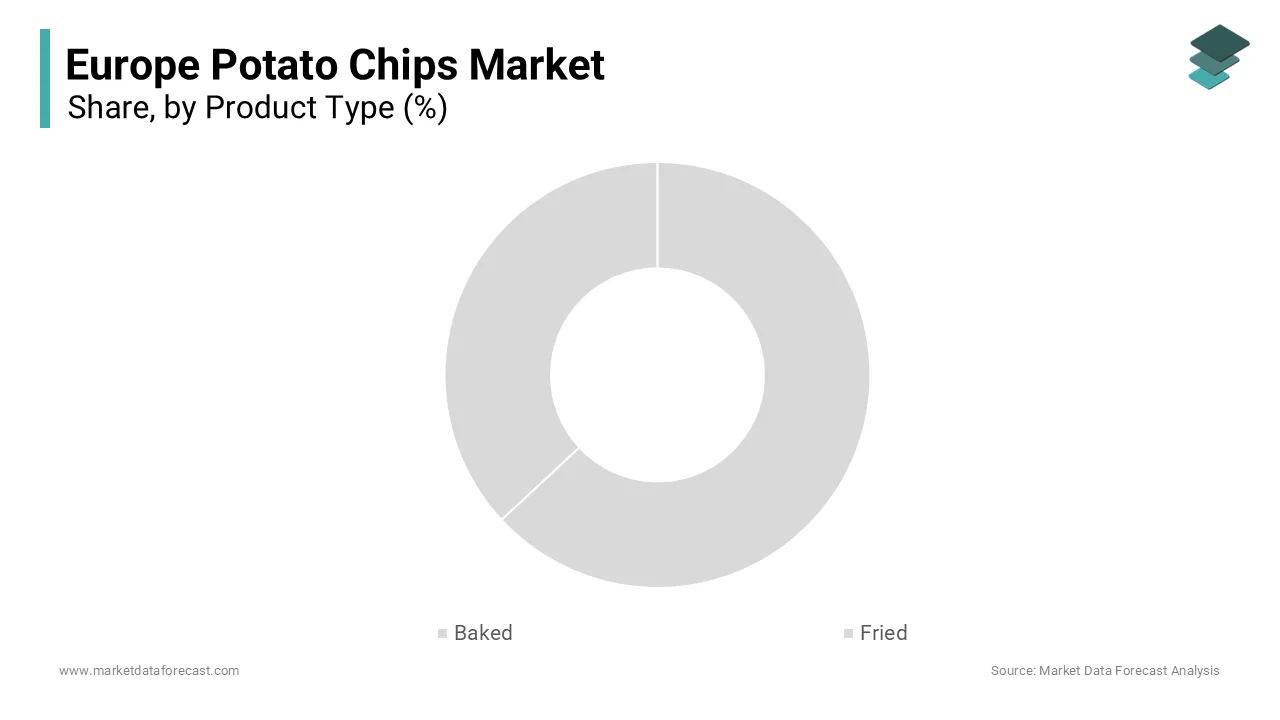
The baked potato chips segment is projected to expand at a CAGR of 6.4% from 2026 to 2034 owing to the surge in baked chips is the escalating public health awareness regarding obesity and cardiovascular diseases, prompting a significant shift toward low-calorie and low-fat snack options. Consumers are increasingly scrutinizing nutrition labels and actively avoiding products with high saturated fat content by making baked chips an attractive compromise between indulgence and wellness. Data from the European Food Information Council shows that European shoppers now prioritize "low fat" claims when purchasing savory snacks, directly benefiting the baked segment. Statistics from the National Health Surveys in Germany, and the UK, indicate that sales of reduced-fat snacks have grown by 18% annually, outpacing the overall snack category. Furthermore, the alignment of baked chips with clean label trends, often containing fewer additives and simpler ingredient lists, enhances their appeal. This structural shift in consumer behavior ensures that the baked segment will continue to capture market share from traditional fried options as health priorities become increasingly central to purchasing decisions.
By Packaging Type Insights
The family and bulk packs segment was the largest by capturing 55.4% of the Europe potato chips market share in 2025 owing to the compelling value proposition they offer to cost-conscious consumers facing inflationary pressures and rising living costs. In an economic environment, where every euro counts, households prefer purchasing larger quantities to reduce the cost per gram, making bulk packs the logical choice for regular snackers. This economic rationale is particularly strong in regions like Eastern and Southern Europe, where budget sensitivity is higher. Statistics from the Household Spending Survey reveal that average expenditure on snacks per trip has increased, but the frequency of trips has decreased, indicating a shift toward stockpiling larger packs. Furthermore, the rise of warehouse clubs and hypermarkets in Europe has facilitated the availability and visibility of bulk options, reinforcing this buying habit. The ability to serve multiple people or last throughout the week makes family packs the preferred format for household pantries, securing their leading market share.
The single serve packs segment is esteemed to grow at a fastest CAGR of 5.8% from 2-26 to 2034 owing to the shifting lifestyle patterns in European cities, where long commutes, busy work schedules, and limited break times demand portable and convenient food solutions. Consumers increasingly rely on snacks that can be easily carried in a bag or pocket and consumed without utensils or preparation by making small bags ideal for transit and office environments. The compact nature of these packs aligns perfectly with the needs of students, professionals, and travelers who require quick energy boosts. Statistics from the Workplace Wellness Survey indicate that some employees consume snacks during short breaks, preferring formats that minimize mess and cleanup. Furthermore, the proliferation of micro-retail outlets and vending machines in urban centers has increased the accessibility of single-serve options, placing them directly in the path of busy consumers.
By Distribution Channel Insights
The supermarkets and hypermarkets segment was accounted in holding a prominent share of the Europe potato chips market in 2025 due to their unparalleled capacity to display a vast array of potato chip products, ranging from economy private labels to premium artisanal brands, thereby catering to every consumer segment. These retailers leverage their massive floor space to create dedicated snack aisles and end-cap displays that maximize visibility and encourage impulse buying. The ability of supermarkets to run aggressive promotional campaigns, such as buy-one-get-one-free offers or multi-buy discounts, further stimulates demand and clears inventory efficiently. The trust consumers place in these established retail giants for food safety and quality assurance also reinforces their position as the primary destination for snack procurement by ensuring their continued market leadership.
The online sales channel segment is expected to witness a fastest CAGR of 8.2% from 2026 to 2034 with the widespread adoption of e-grocery platforms and subscription services that offer the convenience of home delivery for heavy and bulky items like family packs of chips. Consumers increasingly appreciate the ability to order large quantities of snacks without the physical burden of carrying them from stores, a feature particularly valued by elderly populations and busy families. Data from the Digital Commerce Association indicates that online grocery users subscribe to regular delivery slots, ensuring a steady flow of snack products into households. The algorithm-driven nature of online shopping also facilitates automated reordering, where consumers set up recurring deliveries for their favorite chip brands, locking in long-term loyalty. Furthermore, online platforms often offer exclusive bundle deals and larger pack sizes that are not available in physical stores, enhancing the value proposition. This shift toward digital procurement transforms the way Europeans buy snacks, driving rapid growth in the online channel.
REGIONAL ANALYSIS
United Kingdom Potato Chips Market Analysis
The United Kingdom was the top performer of the Europe potato chips market by holding 22.6% of the share in 2025 with the deeply ingrained cultural affinity for crisps (as they are locally known) and the highest per capita consumption rates on the continent. The growth of the market is driven by heavily influenced by the tradition of afternoon tea and pub culture, where chips are a ubiquitous accompaniment, creating a consistent and high-volume demand throughout the year. A primary driving factor is the sophisticated palate of British consumers who eagerly embrace novel and bold flavors, ranging from classic cheese and onion to exotic prawn cocktail and limited-edition collaborations. According to the British Snack Council, the average Briton consumes nearly 1.2 kilograms of chips annually, a figure that significantly exceeds the European average. The presence of iconic domestic brands like Walkers, which continuously innovates with regional flavors and sustainability initiatives, further boost the growth of market.
Germany Potato Chips Market Analysis
Germany potato chips market is expected to grow in coming years with the massive population, strong purchasing power, and the dominant role of discount supermarket chains in shaping consumption patterns. The efficiency of the discount retail model, led by giants like Aldi and Lidl, which have democratized access to potato chips, while pushing for higher quality standards at lower price points. As per the German Federal Office for Agriculture and Food, domestic potato production remains robust, supplying a steady stream of raw materials that support local manufacturing and reduce import dependency. The cultural habit of "Abendbrot" (evening bread) often includes savory snacks, integrating chips into daily routines.
France Potato Chips Market Analysis
France potato chips market is esteemed to grow at the concept of "terroir," where consumers strongly favor chips made from specific French potato varieties and produced using traditional methods, often viewing them as a extension of their gastronomic identity. The rising demand for "Made in France" products, with shoppers willing to pay a premium for chips that guarantee local sourcing and authentic recipes. Data from the National Institute of Statistics and Economic Studies shows that while overall volume growth is moderate, the value of the premium chip segment has surged in 2024. The French aversion to artificial additives and strong support for organic farming further shape the market, with organic chip sales outpacing conventional ones. This dedication to quality and authenticity allows France to maintain a high-value market position, where innovation focuses on refining flavors and enhancing the gourmet experience rather than competing solely on price.
Spain Potato Chips Market Analysis
Spain potato chips market growth is likely to grow with its vibrant social culture, late-night dining habits, and the integral role of tapas to drive frequent snack consumption. The modern lifestyles intersect with traditional social eating by making potato chips a popular choice for gatherings, festivals, and casual meals. The warm climate and outdoor lifestyle also contribute to higher snack consumption during summer months and holidays. Statistics from the Consumer Spending Report show that Spaniards allocate a larger portion of their food budget to snacking compared to Northern Europeans, driven by the social nature of eating. Furthermore, the growth of convenience stores in urban areas has increased accessibility, supporting impulse buys.
Italy Potato Chips Market Analysis
Italy potato chips market is propelled with its preference for high-quality ingredients, regional specialties, and the integration of chips into the broader context of Italian aperitivo culture. The "aperitivo" tradition, where light snacks accompany drinks before dinner by creating a specific occasion for chip consumption that emphasizes quality and presentation. A primary driving factor is the Italian consumer's skepticism toward industrial processed foods and their strong preference for products that highlight local agricultural excellence, such as chips made from indigenous potato varieties. Data from Coldiretti, the largest Italian agricultural organization, indicates that the "km zero" movement has influenced the snack sector, with many consumers seeking chips produced within their own region to support local farmers. The Italian palate's demand for authentic flavors, such as rosemary, sage, and cured meats, drives innovation in the flavored segment.
COMPETITIVE LANDSCAPE
The competition in the Europe potato chips market is fierce and characterized by a dynamic mix of global conglomerates and strong regional players who constantly vie for consumer attention through innovation and branding. Large multinational corporations leverage their vast resources and distribution networks to dominate shelf space while local champions compete by emphasizing regional flavors and artisanal quality that resonate deeply with domestic tastes. The market sees intense rivalry in the premium segment where brands strive to differentiate themselves through unique textures, exotic ingredients, and clean label credentials. Price wars are common in the mass-market sector, particularly driven by the aggressive expansion of private label offerings from major supermarket chains that challenge established brands on value. Regulatory pressures regarding health claims and sustainability further complicate the landscape, forcing all participants to invest in research and development to meet evolving standards. Consumers are becoming increasingly discerning, demanding transparency in sourcing and production methods which drives companies to adopt rigorous traceability systems.
KEY MARKET PLAYERS
Some of the notable key players in the Europe potato chips market are
- PepsiCo, Inc.
- Intersnack Group GmbH & Co. KG
- Calbee, Inc.
- Utz Brands, Inc.
- The Campbell Soup Company
- Mondelez International, Inc.
- Lorenz Snack World
- Herr Foods Inc.
- KP Snacks Limited
- Orkla ASA
Top Players in the Market
- PepsiCo stands as a dominant force in the Europe potato chips market through its iconic Lay's brand, which serves as a cornerstone of its global Frito-Lay division. The company leverages an extensive distribution network to ensure its products reach every corner of the continent, from hypermarkets to small kiosks. Recently PepsiCo has intensified its commitment to sustainability by launching initiatives to source 100% of its potatoes from regenerative agriculture practices across key European regions. They have also expanded their portfolio with premium kettle-cooked lines and limited edition flavors inspired by local cuisines to engage diverse consumer palates. Their investment in advanced manufacturing technologies aims to reduce water usage and carbon emissions during production.
- Intersnack Group operates as a leading European snack manufacturer with a robust portfolio that includes beloved brands like Chio, Pom-Bear, and Funny-Frisch, deeply embedded in local cultures across the continent. The company distinguishes itself by prioritizing regional tastes and maintaining strong relationships with local farmers to secure high-quality potato supplies. Recently Intersnack has strengthened its market position by acquiring niche artisanal producers to broaden its premium offerings and cater to the growing demand for gourmet snacks. They have implemented comprehensive sustainability programs focused on reducing plastic packaging and achieving carbon neutrality in their production facilities. Their strategy involves launching innovative flavor profiles that reflect specific national preferences, thereby fostering deep brand loyalty. Their dedication to quality and local relevance allows them to effectively challenge multinational giants while driving growth in the dynamic European potato chips sector.
- The Kettle Chip Company has carved out a significant niche in the Europe potato chips market by specializing in small-batch, kettle-cooked products that appeal to consumers seeking premium texture and authentic taste. As part of a larger global entity, the brand contributes to the international shift toward artisanal and handcrafted snack options. Recently the company has expanded its production capacity in the United Kingdom and France to meet rising demand for thick-cut and rugged-style chips. They have launched several organic and non-GMO verified lines to align with the clean label movement sweeping across Europe. Their marketing strategies emphasize natural ingredients and traditional cooking methods, resonating strongly with health-conscious and discerning shoppers. By partnering with local suppliers to source sustainable potatoes and adopting eco-friendly packaging solutions, The Kettle Chip Company reinforces its reputation for quality and responsibility. These actions enable the brand to maintain a strong presence in the premium segment and influence global trends toward more wholesome and transparent snacking choices.
Top Strategies Used by Key Market Participants
Key players in the Europe potato chips market primarily focus on product innovation and flavor diversification to capture consumer interest and drive sales growth. Companies frequently launch limited edition flavors inspired by regional cuisines or global food trends to create buzz and encourage trial among adventurous eaters. Another vital strategy involves expanding premium and artisanal product lines to cater to discerning customers who value quality and unique textures over mass-produced options. Major participants also invest heavily in sustainability initiatives such as sourcing potatoes from regenerative farms and transitioning to recyclable or compostable packaging to meet environmental goals. Furthermore, brands leverage digital marketing and social media campaigns to engage directly with younger demographics and build emotional connections through storytelling. Optimizing supply chains to reduce costs and ensure consistent availability while adhering to strict food safety standards remains a critical operational focus. These combined efforts allow market leaders to differentiate themselves and maintain competitiveness in a saturated and evolving industry.
MARKET SEGMENTATION
This research report on the European potato chips market has been segmented and sub-segmented based on categories.
By Product Type
- Baked
- Fried
By Flavor
- Plain or Salted
- Flavored
By Packaging Type
- Single Serve
- Family or Bulk Packs
By Distribution Channel
- Supermarkets or Hypermarkets
- Convenience Stores
- Online Retail Stores
- Other Distribution Channels
By Country
- UK
- France
- Spain
- Germany
- Italy
- Russia
- Sweden
- Denmark
- Switzerland
- Netherlands
- Turkey
- Czech Republic
- Rest of Europe
Frequently Asked Questions
1.What is the Europe potato chips market?
The Europe potato chips market refers to the production, distribution, and consumption of potato based snack chips across European countries.
2.What is driving the growth of the Europe potato chips market?
Rising demand for convenient snack foods, increasing urbanization, and growing preference for flavored snacks are key growth drivers.
3.What are potato chips?
Potato chips are thin slices of potatoes that are fried or baked until crispy and typically seasoned with salt or flavors.
4.Which countries are major consumers in the Europe potato chips market?
Countries such as the United Kingdom, Germany, France, Italy, and Spain are major consumers due to high snack consumption.
5.What are the key product types in the Europe potato chips market?
Key product types include plain chips, flavored chips, kettle cooked chips, and baked chips.
6.Which segment dominates the Europe potato chips market?
Flavored potato chips dominate due to increasing consumer preference for diverse taste options.
7.What are the main distribution channels in this market?
Major distribution channels include supermarkets, hypermarkets, convenience stores, and online retail platforms.
8.What challenges are faced by the Europe potato chips market?
Health concerns related to high fat and salt content, along with increasing competition from healthier snack alternatives, are major challenges.
9.What trends are shaping the Europe potato chips market?
Growing demand for healthier options such as baked chips, organic ingredients, and low fat variants are key trends.
10.Who are the key players in the Europe potato chips market?
Key players include PepsiCo, Kellogg Company, Intersnack Group, Lorenz Snack World, and Calbee Inc.
Related Reports
Access the study in MULTIPLE FORMATS
Purchase options starting from
$ 2000
Didn’t find what you’re looking for?
TALK TO OUR ANALYST TEAM
Need something within your budget?
NO WORRIES! WE GOT YOU COVERED!
Call us on: +1 888 702 9696 (U.S Toll Free)
Write to us: sales@marketdataforecast.com