- Product Description Description
- Table of Contents TOC
- List of Table & Figure LOT
- Get Free Sample PDF Sample PDF
Market Size, 2025
$57.94 BnMarket Estimate, 2026
$61.94 BnMarket Forecast, 2034
$105.63 BnCAGR, 2026–2034
6.9%Europe Precious Metals Market Size
The Europe precious metals market was valued at USD 57.94 billion in 2025, is estimated to reach USD 61.94 billion in 2026, and is projected to reach USD 105.63 billion by 2034, growing at a CAGR of 6.9% from 2026 to 2034.
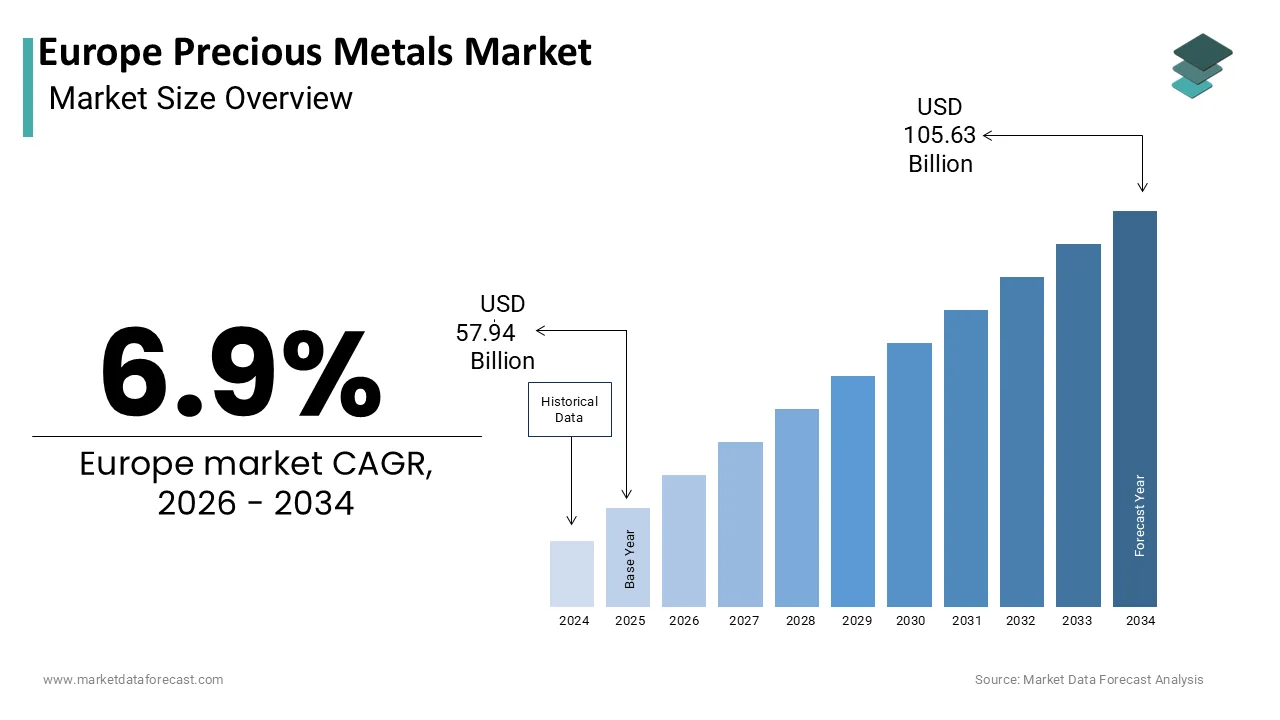
The Europe precious metals market encompasses the trade, refining, and industrial application of gold, silver, platinum, and palladium within the European economic zone. These metals serve dual roles as critical industrial inputs for automotive, electronics, and renewable energy technologies and as traditional stores of value against economic volatility. The region functions as a global hub for precious metal trading, with London serving as the primary center for gold and silver liquidity. As per the World Gold Council, European central banks collectively hold approximately 10,790 tons of gold reserves, representing a significant portion of global official sector holdings. This substantial reserve base underscores the strategic importance of these assets in maintaining financial stability. The industrial demand is heavily influenced by the European Union’s stringent environmental regulations, which drive the adoption of catalytic converters in internal combustion engines and fuel cells in hydrogen technologies. According to the European Automobile Manufacturers Association, the automotive sector remains a dominant consumer of platinum group metals, as hybrid-electric vehicles, which require higher PGM loadings than traditional internal combustion engines, captured a 38.7% share of the EU market in early 2026. The market is characterized by a complex supply chain that relies heavily on imports from South Africa, Russia, and North America due to limited domestic mining activities. Recent geopolitical tensions have prompted a reevaluation of supply chain security, leading to increased stockpiling and diversification efforts. The integration of precious metals into green technology applications, such as hydrogen electrolyzers, further expands their strategic relevance. Understanding this market requires analyzing the interplay between monetary policy, industrial innovation, and regulatory frameworks that shape consumption patterns across the continent.
MARKET DRIVERS
Expansion of Hydrogen Economy and Fuel Cell Technologies
The expansion of the hydrogen economy and fuel cell technologies is primarily driving the growth o,f the Europe precious metals market, particularly for platinum and iridium. These metals are essential components in proton exchange membranes, membrane fuel cells, and electrolyzers,s which are critical for producing and utilizing green hydrogen. As per the European Commission, the REPowerEU plan aims to produce and import renewable hydrogen in the EU by 2030. This scale-up necessitates a massive scale-up in electrolyzer manufacturing, ng which directly increases demand for iridium and platinum. Iridium is used in the anodes of proton exchange membrane electrolyzers due to its stability in acidic environments. According to the International Energy Agency, the current global demand for iridium in electrolyzers is expected to grow as deployment accelerates. Platinum is equally vital for the heavy-duty side of fuel cells used in heavy-duty transport and stationary power generation. The European Union’s commitment to decarbonizing hard-to-abate sectors such as steel and chemical production further boosts this demand. Government subsidies and investment in hydrogen valleys across member states create a favorable environment for hard-to-abate technologies. The scarcity of iridium compared to platinum adds a layer of strategic urgency to secure supplies. This technological shift transforms precious metals from mere commodities into enabling the long-term energy transition. The long-term viability of the hydrogen economy ensures sustained and growing demand for these critical materials.
Persistent Demand from Automotive Catalytic Converters
Despite the rise of electric vehicles, persistent demand from automotive catalytic converters continues to drive the Europe precious metals market, especially for platinum and palladium. Internal combustion engines remain prevalent in the European vehicle fleet, and hybrid vehicles, which also require emission control systems, are gaining popularity. As per the European Automobile Manufacturers Association, many new cars sold in Europe still utilize some form of internal combustion engine, either exclusively or in hybrid configurations. Regulatory standards such as Euro 7 impose stricter limits on nitrogen oxide and particulate emissions,s requiring more efficient and higher-loaded catalytic converters. According to industry data, vehicles require platinum group metals to meet these stringent standards. Palladium has traditionally been the preferred metal for gasoline; higher-loaded platinum is used in diesel applications. The recent substitution of palladium with platinum in gasoline engines due to cost considerations has reshaped cost-effectiveness. Platinum offers a cost-effective alternative with comparable performance when engineered correctly. The longevity of the existing vehicle parc in Europe ensures a steady aftermarket demand for replacement catalytic converters. Furthermore, the production of hybrid electric vehicles, which combine battery power with internal combustion engines, supports continued consumption. This transitional phase in automotive technology extends the relevance of precious metals in the sector. The regulatory push for cleaner air quality maintains the necessity of emission control technologies.
MARKET RESTRAINTS
Accelerated Transition to Battery Electric Vehicles
The accelerated transition to battery electric vehicles is a major restraint on the Europe precious metals market by reducing the need for platinum and palladium in exhaust systems. Battery electric vehicles do not have internal combustion engines and therefore do not require catalytic converters,s which are the primary industrial application for these metals. As per the International Energy Agency, sales of electric cars in Europe have reached a significant level, ls representing a large share of the total market. This rapid adoption rate threatens to erode the traditional demand base for platinum group metals in the automotive sector. According to the European Automobile Manufacturers Association, many major automakers have announced plans to cease production of internal combustion engine vehicles by 2035. This timeline aligns with the European Union Fit for 55 package, which aims to reduce carbon emissions by 2030. The decline in new internal combustion engine vehicle sales will inevitably lead to a decrease in original equipment manufacturer demand for precious metals. While hybrid vehicles provide a temporary buffer, their market share is expected to diminish as battery technology improves and charging infrastructure expands. The long-term structural shift away from fossil fuel-powered transport creates uncertainty for investors and producers. This trend forces the industry to seek new applications to offset the loss of the automotive long-term. The speed of this transition outpaces the fuel-powered development of alternative industrial uses.
High Volatility and Price Fluctuations
High volatility and price fluctuations are another significant restraint on the Europe precious metals market,t creating uncertainty for industrial consumers and investors. Precious metal prices are influenced by a myriad of factors, including geopolitical tensions, currency exchange rates, and speculative trading activities. As per the London Bullion Market Association, gold and silver prices can experience daily fluctuations driven by macroeconomic data releases and central bank policies. This unpredictability makes it difficult for manufacturers to forecast production costs and manage inventory levels effectively. According to the World Platinum Investment Council, platinum prices have historically exhibited volatility compared to gold due to its smaller market size and concentrated supply sources. Industrial users such as automotive manufacturers often hesitate to enter long-term supply contracts when prices are unstable. This hesitation can lead to supply chain disruptions and production delays. The reliance on imports from politically unstable regions exacerbates price risks. Currency fluctuations between the euro and the US dollar further complicate pricing dynamics since precious metals are predominantly traded in dollars. Hedging strategies can mitigate some risks but involve additional costs and complexity. The lack of price stability discourages small and medium-sized enterprises from entering the market. This financial uncertainty constrains market growth and investment in new applications.
MARKET OPPORTUNITIES
Growth in Medical and Healthcare Applications
The growth in medical and healthcare applications provides a significant opportunity for the Europe precious metals market, particularly for silver and gold. Silver possesses potent antimicrobial properties,s making it valuable in wound dressings, catheters, and medical devices. As per the European Centre for Disease Prevention and Control, healthcare-associated infections affect patients annually, driving demand for antimicrobial solutions. Silver-coated devices reduce the risk of infection and improve patient outcomes. According to industry data, the market for silver-based medical products in Europe is expanding due to an aging population and increased healthcare spending. Gold is used in diagnostic tests such as lateral flow assays for the rapid detection of diseases, including respiratory infections. The COVID-19 pandemic highlighted the importance of rapid diagnostics, boosting demand for gold nanoparticles. Additionally,y gold is used in dental restorations and implants due to its biocompatibility and durability. The European medical device industry is a global leader in innovation, creating opportunities for specialized precious metal applications. Research into new therapeutic uses of gold nanoparticles for cancer treatment is advancing. The regulatory framework in Europe supports the approval of safe and effective medical technologies. This sector offers high-value-added opportunities with less price sensitivity than industrial applications. The convergence of technology and healthcare drives continuous innovation.
Expansion of Electronics and Semiconductor Industry
The expansion of electronics and the semiconductor industry offers a lucrative opportunity for the Europe precious metals market,t driven by the increasing complexity of electronic devices. Gold and silver are essential for ensuring reliable electrical connectivity in printed circuit boards, connectors, and semiconductors. As per the European Semiconductor Industry Association, the demand for chips in automotive, industrial, and consumer applications is growing steadily. Gold is preferred for high-reliability connections due to its resistance to corrosion and excellent conductivity. According to industry reports, the miniaturization of electronic components requires precise deposition of precious metals to maintain performance. The rollout of fifth-generation telecommunications networks and the Internet of Things increases the number of connected devices, each requiring precious metal components. The European Chips Act aims to double the EU’s global market share in semiconductors by 2030, which will boost local demand. This initiative encourages the establishment of new fabrication facilities in Europe. The aerospace and defense sectors also rely on precious metals for high-performance electronics. The trend towards autonomous vehicles increases the content of precious metals per vehicle due to advanced sensor and computing systems. This technological evolution creates sustained demand for high-purity precious metals. The focus on quality and reliability ensures long-term consumption.
MARKET CHALLENGES
Supply Chain Concentration and Geopolitical Risks
Supply chain concentration and geopolitical risks pose a critical challenge to the Europe precious metals market due to heavy reliance on a few producing nations. The majority of the world’s platinum and palladium supplies originate from South Africa and Russia, respectively. As per the United States Geological Survey, South Africa accounts for over 70% of global platinum production,n while Russia produces approximately 40% of palladium. This concentration creates vulnerability to supply disruptions caused by political instability, labor strikes, or trade sanctions. According to the European Commission, the EU has identified platinum group metals as critical raw materials due to their supply risk and economic importance. Recent geopolitical tensions have led to restrictions on trade with Russia, forcing European buyers to seek alternative sources. However, finding substitute suppliers is difficult due to the limited number of viable mining projects globally. Logistics challenges and transportation bottlenecks further exacerbate supply risks. The lack of domestic production in Europe means that the region has little leverage in negotiating prices or terms. This dependency undermines supply security and increases costs for downstream industries. Companies must invest in diverse sourcing strategies and stockpiling to mitigate risks. The geopolitical landscape remains unpredictable, requiring constant monitoring and adaptation. This structural weakness limits the resilience of the European market.
Environmental and Regulatory Compliance Costs
Environmental and regulatory compliance costs present a significant challenge to the Europe precious metals market,t particularly for refiners and recyclers. The extraction and processing of precious metals involve hazardous chemicals and generate substantial waste, requiring strict environmental management. As per the European Environment Agency, industrial facilities must adhere to rigorous standards under the Industrial Emissions Directive to minimize pollution. Compliance with these regulations requires significant investment in advanced filtration and waste treatment technologies. According to industry data, the cost of environmental compliance can account for a substantial portion of operational expenses for refineries. The European Union’s circular economy action plan mandates higher recycling rates and responsible sourcing practices. Implementing traceability systems to ensure ethical sourcing adds administrative burdens and costs. The REACH regulation restricts the use of certain substances in industrial processes, requiring companies to find safer alternatives. These regulatory pressures increase the barrier to entry for new players and raise operational costs for existing ones. Small and medium-sized enterprises may struggle to meet these requirements, leading to market consolidation. The push for sustainability, while beneficial, creates short-term financial strain. Companies must balance compliance with profitability to remain competitive. This challenge requires continuous innovation in clean technologies.
REPORT COVERAGE
| REPORT METRIC | DETAILS |
| Market Size Available | 2025 to 2034 |
| Base Year | 2025 |
| Forecast Period | 2026 to 2034 |
| Segments Covered | By Metal Type, Application, and Region. |
| Various Analyses Covered | Global, Regional and Country-Level Analysis, Segment-Level Analysis, Drivers, Restraints, Opportunities, Challenges; PESTLE Analysis; Porter’s Five Forces Analysis, Competitive Landscape, Analyst Overview of Investment Opportunities |
| Countries Covered | UK, France, Spain, Germany, Italy, Russia, Sweden, Denmark, Switzerland, Netherlands, Turkey, Czech Republic, Rest of Europe |
| Market Leaders Profiled | Anglo American plc, Barrick Gold Corporation, Newmont Corporation, Sibanye Stillwater Limited, Norilsk Nickel, Polymetal International plc, Fresnillo plc, Agnico Eagle Mines Limited, Kinross Gold Corporation, Johnson Matthey plc, Umicore N.V., Heraeus Holding GmbH |
SEGMENTAL ANALYSIS
By Metal Type Insights
The gold segment held the leading position in the Europe precious metals market by holding 41.4% of the European market share in 2025. The dominance of the old segment in the European market can be credited to its dual role as a critical financial asset for central banks and institutional investors and a key component in high-value jewelry and electronics. European central banks have consistently increased their gold reserves to diversify away from fiat currencies and hedge against inflationary pressures. As per the World Gold Council, European central banks hold substantial gold reserves, which represent a significant portion of global official sector holdings. This sustained accumulation supports price stability and demand. Additionally, the investment demand from retail and institutional investors remains robust due to geopolitical uncertainties and economic volatility. According to the London Bullion Market Association, London serves as the global hub for gold trading, facilitating substantial liquidity and price discovery. The metal’s inherent store of value attributes make it indispensable during periods of market stress. Furthermore, the industrial application of gold in electronics, particularly in connectors and semiconductors, ensures a baseline demand that is less sensitive to price fluctuations. The cultural significance of gold in jewelry, especially in Southern and Eastern Europe, further cements its market leadership. The combination of monetary, industrial, and ornamental demand creates a multifaceted support structure for the gold segment. This diverse demand base ensures that gold remains the most traded and valued precious metal in the region.
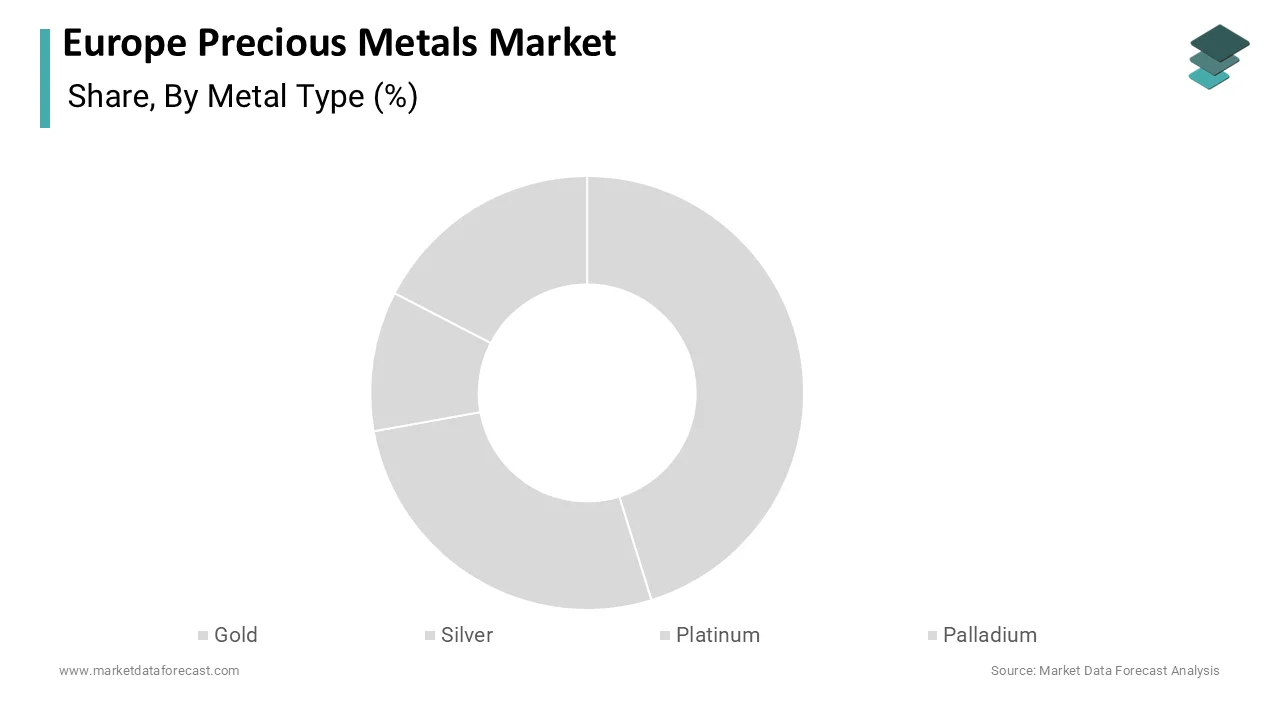
However, the platinum segment is anticipated to record a CAGR of 7.1% over the forecast period in the European market,t owing to the expanding hydrogen economy and the increasing adoption of fuel cell technologies across Europe. Platinum is the primary catalyst used in proton exchange membrane fuel cells,s which are essential for hydrogen-powered vehicles and stationary power generation. As per the European Commission, the REPowerEU plan aims to produce renewable hydrogen in the EU by 2030, creating a massive demand for electrolyzers and fuel cells. Each fuel cell vehicle requires significantly more platinum than a conventional catalytic converter, driving up industrial consumption. According to the International Energy Agency, the deployment of hydrogen infrastructure is accelerating with major investments in Germany, France, and the Netherlands. The substitution of palladium with platinum in gasoline catalytic converters also contributes to this growth as automakers seek cost-effective alternatives. Platinum offers better long-term stability and performance in certain applications. The limited supply of platinum compared to gold enhances its investment appeal among institutional buyers. The strategic importance of platinum in green energy technologies aligns with European sustainability goals. Government incentives for clean transport and energy storage further boost demand. This segment represents the future of industrial precious metal applications in a decarbonizing economy. The convergence of the automotive and energy sectors ensures sustained growth momentum.
By Application Insights
The investment segment led the market by occupying 37.9% of the European market share in 2025. The dominance of the investment segment in the European market is attributed to the strong culture of wealth preservation and portfolio diversification among European investors. Gold and silver are widely recognized as haven assets that protect against currency devaluation and inflation. As per the World Gold Council, retail investment in gold bars and coins in Europe has remained resilient despite economic fluctuations. The availability of sophisticated financial instruments, such as exchange-traded funds and digital gold platforms, has made precious metal investing more accessible to a broader audience. According to the London Bullion Market Association, the volume of transactions for investment-grade bullion in London is among the highest globally. The low-interest-rate environment in recent years reduced the opportunity cost of holding non-yielding assets like gold. Geopolitical tensions and banking sector instability have further boosted demand for tangible assets. Institutional investors are increasingly allocating portions of their portfolios to precious metals to mitigate risk. The regulatory framework in Europe supports transparent and secure trading practices. The ease of access and liquidity enhance the appeal of investment products. Silver investment is also growing due to its affordability and industrial potential. This segment’s dominance reflects the broader macroeconomic trends and investor sentiment towards security and stability. The established infrastructure for storage and trading reinforces this position.
However, the automotive segment is anticipated to register a CAGR of 6.4% over the forecast period owing to the stringent emission regulations and the increasing complexity of vehicle electronics. Although the transition to electric vehicles is underway, the majority of vehicles on European roads still utilize internal combustion engines or hybrid systems that require catalytic converters. As per the European Automobile Manufacturers Association, many new cars sold in Europe still contain some form of internal combustion engine. These vehicles require platinum, palladium, and rhodium for emission control systems to meet Euro 7 standards. According to industry data, the amount of precious metals per vehicle is increasing as regulators tighten limits on nitrogen oxide and particulate emissions. Additionally, the rise of hybrid vehicles, which combine battery power with internal combustion engines, supports continued consumption of these metals. The automotive electronics sector also contributes to growth through the use of gold and silver in connectors and sensors. Autonomous driving technologies require advanced computing systems that rely on precious metals for reliable connectivity. The aftermarket for replacement catalytic converters provides a steady demand base. The strategic shift towards cleaner air quality maintains the necessity of emission control technologies. This segment’s growth is supported by both regulatory mandates and technological advancements in vehicle design.
COUNTRY LEVEL ANALYSIS
Germany Precious Metals Market Analysis
Germany captured the leading position in the Europe precious metals market in 2025 with 23.2% of the European market share. Germany's leading position in the European market is attributed to the country’s robust automotive industry and strong investment culture. Germany is home to major automobile manufacturers that are significant consumers of platinum and palladium for catalytic converters in both domestic and export vehicles. As per the German Federal Ministry for Economic Affairs and Climate Action, the country i,s investing in hydrogen technologies which require platinum for fuel cells and electrolyzers. The strong industrial base ensures steady demand for precious metals in various applications, including electronics and chemical processing. According to the German Precious Metals Association, the trading and refining sector in Germany is well developed, supporting both industrial and investment needs. The country’s central location in Europe facilitates logistics and distribution. Germany’s commitment to environmental sustainability drives the adoption of clean technologies that utilize precious metals. The presence of research institutions fosters innovation in material science. The investment culture in Germany includes a strong preference for physical gold and silver as a hedge against economic uncertainty. This combination of industrial demand and investment interest sustains market growth. The regulatory framework supports responsible sourcing and recycling. Germany’s economic stability attracts international traders and investors.
United Kingdom Precious Metals Market Analysis
The United Kingdom held a promising share of the Europe precious metals market in 2025. The UK market is driven primarily by its role as a global financial hub for precious metal trading. London is the center of the global over-the-counter market for gold and silver, facilitating transactions daily. As per the London Bullion Market Association, the city hosts large vaults of gold and silver, ensuring deep liquidity and efficient price discovery. The financial services sector drives significant investment demand for precious metals as hedging instruments against inflation and currency risks. According to the Bank of England, the UK holds gold reserves that contribute to market stability and confidence. The jewelry sector in the UK also contributes to demand, although it is smaller than in other regions. The regulatory environment in the UK is conducive to financial innovation, including the development of digital precious metal products. The country’s historical ties to global mining regions influence trade flows and supply chains. The investment culture in the UK is sophisticated, with participation in exchange-traded funds and bullion accounts. The Brexit impact on trade has been managed through established financial protocols. The UK’s position as a trading hub ensures its continued significance in the global market. The depth of the large-scale infrastructure supports large-scale operations.
Switzerland Precious Metals Market Analysis
Switzerland is estimated to showcase a prominent CAGR in the Europe precious metals market during the forecast period due to a focus on refining and private banking. The country is home to some of the world’s largest precious metal refineries, which process significant volumes of gold and silver from global sources. As per the Swiss Customs Administration, Switzerland imports and exports precious metals for refining and re-export, which is making it a critical node in the global supply chain. The private banking sector in Switzerland offers sophisticated wealth management services, including secure storage and trading of precious metals. According to the Swiss National Bank, the country holds gold reserves that back its financial stability. The neutrality and political stability of Switzerland attract international investors seeking secure storage solutions for their assets. The high standards of quality and integrity in Swiss refineries enhance their global reputation and trust. The regulatory environment is strict, ensuring compliance with anti-money laundering laws and ethical sourcing. The high-net-worth investment demand from high-net-worth individuals is significant due to the confidentiality and security offered. The country’s infrastructure for logistics and security is world-class. Switzerland plays a critical role in the global supply chain as a processing and distribution hub. The focus on discretion and service excellence differentiates the market. The integration with global financial markets ensures liquidity.
France Precious Metals Market Analysis
France is expected to account for a notable share of the Europe precious metals market over the forecast period due to the strong investment demand and a growing industrial sector. French investors have a cultural affinity for physical gold and silver as stores of value and heritage assets. As per the French Ministry of Economy and Finance, the purchase of gold coins and bars remains popular among households seeking to preserve wealth. The industrial sector in France, including aerospace and automotive, also consumes precious metals for specialized applications. According to the French Customs data, imports of precious metals for industrial use have remained stable, reflecting consistent manufacturing activity. The luxury goods sector in high-end tilizes gold and silver in high-end jewelry and accessories, adding value through design and craftsmanship. This segment is a significant contributor to the economy and brand prestige. The government’s policies on wealth management and taxation influence investment patterns. The presence of major refineries in France supports the local supply chain and adds value to imported raw materials. The regulatory framework ensures transparency and security in transactions. The focus on sustainability is driving interest in recycled precious metals and ethical sourcing. France’s strategic location in Western Europe facilitates trade with neighboring countries. The combination of cultural and industrial factors creates a balanced and resilient market.
Italy Precious Metals Market Analysis
Italy is estimated to witness a healthy CAGR in the Europe precious metals market over the forecast period due to its renowned jewelry industry and strong investment culture. The country is a global leader in gold jewelry manufacturing with a long tradition of craftsmanship and design excellence. As per the Italian Confederation of Goldsmiths, the sector generates revenue and employment, contributing to the national economy. The demand for gold in jewelry production is high-quality and focuses on high quality and intricate designs. According to the Bank of Italy, household holdings of gold are substantial, reflecting a cultural preference for tangible assets and financial security. The investment demand for gold coins and bars is also robust, particularly during times of economic uncertainty. The industrial sector in Italy uses precious metals in electronics and automotive components, although to a lesser extent than Germany. The regulatory framework supports the jewelry industry through certification and labeling standards that protect consumers. The tourism sector boosts sales of luxury jewelry items to international visitors. Italy’s strategic location in the Mediterranean facilitates trade with North Africa and the Middle East. The focus on design and innovation keeps the industry competitive in global markets. The combination of manufacturing and investment creates a dynamic and diverse market. The heritage of goldsmithing adds significant value to the products.
KEY MARKET PLAYERS
Some of the companies that are playing a dominating role in the global europe precious metals market include
- Anglo American plc
- Barrick Gold Corporation
- Newmont Corporation
- Sibanye Stillwater Limited
- Norilsk Nickel
- Polymetal International plc
- Fresnillo plc
- Agnico Eagle Mines Limited
- Kinross Gold Corporation
- Johnson Matthey plc
- Umicore N.V.
- Heraeus Holding GmbH
TOP LEADING PLAYERS IN THE MARKET
- Umicore SA is a global materials technology and recycling group headquartered in Belgium with a dominant presence in the European precious metals sector. The company specializes in refining and recycling platinum group metals, gold, nd silver for industrial applications including automotive catalysts and electronics. Umicore contributes to the closed-loop market by providing closed-loop solutions for valuable metals from end-of-life products. Recently, the company has expanded its recycling capacity in Hoboken, Belgium, to handle increasing volumes of battery and catalyst waste. It invests heavily in research to improve recovery rates and reduce environmental impact. Umicore strengthens its position through strategic partnerships with automakers and electronics manufacturers to secure feedstock supplies. Its focus on circular economy principles aligns with European sustainability regulations. The company continues to innovate in hydrometallurgical processes to enhance efficiency. These actions reinforce its leadership in sustainable precious metals management and supply chain security.
- Heraeus Precious Metals is a leading German technology group specializing in the processing and trading of precious metals. The company serves diverse industries, including healthcare, high-purity chemical sectors with high-purity gold, silver,ilver platinum, and palladium products. Heraeus contributes to the global market by setting standards for quality and reliability in precious metal manufacturing. Recently,y the company has invested in expanding its production facilities in Hana,u Germany, to meet growing demand for hydrogen technologies. It develops advanced catalysts for fuel cells and electrolyzers, supporting the energy transition. Heraeus strengthens its market position by offering comprehensive services, including toll refining and material analysis. The company focuses on digitalizing its supply chain to enhance transparency and customer service. Its commitment to innovation and sustainability drives continuous improvement in product performance. These initiatives ensure Heraeus remains a trusted partner for industrial clients seeking reliable precious metal solutions.
- Metalor Technologies is a Swiss refiner and manufacturer of precious metal products with a strong reputation for quality and integration. The company produces gold bars,s silver coins, and industrial precious metal components for global markets. Metalor contributes to the international trade of precious metals by providing secure storage and logistics services. Recently, the company has enhanced its compliance to meet stricter anti-money laundering regulations in Europe. It invests in modernizing its refining operations in Switzerland to improve efficiency and reduce carbon emissions. Metalor strengthens its position by expanding its distribution network for investment products such as bullion and coins. The company collaborates with financial institutions to offer secure asset management solutions. Its focus on ethical sourcing and transparency builds trust among investors and industrial clients. These strategic moves support Metalor’s growth in both the investment and industrial segments of the precious metals market.
TOP STRATEGIES USED BY THE KEY MARKET PARTICIPANTS
Key players in the Europe precious metals market primarily employ strategies focused on circular economy integration and supply chain diversification. Companies are investing heavily in advanced recycling technologies to recover precious metals from industrial waste and end-of-life products. This approach reduces dependency on primary mining and aligns with strict European environmental regulations. Participants are also diversifying their supply sources to mitigate geopolitical risks associated with concentrated production regions. Strategic partnerships with automotive and electronics manufacturers ensure stable feedstock flows and long-term off-take agreements. Digitalization of trading platforms enhances transparency and efficiency in transactions. Companies are developing specialized products for emerging applications such as long-term off-take to capture new growth opportunities. Compliance with ethical sourcing standards is prioritized to maintain brand reputation and meet regulatory requirements. These combined strategies enable firms to navigate market volatility, sustain operational resilience, and capitalize on the transition towards a greener landscape effectively.
COMPETITIVE LANDSCAPE
The competition in the Europe precious metals market is characterized by a mix of established refiners, traders, and specialized technology providers competing on quality, reliability, and sustainability. Major players differentiate themselves through advanced recycling capabilities and integrated s supply chains and services rather than price alone due to the standardized nature of materials. The market is influenced by global pricing mechanisms centred in London and Zurich, which dictate that baseline value-added services compete by offering value-added services such as toll refining,g material analysis, and secure logistics. Regulatory compliance with environmental and anti-money laundering laws serves as a critical barrier to entry, favoring large incumbent firms. Innovation application-specific alloys and catalysts provide niche competitive advantages. The shift towards sustainable sourcing creates opportunities for companies with transparent and ethical supply chains. Geoapplication-specific driven demand for se, cur,e and diversified supply options benefiting local processors. Collaboration with long-term industrial customers fosters long-term relationships and stability. The focus on circular economy practices enhances competitiveness by reducing raw material costs. Adaptability to regulatory changes and technological advancements is essential for maintaining market position in this mature yet evolving sector.
MARKET SEGMENTATION
This research report on the europe precious metals market is segmented and sub-segmented into the following categories.
By Metal Type
- Gold
- Silver
- Platinum
- Palladium
- Other Precious Metals
By Application
- Investment
- Jewelry
- Automotive
- Electronics
- Industrial Applications
By Country
- Germany
- United Kingdom
- Switzerland
- France
- Italy
- Rest of Europe