- Product Description Description
- Table of Contents TOC
- List of Table & Figure LOT
- Get Free Sample PDF Sample PDF
Market Size, 2025
$2.45 BnMarket Estimate, 2026
$2.61 BnMarket Forecast, 2034
$4.31 BnCAGR, 2026–2034
6.47%Europe Processed Meat Market Size, Growth, Trends & Forecast (2026–2034)
The Europe processed meat market size was calculated to be USD 2.45 billion in 2025, is anticipated to be worth USD 2.61 billion in 2026, and is projected to scale up to USD 4.31 billion by 2034, registering a compound annual growth rate (CAGR) of 6.47% during the forecast period from 2026 to 2034. Driven by the deep-rooted cultural heritage of charcuterie, rising demand for ready-to-eat convenience foods, and expanding product innovations like premium artisanal lines, the market continues to evolve amidst health and regulatory considerations across Europe.
Key Executive Metrics (At-a-Glance)
- 2025 Base Valuation: USD 2.45 Billion
- 2026 Current Valuation: USD 2.61 Billion
- 2034 Forecast Valuation: USD 4.31 Billion
- Compound Annual Growth Rate (CAGR): 6.47% (2026–2034)
- Dominant Processing Type: Chilled Processed Meat (commanding a major share due to consumer preference for freshness, taste, and advanced cold chain logistics)
- Dominant Product Type: Pork (leading market share backed by strong culinary traditions, geographical indication labels, and high production volumes)
- Dominant Distribution Channel: Supermarkets and Hypermarkets (holding the leading share driven by private labels, extensive product variety, and one-stop shopping convenience)
- Dominant Region / Country: Germany (market leader backed by a powerful heritage of sausage production and strong consumption traditions)
Core Market Drivers
- Demand for Convenience & Ready-to-Eat Foods: Accelerated urban lifestyles, dual-income households, and busy schedules driving reliance on quick, pre-cooked protein options.
- Cultural Heritage & Traditions: Deeply embedded consumption patterns of cured meats, charcuterie, and protected regional delicacies across countries like Germany, Spain, Italy, and France.
Primary Market Restraints & Challenges
- Regulatory Frameworks & Health Warnings: WHO classifications, strict EFSA limits on nitrites/nitrates, and Nutri-Score labeling creating negative health perceptions and compliance costs.
- Plant-Based Alternatives: Growing flexitarian, vegetarian, and vegan dietary shifts—particularly among younger consumers—intensifying market competition.
Europe Processed Meat Market Segmentation Breakdown
| Segment Category | Largest (Dominant) Sub-Segment | Fastest-Growing Sub-Segment |
|---|---|---|
| By Processing Type | Chilled Processed Meat (Dominant share supported by fresh taste, premium quality perception, and robust cold chains) | Frozen Processed Meat (Expanding at a 4.2% CAGR driven by extended shelf life, quick food service solutions, and convenience) |
| By Product Type | Pork (Commanding share fueled by deep culinary traditions, high EU production, and regional specialties) | Poultry (Fastest-growing at a 5.1% CAGR propelled by health perceptions, leanness, and clean-label trends) |
| By Distribution Channel | Supermarkets and Hypermarkets (Leading share owing to wide product assortments and private-label strength) | Online Channels (Fastest-growing at an 8.5% CAGR powered by e-commerce adoption and quick commerce delivery) |
| By Region / Country | Germany (Top performer driven by iconic sausage processing heritage and high volume consumption) | Southern Europe / Spain & Italy (Lucrative markets expanding via gourmet charcuterie and tourism demand) |
Major Industry Players Profiled
Key enterprises shaping the competitive European processed meat market include Cherkizovo Group, Cargill Inc., Hormel Foods, Foster Farms, National Beef, Marfrig Group, Perdue Farms, Nippon Meat Packers Inc., Smithfield Foods Inc., Sadia SA, Pilgrim's Pride, Shuanghui International, Sanderson Farms Inc., and Tyson Foods Inc.
Europe Processed Meat Market Size
The processed meat market size in Europe was calculated to be USD 2.45 billion in 2025 and is anticipated to be worth USD 4.31 billion by 2034, from USD 2.61 billion in 2026, growing at a CAGR of 6.47% during the forecast period.

Processed meat is any meat that has been preserved, flavored, or altered from its natural, fresh state using methods like smoking, curing, salting, fermenting, or adding chemical preservatives. This sector is deeply embedded in the culinary traditions of many European nations, yet it faces evolving consumer dynamics and regulatory scrutiny. The market is characterized by a tension between traditional consumption habits and modern health consciousness. According to market consumption data from Eurostat, livestock production and overall meat availability remain major elements of European agriculture, though specific household food expenditure is tracked via broad classification standards rather than specific processed meat variables. In countries like Germany and Spain, cured meats are integral to daily diets and cultural identity. However, the World Health Organization has classified processed meat as a Group 1 carcinogen, which has prompted public health agencies across the continent to issue dietary guidelines recommending reduced intake. Despite these warnings, demand persists due to convenience and flavor preferences. The European Food Safety Authority continues to monitor additive usage such as nitrites and nitrates, ensuring compliance with strict safety standards. Urbanization and changing lifestyles have increased the reliance on convenient food options, further sustaining the relevance of processed meat products. Manufacturers are responding by reformulating products to reduce sodium and fat content while maintaining sensory appeal. This complex interplay of tradition, health concerns, and innovation defines the current landscape of the processed meat industry in Europe.
MARKET DRIVERS
Rising Demand for Convenience and Ready-to-Eat Foods
The accelerating pace of urban life and the increasing participation of women in the workforce have significantly driven the demand for convenience foods, which propels the growth of the Europe processed meat market. Modern consumers prioritize time-saving solutions without compromising on taste or nutritional value. As per the European Commission, households are spending less time on meal preparation, leading to a surge in the consumption of ready-to-eat and easy-to-prepare meals. Processed meats such as sliced ham, turkey breast, and pre-cooked sausages offer immediate consumption options that fit seamlessly into busy schedules. In major urban centers like London, Paris, and Berlin, the sales of packaged cold cuts have remained resilient despite health trends. The proliferation of dual-income households has further amplified this trend as families seek quick protein sources for lunches and dinners. Retailers have responded by expanding their ranges of premium convenience meat products, often marketed with clean label claims to attract health-conscious shoppers. The growth of the food service sector, particularly in the quick service restaurant segment, also contributes to this demand, as processed meats are key ingredients in sandwiches, burgers, and salads. This structural shift in consumer behavior ensures a steady baseline demand for processed meat products driven by the fundamental need for convenience in contemporary European lifestyles.
Strong Cultural Heritage and Traditional Consumption Patterns
The deep-rooted cultural heritage and traditional consumption patterns in many countries in the region contribute to the expansion of the Europe processed meat market. In nations such as Italy, Spain, France, and Germany, cured meats are not merely food items but symbols of regional identity and culinary pride. According to agricultural production data monitored by the European Commission, Europe produces substantial volumes of charcuterie, though Italy's total annual production of certified specialty cured meats like Prosciutto di Parma and salami scales closer to tens or hundreds of thousands of tons. These products are often protected by geographical indication labels, which preserve traditional methods and ensure quality. Consumers in these regions view processed meats as essential components of social gatherings, festivals, and daily meals. The emotional connection to these traditional foods creates a loyal customer base that is less sensitive to health warnings compared to other demographics. Furthermore, the tourism industry plays a vital role in sustaining demand as visitors seek authentic local culinary experiences, including charcuterie boards and traditional sausages. This cultural entrenchment provides a stable foundation for the market even as health trends evolve. Manufacturers leverage this heritage by marketing products as artisanal and authentic, appealing to consumers who value tradition and quality over mass-produced alternatives. This cultural resilience ensures that processed meats remain a staple in the European diet.
MARKET RESTRAINTS
Stringent Regulatory Frameworks and Health Warnings
The implementation of stringent regulatory frameworks and prominent health warnings hampers the growth of the Europe Processed Meat Market. Regulatory bodies such as the European Food Safety Authority enforce strict limits on the use of additives like nitrites and nitrates, which are commonly used in curing processes to prevent bacterial growth and maintain color. As per the World Health Organization, processed meat is classified as a Group 1 carcinogen linked to colorectal cancer, which has led to widespread public health campaigns advising reduced consumption. Several European countries, including France and Belgium, have introduced front-of-pack labeling systems such as Nutri-Score, which often assign lower ratings to processed meats due to their high sodium and saturated fat content. These labels influence consumer purchasing decisions by highlighting the negative nutritional aspects of these products. Additionally, the European Union is considering further restrictions on additive usage, which could increase production costs and force manufacturers to reformulate products extensively. The constant scrutiny from health organizations and media outlets creates a negative perception around processed meats, discouraging new consumers from adopting them. This regulatory and informational pressure constrains market growth by shifting consumer preference toward fresh and unprocessed protein sources.
Growing Consumer Preference for Plant-Based Alternatives
The rising consumer preference for plant-based alternatives is a significant restraint to the Europe Processed Meat Market. This is because ethical and environmental concerns are driving dietary shifts. A growing segment of the European population is adopting vegetarian, vegan,n or flexitarian diets, reducing their reliance on animal products. According to ProVeg International, the plant-based dietary shift across Europe is heavily led by an expanding flexitarian base of meat-reducers comprising nearly 30% of shoppers, while strict vegans account for less than 4% of total addressable consumers. This demographic shift is particularly pronounced among younger generations who are more aware of the environmental impact of livestock farming and animal welfare issues. Retailers and food service providers are responding by expanding their offerings of plant-based deli slices, sausages, and bacon alternatives made from soy, pea, or wheat protein. These alternatives are increasingly marketed as healthier and more sustainable options competing directly with traditional processed meats. The improvement in taste and texture of plant-based products has made them viable substitutes for conventional meats in many applications. This competitive pressure forces processed meat manufacturers to invest in hybrid products or face declining sales volumes. The mainstream acceptance of plant-based diets thus erodes the traditional customer base of the processed meat industry, acting as a formidable restraint on market expansion.
MARKET OPPORTUNITIES
Expansion of Premium and Artisanal Product Lines
The expansion of premium and artisanal product lines offers a significant opportunity for the Europe Processed Meat Market. Consumers are increasingly seeking high-quality and authentic experiences. There is a growing trend toward gourmetization, where shoppers are willing to pay higher prices for products with superior ingredients, traditional processing methods, and unique flavor profiles. As per sources, the sales of premium cured meats such as Iberico ham and artisanal salamis have outpaced those of standard mass-produced items. Manufacturers can capitalize on this trend by introducing niche products that emphasize origin transparency and craftsmanship. Geographical indication labels provide a framework for differentiating these premium products and commanding higher margins. The rise of specialty food stores and online gourmet retailers facilitates access to these exclusive items for a broader audience. Additionally, the hospitality sector drives demand forhigh-endd charcuterie boards and specialty meats, enhancing the perceived value of artisanal processed meats. By focusing on quality rather than quantity, producers can mitigate the negative perceptions associated with industrially processed meats. This strategic pivot towards premiumization allows companies to cater to discerning consumers who prioritize taste and heritage, thereby opening new revenue streams and fostering brand loyalty in a competitive market.
Innovation in Clean Label and Reduced Additive Formulations
Innovation in clean label and reduced additive formulations provides a promising prospect for the Europe Processed Meat Market. This addresses health concerns while maintaining product integrity. Consumers are increasingly demanding products with fewer artificial ingredients and recognizable components. According to the European Consumer Organization, consumers frequently encounter misleading marketing terms on packaging due to a lack of harmonized legal definitions at the EU level for the claim "natural. Manufacturers are responding by developing new curing technologies that use natural sources of nitrites such as celery powder or fermented vegetable juices. These alternatives allow producers to maintain the safety and color of processed meats while meeting clean label expectations. Additionally, advancements in packaging technology such as modified atmosphere packaging help extend shelf life without relying heavily on chemical preservatives. Companies are also reducing sodium and fat content through innovative formulation techniques that preserve texture and flavor. This focus on health and transparency enables brands to regain consumer trust and appeal to health-conscious segments that previously avoided processed meats. By positioning their products as cleaner and safer, manufacturers can differentiate themselves in the market and capture growth from consumers seeking healthier convenience options. This technological and formulation innovation opens pathways for sustained market relevance amidst evolving dietary preferences.
MARKET CHALLENGES
Supply Chain Volatility and Rising Input Costs
Supply chain volatility and rising input costs inhibit the growth of the Europe Processed Meat Market. This affects profitability and pricing stability. The industry relies heavily on consistent supplies of raw meat grains for animal feed and energy for processing facilities. As per Eurostat, fluctuations in agricultural commodity prices, particularly for pork and beef, have been significant due to factors such as disease outbreaks, trade disruptions, and climate change. The African Swine Fever outbreak in various regions impacted pork supplies, leading to price spikes and scarcity. Additionally, the energy crisis in Europe has increased operational costs for processing plants, which require substantial electricity and gas for refrigeration and cooking. These rising costs are difficult to pass on to consumers who are already sensitive to price increases due to inflationary pressures. Manufacturers face squeezed margins as they struggle to balance cost efficiency with product quality. The dependency on global supply chains also exposes the industry to geopolitical risks and logistical bottlenecks. Ensuring a stable and affordable supply of raw materials remains a critical challenge that requires strategic sourcing and risk management initiatives to mitigate the impact on final product prices and availability.
Negative Public Perception and Health Consciousness
Negative public perception and heightened health consciousness are persistent challenges to the Europe Processed Meat Market. This influences consumer behavior and brand reputation. The association of processed meats with adverse health outcomes such as heart disease and cancer has led to a decline in trust among health-aware consumers. As per surveys, a significant proportion of Europeans actively try to limit their intake of processed foods. This sentiment is reinforced by media coverage and educational campaigns that highlight the risks of high sodium and preservative consumption. The stigma attached to processed meats makes it difficult for manufacturers to market their products positively, especially to younger demographics who prioritize wellness. Brands face the challenge of overcoming deep-seated negative beliefs while trying to promote reformulated or premium variants. The lack of clear communication regarding the benefits of moderate consumption and improved formulations further exacerbates this issue. Companies must invest heavily in public relations and educational initiatives to reshape the narrative around processed meats. However, changing long-standing perceptions is a slow and resource-intensive process. This enduring negative image constrains market growth and forces companies to constantly adapt their messaging and product offerings to align with evolving health standards.
REPORT COVERAGE
| REPORT METRIC | DETAILS |
| Market Size Available | 2025 to 2034 |
| Base Year | 2025 |
| Forecast Period | 2026 to 2034 |
| CAGR | 6.47% |
| Segments Covered | By Product Type, Processing Type, Distribution Channel, and Region |
| Various Analyses Covered | Global, Regional & Country Level Analysis; Segment-Level Analysis; DROC, PESTLE Analysis; Porter’s Five Forces Analysis; Competitive Landscape; Analyst Overview of Investment Opportunities |
| Regions Covered | UK, France, Spain, Germany, Italy, Russia, Sweden, Denmark, Switzerland, Netherlands, Turkey, and Czech Republic |
| Market Leaders Profiled | Cherkizovo Group, Cargill Inc., Hormel Foods, Foster Farms, National Beef, Marfrig Group, Perdue Farms, Nippon Meat Packers Inc., Smithfield Foods Inc., Sadia SA, Pilgrim's Pride, Shuanghui International, Sanderson Farms Inc., and Tyson Foods Inc. |
SEGMENTAL ANALYSIS
By Processing Type Insights
The chilled processed meat segment dominated the Europe processed meat market and accounted for a substantial share in 2025. Factors such as consumer preference for fresh taste, texture, and perceived higher quality drive the dominance of this segment. This segment includes refrigerated sausages, deli slices, bacon, and ham, which are staples in European households. Consumers' strong preference for freshness and premium taste is the main reason the chilled segment dominates. European shoppers often associate chilled products with higher quality and better taste compared to frozen or canned alternatives. As per the European Commission, the majority of meat consumption in the EU occurs in fresh or chilled form, with processed chilled meats accounting for a significant share of retail sales. In countries like Germany and France, where charcuterie culture is prominent, consumers prioritize the texture and flavor profile of freshly sliced meats. Chilled processing allows manufacturers to retain moisture and tenderness, which are critical for product acceptance. The short supply chain for chilled products ensures that items reach shelves quickly, maintaining their appeal. Retailers dedicate substantial shelf space to chilled counters featuring premium brands and artisanal options. This focus on quality aligns with the European trend toward gourmetization and clean label products. Consumers are willing to pay a premium for chilled processed meats that offer a near-fresh experience. The perception that chilled products contain fewer preservatives and additives further enhances their attractiveness. Consequently, the demand for high-quality chilled processed meats remains robust, driving the segment's leadership in the market.
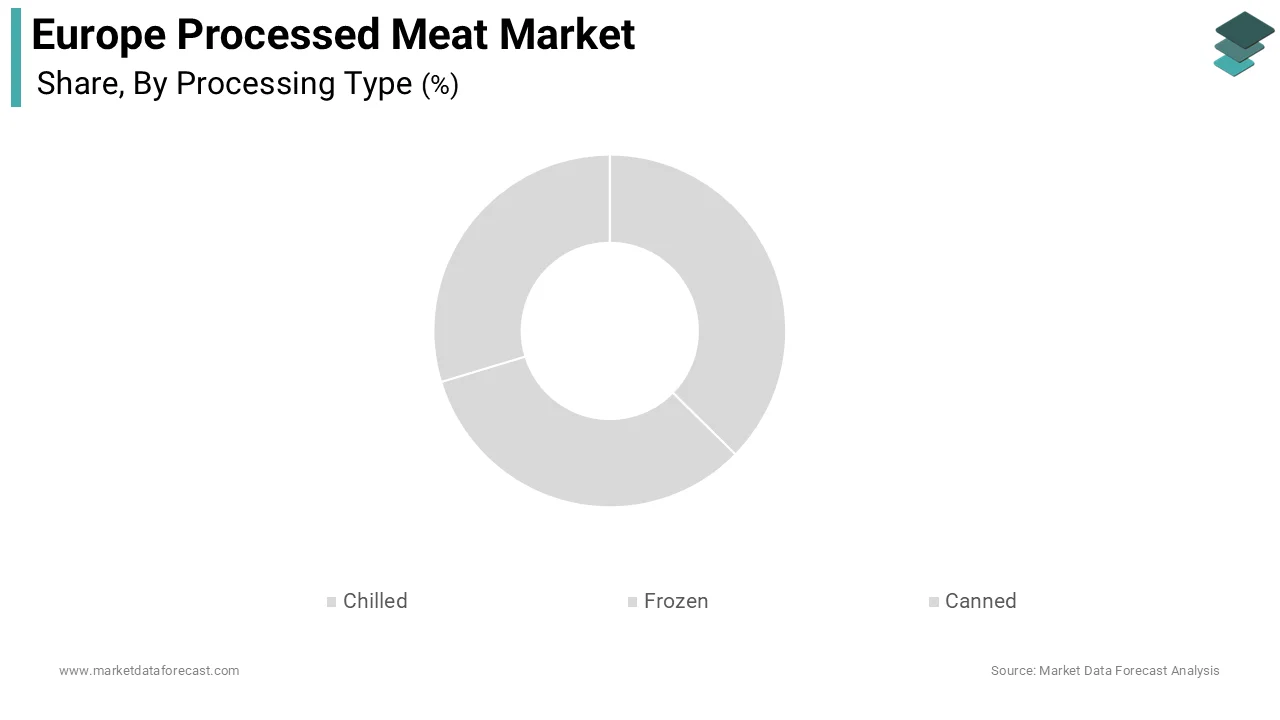
The existence of advanced cold chain infrastructure across Europe significantly supports the dominance of the chilled processed meat segment. Efficient refrigeration logistics ensure that products maintain their safety and quality from production facilities to retail outlets. As per research, the European logistics sector has invested heavily in temperature-controlled transportation and storage, minimizing spoilage and extending shelf life. This reliability allows manufacturers to distribute chilled products widely, including to remote areas, without compromising integrity. Supermarkets and hypermarkets are equipped with sophisticated refrigeration systems that display chilled meats, optimally enhancing visual appeal and accessibility. The consistency of the cold chain reduces waste and ensures that consumers receive products within their optimal consumption window. This infrastructure advantage enables retailers to offer a diverse range of chilled processed meats, including premium and organic variants. The ability to manage inventory effectively through real-time temperature monitoring further strengthens the supply chain. Manufacturers leverage this efficiency to launch new products with shorter shelf lives but higher quality standards. The robust cold chain network thus serves as a critical enabler for the chilled segment, sustaining its market leadership by ensuring product availability and consumer trust.
The frozen processed meat segment is estimated to register the fastest CAGR of 4.2% during the forecast period. This growth of the segment is fueled by convenience, extended shelf life, and changing consumption habits.
The increasing demand for convenience and extended shelf life is a key catalyst for the rapid growth of the frozen processed meat segment. Modern lifestyles characterized by busy schedules and smaller household sizes drive consumers toward products that can be stored for longer periods and prepared quickly. According to Eurostat, overall generation of household food waste remains high across the union, and while specific frozen preservation strategies are promoted regionally to improve sustainability, the statistical agency tracks total waste volume outcomes. Frozen processed meats such as nuggets, patties, and pre-cooked sausages offer easy storage and quick preparation options suitable for single-serve meals. The improvement in freezing technologies has enhanced the texture and taste of frozen products, making them more acceptable to discerning consumers. Retailers are expanding their frozen food aisles to include a wider variety of premium processed meat options. The ability to buy in bulk and store for later use appeals to budget-conscious shoppers looking to manage household expenses. Additionally, the rise of home cooking trends during recent years has increased the popularity of frozen ingredients that simplify meal preparation. This shift toward practicality and efficiency ensures that the frozen segment experiences faster growth rates compared to traditional chilled options.
The expansion of the food service sector, particularly quick-service restaurants, drives the rapid growth of the frozen processed meat segment. These establishments rely heavily on frozen ingredients to ensure consistency, speed, and cost efficiency in their operations. As per sources, the number of quick-service restaurant outlets in Europe continues to grow, with many chains utilizing frozen processed meats for burgers, sandwiches, and breakfast items. Frozen products allow restaurants to standardize portion sizes and reduce preparation time, leading to faster service and lower labor costs. The reliability of frozen supply chains ensures that restaurants can maintain consistent menu offerings across multiple locations. Furthermore, the growth of delivery platforms has increased the demand for ready-to-eat meals, which often feature frozen processed meat components. Manufacturers are developing specialized frozen products tailored for the food service industry, offering improved heat stability and flavor retention. The scalability of frozen processing enables suppliers to meet the large volume requirements of major restaurant chains. As the food service industry recovers and expands post-pandemic, the demand for frozen processed meats is expected to surge further, solidifying its position as the fastest-growing segment.
By Product Type Insights
The pork segment was the largest in the Europe processed meat market and occupied a commanding share in 2025. This leading position of the segment was attributed to deep-rooted culinary traditions and high production volumes. It is the primary raw material for many iconic European processed meat products.
The cultural significance of pork in European cuisine serves as the primary driver for its market dominance. Many countries have centuries-old traditions of pork curing and processing, resulting in iconic products such as Spanish Jamón, Italian Prosciutto, and German Bratwurst. As per the International Meat Secretariat, pork accounts for the largest share of meat consumption in several European nations, including Germany, Poland, and Spain. These traditional products are integral to national identities and social rituals, ensuring steady demand. Protected Geographical Indication status for many pork products reinforces their authenticity and quality, attracting both local and international consumers. The versatility of pork allows it to be used in a wide range of processed forms, from dry-cured hams to fresh sausages. Consumers associate pork processed meats with heritage and craftsmanship, which fosters brand loyalty. The widespread availability of pork-based products in retail and food service channels further cements its leadership. Despite health concerns, the emotional and cultural connection to pork products sustains their popularity. Manufacturers continue to innovate within this category by introducing premium and artisanal variants that appeal to modern tastes while respecting tradition.
The high production efficiency and widespread availability of pork contribute significantly to its leading position in the market. Europe is one of the world's largest producers of pork, with advanced farming and processing technologies ensuring consistent supply. As per Eurostat, the EU produces millions of tons of pork annually, providing a robust raw material base for the processed meat industry. The economies of scale in pork production result in competitive pricing, making processed pork products accessible to a broad consumer base. Efficient supply chains ensure that pork is readily available for processing into various formats, including bacon, ham, and sausages. The adaptability of pork to different preservation methods such as smoking, curing, and drying allows for diverse product offerings. This abundance enables manufacturers to maintain stable prices and consistent quality. The established infrastructure for pork processing supports innovation and product development. The combination of high production volumes and efficient distribution networks ensures that pork remains the most consumed and processed meat in Europe, driving its sustained market leadership.
The poultry segment is anticipated to witness the fastest CAGR of 5.1% from 2026 to 2034 due to health perceptions and dietary shifts.
The rising health consciousness among European consumers is a key factor behind the rapid growth of the poultry processed meat segment. Poultry is perceived as a healthier alternative to red meats due to its lower saturated fat content and high protein value. As per the World Health Organization dietary guidelines, it is recommended to reduce red meat consumption in favor of leaner proteins such as chicken and turkey. This advice has influenced consumer purchasing behavior, leading to increased demand for processed poultry products like turkey breast slices, chicken sausages, and deli meats. Manufacturers are responding by launching low-sodium and additive-free poultry options that align with clean label trends. The versatility of poultry allows it to be incorporated into various healthy meal solutions, including salads and wraps. Fitness enthusiasts and weight-conscious individuals prefer poultry for its nutritional profile supporting muscle maintenance without excessive calorie intake. The positive perception of poultry as a light and digestible protein source drives its adoption in daily diets. As health awareness continues to rise, the poultry segment is poised for sustained growth, outpacing traditional red meat categories.
The culinary versatility of poultry significantly contributes to its fast growth in the processed meat market. Poultry can be easily flavored, marinated, and processed into a wide variety of formats appealing to diverse taste preferences. As per sources, the introduction of exotic flavors and global cuisines in poultry products has expanded their appeal among younger consumers. Processed chicken and turkey are used in snacks, ready meals, and sandwich fillings, offering convenient protein options. The mild taste of poultry acts as a canvas for innovative seasoning blends, allowing manufacturers to create unique product differentiation. The rise of ethnic food trends has led to the popularity of spiced chicken sausages and marinated turkey strips. Poultry also integrates well into plant-based hybrid products catering to flexitarian diets. Its ability to mimic texture in various forms makes it suitable for nuggets, patties, and deli slices. This adaptability enables manufacturers to target multiple consumer segments and occasions. The continuous innovation in poultry processing techniques enhances texture and flavor, driving consumer interest and repeat purchases.
By Distribution Channel Insights
In 2025, the supermarkets and hypermarkets segment held the majority share of the Europe processed meat market because of its extensive reach and comprehensive product offerings. These channels are the primary destination for grocery shopping in Europe.
The extensive product range and convenience of one-stop shopping propel the growth of supermarkets and hypermarkets. These retailers offer a vast selection of processed meat brands, from mass-market to premium artisanal options, under one roof. According to the European Commission, supermarkets and large grocery chains command the overwhelming market share of physical food sales across Europe. The ability to compare prices and brands encourages impulse purchases and bulk buying. Supermarkets often feature dedicated deli counters and refrigerated sections that highlight fresh processed meats, enhancing visibility. Promotional activities such as discounts and bundle offers attract price-sensitive shoppers. The strategic placement of processed meats near complementary items like bread and cheese stimulates cross-selling. The trust associated with large retail chains ensures product quality and safety assurance. Consumers appreciate the convenience of purchasing all their weekly needs in a single trip. This comprehensive shopping experience solidifies the leading position of supermarkets and hypermarkets in the distribution landscape.
The strong presence of private label brands in supermarkets and hypermarkets significantly contributes to their market leadership. Retailers have developed high-quality own-brand processed meat products that compete effectively with national brands. As per sources, private label shares in the European food sector have grown substantially, with consumers recognizing the value and quality of retailer brands. Private label processed meats often offer similar quality at lower prices, appealing to budget-conscious shoppers. Supermarkets invest in sourcing and manufacturing partnerships to ensure consistent quality and innovation in their private labels. These brands benefit from prominent shelf placement and marketing support within stores. The loyalty programs of major retailers further incentivize purchases of private label products. Consumers are increasingly willing to switch from branded to private-label items due to improved quality perceptions. This strategy enhances retailer margins and strengthens customer retention. The dominance of private labels in the processed meat category reinforces the central role of supermarkets and hypermarkets in the market.
The online channels segment is likely to experience the fastest CAGR of 8.5% during the forecast period owing to digital adoption and convenience.
In addition, the rising penetration of e-commerce and increasing digital adoption among consumers are key drivers for the rapid growth of online channels. More Europeans are comfortable purchasing groceries online, including perishable items like processed meats. As per Eurostat, online shopping participation in the EU has increased significantly, with food and beverage categories seeing notable growth. The convenience of home delivery saves time and effort, appealing to busy urban consumers. Online platforms offer a wider selection of niche and premium processed meat products that may not be available in local stores. Subscription services for regular deliveries of favorite items enhance customer loyalty. The integration of mobile apps allows for easy ordering and tracking. Improved logistics and cold chain capabilities ensure that online orders arrive in fresh condition. The ability to read reviews and compare products online informs purchasing decisions. As digital literacy improves across age groups, the online channel continues to expand its reach. This shift toward digital shopping ensures sustained high growth rates for online processed meat sales.
The expansion of quick commerce services significantly accelerates the growth of online channels for processed meat. These services promise delivery within minutes or hours, meeting immediate consumer needs. As per a study, quick commerce platforms have gained popularity in major European cities, offering a curated selection of fresh and processed foods. Consumers use these services for last-minute meal ingredients or snack cravings, driving impulse purchases of processed meats. The convenience of instant delivery appeals to younger demographics and urban professionals. Quick commerce partners with local retailers and dark stores to ensure rapid fulfillment. The availability of premium and artisanal processed meats on these platforms attracts discerning shoppers. Promotional offers and personalized recommendations enhance user engagement. The seamless integration of technology and logistics creates a frictionless shopping experience. As quick commerce networks expand to more regions, the accessibility of processed meats online increases. This trend drives rapid adoption and frequent usage, contributing to the segment's fast growth trajectory.
REGIONAL ANALYSIS
Germany Processed Meat Market Analysis
Germany was the top performer in the Europe Processed Meat Market and accounted for a substantial share in 2025. This position of the German market was driven by its strong tradition of sausage and cured meat consumption. The country is renowned for its diverse range of Wurst varieties, which are integral to daily diets. However, according to the Federal Ministry of Food and Agriculture, pork consumption in Germany has seen a continuous multi-year decline, though it still accounts for the largest share of total per capita meat consumption. The market is characterized by a mix of large industrial producers and small artisanal butchers. Consumer preference for high quality and regional specialties supports the demand for premium processed meats. Regulatory standards for meat production are strict, ensuring safety and quality. The rise of health consciousness has led to increased demand for low-salt and organic options. Retailers offer extensive selections of both conventional and premium processed meats. The cultural importance of meat in German cuisine ensures steady demand despite health trends. Innovation in traditional products helps maintain relevance among younger consumers. Germany remains a key driver of the European market due to its high consumption volumes and production capabilities.
France Processed Meat Market Analysis
France followed closely behind in the European market because of a strong appreciation for artisanal and gourmet processed meats. The country has a rich heritage of charcuterie, with products like pâté, terrines, and cured hams being staples. According to sources, the Office national interprofessionnel du bétail et des viandes functioned as a state-run regulatory body established in 1972 before being formally dissolved and merged into larger livestock production offices in the 1985–2006 window. Consumers prioritize quality, origin, and traditional production methods. Protected Geographical Indication labels play a crucial role in influencing purchasing decisions. The market sees strong demand for premium and organic processed meats. Health concerns have led to a gradual shift toward lighter options, but traditional favorites remain popular. Retailers emphasize the provenance and craftsmanship of products. The food service sector also drives demand for high-quality charcuterie. France maintains its position through a focus on culinary excellence and heritage.
Spain Processed Meat Market Analysis
Spain holds a prominent position in the Europe Processed Meat Market, famous for its cured ham industry. Jamon Iberico and Jamon Serrano are iconic products that drive both domestic consumption and exports. As per the Spanish Ministry of Agriculture, the production of cured meats is a vital part of the agricultural economy. Consumers value the quality and flavor of traditional cured products. The tourism sector boosts demand for authentic Spanish charcuterie. Domestic consumption remains steady, with processed meats being common in tapas and daily meals. There is a growing trend toward premium and artisanal products. Health awareness is influencing some consumers to reduce intake, but cultural attachment remains strong. Spain leverages its reputation for quality to maintain market leadership in the cured meat segment.
Italy Processed Meat Market Analysis
Italy is a key player in the Europe Processed Meat Market. It is known for its diverse range of cured meats and sausages. Products like Prosciutto di Parma, salami, and mortadella are deeply embedded in Italian cuisine. As per ISTAT, the consumption of processed meats is significant, with a strong preference for regional specialties. Consumers prioritize authenticity and traditional methods. The market is driven by high-quality standards and geographical indications. Export demand for Italian cured meats supports production volumes. Domestic consumers are increasingly interested in organic and clean label options. The balance between tradition and modern health trends shapes the market. Italy maintains its status through innovation in traditional products and strong branding.
United Kingdom Processed Meat Market Analysis
The United Kingdom contributes notably to the European market due to a strong preference for convenience and value. Processed meats such as bacon, sausages, and ham are breakfast and lunch staples. According to the Department for Environment, Food and Rural Affairs, household purchases of meat products have shown a fluctuating downward trend over multiple decades rather than a sudden stabilization phase. Consumers are shifting toward higher-welfare and reduced-additive products. Retailers drive innovation with private label ranges. The food service sector contributes significantly to demand. Health campaigns have impacted perception, but convenience keeps demand steady. The UK market is characterized by a focus on ethical sourcing and transparency.
COMPETITION OVERVIEW
The competitive landscape of the Europe Processed Meat Market is characterized by a mix of large multinational corporations and numerous regional artisanal producers who collectively shape market dynamics. Major players leverage economies of scale and extensive distribution networks to dominate mass market segments, particularly in Northern and Central Europe. These giants compete intensely on price efficiency and brand recognition while facing pressure from strict environmental and health regulations. Meanwhile, smaller regional specialists differentiate themselves through traditional methods, geographical indications, and premium quality attributes, appealing to discerning consumers in countries like Italy, Spain, and France. The market sees increasing competition from plant-based alternatives, which forces traditional meat processors to innovate and diversify their portfolios. Private label products from major retailers also pose a significant threat by offering comparable quality at lower prices. Consolidation through mergers and acquisitions is common as companies seek to expand their geographic reach and product offerings. Sustainability and transparency have become key competitive differentiators as consumers demand greater accountability in sourcing and production. This fragmented yet consolidated environment requires continuous adaptation to regulatory changes and evolving dietary trends to maintain market relevance.
KEY MARKET PLAYERS
A few major players of the Europe processed meat market include
- Cherkizovo Group
- Cargill Inc
- Hormel Foods
- Foster Farms
- National Beef
- Marfrig Group
- Perdue Farms
- Nippon Meat Packers Inc
- Smithfield Foods Inc
- Sadia SA
- Pilgrim's Pride
- Shuanghui International
- Sanderson Farms Inc
- Tyson Foods Inc
Top Strategies Used by Key Market Participants
Key players in the Europe Processed Meat Market primarily employ product reformulation and sustainability initiatives to strengthen their market positions. Companies are increasingly reducing sodium nitrite and salt content while introducingclean-labell ingredients to address health concerns and regulatory pressures. Strategic investments in sustainable farming and carbon-neutral production processes help brands appeal to environmentally conscious consumers. Manufacturers also focus on premiumization by launching artisanal and regionally sourced products that command higher margins. Digital transformation and supply chain optimization are utilized to enhance efficiency and traceability. Additionally, firms are expanding into plant-based and hybrid meat alternatives to capture the growing flexitarian demographic. These multifaceted strategies enable participants to navigate regulatory challenges and shifting consumer preferences while maintaining competitiveness in the mature European market.
Leading Players in the Europe Processed Meat Market
- Danish Crown A/S stands as a leading cooperative owned by Danish farmers and serves as a major exporter of pork products across Europe. The company focuses on high-quality standards and sustainability initiatives to meet evolving consumer demands. Recently, Danish Crown has invested heavily in reducing its carbon footprint by implementing green energy solutions in its processing facilities. The company actively promotes animal welfare and traceability, which strengthens trust among European consumers. By expanding its portfolio ofvalue-addedd processed meats such as bacon and sausages, Danish Crown enhances its presence in key markets like Germany and the United Kingdom. Their commitment to innovation and responsible sourcing ensures they remain competitive in a market increasingly driven by ethical considerations and premium product preferences.
- Tönnies Holding SE & Co. KG is a prominent German meat processor known for its extensive production capabilities and wide distribution network. The company supplies a diverse range of fresh and processed meat products to retailers and food service providers throughout Europe. Tönnies has recently focused on modernizing its production lines to improve efficiency and hygiene standards following industry scrutiny. The company emphasizes transparency and quality control to rebuild consumer confidence after past challenges. By investing in advanced packaging technologies and sustainable practices, Tönnies aims to extend shelf life and reduce waste. Their strategic partnerships with retail chains ensure consistent product availability. Tönnies continues to adapt to regulatory changes and consumer preferences by offering cleaner label options and enhancing operational resilience in the competitive European landscape.
- Nestlé S.A. contributes significantly to the Europe processed meat market through its Garden Gourmet and other plant-based and meat alternative brands. While traditionally known for broader food categories, Nestlé has expanded its portfolio to include hybrid and alternative protein products that compete directly with traditional processed meats. The company leverages its global research and development capabilities to create innovative textures and flavors that appeal to flexitarian consumers. Nestlé recently launched new ready-to-eat meal solutions featuring plant-based proteins in several European markets. By focusing on sustainability and health, Nestlé addresses the growing demand for environmentally friendly and nutritious options. Their strong brand recognition and extensive distribution channels allow them to effectively penetrate the market and influence dietary shifts toward more sustainable protein sources across the continent.
MARKET SEGMENTATION
This research report on the Europe processed meat market has been segmented and sub-segmented based on processing type, product type, distribution channel, and region.
By Processing Type
- Chilled
- Frozen
- Canned
By Product Type
- Poultry
- Beef
- Lamb
- Pork
By Distribution Channel
- Supermarkets/Hypermarkets
- Grocery Stores
- Specialty Retailers
- Online Channels
- Others
By Country
- UK
- France
- Spain
- Germany
- Italy
- Russia
- Sweden
- Denmark
- Switzerland
- Netherlands
- Turkey
- Czech Republic
- Rest of Europe