- Product Description Description
- Table of Contents TOC
- List of Table & Figure LOT
- Get Free Sample PDF Sample PDF
Market Size, 2025
$16.48 BnMarket Estimate, 2026
$17.35 BnMarket Forecast, 2034
$26.13 BnCAGR, 2026–2034
5.25%Europe Protein Ingredients Market Size, Growth, Trends & Forecast (2026–2034)
The Europe Protein Ingredients Market size was calculated to be USD 16.48 billion in 2025, is estimated to reach USD 17.35 billion in 2026, and is projected to expand to USD 26.13 billion by 2034, registering a compound annual growth rate (CAGR) of 5.25% during the forecast period from 2026 to 2034. Driven by the rising burden of age-related sarcopenia, expanding plant-based food innovations, clean-label requirements, and rigorous regulatory frameworks governed by the EFSA, the market continues to experience steady upward momentum.
Key Executive Metrics (At-a-Glance)
- 2025 Base Valuation: USD 16.48 Billion
- 2026 Current Valuation: USD 17.35 Billion
- 2034 Forecast Valuation: USD 26.13 Billion
- Compound Annual Growth Rate (CAGR): 5.25% (2026–2034)
- Leading Region: Germany (holding a dominant 24.3% share in 2025 backed by advanced healthcare infrastructure and food processing technology)
- Key Growth Hubs: France (17.5% share in 2025), the United Kingdom, Italy, and the Netherlands
Core Market Drivers
- Clinical Nutrition & Sarcopenia: Growing elderly demographics requiring specialized high-protein diets and oral nutritional supplements to combat muscle mass loss.
- Plant-Based Innovation: Consumer preference shifts toward sustainable, minimally processed plant proteins and clear sustainability-focused labeling.
Primary Market Restraints & Challenges
- Regulatory Hurdles: Strict and time-intensive Novel Foods authorizations and inconsistent member-state approvals for insect-derived and novel proteins.
- Supply Chain Volatility: Climate and policy-driven disruptions impacting conventional dairy feedstocks and regional plant protein import corridors.
Market Segmentation: Largest and Fastest-Growing Segments
| Segment Category | Largest Segment | Fastest-Growing Segment |
|---|---|---|
| By Product | Animal and Dairy Protein (58.1% share in 2025) | Microbe-Based Protein (CAGR of 24.3%) |
| By Application | Food & Beverages (51.4% share in 2025) | Clinical Nutrients (CAGR of 9.7%) |
| By Region | Germany (24.3% share in 2025) | The Netherlands & France |
Major Industry Players Profiled
Key market participants shaping the Europe protein ingredients landscape include Rousselot, Archer Daniels Midland (ADM), Roquette Frères, Ingredion, DuPont de Nemours (IFF/DUO portfolio), Kerry Group, Tate & Lyle, DSM (dsm-firmenich), Glanbia, FrieslandCampina Ingredients, Arla Foods Ingredients, Lactalis Ingredients, Tessenderlo Group, Cargill, Fonterra, Kewpie Corporation, Prinova, Barentz, Burcon NutraScience, and Tereos.
Europe Protein Ingredients Market Size
The Europe protein ingredients market size was calculated to be USD 16.48 billion in 2025 and is anticipated to be worth USD 26.13 billion by 2034, from USD 17.35 billion in 2026, growing at a CAGR of 5.25% during the forecast period.
Protein ingredients are functional and nutritional compounds derived from animal, plant, and microbial sources, including whey, casein, soy, pea, wheat, egg, and emerging alternatives such as algae and precision fermented proteins. These ingredients serve as foundational components in food, beverage, dietary supplements, clinical nutrition, and pet food formulations due to their amino acid profiles, solubility, emulsification, and gelling properties. The European market is distinguished by its stringent regulatory framework under the European Food Safety Authority and Novel Foods Regulation, which governs safety, labeling, and health claims. According to sources, a notable share of protein ingredient approvals since 2020 have involved plant-based or fermentation-derived sources, which reflects a strategic shift toward sustainable nutrition. As per research, there is a significant and growing consumer trend towards plant-based and high-protein products across Europe. Apart from these, the Farm to Fork Strategy’s emphasis on reducing livestock dependency has accelerated innovation in alternative proteins. European protein ingredients are distinct from commodity additives because their evaluation criteria encompass both performance and sustainability (environmental footprint) and ethical considerations, making them a central focus for public health policy, consumer behavior shifts, and the broader change within the food system.
MARKET DRIVERS
Rising Prevalence of Age-Related Sarcopenia and Clinical Nutrition Needs
The growing burden of age-related muscle loss in Europe is among the key factors propelling the Europe protein ingredients market. The prevalence of sarcopenia in community-dwelling older adults in the EU varies widely depending on the specific diagnostic criteria and methods used, typically ranging from 1 to 29%, as per sources. This condition necessitates a daily protein intake of 1.2 to 2.0 grams per kilogram of body weight, significantly higher than the general adult recommendation of 0.83 grams per kilogram set by the European Food Safety Authority. In response, hospitals and long-term care facilities are integrating high-protein oral nutritional supplements into standard care protocols. Dairy-derived proteins like whey, rich in leucine, are especially valued for their rapid digestibility and muscle protein synthesis stimulation. Furthermore, the EU’s Joint Action on Nutrition and Healthy Aging has endorsed protein fortification in public meal programs for seniors. These clinical and policy developments create sustained demand for high-quality and bioavailable protein ingredients tailored to vulnerable populations.
Expansion of Plant-Based Food Innovation and Clean Label Trends
Consumer preference for plant-derived and minimally processed foods is accelerating the expansion of the Europe protein ingredients market. According to studies, a considerable share of adults in the EU actively seek products labeled as plant-based or free from animal ingredients, which extends beyond vegetarians to flexitarians and environmentally conscious shoppers. This shift has spurred food manufacturers to reformulate dairy alternatives, meat analogs, and ready meals using pea, fava bean, and oat proteins that deliver neutral taste and clean label compliance. Plant-based food sales grew, with protein content cited as a top purchase criterion in a share of transactions. Regulatory support further enables this transition. Apart from these, innovations in enzymatic hydrolysis have improved the solubility and texture of legume proteins by overcoming historical limitations in beverage applications. Plant proteins are set to become central to the European protein landscape as new food labeling (like the EU's planned eco-score) incorporates sustainability metrics, which leverage their inherent advantages in lower carbon and water usage.
MARKET RESTRAINTS
Stringent Regulatory Hurdles for Novel and Insect-Derived Proteins
Delays and uncertainties due to the rigorous and time-intensive Novel Foods authorization process hamper the growth of the Europe protein ingredients market. Insect-derived proteins, for instance, require full safety dossiers including toxicological, allergenic, and compositional data before market entry. According to the European Commission, only four insect species—yellow mealworm (Tenebrio molitor), migratory locust (Locusta migratoria), house cricket (Acheta domesticus), and lesser mealworm (Alphitobius diaperinus)- have received Novel Foods approval as of early 2026, with several more applications still under safety assessment by the European Food Safety Authority (EFSA). The approval timeline exceeds several months, deterring small innovators with limited regulatory capacity. Moreover, labeling requirements mandate explicit declaration, such as powder from Tenebrio molitor larva. Additional complications arise from national divergences; while the Netherlands permits insect protein in bakery goods, Germany restricts its use to supplements only. These regulatory inconsistencies fragment the single market and increase compliance costs. Novel protein ingredients will struggle to achieve commercial success without the implementation of consistent regulations and streamlined approval processes, despite their nutritional and environmental benefits.
Volatility in Dairy Supply Chains and Geopolitical Disruptions
Vulnerability towards supply chain instability remains a hindrance to the Europe protein ingredients market. This volatility is particularly pronounced for dairy-derived proteins. According to the European Dairy Association (EDA), dairy products contribute approximately 20-28% of the protein requirement in Western diets. Milk production, the primary feedstock for whey and casein, is highly sensitive to climatic conditions, feed costs, and policy shifts. The total raw milk production in the EU (EU-27) reached 160.8 million tonnes in 2023, which represents an increase of 0.8 million tonnes compared to 2022. This increase is approximately 0.5% (0.8 / 160.0, as production in 2022 was an estimated 160.0 million tonnes). Simultaneously, the EU’s Common Agricultural Policy reforms have incentivized herd reduction to meet methane emission targets. These constraints tighten whey availability, a byproduct of cheese manufacturing, which itself faces fluctuating demand. Furthermore, geopolitical tensions have disrupted key import channels for plant proteins. The Black Sea grain corridor disruptions in early 2025 led to a spike in pea protein prices in Central Europe, according to research. Such volatility complicates long-term pricing and formulation strategies for food manufacturers, especially in cost-sensitive categories like sports nutrition and school meals. Persistent supply insecurity, a key structural restraint, will only be resolved once we implement robust, diversified sourcing models.
MARKET OPPORTUNITIES
Integration of Precision Fermentation for Dairy Protein Alternatives
Precision fermentation is coming up as a major opportunity in the Europe protein ingredients market. This enables the production of animal identical proteins, such as whey and casein, without livestock. This technology leverages microbial hosts like yeast or fungi to express specific milk proteins through controlled fermentation, offering identical functionality with a fraction of the environmental impact. According to research, fermentation-derived whey requires less land and less water than conventional dairy production. Several European startups have advanced toward commercialization. In April 2022, the EFSA issued a positive safety opinion for a novel food application of beta-lactoglobulin (BLG) produced by the Danish company Arla Foods Ingredients (under the brand name Lacprodan BLG-100). This ingredient is derived from conventional dairy processing, not precision fermentation. The European Commission’s Innovation Fund has allocated 220 million euros since 2022 to support pilot-scale fermentation facilities in Belgium and Denmark. Driven by falling costs and improved regulatory environments, precision fermented proteins are positioned to profoundly impact existing dairy supply chains and offer solutions that align with EU sustainability and food security objectives.
Growth in Personalized Nutrition and Medical Food Applications
The convergence of genomics, digital health, and regulatory innovation is opening fresh opportunities for the Europe protein ingredients market. Chronic conditions such as phenylketonuria, renal disease, and cancer cachexia require tailored amino acid profiles that standard proteins cannot provide. According to sources, the number of CE-marked medical foods containing modified or free amino acid blends grew annually. Advances in metabolic phenotyping now enable dietitians to prescribe protein formulations based on individual biomarkers. The EU’s Horizon Europe program has funded projects exploring protein personalization, including a multicenter trial on sarcopenia interventions using leucine-enriched whey isolates. These developments position Europe as a leader in therapeutic nutrition, where protein ingredients serve not merely as nutrients but as active components of clinical care pathways.
MARKET CHALLENGES
Persistent Consumer Skepticism Toward Highly Processed Protein Products
A significant segment of European consumers remains wary of highly processed or technologically derived protein ingredients, particularly those involving chemical extraction or genetic modification, which negatively affects the growth of the Europe protein ingredients market. According to sources, a portion of EU citizens express concern about ultra-processed foods, with protein isolates and concentrates frequently perceived as artificial despite their natural origin. This sentiment is especially strong in Southern and Eastern Europe, where traditional diets emphasize whole food sources. As per studies, a portion of consumers trusts health claims on protein fortified products, citing a lack of transparency in sourcing and processing methods. Such skepticism limits market penetration in mainstream categories like bread, pasta, and dairy, where clean label expectations prevail. Even plant proteins face resistance when labeled as “isolates”. This perception gap forces manufacturers to invest heavily in consumer education and transparent labeling, which increases time to market and marketing costs. The food industry's reliance on advanced proteins is hindered because consumers lack confidence in their sourcing and processing methods.
Fragmented Sustainability Certification and Greenwashing Risks
A lack of standardized environmental metrics leads to inconsistent sustainability claims and consumer confusion, and this slows down the expansion of the Europe protein ingredients market. While the EU promotes circular economy principles, there is no unified methodology for calculating the carbon or water footprint of protein ingredients across animal, plant, and fermentation sources. The fragmentation enables greenwashing. As per sources, a share of “low-carbon protein” claims lacked third-party verification. Moreover, life cycle assessments often overlook critical factors such as land use change for soy or water stress in pea-growing regions like Northern France. The absence of a mandatory EU-wide protein sustainability score, despite proposals under the Green Claims Directive, affects credible differentiation. As a result, responsible producers struggle to communicate genuine environmental advantages, while less scrupulous actors exploit the ambiguity. This regulatory gap not only distorts competition but also impedes the market’s ability to reward truly sustainable protein innovation, posing a systemic challenge to the sector’s green transition.
REPORT COVERAGE
| REPORT METRIC | DETAILS |
| Market Size Available | 2025 to 2034 |
| Base Year | 2025 |
| Forecast Period | 2026 to 2034 |
| CAGR | 5.25% |
| Segments Covered | By Product, Application, and Region |
| Various Analyses Covered | Global, Regional & Country Level Analysis; Segment-Level Analysis; DROC, PESTLE Analysis; Porter’s Five Forces Analysis; Competitive Landscape; Analyst Overview of Investment Opportunities |
| Regions Covered | UK, France, Spain, Germany, Italy, Russia, Sweden, Denmark, Switzerland, Netherlands, Turkey, and the Czech Republic |
| Market Leaders Profiled | Rousselot, Archer Daniels Midland (ADM), Roquette Frères, Ingredion, DuPont de Nemours (IFF/DUO portfolio), Kerry Group, Tate & Lyle, DSM (dsm-firmenich), Glanbia, FrieslandCampina Ingredients, Arla Foods Ingredients, Lactalis Ingredients, Tessenderlo Group, Cargill, Fonterra, Kewpie Corporation, Prinova, Barentz, Burcon NutraScience, Tereos. |
SEGMENTAL ANALYSIS
By Product Insights
In 2025, the animal and dairy protein ingredients segment captured the largest share of 58.1% of the Europe protein ingredients market. The entrenched role of whey and casein in clinical nutrition, sports supplements, and infant formula, categories where high biological value and complete amino acid profiles are non-negotiable, is propelling the dominance of the animal and dairy protein ingredients segment. Whey protein alone accounts for a share of sports nutrition protein usage in the EU, as per research. The regulatory acceptance of dairy proteins under the EU’s Infant Formula Directive further cements their position. Apart from these, Europe’s robust dairy infrastructure, processing millions of metric tons of raw milk annually, ensures a consistent, cost-effective supply. Consumer trust also plays a pivotal role. This combination of functional superiority, regulatory endorsement, and consumer familiarity sustains dairy protein’s dominance despite the rise of alternatives.
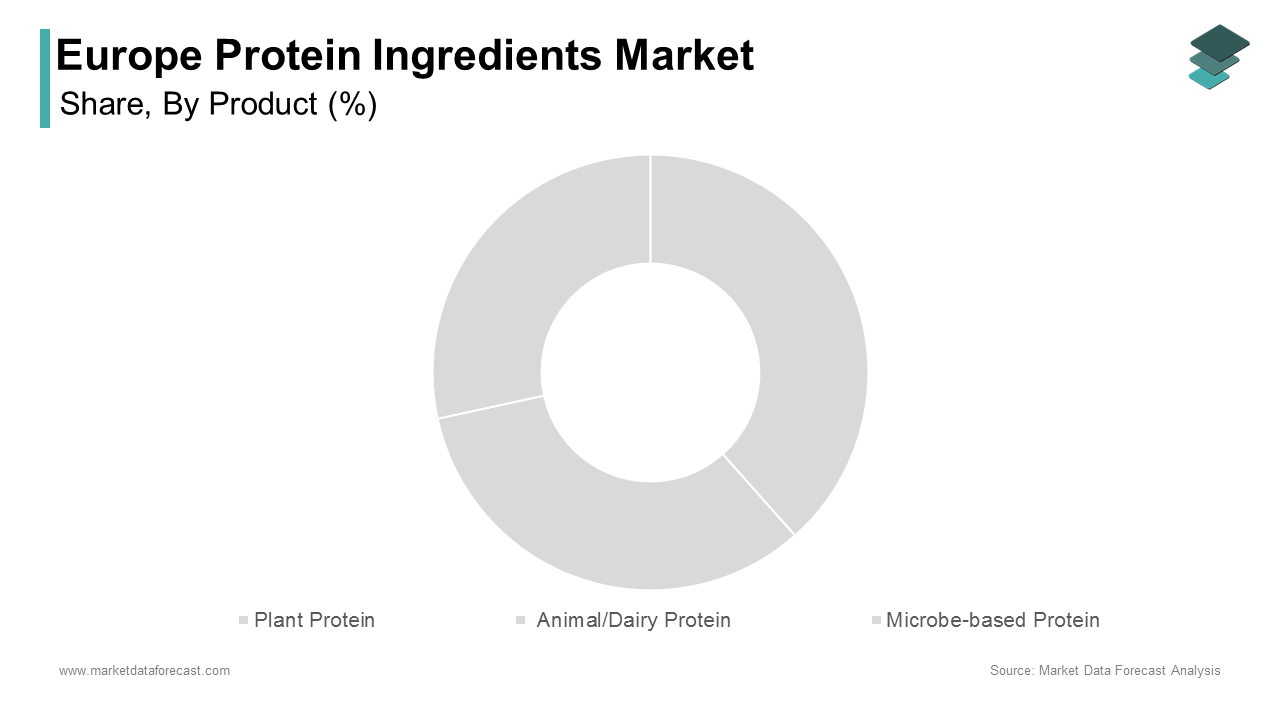
The microbe-based protein segment is on the rise and is expected to be the fastest-growing segment in the regional market by witnessing a CAGR of 24.3% between 2026 and 2034. The growth of the microbe-based protein segment is attributed to the advances in precision fermentation and single-cell protein technologies that produce nutritionally complete, allergen-free, and sustainable protein ingredients without agricultural land use. Companies in Denmark and the Netherlands are commercializing fungal and yeast-derived proteins with protein content exceeding 65 percent on a dry weight basis, suitable for both human and pet food applications. The European Commission’s Horizon Europe program has allocated funds to scale microbial protein production, which recognizes its potential to reduce EU dependency on imported soy. Consumer acceptance is also rising. These scientific, policy, and behavioral tailwinds position microbe-based proteins as the most dynamic frontier in Europe’s protein transition.
By Application Insights
The food and beverages application segment led the Europe protein ingredients market and accounted for 51.4% share in 2025. The prominence of the food and beverages application segment is fuelled by widespread fortification of everyday products such as plant-based milk, high protein snacks, bakery items, and ready meals to meet evolving consumer health expectations. Dairy proteins dominate in yogurts and dairy alternatives, while pea and wheat proteins are preferred in meat analogs and baked goods due to functional versatility. Furthermore, the rise of “protein for satiety” messaging has resonated with weight management consumers. High-protein breakfasts reduced daily caloric intake. Food producers are under pressure to provide tasty and nutritious options, which makes protein ingredients vital formulation tools across a wide range of popular food items.
The clinical nutrients segment is expected to exhibit a noteworthy CAGR of 9.7% during the forecast period, owing to aging demographics, rising prevalence of chronic diseases, and integration of medical nutrition into standard care pathways. Hospitals across Germany, France, and the Nordic countries now routinely screen patients for nutritional risk, with protein-enriched oral supplements prescribed in a share of geriatric and oncology admissions. Regulatory support is also strengthening. The EU’s upcoming Medical Foods Regulation will streamline approval for condition-specific formulations, including those for sarcopenia and renal disease. Apart from these, home-based care models are expanding due to cost pressures, increasing demand for shelf-stable, easy-to-consume protein products. The healthcare industry's move toward preventive and personalized nutrition is transforming clinical protein ingredients from mere supplements into vital therapeutic tools.
REGIONAL ANALYSIS
Germany Protein Ingredients Market Analysis
Germany dominated the Europe protein ingredients market in 2025 and occupied 24.3% of the regional market share. The domination of Germany is largely propelled by its advanced healthcare system, strong sports nutrition culture, and world-class food processing industry. Germany is home to dietary supplement manufacturers, many specializing in whey and casein-based products. The statutory health insurance system covers medical nutrition for specific conditions, driving consistent clinical demand. Apart from these, Germany’s engineering prowess supports high-efficiency dairy processing. Consumer behavior also favors protein. Germany is established as the primary hub for alternative protein innovation and consumption in Europe, a position fortified by significant R&D at institutes such as Fraunhofer and supportive policies like the Farm to Fork Strategy.
France Protein Ingredients Market Analysis
France was the next prominent country in the Europe protein ingredients market, with a 17.5% share in 2025. The growth of France is due to its dual focus on premium infant nutrition and plant-based food innovation. France is the EU’s largest producer of infant formula, manufacturing significant metric tons annually, as per sources, with whey protein as a core component. Consumer trends reinforce this duality. Major food companies like Danone and Lactalis invest heavily in protein R&D at facilities in Normandy and Brittany. This blend of traditional dairy excellence and strategic plant protein development ensures France’s pivotal role in shaping Europe’s protein future.
The United Kingdom Protein Ingredients Market Analysis
The United Kingdom is another key player in the Europe protein ingredients market. Its mature sports nutrition sector and expanding clinical nutrition services are driving the demand for protein ingredients in the UK, despite Brexit. The National Health Service now includes protein screening in routine elderly care assessments following the 2023 Malnutrition Taskforce recommendations, increasing institutional procurement. The UK is also a hub for alternative protein startups. Many companies are developing fermentation or plant-based proteins. Consumer adoption is high. Regulatory continuity with EU standards on novel foods and health claims has preserved market access for ingredient suppliers. The UK continues to be a primary driver of the European protein industry, due to its excellent food science universities and strong culture of nutritional innovation.
Italy Protein Ingredients Market Analysis
Italy is growing steadily in the Europe protein ingredients market because of strong demand in pasta and bakery fortification, infant nutrition, and premium dietary supplements. Italian consumers increasingly seek protein-enriched traditional foods. Italy is also a major infant formula producer, with domestic brands supplying a share of the national market. The dairy sector contributes significantly. Italy produces millions of metric tons of milk annually, supporting whey protein extraction. Apart from these, the Mediterranean diet’s evolution now incorporates protein balancing, with health authorities promoting legume and dairy combinations to maintain muscle mass in aging populations. Government support through the National Recovery Plan includes funding for sustainable protein ingredient facilities in Emilia Romagna and Lombardy. These cultural, industrial, and policy factors sustain Italy’s relevance in both traditional and emerging protein applications.
Netherlands Protein Ingredients Market Analysis
The Netherlands is expected to grow notably in the Europe protein ingredients market from 2026 to 2034, owing to its role as a logistics and innovation hub for alternative proteins. The Netherlands hosts Europe’s largest plant protein refinery in Delfzijl, processing significant metric tons of peas and fava beans annually, as per sources. It is also a global leader in precision fermentation, with companies and newly established biotech firms producing microbial proteins for export. Dutch consumers are among the most receptive to novel proteins. The Netherlands serves as Europe's central hub for protein innovation, which leverages the Port of Rotterdam's vast distribution capabilities and a strong network of food tech incubators to influence both supply chains and adoption trends.
COMPETITION OVERVIEW
The Europe protein ingredients market exhibits dynamic competition characterized by a blend of established dairy giants, agile plant protein specialists, and emerging biotech innovators. Competition is not primarily price-driven but revolves around functionality, sustainability credentials, regulatory compliance, and application expertise. Large players leverage scale and integrated supply chains to dominate clinical and infant nutrition segments, while niche firms compete through sensory optimization and regional crop sourcing. The entry of precision fermentation companies is intensifying innovation pressure, particularly in dairy alternative spaces. Barriers to entry remain high due to stringent EFSA safety requirements, capital-intensive processing infrastructure, and complex consumer trust dynamics. However, the lack of harmonized sustainability metrics creates uneven playing fields, allowing some firms to overstate environmental benefits. Overall, the competitive environment favors companies that combine scientific rigor, transparent sourcing, and agile formulation capabilities to meet Europe’s evolving nutritional and ecological expectations.
Key MARKET PLAYERS
A few major key players of the Europe Protein Ingredients Market include
- Rousselot
- Archer Daniels Midland (ADM)
- Roquette Frères
- Ingredion
- DuPont de Nemours (IFF/DUO portfolio)
- Kerry Group
- Tate & Lyle
- DSM (dsm-firmenich)
- Glanbia
- FrieslandCampina Ingredients
- Arla Foods Ingredients
- Lactalis Ingredients
- Tessenderlo Group
- Cargill
- Fonterra
- Kewpie Corporation
- Prinova
- Barentz
- Burcon NutraScience
- Tereos
Top Strategies Used by the Key Market Participants
Key players in the Europe protein ingredients market pursue integrated strategies centered on sustainability, functional innovation, and regulatory leadership. They invest heavily in vertical integration to secure non-GMO and traceable raw material sources, particularly for plant proteins. Companies prioritize clean-label processing technologies such as enzymatic hydrolysis and membrane filtration to enhance solubility and reduce off-flavors without chemical additives. Strategic partnerships with academic institutions and food manufacturers accelerate application-specific development in high-growth categories like clinical nutrition and meat analogs. Active engagement with European regulatory bodies ensures early alignment with evolving Novel Foods and health claim guidelines. Additionally, life cycle assessments and carbon footprint labeling are increasingly deployed to meet EU green consumer expectations and comply with upcoming eco score mandates, reinforcing brand differentiation in a competitive landscape.
Leading Players in the Europe Protein Ingredients Market
Arla Foods Ingredients
Arla Foods Ingredients is a leading global supplier of dairy-based protein solutions with a strong foothold in the Europe protein ingredients market. The company specializes in high-value whey and milk protein concentrates, isolates, and hydrolysates used in clinical nutrition, sports supplements, and infant formula. Arla has reinforced its position by expanding its production capacity at its Nr Vium facility in Denmark to meet rising demand for clean-label and sustainable protein ingredients. Recent initiatives include launching a carbon-neutral whey protein range certified by third-party auditors and developing hypoallergenic hydrolysates for sensitive populations. The company also collaborates with European research institutions to validate protein efficacy in muscle health and early life nutrition, enhancing its scientific credibility and customer trust across the region.
Roquette Frères
Roquette Frères is a major European producer of plant-based protein ingredients, particularly from peas and fava beans, serving the food, beverage, and clinical nutrition sectors. Headquartered in France, the company leverages its vertically integrated supply chain to ensure traceability and non-GMO compliance, aligning with EU consumer preferences. Roquette has strengthened its market presence by commissioning a new NUTRALYS pea protein production line in Lestrem, France, featuring advanced flavor masking technology to improve sensory profiles. The company also partners with food manufacturers to co-develop high-protein bakery and dairy alternative products. Its active participation in the European Plant Based Foods Association and investment in life cycle assessments further solidify its leadership in sustainable plant protein innovation across Europe.
DSM-Firmenich
DSM-Firmenich plays a pivotal role in the Europe protein ingredients market through its integrated portfolio of dairy, plant, and fermentation-derived proteins. The company combines nutritional science with sensory expertise to deliver functional and palatable protein solutions for medical foods, sports nutrition, and fortified beverages. Following its 2023 merger, DSM-Firmenich has accelerated R&D in protein digestibility and amino acid optimization, launching tailored blends for elderly and pediatric applications. The company recently enhanced its production capabilities in Belgium to support the scalable output of clean-label protein concentrates. It also leads industry coalitions on protein sustainability metrics and actively contributes to EFSA scientific opinions, reinforcing its influence in shaping regulatory and nutritional standards across Europe.
MARKET SEGMENTATION
This research report on the Europe protein ingredients market has been segmented and sub-segmented based on product, application, and region.
By Product
- Plant Protein
- Animal/Dairy Protein
- Microbe-based Protein
By Application
- Food & Beverages
- Infant Formulations
- Animal Feed
- Clinical Nutrients
By Region
- UK
- France
- Spain
- Germany
- Italy
- Russia
- Sweden
- Denmark
- Switzerland
- Netherlands
- Turkey
- Czech Republic
- Rest of Europe