Europe Recreational Vehicle (RV) Market Report: Industry Size, Share, Growth Trends, Analysis & Forecast by Type, Fuel, End-User, and Country – 2026 to 2034
Market Size, 2025
$33.42 BnMarket Estimate, 2026
$37.23 BnMarket Forecast, 2034
$88.30 BnCAGR, 2026–2034
11.4%Europe Recreational Vehicle (RV) Market Summary
The European recreational vehicle (RV) market was valued at USD 33.42 billion in 2025 and is projected to reach USD 37.23 billion in 2026 and USD 88.30 billion by 2034, expanding at a strong CAGR of 11.4% from 2026 to 2034. This growth is driven by increased consumer interest in mobile travel, rising disposable income, and growing demand for personalized tourism experiences across Europe.
Motorhomes led the market in 2024, driven by their popularity among long-distance travelers and retirees. Germany held the largest market share at 30.3% in 2024, while France is expected to witness a strong growth rate over the forecast period.
- 2024 Market Size: USD 30 Billion
- 2025 Market Size: USD 33.42 Billion
- 2033 Forecast: USD 79.27 Billion
- CAGR (2025–2033): 14.4%
- Top Vehicle Type: Motorhomes
- Leading Country: Germany – 30.3% share
- High-Growth Market: France
- Major Companies: Thor Industries, Dethleffs, Autotrail, Swift Group, Knaus Tabbert
Key Market Trends
- Shift toward eco-friendly and electric RV models
- Rise in RV rentals and sharing platforms
- Integration of smart technologies and solar panels
- Growing popularity of “van life” among younger demographics
- Expansion of camping grounds and RV parks across Europe
Market Drivers
- Increasing demand for flexible and remote travel solutions
- Rising disposable income and interest in outdoor recreation
- Supportive government policies for tourism infrastructure
Market Restraints
- High initial purchase and maintenance costs
- Limited parking and camping regulations in urban areas
- Supply chain disruptions impacting vehicle availability
Market Opportunities
- Adoption of electric and hybrid RVs in European markets
- Growing senior travel and post-retirement mobility demand
- Rise in cross-border tourism and long-distance travel
Market Challenges
- Strict emission regulations in some EU countries
- Competition from budget airlines and hospitality services
- Insurance and road tax complexities across regions
To learn more about this research report, ask for a free sample PDF of the report here
Europe Recreational Vehicle Market Overview
The recreational vehicle market size in Europe was valued at USD 33.42 billion in 2025. The European market is estimated to be worth USD 88.30 billion by 2034 from USD 37.23 billion in 2026, growing at a CAGR of 11.4% from 2026 to 2034.
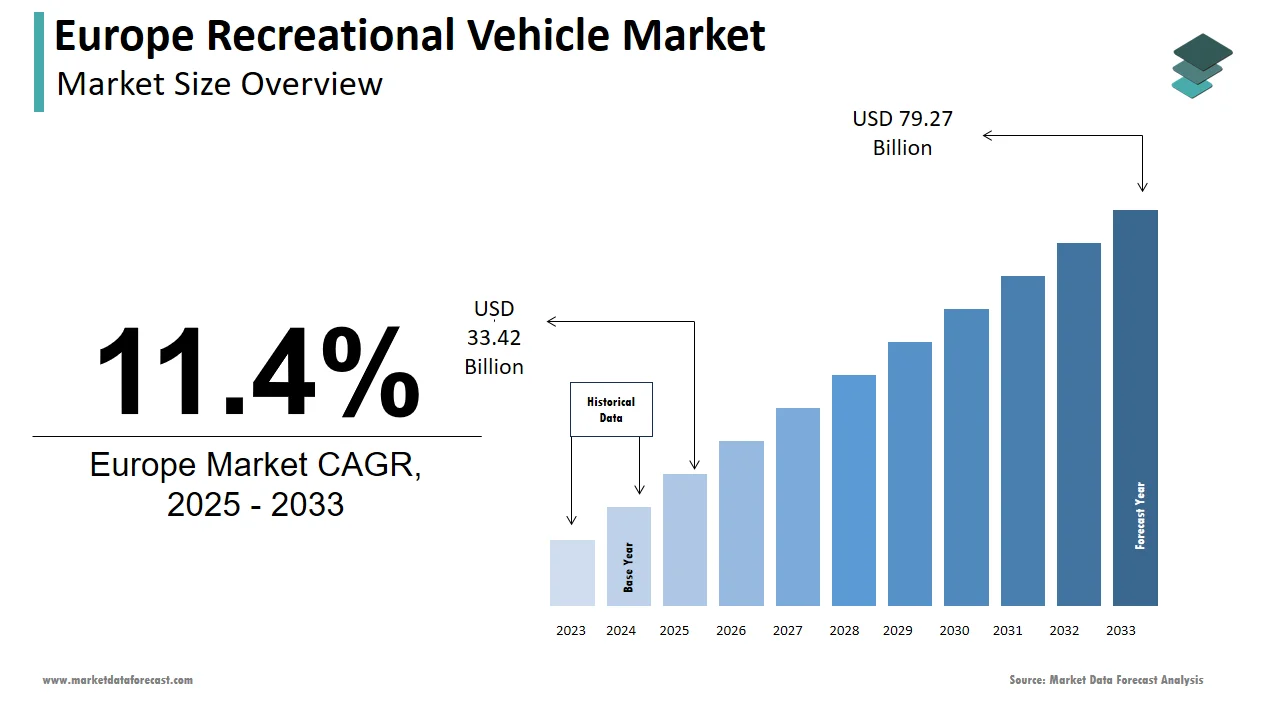
The Europe recreational vehicle (RV) market is experiencing steady growth by a rising preference for outdoor leisure activities and flexible travel options. This expansion is fueled by increasing demand for motorhomes and towable RVs, particularly among millennials and retirees seeking adventure-oriented lifestyles. A key factor shaping the market is the growing emphasis on sustainability and eco-friendly designs. As per Eurostat, over 60% of European consumers prioritize RVs with energy-efficient features by encouraging manufacturers to innovate in solar-powered systems and lightweight materials. Additionally, the rise of digital platforms has broadened accessibility by ensuring sustained demand across demographics.
MARKET DRIVERS
Rising Popularity of Outdoor Tourism
The increasing popularity of outdoor tourism is one of the most significant drivers propelling the Europe recreational vehicle market forward. According to Nielsen, over 70% of European travelers now prefer road trips and camping vacations that is creating a lucrative niche for RV manufacturers. For instance, in France, motorhome rentals surged by 40% in 2022, as per the French Tourism Federation. This trend is further amplified by the growing affordability of RVs compared to traditional travel accommodations. According to the European Travel Commission, RV-based vacations reduce lodging costs by 50% while offering flexibility by reflecting heightened consumer interest in cost-effective mobility. Additionally, advancements in RV design have addressed previous concerns about comfort and usability. These developments ensure that outdoor tourism remains a cornerstone of the market’s growth trajectory.
Expansion of Remote Work and Digital Nomadism
The surging adoption of remote work and digital nomadism, which fuels demand for mobile living solutions is surging the growth of the Europe recreational vehicle (RV) market. According to a study by Deloitte, the number of digital nomads in Europe grew by 50% in 2022, with markets like Spain and Italy leading the charge, as per the Italian Remote Work Association. The emphasis on work-life balance and location independence has further amplified this trend. As per Eurostat, RVs equipped with Wi-Fi and office spaces cater to over 50% of remote workers. Additionally, government incentives promoting rural tourism have broadened their appeal, addressing previous concerns about connectivity and infrastructure.
MARKET RESTRAINTS
High Costs of Premium RVs
One of the primary restraints hindering the Europe recreational vehicle market is the high cost associated with premium RVs due to expensive materials and advanced technology integration. According to the European Chemicals Agency, luxury motorhomes are priced 30% higher than standard models due to features like solar panels and smart home systems. For instance, in Belgium, shortages of lightweight materials caused logistical challenges by leading to a 10% increase in production costs, as per the Belgian Automotive Federation. These fluctuations create uncertainty for manufacturers by forcing them to either absorb additional costs or pass them on to consumers. As per the European Central Bank, inflationary pressures have further exacerbated this issue is reducing consumer spending power and affecting demand. This financial barrier poses a significant challenge for the broader adoption of premium RVs.
Limited Infrastructure for RV Travel
Another significant restraint is the lack of adequate infrastructure for RV travel, which impacts user experience and market growth. According to the European Commission, over 40% of rural areas lack proper campsites and service stations, discouraging potential buyers. For example, in Sweden, inadequate facilities led to a 15% decline in RV sales in 2022, as per the Swedish Camping Federation. This issue is exacerbated by growing consumer skepticism about long-distance travel. As per the World Health Organization, only 30% of first-time RV users trust existing infrastructure is driving demand for improved amenities.
MARKET OPPORTUNITIES
Adoption of Smart Technology Integration
The integration of smart technology presents a transformative opportunity for the Europe recreational vehicle market. According to a study by Bain & Company, over 60% of European consumers are willing to invest in RVs equipped with IoT-enabled systems by creating a niche for brands offering enhanced convenience and safety. For instance, in Germany, companies like Hymer introduced smart RVs with voice-activated controls, boosting sales by 25%, as per the German Caravaning Industry Association. A significant driver of this trend is the growing emphasis on connectivity and automation. As per Eurostat, smart systems reduce energy consumption by 20% while improving user experience by aligning with market demands. Additionally, certifications like ISO standards have enhanced brand credibility, attracting premium buyers.
Growth of Rental and Sharing Services
Another promising opportunity lies in the rapid adoption of RV rental and sharing services, which cater to the growing demand for flexible and affordable travel solutions. The emphasis on short-term travel and urban mobility has further amplified this trend. As per McKinsey & Company, rental services reduce upfront costs by 40% while offering convenience by creating a niche for innovative solutions. Additionally, partnerships with e-commerce platforms have improved accessibility, addressing previous concerns about availability.
MARKET CHALLENGES
Intense Competition and Price Wars
One of the most pressing challenges facing the Europe recreational vehicle market is the intense competition among established brands and private labels, which complicates efforts to build brand loyalty. According to Kantar Worldpanel, private label RVs account for over 25% of total sales in Europe, with major retailers like Lidl offering affordable alternatives to branded products. For instance, in Italy, private labels captured 30% of the towable RV market share in 2022, as per the Italian Retail Federation. This competition is further intensified by price wars by making it difficult for brands to differentiate themselves. As per Nielsen, over 60% of consumers switch between brands based on discounts and promotions, underscoring the challenge of retaining customer loyalty. Additionally, the lack of innovation in traditional categories limits opportunities for premiumization, posing a significant obstacle for market participants striving to stand out.
Fluctuating Raw Material Prices
Another critical challenge is the volatility of raw material prices, which impacts production costs and pricing strategies. According to the International Metal Exchange, the price of aluminum and steel fluctuated by up to 15% over the past year due to geopolitical tensions and supply chain disruptions. For example, in Germany, shortages of raw materials caused logistical challenges, leading to a 10% increase in production costs, as per the German Engineering Association. These fluctuations create uncertainty for manufacturers, forcing them to either absorb additional costs or pass them on to consumers. As per the European Central Bank, inflationary pressures have further exacerbated this issue, reducing consumer spending power and affecting demand. These challenges not only strain profitability but also hinder long-term planning and investment in the market.
REPORT COVERAGE
| REPORT METRIC | DETAILS |
| Market Size Available | 2025 to 2034 |
| Base Year | 2025 |
| Forecast Period | 2026 to 2034 |
| Segments Covered | By Type and Region. |
| Various Analysis Covered | Global, Regional & Country Level Analysis, Segment-Level Analysis; DROC, PESTLE Analysis, Porter's Five Forces Analysis, Competitive Landscape, Analyst Overview of Investment Opportunities |
| Countries Covered | UK, France, Spain, Germany, Italy, Russia, Sweden, Denmark, Switzerland, Netherlands, Turkey, Czech Republic, and the Rest of Europe. |
| Market Leader Profiled | Thor Industries Inc., Dethleffs GmbH & Co. KG, Autotrail motorhomes, Swift Group Limited, Knaus Tabbert GmbH, and Others. |
SEGMENTAL ANALYSIS
By Type Insights
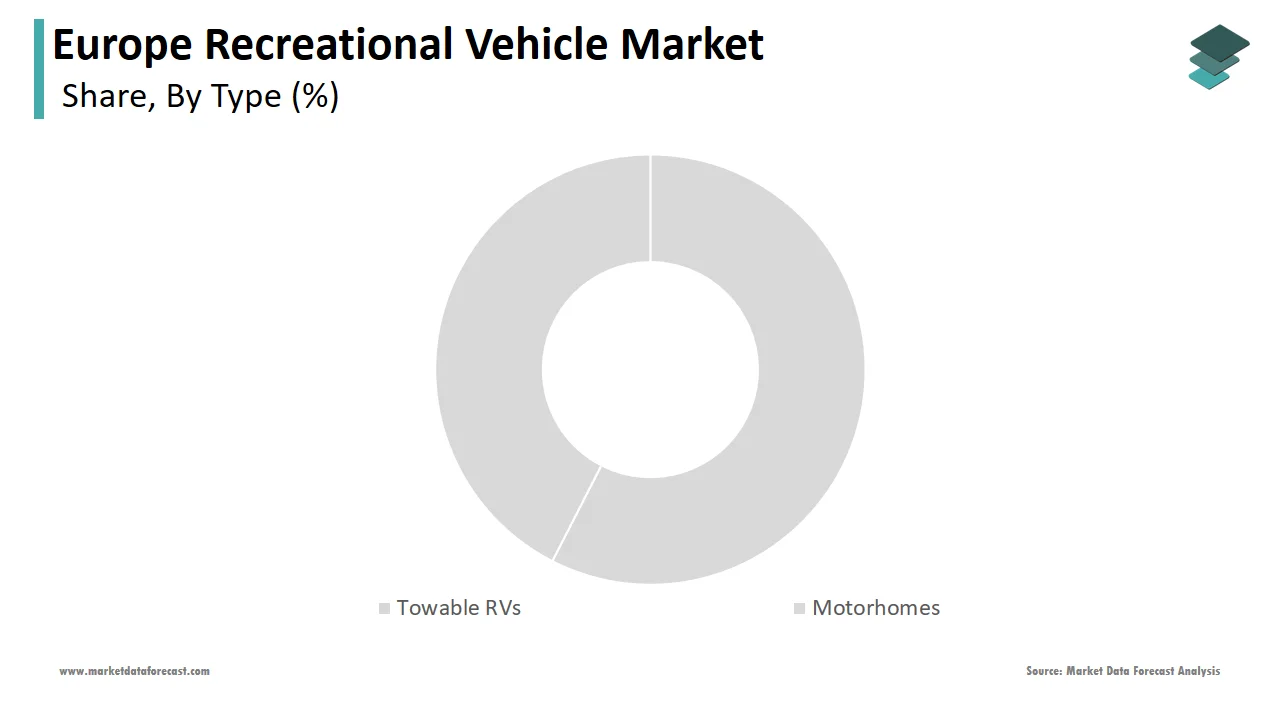
The motorhomes segment dominated the Europe recreational vehicle market with an estimated share in 2024 owing to their versatility and self-contained features, appealing to families and retirees seeking comfort during long trips. A key factor behind the segment’s dominance is the growing preference for all-in-one solutions. According to Eurostat, motorhomes reduce travel planning time by 30% while offering comprehensive amenities by ensuring compliance with consumer expectations. Additionally, advancements in fuel-efficient engines have addressed previous concerns about operating costs.
The Towable RVs segment is projected to exhibit a CAGR of 8.4% from 2026 to 2034. This growth is fueled by their affordability and ease of use by appealing to budget-conscious consumers. For example, in the UK, towable RV sales gained immense popularity, with investments surging by 50% in 2022, as per the British Caravaning Association. A significant driver of this segment’s rapid expansion is the growing emphasis on cost-effective travel solutions. Additionally, advancements in lightweight materials have improved towing efficiency by addressing previous concerns about usability.
REGIONAL ANALYSIS
Germany RV Market Insights
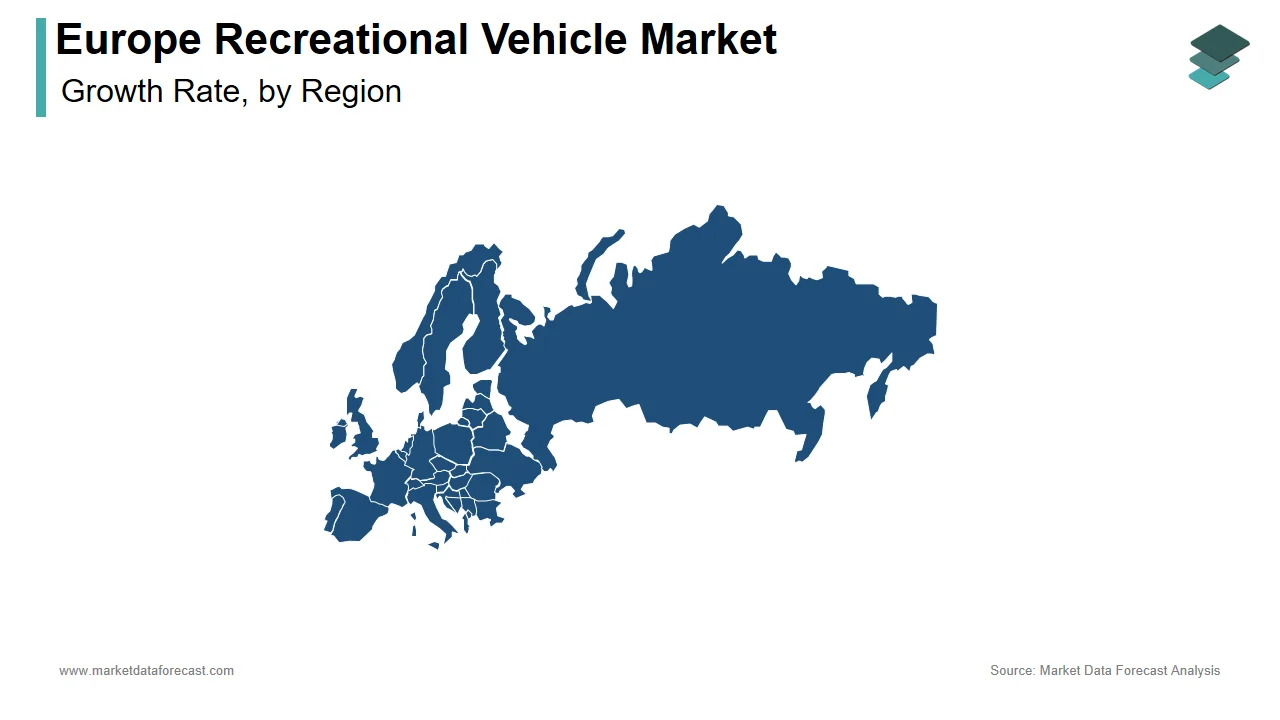
The German recreational vehicle market was accounted in holding 30.3% in 2024. The country’s robust industrial base and emphasis on technological innovation have positioned it as a leader in the region. For instance, iconic brands like Hymer and Knaus Tabbert are renowned globally for their high-quality motorhomes and towable RVs, catering to diverse demographics. A key factor driving Germany’s success is its proactive adoption of sustainable manufacturing practices. According to the German Engineering Association, over 60% of German manufacturers now use eco-friendly materials, reducing environmental impact while maintaining quality. Additionally, the rise of digital platforms has enabled German brands to offer personalized recommendations.
France RV Market Insights
France is anticipated to grow at a CAGR of 8.6% during the forecast period. The country’s strong emphasis on outdoor tourism and innovation has propelled its position as a key player. For instance, French brands like Challenger dominate the mid-tier segment by appealing to cost-conscious yet quality-focused consumers. A significant driver of France’s dominance is its focus on export-oriented growth and research. According to the French Tourism Federation, over 50% of French RV production is exported by reflecting its global appeal. Additionally, as per Deloitte, the integration of digital marketing strategies has enhanced brand visibility by encouraging younger demographics to explore RV travel.
COMPETITIVE LANDSCAPE
The Europe recreational vehicle market is characterized by intense competition, with established brands and emerging startups vying for market share. Key players like Hymer and Knaus Tabbert dominate the premium segment, while private labels compete aggressively on affordability and accessibility.
Emerging startups, supported by venture capital funding, are disrupting traditional business models. For instance, brands like Dethleffs are pioneering eco-friendly RVs, challenging incumbents in the sustainability segment. As per the European Commission, this competitive landscape drives innovation and ensures affordability for end-users. However, regulatory compliance and raw material volatility remain critical challenges for all participants by shaping the market’s evolution.
KEY MARKET PLAYERS
Some notable companies that dominate the Europe recreational vehicle market profiled in this report are Thor Industries Inc., Dethleffs GmbH & Co. KG, Autotrail motorhomes, Swift Group Limited, Knaus Tabbert GmbH, and Others.
The Europe recreational vehicle market is led by three key players are Hymer, Knaus Tabbert, and Adria Mobil, each contributing significantly to the global market. Hymer, headquartered in Germany, holds a substantial presence in Europe, offering iconic products like luxury motorhomes and compact campers.
Knaus Tabbert, based in Germany, specializes in innovative designs, with a growing footprint in markets like France and Spain. Meanwhile, Adria Mobil, a Slovenian firm, is renowned for its versatile towable RVs, widely adopted by budget-conscious consumers. These players collectively drive innovation and set benchmarks for quality and sustainability in the Europe recreational vehicle market.
EUROPE RECREATIONAL VEHICLE MARKET NEWS
- In April 2024, Hymer acquired a German startup specializing in solar panel technology for RVs. This acquisition aimed to expand its portfolio of sustainable energy solutions and cater to environmentally conscious buyers.
- In May 2024, Knaus Tabbert partnered with a French e-commerce platform to launch exclusive collections targeting younger demographics. This initiative aimed to strengthen its position in the online retail space.
- In July 2024, Adria Mobil introduced a line of biodegradable interior components targeting eco-friendly RV owners. This move aimed to align with consumer values and boost brand loyalty.
- In September 2024, Dethleffs secured USD 100 million in funding from European investors to scale its eco-friendly RV initiatives. This investment aimed to enhance transparency and accountability.
- In November 2024, Hymer launched a campaign promoting its zero-carbon manufacturing initiative. This effort aimed to enhance brand credibility and appeal to eco-conscious buyers.
MARKET SEGMENTATION
This European recreational vehicle market research report is segmented and sub-segmented into the following categories.
By Type
- Towable RVs
- Motorhomes
By Country
- UK
- France
- Spain
- Germany
- Italy
- Russia
- Sweden
- Denmark
- Switzerland
- Netherlands
- Turkey
- Czech Republic
- Rest of Europe
Frequently Asked Questions
What is the current size of the Europe Recreational Vehicle Market?
As of 2025, the European Recreational Vehicle Market is estimated to be valued at USD 33.42 billion, with strong growth projected through 2033 due to increased consumer interest in domestic travel and outdoor experiences.
What factors are driving growth in the European RV industry?
Key drivers include the rising popularity of road tourism, the expansion of camping infrastructure, eco-conscious travel trends, and innovations such as electric and hybrid RVs.
Which countries in Europe have the highest demand for recreational vehicles?
Germany, France, the UK, Italy, and the Netherlands are leading markets, driven by a strong tourism culture, disposable income levels, and supportive RV infrastructure.
What are the major types of RVs available in the Europe market?
The market includes motorhomes (Class A, B, and C), campervans, caravans, and travel trailers. Demand is growing for compact and eco-friendly designs across all segments.
How is the electric RV segment growing in Europe?
Electric RVs are gaining traction as governments push for reduced emissions and consumers demand sustainable travel options. Manufacturers are investing in battery efficiency and charging infrastructure to support this trend.
What is the expected CAGR of the Europe Recreational Vehicle Market from 2025 to 2033?
The market is anticipated to grow at a CAGR of approximately 14.4% between 2025 and 2033, with significant growth opportunities in electric RVs and digitalized travel planning.
Who are the leading manufacturers in the European RV market?
Key players include Hymer GmbH & Co., Knaus Tabbert AG, Trigano SA, Hobby-Wohnwagenwerk, and Bürstner GmbH. These companies lead in innovation, product range, and geographic reach.
How does tourism influence the European RV industry?
Tourism directly boosts RV sales and rentals, especially with the growing preference for self-guided road trips post-pandemic. Seasonal travel, festivals, and natural attractions further fuel demand.
What are the upcoming trends in the Europe Recreational Vehicle Market?
Trends include the rise of smart RVs, integration of IoT and AI for navigation and comfort, increased use of lightweight materials, and a focus on sustainability and off-grid capabilities.
How do European regulations affect the RV manufacturing sector?
EU emission norms, safety standards, and road compliance regulations are pushing manufacturers to innovate with low-emission vehicles, sustainable materials, and more efficient energy systems.
Related Reports
Access the study in MULTIPLE FORMATS
Purchase options starting from
$ 2000
Didn’t find what you’re looking for?
TALK TO OUR ANALYST TEAM
Need something within your budget?
NO WORRIES! WE GOT YOU COVERED!
Call us on: +1 888 702 9696 (U.S Toll Free)
Write to us: sales@marketdataforecast.com