- Product Description Description
- Table of Contents TOC
- List of Table & Figure LOT
- Get Free Sample PDF Sample PDF
Market Size, 2025
$22.24 BnMarket Estimate, 2026
$25.72 BnMarket Forecast, 2034
$82.45 BnCAGR, 2026–2034
15.67%Europe Smart Grid Market Size, Growth, Trends & Forecast (2026–2034)
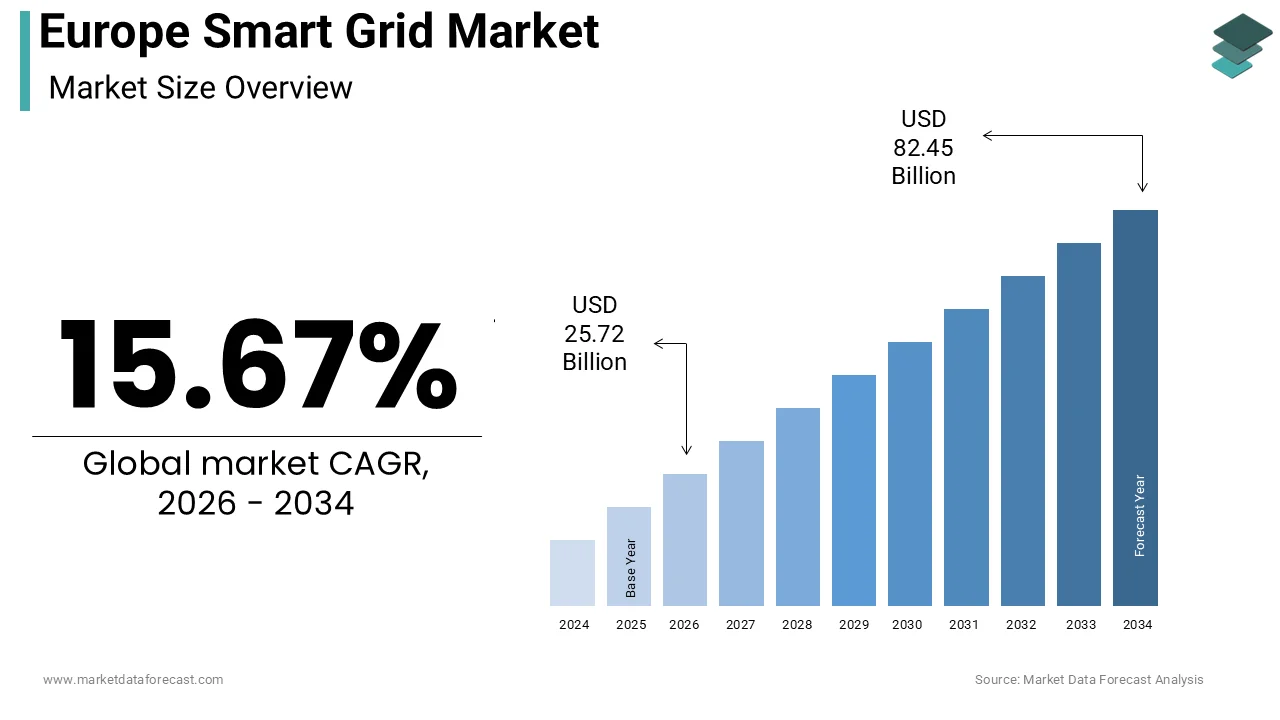
The Europe smart grid market size was calculated to be USD 22.24 billion in 2025, is anticipated to reach USD 25.72 billion in 2026, and is projected to be worth USD 82.45 billion by 2034, growing at a compound annual growth rate (CAGR) of 15.67% during the forecast period from 2026 to 2034. The market expansion is primarily driven by aggressive European decarbonization mandates, massive renewable energy integration, and the rapid electrification of transport and heating sectors.
Key Executive Metrics (At-a-Glance)
- 2025 Base Valuation: USD 22.24 Billion
- 2026 Current Valuation: USD 25.72 Billion
- 2034 Forecast Valuation: USD 82.45 Billion
- Compound Annual Growth Rate (CAGR): 15.67% (2026–2034)
- Leading Regional Market: Germany (holding 24.4% market share)
- Key Geographic Markets: Germany, United Kingdom, France, Italy, Spain, and others across Europe
Core Market Drivers & Opportunities
- Decarbonization Targets: The European Green Deal legally binding member states to net-zero emissions by 2050, accelerating wind and solar influx.
- Transport & Heating Electrification: Surging EV adoption and residential heat pump installations necessitating dynamic smart load management.
- Virtual Power Plants (VPPs): Emerging platforms connecting decentralized renewables, energy storage, and flexible loads for grid balancing.
Primary Market Restraints & Challenges
- Regulatory Fragmentation: Varying national energy laws, data protection rules, and metering standards hindering cross-border synchronization.
- Cybersecurity Risks: Expanding digital attack surfaces making critical grid infrastructure vulnerable to advanced threats.
Market Segmentation: Largest and Fastest-Growing Sectors
| Segment Category | Largest Segment | Fastest-Growing Segment |
|---|---|---|
| By Component | Solution (61.6% share) | Services (12.2% CAGR) |
| By End User | Industrial (41.9% share) | Residential (13.2% CAGR) |
| By Application | Distribution (51.9% share) | Consumption (14.4% CAGR) |
Major Industry Players Profiled
Key market participants shaping the European smart grid landscape include Siemens AG, Schneider Electric SE, ABB Ltd., General Electric Company, Eaton Corporation plc, IBM Corporation, Cisco Systems Inc., Honeywell International Inc., Oracle Corporation, Landis+Gyr Group AG, Itron Inc., Sensus (Xylem Inc.), Alstom SA, Capgemini SE, and Siemens Energy AG.
Europe Smart Grid Market Size
The Europe smart grid market size was calculated to be USD 22.24 billion in 2025 and is anticipated to be worth USD 82.45 billion by 2034, from USD 25.72 billion in 2026, growing at a CAGR of 15.67% during the forecast period.
Smart grid constitutes the modernization of electrical infrastructure through the bidirectional flow of energy and data, enabling real-time monitoring and automated control across generation, transmission, and distribution networks. This digital ecosystem integrates renewable energy sources, electric vehicles, and consumer storage systems into a cohesive network that responds dynamically to supply and demand fluctuations. The transformation is critical as the continent shifts away from centralized fossil fuel plants toward decentralized clean energy generation. According to Eurostat, renewable energy sources contribute significantly to gross electricity consumption in the European Union, which requires intelligent grid management to handle intermittency. As per the European Network of Transmission System Operators for Electricity, cross-border electricity exchanges have reached notable levels recently, requiring advanced synchronization technologies to maintain stability. Unlike traditional grids that operate on a one-way flow, the smart grid empowers consumers to become prosumers who both consume and produce energy. The European Commission emphasizes that digitalization is the backbone of the Green Deal, ensuring that energy efficiency targets are met through precise data analytics. This definition extends beyond hardware upgrades to include sophisticated software platforms that predict load patterns and optimize asset utilization. As per the International Energy Agency, the deployment of smart meters has expanded widely across Europe, creating a vast data network that forms the foundation of this intelligent utility landscape.
MARKET DRIVERS
Aggressive Decarbonization Mandates Driving Renewable Integration
The imperative to meet stringent climate neutrality goals acts as the most potent catalyst for smart grid deployment across the European continent, which is majorly propelling the growth of the European smart grid market. The European Green Deal legally binds member states to achieve net-zero greenhouse gas emissions by 2050, which requires a massive influx of variable renewable energy sources like wind and solar. As per the European Environment Agency, solar photovoltaic capacity in the EU has expanded rapidly in recent years, which is creating significant volatility in power generation that legacy grids cannot manage. Traditional infrastructure lacks the flexibility to balance sudden surges in production with fluctuating consumption patterns, which is leading to potential blackouts or curtailment of clean energy. Smart grids utilize advanced sensors and artificial intelligence to forecast weather-dependent generation and automatically adjust load distribution to maintain frequency stability. The European Commission mandates that all new renewable projects must be grid-ready, which implies integration with digital control systems from inception. This regulatory pressure forces transmission system operators to invest heavily in wide-area monitoring systems and flexible alternating current transmission systems. According to WindEurope, offshore wind farms in the North Sea generate power at a scale that requires complex subsea cable management and real-time voltage control. The inability to integrate these green assets without smart technology would render climate targets unachievable. Consequently, the drive to decarbonize the energy mix directly fuels the demand for intelligent grid solutions that ensure reliability amidst high renewable penetration.
Electrification of Transport and Heating Sectors
The rapid electrification of the transport and heating sectors creates an unprecedented demand for grid intelligence to manage soaring electricity loads and prevent infrastructure overload, which is further boosting the expansion of the European smart grid market. As per the European Automobile Manufacturers Association, electric vehicle sales have risen sharply, representing a substantial portion of new car registrations and introducing massive new load centers to the distribution network. Uncoordinated charging of millions of electric vehicles could cause local transformer failures and voltage drops, especially during peak evening hours when residential demand is already high. Smart grid technologies enable vehicle-to-grid interactions where electric cars act as distributed storage units that discharge power back to the grid during shortages. Similarly, the shift from gas boilers to electric heat pumps for residential heating significantly increases winter electricity consumption, which requires dynamic load management to avoid system stress. According to the European Heat Pump Association, installations of heat pumps have grown considerably, adding gigawatts of demand that must be balanced intelligently. Distribution system operators deploy smart meters and home energy management systems to incentivize off-peak charging and heating through time of use tariffs. This digital coordination allows the existing grid to accommodate higher loads without the immediate need for costly physical reinforcement. As per the International Energy Agency, flexible demand response programs could unlock vast latent capacity across Europe. The convergence of mobility and heating electrification makes smart grid deployment not just an option but a necessity for maintaining energy security.
MARKET RESTRAINTS
Fragmented Regulatory Frameworks Across Member States
The lack of harmonized regulations and technical standards across European nations creates a significant barrier to the seamless deployment of smart grid technologies. Each member state maintains its own national energy laws, grid codes, and data privacy rules, which complicates the implementation of cross-border smart grid solutions. The Agency for the Cooperation of Energy Regulators highlights that discrepancies in metering standards and interoperability protocols hinder the creation of a truly unified European energy market. Utilities operating in multiple countries face increased costs and complexity as they must customize solutions for each jurisdiction rather than deploying scalable platforms. This fragmentation slows down the rollout of advanced features like dynamic pricing and cross-border balancing services, which rely on uniform data exchange formats. The General Data Protection Regulation adds another layer of complexity regarding how consumer energy data is collected and shared among stakeholders. National regulators often prioritize domestic energy security over regional integration, leading to conflicting investment priorities and delayed joint projects. According to the European Commission, only a limited number of planned cross-border interconnectors are fully operational due to regulatory bottlenecks and permitting delays. This disjointed landscape prevents the realization of economies of scale and stifles innovation as vendors struggle to navigate a patchwork of compliance requirements. Until a more cohesive regulatory framework is established, the full potential of the European smart grid will remain constrained by administrative and legal silos.
High Capital Expenditure and Uncertain Return on Investment
The immense financial burden associated with upgrading legacy infrastructure to smart grid standards is further impeding the growth of the European smart grid market. Retrofitting aging transmission lines and distribution networks with sensors, communication modules, and advanced control systems requires billions of euros in upfront capital expenditure. As per the European Investment Bank, achieving the 2030 climate targets will require significant additional annual investment in energy infrastructure, which strains public and private budgets. Many distribution system operators, particularly in Eastern and Southern Europe, operate with limited financial resources and struggle to secure funding for such transformative projects. The long payback periods for smart grid investments, coupled with uncertain regulatory returns, discourage risk-averse stakeholders from committing funds. Fluctuating interest rates and inflation further escalate the cost of borrowing, making large-scale modernization projects less economically viable. There is also a risk that rapidly evolving technology may render expensive installations obsolete before they generate sufficient returns. According to Eurelectric, the gap between required investment and actual spending remains considerable, threatening the timeline for grid digitalization. Consumers may also resist bearing the cost through higher tariffs, leading to political pushback against necessary upgrades. This financial uncertainty creates a cautious investment environment where only essential upgrades are pursued, while comprehensive smart grid transformations are deferred.
MARKET OPPORTUNITIES
Deployment of Virtual Power Plants and Aggregated Resources
The rise of virtual power plants is a prominent opportunity in the European smart grid market. These digital platforms connect thousands of small-scale generators, batteries, and flexible loads to provide grid services traditionally supplied by large fossil fuel power stations. The European Commission recognizes virtual power plants as a key enabler for integrating decentralized renewables and enhancing system flexibility without building new physical infrastructure. As per Next Kraftwerke, one of the largest virtual power plant operators in Europe, distributed capacity is managed at a scale that balances the grid in real time. This model allows homeowners with solar panels and electric vehicles to monetize their assets by participating in frequency regulation and capacity markets. Smart grid software enables the seamless coordination of these disparate resources, ensuring that supply matches demand instantaneously across vast geographical areas. According to the International Renewable Energy Agency, virtual power plants could provide significant flexible capacity in Europe by 2030, reducing the need for peaker plants. The opportunity extends to creating new revenue streams for aggregators and empowering consumers to take an active role in the energy transition. By leveraging cloud computing and artificial intelligence, virtual power plants optimize the dispatch of distributed assets, maximizing efficiency and reliability. This paradigm shift from centralized to decentralized control opens vast avenues for innovation and investment in smart grid software and services.
Integration of Hydrogen Infrastructure with Electrical Networks
The burgeoning green hydrogen economy offers a unique opportunity for smart grids to manage the complex interplay between electricity generation and hydrogen production facilities. Electrolyzers used to produce green hydrogen can act as massive flexible loads that absorb excess renewable energy during periods of low demand and high generation. The European Hydrogen Backbone initiative plans to establish a dedicated hydrogen transport network connecting industrial clusters with renewable energy hubs, requiring sophisticated coordination with the power grid. Smart grid technologies enable real-time communication between wind farms and electrolysis plants, ensuring that hydrogen production ramps up only when surplus clean electricity is available. This synergy helps to minimize curtailment of renewable energy and stabilizes grid frequency by providing a reliable sink for excess power. As per the European Clean Hydrogen Alliance, installed electrolyzer capacity could reach substantial levels by 2030, creating significant new demand for intelligent load management systems. Integrating hydrogen storage with the grid allows for long term energy storage, which complements short term battery solutions. According to the International Energy Agency, coupling power and hydrogen sectors through digital interfaces can reduce overall system costs and enhance energy security. This convergence creates a new market segment for smart controllers and communication protocols designed specifically for power-to-gas applications. Utilities that master this integration will gain a competitive advantage in managing the future multi-vector energy system.
MARKET CHALLENGES
Cybersecurity Vulnerabilities in Connected Infrastructure
The increasing digitization of the power grid exposes critical energy infrastructure to sophisticated cyberattacks that pose existential threats to national security and public safety, which is one of the major challenges to the European smart grid market. As smart grids rely heavily on Internet of Things devices and cloud-based data analytics, the attack surface expands exponentially, inviting malicious actors to target control systems. According to the European Union Agency for Cybersecurity, the energy sector remains the most targeted industry for cyber incidents, with attacks rising significantly in recent years. A successful breach could manipulate grid frequencies, cause widespread blackouts, or damage expensive physical equipment like transformers and generators. The interconnected nature of smart grids means that a vulnerability in one node could cascade rapidly across national borders, affecting multiple countries simultaneously. Legacy systems integrated with new digital technologies often lack robust security protocols, creating weak links that hackers can exploit. Protecting the vast amount of sensitive consumer data collected by smart meters also requires stringent encryption and access controls, which add complexity to system design. As per ENISA, ransomware attacks on utility providers have become more frequent and damaging, disrupting operations and eroding public trust. The shortage of skilled cybersecurity professionals in the energy sector further exacerbates the risk, leaving many utilities ill-prepared to defend against advanced persistent threats. Ensuring the resilience of smart grids against evolving cyber dangers remains a paramount challenge that requires continuous vigilance and international cooperation.
Interoperability Issues Among Diverse Technology Vendors
The proliferation of diverse hardware and software solutions from numerous vendors creates significant interoperability challenges that hinder the seamless operation of smart grid networks, which further impacts the regional market growth. Utilities often procure components from different manufacturers who utilize proprietary communication protocols and data formats, leading to siloed systems that cannot effectively exchange information. The Institute of Electrical and Electronics Engineers notes that a lack of standardization results in integration delays, increased costs, and reduced system reliability. When devices such as smart meters, inverters, and sensors cannot communicate fluently, the grid loses its ability to respond dynamically to changing conditions. This fragmentation prevents the realization of a truly holistic smart grid where every asset contributes to overall optimization. Efforts to establish common standards like the Common Information Model have made progress, but adoption remains uneven across the continent. Vendor lock-in strategies further complicate matters as suppliers design ecosystems that discourage the use of third-party components. According to the European Standardization Organization, the absence of universal interoperability frameworks slows down the deployment of advanced applications like demand response and microgrid management. Utilities face the difficult task of managing complex middleware solutions to bridge gaps between incompatible systems, which increases maintenance overhead. Achieving true plug-and-play functionality for all grid assets remains a distant goal, requiring stronger industry collaboration and regulatory enforcement of open standards.
REPORT COVERAGE
| REPORT METRIC | DETAILS |
| Market Size Available | 2025 to 2034 |
| Base Year | 2025 |
| Forecast Period | 2026 to 2034 |
| CAGR | 15.67% |
| Segments Covered | By Component, End User, Application, And Region |
| Various Analyses Covered | Global, Regional & Country Level Analysis; Segment-Level Analysis; DROC, PESTLE Analysis; Porter’s Five Forces Analysis; Competitive Landscape; Analyst Overview of Investment Opportunities |
| Regions Covered | UK, France, Spain, Germany, Italy, Russia, Sweden, Denmark, Switzerland, Netherlands, Turkey, and the Czech Republic |
| Market Leaders Profiled | Siemens AG, Schneider Electric SE, ABB Ltd., General Electric Company, Eaton Corporation plc, IBM Corporation, Cisco Systems Inc., Honeywell International Inc., Oracle Corporation, Landis+Gyr Group AG, Itron Inc., Sensus (Xylem Inc.), Alstom SA, Capgemini SE, Siemens Energy AG |
SEGMENTAL ANALYSIS
By Component Insights
The solution segment dominated the market by capturing 61.6% of the regional market share in 2025, owing to the massive capital expenditure required to deploy physical hardware and software platforms that form the backbone of grid modernization. The widespread regulatory mandate for installing advanced metering infrastructure across the European Union is further contributing to the expansion of the solution segment in the European market. According to the European Commission, member states are required to equip a majority of consumers with smart meters where cost-benefit assessments are positive. Countries such as Italy and Sweden have already achieved near full penetration, necessitating continuous hardware refreshes and software upgrades to support new functionalities. As per Eurostat, smart meters are now widely operational across Europe, creating a vast network of endpoints that require robust data management solutions. These devices are not merely measurement tools but complex communication hubs that enable real-time pricing and remote disconnect capabilities. Utilities must invest heavily in head-end systems and meter data management platforms to process the terabytes of data generated daily. The sheer volume of hardware procurement, including sensors, communication modules, and control units, ensures that the solution segment remains the largest revenue generator. As per the International Energy Agency, the replacement cycle for these devices begins within 10 to 15 years, ensuring sustained demand for next-generation hardware solutions. This regulatory-driven hardware rollout forms the foundational layer upon which all other smart grid services operate.
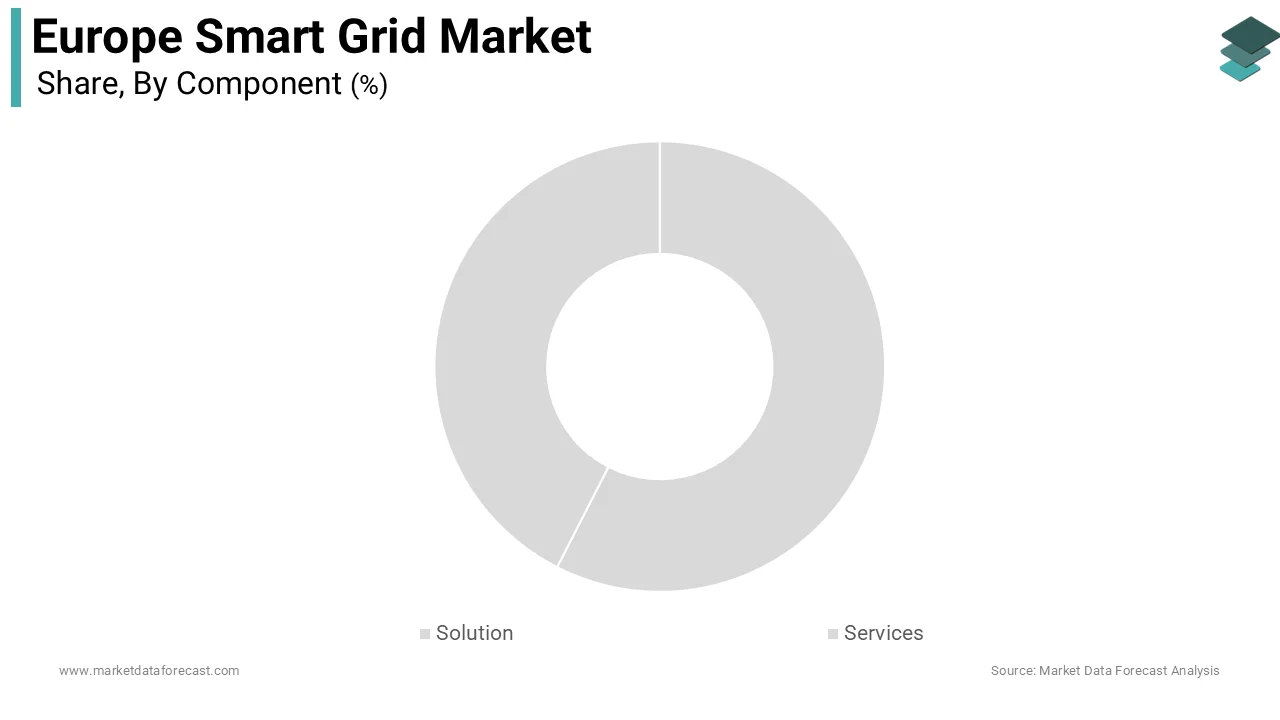
On the other hand, the services segment is projected to register the highest CAGR of 12.2% over the forecast period owing to the increasing complexity of grid operations, which necessitates ongoing professional support and managed services. The escalating threat landscape targeting critical energy infrastructure that forces utilities to outsource specialized security functions is also aiding the growth of the services segment in the European market. According to the European Union Agency for Cybersecurity, cyberattacks against the energy sector have risen significantly, highlighting the vulnerability of connected grid assets. Managing these threats requires highly specialized expertise that most traditional utilities lack in-house, leading to a surge in demand for managed security services. Providers offer continuous monitoring, threat detection, and incident response capabilities that ensure grid resilience against sophisticated state-sponsored and criminal actors. The implementation of the Network and Information Systems Directive mandates strict reporting and security measures, which many operators meet by partnering with external experts. As per ENISA, the financial impact of major grid cyber incidents can be substantial, making preventive services a cost-effective necessity. Utilities are increasingly adopting security as a service models that provide access to the latest threat intelligence without heavy upfront capital investment. The dynamic nature of cyber threats means that security services require constant updates and human oversight, which drives recurring revenue streams. This shift from product-centric to service-centric security approaches ensures that the services segment grows faster than the hardware market.
By End User Insights
The industrial segment accounted for 41.9% of the European market share in 2025. The dominance of the industrial segment in the European market is driven by the massive energy consumption of heavy industries and their urgent need to optimize costs and ensure supply reliability. The sheer volume of electricity consumed by manufacturing sectors that makes even marginal efficiency gains financially significant is also supporting the dominance of the industrial segment by end user in the European market. As per Eurostat, the industrial sector accounts for a substantial portion of total electricity consumption in the European Union, making it the largest single end-user group. Heavy industries such as steel, chemicals, and automotive manufacturing operate energy-intensive processes where power costs constitute a major portion of operational expenses. Smart grid technologies enable these facilities to monitor energy usage in real time and participate in demand response programs that offer financial incentives for reducing load during peak periods. The European Industry Electrification Platform states that industrial electrification could significantly increase electricity demand by 2050, necessitating intelligent management to avoid grid congestion. By deploying smart sensors and automated control systems, factories can identify energy waste and optimize machine scheduling to align with low tariff windows. This capability to actively manage energy portfolios allows industrial players to mitigate the impact of volatile wholesale electricity prices. As per the International Energy Agency, industrial demand response potential in Europe is equivalent to several large power plants. The economic imperative to reduce carbon footprints while maintaining competitiveness drives continuous investment in smart grid solutions tailored for industrial applications.
On the other hand, the residential segment is anticipated to grow at a promising CAGR of 13.2% over the forecast period in the European smart grid market, owing to the empowerment of homeowners to become active participants in the energy market through prosumer activities. The rapid adoption of rooftop solar photovoltaic systems coupled with home battery storage units across European households is further boosting the expansion of the residential segment in the European market. According to the European Photovoltaic Industry Association, residential solar installations have surged in recent years, driven by high electricity prices and generous government subsidies. Homeowners are increasingly installing smart inverters and energy management systems that allow them to store excess solar generation and use it during peak evening hours. This shift transforms passive consumers into prosumers who interact dynamically with the grid by exporting surplus power or providing flexibility services. Smart meters are essential for measuring bidirectional flows and enabling net metering schemes that compensate households for their contributions. As per Eurostat, the number of energy communities involving residential users has grown significantly, fostering collective self-consumption models. The integration of smart thermostats and connected appliances further enhances the ability of households to automate energy usage based on price signals. This decentralization of generation requires the grid to evolve from a one-way delivery system to an interactive network capable of handling millions of small injection points. The financial benefits of self-sufficiency, combined with environmental consciousness, drive rapid uptake of residential smart grid solutions.
By Application Insights
The distribution segment dominated the Europe smart grid market with 51.9% of the European market share in 2025 due to the fact that the distribution network is the interface where most renewable generation and consumer interactions occur. The massive influx of decentralized renewable energy sources connecting directly to the medium and low voltage networks is also supporting the dominating position of the distribution segment in the European market. Unlike transmission grids, which handle bulk power from large plants, distribution grids now host thousands of small-scale solar farms, wind turbines, and biomass generators. As per the European Distribution System Operators association, most new renewable capacity connections happen at the distribution level, creating complex bidirectional power flows. Traditional radial distribution networks were designed for one-way power delivery and lack the visibility and control needed to manage these variable injections. Smart grid technologies such as advanced distribution management systems and fault location, isolation, and service restoration devices are critical for maintaining voltage stability and preventing equipment damage. The ability to monitor real-time conditions allows operators to maximize the hosting capacity of the grid without expensive physical upgrades. According to the International Renewable Energy Agency, distributed renewables have become a major portion of total renewable additions in Europe, intensifying the need for smart distribution solutions. The transition from passive to active distribution networks requires comprehensive digitalization to ensure reliable power delivery amidst high variability. This fundamental shift in grid architecture ensures that the distribution segment remains the largest area of investment and innovation.
However, the consumption application segment is projected to grow at the fastest CAGR of 14.4% over the forecast period, owing to the paradigm shift towards active demand side management and energy efficiency at the point of use. The emergence of mature demand response and flexibility markets that incentivize consumers to adjust their usage patterns is further contributing to the rapid expansion of the consumption segment in the European market. Historically, consumption was viewed as a fixed load, but smart grid technologies now allow it to become a flexible resource that balances the grid. The European Commission has established clear rules for aggregation and participation in balancing markets, enabling even small residential and commercial consumers to monetize their flexibility. Utilities and aggregators deploy smart controllers that automatically shift loads like water heating, air conditioning, and pool pumps to times of low demand or high renewable generation. As per Eurelectric, demand response potential in Europe could reach significant levels by 2030, providing a cost-effective alternative to building new peaker plants. The financial rewards for participating in these programs drive rapid adoption of smart plugs, thermostats, and energy management systems. The integration of artificial intelligence allows for predictive load shaping that optimizes comfort while minimizing costs. This transformation of consumption from a passive activity to an active market participant creates a vibrant ecosystem of services and devices. The economic value unlocked by flexibility ensures that the consumption segment will outpace other applications in growth rate.
REGIONAL ANALYSIS
Germany Smart Grid Market Analysis
Germany led the smart grid market in Europe in 2025 with 24.4% of the European market share. The dominance of Germany in the European market is attributed to its aggressive Energiewende policy and industrial prowess. The nation serves as the primary testing ground for integrating high shares of renewable energy into the grid, which requires advanced digital solutions. According to the German Federal Ministry for Economic Affairs and Climate Action, billions of euros have been allocated specifically for grid digitalization and expansion projects to accommodate the phase-out of nuclear and coal power. This public funding accelerates the deployment of smart meters and distribution automation systems across the country. TenneT and Amprion, the leading transmission system operators, are pioneering offshore wind integration projects that require cutting-edge high-voltage direct current technology and real-time monitoring. As per Destatis, renewable energy sources generated a significant portion of Germany’s electricity in 2024, creating volatility that only smart grids can manage. The strong manufacturing base provides a steady stream of innovative hardware and software solutions from companies like Siemens and Bosch. Stringent efficiency standards for buildings and industries drive the adoption of smart energy management systems. The collaborative approach between government regulators and utility companies ensures that pilot projects scale rapidly into nationwide implementations. This combination of policy support, technological innovation, and industrial capacity solidifies Germany’s position as the dominant market force.
United Kingdom Smart Grid Market Analysis
The United Kingdom secured a promising share of the European smart grid market in 2025 due to its world-leading offshore wind sector and progressive regulatory framework for flexibility services. The UK government has positioned smart grid development as a cornerstone of its net-zero strategy, aiming to decarbonize the power system by 2035. Ofgem, the energy regulator, has introduced innovative price controls that incentivize distribution network operators to invest in non-wire alternatives like demand response and storage. National Grid ESO operates one of the most advanced balancing mechanisms globally, procuring flexibility from thousands of small assets to maintain system stability. As per the Department for Energy Security and Net Zero, the UK added record amounts of offshore wind capacity in 2024, requiring sophisticated grid management to handle intermittent outputs. The presence of a vibrant fintech and tech startup ecosystem in London fosters the development of novel energy trading platforms and AI-driven optimization tools. The rollout of smart meters has reached over 30 million homes, enabling detailed consumption analytics and time-of-use tariffs. The focus on vehicle-to-grid trials positions the UK as a pioneer in integrating electric mobility with the power network. This forward-looking regulatory environment and strong commitment to renewable integration ensure the UK remains a critical growth engine for the European market.
France Smart Grid Market Analysis
France is estimated to account for a promising share of the European smart grid market during the forecast period, owing to its unique energy mix and strong state-led investment in grid modernization. The country is transitioning from a predominantly nuclear baseload system to a more diversified portfolio including significant renewable additions, which requires enhanced grid flexibility. Enedis, the main distribution system operator, has launched a massive smart meter rollout program covering millions of premises, providing granular data for grid optimization. The French government views energy sovereignty as a strategic priority, driving substantial public investment in grid resilience and digitalization. RTE, the transmission operator, is developing advanced forecasting tools to manage the variability of growing wind and solar capacity alongside nuclear output. As per the Commission de Régulation de l’Énergie, France aims to significantly increase its renewable capacity by 2030, necessitating urgent upgrades to distribution infrastructure. The emphasis on nuclear life extension and new reactor construction also requires smart grid technologies to optimize plant operations and grid interfacing. France’s strong engineering sector supports the development of proprietary solutions for grid control and protection. The regulatory push for energy communities and self-consumption fosters innovation at the distribution edge. This balanced approach, combining nuclear stability with renewable growth, ensures France maintains an influential position in the regional smart grid landscape.
Italy Smart Grid Market Analysis
Italy is anticipated to witness a healthy CAGR in the European smart grid market during the forecast period, owing to being the first country in Europe to achieve nearly complete smart meter penetration, which sets a benchmark for data-driven grid management. Enel Distribuzione pioneered the early adoption of smart meters over two decades ago, creating a vast repository of consumption data that enables advanced analytics and service offerings. The Italian Regulatory Authority for Energy Networks and Environment continues to drive innovation through incentives for storage integration and demand response programs. The country’s high solar irradiance has led to a boom in rooftop photovoltaic installations, requiring sophisticated voltage control and curtailment management at the distribution level. As per Terna, the national transmission operator, Italy is investing heavily in interconnectors and digital substations to enhance cross-border electricity exchanges and internal grid stability. The focus on electrifying transport and heating aligns with national recovery plan funds dedicated to green infrastructure. Italian utilities are leveraging their data advantage to offer value-added services like energy efficiency advice and dynamic pricing to customers. The integration of blockchain pilots for peer-to-peer trading demonstrates the country’s appetite for decentralized energy models. This early mover advantage, combined with continued investment in digital infrastructure, keeps Italy at the forefront of smart grid evolution.
Spain Smart Grid Market Analysis
Spain is predicted to account for a notable share of the European smart grid market during the forecast period due to its ambitious renewable energy targets and favorable geographical conditions for solar and wind power. The Spanish government has approved a national energy and climate plan that mandates a high share of renewable electricity by 2030, driving an urgent need for grid modernization. Red Eléctrica de España, the transmission system operator, is deploying advanced wide-area monitoring systems to manage the high penetration of renewables and ensure system security. The country’s abundant solar resources have triggered a surge in utility-scale solar parks and distributed generation, requiring flexible grid assets to balance intermittency. As per the National Markets and Competition Commission, Spain is promoting regulatory frameworks that facilitate the aggregation and participation of small consumers in balancing markets. Major utilities like Iberdrola and Endesa are investing heavily in digitalizing their networks to support the energy transition and improve reliability. The focus on green hydrogen production adds another layer of complexity, requiring smart coordination between electrolyzers and the power grid. The favorable climate and strong political will create an ideal environment for testing and scaling smart grid solutions. This aggressive expansion of renewable capacity ensures that Spain will remain a key growth market for smart grid technologies in Southern Europe.
COMPETITION OVERVIEW
The competition in the Europe smart grid market is intense and characterized by a mix of established industrial giants and agile technology startups vying for dominance in a rapidly evolving landscape. Incumbent players leverage their deep domain expertise and extensive installed bases to secure large-scale modernization contracts from national utilities and transmission operators. Meanwhile, new entrants disrupt the market with cloud native software solutions and artificial intelligence algorithms that offer superior scalability and cost efficiency. The rivalry intensifies as firms strive to differentiate their offerings through unique value propositions such as enhanced cybersecurity features or seamless integration with renewable energy sources. Strategic alliances have become essential as no single entity possesses all the capabilities required to deliver a fully integrated smart grid ecosystem. Competitors constantly monitor each other's moves to quickly replicate successful innovations or counter new market entries with improved versions of existing products. The pressure to comply with stringent European Union regulations regarding data privacy and environmental sustainability further shapes competitive strategies. Companies that can demonstrate tangible improvements in grid reliability and operational efficiency while maintaining robust security standards gain a distinct advantage. This fierce yet collaborative environment drives rapid technological advancement and ensures that European grids remain at the global forefront of digital energy innovation.
KEY MARKET PLAYERS
A few major players of the Europe smart grid market include
- Siemens AG
- Schneider Electric SE
- ABB Ltd
- General Electric Company
- Eaton Corporation plc
- IBM Corporation
- Cisco Systems Inc
- Honeywell International Inc
- Oracle Corporation
- Landis+Gyr Group AG
- Itron Inc
- Sensus (Xylem Inc.)
- Alstom SA
- Capgemini SE
- Siemens Energy AG
Top Strategies Used by Key Market Participants
Key players in the Europe smart grid market primarily employ strategic acquisitions to rapidly acquire niche technologies and expand their digital portfolios. Companies frequently purchase specialized software startups to gain access to advanced analytics and artificial intelligence capabilities that enhance grid management. Another prevalent strategy involves forming extensive partnerships with telecommunications providers to ensure robust connectivity for Internet of Things devices deployed across vast networks. Market participants also focus heavily on research and development to pioneer new standards for interoperability and cybersecurity that address emerging regulatory requirements. Expanding into adjacent sectors such as electric vehicle charging and home energy management allows firms to offer holistic solutions that cover the entire value chain. Furthermore, companies actively engage in pilot projects with leading utilities to test and validate innovative concepts before full-scale commercial deployment. These collaborative and innovation-driven approaches enable stakeholders to navigate the complex regulatory landscape while meeting the urgent demands of the energy transition effectively.
Leading Players in the Europe Smart Grid Market
- Siemens AG stands as a cornerstone of the Europe smart grid market by delivering comprehensive digitalization solutions that span generation, transmission, and distribution. The company leverages its extensive portfolio of hardware and software to enable utilities to manage complex energy flows and integrate renewable sources efficiently. Globally, Siemens contributes by setting benchmarks for grid stability and automation through its Spectrum Power and Gridscale X platforms. Recently, the company launched an advanced grid control center in Berlin that utilizes artificial intelligence to predict outages and optimize asset performance in real time. This initiative demonstrates their commitment to enhancing grid resilience against climate induced disruptions. Siemens also partners with transmission system operators across Europe to deploy high-voltage direct current technologies that facilitate cross-border energy trading. Their continuous investment in research ensures they remain at the forefront of developing quantum secure communication protocols for critical infrastructure. By focusing on interoperability and sustainability, Siemens helps shape the future of intelligent energy networks worldwide.
- Schneider Electric plays a pivotal role in the Europe smart grid market through its innovative EcoStruxure grid architecture, which connects assets from edge to cloud. The company specializes in distribution automation and microgrid management, enabling utilities to handle decentralized energy resources effectively. On a global scale, Schneider Electric drives the adoption of open standards that allow diverse devices to communicate seamlessly within smart grid ecosystems. Recent actions include the acquisition of a leading software firm specializing in distributed energy resource management to bolster their digital offerings. This strategic move enhances their ability to aggregate solar panels and batteries into virtual power plants that support grid balancing. The company also collaborates with European cities to implement smart street lighting and electric vehicle charging networks that reduce carbon footprints. Their focus on sustainability and efficiency resonates with the European Green Deal objectives, making them a preferred partner for modernization projects. By integrating cybersecurity into every layer of its solutions, Schneider Electric ensures robust protection for critical energy infrastructure against evolving threats.
- ABB Ltd is a key contributor to the Europe smart grid market by providing cutting-edge robotics and electrification technologies that optimize grid operations. The company excels in high-voltage equipment and digital substations that enhance the reliability and capacity of transmission networks. Globally, ABB leads in deploying flexible alternating current transmission systems that stabilize grids with high renewable penetration. Recently, ABB inaugurated a new factory in Poland dedicated to producing advanced switchgear and digital control units for smart grid applications. This expansion strengthens their supply chain and reduces delivery times for critical infrastructure projects across the continent. The company also partners with research institutions to develop next-generation battery storage solutions that address intermittency challenges. Their ability to integrate physical and digital technologies allows utilities to monitor and control assets remotely with unprecedented precision. ABB's commitment to innovation is evident in its development of carbon-neutral factories, which serve as living labs for smart grid concepts. By focusing on efficiency and decarbonization, ABB empowers utilities to build resilient and sustainable energy systems for the future.
RECENT HAPPENINGS NEWS
- In March 2024, Siemens AG partnered with TenneT to deploy an AI-driven grid control system. This partnership is anticipated to allow Siemens AG to showcase its digital capabilities and strengthen the Europe smart grid market presence.
- In May 2024, Schneider Electric acquired a software startup specializing in virtual power plant management. This acquisition is anticipated to allow Schneider Electric to expand its distributed energy resource portfolio and strengthen the Europe smart grid market presence.
- In February 2024, ABB Ltd opened a new manufacturing facility for digital substations in Poland. This opening is anticipated to allow ABB Ltd to increase production capacity and strengthen the Europe smart grid market presence.
- In June 2024, Hitachi Energy launched a new cybersecurity service suite for critical infrastructure protection. This launch is anticipated to allow Hitachi Energy to offer enhanced security solutions and strengthen the Europe smart grid market presence.
- In April 2024, General Electric Vernova signed a contract to upgrade transmission systems in France. This contract is anticipated to allow General Electric Vernova to demonstrate its high voltage expertise and strengthen the Europe smart grid market presence.
MARKET SEGMENTATION
This research report on the Europe smart grid market has been segmented and sub-segmented based on component, end user, application & region.
By Component
- Solution
- Smart Grid Distribution Management
- Substation Automation
- Smart Grid Network Management
- Smart Grid Metering Infrastructure
- Smart Grid Security
- Smart Grid Communications
- Others
- Services
By End User
- Commercial
- Industrial
- Residential
By Application
- Distribution
- Transmission
- Consumption
- Generation
By Region
- UK
- France
- Spain
- Germany
- Italy
- Russia
- Sweden
- Denmark
- Switzerland
- Netherlands
- Turkey
- Czech Republic
- Rest of Europe