- Product Description Description
- Table of Contents TOC
- List of Table & Figure LOT
- Get Free Sample PDF Sample PDF
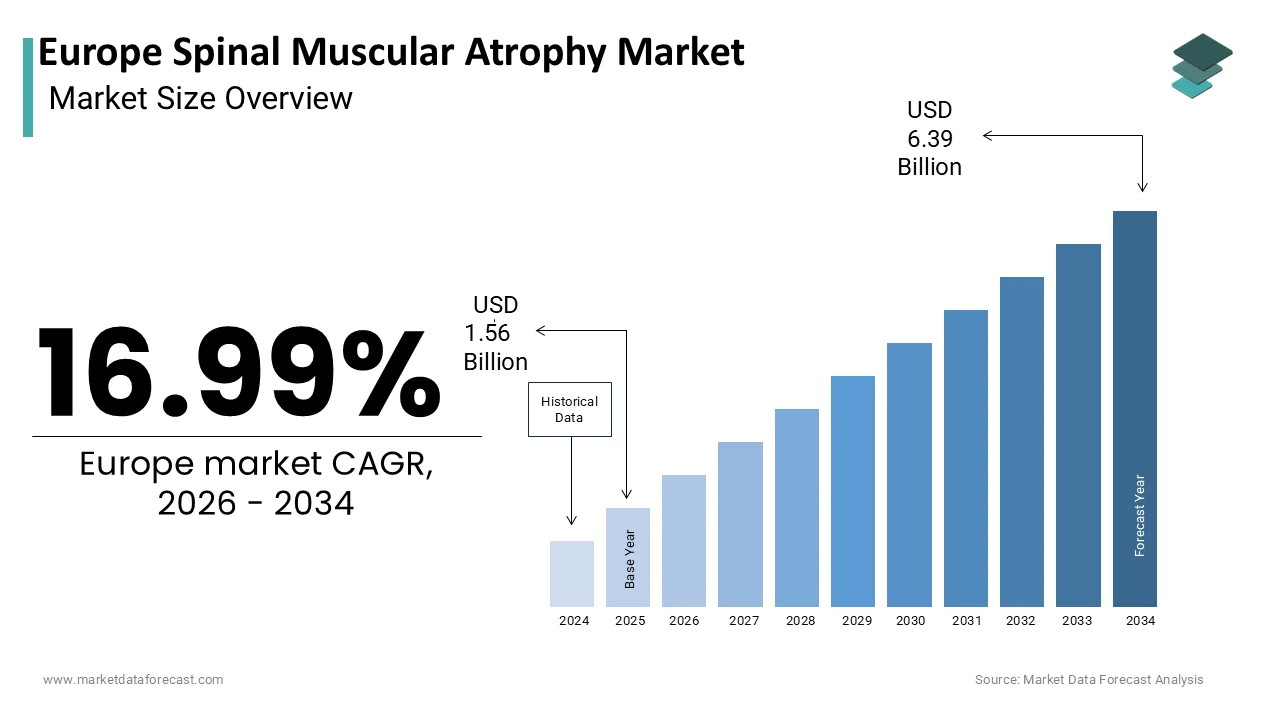
Market Size, 2025
$1.56 BnMarket Estimate, 2026
$1.82 BnMarket Forecast, 2034
$6.39 BnCAGR, 2026–2034
16.99%Europe Spinal Muscular Atrophy Market Size
The Europe spinal muscular atrophy market was valued at USD 1.56 billion in 2025, is estimated to reach USD 1.82 billion in 2026, and is projected to reach USD 6.39 billion by 2034, growing at a CAGR of 16.99% from 2026 to 2034.
The spinal muscular atrophy is a specialized ecosystem dedicated to the diagnosis, treatment, and management of a rare genetic neuromuscular disorder characterized by the loss of motor neurons in the spinal cord. This condition stems from a mutation in the survival motor neuron 1 gene, leading to progressive muscle weakness and atrophy. The scope of this market extends beyond pharmaceutical interventions to include genetic screening programs, multidisciplinary care services, and assistive technologies essential for patient survival and quality of life. Epidemiological data indicate that spinal muscular atrophy affects approximately 1 in 10000 live births globally, with similar incidence rates observed across European nations according to the European Neuromuscular Centre. As per estimates from Orphanet, there are roughly 25000 individuals living with this condition in Europe, creating a critical need for specialized medical infrastructure. The World Health Organization emphasizes that early intervention is paramount, as untreated infants with the most severe form rarely survive beyond two years of age. This urgent medical necessity drives the integration of newborn screening protocols across member states, fundamentally altering the diagnostic timeline and therapeutic window. The emergence of advanced gene therapies, robust orphan drug regulations, and heightened clinical awareness defines the current operational framework of this vital healthcare sector.
MARKET DRIVERS
Implementation of Comprehensive Newborn Screening Programs
The widespread adoption of mandatory newborn screening initiatives by enabling early detection and immediate therapeutic intervention is escalating the growth of Europe spinal muscular atrophy market. Early diagnosis is crucial because the window for maximizing motor neuron preservation is narrow, particularly for infants with Type 1 spinal muscular atrophy. According to the European Society for Paediatric Neurology, countries like Germany, Belgium, and Italy have successfully integrated genetic testing for this condition into their national screening panels by covering over 80% of all live births in these regions. This systematic approach has reduced the average age of diagnosis from six months to merely two weeks in participating nations, allowing clinicians to administer disease-modifying treatments before irreversible symptom onset. Data from the TREAT NMD network indicates that early treated patients demonstrate significantly improved motor function scores compared to those diagnosed symptomatically. The European Union has further encouraged this trend through recommendations urging all member states to adopt standardized screening protocols by 2025. This shift from reactive to proactive healthcare ensures a steady influx of newly diagnosed cases entering the treatment pipeline, thereby sustaining market growth and improving long-term patient outcomes across the continent.
Favorable Regulatory Frameworks for Orphan Drug Designation
The robust regulatory environment in Europe, specifically designed to incentivize the development of treatments for rare diseases,s is additionally boosting the growth of Europe spinal muscular atrophy market. The European Medicines Agency provides significant advantages to pharmaceutical companies that obtain orphan drug designation, including ten years of market exclusivity, protocol assistance, and fee reductions for regulatory submissions. As per the European Commission, over 90% of approved therapies for spinal muscular atrophy have benefited from this designation, which mitigates the financial risks associated with developing drugs for small patient populations. This supportive framework has attracted substantial investment from biotechnology firms, resulting in a diverse portfolio of innovative treatments ranging from gene replacement therapies to splice-modifying agents. The accelerated assessment pathways available for these critical medicines ensure that viable treatments reach patients much faster than standard drugs, often within months of application. Furthermore, the Pediatric Investigation Plan requirement ensures that new medicines are studied in children, directly addressing the demographic most affected by this condition. These regulatory mechanisms create a conducive ecosystem where innovation is rewarded, and access is prioritized, encouraging continuous research and development activities that expand the therapeutic arsenal available to European patients and fuel market dynamics.
MARKET RESTRAINTS
Prohibitive Costs of Advanced Gene Therapies
The exorbitant pricing of novel disease modifying a formidable barrier to universal access and significantly hinders the growth of Europe spinal muscular atrophy market. Treatments such as gene replacement therapies carry price tags exceeding 2 million euros per dose, placing an immense financial burden on national health budgets and insurance providers. According to the European Observatory on Health Systems and Policies, several member states have struggled to negotiate reimbursement agreements due to these astronomical costs, leading to delayed patient access or restricted eligibility criteria. In some regions, only infants under a specific weight or age qualify for coverage, leaving older children and adults without viable treatment options despite clinical need. Data from the European Organisation for Rare Diseases indicates that nearly 30% of eligible patients in Southern and Eastern Europe face significant delays in receiving therapy due to budgetary constraints and complex approval processes. The high cost also forces healthcare providers to make difficult triage decisions, potentially limiting the number of treated individuals within a given fiscal year. While the clinical value of these therapies is undeniable, the economic sustainability of funding such expensive interventions for a chronic condition remains a contentious issue.
Disparities in Healthcare Infrastructure Across Member States
The significant variations in healthcare infrastructure and specialist availability create uneven access to diagnosis and treatment, which is another attribute hampering the growth of Europe spinal muscular atrophy market. Western European countries generally possess well-established neuromuscular centers equipped with multidisciplinary teams, whereas many Eastern and Southern European regions lack sufficient specialized facilities and trained personnel. As per the European Reference Network for rare neuromuscular diseases, over 40% of patients in less developed regions must travel hundreds of kilometers to reach a certified center of excellence, creating logistical and financial barriers to care. This geographical inequality results in delayed diagnoses and inconsistent management protocols, with some patients never receiving standard care treatments. Data from the World Health Organization Regional Office for Europe highlights that the density of neurologists varies by a factor of five between the best and worst-performing countries, directly impacting the capacity to manage complex cases. Furthermore, disparities in genetic testing capabilities mean that screening is not uniformly available, leading to underdiagnosis in resource-limited settings. These structural imbalances fragment the market, preventing a cohesive rollout of therapies and hindering the collection of comprehensive real-world evidence.
MARKET OPPORTUNITIES
Expansion of Adult Treatment Indications
The therapeutic scope should include the substantial population of adult patients who have historically been excluded from treatment protocols. While initial approvals focused primarily on pediatric populations, emerging clinical data suggest that adults with spinal muscular atrophy can also derive meaningful benefits from disease-modifying therapies, including improved stability and slowed progression. According to the European Academy of Neurology, approximately 60% of the total spinal muscular atrophy population in Europe consists of adults, representing a vast and largely underserved market segment. Recent studies indicate that treating adults can enhance respiratory function and reduce fatigue, leading to a better quality of life and reduced long-term care costs. Pharmaceutical companies are increasingly pursuing label expansions to include older age groups, driven by positive outcomes in ongoing clinical trials. As per data from clinical trial registries, over 15 new studies focusing on adult efficacy are currently active across the region. Payers are beginning to recognize the economic rationale of treating adults to prevent costly complications and hospitalizations. Unlocking this demographic would dramatically increase the addressable patient pool and drive sustained revenue growth. The shift towards a lifespan approach to treatment aligns with patient advocacy goals and offers a lucrative avenue for market expansion as regulatory bodies approve broader indications.
Advancement of Next Generation Genetic Therapies
The development of next-generation genetic therapies to address the limitations of current treatments, which is another factor that promotes new opportunities for the growth of Europe spinal muscular atrophy market. Current therapies, while groundbreaking, do not offer a complete cure for all patients and may require repeated administration or have variable efficacy depending on the genotype. Innovations in gene editing technologies such as CRISPR Cas9 and base editing hold the promise of permanent genetic correction rather than temporary modulation. As per the European Society of Gene and Cell Therapy, several European research consortia are actively investigating these advanced modalities, with three distinct candidates entering preclinical phases in 2024 alone. These next-generation solutions aim to overcome issues related to immune response and delivery efficiency that plague first-generation vectors. Furthermore, the exploration of combination therapies that pair gene replacement with neuroprotective agents could yield synergistic effects, enhancing overall clinical outcomes. Investment in this area is surging, with the European Innovation Council allocating substantial grants to startups focused on rare disease gene editing. Successfully bringing these advanced therapies to market would not only solidify leadership positions for innovators but also open new revenue streams by addressing unmet needs in refractory patient subsets.
MARKET CHALLENGES
Complex Reimbursement and Health Technology Assessment Processes
The intricate and often divergent reimbursement schemes across European countries for the widespread adoption of various therapies are one of the challenges for the growth of Europe spinal muscular atrophy market. Each country employs its own Health Technology Assessment body to evaluate the clinical and economic value of new drugs, leading to inconsistent decision-making and prolonged wait times for patient access. According to the European Patients Forum, the time lag between regulatory approval by the European Medicines Agency and final reimbursement decisions can exceed 18 months in certain jurisdictions, during which patients remain untreated. The high cost of therapies complicates these assessments, as payers struggle to justify the expenditure within fixed budgets using traditional cost-effectiveness metrics like Quality Adjusted Life Years. Data from the Institute for Clinical and Economic Review suggests that standard evaluation models often fail to capture the full societal value of treating rare diseases, resulting in negative or restricted recommendations. This fragmentation forces manufacturers to engage in lengthy negotiations with each nation individually, delaying market entry and creating a patchwork of access rights. The lack of a unified European pricing mechanism exacerbates these delays, causing frustration among clinicians and families.
Long-Term Safety and Efficacy Data Gaps
The scarcity of long-term safety and efficacy data for newly approved gene therapies affects clinical confidence and payer willingness to commit to lifelong funding, which additionally hampers the growth of Europe spinal muscular atrophy market. Since many of these transformative treatments have only been available for a few years, there is limited understanding of their durability beyond the short to medium term. According to the European Medicines Agency, post-marketing surveillance studies are ongoing, but definitive data on whether the therapeutic effect lasts a lifetime or wanes over decades is currently unavailable. This uncertainty makes it difficult for clinicians to counsel patients on long-term prognosis and for insurers to model the lifetime cost-benefit ratio accurately. Concerns regarding potential late-onset adverse events, such as insertional mutagenesis or immune-mediated toxicity, further complicate the risk profile. Data from rare disease registries indicates that only 40% of treated patients have been followed for more than three years, leaving a substantial knowledge gap. The inability to predict long-term outcomes may lead payers to implement managed entry agreements with clawback clauses or restrict usage to specific subgroups. Addressing these data gaps requires years of rigorous follow-up, during which market stability may be compromised by evolving safety signals and shifting reimbursement policies based on emerging evidence.
REPORT COVERAGE
| REPORT METRIC | DETAILS |
| Market Size Available | 2025 to 2034 |
| Base Year | 2025 |
| Forecast Period | 2026 to 2034 |
| Segments Covered | By Type, Route of Administration, Treatment Type, and Region. |
| Various Analyses Covered | Global, Regional, and Country-Level Analysis, Segment-Level Analysis, Drivers, Restraints, Opportunities, Challenges; PESTLE Analysis; Porter’s Five Forces Analysis, Competitive Landscape, Analyst Overview of Investment Opportunities |
| Countries Covered | UK, France, Spain, Germany, Italy, Russia, Sweden, Denmark, Switzerland, Netherlands, Turkey, Czech Republic, Rest of Europe |
| Market Leaders Profiled | Biogen Inc., Novartis AG, Hoffmann-La Roche Ltd, Ionis Pharmaceuticals, Inc., Pfizer Inc., Sanofi S.A., Merck & Co., Inc., Cytokinetics, Incorporated, Boehringer Ingelheim GmbH, Astellas Pharma Inc., AstraZeneca plc, Sarepta Therapeutics, Inc. |
SEGMENTAL ANALYSIS
By Type Insights
The type 1 segment was the largest by holding 45.3% of the Europe spinal muscular atrophy market share in 2025, owing to the life-threatening nature of the condition, which necessitates immediate and aggressive therapeutic intervention upon diagnosis. Infants with Type 1 spinal muscular atrophy typically present symptoms before six months of age and historically faced mortality before their second birthday without treatment. According to the European Neuromuscular Centre, the implementation of newborn screening programs in countries like Germany and Belgium has shifted the diagnosis window to the first few weeks of life, triggering an immediate surge in demand for high-cost disease-modifying therapies. Data from the TREAT NMD registry indicates that over 90% of diagnosed Type 1 infants in Western Europe now receive approved therapy within the first month of confirmation. The sheer intensity of care required, including respiratory support and nutritional management alongside pharmacological treatment, drives significant expenditure. Furthermore, the emotional and clinical imperative to save these young lives ensures that healthcare systems prioritize funding for this demographic above others.
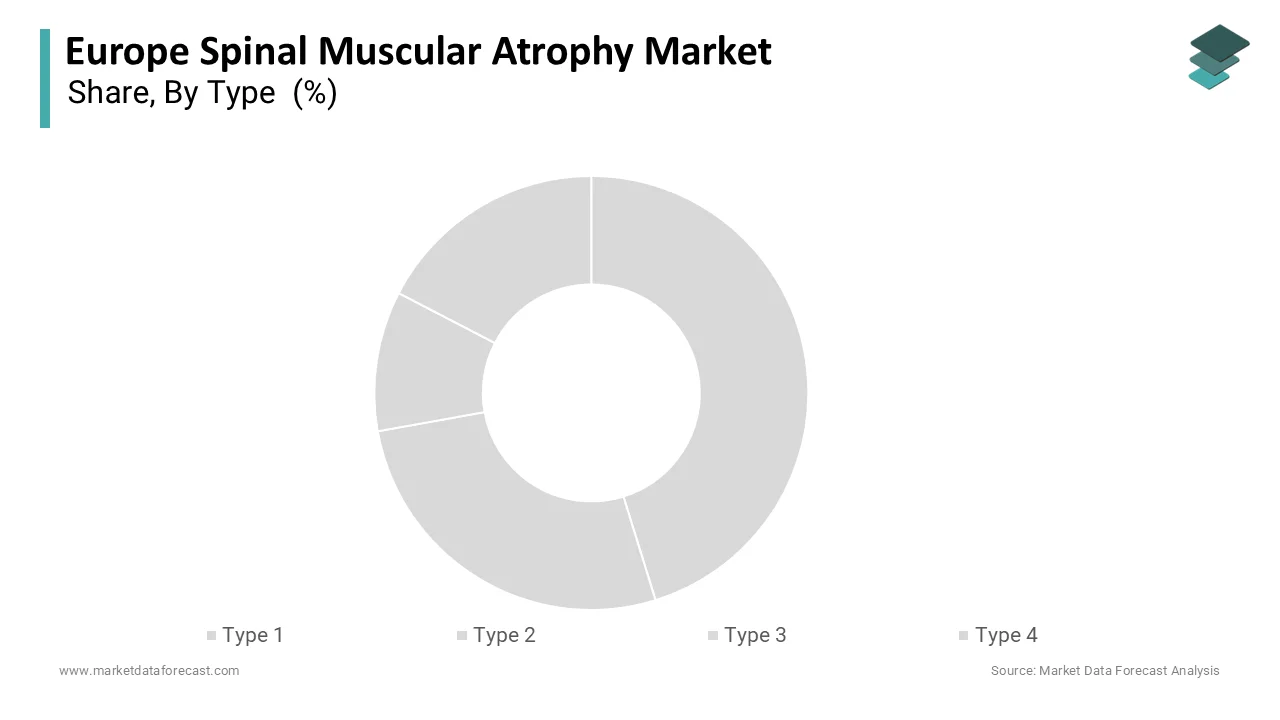
The type 2 segment is expected to witness the fastest CAGR of 12.8% throughout the forecast period due to the broadening of therapeutic labels and clinical guidelines to include children who were previously considered too old or too stable for intervention. Historically, treatment focus was almost exclusively on presymptomatic infants, but emerging data demonstrate that children with Type 2, who typically sit but do not walk, derive significant motor function benefits from therapy. Data from patient registries shows that there are approximately 3 times as many living Type 2 patients in Europe compared to Type 1, representing a massive latent demand. As awareness spreads among neurologists about the potential for improving sitting balance and preventing scoliosis in this group, prescription rates are surging. The shift in paradigm from palliative care to active disease modification for Type 2 children has created a new wave of diagnoses and treatments. Furthermore, the success stories of treated Type 2 children achieving milestones like standing or walking with assistance have galvanized advocacy groups and payers to support access.
By Route of Administration Insights
The injection route of administration segment was the largest by capturing 65.4% of Europe spinal muscular atrophy market share in 2025, with the fundamental pharmacological requirement to bypass the blood-brain barrier to deliver antisense oligonucleotides and gene vectors effectively to motor neurons. Drugs like nusinersen require intrathecal injection via lumbar puncture to reach the cerebrospinal fluid, while gene therapies like onasemnogene abeparvovec necessitate intravenous infusion for systemic distribution. According to the European Medicines Agency, these complex biologics cannot be administered orally because they would be degraded by digestive enzymes before reaching their target, making injection the only viable delivery method for the most transformative treatments. Data from clinical practice guidelines across Europe indicates that 100% of patients receiving gene therapy or antisense therapy undergo injectable procedures, which constitute the bulk of high-value market transactions. The specialized nature of these administrations requires hospital-based settings and trained personnel, reinforcing the dominance of this route in terms of associated service revenue and drug sales. Furthermore, the dosing schedules for these injectables, particularly the loading doses required in the first year of treatment, create intense periods of high-volume activity.
The oral route of administration segment is lucratively growing at a fastest CAGR of 18.5% from 2026 to 2034, with the rapid adoption of oral therapies, which is primarily fueled by the significant improvement in patient quality of life and the elimination of invasive medical procedures associated with injections. The approval of risdiplam, a small molecule splice modifier, has revolutionized care by allowing daily treatment at home rather than requiring frequent hospital visits for lumbar punctures or infusions. According to patient advocacy groups like SMA Europe, families overwhelmingly prefer oral administration due to the reduction in travel burden, anesthesia risks, and procedural pain, particularly for children with compromised respiratory function. Data from real-world evidence studies conducted in Italy and Spain show that adherence rates for oral therapies are 15% higher than for injectable regimens, attributed to the ease of integration into daily routines. This convenience factor is especially critical for Type 2 and Type 3 patients who may require lifelong treatment, making the prospect of decades of hospital visits untenable. The ability to administer medication at home also reduces the strain on healthcare facilities, a benefit highlighted by health ministries during periods of high system pressure. As awareness of this oral option spreads among clinicians and families, the shift from injectable to oral for eligible patients is accelerating.
By Treatment Type Insights
The sSpinrazasegment was the largest by holding 40.3% of the Europe spinal muscular atrophy market share in 2025. According to the European Medicines Agency public assessment reports, Spinraza has been administered to over 10000 patients globally, with a significant portion residing in Europe, creating a deep reservoir of physician familiarity and confidence. This extensive track record reassures clinicians and payers regarding its safety profile and efficacy across diverse patient subgroups, from presymptomatic infants to adults. The momentum of being the incumbent treatment creates a high switching barrier, as physicians are reluctant to change stable patients to newer agents without compelling reasons. Furthermore, the continuous publication of long-term follow-up data reinforces its value proposition, demonstrating sustained motor function benefits over many years.
The gene therapy segment is expected to witness the fastest CAGR of 22.4% in the coming year,s with its unique value proposition of offering a potential functional cure through a single administration, contrasting sharply with the lifelong commitment required for other therapies. According to clinical trial data published in the New England Journal of Medicine and cited by European health authorities, infants treated with onasemnogene abeparvovec before symptom onset achieve motor milestones indistinguishable from healthy peers, an outcome that has reshaped treatment goals. Data from the European Society for Gene and Cell Therapy indicates that the number of gene therapy procedures performed in Europe has tripled in the last two years as more centers gain accreditation to deliver these complex treatments. Furthermore, health economic models are increasingly recognizing the long-term cost savings of eliminating decades of cumulative drug and care costs, facilitating reimbursement approvals.
COUNTRY LEVEL ANALYSIS
Germany Spinal Muscular Atrophy Market Analysis
Germany was the top performer in the Europe spinal muscular atrophy market by capturing 24.3% of the market share in 2025 with its pioneering role in implementing nationwide newborn screening for spinal muscular atrophy, which began in 2021 and now covers 100% of live births. According to the Federal Joint Committee, this proactive strategy has resulted in the earliest average age of diagnosis in Europe, often within the first two weeks of life, triggering immediate treatment initiation. The German healthcare system, with its mandatory statutory health insurance, provides comprehensive coverage for all approved spinal muscular atrophy therapies, minimizing financial barriers for families. Data from the German Society for Neuropediatrics indicates that over 95% of eligible infants receive disease-modifying therapy within one month of diagnosis, a rate significantly higher than the European average. Furthermore, Germany hosts a dense network of specialized neuromuscular centers that are leaders in clinical research, frequently serving as primary sites for global pivotal trials. This close integration of research and clinical care fosters a culture of innovation and early access. The strong advocacy presence and well-organized patient support groups also play a crucial role in driving awareness and ensuring adherence.
France Spinal Muscular Atrophy Market Analysis
The French spinal muscular atrophy market is likely to witness the fastest CAGR in the coming years, with its "Plan National Maladies Rares,s" which strategically organizes care through designated reference centers, ensuring that patients have access to multidisciplinary expertise regardless of their location. As per the French National Authority for Health, the rapid inclusion of spinal muscular atrophy therapies into the positive list of reimbursed medicines has facilitated swift market penetration, with coverage granted shortly after European approval. This streamlined reimbursement process eliminates the long delays seen in other jurisdictions, allowing patients to benefit from innovations almost immediately. France also boasts a strong tradition of genetic research, with leading institutions contributing significantly to the understanding of the disease and the development of new treatments. The government's commitment to funding high-cost orphan drugs through solidarity-based financing ensures that even the most expensive therapies are accessible to all citizens. Additionally, active patient associations work closely with health authorities to monitor care quality and advocate for policy improvements.
United Kingdom Spinal Muscular Atrophy Market Analysis
The United Kingdom spinal muscular atrophy market is significantly growing in the coming years, with a rigorous health technology assessment process balanced by a strong commitment to equitable access through the National Health Service. As per data from NHS England, the rollout of newborn screening pilots has transitioned into a national program, significantly boosting the identification of presymptomatic infants and driving early treatment volumes. The British healthcare system's focus on centralized specialized care means that patients are treated in designated neuromuscular hubs, optimizing resource utilization and clinical outcomes.
Italy Spinal Muscular Atrophy Market Analysis
Italy's spinal muscular atrophy market is gearing up with the recent inclusion of spinal muscular atrophy in the mandatory newborn screening panel, a legislative change enacted in 2022 that is expected to transform the diagnostic landscape. According to the Italian Ministry of Health, this mandate is being implemented region by region, with northern regions like Lombardy and Emilia Romagna leading the way in coverage and treatment initiation rates. The Italian National Health Service provides full reimbursement for approved therapies, although administrative timelines can vary by region, creating a patchwork of access speeds that is slowly improving. Data from the Italian Neuromuscular Patient Registry indicates a steady increase in the number of diagnosed and treated patients, particularly among the adult population, who are increasingly being recognized as candidates for therapy. Italy is also home to several renowned research institutes that are actively involved in gene therapy development and clinical trials, fostering a vibrant scientific community. Patient advocacy groups play a pivotal role in navigating the bureaucratic complexities and pushing for uniform access across all regions.
Spain Spinal Muscular Atrophy Market Analysis
Spain's spinal muscular atrophy market growth is anticipated to witness growth with the "Estrategia en Enfermedades Raras del SNS," a national strategy that prioritizes early diagnosis and equitable access to treatments for rare conditions like spinal muscular atrophy. As per the Spanish Ministry of Health, several autonomous communities have pioneered newborn screening initiatives, and a national consensus is building towards a unified screening protocol, which is already driving up detection rates. The Spanish healthcare system's decentralization means that access can vary by region, but coordination through the Rare Diseases Unit network helps standardize care protocols. Data from the Spanish Federation of Rare Diseases shows that awareness campaigns have significantly reduced the diagnostic odyssey for many families, leading to earlier intervention.
COMPETITIVE LANDSCAPE
The competition in the Europe spinal muscular atrophy market is intense yet collaborative, characterized by a few dominant pharmaceutical giants vying for leadership through distinct therapeutic mechanisms. Biogen and Roche each offer unique solutions ranging from intrathecal injections to gene replacement and oral small molecules, creating a diversified treatment landscape. Rivalry focuses on demonstrating superlong-term efficacy, safety profile,s and convenience to influence clinician preference and payer reimbursement decisions. Companies compete aggressively to secure early access via newborn screening programs, ms ensuring their therapy is the first line of treatment for newly diagnosed infants. The high cost of these orphan drugs necessitates sophisticated market access strategies,ies including managed entry agreements, outcome-based pricing models, to satisfy budget-constrained healthcare systems. Innovation remains the primary battleground with firms investing billions in research to develop next-generation curative options that could render current standards obsolete.
KEY MARKET PLAYERS
Some of the companies that are playing a dominating role in the global europe spinal muscular atrophy market include
- Biogen Inc.
- Novartis AG
- Hoffmann-La Roche Ltd
- Ionis Pharmaceuticals, Inc.
- Pfizer Inc.
- Sanofi S.A.
- Merck & Co., Inc.
- Cytokinetics, Incorporated
- Boehringer Ingelheim GmbH
- Astellas Pharma Inc.
- AstraZeneca plc
- Sarepta Therapeutics, Inc.
TOP LEADING PLAYERS IN THE MARKET
- Biogen Inc. remains a cornerstone of the Europe spinal muscular atrophy market through its pioneering therapy nusinersen, which was the first disease-modifying treatment approved globally. The company has established a robust infrastructure across European nations to support intrathecal administration and long-term patient monitoring. Biogen continues to strengthen its position by investing heavily in real-world evidence generation to demonstrate the sustained benefits of its therapy over many years. Recent actions include expanding access programs in Eastern European countries where reimbursement pathways were previously limited. The firm also collaborates with newborn screening initiatives to ensure early detection and immediate treatment initiation. Globally, Biogen leverages its extensive experience to guide clinical care standards and advocate for policy changes that benefit the rare disease community.
- Novartis AG has revolutionized the Europe spinal muscular atrophy market with its gene therapy product onasemnogene abeparvov,ec which offers a potential cure for eligible infants. The company focuses on building specialized delivery centers across Europe to manage the complex administration requirements of this advanced therapy. Novartis actively engages with health technology assessment bodies to secure favorable reimbursement terms based on long-term cost-effectiveness models. Recent efforts involve launching patient support programs that provide comprehensive care coordination from diagnosis through treatment and follow-up. The firm is also investing in manufacturing capacity expansion within Europe to ensure a reliable supply chain for its high-demand product. Globally, Novartis leads the field of gene therapy innovation and uses its expertise to accelerate the development of treatments for other genetic disorders. Their strategic focus on curative intent and operational excellence ensures they remain a dominant force in transforming the lives of patients with severe neuromuscular conditions.
- Hoffmann-La Roche Ltd contributes significantly to the Europe spinal muscular atrophy market through its oral therapy risdiplam, which provides a convenient home-based treatment option. The company emphasizes accessibility and ease of use, allowing patients to avoid invasive hospital procedures associated with other treatments. Roche has strengthened its market presence by partnering with telehealth providers to facilitate remote consultations and prescription management. Recent actions include initiating studies to explore the efficacy of their medication in a broader patient population,s including adults and presymptomatic infants. The firm also supports educational campaigns to raise awareness about the benefits of oral administration among clinicians and families. Global, Lyy Roche leverages its vast pharmaceutical resources to advance precision medicine and expand the reach of its spinal muscular atrophy portfolio.
TOP STRATEGIES USED BY KEY MARKET PARTICIPANTS
Key players in the Europe spinal muscular atrophy market primarily focus on securing comprehensive reimbursement agreements through rigorous health technology assessments to ensure patient access. Companies invest heavily in establishing specialized treatment centers and training healthcare professionals to manage complex administration protocols safely. Strategic partnerships with patient advocacy groups help drive awareness and influence policy decisions regarding newborn screening implementation. Firms are also expanding their clinical trial networks tgather long-term real-worldld evidence that supports the durability and safety of their therapies. Developing patient support programs that offer logistical, financial,l and emotional assistance is another critical strategy to improve adherence and outcomes. Additionally, manufacturers areexploring next-generationn pipeline candidates, including gene editing and combination therapies,s tomaintain an competitive advantage.
MARKET SEGMENTATION
This research report on the Europe Spinal Muscular Atrophy Market is segmented and sub-segmented into the following categories.
By Type
- Type 1
- Type 2
- Type 3
- Type 4
By Route of Administration
- Injection
- Oral
By Treatment Type
- Spinraza
- Gene Therapy
- Risdiplam
- Other Therapies
By Country
- Germany
- France
- United Kingdom
- Italy
- Spain
- Rest of Europe