- Product Description Description
- Table of Contents TOC
- List of Table & Figure LOT
- Get Free Sample PDF Sample PDF
Market Size, 2025
$15.31 BnMarket Estimate, 2026
$16.26 BnMarket Forecast, 2034
$26.31 BnCAGR, 2026–2034
6.2%Europe Pediatric Healthcare Market Summary
The Europe pediatric healthcare market is experiencing steady structural expansion in 2025, supported by rising clinical complexity among children despite a declining pediatric population. The market is primarily driven by increasing prevalence of chronic pediatric conditions, expanding mental health needs, and mandatory early childhood screening programs across European healthcare systems.
Market Size and Growth (2026 to 2034)
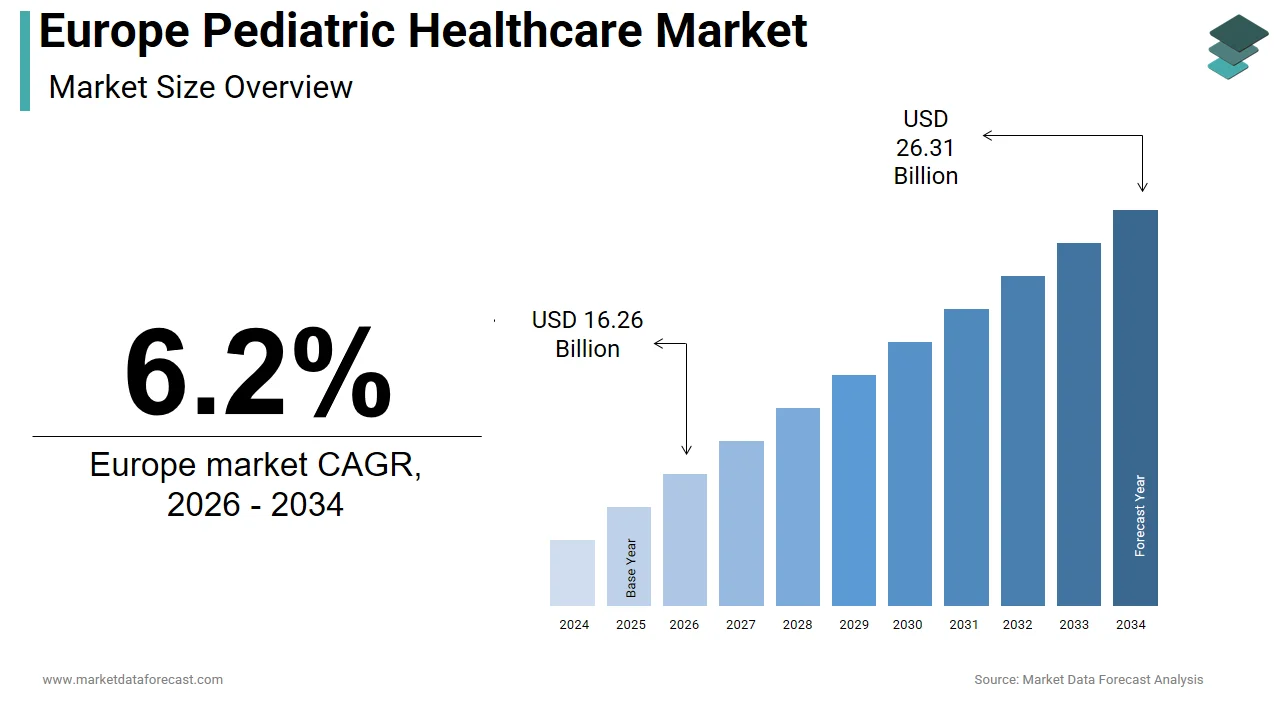
- Compound Annual Growth Rate (CAGR): The market is projected to grow at a CAGR of 6.2% from 2026 to 2034.
- Key Drivers: Rising incidence of chronic pediatric diseases such as asthma and type 1 diabetes, increasing mental health burden among children and adolescents, and strong government-backed preventive healthcare programs.
- 2026 Outlook: The market reached USD 16.26 billion in 2026 and is expected to maintain stable year-on-year growth supported by higher per-child healthcare spending and integrated care pathways.
- 2033 Forecast Size: The market is projected to reach USD 26.31 billion by 2034, supported by sustained increases in per-child healthcare spending, chronic disease management, and integrated pediatric care pathways.
Regional Leaders and Activity Hubs
- Germany: Holds the largest market share due to universal statutory health insurance, mandatory pediatric screening programs, and advanced pediatric hospital infrastructure.
- United Kingdom: Driven by NHS-led integrated pediatric care models, strong newborn screening coverage, and expanding community-based mental health services.
- France: Supported by mandatory childhood health examinations, high vaccination compliance, and extensive rare disease and preventive care frameworks.
Market Segmentation
- Type: The chronic illness segment dominates with a 62.4% share in 2024, driven by long-term management of asthma, diabetes, and neurodevelopmental disorders.
- Acute Illness Segment: Expected to register the fastest growth at a 6.8% CAGR, supported by post-pandemic resurgence in pediatric infections and emergency care demand.
- Treatment: Drugs account for the largest share (58.5% in 2024), while vaccines are the fastest-growing segment at an 8.1% CAGR.
Major Trends for 2025
- Digitalization & Automation: Increasing adoption of AI-enabled diagnostics, telehealth platforms, and remote monitoring tools in pediatric care delivery.
- Preventive Care Expansion: Strengthening of mandatory newborn screening, developmental assessments, and vaccination programs across EU member states.
- Decentralized Care Models: Shift toward community-based and home-centered pediatric care to reduce hospital burden and improve continuity of care.
Europe Pediatric Healthcare Market Size
The size of the Europe pediatric healthcare market was valued at USD 15.31 billion in 2025. This market is expected to grow at a CAGR of 6.2% from 2026 to 2034 and be worth USD 26.31 billion by 2034, up from USD 16.26 billion in 2026.
Pediatric healthcare refers to the medical services, pharmaceuticals, diagnostics, digital health tools, and specialized care models tailored exclusively for infants, children, and adolescents up to eighteen years of age. This sector is distinguished by its emphasis on age-appropriate clinical protocols, developmental considerations, and family-centric care delivery. According to sources, the number of children under fifteen has been decreasing in the European Union over time, as part of a general trend towards an ageing society. The demographic significance of this cohort is reinforced by public health data showing that respiratory infections, neurodevelopmental disorders, and chronic conditions such as type 1 diabetes remain leading pediatric health concerns across the region. As per research, the prevalence of mental health conditions among children and young people in Europe is a significant and growing public health concern. These epidemiological patterns underscore the structural necessity for robust pediatric infrastructure. Furthermore, national health strategies in countries like Germany, France, and the Nordic region increasingly prioritize early childhood intervention and integrated care pathways. The convergence of clinical need, policy support, and technological innovation defines the contemporary landscape of pediatric healthcare in Europe, setting the stage for both systemic advancement and persistent operational complexities.
MARKET DRIVERS
Rising Burden of Chronic Pediatric Conditions Necessitates Specialized Care Infrastructure
The rising incidence of chronic diseases among European children is a major contributor to the growth of the Europe pediatric healthcare market. This compels health systems to invest in condition-specific care models and therapeutic innovations. According to sources, the prevalence of type 1 diabetes in children has shown an upward trend over time. Similarly, asthma is a common condition, affecting a notable percentage of children in various regions, and often requires long-term management strategies and specialist consultations. Neurodevelopmental disorders present another critical dimension. Furthermore, attention deficit hyperactivity disorder is observed in a segment of the school-aged population. Diagnoses for autism spectrum disorder have also been increasing, a change that reflects both greater awareness and actual epidemiological shifts. These conditions demand multidisciplinary care involving endocrinologists, pulmonologists, neurologists, psychologists, and allied health professionals. National health services are responding by establishing integrated pediatric chronic disease clinicss particularly in countries like Sweden and the Netherlands, where coordinated care pathways have demonstrated improved outcomes. This clinical complexity translates into sustained demand for specialized diagnostics, tailored pharmaceutical formulations, remote monitoring tools, and caregiver support services, collectively reinforcing the structural growth trajectory of the pediatric healthcare sector.
Mandatory Early Childhood Screening Programs Generate Consistent Service Utilization
Legislated and guideline-driven early detection programs across European nations are elevating demand for pediatric primary and preventive care services, which in turn accelerates the expansion of the Europe pediatric healthcare market. A number of European Union member states have established national newborn screening protocols that frequently include testing for various inherited metabolic and endocrine disorders, as per research. Germany utilizes a series of standardized health assessments from birth until school entry to monitor child development. Austria and Switzerland have implemented health screening frameworks that are similar to the German model. These established protocols ensure that children enter the pediatric healthcare system for regular monitoring even when they are not acutely ill. The United Kingdom conducts scheduled developmental reviews for young children to identify potential delays in speech, motor function, or social interaction. Childhood screenings in the United Kingdom serve as a mechanism for identifying developmental concerns and facilitating referrals to specialist services. France integrates mandatory health examinations at specific childhood milestones into its national disease prevention strategy. Compliance rates for mandatory childhood health examinations in France remain high. These institutionalized touchpoints not only facilitate timely diagnosis but also build longitudinal patient-provider relationships, reinforcing trust in structured pediatric care. The administrative and clinical infrastructure required to sustain these programs, ranging from trained personnel to data management systems, creates durable demand across diagnostic telehealth platforms and community-based support networks, thereby anchoring market activity in prevention-oriented frameworks rather than reactive treatment alone.
MARKET RESTRAINTS
Inconsistent Reimbursement Frameworks Across Europe Impede Equitable Access
Significant disparities in pediatric service reimbursement mechanisms across European countries constrain consistent market development and equitable care access, which hampers the growth of the Europe pediatric healthcare market. In nations like Poland and Romania, public coverage for specialized pediatric therapies, particularly for rare diseases or mental health interventions, remains limited, forcing families to seek costly private alternatives or forego treatment. In certain Central and Eastern European nations, household expenses for children's healthcare represent a notable share of all money spent on pediatric health. This contrasts with a much smaller share in countries like Germany or the Nordic states. This variation is also present in access to medicines. A significant number of new pediatric medications authorized for use across the EU do not have consistent pricing and coverage decisions among member states. This inconsistency can lead to children receiving treatments later or receiving different medications than originally intended. Moreover, cross-border care initiatives like the European Reference Networks face operational hurdles due to inconsistent national eligibility criteria and billing rules. These systemic inconsistencies not only impede patient outcomes but also deter investment in pan-European pediatric service models as providers struggle to standardize operations amid divergent regulatory and financial landscapes.
Acute Shortage of Pediatric Specialists Limits Clinical Capacity
The persistent shortfall of clinicians with advanced training in child-specific disciplines directly limits the scalability and quality of services, ultimately hindering the expansion of the Europe pediatric healthcare market. According to research, the number of individuals under eighteen who have certain conditions varies between countries. The gap is even more pronounced in subspecialties. As per research, Many medical centers across the EU have incomplete staffing in pediatric rheumatology departments. A significant number of children in the EU are living with juvenile idiopathic arthritis. Mental health services face comparable deficits. Europe generally has a limited number of child psychiatrists relative to the overall child population. Official health guidelines suggest a higher ratio of child psychiatrists is necessary to provide comprehensive coverage. This scarcity drives extended wait times. The underlying causes include limited residency positions, migration of professionals to higher-paying adult specialties, and inadequate rural recruitment incentives. The healthcare market's maturation is stifled because existing infrastructure is unable to absorb growing demand for complex chronic and behavioral conditions. This challenge stems from the lack of a targeted workforce expansion, harmonized training standards, and effective retention strategies.
MARKET OPPORTUNITIES
AI-Enabled Diagnostic Tools Facilitate Early and Accurate Pediatric Detection
The strategic deployment of artificial intelligence in pediatric diagnostics offers a major opportunity for the growth of the Europe pediatric healthcare market. This is achieved by enabling earlier, more accurate, and non-invasive detection of childhood conditions. Emerging AI algorithms trained on diverse European pediatric datasets are demonstrating exceptional performance in identifying subtle clinical patterns often missed by conventional methods. Machine learning models analyzing retinal images have shown promise in identifying retinopathy of prematurity, a significant cause of childhood blindness. Similarly, the use of AI tools to analyze vocal patterns and conversational exchanges in young children may help flag early signs of autism spectrum disorder. These innovations reduce diagnostic delays. Beyond detection, AI-driven predictive analytics are being piloted in neonatal intensive care units in the Netherlands and Finland to forecast sepsis onset hours in advance, significantly improving survival rates. Regulatory frameworks, such as the EU AI Act, are paving the way for scalable deployment of AI in public health systems, which enables personalized patient monitoring, fewer hospitalizations, and better management of limited specialist resources.
Growth of Decentralized Pediatric Care Models Enhances System Efficiency
The shift toward decentralized pediatric care delivery, centered on home and community settings, offers a scalable solution to hospital capacity constraints, which creates new prospects for the expansion of the Europe pediatric healthcare market. This approach also improves family engagement and continuity of care. Driven by technological enablement and post pandemic policy recalibration, this model is gaining traction across Western and Northern Europe. Routine follow-up appointments for children with chronic respiratory conditions are increasingly conducted through telehealth or home visits by specialized nurses. Healthcare initiatives are shifting pediatric consultations for stable, long-term conditions toward virtual or community-based formats. This decentralized model of care has proven to be an effective approach for managing pediatric mental health. The expansion of community outpatient centers has contributed to a decrease in inpatient admissions for adolescent depression. Home-based care also addresses social determinants by integrating social workers, nutritionists, and early educators into care teams. These models not only alleviate pressure on tertiary hospitals but also align with family preferences for care in familiar environments. Targeted grants from the European Social Fund Plus for health workers mean this new approach will likely become a permanent part of sustainable pediatric services.
MARKET CHALLENGES
Fragmented Pediatric Data Governance Stalls Digital Health Innovation
The advancement of digital health solutions in pediatric care is hindered by stringent and often divergent data protection regulations governing minors across the regional jurisdictions, which hold back the growth of the Europe pediatric healthcare market. The GDPR serves as a foundational structure; however, there is notable inconsistency in its practical execution, particularly regarding the nuances of informed consent and the cross-border movement of children's personal information. National supervisory authorities in certain European countries have implemented heightened restrictions regarding the processing of minors' health information. These regulations require explicit parental authorization for data belonging to individuals under the age of sixteen. Such requirements for parental consent apply even when the health data is intended for use in anonymized research datasets. This creates substantial barriers for multicenter clinical trials and real-world evidence generation. The integration of artificial intelligence into industrial manufacturing processes continues to influence operational workflows. Remote work arrangements have become a standard consideration for organizations evaluating modern employment structures. Furthermore, the lack of harmonized standards for the identification of pediatric imaging or genomic data limits the creation of large-scale training sets essential for AI development. Innovation in child-specific healthcare data applications will be hindered unless a balanced data governance protocol is established. The current fragmentation and underfunding of predictive analytics, remote monitoring, and personalized medicine will persist without unified rules that protect privacy while enabling essential research.
Chronic Underfunding of Preventive and Mental Health Services Widens Care Gaps
The regional healthcare systems continue to allocate disproportionately low resources to preventive and psychological services, which affects long-term population health outcomes, and negatively impacts the expansion of the Europe pediatric healthcare market. Mental health funding for children in the EU is notably low relative to the burden of psychiatric conditions in the five-to-14-year age group. This disparity in funding results in clear shortages in service availability. A significant number of children in one southern European country diagnosed with anxiety or depression do not receive professional help. Preventive healthcare faces similar issues, as demonstrated by the variance in human papillomavirus vaccination coverage among adolescent girls across different member states. Overall, prioritization of public health initiatives is inconsistent throughout the region. Read more about the topic. School-based health programs, proven to improve early detection and reduce absenteeism, are fully implemented in only nine EU member states. This reactive orientation perpetuates downstream costs. The pediatric healthcare market will continue favoring acute and specialty care, neglecting the root causes of morbidity and squandering chances for scalable, cost-effective population health improvement, unless there is a structural reallocation toward upstream interventions.
REPORT COVERAGE
| REPORT METRIC | DETAILS |
| Market Size Available | 2025 to 2034 |
| Base Year | 2025 |
| Forecast Period | 2026 to 2034 |
| Segments Covered | By Type, Treatment, Indication, and Region. |
| Various Analyses Covered | Global, Regional, and Country-Level Analysis, Segment-Level Analysis, Drivers, Restraints, Opportunities, Challenges; PESTLE Analysis; Porter’s Five Forces Analysis, Competitive Landscape, Analyst Overview of Investment Opportunities |
| Countries Covered | UK, France, Spain, Germany, Italy, Russia, Sweden, Denmark, Switzerland, Netherlands, Turkey, Czech Republic, and the Rest of Europe |
| Market Leaders Profiled | Gilead Sciences, GlaxoSmithKline Plc., Novo Nordisk, Eli Lilly, Sanofi, Abbott, Bristol-Myers Squibb Company, AxcanPharma USA, Roche Diagnostics, Johnson and Johnson, Pfizer, and Wyeth. |
SEGMENTAL ANALYSIS
By Type Insights
The chronic illness segment held the largest share of 62.4% of the Europe Pediatric Healthcare Market in 2024. The dominance of the chronic illness segment is primarily driven by the escalating prevalence of long-term pediatric conditions requiring sustained clinical engagement and multidisciplinary management. The growing burden of immune-mediated and metabolic chronic diseases continues to anchor demand in this segment. A notable number of new cases of type 1 diabetes are diagnosed each year among children under the age of fifteen. The rates at which these cases occur are showing consistent increases. Parallel changes in prevalence are observed in respiratory health conditions like asthma. Asthma affects a substantial percentage of children in various regions, with a notable lifetime occurrence rate in some areas. These conditions necessitate continuous pharmacotherapy monitoring and specialist consultations, often spanning years. National health systems increasingly emphasize integrated care pathways, which standardize treatment protocols and encourage early specialist referral. This institutional reinforcement not only improves outcomes but also institutionalizes recurring service utilization. The economic weight of these conditions is substantial. European public health strategies have systematically shifted toward managing chronic disease rather than acute episodes alone. Countries like Sweden and the Netherlands have operationalized this through national registries. As per sources, a portion of EU nations now include pediatric chronic disease indicators in their national health performance dashboards. This policy alignment translates into stable funding streams for home monitoring devices, specialized nursing visits, and telehealth follow-ups. Such structural mechanisms ensure that chronic illness not only commands current market share but is positioned for sustained expansion amid aging pediatric cohorts with complex comorbidities.
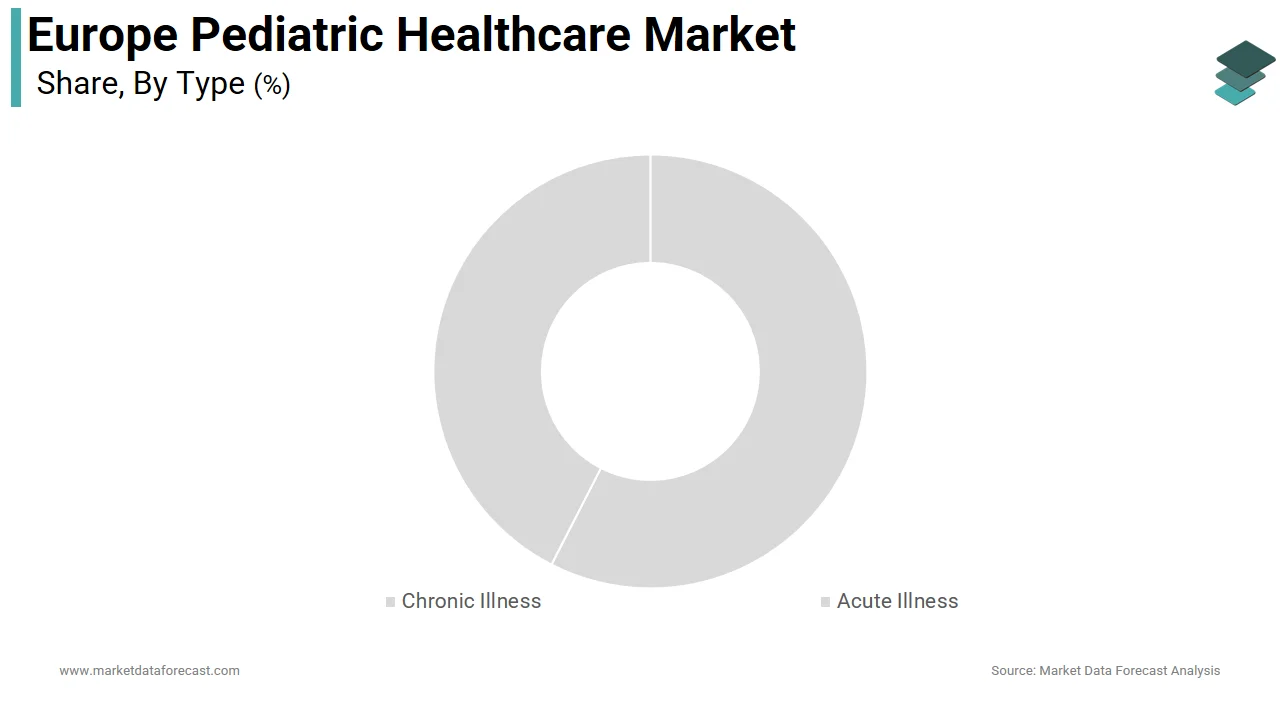
The acute illness segment is estimated to register the fastest CAGR of 6.8% between 2025 and 2033 due to post pandemic reinvestment in infectious disease surveillance and emergency pediatric response systems. Europe has witnessed a marked rebound in acute pediatric infections following the relaxation of pandemic-era public health measures. Hospitalizations among young children for respiratory syncytial virus increased in the winter, with similar trends noted in influenza and streptococcal infections. These infections place a significant burden on healthcare systems. This suggests the importance of ongoing monitoring of seasonal respiratory illness trends to help manage health resource allocation. This resurgence strains emergency departments and fuels demand for rapid diagnostics, point-of-care testing, and short-course antimicrobial therapies. National responses have been swift. These investments not only address immediate clinical needs but also institutionalize acute care infrastructure, transforming episodic demand into structured service lines. Beyond infection control, health systems are proactively building dedicated acute care capacity. Pediatric emergency visits have shown an increase across the EU27. This change reflects both a potentially higher incidence of conditions and a reduced threshold for seeking medical care. In response, some countries, notably Spain and Italy, have expanded their pediatric urgent care facilities to meet the rising demand. The centers are designed for conditions such as otitis media, minor trauma, and acute gastroenteritis, historically managed in overcrowded emergency rooms. This strategic decentralization of acute care not only improves access but also creates new revenue channels for diagnostics, pharmaceuticals, and digital monitoring, propelling the segment’s above average growth trajectory.
By Treatment Insights
The drugs segment led the Europe pediatric healthcare market and captured a share of 58.5% in 2024. This supremacy of the drugs segment is attributed to the essential role of medications across both chronic and acute care pathways, including specialized formulations for children. The sustained reliance on pharmacotherapy for managing prevalent pediatric conditions underpins this segment’s dominance. Inhaled corticosteroids are frequently used as a treatment option for children with asthma across Europe. Similarly, there has been an increase in the pediatric dispensing of insulin analogs for individuals with type 1 diabetes in some regions. Crucially, regulatory efforts have improved drug availability. The regulatory, clinical, and commercial alignment ensures that drugs remain the cornerstone of pediatric intervention, spanning endocrine, respiratory, neurological, and psychiatric domains. European health systems embed pharmaceuticals into standardized clinical algorithms, ensuring consistent and reimbursed access. These frameworks not only guarantee access but also drive predictable market demand. This deep integration into both outpatient and inpatient settings solidifies the drugs segment as the market’s operational and financial backbone.
The vaccines segment is anticipated to witness the fastest CAGR of 8.1% from 2025 to 2033, owing to policy momentum, technological innovation, and catch-up immunization campaigns. Efforts across Europe are promoting the synchronized adoption of vaccines for both childhood and adolescent populations. The human papillomavirus vaccine is now widely included in routine adolescent immunization programs in many countries. The use of combined vaccines, such as those that protect against multiple diseases in a single injection, is becoming more common. The introduction of combined vaccines helps to reduce the number of injections needed and may improve adherence to immunization schedules. Increased timely completion of infant vaccinations has been observed in some locations following the introduction of combined vaccine strategies. These policy-driven shifts not only expand the addressable population but also increase dose frequency and value per child. Routine immunization services experienced disruptions, resulting in an accumulation of children who needed vaccinations. Health authorities are now focusing on addressing this gap through specific immunization initiatives. In one country, a national program was implemented, successfully increasing the coverage of missed doses. Another country's health program aimed at recovering delayed vaccinations among young children also showed positive outcomes. Public trust has been rebuilt through transparent communication. These efforts transform temporary catch-up into sustained demand, which fuels the segment’s exceptional growth.
By Indication Insights
The asthma and allergies segment was the largest segment in the Europe pediatric healthcare market and accounted for a 31.7% share in 2024. The dominance of the asthma and allergies segment is credited to both high prevalence and the necessity for ongoing therapeutic and monitoring interventions. Respiratory allergies and asthma dominate the pediatric disease landscape across Europe. The urbanization effect intensifies this burden. As per sources, children living in cities with high particulate matter exposure are more likely to develop asthma than their rural counterparts. These conditions demand continuous care, including controller medications, quick relief inhalers, allergen testing, and environmental counseling. The chronic recurrent nature of symptoms ensures repeated healthcare interactions, making this indication a consistent revenue driver across primary care specialist clinics and pharmacies. European nations have institutionalized evidence-based asthma care through national guidelines and digital support tools. Compliance with these protocols triggers automatic reimbursement for controller medications and inhaler devices. Digital adherence tools are also scaling rapidly. This ecosystem of policy reimbursement and technology locks in high utilization, which strengthens asthma and allergies as the market’s leading indication.
The genetic disorders segment is likely to experience the fastest CAGR of 9.3% over the forecast period. The rapid expansion of the genetic disorders segment is propelled by advances in genomic screening and targeted therapies. Europe is rapidly integrating comprehensive genetic testing into routine care. Several European Union member states have broadened their newborn screening programs to encompass a wider array of inherited metabolic and neurological conditions. The number of countries incorporating these expanded panels has significantly increased over recent years. Specifically, one nation, Germany, has implemented a national program that screens for conditions such as spinal muscular atrophy and severe combined immunodeficiency, achieving extensive coverage for nearly all newborns. The widespread use of these screening methods enables the early identification of various treatable genetic conditions. Prenatal screening is also advancing. Early detection creates immediate demand for confirmatory diagnostics, genetic counseling, and, increasingly, pre-symptomatic intervention, thereby expanding the market at its foundational level. The therapeutic landscape for pediatric genetic diseases is undergoing revolutionary change with the approval of high-value targeted treatments. These therapies command premium pricing but are increasingly covered under national ultra-orphan schemes. Improved survival rates and broader treatment windows are leading to an exponential rise in the demand for ongoing monitoring, supportive care, and multidisciplinary healthcare teams, positioning this as the fastest-growing indication within the pediatric healthcare market.
COUNTRY-LEVEL ANALYSIS
Germany Pediatric Healthcare Market Analysis
Germany dominated the Europe Pediatric Healthcare Market and accounted for a 19.2% share in 2024. The supremacy of the German market is attributed to its robust statutory health insurance system, advanced clinical infrastructure, and strong regulatory support for pediatric innovation. The country operates a system of universal coverage, which ensures widespread access to both preventive and curative health services for children. Financial contributions are not required for individuals under the age of eighteen receiving these health services. Annual pediatric healthcare expenditure per person is a significant amount, notably higher than the average for the broader region. Key drivers include the nationwide “U” and “J” preventive checkup series, which mandates standardized health assessments from birth to age nineteen, achieving high participation. Additionally, Germany leads in pediatric drug development. The expansion of university-affiliated children’s hospitals further consolidates its dominance. Recent investments in digital health enable seamless data sharing across providers, enhancing care coordination and reinforcing Germany’s position as the region’s pediatric care benchmark.
United Kingdom Pediatric Healthcare Market Analysis
The United Kingdom followed closely in the Europe pediatric healthcare market and captured a 14.7% share in 2024. The growth of the UK market is propelled by its centralized National Health Service and strong emphasis on integrated child health pathways. Despite fiscal constraints, the NHS allocates over 8 billion pounds annually to pediatric services covering everything from school nursing to tertiary specialist care. A pivotal driver is the NHS Long Term Plan, which commits to shifting a portion of chronic disease management to community and virtual settings, including dedicated digital platforms for asthma, diabetes, and mental health. The UK also leads in newborn screening, covering nine conditions including sickle cell disease and cystic fibrosis. Furthermore, the country has fast-tracked access to advanced therapies. The UK is demonstrating significant momentum in both the volume and innovation of mental health support through continuous reforms aimed at reducing waiting times and expanding school-based hubs.
France Pediatric Healthcare Market Analysis
France is also a significant country in the Europe pediatric healthcare market due to its comprehensive Sécurité Sociale system and proactive public health strategies targeting early childhood. The French healthcare model provides extensive pediatric coverage, which includes full payment for preventive consultations, vaccinations, and medications for ongoing health conditions. Children in that system undergo a series of mandatory health evaluations throughout their development from birth into their teenage years. The level of adherence to these required health evaluations is generally high. This structured surveillance drives consistent demand across diagnostics, pharmaceuticals, and allied health services. A critical growth lever is France’s command in pediatric vaccine policy. The country mandates eleven vaccines for school entry and achieved notable coverage for hexavalent vaccines. Additionally, France has invested heavily in rare disease networks. The national digital health initiative further enhances care coordination through a unified child health record accessible to parents and providers. These systemic strengths sustain France’s position as a high access high quality pediatric market.
Italy Pediatric Healthcare Market Analysis
Italy is moving ahead steadfastly in the Europe Pediatric Healthcare Market because of regional variation, yet strong national programs in vaccination and infectious disease control. The Italian National Health Service provides pediatric care for all children up to age sixteen, utilizing family pediatricians who act as initial points of contact in a system that covers a large majority of the population. The country has effectively managed to restore its childhood immunization schedules following the pandemic disruption, demonstrating high rates of catch-up for key immunizations such as those for measles and polio. Another key driver is the expansion of pediatric emergency networks. Despite challenges in the south, the north central regions, including Lombardy and Emilia Romagna, have developed integrated chronic care models for asthma and diabetes, reducing hospitalizations. These targeted improvements sustain Italy’s relevance in the European landscape.
Spain Pediatric Healthcare Market Analysis
Spain is likely to grow in the Europe pediatric healthcare market from 2025 to 2033, owing to its community-oriented primary care model and recent investments in pediatric mental health. The Spanish National Health System provides universal pediatric coverage. Family doctors manage most child health issues at the local level. Most children receive at least one preventive checkup. Additionally, school-based programs reach a significant number of students. A major initiative involves the integration of psychologists within schools and primary care centers. This program aims to expand mental health support for children. Results from initial implementation areas indicate an increase in early mental health referrals. Spain also leads in asthma management. Spain’s pediatric market is consolidating its position as a key regional player in Southern Europe, fueled by urban demographic growth and the systematic adoption of digital healthcare technologies.
COMPETITIVE LANDSCAPE
The Europe Pediatric Healthcare Market features a dynamic competitive environment characterized by collaboration between multinational life sciences companies, specialized biotechnology firms, and public health institutions. Competition centers not on pricing alone but on clinical differentiation, regulatory compliance, and integration into national care pathways. Leading participants compete by developing child-friendly formulations, secure digital monitoring tools, and diagnostics aligned with European screening mandates. The market rewards innovation that addresses unmet needs in chronic disease, mental health, and rare disorders while meeting stringent EU safety and data privacy standards. Smaller niche players often partner with larger corporations to access distribution networks and regulatory expertise. This ecosystem fosters continuous advancement but demands significant investment in pediatric clinical trials, post-market surveillance, and stakeholder engagement to sustain relevance and impact across diverse European healthcare systems.
KEY MARKET PLAYERS
The leading companies operating in the Europe pediatric healthcare market include:
- Gilead Sciences
- GlaxoSmithKline plc
- Novo Nordisk
- Eli Lilly
- Sanofi
- Abbott
- Bristol-Myers Squibb Company
- AxcanPharma USA
- Roche Diagnostics
- Johnson & Johnson
- Pfizer
- Wyeth
TOP PLAYERS IN THE MARKET
- Novo Nordisk plays a pivotal role in the Europe Pediatric Healthcare Market through its specialized insulin formulations and delivery systems tailored for children with type 1 diabetes. The company has invested significantly in age-appropriate pen devices and real-time glucose monitoring integrations to improve adherence and safety. This initiative enhances clinical outcomes while reinforcing the company’s commitment to child-centric innovation. Its global footprint enables rapid deployment of pediatric endocrine solutions across multiple continents, making it a key contributor to diabetes care standards worldwide.
- GlaxoSmithKline maintains a strong presence in the European pediatric healthcare landscape primarily through its respiratory and vaccine portfolios. The company supplies widely used inhaled corticosteroids and combination therapies specifically formulated for children with asthma and allergies. In recent years, GSK has expanded access to its hexavalent and meningococcal vaccines across national immunization programs in Germany, France, and Spain.
- Roche Diagnostics contributes to the Europe Pediatric Healthcare Market by advancing precision diagnostics for genetic, metabolic, and oncologic conditions in children. The company offers next-generation sequencing platforms and non-invasive prenatal tests widely adopted in European genetic screening programs. The firm also integrates its diagnostic data with electronic health records to support early intervention.
TOP STRATEGIES USED BY THE KEY MARKET PARTICIPANTS
Key players in the Europe Pediatric Healthcare Market primarily pursue pediatric-specific product development, strategic partnerships with public health agencies, expansion of digital health integrations, regulatory alignment with EU Paediatric Regulation requirements, and geographic reinforcement through localized clinical evidence generation. These strategies are designed to address age-appropriate formulation needs, enhance early diagnosis capabilities, ensure reimbursement eligibility, and build trust with national health systems. Companies also invest in real-world data collection to demonstrate long term safety and efficacy in children,n which supports market access and clinician adoption across diverse European care settings.
MARKET SEGMENTATION
This Europe pediatric healthcare market research report is segmented and sub-segmented into the following categories.
By Type
- Chronic Illness
- Acute Illness
By Treatment
- Vaccines
- Drugs
- Others
By Indication
- Cardiac Disorders
- Metabolic Disorders
- Asthma and Allergies
- Genetic Disorders
- Other Indications
By Country
- UK
- France
- Spain
- Germany
- Italy
- Russia
- Sweden
- Denmark
- Switzerland
- Netherlands
- Turkey
- Czech Republic
- Rest of Europe