Europe Orthodontic Supplies Market Size, Share, Trends & Growth Forecast Report By Product, Patients & Country (UK, France, Spain, Germany, Italy, Russia, Sweden, Denmark, Switzerland, Netherlands, Turkey, Czech Republic & Rest of Europe), Industry Analysis From 2026 to 2034.
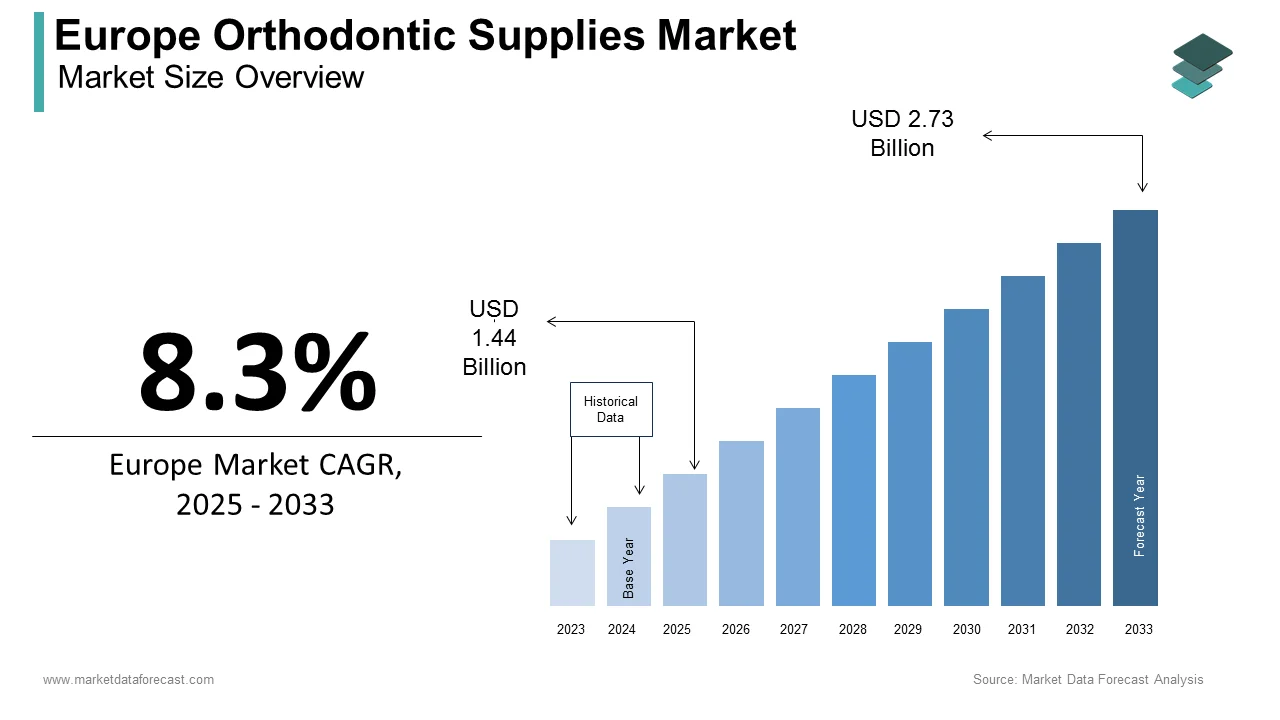
Market Size, 2025
$1.44 BnMarket Estimate, 2026
$1.56 BnMarket Forecast, 2034
$2.95 BnCAGR, 2026–2034
8.3%Europe Orthodontic Supplies Market Size
The orthodontic supplies market size in Europe was valued at USD 1.44 billion in 2025. The European market is estimated to grow at a CAGR of 8.3% from 2026 to 2034 and be worth USD 2.95 billion by 2034 from USD 1.56 billion in 2026.
Orthodontic supplies are a specialized array of clinical products, including brackets, archwires, bonding agents, ligatures, orthodontic bands, and digital scanning systems that are designed for the diagnosis, correction, and management of dental malocclusions. These supplies serve private orthodontic practices, public dental clinics, university hospitals, and specialty centers across the European Economic Area. Unlike general dental consumables, orthodontic materials are engineered for biomechanical precision, long-term stability, and increasingly, compatibility with digital treatment workflows. According to OECD, a substantial portion of adults in Western Europe visited a dentist in the past year, which reflects high engagement with oral health services. As per Eurostat demographic data, the adolescent population aged 10 to 19 in the European Union constitutes a significant cohort and forms a meaningful part of the demand base for orthodontic care. Additionally, professional certification bodies for orthodontics report that a steady pipeline of new specialists enters practice annually, helping maintain service capacity.
MARKET DRIVERS
Rising Prevalence of Malocclusion and Aesthetic Consciousness Among Adolescents and Adults
Malocclusion remains a widespread clinical condition across Europe with significant implications for orthodontic supply demand, which is one of the key factors propelling the growth of the European orthodontic supplies market. A substantial proportion of adolescents in high-income European countries exhibit moderate to severe dental misalignment, warranting corrective intervention according to prevalence studies. According to reports, over 70 % of individuals aged 15 to 45 regard straight teeth as vital to self-confidence and social interaction. Adult patients increasingly form part of the treatment base, with approximately a quarter of new orthodontic cases in Germany and the United Kingdom now involving working-age adults. Discreet appliances such as ceramic brackets and clear aligners have further normalized treatment among professionals. According to the French National Council of Dental Surgeons, adult orthodontic consultations in France rose by about 18% between 2019 and 2023. This behavioural shift sustains consistent procurement of both traditional and aesthetic orthodontic supplies across diverse clinical settings.
Integration of Digital Orthodontics and CAD CAM Workflows in Clinical Practice
Digital transformation is fundamentally reshaping orthodontic practice and supply requirements across Europe. Intraoral scanners, 3D printers, and cloud-based treatment simulation tools have transitioned from optional enhancements to clinical essentials, which is also supporting the expansion of the orthodontic supplies market in Europe. A substantial proportion of orthodontic clinics in the Nordic countries and the Benelux region had adopted digital impression systems by 2024. This shift necessitates a new class of compatible consumables, including scan-optimized adhesives, precision-manufactured archwires, and software-integrated bracket systems. Traditional alginate and plaster workflows are being phased out, which is accelerating turnover of high-value digital supplies. Germany alone installed a large number of intra-oral scanners in dental practices between 2021 and 2023. Furthermore, the European Union’s Horizon Europe initiative has allocated substantial funding since 2021 to advance AI-driven dental diagnostics, which is indirectly promoting hardware and consumable innovation. Clinics now view digital readiness as a competitive differentiator, which is compelling continuous investment in next-generation orthodontic supplies that align with evolving software ecosystems and regulatory standards for interoperability.
MARKET RESTRAINTS
Stringent Regulatory Compliance Under the EU Medical Device Regulation
The enforcement of the European Union Medical Device Regulation 2017 745 has imposed significant operational and financial burdens on orthodontic supply manufacturers, which is majorly impeding the growth of the European market. Unlike the prior directive, the regulation mandates comprehensive clinical evidence, post-market surveillance, and unique device identification even for Class IIa items such as brackets and wires. According to the European Commission, a substantial share of legacy orthodontic product registrations were either withdrawn or delayed in recertification between 2021 and 2023 due to insufficient documentation. As per the European Association of Dental Manufacturers, approval timelines have extended on average by nine to twelve months. Smaller firms face disproportionate challenges with compliance costs rising significantly, as noted by the Confederation of European Medical Devices Industry. The scarcity of designated notified bodies reported to have fallen from 23 to only 18 for dental devices in early 2025 by the European Medicines Agency. These constraints delay product launches, limit portfolio diversity, and elevate costs for end-users and hampering the expansion of the European market.
Workforce Shortages and Uneven Distribution of Orthodontic Specialists
Despite robust patient demand, the European orthodontic supplies market is also constrained by a critical shortage and geographic maldistribution of certified orthodontists. Orthodontics requires three to four years of postgraduate training, and the specialist pipeline remains narrow. According to the reports, the ratio of dental specialists to the total population in parts of Europe can be as low as around 1 per 15,417 people. The number of practitioners in the field has grown only modestly in recent years. The waiting lists for non-urgent public orthodontic cases in Italy exceed a year and a half for many patients. The bottleneck restricting clinical throughput is tied to human resources rather than equipment or supply availability. Private clinics struggle to recruit in Southern and Eastern Europe due to specialist migration toward higher-income regions. The association estimates that a large number of specialist positions across Europe remain unfilled, which caps treatment capacity even when supplies are abundant.
MARKET OPPORTUNITIES
Expansion of Teledentistry Enabled Orthodontic Monitoring Platforms
Teledentistry is unlocking new commercial pathways for orthodontic supply manufacturers through integrated digital care models. Remote platforms now support virtual diagnostics, progress tracking, and compliance verification, especially for aligner therapies. According to the Journal of Medical Internet Research, 8 European countries had defined digital health reimbursement strategies as of 2023. These systems require specialized consumables such as QR-coded aligner trays, sensor-embedded elastics, and cloud-synced impression kits that generate recurring revenue. In the Netherlands, many new orthodontic patients began treatment via hybrid digital in-person models. Regulatory support has accelerated adoption, with several EU member states establishing reimbursement codes for remote orthodontic monitoring in 2023. Manufacturers are embedding connectivity, such as NFC-enabled brackets or AI-readable ligatures that can command premium pricing and secure platform partnerships. This convergence positions orthodontic supply firms not merely as product vendors but as enablers of Europe’s digital oral health infrastructure.
MARKET CHALLENGES
Supply Chain Fragmentation and Dependence on Non-EU Raw Material Sources
The limited domestic production of critical raw materials and fragmented manufacturing capacity pose a potential challenge to the growth of the European orthodontic supplies market. According to the European Commission’s statistics on industrial import prices, inputs for many manufactured products have seen significant cost pressures in recent years. Medical-grade polymers for clear aligners and bonding resins are primarily sourced from the United States and South Korea. The 2022 European Raw Materials Initiative classified these inputs as critical due to the lack of EU-based alternatives. Only three EU companies possess end-to-end capabilities from raw material processing to finished devices, as noted by the European Industrial Dental Consortium. This fragmentation impedes economies of scale, inflates costs, and increases exposure to geopolitical and trade risks. For high-precision items like customized lingual brackets, supply reliability remains a persistent operational challenge for clinics and distributors alike.
Patient Adherence Variability and Treatment Abandonment Rates
Inconsistent patient compliance, particularly with removable appliances, is further hampering the growth of the European market. Clear aligner therapy demands 22 hours of daily wear over 12 to 24 months, yet real-world adherence often falls short. For instance, on average, only around 36% of patients achieve full compliance during aligner treatment. According to the British Orthodontic Society, a proportion of aligner cases require mid-course corrections due to non-compliance, which triggers additional scanning and remanufacturing. The variability in patient adherence inflates per-patient supply consumption and complicates inventory forecasting. Treatment abandonment also leads to wasted initial kits and reduced reimbursement efficiency, especially in outcome-based payment models. Digital adherence monitors remain under-utilized, with fewer than one-in-five aligner prescriptions in Europe including sensor-enabled trays in recent years. Until behavioural or technological interventions improve compliance, supply and demand will remain erratic and misaligned with intended treatment protocols.
REPORT COVERAGE
| REPORT METRIC | DETAILS |
| Market Size Available | 2025 to 2034 |
| Base Year | 2025 |
| Forecast Period | 2026 to 2034 |
| Segments Covered | By Product, Patients, and Country. |
| Various Analyses Covered | Global, Regional, and Country-Level Analysis, Segment-Level Analysis, Drivers, Restraints, Opportunities, Challenges; PESTLE Analysis; Porter’s Five Forces Analysis, Competitive Landscape, Analyst Overview of Investment Opportunities |
| Countries Covered | UK, France, Spain, Germany, Italy, Russia, Sweden, Denmark, Switzerland, Netherlands, Turkey, Czech Republic, and the Rest of Europe. |
| Market Leaders Profiled | 3M, Align Technology Inc., Danaher Corporation, Henry Schein, Inc., Dentsply Sirona, Inc., Dentaurum GmbH & Co. KG, and TP Orthodontics, Inc. |
SEGMENT ANALYSIS
By Product Insights
The fixed supplies segment captured the major share of 57.1% of the European market in 2024. The domination of the fixed supplies segment in the European market is driven by the clinical preference for fixed appliances, particularly metal and ceramic brackets with archwires in comprehensive orthodontic treatment due to their biomechanical efficiency and predictable outcomes. Fixed systems remain the standard of care for moderate to severe malocclusions, which constitute the majority of orthodontic cases across the region. The reliability of fixed systems in achieving precise tooth movement, coupled with decades of clinical validation, sustains their entrenched position in both public and private practices. Additionally, innovations such as self-ligating brackets and low-friction mechanics have enhanced treatment efficiency, which further reinforces adoption. The growth of the fixed supplies segment is also driven by the recurring revenue through arch-wire replacements and auxiliary components, which is creating a stable demand base less susceptible to short-term market fluctuations compared to removable alternatives.
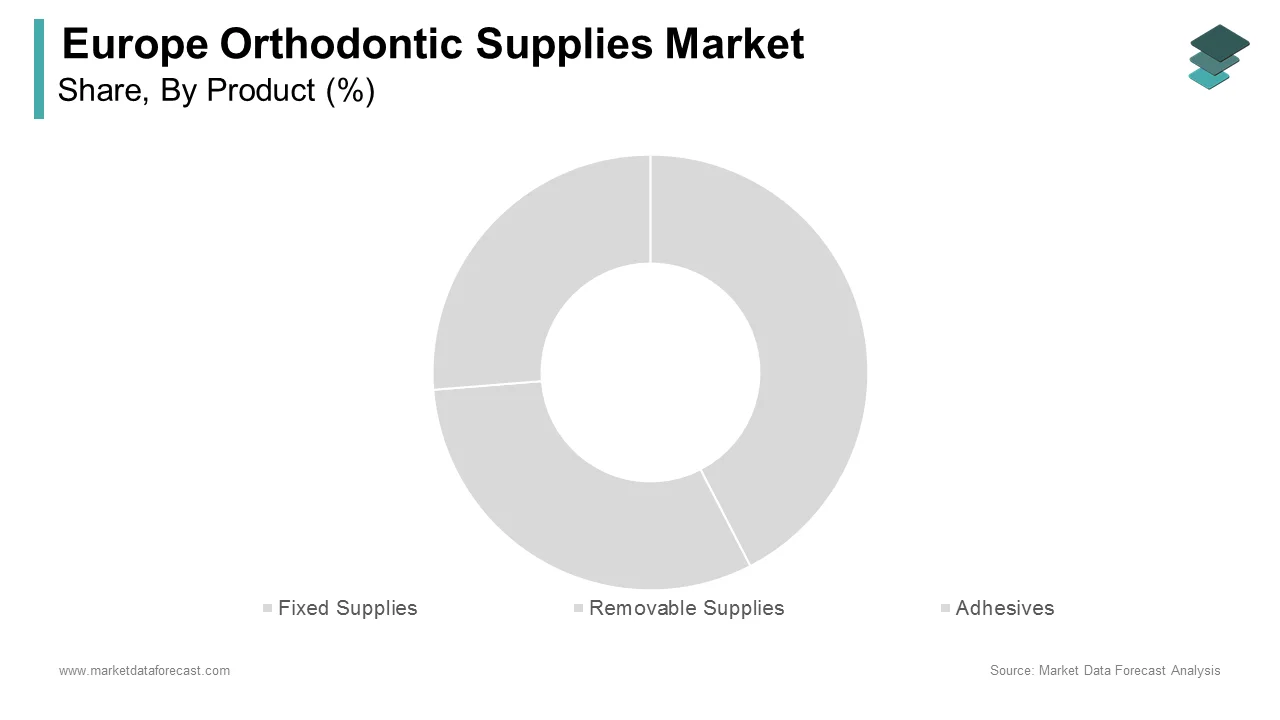
The removable supplies segment is estimated to register the fastest CAGR of 10.2% over the forecast period in the European market, owing to the rising adoption of clear aligner therapy among adults and older adolescents seeking discreet, removable treatment options. Unlike fixed appliances, aligners offer aesthetic appeal, comfort, and convenience, and align with evolving patient expectations in urban and professional demographics. The digital workflow integration that enables rapid customization and remote monitoring is also contributing to the rapid growth of the removable supplies segment in the European market. As per the European Commission’s Digital Health Atlas, 28 EU member states now recognize clear aligner platforms as regulated medical devices, facilitating reimbursement pathways and clinical legitimacy. In the Netherlands and Denmark, aligner starts among adults grew by over 30 percent annually between 2021 and 2024 according to national dental registries. Additionally, hybrid treatment models—combining limited fixed anchorage with aligner finishing—have expanded clinical applicability to more complex cases, broadening the addressable market beyond mild crowding. This convergence of patient preference, digital enablement, and regulatory acceptance underpins the segment’s superior growth trajectory.
By Patients Insights
The children and adolescents segment led the market by holding a dominating share of the European market in 2024. The dominance of the children and adolescents’ segment is attributed to the biological and policy-driven focus on early orthodontic intervention during the mixed and permanent dentition phases. National healthcare systems across Western and Northern Europe routinely fund orthodontic treatment for individuals under 18 with defined malocclusion severity, which is creating a large and stable patient cohort. The regulatory landscape across Europe is evolving with increased recognition of clear aligner systems as regulated medical devices, which is facilitating reimbursement pathways and clinical legitimacy in multiple member states. In the Netherlands and Denmark, adult aligner starts have been reported to grow significantly year-on-year between 2021 and 2024. Additionally, hybrid treatment models that combine limited fixed anchorage with aligner finishing have expanded clinical applicability to more complex cases, which is broadening the addressable market beyond mild crowding. This convergence of patient preference, digital enablement, and regulatory acceptance is significantly boosting the growth of the children and adolescents segment in the European market.
The adult segment is estimated to showcase the fastest CAGR of 8.8% over the forecast period in the European orthodontic supplies market. The shift in adult attitudes toward dental aesthetics, professional image, and oral health maintenance is primarily driving the adult segment in the European market. Unlike previous decades, adults now actively seek orthodontic correction for both functional and cosmetic reasons, which is also supported by discreet treatment options such as clear aligners and lingual braces. According to the World Health Organization, oral diseases affect nearly 3.5 billion people globally, with misaligned teeth and bite irregularities being among the most common concerns contributing to adult orthodontic demand. The willingness of many adults to undergo orthodontic treatment if it improves their smile or bite is clear. The growth of the segment is further driven by rising disposable incomes in urban centres and the integration of orthodontics into comprehensive dental rehabilitation, particularly before implant or prosthetic work. In Germany and the Netherlands, adult orthodontic cases linked to restorative treatment plans are increasingly significant. This convergence of aesthetic aspiration, functional necessity, and clinical integration is fuelling the growth of the adult segment in the European market.
COUNTRY LEVEL ANALYSIS
Germany Orthodontic Supplies Market Analysis
Germany dominated the orthodontic supplies market in Europe in 2024 with 22.3% of the regional market share. The robust statutory health insurance system of Germany that fully covers orthodontic treatment for minors meeting defined clinical severity thresholds is primarily contributing to the dominating role of Germany in the European market. According to the “Sixth German Study on Oral Health (DMS 6)”, approximately 40.4% of eight-to-nine-year-old children in Germany were found to need orthodontic treatment under the statutory indication system. The public funding mechanism in Germany ensures consistent demand for fixed appliances, brackets, and archwires across more than 12,000 orthodontic practices nationwide. Germany also boasts the highest density of certified orthodontic specialists in the EU, with over 4,500 practitioners registered with the German Society of Orthodontics. Technological adoption further amplifies market activity, with digital dentistry research pointing to Germany’s dominant role in the European intraoral scanner market. Additionally, Germany serves as a manufacturing and R&D hub for major European dental companies by fostering innovation in self-ligating systems and biocompatible alloys. This confluence of public support, clinical capacity, and industrial infrastructure is further driving the growth of Germany in the European market.

United Kingdom Orthodontic Supplies Market Analysis
The United Kingdom is another potential market for orthodontic supplies and occupied the second-largest share of the European market in 2024. According to a 2025 audit of British Orthodontic Society data, over 351,000 children were waiting for NHS orthodontic assessments, with 141,487 waiting beyond 52 weeks. The National Health Service has historically provided comprehensive orthodontic care for patients under 18, funding around 220,000 new fixed appliance cases annually. However, prolonged waiting lists averaging 14 months in 2023 have driven significant migration to private care, especially among adults and families seeking faster or aesthetic options. This dual-tier system sustains demand across both public and private supply chains. Regulatory clarity under the UK Medical Devices Regulations continues to support innovation, while post-Brexit trade adjustments have increased reliance on domestic and EU-based suppliers. The UK also hosts a high concentration of dental schools and research institutions, contributing to clinical protocol standardization and early adoption of evidence-based supplies. These structural and behavioural dynamics are propelling the orthodontic supplies market in the UK.
France Orthodontic Supplies Market Analysis
France is anticipated to account for a notable share of the European orthodontic supplies market over the forecast period. Orthodontic treatments that begin before the age of 16 in France are reimbursed at 70% of the official rate by the state health insurance. The French healthcare system provides substantial reimbursement for orthodontic treatment initiated before age 16, covering up to this level for medically indicated cases. The public support ensures a steady demand for traditional supplies. Simultaneously, France exhibits one of Europe’s highest rates of adult aesthetic orthodontics, which is driven by cultural emphasis on appearance and professional image. Paris alone hosts over 800 specialized orthodontic clinics with many integrating digital workflows and premium aesthetic systems. Regulatory reforms in 2022 streamlined approval for digital orthodontic platforms, which are accelerating teledentistry adoption. This blend of strong public infrastructure and dynamic private innovation is driving the orthodontic supplies market in France in Europe.
Italy Orthodontic Supplies Market Analysis
Italy is expected to exhibit a prominent CAGR in the European orthodontic supplies market over the forecast period. While the national health service nominally covers orthodontics for minors, severe regional disparities and underfunding result in waiting times exceeding 18 months in southern regions, as per the Italian Ministry of Health. According to sources, the orthodontic segment’s share of the Italian dental market increased from 7.1% in 2015 to 13% in 2022. Consequently, over 65% of orthodontic treatments are now privately financed, which is creating a highly commercialised but fragmented market. This private dominance has accelerated the adoption of premium aesthetic solutions, with the clear-aligner market in Italy accounting for a substantial share of the European market in recent years. Northern Italy, particularly Lombardy and Emilia-Romagna, a home to dense clusters of high-end orthodontic practices utilising digital scanning and customised appliances. Italy also serves as a key distribution hub for Southern Europe, with Milan-based distributors supplying orthodontic supplies to Greece, Croatia, and Malta. Despite systemic inefficiencies, the large population and rising private expenditure of Italy sustain its significant market presence.
Spain Orthodontic Supplies Market Analysis
Spain is likely to hold a considerable share of the European orthodontic supplies market during the forecast period. Historically reliant on out-of-pocket payments, the market underwent a transformative shift in 2023 when the national dental plan began partially reimbursing clear aligner therapy for adolescents with moderate malocclusion. According to Eurostat data, about 13.2% of Spain’s population was aged 0-14 years in December 2024. The public healthcare system now covers up to 70% of costs for eligible orthodontic cases in Spain, which is significantly expanding access. The Spanish healthcare policy has reportedly led to a substantial uptick in aligner prescriptions within the first six months of implementation. Spain also benefits from a younger-skewing demographic profile that provides a larger potential patient base. Urban centres such as Madrid and Barcelona exhibit high concentrations of digitally equipped orthodontic clinics, many of which are adopting intraoral scanners and digital workflows. Additionally, medical tourism for dental care, particularly from Northern Europe, contributes to clinic revenues and supply turnover. These policy and demographic tailwinds position Spain as a high-growth market within the European orthodontic landscape.
COMPETITIVE LANDSCAPE
The Europe Orthodontic Supplies Market features intense competition among multinational corporations and specialized regional players. Established companies leverage technological superiority, brand recognition, and extensive distribution channels to dominate the landscape. Innovation in digital orthodontics, particularly clear aligners and intraoral scanning systems, has intensified rivalry as firms race to offer integrated end-to-end solutions. Regulatory harmonization across the European Union enables smoother market entry but also raises compliance expectations. Companies increasingly differentiate themselves through clinical support services, training programs, and sustainability commitments. The market also sees consolidation through acquisitions and partnerships aimed at expanding product portfolios and geographic reach. This dynamic environment drives continuous advancement in treatment precision, patient comfort, and practitioner efficiency across both public and private dental care sectors.
KEY MARKET PLAYERS
Some of the companies that are playing a dominating role in the Europe orthodontic supplies market include
- 3M
- Align Technology Inc.
- Danaher Corporation
- Henry Schein, Inc.
- Dentsply Sirona, Inc.
- Dentaurum GmbH & Co. KG
- TP Orthodontics, Inc.
TOP PLAYERS IN THE MARKET
- Align Technology is a global leader in orthodontic innovation with a strong presence in Europe through its Invisalign clear aligner system and iTero intraoral scanners. The company has significantly advanced digital orthodontics by integrating artificial intelligence and 3D imaging into treatment planning. In recent years, Align Technology has expanded its European footprint by enhancing its clinical support infrastructure and launching region-specific training programs for dental professionals. The company also invested in localized manufacturing and digital workflow solutions to meet rising demand across Western and Central Europe. These initiatives reinforce its commitment to delivering precision-based orthodontic care and solidify its influence in both the European and global orthodontic supplies markets.
- 3M Company maintains a prominent role in the Europe Orthodontic Supplies Market through its comprehensive portfolio of brackets, adhesives, archwires, and bonding systems under the 3M Oral Care division. The company emphasizes evidence-based innovation and collaborates closely with European dental institutions to refine product performance. Recently, 3M has intensified its focus on sustainability by introducing eco-conscious packaging and reducing the environmental impact of its manufacturing processes. It has also launched digital educational platforms for orthodontists to improve clinical outcomes using its products. These efforts demonstrate 3M’s dedication to supporting practitioners while reinforcing its global leadership in orthodontic materials and technologies across diverse healthcare systems.
- Dentsply Sirona contributes extensively to the Europe Orthodontic Supplies Market with a diversified offering that includes orthodontic appliances, diagnostic tools, and digital treatment planning software. The company leverages its integrated digital ecosystem to connect clinical workflows from diagnosis to delivery. In recent years, Dentsply Sirona has strengthened its European position by expanding its network of certified training centers and partnering with academic institutions to promote digital orthodontics. It also introduced cloud-based platforms that enable remote case monitoring and collaboration among practitioners. These strategic enhancements underscore its commitment to innovation and its pivotal role in shaping modern orthodontic practices both in Europe and worldwide.
TOP STRATEGIES USED BY THE KEY MARKET PARTICIPANTS
Key players in the Europe Orthodontic Supplies Market employ several strategic approaches to maintain a competitive advantage. Product innovation remains central with companies investing heavily in digital solutions such as 3D scanning and AI-driven treatment planning. Strategic partnerships with dental schools and clinics facilitate clinical validation and practitioner adoption. Geographic expansion through localized distribution networks and regulatory compliance enhances market access. Companies also prioritize sustainability by redesigning packaging and optimizing manufacturing processes. Additionally, they deploy comprehensive educational initiatives, including workshops and online certification programs, to build professional loyalty and ensure proper product utilization across diverse European healthcare environments.
EUROPE ORTHODONTIC SUPPLIES MARKET NEWS
- In March 2024, Align Technology launched a new version of its iTero Element Plus Series scanner in Germany, enhancing scanning speed and accuracy for orthodontic diagnostics and strengthening the Europe Orthodontic Supplies Market presence
- In November 2023, 3M Company introduced the next generation of its APC Plus Adhesive Precoated Orthodontic Bracket System across France and Italy, improving clinical efficiency and reinforcing the Europe Orthodontic Supplies Market position
- In June 2024, Dentsply Sirona partnered with the European Orthodontic Society to deliver a digital orthodontics certification program for practitioners in Spain and the Netherlands, advancing clinical adoption and supporting the Europe Orthodontic Supplies Market growth
- In September 2023, Align Technology opened a new digital training center in London dedicated to Invisalign provider education and case planning, thereby deepening its engagement in the Europe Orthodontic Supplies Market
- In February 2024, Dentsply Sirona unveiled its upgraded OrthoCAD software with cloud-based collaboration tools for orthodontists in Sweden and Belgium, facilitating remote treatment planning and enhancing its Europe Orthodontic Supplies Market capabilities
MARKET SEGMENTATION
This research report on the European orthodontic supplies market has been segmented and sub-segmented into the following categories.
By Product
- Fixed Supplies
- Removable Supplies
- Adhesives
By Patients
- Children & Adolescents
- Adults
By Country
- UK
- France
- Spain
- Germany
- Italy
- Russia
- Sweden
- Denmark
- Switzerland
- Netherlands
- Turkey
- Czech Republic
- Rest of Europe
Frequently Asked Questions
1. What drives growth in the europe orthodontic supplies market?
Growth is driven by rising malocclusion cases, increased dental aesthetics awareness, and demand for advanced technologies like clear aligners in europe orthodontic supplies market
2. Which products dominate the europe orthodontic supplies market?
Clear aligners, dental braces, self-ligating brackets, and orthodontic adhesives lead the europe orthodontic supplies market due to their effectiveness and aesthetics
3. How does adult orthodontics impact the europe orthodontic supplies market?
Growing adult demand for aesthetic, discreet treatments like clear aligners significantly boosts the europe orthodontic supplies market
4. What role does technology play in the europe orthodontic supplies market?
Technologies like 3D printing, AI-driven treatment planning, and digital orthodontics innovate the europe orthodontic supplies market for better outcomes
5. Who are the key players in the europe orthodontic supplies market?
Major players include Align Technology, Dentsply Sirona, 3M, and Henry Schein, driving innovation and market expansion in europe orthodontic supplies market
6. Which countries lead the europe orthodontic supplies market?
Germany, UK, France, Italy, and Spain are leading markets in europe orthodontic supplies due to advanced healthcare and dental infrastructure
7. What challenges affect the europe orthodontic supplies market?
High treatment costs and limited public coverage for adults hinder wider penetration in the europe orthodontic supplies market
8. How does malocclusion prevalence impact the europe orthodontic supplies market?
High malocclusion rates increase the need for orthodontic corrective products, driving growth in the europe orthodontic supplies market
9. Are clear aligners growing in the europe orthodontic supplies market?
Yes, clear aligners are rapidly growing due to aesthetics and comfort, reshaping the europe orthodontic supplies market
10. How does pediatric orthodontics affect the europe orthodontic supplies market?
High adolescent orthodontic patient numbers sustain demand for braces and appliances in the europe orthodontic supplies market
Related Reports
Access the study in MULTIPLE FORMATS
Purchase options starting from
$ 2000
Didn’t find what you’re looking for?
TALK TO OUR ANALYST TEAM
Need something within your budget?
NO WORRIES! WE GOT YOU COVERED!
Call us on: +1 888 702 9696 (U.S Toll Free)
Write to us: sales@marketdataforecast.com