Europe Dental Market Size, Share, Trends & Growth Forecast Report – Segmented By Type, End User, and Country (UK, France, Spain, Germany, Italy, Russia, Sweden, Denmark, Switzerland, Netherlands, Turkey, Czech Republic & Rest of Europe), Industry Analysis From 2026 to 2034
Europe Dental Market Report Summary
The Europe dental market was valued at USD 12.16 billion in 2025 and is estimated to reach USD 13.46 billion in 2026, further projected to reach USD 30.35 billion by 2034, growing at a CAGR of 10.7% during the forecast period. Market growth is driven by increasing prevalence of dental disorders, rising demand for cosmetic dentistry procedures, and growing awareness regarding oral health across European countries. Expansion of dental clinics, technological advancements in digital dentistry, and adoption of CAD CAM systems, 3D imaging, and minimally invasive treatment solutions are further accelerating market expansion. In addition, aging populations and higher healthcare expenditure are supporting sustained demand for dental care services and products.
Key Market Trends
- Rising demand for dental consumables including implants, crowns, orthodontic brackets, and restorative materials due to increasing treatment volumes.
- Growing adoption of digital dentistry technologies such as intraoral scanners, 3D printing, and computer aided design systems.
- Increasing preference for cosmetic dentistry procedures including teeth whitening, veneers, and aligners.
- Expansion of private dental clinics and consolidation of group dental practices across major European economies.
- Strong regulatory standards and reimbursement frameworks supporting high quality dental care services.
Segmental Insights
- Based on type, the dental consumables segment accounted for 60.5% of the Europe dental market share in 2025. The segment’s dominance is attributed to frequent usage in routine procedures, high replacement rate, and increasing demand for implants and restorative products.
- Based on end user, the solo practices segment held 55.9% of the European dental market share in 2025. Solo dental clinics dominate due to widespread presence across urban and semi urban areas and strong patient preference for personalized care services.
Regional Insights
- Germany accounted for 19.2% of the Europe dental market share in 2025, making it the leading country in the region. The country’s dominance is supported by advanced healthcare infrastructure, high dental expenditure per capita, strong reimbursement policies, and widespread adoption of innovative dental technologies.
- Other Western European countries such as France, the United Kingdom, and Italy also contribute significantly to regional market growth.
Competitive Landscape
The Europe dental market is highly competitive with the presence of global dental product manufacturers and specialized equipment providers. Companies are focusing on product innovation, digital integration, strategic partnerships, and geographic expansion to strengthen their market presence. Key players operating in the Europe dental market include 33M (U.S.), Dentsply Sirona (U.S.), Institut Straumann AG (Switzerland), Henry Schein Inc. (U.S.), Zimvie under Zimmer Biomet (U.S.), Ultradent Products Inc. (U.S.), Septodont GmbH (France), BIOLASE Inc. (U.S.), VATECH (South Korea), and PLANMECA OY (Finland).
Europe Dental Market Size
The Europe dental market size was valued at USD 12.16 billion in 2025 and is projected to reach USD 30.35 billion by 2034 from USD 13.46 billion in 2026, growing at a CAGR of 10.7%.

Dental encompasses the provision of a comprehensive spectrum of oral health services and products, ranging from preventive care and routine restorative procedures to advanced prosthetics, orthodontics, and implantology. It operates within a diverse healthcare ecosystem that blends public funding, private insurance, and out of pocket expenditure, varying significantly across member states. A defining non market characteristic of this landscape is the high prevalence of oral diseases among the population. According to the World Health Organization, adults in the European Region commonly experience dental caries, while severe periodontal disease is also widespread among older individuals. This creates a foundational and persistent demand for dental services. As per Eurostat, life expectancy in the European Union continues to rise, which directly correlates with an increased need for complex, long term dental solutions such as implants and dentures to maintain function and quality of life in an aging society.
MARKET DRIVERS
Rising Prevalence of Oral Diseases Fuels Demand for Restorative and Preventive Care
The overwhelming and near universal incidence of dental caries and periodontal disease across all age groups in Europe serves as a primary engine for market activity. The human mouth hosts a complex microbiome, and without consistent and effective hygiene, the resulting biofilm leads to enamel demineralization and gum inflammation. According to the World Health Organization, dental caries is recognized as the most prevalent health condition globally, affecting adults in the European Region during their lifetime. Untreated caries can lead to pain, infection, and tooth loss, driving demand for fillings, root canal treatments, and extractions. Similarly, as per WHO, severe periodontitis is widespread among older Europeans and is a leading cause of adult tooth loss, necessitating specialized periodontal therapy and rehabilitation with crowns or implants. This constant and widespread biological reality ensures a steady, non-discretionary flow of patients into dental practices, forming the bedrock of the entire market’s service and product economy.
Aging Population Drives Demand for Advanced Prosthetic and Implant Solutions
Europe’s demographic structure, marked by a rapidly expanding elderly cohort, is a powerful structural driver for the higher end segments of the dental market. As people live longer, they retain their natural teeth for more years, but this also means they are more likely to experience cumulative wear, periodontal breakdown, and eventual tooth loss. As per Eurostat, the European Union’s population aged 65 and over is projected to continue rising in the coming years, which increases the pool of individuals requiring complex oral rehabilitation. Unlike previous generations who often relied on conventional removable dentures, today’s seniors are more health conscious, affluent, and demanding of solutions that restore full function and aesthetics. This has led to a surge in demand for fixed prosthetics and, most notably, dental implants. These sophisticated, surgically placed devices offer a permanent and stable alternative to dentures, directly addressing the functional and social needs of an active aging population who view oral health as integral to their overall well-being and quality of life.
MARKET RESTRAINTS
Fragmented Reimbursement Policies Limit Access to Advanced Dental Care
A significant restraint on the growth and equity of the Europe dental market is the profound inconsistency in public reimbursement for dental services across different countries and even within national systems. While basic and emergency care may be covered in some nations, advanced procedures like dental implants, orthodontics for adults, and high-end cosmetic dentistry are almost universally excluded from public health schemes. According to statutory health insurance frameworks in countries such as Germany and France, coverage is often limited to partial support for standard crowns or basic dentures, leaving patients to bear the majority of costs for premium materials or implant-based solutions. This patchwork of coverage creates a two-tier system where access to the most effective and durable treatments is largely determined by an individual’s ability to pay out of pocket or secure private insurance. Consequently, a substantial portion of the population is forced to forego optimal care or delay treatment, which restricts market potential and perpetuates oral health inequalities across socioeconomic lines.
Shortage of Dental Professionals in Key Regions Constrains Service Capacity
Despite the high demand for oral health services, the Europe dental market faces a critical bottleneck in the form of an uneven distribution and, in some areas, an outright shortage of qualified dental professionals. According to the Organisation for Economic Co-operation and Development, dentist density varies significantly across Europe, with countries in Eastern and Southern regions reporting lower availability compared to oversupplied urban centers in Western Europe. This geographic maldistribution means that millions of Europeans, particularly in rural and underserved communities, face significant barriers to accessing timely care. The problem is exacerbated by an aging workforce, as a considerable proportion of practicing dentists in countries such as Italy and Portugal are nearing retirement age, with insufficient new graduates to replace them. This human capital gap directly limits the market’s ability to meet existing demand, leading to long waiting times and unmet oral health needs.
MARKET OPPORTUNITIES
Digital Dentistry Revolution Creates New Avenues for Efficiency and Precision
The ongoing integration of digital technologies into clinical workflows presents a transformative opportunity for the European dental market. The shift from analog to digital processes, from intraoral scanning and computer aided design to 3D printing and digital smile design, is fundamentally changing how care is delivered. Intraoral scanners eliminate the need for uncomfortable physical impressions, improving patient comfort and enabling same day restorations through chairside milling units. This technological leap enhances clinical precision, reduces turnaround times, and allows for a more predictable and engaging patient experience. The adoption of these technologies is being accelerated by a new generation of digitally native dentists and the increasing affordability of the hardware and software. As these tools become mainstream, they create a powerful value proposition that drives practice modernization, boosts productivity, and opens up new service lines centred around aesthetic and minimally invasive dentistry.
Growing Medical Tourism for Dental Services Expands Cross Border Demand
Europe has emerged as a global epicentre for dental tourism, which is creating a significant cross border opportunity within the market. Patients from Western and Northern European countries, where the cost of advanced dental care can be prohibitive, are increasingly traveling to destinations in Central and Eastern Europe for high quality yet affordable treatment. Countries such as Hungary, Poland, and Croatia have built world class dental clinics that cater specifically to international patients, offering complex procedures at a fraction of the domestic cost. This phenomenon is facilitated by the Schengen Area’s open borders and the high standard of training many Eastern European dentists receive. The influx of medical tourists not only boosts the economies of host nations but also fosters a competitive environment that encourages clinics across the continent to improve their service quality, adopt international standards, and invest in marketing.
MARKET CHALLENGES
High Out of Pocket Expenditure Deters Patients from Seeking Timely Care
One of the most persistent challenges facing the Europe dental market is the heavy reliance on direct patient payment for a wide array of essential and advanced services. In many European countries, public health systems provide minimal or no coverage for routine dental care for adults, placing the financial burden on the individual. As per multiple European health studies, dental expenses constitute a major component of household out of pocket health spending. This economic barrier has a profound behavioral impact, with cost often cited by adults as the primary reason for delaying or forgoing necessary dental treatment. This pattern leads to a cycle of neglect where minor, easily treatable issues evolve into complex and expensive problems requiring extensive intervention.
Regulatory Hurdles for Novel Biomaterials and Devices Slow Innovation Adoption
The introduction of new dental materials, devices, and technologies into the European market is often hampered by a complex and time-consuming regulatory pathway under the EU Medical Device Regulation. Many innovative dental products, including novel implant surfaces, bioactive cements, and digital diagnostic tools, fall under higher risk categories, requiring rigorous conformity assessment. As per EU MDR guidelines, stringent requirements for clinical evidence and post market surveillance have created delays and increased costs for bringing new products to market. For small and medium sized enterprises, which are often the source of cutting-edge innovation in biomaterials, these regulatory burdens can be difficult to overcome. This slow and costly approval process stifles the pace of technological advancement available to European clinicians, preventing them from accessing the latest tools that could improve patient outcomes and practice efficiency.
REPORT COVERAGE
| REPORT METRIC | DETAILS |
| Market Size Available | 2025 to 2034 |
| Base Year | 2025 |
| Forecast Period | 2026 to 2034 |
| CAGR | 10.7% |
| Segments Covered | By Type, End User, and Region |
| Various Analyses Covered | Global, Regional, & Country Level Analysis; Segment-Level Analysis; DROC, PESTLE Analysis; Porter’s Five Forces Analysis; Competitive Landscape; Analyst Overview of Investment Opportunities |
| Regions Covered | UK, France, Spain, Germany, Italy, Russia, Sweden, Denmark, Switzerland, Netherlands, Turkey, and the Czech Republic |
| Market Leaders Profiled | 3M (U.S.), Dentsply Sirona (U.S.), Institut Straumann AG (Switzerland), Henry Schein Inc. (U.S.), Zimvie under Zimmer Biomet (U.S.), Ultradent Products Inc. (U.S.), Septodont GmbH (France), BIOLASE Inc. (U.S.), VATECH (South Korea), and PLANMECA OY (Finland) |
Segmental Analysis
By Type Insights
The dental consumables segment dominated the market by commanding for the highest share of 60.5% of the regional market share in 2025. The growth of dental consumables segment in the European market is driven by the recurrent and essential nature of these products, which are used in virtually every patient interaction, from routine checkups to complex surgical procedures. A primary driver of this segment’s dominance is the high and sustained demand for restorative and prosthetic solutions driven by an aging population. As Europeans live longer, they retain their natural dentition longer but face increased risks of caries, periodontal disease, and tooth loss. According to the World Health Organization, severe periodontitis is common among older adults in the European Region. This reality creates a constant need for consumables such as composite resins, cements, impression materials, and dental implants and prosthetics. These items are not one-time purchases but are integral to ongoing patient care, ensuring a steady, high volume revenue stream that far outpaces the more capital intensive but less frequently purchased equipment segment.
The clear aligners segment is projected to expand at a CAGR of 15.5% over the forecast period owing to the aesthetic preference, technological advancement, and shifting consumer behavior. Clear aligners offer a nearly invisible and removable alternative that fits seamlessly into professional and social lifestyles. Furthermore, the integration of digital workflows, including intraoral scanning and 3D printing, has shortened treatment planning times and improved clinical predictability. Companies have capitalized on this by establishing direct to consumer channels and partnering with general dentists, expanding the pool of potential providers beyond traditional orthodontic specialists.
By End User Insights
The solo practices segment led the market by holding 55.9% of the European market share in 2025. The growth of the solo practices segment in the European market is attributed to a a reflection of the historical and cultural foundation of dentistry in Europe, where independent practice has long been the norm. The key factor sustaining this dominance is the deeply ingrained tradition of independent professional autonomy among European dentists. Many practitioners value the freedom to manage their own clinical protocols, build direct patient relationships, and control their business operations without corporate oversight. This model is particularly resilient in countries with strong private healthcare sectors, such as Germany and Switzerland, where a large number of dentists operate successful single or small multi dentist clinics. Their purchasing decisions, while often on a smaller scale, are frequent and focused on essential consumables and core equipment, collectively forming the bedrock of the market’s demand.
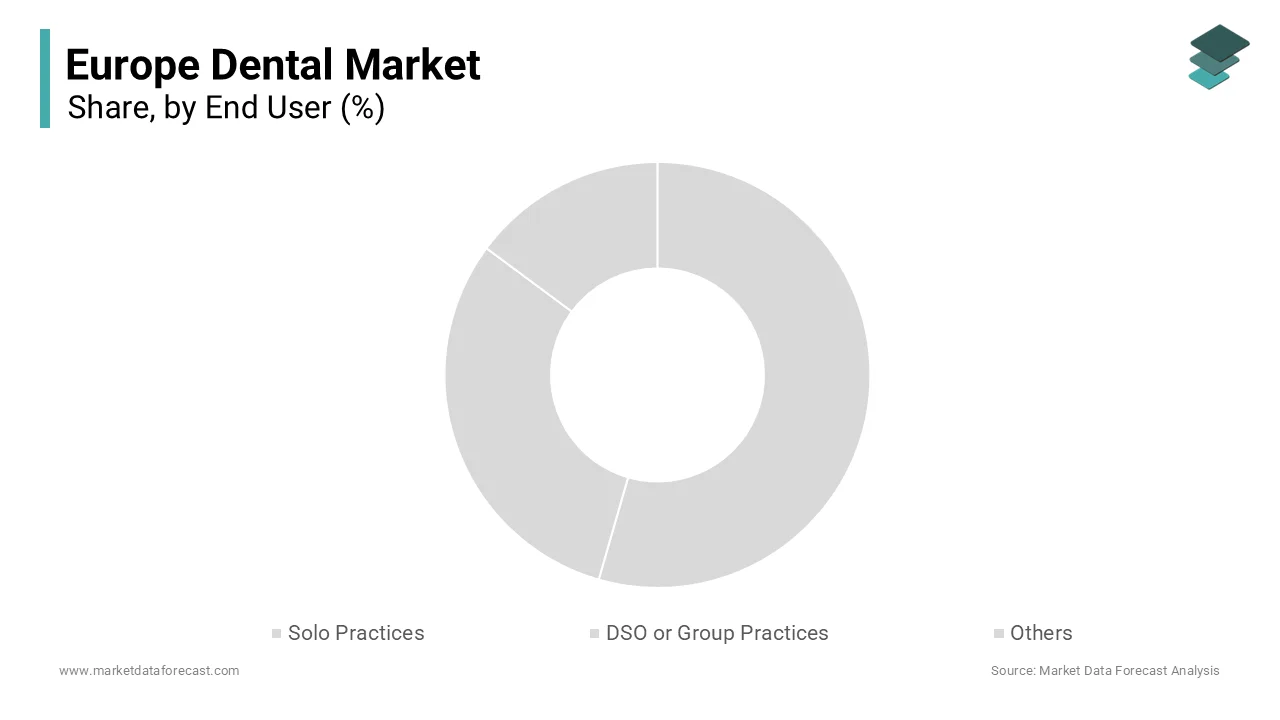
Conversely, the DSO/Group practices segment is the fastest growing and is anticipated to register a CAGR of 10.4% over the forecast period owing to the fundamental shift in the economics and operational demands of modern dentistry. A major catalyst is the increasing administrative and regulatory burden on individual practitioners, including compliance with the EU Medical Device Regulation and complex billing systems. Dental Support Organizations provide a solution by centralizing non clinical functions such as marketing, human resources, IT, and procurement, allowing dentists to focus solely on patient care. This model also offers economies of scale in purchasing, enabling group practices to invest in expensive digital technologies like CAD/CAM systems and intraoral scanners that might be financially out of reach for a solo practitioner.
REGIONAL ANALYSIS
Germany Dental Market Analysis
Germany was the undisputed leader in the European dental market and accounted for 19.2% of the regional market share in 2025. The dominance of Germany in the European dental market is attributed to a robust economy, a high density of dental professionals, and a strong culture of private dental care. According to national insurance data, a very high proportion of the German population opts for private dental supplementary insurance, which covers advanced and aesthetic treatments not included in the basic statutory plan. This high level of private coverage directly translates into a vibrant market for premium consumables like zirconia crowns and dental implants, as well as sophisticated equipment, making Germany the most lucrative and technologically advanced dental market on the continent.
France Dental Market Analysis
France occupied a significant position as the second largest market in 2025. The French market is characterized by a generous public reimbursement system for basic care combined with a very high uptake of complementary private health insurance, known as mutuelles. According to the French National Health Insurance Fund, most of the population is covered by a mutuelle, which reimburses a substantial portion of fees for prosthetics, orthodontics, and other advanced services. This dual layer of coverage ensures broad patient access and a stable, high volume of procedures, creating fertile ground for both domestic and international dental product companies.
United Kingdom Dental Market Analysis
The United Kingdom is estimated to account for a promising share of the European dental market over the forecast period. While the National Health Service provides basic dental care, its limited scope and long waiting lists have driven a massive expansion of the private sector. A key driver of the UK market is the exceptionally high demand for aesthetic and cosmetic dentistry, particularly in urban centers. This consumer driven demand is supported by a large number of private practices that actively market services such as teeth whitening, veneers, and clear aligners. The UK’s market is further energized by its role as a hub for dental innovation and education, with universities and research institutions contributing to new clinical techniques and materials.
Italy Dental Market Analysis
Italy holds a prominent place in the European dental market. Its market dynamics are heavily influenced by its aging population and a strong preference for private dental care. As per Eurostat, Italy has one of the highest proportions of citizens aged 65 or older in Europe, creating a significant burden of edentulism and complex restorative needs. A defining feature of the Italian market is the high concentration of specialized dental laboratories, particularly in the northern regions, renowned for craftsmanship in producing high end prosthetics. This collaboration between skilled clinicians and master technicians fosters a market highly receptive to premium materials and advanced digital workflows.
Spain Dental Market Analysis
Spain is a dynamic and rapidly evolving market. Its growth trajectory is powered by a recovering economy and a growing middle class with increasing disposable income for private healthcare. A crucial factor shaping the Spanish market is its emergence as a leading destination for dental tourism. Clinics in cities such as Madrid and Barcelona have built international reputations for offering high quality implantology and full mouth rehabilitation at competitive prices, attracting patients from across Europe. This influx of international patients has spurred investment in state-of-the-art technology and multilingual staff, raising the overall standard of care and accelerating adoption of innovative products and services throughout the domestic market.
COMPETITIVE LANDSCAPE
The competitive environment in the Europe dental market is highly dynamic and characterized by the presence of a few dominant multinational corporations that compete on technological sophistication, brand legacy, and the comprehensiveness of their product portfolios. The rivalry is intense, particularly in the high growth segments of digital dentistry, dental implants, and clear aligners. Competition is not merely about individual products but about offering integrated, end-to-end digital ecosystems that can streamline the entire clinical workflow. This has led to a wave of strategic acquisitions and partnerships aimed at closing gaps in digital capabilities. While these global players set the pace, they also face competition from agile regional manufacturers and specialized local brands that cater to specific national preferences or price-sensitive segments. The overall landscape is consolidating, with innovation and the ability to provide holistic solutions being the primary determinants of long-term success.
KEY MARKET PLAYERS
Some of the notable key players in the Europe dental market are
- 3M (U.S.)
- Dentsply Sirona (U.S.)
- Institut Straumann AG (Switzerland)
- Henry Schein, Inc. (U.S.)
- Zimvie (Zimmer Biomet) (U.S.)
- Ultradent Products Inc. (U.S.)
- Septodont GmbH (France)
- BIOLASE Inc. (U.S.)
- VATECH (South Korea)
- PLANMECA OY (Finland)
Top Players in the Market
- Dentsply Sirona is a global powerhouse in dental technology with a deeply entrenched presence across Europe. The company offers an integrated portfolio spanning consumables like implants and restorative materials to advanced equipment including CAD/CAM systems and imaging solutions. Its strength lies in its ability to provide end-to-end digital workflows that connect every step of the dental process. To fortify its European position, Dentsply Sirona has intensified its focus on digital dentistry, launching next generation CEREC software updates and expanding its PrimeScan intraoral scanner ecosystem. The company also actively partners with dental schools and professional associations across the continent to drive education and adoption of its integrated platforms.
- Straumann Group is a world leader in aesthetic and implant dentistry, with Europe serving as its most strategic and mature market. The company’s core expertise revolves around its premium dental implant systems, biomaterials, and clear aligner solutions under the ClearCorrect brand. Straumann has built a formidable reputation for clinical excellence and innovation in osseointegration. In recent years, the company has significantly strengthened its European footprint by investing in digital infrastructure, including its proprietary CARES digital workflow and the acquisition of companies specializing in 3D printing and orthodontic software. These moves are designed to create a seamless, fully digital patient journey from diagnosis to final restoration.
- Envista Holdings Corporation is a major global player whose European operations are anchored by its legacy brands like Nobel Biocare, Ormco, and KaVo Kerr. The company provides a comprehensive range of products, from orthodontic appliances and implant systems to dental equipment and specialty consumables. Envista’s strategy in Europe focuses on empowering both solo and group practices through a broad, multi brand portfolio that caters to diverse clinical needs and budgets. To enhance its market position, Envista has been aggressively expanding its digital offerings, such as the Ormco Digital Lab for clear aligners and advanced imaging solutions from KaVo, while simultaneously streamlining its distribution network to ensure faster and more reliable product delivery across the region.
Top Strategies Used by the Key Market Participants
Key players in the Europe dental market are primarily focused on vertical integration of digital workflows to create seamless chairside experiences. They invest heavily in research and development to launch innovative biomaterials and precision equipment that enhance clinical outcomes. Strategic acquisitions of niche digital health and software companies are common to rapidly acquire new capabilities. Companies also prioritize building extensive educational ecosystems through partnerships with universities and professional bodies to train dentists on their proprietary systems. Furthermore, they are tailoring their commercial models to support the growing DSO segment by offering bundled solutions and centralized procurement agreements, thereby securing long term relationships with large practice groups.
MARKET SEGMENTATION
This research report on the European dental market has been segmented and sub-segmented based on categories.
By Type
- Dental Consumables
- Dental Restoration Products
- Dental Implants
- Dental Prosthetics
- Orthodontics
- Clear Aligners
- Conventional Braces
- Others
- Endodontics
- Others
- Dental Restoration Products
- Dental Equipment
- Dental Radiology Equipment
- Extraoral Imaging
- Intraoral Imaging
- Intraoral Scanners
- Dental Lasers
- Dental Surgical Navigation Systems
- CAD or CAM Equipment
- Dental Chairs
- Dental Handpieces
- Others
- Dental Radiology Equipment
By End User
- Solo Practices
- DSO or Group Practices
- Others
By Country
- UK
- France
- Spain
- Germany
- Italy
- Russia
- Sweden
- Denmark
- Switzerland
- Netherlands
- Turkey
- Czech Republic
- Rest of Europe
Frequently Asked Questions
1. What is the Europe dental market?
The Europe dental market includes the production, distribution, and adoption of dental equipment, consumables, implants, orthodontic products, and dental services across European countries.
2. What are the major segments in the Europe dental market?
Key segments include dental consumables, dental equipment, dental implants, orthodontics, prosthetics, and digital dentistry solutions.
3. What factors are driving growth in the Europe dental market?
Growth is driven by rising oral health awareness, increasing demand for cosmetic dentistry, technological advancements, aging population, and expansion of private dental clinics.
4. Which countries are leading in the Europe dental market?
Germany, France, the United Kingdom, Italy, and Spain are major markets due to strong healthcare infrastructure and high dental care expenditure.
5. How is cosmetic dentistry influencing the market?
Growing demand for teeth whitening, veneers, clear aligners, and smile enhancement procedures is significantly boosting market revenues.
6. What role does digital dentistry play in market expansion?
Technologies such as CAD CAM systems, 3D printing, intraoral scanners, and digital imaging are improving precision, efficiency, and patient experience.
7. How does the aging population impact the dental market?
An increasing elderly population drives demand for dental implants, prosthetics, and restorative procedures.
8. What challenges does the Europe dental market face?
Challenges include high treatment costs, reimbursement limitations, regulatory compliance requirements, and shortage of skilled dental professionals in certain regions.
9. Who are the key players in the Europe dental market?
Major companies include Dentsply Sirona, Straumann Group, Envista Holdings, Henry Schein, 3M, and other regional dental equipment manufacturers.
10. How is dental tourism affecting the market?
Dental tourism within Europe, particularly in countries offering cost effective treatments, is influencing patient flow and competitive dynamics.
Related Reports
Access the study in MULTIPLE FORMATS
Purchase options starting from
$ 2000
Didn’t find what you’re looking for?
TALK TO OUR ANALYST TEAM
Need something within your budget?
NO WORRIES! WE GOT YOU COVERED!
Call us on: +1 888 702 9696 (U.S Toll Free)
Write to us: sales@marketdataforecast.com