- Product Description Description
- Table of Contents TOC
- List of Table & Figure LOT
- Get Free Sample PDF Sample PDF
Market Size, 2025
$6.13 BnMarket Estimate, 2026
$6.68 BnMarket Forecast, 2034
$13.35 BnCAGR, 2026–2034
9.03%Europe Vegan Food Market Report Summary
The Europe vegan food market was valued at USD 6.13 billion in 2025, is estimated to reach USD 6.68 billion in 2026, and is projected to grow to USD 13.35 billion by 2034, expanding at a CAGR of 9.03% during the forecast period from 2026 to 2034. Market growth is driven by rising health and wellness awareness, ethical and environmental concerns, and the rapid mainstreaming of plant-based diets across Europe. Expanding product innovation in taste, texture, and nutrition—along with wider availability through organized retail—continues to accelerate consumer adoption among vegans, vegetarians, and flexitarians.
Key Market Trends
- Strong consumer shift toward plant-based dairy alternatives as lactose intolerance and clean-label preferences rise.
- Growing demand for soy-based products due to familiarity, protein content, and functional versatility.
- Expansion of supermarkets and hypermarkets as primary distribution channels, improving visibility and access.
- Increasing focus on sustainability, low-carbon diets, and ethical sourcing is aligned with EU climate goals.
- Product innovation emphasizing taste parity, fortification, and culinary versatility to attract mainstream consumers.
Segmental Insights
- Based on product, the dairy alternatives segment was the largest, accounting for 48.8% of the Europe vegan food market share in 2024. The segment’s dominance is attributed to high consumption of plant-based milk, yogurt, cheese, and spreads as direct substitutes for traditional dairy products.
- By source, the soy segment led the market with a 36.4% share in 2024, supported by its high protein content, established supply chains, and widespread use in both dairy and meat alternative formulations.
- Based on distribution channel, the supermarkets and hypermarkets segment captured the majority share of 62.6% in 2024, reflecting the importance of large-format retail in driving mass-market penetration, private-label growth, and consumer trial.
Regional Insights
The Europe vegan food market is witnessing robust growth across major economies.
- Germany dominated the regional market by accounting for 23.7% share in 2024, driven by strong consumer awareness, a mature plant-based ecosystem, and extensive retail penetration.
- The United Kingdom followed with 19.1% share, supported by rapid flexitarian adoption and strong foodservice participation.
- France recorded consistent growth due to the culinary reinterpretation of plant-based foods, supportive agricultural policies, and public health integration.
- Sweden remains a key contributor, backed by environmental consciousness, public sector leadership, and food-tech innovation.
- The Netherlands is expected to grow steadily from 2025 to 2033, supported by agricultural innovation, advanced logistics infrastructure, and pragmatic regulatory frameworks.
Competitive Landscape
The Europe vegan food market is moderately competitive, characterized by global food majors and specialized plant-based brands focusing on product innovation, brand differentiation, and retail expansion. Leading players emphasize clean-label formulations, sustainability credentials, and strategic partnerships across retail and foodservice channels. Prominent companies operating in the Europe vegan food market include Amy’s Kitchen Inc., Beyond Meat Inc., Daiya Foods Inc., Danone S.A., Eden Foods Inc., Plamil Foods Ltd., The Archer Daniels Midland Company, Tofutti Brands Inc., VBites Foods, and Vitasoy Australia Products Pty Ltd.
Europe Vegan Food Market Size
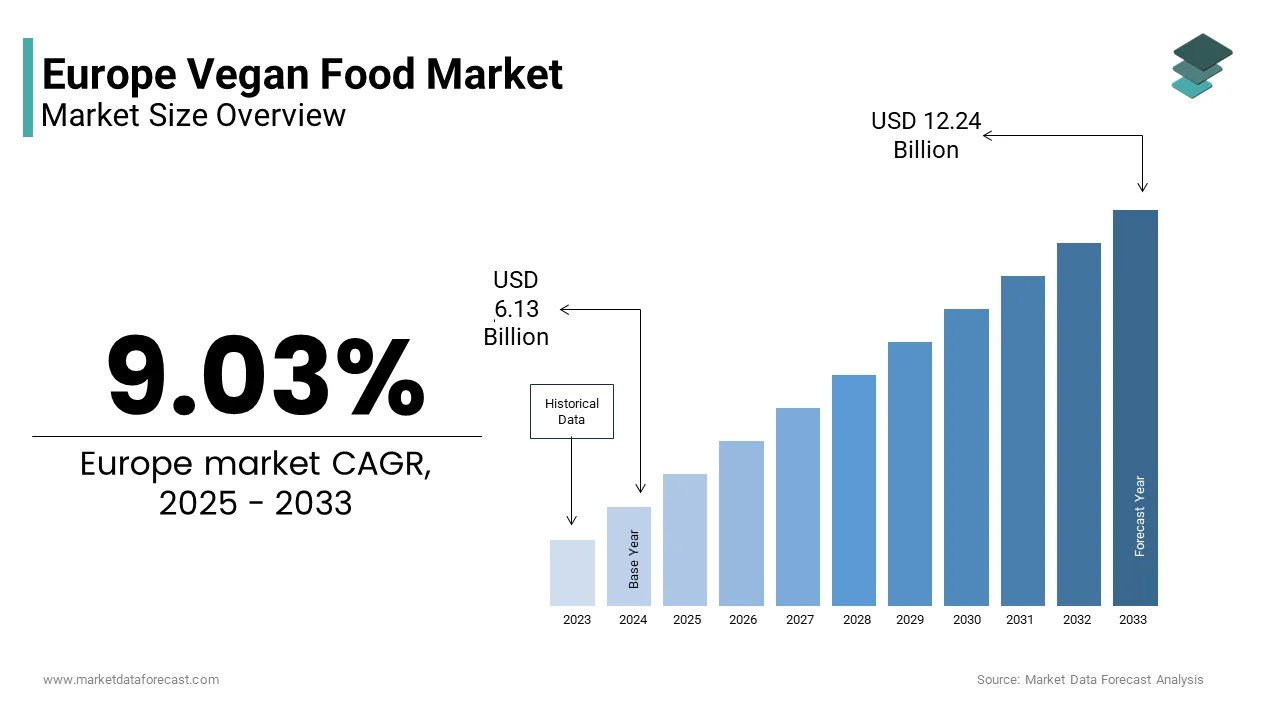
The Europe vegan food market size was valued at USD 6.13 billion in 2025 and is anticipated to reach USD 6.68 billion in 2026 to USD 13.25 billion by 2034, growing at a CAGR of 9.03% during the forecast period from 2026 to 2034.
Current Introduction of the Europe Vegan Food Market
Vegan food refers to any food or beverage formulated without ingredients or processing aids derived from animals, including meat, poultry, fish, dairy, eggs, and honey. This market is not merely a niche consumer trend but a structural shift shaped by climate policy, public health initiatives, and changing ethical norms. As per multiple sources, the average per capita meat consumption varies significantly across the European Union, with some countries consuming considerably less meat per person than others. A notable portion of the adult population in Europe is increasingly identifying as flexitarian, reflecting a growing consumer interest in reducing the intake of animal products due to health and environmental concerns. The European Commission's Farm to Fork Strategy aims to accelerate the transition to a sustainable food system by encouraging the consumption of more plant-based foods and less red and processed meat. The strategy includes ambitious goals to reduce the environmental footprint of food production by halving nutrient losses and pesticide use by the end of the decade. Meanwhile, the European Food Safety Authority continues to assess and provide scientific opinions on various alternative protein sources under Novel Food regulations, paving the way for a greater diversity of sustainable products in the EU market. The growing interest in innovative protein sources, such as certain types of mycoprotein and microalgae ingredients, is leading to new product development and expanded food choices for consumers. Cultural institutions are also adapting, with school canteens in Berlin and Barcelona offering fully vegan days and hospitals in Sweden integrating plant-based meals into standard nutrition protocols. UNESCO recognizes the Mediterranean diet’s plant-forward principles as intangible cultural heritage, further anchoring plant-based eating in European identity. These cross-cutting forces position the vegan food market as a critical component of Europe’s sustainable food system transformation.
MARKET DRIVERS
Stringent EU Climate and Agricultural Policy Mandates
Binding policy frameworks that link dietary patterns to environmental outcomes propel the growth of the Europe vegan food market. Agricultural strategies are increasingly concentrating on diversifying sources of dietary protein. There is a clear emphasis on the cultivation of legumes and pulses as part of these new agricultural priorities. A significant increase in the amount of land dedicated to organic farming methods is an established objective. Legislative and policy approaches are being used to influence food production methods and consumption habits. The development and implementation of mandatory environmental labeling for food products is a key policy initiative. There is a notable increase in the financial resources directed toward the advancement of plant-based food technologies and related innovations. Regulatory measures are also affecting food product descriptions and marketing terminology to distinguish between animal-based and plant-based items. Projections and analyses indicate a potential substantial increase in the consumption of plant-based foods as these initiatives are implemented. These regulatory currents transform vegan food from a lifestyle choice into a policy-aligned necessity.
Rising Consumer Health Awareness and Preventive Nutrition Trends
Public health imperatives are accelerating demand for these foods as Europeans increasingly associate plant-based diets with chronic disease prevention, which further boosts the expansion of the Europe vegan food market. Cardiovascular diseases account for a notable portion of mortality across the European region, with dietary patterns identified as a significant modifiable risk factor. Recent observational research suggests an association between predominantly plant-based diets and a reduced incidence of certain chronic conditions. This has led to shifts in public health promotion and clinical applications, with some rehabilitation programs incorporating plant-focused meal plans. Besides, regulatory bodies have addressed some nutritional concerns regarding plant-derived food alternatives through fortification approvals. This alignment of clinical evidence, public messaging, ng and accessible fortified products is making vegan food a mainstream component of preventive healthcare across the continent.
MARKET RESTRAINTS
Inconsistent Regulatory Definitions and Labeling Standards Across Member States
The absence of a harmonized legal definition for “vegan” across the European Union creates consumer confusion and compliance burdens for producers, and thereby restrains the growth of the Europe vegan food market. Unlike the EU's precise regulation of organic and geographical indications, vegan labeling is still subject to non-binding guidelines outlined in the European Commission’s recommendation. Labeling practices related to potential cross-contamination with common allergens are inconsistent across various regions. In some areas, products designated as vegan are allowed to include cautionary allergen statements. In contrast, other areas strictly prohibit such allergen statements on vegan products. The application of criteria for allergen cross-contamination appears to vary significantly among different regulatory environments. There has been an observation of enforcement actions targeting plant-based products that use specific sensory descriptions. Enforcement actions were taken against brands whose descriptions were considered to closely resemble traditional animal-derived product descriptions. Conversely,ely in the Netherlands, such descriptors are permitted under national advertising codes. This fragmentation increases reformulation and packaging costs, with manufacturers maintaining up to seven regional variants for a single product, as documented by FoodDrinkEurope. Market growth and consumer confidence in vegan products will remain hindered by inconsistent rules until a single EU-wide certification is established under Regulation 1169/2011.
Persistent Price Premium and Limited Accessibility in Rural and Low-Income Communities
These foods remain financially inaccessible to significant portions of the European population, despite growing demand, due to persistent cost differentials, which in turn obstructs the expansion of the Europe vegan food market. There is a noticeable price disparity between plant-based alternatives and their conventional animal-based counterparts, with the former carrying a significant premium per unit of weight compared to certain traditional protein sources. Moreover, the pricing structure of these specialty items places a greater financial burden on consumers in regions where the average household income is relatively lower. Product availability is uneven across geographic areas, with a limited assortment of plant-based options observed in grocery stores located outside major urban centers in some member nations. Government and institutional purchasing guidelines often do not require the inclusion of plant-based options in public meal programs, which limits consistent access in venues like schools. A prevalent perception exists among households with lower incomes that plant-based food is a luxury item rather than an accessible dietary alternative. The risk is that the shift to veganism becomes an indicator of privilege unless policies, such as targeted subsidies and inclusion in social food initiatives, make it accessible to everyone.
MARKET OPPORTUNITIES
Integration of Vegan Options into EU Public Procurement and Institutional Catering
Mandatory inclusion of plant-based meals in public institutions provides a major opportunity for the Europe vegan food market. Guidance regarding public food procurement criteria increasingly emphasizes the inclusion of plant-based meal options within institutional settings such as schools, hospitals, and government facilities. A substantial and consistent volume of demand exists for meals provided through public catering systems across the continent. Certain urban areas have moved toward fully plant-based meal days in educational facilities, with high levels of participation observed among students. Initiatives designed to foster culturally appropriate plant-based menu development, using regional ingredients like legumes and grains, have been established and are being tested in various cities. National defense ministries are also participating with the Swedish Armed Forces, now serving fully vegan field rations during training exercises. This institutional anchoring not only guarantees market volume but also normalizeplant-baseded eating across all socioeconomic strata, fostering long term behavioral change.
Advancement of Precision Fermentation and Cultivated Plant Protein.
Next-generation production technologies are opening unprecedented quality and scalability in European vegan food innovation. This generates fresh prospects for the Europe vegan food market. Precision fermentation, a process using microbial hosts to produce animal-free proteins, is gaining regulatory and industrial traction. Regulatory bodies in the European market have started to authorize fungal-derived protein sources for public consumption. Substantial capital has been invested in constructing fermentation facilities tailored to meet regional food safety standards. A discernible pattern of infrastructure development is emerging across several nations to bolster the production of dairy alternatives via precision fermentation, with numerous pilot plants signaling a strategic pivot towards scaling alternative protein technologies. Businesses aiming to commercialize fermented protein products are increasingly prioritizing compliance with novel food regulations. These technologies enable vegan products with sensory and functional properties nearly identical to animal counterparts at potentially lower environmental cost. As per research, fermentation-based casein generates less greenhouse gas than bovine dairy. Europe is positioned to lead the market for high-fidelity, animal-free ingredients, which exceed the scope of traditional vegan products, as production scales and regulatory frameworks advance.
MARKET CHALLENGES
Supply Chain Vulnerabilities in Key Plant Protein Sourcing
The region’s reliance on imported pulses and specialty crops creates significant supply chain fragility, which challenges the growth of the Europe vegan food market. A significant majority of key legume ingredients used within the region's plant-based meat sector are acquired from external markets. Procurement patterns indicate a reliance on a small number of distant supplying countries across different continents. Production within the region is directly susceptible to variations in growing conditions and climate disruptions observed in these specific overseas supply areas. The cultivation of necessary protein crops within the region is limited in scope, representing a modest fraction of the available agricultural land. This dependency conflicts with the EU’s strategic autonomy goals and exposes manufacturers to geopolitical trade barriers. Slow adoption rates for legume cultivation persist despite the Common Agricultural Policy's eco schemes, primarily due to challenges with lower yields and an absence of adequate processing infrastructure. The European Plant-Based Foods Association warns that, without coordinated investment in regional protein hubs,s Europe’s vegan food sector will remain vulnerable to external shocks, ks undermining both affordability and sustainability claims.
Consumer Skepticism RegardUltra-Processingsing and Ingredient Transparency
Many European consumers remain wary of vegan foods perceived, despite ethical and environmental motivations, as highly processed or containing unfamiliar ingredients, which is one of the major obstacles to the Europe vegan food market. According to a study, a notable share of adults express concern that plant-based meats contain “too many additives,” while many distrust the nutritional equivalence of fortified vegan products. This skepticism is amplified by media narratives and inconsistent front-of-pack labeling with terms like “natural” or “clean label” lacking a legal definition. Consumers have expressed significant dissatisfaction regarding the clarity of ingredient disclosures on plant-based dairy alternatives. As per sources, individuals purchasing meat-substitute products tend to engage in more extensive reviews of product packaging than those buying traditional items. The complexity of labeling for vegan specialty goods appears to be a primary driver of increased consumer scrutiny during the selection process. This trust deficit is particularly acute among older demographics and rural populatio,, ns where whole food plant-based diets are favored over engineered alternatives. The market's ability to retain health-conscious consumers, and thus ensure long-term growth, depends on providing greater ingredient simplicity, transparent sourcing, and independent verification.
REPORT COVERAGE
| REPORT METRIC | DETAILS |
| Market Size Available | 2024 to 2033 |
| Base Year | 2024 |
| Forecast Period | 2025 to 2033 |
| CAGR | 9.03% |
| Segments Covered | By Product, Source, Distribution Channel, and Region. |
| Various Analyses Covered | Global, Regional, and Country-Level Analysis, Segment-Level Analysis, DROC, PESTLE Analysis, Porter’s Five Forces Analysis, Competitive Landscape, Analyst Overview of Investment Opportunities |
| Regions Covered | North America, Europe, APAC, Latin America, Middle East & Africa |
| Market Leaders Profiled | Amy’s Kitchen Inc., Beyond Meat Inc., Daiya Foods Inc., Danone S.A., Eden Foods Inc., Plamil Foods Ltd., The Archer Daniels Midland Company, Tofutti Brands Inc., VBites Foods, Vitasoy Australia Products Pty Ltd. |
SEGMENTAL ANALYSIS
By Product Insights
In 2024, the dairy alternatives segment was the largest segment of the Europe vegan food market by holding a 48.8% share. The supremacy of the dairy alternatives segment is driven by widespread lactose intolerance, high environmental awareness, and regulatory support for plant-based nutrition. According to sources, a significant portion of the global population, with varying regional prevalence across Europe, experiences lactose maldigestion. European food-based dietary guidelines are increasingly encouraging sustainable and healthy food choices, which include greater emphasis on plant-based dietary patterns. Oat and soy milk have become standard in coffee chains. Major coffee chains in Europe have increasingly made plant-based milk alternatives available without an extra charge, responding to growing consumer demand for these options. Additionally, the EU’s ban on phthalates in plastic packaging, commonly used in dairy containers, has accelerated shifts toward recyclable cartons used by oat milk brands like Oatly. Recent scientific research consistently indicates that plant-based milk alternatives generate substantially lower greenhouse gas emissions compared to traditional cow's milk. The growing presence of plant-based milks, yogurts, and cheeses in dedicated chilled sections of most European supermarkets highlights a segment benefiting from both health-conscious consumer choices and systemic policy support.
The meat substitutes segment is on the rise and is expected to be the fastest-growing segment in the market by witnessing a CAGR of 14.8% from 2025 to 2033 due to intensifying climate accountability, dietary shift,s and culinary innovation. A notable trend involves national initiatives emerging across various regions that aim to moderate the consumption of animal products, reflecting a broader effort to address certain environmental impacts. The retail landscape has adjusted to this shift, as numerous food retailers are now establishing dedicated sections for plant-based food items. These new sections often feature a wide array of choices for consumers looking for alternatives to conventional meat products. Overall, all observed sales for these alternative product lines have shown significant and continuous expansion. Culinary acceptance has surged with Michelin-starred restaurants in Spain and Italy incorporating pea protein-based “meats” into tasting menus validated by chef associations like Euro-Toques. Furthermore, public health campaigns in Sweden and the Netherlands now link red meat reduction to cancer prevention, citing World Health Organization classifications. This convergence of environmental policy,y gastronomic legitimacy,acy and retail investment positions meat substitutes as the most dynamically evolving segment in Europe’s vegan transformation.
By Source Insights
The soy segment led the Europe vegan food market by capturing a share of 36.4% in 2024. The leading position of the soy segment is propelled by its nutritional completeness, prein density, and established supply chains. Soy protein contains all nine essential amino acids, establishing it as a key ingredient for meat and dairy alternatives in fortified products. A majority of vegan cheeses and plant-based meats sold in the region depend on soy isolates or concentrates as primary protein sources. The authorization of specific non-GMO soy varieties for cultivation in Southern Europe has decreased import dependency, with certain countries now producing significant metric tons annually. Major manufacturers operate vertically integrated soy processing facilities in Belgium and Germany, ensuring traceability and allergen control. Despite allergen labeling requirements, soy remains the backbone of Europe’s plant protein infrastructure due to its functional versatility and regulatory acceptance.
The oats segment is expected to exhibit a noteworthy CAGR of 18.2% during the forecast period, owing to superior sustainability credentials, sensory appeal,l and policy endorsement. Oat production demonstrates a lower environmental footprint regarding resource consumption and greenhouse gas output when compared to alternative crops used for plant-based beverages. Agricultural policy frameworks have integrated oats into specialized crop programs aimed at diversifying protein sources. Financial incentives are available to cultivators to encourage the adoption of specific crops recognized for their role in sustainable land management. The classification of certain grains as strategic protein sources reflects a shift in regional agricultural priorities toward ecological objectives. Oat milk’s neutral flavor and creamy texture have made it the preferred dairy alternative in coffee culture, with a notable portion of specialty cafes in Berlin and Amsterdam using it as the default option, as per sources. Brands have invested in regional milling infrastructure with new facilities in the Netherlands and Denmark, reducing transport emissions. Moreover, oats are naturally gluten-free when processed in dedicated facilities, addressincross-contaminationon concerns for sensitive consumers. Oats have become a nutritionally and environmentally sound staple of Europe's plant-based future, with clinical studies consistently confirming the heart health benefits of beta-glucan.
By Distribution Channel Insights
The supermarkets and hypermarkets segment captured the majority share of 62.6% of the Europe vegan food market in 2024. The prominence of the supermarkets and hypermarkets segment is credited to scale accessibility and strategic category management. Large format retailers are a dominant force in the European retail landscape, serving as a significant gateway for mainstream consumer adoption of various products. Chains in some countries have implemented plant-based scorecards requiring suppliers to meet sustainability and clean-label criteria for shelf placement. Tesco has an established and continually expanding own-brand plant-based range called "PlantChef", which includes numerous product lines and contributes significantly to the company's annual sales. The integration of vegan products into core categories—not just specialty aisles—has normalized consumption with plant milks placed beside dairy and meat alternatives in refrigerated meat sections. Additionally, Sainsbury's utilizes its Nectar loyalty program app to provide personalized recommendations, which has been shown to effectively encourage existing customers, including flexitarians, to increase their repeat purchases of vegan products. With mandatory origin labeling and front-of-pack nutrition schemes like Nutri Score influencing purchase decisions, supermarkets act as powerful curators of credible and convenient plant-based choices for the mass market.
The online stores segment is expected to exhibit a noteworthy CAGR of 21.4% from 2025 to 2033. The rapid expansion of the online stores segment is propelled by convenience, personalization,n and access to niche innovation. According to sources, online grocery sales of vegan products grew with subscription models for plant-based staples like milks and ready meals gaining traction. Platforms such as Planet Organic UK and Veganz Germany offer curated discovery experiences featuring emerging brands from Eastern Europe and the Baltics that lack physical retail presence. Artificial intelligence-driven recommendations have increased basket size, with vegan shoppersbuyingy more items per order than average customers. The rise of social commerce further fuels growth, with Instagram and TikTok integrated checkout driving trial among Gen Z consumers. Moreover, our onlinechannels enable transparent storytelling with QR codes linking to farm origin videos and carbon footprint datthus ta satisfying ethically motivated buyers. Last-mile delivery networks expand into secondary cities, and this digital frontier will continue to democratize access to Europe’s evolving plant-based ecosystem.
COUNTRY ANALYSIS
Germany Vegan Food Market Analysis
Germany dominated the Europe vegan food market by accounting for a 23.7% share in 2024. The dominance of the German market is driven by its strong regulatory framework, consumer activism, and manufacturing base. The nation has a significant concentration of plant-based food producers, encompassing both established international entities and smaller, regional operators. One major metropolitan area within the country is widely regarded as a focal point for the global vegan lifestyle and related commerce. A notable portion of the population has adopted dietary patterns that include a reduced intake of animal products, which has led to widespread availability of related food items in general retail environments. Official governmental policy now requires that public dining facilities under federal oversight must consistently provide at least one food option that contains no animal products. This specific policy on public dining has been implemented across a large number of government-managed institutions. Germany also leads in plant protein R and D, with the Fraunhofer Institute developing pea and lupin isolates that reduce reliance on imported soy. Annual Vegan Summer Festivals in Cologne and Munich attract a large number of visitors, demonstrating cultural entrenchment. With robust labeling laws, strict allergen control, and consumer trust in local production, Germany’s market is both deep and structurally resilient.
The United Kingdom Vegan Food Market Analysis
The United Kingdom was the second-largest player in the Europe vegan food market by holding a 19.1% share in 2024. The demand offoregan food in the UK is fuelled by rapid retail innovation, media influence, and policy momentum. The introduction of new vegan products in British supermarkets has shown a significant increase, indicating a strong trend in product development in the region. Major retailers have established specific targets to expand the volume of plant-based sales in the near future. Private label product lines have seen substantial growth, with each leading retailer now offering an extensive array of vegan options numbering in the hundreds. A new dietary trend has been observed within public health organizations, where plant-based menu options are being tested in various facilities. London’s food tech scene is vibrant with startups like Arborea and Better Nature securing significant venture funding for algae and tempeh innovations. The upcoming UK Sustainable Food Strategy is expected to include mandatory plant-based meal options in schools, further institutionalizing the trend. With high-commerce penetration and cultural openness, the UK remains a critical launchpad forpan-Europeann vegan brands.
France Vegan Food Market Analysis
France witnessed a consistent growth in the Europe vegan food market due to culinary reinterpretation, agricultural policy, and public health integration. Despite its gastronomic heritage in dairy and meat, France is rapidly embracing plant-based innovation, with the government allocating funds to develop alternative proteins. Major retailers like Monoprix and Franprix have introduced “Veggie” sections featuring French-made lentil pâtés and chickpea charcuterie that align with traditional flavors. Startups like Les Nouveaux Fermiers are scaling fermented legume cheeses that satisfy sensory expectations without dairy. Paris hosts the annual fair, attracting a large number of attendees, showcasing how France is reconciling its culinary identity with sustainable transformation. This blend of innovation and cultural sensitivity ensures steady market expansion.
Sweden Vegan Food Market Analysis
Sweden is another major contributorton the Europe vegan food market owing to environmental consciousness, public sector leadership, and food tech excellence. The Swedish Environmental Protection Agency includes vegan diets in its official climate action guide as a high-impact individual behavior. Oatly originated in Sweden and continues to influence global perceptions of plant milk, with domestic production prioritizing renewable energy-powered facilities. The government’s initiative funds startups developing fava bean and algae proteins, reducing reliance on soy imports. Sweden's vegan market is a key part of its national sustainability strategy, driven by one of the highest EU organic food consumption rates and strong public trust in institutions.
Netherlands Vegan Food Market Analysis
The Netherlands is likely to grow in the Europe vegan food market from 2025 to 2033 due to agricultural innovation, logistics infrastructure, and regulatory pragmatism. Emerging enterprises focused on plant-derived food products have established operations within the region. The geographic positioning of major maritime hubs facilitates the large-scale arrival of essential legume commodities required for production. Public policy frameworks increasingly emphasize a transition toward diversified protein sources. Economic incentives are being utilized to assist agricultural producers in moving away from traditional livestock management, and agricultural priorities are shifting toward the cultivation of pulses and other crops intended for direct human consumption. Wageningen University leads in alternative protein research with breakthroughs in mycoprotein fermentation and textured fava bean isolates. So, the Netherlands functions as a practical laboratory for scalable and inclusive vegan food systems across Europe.
COMPETITIVE LANDSCAPE
Competition in the Europe vegan food market is characterized by a dynamic interplay between global brands, regional specialists, and private label entrants, all navigating a landscape defined by regulatory scrutiny, nutritional expectations,s and environmental accountability. Unlike markets driven purely by trend adoption, Europe’s competition centers on demonstrable sustainability, credible nutrition, and cultural relevance. Large players leverage scale and R and D to innovate in texture and taste while local brands differentiate through heritage ingredients and community trust. Retailers exert significant influence through private label development and shelf placement policies that favor transparent sourcing and recyclable packaging. Regulatory developments such as restrictions on dairy terminology and mandatory environmental labeling raise the bar for market entry, compelling continuous reformulation and communication refinement. This environment rewards companies that combine scientific rigor, ethical transparency,cy and culinary authenticity,ity creating a highly sophisticated and demanding arena that sets global benchmarks for plant-based food evolution.
KEY MARKET PLAYERS
A Crucial dominant market player that is in the Europe vegan food market
- Amy’s Kitchen Inc.
- Oatly AB
- Alpro (Danone)
- Beyond Meat Inc.
- Daiya Foods Inc.
- Danone S.A.
- Eden Foods Inc.
- Plamil Foods Ltd.
- The Archer Daniels Midland Company
- Tofutti Brands Inc.
- VBites Foods
- Vitasoy Australia Products Pty Ltd.
Top Players In The Market
- Oatly AB is a Swedish pioneer in oat-based dairy alternatives with deep roots in European consumer culture and sustainability advocacy. The company has significantly shaped global perceptions of plant milk through its bold marketing and transparent environmental disclosures. In Europe, Oatly supplies thousands of coffee shops and major retailers while operating carbon-neutral production facilities in the Netherlands and the UK. It also partnered with the European Cyclists Federation to promote low-impact distribution. These actions reinforce Oatly’s identity as an environmental catalyst rather than just a food brand, strengthening its influence across both consumer and policy arenas in Europe and beyond.
- Alpro, a Danone subsidiary, is a cornerstone of Europe’s plant-based dairy landscape, offering soy, oat,t and almond alternatives across 30 countries. With manufacturing sites in Belgium and the UK, Alpro emphasizes European sourcing and nutritional fortification to meet regional health standards. The company also collaborated with the European Society of Paediatric Gastroenterology to develop pediatric plant-based nutrition guidelines. Through Danone’s B Corp certification and commitment to regenerative agriculture,e Alpro aligns its operations with Europe’s Farm to Fork Strategy, enhancing trust among health professionals and environmentally conscious households.
- Beyond Meat Inc has established a strong European footprint through strategic partnerships and localized product development tailored to regional culinary preferences. The company operates a dedicated R and D center in the Netherlands focused on whole cut plant meats using European legumes. It also joined the European Alternative Proteins Partnership to advocate foscience-baseded regulatory pathways. By aligning with EU climate goals and investing in local production, Beyond Meat positions itself not as an imported novelty but as an integrated player in Europe’s protein transition ecosystem, contributing to global innovation while respecting regional food culture.
Top Strategies Used by the Key Market Participants
Leading players in the Europe vegan food market prioritize clean label formulations using recognizable ingredients and avoiding artificial additives to address consumer skepticism. They invest in regional production facilities to ensure supply chain resiliency,e reduce carbon footprint, and comply with EU origin labeling expectations. Strategic collaborations with retailers chefse, fs and nutritionists enhance product credibility and culinary integration. Companies also adopt transparent environmental metrics such as carbon and water footprint labeling to align with the Green Claims Directive. Furthermore,e they actively engage in policy dialogues through industry consortia to shape favorable regulatory frameworks for plant-based innovation and labeling clarity across member states.
MARKET SEGMENTATION
This research report on the Europe vegan food market is segmented and sub-segmented into the following categories.
By Product Type
- Dairy alternatives
- Cheese
- Desserts
- Snacks
- Others
- Meat substitutes
- Tofu
- Texturized vegetable protein (TVP)
- Seiten
- Quorn
- Others
- Others
By Source Type
- Almond
- Soy
- Oats
- Wheat
- Others
By Distribution Channel
- Supermarkets and Hypermarkets
- Convenience stores
- Specialty stores
- Online stores
- Others
By Country
- UK
- France
- Spain
- Germany
- Italy
- Russia
- Sweden
- Denmark
- Switzerland
- Netherlands
- Turkey
- Czech Republic
- Rest of Europe