- Product Description Description
- Table of Contents TOC
- List of Table & Figure LOT
- Get Free Sample PDF Sample PDF
Market Size, 2025
$1.76 BnMarket Estimate, 2026
$1.86 BnMarket Forecast, 2034
$2.92 BnCAGR, 2026–2034
5.78%Europe Waffle Market Report Summary
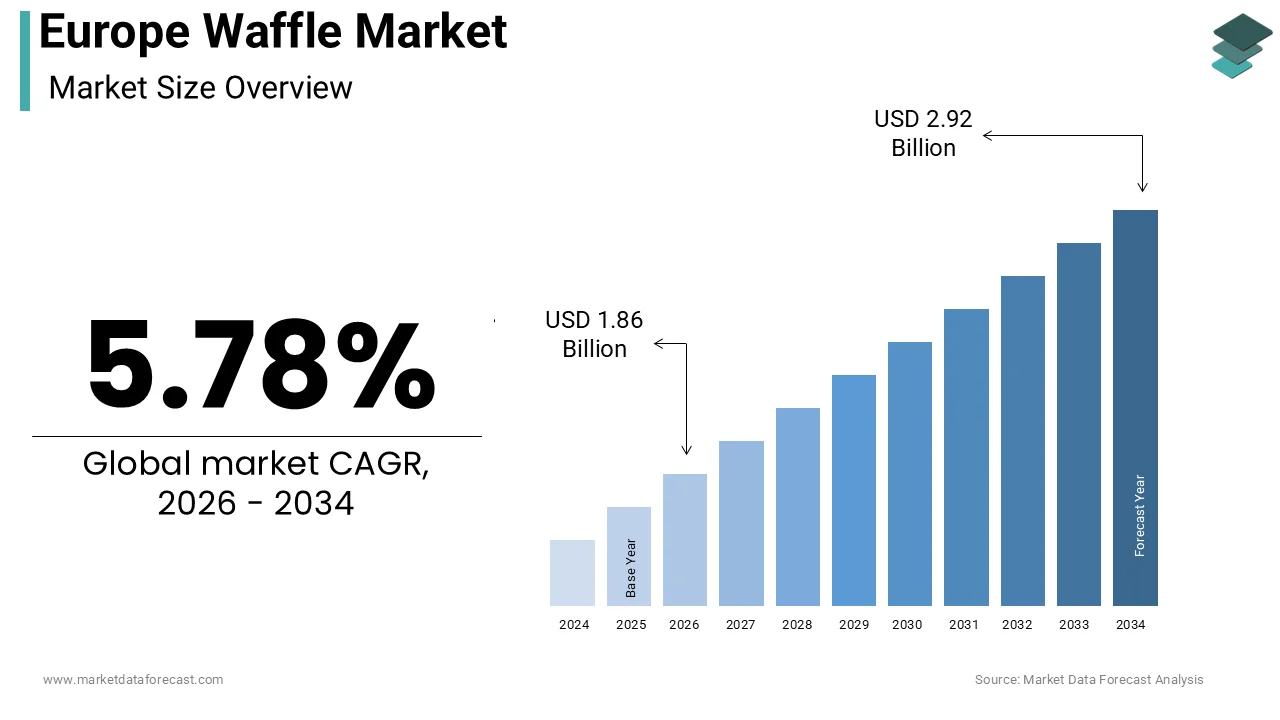
The Europe waffle market was valued at USD 1.76 billion in 2025, is estimated to reach USD 1.86 billion in 2026, and is projected to reach USD 2.92 billion by 2034, growing at a CAGR of 5.78% during the forecast period. The growth of the Europe waffle market is driven by increasing demand for convenient and ready-to-eat breakfast options, rising popularity of bakery and snack products, and the strong cultural heritage of waffles in European cuisine. Waffles are widely consumed as both sweet and savory items, supported by their versatility and appeal across different age groups. The market is further fueled by the expansion of foodservice outlets, cafés, and quick-service restaurants offering innovative waffle-based products. Additionally, the growing trend of frozen and packaged foods, along with the introduction of healthier and premium waffle variants, is contributing to steady market growth.
Key Market Trends
- Increasing demand for convenient and ready-to-eat breakfast and snack options.
- The rising popularity of frozen and packaged waffle products supports retail growth.
- Growing innovation in flavors, toppings, and premium waffle offerings.
- Expansion of cafés, bakeries, and quick-service restaurants, boosting consumption.
- Increasing demand for healthier and specialty waffles, including gluten-free and organic variants.
Segmental Insights
- Based on storage, the frozen waffles segment dominated the Europe waffle market in 2025, driven by convenience, longer shelf life, and ease of preparation.
- Based on product type, the plain waffle segment held 45.3% of the Europe waffle market share in 2025, supported by its versatility and widespread use in both sweet and savory applications.
- Based on end user, the commercial segment accounted for 58.3% of the Europe waffle market share in 2025, owing to high demand from foodservice establishments such as restaurants, cafés, and hotels.
Regional Insights
- Belgium dominated the Europe waffle market in 2025, accounting for 28.3% of the regional market share, driven by its deep-rooted waffle-making tradition and global recognition for Belgian waffles.
- France is expected to witness notable growth, supported by consumer preference for both traditional and modern waffle varieties.
- Germany is projected to grow steadily, driven by strong demand for bakery and snack products.
- The United Kingdom is experiencing growth, fueled by a dynamic foodservice sector and the increasing popularity of American-style and Belgian-inspired waffles.
- The Netherlands is emerging as a key market, supported by its proximity to Belgium and strong consumer preference for sweet bakery products.
Competitive Landscape
- The Europe waffle market is moderately competitive, with the presence of global food manufacturers and regional bakery specialists. Market players are focusing on product innovation, expanding frozen food portfolios, and strengthening distribution networks to enhance their market position. Strategic partnerships and expansion into new retail channels are key strategies adopted by leading companies.
- Prominent players in the Europe waffle market include Kellogg Company, General Mills Inc, Aryzta AG, Vandemoortele NV, Lantmännen Unibake International, Dely Wafels, Lotus Bakeries NV, Dr. Oetker GmbH, Avieta SA, Lieken AG, Europastry SA, Grupo Bimbo S.A.B. de C.V, Nestlé S.A, Mars Incorporated, and PepsiCo Inc.
Europe Waffle Market Size
The Europe waffle market size was calculated to be USD 1.76 billion in 2025 and is anticipated to be worth USD 2.92 billion by 2034, from USD 1.86 billion in 2026, growing at a CAGR of 5.78% during the forecast period.
The waffle is a waffle-based product, ranging from traditional frozen varieties and ambient shelf-stable packs to fresh offerings in food service establishments. The deeply rooted in culinary heritage, particularly in Belgium and France, where waffles are considered iconic gastronomic symbols rather than mere breakfast items. According to Eurostat, the average European household expenditure on bakery and cereal products has shown resilience, with convenience foods accounting for a growing proportion of daily caloric intake. As per the Food and Agriculture Organization of the United Nations, wheat consumption in Europe remains stable by providing a robust raw material base for waffle production, although shifts toward alternative grains are emerging. Data from the European Commission indicates that the food service industry recovered strongly post-pandemic, with quick-service restaurants reporting increased footfall for sweet snack options. Furthermore, the rise of home baking trends has spurred sales of waffle makers and mixes, blurring the lines between commercial and domestic consumption.
MARKET DRIVERS
Deep-Rooted Cultural Heritage and Tourism Influence
The enduring cultural significance of waffles in specific European nations, transcending seasonal fluctuations and economic cycles, is propelling the growth of Europe waffle market. In countries like Belgium and France, waffles are not merely a food item but a cultural export and a mandatory experience for tourists, driving consistent volume in both retail and food service segments. According to the European Travel Commission, international tourist arrivals in Europe reached pre-pandemic levels recently, with culinary tourism cited as a top motivation for visitors. Data from national tourism boards indicates that the density of waffle-specific outlets in historic city centers has increased over the last 5 years to cater to this demand. As per the World Tourism Organization, food experiences are a critical component of travel itineraries by prompting local businesses to maintain high standards and diverse offerings ranging from Liege to Brussels styles. This cultural embedding ensures that waffles remain a staple treat for locals and a must-try for visitors, creating a stable baseline demand that supports both small artisanal producers and large industrial manufacturers who supply the hospitality trade.
Rising Demand for Convenience and On-the-Go Breakfast Solutions
The accelerating pace of urban life across Europe has fueled a robust demand for convenient, portable, and ready-to-eat breakfast and snack options, positioning waffles as an ideal choice for busy consumers. The rising demand for convenience and on-the-go breakfast solutions is boosting the growth of Europe waffle market. Modern European households increasingly prioritize time-saving meal solutions without compromising on taste, leading to a surge in the consumption of frozen and ambient waffles that require minimal preparation. As per the research, European consumers now eat breakfast on the go or at their desks, driving the popularity of single-serve waffle packs available in convenience stores and vending machines. As per the European Convenience Food Federation, the expansion of the "grab-and-go" sector in railway stations and office complexes has provided new distribution channels for waffle manufacturers, increasing accessibility for commuters. The ability of waffles to serve as a vehicle for various toppings, from simple sugar to elaborate fruit and cream combinations, allows them to adapt to different dayparts, functioning as both a quick morning meal and an afternoon pick-me-up.
MARKET RESTRAINTS
Health Consciousness and Sugar Content Concerns
The growing awareness regarding the health implications of high sugar and refined carbohydrate consumption, particularly among health-conscious demographics and parents, is restraining the growth of Europe waffle market. Traditional waffle recipes are inherently rich in sugar and white flour, which conflicts with the prevailing dietary trends favoring low-glycemic, high-protein, and whole-grain options. According to the World Health Organization Regional Office for Europe, excessive sugar intake remains a critical public health issue, with over 50% of adults in the region classified as overweight, prompting stricter dietary guidelines and consumer scrutiny of food labels. As per the European Food Information Council, shoppers actively check nutrition panels for sugar content, often avoiding products that exceed recommended daily limits in a single serving. As per the European Commission's Farm to Fork Strategy, there is increased pressure on food manufacturers to reformulate products to reduce sugar levels, a technical challenge for waffles, where sugar is crucial for caramelization and texture. This health stigma limits the frequency of consumption for many consumers who view waffles as an occasional indulgence rather than a regular dietary component. Consequently, manufacturers face the dilemma of altering traditional recipes to meet health standards, which risks alienating purists, or maintaining authenticity and losing market share to healthier alternatives, thereby constraining overall market growth potential.
Volatility in Raw Material Prices and Supply Chain Disruptions
The instability in the prices of key raw materials, particularly wheat, sugar, and dairy products, coupled with broader supply chain disruptions, is limiting the growth of Europe waffle market. As an agriculture-dependent industry, waffle manufacturers are highly exposed to fluctuations in commodity markets driven by climate change, geopolitical tensions, and logistical issues. According to the World Bank, global food price indices have experienced significant volatility, with wheat prices spiking in recent periods due to conflicts in major exporting regions and adverse weather conditions. As per the International Chamber of Shipping, delays in port operations and container shortages have increased lead times for imported ingredients like vanilla and cocoa, which are common waffle accompaniments, further complicating production planning. These cost pressures force manufacturers to either absorb the expenses, reducing profitability, or pass them on to consumers through higher retail prices, which can dampen demand in price-sensitive segments. The unpredictability of input costs makes long-term strategic planning difficult and threatens the affordability of waffles as a mass-market convenience food by limiting the sector's expansion capabilities.
MARKET OPPORTUNITIES
Innovation in Health-Conscious and Functional Formulations
The development of innovative waffle formulations that align with modern health trends to expand its consumer base beyond traditional indulgence seekers, which is setting up new opportunities for the growth of Europe waffle market. By incorporating alternative flours, natural sweeteners, and functional ingredients, manufacturers can create products that appeal to diabetic, gluten-intolerant, and fitness-oriented demographics. According to the Global Institute for Health and Nutrition, the market for functional foods in Europe is projected to grow significantly, with consumers increasingly seeking products that offer added benefits such as high protein, fiber enrichment, or probiotic inclusion. Opportunities exist in utilizing almond, oat, or chickpea flours to lower the glycemic index while maintaining texture, and using stevia or monk fruit to reduce calorie content without sacrificing sweetness.
Expansion of Premium and Artisanal Gourmet Experiences
The rising consumer preference for premiumization and authentic culinary experiences, particularly in the food service and high-end retail, is another attribute boosting the growth of Europe waffle market. Consumers are increasingly willing to pay a premium for waffles made with high-quality, locally sourced, and organic ingredients, prepared using traditional methods that emphasize craftsmanship and flavor complexity. According to the European Specialty Food Association, the gourmet food sector has outpaced the mass market in growth, with artisanal bakery products seeing a double-digit increase in sales as shoppers seek unique and superior taste profiles. Data from the Sustainable Restaurant Association indicates that diners are more likely to visit establishments that transparently source their ingredients and offer bespoke topping bars, turning the waffle experience into a customizable culinary event. As per the European Organic Farming statistics, the demand for organic wheat and dairy has surged, providing a ready supply chain for producers aiming to launch premium organic waffle lines. This trend allows businesses to differentiate themselves from commoditized frozen offerings by focusing on storytelling, origin, and quality, thereby commanding higher price points. The integration of waffles into fine dining desserts or upscale brunch menus further elevates their status, attracting affluent consumers and food enthusiasts who value exclusivity and sensory excellence, driving revenue growth through value rather than just volume.
MARKET CHALLENGES
Intense Competition from Alternative Breakfast and Snack Categories
The stiff competition from a wide array of alternative breakfast and snack options that vie for the same consumer spending and occasion share, ranging from cereals and yogurt to savory pastries and smoothie bowls, is acting as a major barrier for the growth of Europe waffle market. The breakfast landscape is highly fragmented, with consumers having access to an overwhelming variety of convenient and healthy choices that often overshadow waffles in terms of perceived nutritional value or novelty. According to the European Breakfast Cereal Association, cereal consumption remains dominant in many Northern European countries due to its speed and fortified nutritional profile, posing a direct threat to waffle market share during morning dayparts. Data from the European Dairy Association highlights the popularity of yogurt-based snacks, which are marketed heavily as protein-rich and gut-health friendly, appealing to the same health-conscious demographic that waffle manufacturers are trying to capture. As per the European Bakery Association, the proliferation of savory handheld options like croissants, wraps, and sandwiches in convenience stores offers a satisfying alternative for consumers seeking a substantial meal, limiting the occasions where a sweet waffle is the preferred choice. This intense competitive pressure forces waffle brands to invest heavily in marketing and innovation to justify their place in the consumer's routine, often leading to price wars that erode margins.
Regulatory Pressures on Labeling and Nutritional Claims
The complex and evolving regulations regarding food labeling, nutritional claims, and ingredient transparency are additionally restricting the growth of Europe waffle market. The European Union enforces strict regulations on how products can be marketed, particularly concerning terms like "natural," "healthy," or specific health benefits, which can limit the ability of companies to promote reformulated waffles effectively. According to the European Commission, the regulation on nutrition and health claims requires rigorous scientific substantiation for any assertion made on packaging, a process that is costly and time-consuming for small and medium-sized enterprises. Data from the European Consumer Organisation reveals that misleading labeling is a top concern for shoppers, leading to heightened scrutiny from regulators and potential penalties for non-compliance. As per the European Food Safety Authority, recent updates to front-of-pack labeling initiatives, such as the Nutri-Score system, may categorize traditional waffles poorly due to their sugar and fat content, potentially deterring health-aware consumers at the point of sale. Furthermore, varying national implementations of EU directives create a fragmented compliance environment, which requires manufacturers to adapt packaging and formulations for different member states. This regulatory burden increases operational costs and creates barriers to entry for innovation, as companies must carefully balance product formulation with legal requirements to avoid reputational damage and financial losses.
REPORT COVERAGE
| REPORT METRIC | DETAILS |
| Market Size Available | 2025 to 2034 |
| Base Year | 2025 |
| Forecast Period | 2026 to 2034 |
| CAGR | 5.78% |
| Segments Covered | By Storage, Product Type, End User, And Region |
| Various Analyses Covered | Global, Regional & Country Level Analysis; Segment-Level Analysis; DROC, PESTLE Analysis; Porter’s Five Forces Analysis; Competitive Landscape; Analyst Overview of Investment Opportunities |
| Regions Covered | UK, France, Spain, Germany, Italy, Russia, Sweden, Denmark, Switzerland, Netherlands, Turkey, and the Czech Republic |
| Market Leaders Profiled | Kellogg Company, General Mills Inc., Aryzta AG, Vandemoortele NV, Lantmännen Unibake International, Dely Wafels, Lotus Bakeries NV, Dr. Oetker GmbH, Avieta SA, Lieken AG, Europastry SA, Grupo Bimbo S.A.B. de C.V., Nestlé S.A., Mars Incorporated, PepsiCo Inc. |
SEGMENTAL ANALYSIS
By Storage Insights
The frozen waffle segment was the largest by holding a dominant share of the Europe waffle market in 2025, owing to the superior preservation of texture and freshness that freezing offers, which aligns perfectly with the European consumer demand for high-quality convenience foods that mimic artisanal results at home. According to the survey, the frozen bakery sector has witnessed a consistent volume growth of 7% annually, as consumers increasingly trust frozen products to deliver a fresher taste compared to ambient alternatives that often rely on stabilizers. Furthermore, the versatility of frozen waffles allows them to be toasted to order, offering a warm and crispy experience that ambient waffles cannot replicate, making them the preferred choice for family breakfasts.
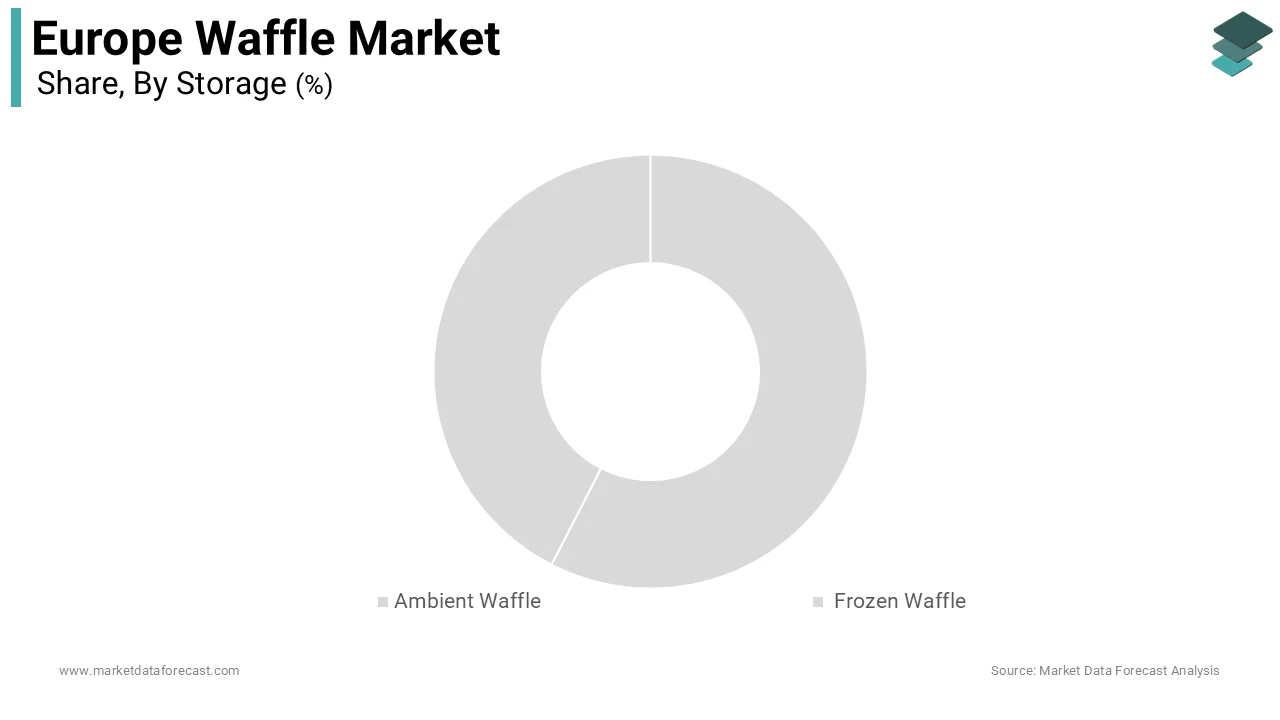
The ambient waffle segment is likely to witness the fastest CAGR of 5.8% from 2026 to 2033, owing to the surging demand for ultra-convenient, ready-to-eat snacks that require no preparation equipment or heating, catering to the busy lifestyles of students and office workers. As per the study, product launches featuring ambient waffles with extended best-before dates have increased by 20%, allowing retailers to manage inventory with less waste and lower logistics costs compared to frozen goods. As per the European Retail Forum, the placement of ambient waffles near checkout counters has significantly boosted impulse purchases, particularly among younger demographics seeking quick energy boosts. The ability of manufacturers to innovate with packaging that maintains softness without refrigeration has also enhanced consumer perception, transforming ambient waffles from a compromise into a preferred grab-and-go solution for on-the-move consumption across urban centers.
By Product Type Insights
The pain waffle segment was accounted for in holding 45.3% of the Europe waffle market share in 2025, with the inherent versatility of plain waffles, which serve as a neutral canvas for a wide array of toppings, syrups, fruits, and creams, allowing consumers to customize their eating experience according to personal taste or dietary needs. The deep-rooted cultural tradition in countries like Belgium and France, where plain Liege and Brussels waffles are traditionally served with simple toppings like pearl sugar, whipped cream, or fresh strawberries, rather than being pre-filled or coated. Data from national tourism boards indicates that street vendors in major European cities sell millions of plain waffles annually, relying on the authenticity of the base recipe to attract tourists seeking traditional experiences. As per the European Consumer Organisation, households prefer buying plain frozen waffles in bulk because they offer greater flexibility for different meal occasions, from savory breakfasts with eggs to sweet desserts with chocolate.
The chocolate-coated waffle segment is anticipated to grow at a CAGR of 7.2% during the foreseen years, with the irresistible appeal of chocolate as a premium indulgence ingredient and the increasing trend of treating waffles as a dessert or luxury snack rather than just a breakfast item. The innovation in coating technologies allows for even distribution of high-quality Belgian or Swiss chocolate, creating a distinct textural contrast between the crisp waffle and the smooth shell that resonates strongly with confectionery lovers. The new product launches featuring chocolate-coated waffles with added elements like hazelnut praline or sea salt have grown by 25% by appealing to consumers seeking gourmet experiences at affordable price points. As per the European Sweet Biscuit and Cake Association, the positioning of chocolate-coated waffles in the impulse buy section of supermarkets has driven significant volume growth, particularly among children and teenagers.
By End-User Insights
The commercial segment was the largest by accounting for 58.3% of the Europe waffle market share in 2025, owing to the massive scale of the European food service industry, including cafes, street food vendors, hotels, and quick-service restaurants, where waffles are a high-margin staple item on menus. The thriving culinary tourism sector, where waffle stalls in city centers and tourist attractions generate immense volume, is found in destinations like Brussels, Paris, and Amsterdam. Data from the European Hospitality Industry Association indicates that the number of cafes and dessert bars specializing in waffles has increased by 18% over the last five years, reflecting strong investor confidence in the category. As per the European Vending Association, the deployment of automated waffle machines in high-traffic areas like train stations and shopping malls has further expanded commercial reach, offering fresh products with minimal labor costs.
The residential segment is likely to witness the fastest CAGR of 6.5% from 2026 to 2034, with the sustained trend of home baking and the increasing ownership of specialized kitchen appliances, such as electric waffle makers, which empower consumers to create restaurant-quality waffles in their own kitchens. The shift in consumer behavior towards home-centric leisure activities and family bonding moments, where preparing waffles together has become a popular weekend ritual. According to the European Home Appliance Association, sales of small kitchen appliances, including waffle irons, have risen by 22% in recent years, indicating a robust installed base that drives recurring purchases of waffle mixes and frozen batter. As per social media trends analysis, the viral popularity of homemade waffle recipes and creative topping ideas on platforms like Instagram and TikTok has inspired millions of Europeans to experiment with waffle making at home. This democratization of waffle preparation, combined with the convenience of high-quality retail products, ensures that the residential segment will continue to accelerate its growth trajectory.
REGIONAL ANALYSIS
Belgium Waffle Market Analysis
Belgium was the top performer of the Europe waffle market by holding 28.3% of the share in 2025 due to its status as the birthplace of the iconic Liege and Brussels waffles. The dense concentration of specialized waffle bars and street vendors in historic city centers maintains traditional recipes and preparation methods that define the global standard for quality. According to the Belgian Federal Public Service Economy, the hospitality sector dedicated to waffle production contributes significantly to the local economy, with thousands of small businesses relying on this single product category. Data from Visit Belgium indicates that culinary tours focused on waffles attract over 2 million tourists annually by creating a perpetual high-demand environment that supports both artisanal and industrial producers. As per the Belgian Bakery Confederation, the per capita consumption of waffles in Belgium is the highest in the world, with households purchasing fresh waffles multiple times a week from local bakeries. The strict adherence to traditional ingredients like pearl sugar and yeast-based doughs ensures a premium positioning that distinguishes Belgian waffles from generic variants, securing the country's undisputed leadership in the regional market.
France Waffle Market Analysis
The French waffle market growth is likely to grow with the sophisticated palate that appreciates both traditional galettes and modern sweet waffle variations. The integration of waffles into the broader cafe culture, where they are served as elegant desserts or afternoon snacks alongside coffee in bustling urban bistros. The strong influence of the French pastry tradition, which elevates waffle preparation to an art form, often features high-end toppings like artisanal chocolates, exotic fruits, and premium creams. According to FranceAgriMer, the consumption of sweet bakery products in France has remained resilient, with waffles gaining popularity as a versatile option for both breakfast and evening treats. As per the French Tourism Development Agency, regions like Normandy and Brittany have successfully marketed their local waffle traditions, attracting domestic and international tourists eager to experience authentic flavors.
Germany Waffle Market Analysis
Germany's waffle market is anticipated to have steady growth in the coming years, with a high preference for frozen waffles that offer convenience for busy families, alongside a thriving cafe scene in major cities like Berlin and Munich. The leading position of German retailers in the private label sector, where supermarket chains offer extensive ranges of high-quality, yet affordable frozen waffles that dominate household pantries. Data from the Federal Ministry of Food and Agriculture indicates that the average German household consumes waffles at least once a week, often as part of a traditional Sunday coffee and cake ritual known as "Kaffee und Kuchen." As per the German Bakery Association, the trend towards health-conscious options has spurred innovation in whole-grain and low-sugar waffle varieties, catering to evolving dietary preferences. The combination of strong retail infrastructure, cultural traditions of communal eating, and technological advancement in freezing ensures Germany remains a powerhouse in the European waffle market.
United Kingdom Waffle Market Analysis
The United Kingdom waffle market growth is likely to grow with a dynamic food service sector and a growing enthusiasm for American-style and Belgian-inspired waffle concepts. The influence of social media and food trends, which have popularized extravagant waffle toppings and presentations, is driving footfall to specialty outlets among younger people. Data from the British Retail Consortium shows that retail sales of frozen and ambient waffles have grown steadily, driven by the convenience needs of dual-income households and the availability of innovative flavors in major supermarkets. As per the UK Food Standards Agency, the clear labeling of allergens and ingredients has boosted consumer confidence in trying new waffle products, facilitating market expansion.
Netherlands Waffle Market Analysis
The Netherlands waffle market growth is driven by its geographical proximity to Belgium and a strong domestic appreciation for sweet treats. The Netherlands reflects a seamless blend of cross-border culinary influences and a highly developed retail network that ensures the wide availability of both fresh and frozen waffle products. The vibrant street food culture in cities like Amsterdam and Rotterdam, where waffle vendors are a common sight in tourist hubs and local markets, serves traditional Dutch and Belgian styles to a steady stream of customers. As per the study, while health consciousness is rising, the occasional indulgence in sweet bakery items remains a cherished part of Dutch social life, particularly during festivals and holidays. As per the Netherlands Enterprise Agency, the country serves as a major logistics hub for the distribution of waffle ingredients and finished products across Northern Europe, enhancing its strategic importance in the supply chain.
COMPETITION OVERVIEW
The competition in the Europe waffle market is characterized by a dynamic mix of global food conglomerates and regional bakery specialists who vie for dominance in both retail and food service channels. The market landscape features intense rivalry based on product quality, flavor innovation, and the ability to meet strict health and sustainability standards demanded by European consumers. Large multinational corporations leverage their scale and distribution networks to dominate shelf space with consistent and affordable offerings, while local artisans compete on authenticity and premium ingredients. Price sensitivity remains a key factor, yet there is a growing segment willing to pay more for organic, gluten-free, or ethically sourced products. Private label brands from major supermarket chains also exert significant pressure by offering lower-priced alternatives that challenge branded manufacturers. The rise of dedicated waffle bars and street food vendors adds another layer of competition in the food service sector, focusing on fresh preparation and customizable toppings.
KEY MARKET PLAYERS
A few major players of the Europe waffle market include
- Kellogg Company
- General Mills Inc
- Aryzta AG
- Vandemoortele NV
- Lantmännen Unibake International
- Dely Wafels
- Lotus Bakeries NV
- Dr. Oetker GmbH
- Avieta SA
- Lieken AG
- Europastry SA
- Grupo Bimbo S.A.B. de C.V
- Nestlé S.A
- Mars Incorporated
- PepsiCo Inc
Top Strategies Used by Key Market Participants
Key players in the Europe waffle market primarily employ strategies focused on product innovation and health-oriented reformulation to meet changing consumer preferences. Companies are increasingly investing in research and development to create waffles with whole grains, reduced sugar, and alternative flours that appeal to health-conscious demographics without compromising taste. Expanding distribution channels into convenience stores and vending machines is another major strategy used to capture the growing demand for on-the-go snacks. Participants are also leveraging premiumization by launching gourmet and artisanal lines that feature high-quality ingredients and unique flavors to differentiate from standard offerings. Furthermore, firms are adopting sustainable practices such as eco-friendly packaging and responsible sourcing to align with European environmental regulations and consumer values.
Leading Players in the Europe Waffle Market
- Kellogg Company operates as a global leader in the breakfast and snack sector with a significant footprint in the Europe waffle market through its diverse portfolio of frozen and ambient products. The company leverages its extensive distribution network to supply major retailers across the continent with high-quality waffle varieties that cater to both family breakfast needs and on-the-go snacking. Their contribution to the global market involves setting benchmarks for food safety, consistency, and brand recognition in the frozen bakery aisle. Recently, the company has focused on expanding its range of whole-grain and reduced sugar waffles to align with evolving European health trends and regulatory guidelines. They have also invested in sustainable packaging initiatives to reduce plastic waste and appeal to environmentally conscious consumers. These strategic moves strengthen their market position by addressing key consumer demands for nutrition and sustainability while maintaining their reputation for delivering convenient and tasty breakfast solutions to millions of households daily.
- General Mills stands as a prominent player in the Europe waffle market, offering a wide array of frozen waffle products under well-known brands that resonate with European families. The company utilizes its advanced manufacturing capabilities to produce waffles that balance convenience with a homemade taste profile, ensuring strong shelf presence in supermarkets throughout the region. Their global influence is marked by continuous innovation in flavor profiles and texture enhancements that keep their product lines fresh and competitive. In recent actions to solidify their standing, the group has launched new organic and gluten-free waffle options to capture niche demographics seeking specific dietary attributes. They have also strengthened partnerships with local dairy and fruit suppliers to create bundled meal solutions that enhance the consumer experience. These efforts demonstrate their commitment to meeting diverse nutritional needs and lifestyle preferences while leveraging their scale to maintain cost efficiency and broad availability in the competitive European frozen food landscape.
- Jacquet Brossard is a leading European bakery group that plays a critical role in the waffle market through its strong presence in France and expanding reach across neighboring countries. The company specializes in both industrial and artisanal style waffles, supplying retail chains and food service operators with products that emphasize traditional recipes and premium ingredients. Their contribution to the global bakery sector includes pioneering techniques in dough fermentation and freezing that preserve the authentic texture and flavor of fresh waffles. To bolster its market position, the corporation has recently upgraded its production facilities to increase capacity and improve energy efficiency in line with European sustainability goals. They have also introduced a range of gourmet waffles featuring high-end toppings and fillings to target the growing demand for indulgent treat options.
MARKET SEGMENTATION
This research report on the Europe waffle market has been segmented and sub-segmented based on storage, product type, end user & region.
By Storage
- Ambient Waffle
- Frozen Waffle
By Product Type
- Filled Waffles
- Chocolate Coated Waffles
- Plain Waffles
- Others
By End User
- Commercial
- Residential
By Region
- UK
- France
- Spain
- Germany
- Italy
- Russia
- Sweden
- Denmark
- Switzerland
- Netherlands
- Turkey
- Czech Republic
- Rest of Europe