- Product Description Description
- Table of Contents TOC
- List of Table & Figure LOT
- Get Free Sample PDF Sample PDF
Market Size, 2025
$96.67 BnMarket Estimate, 2026
$105.33 BnMarket Forecast, 2034
$209.26 BnCAGR, 2026–2034
8.96%Europe Weight Loss and Diet Management Market Report Summary
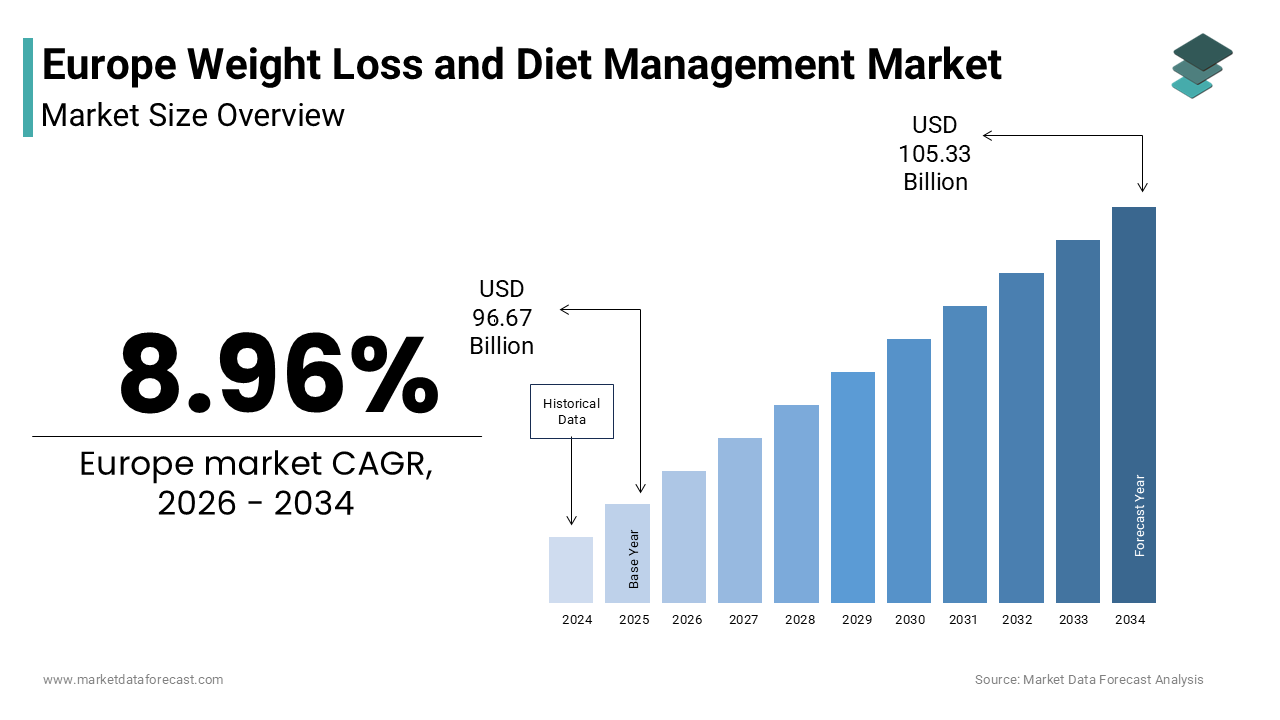
The Europe weight loss and diet management market was valued at USD 96.67 billion in 2025 and is anticipated to reach USD 105.33 billion in 2026 from USD 209.26 billion by 2034, growing at a CAGR of 8.96% during the forecast period from 2026 to 2034. The growth of the Europe weight loss and diet management market is driven by the rising prevalence of obesity and overweight populations, increasing awareness regarding preventive healthcare, and growing demand for personalized nutrition solutions. Expanding adoption of digital health platforms, increasing consumer focus on fitness and wellness, and growing utilization of structured weight management programs are further accelerating market growth. Moreover, advancements in artificial intelligence-driven nutrition planning, expansion of wearable health technologies, and increasing demand for plant-based and functional food products are supporting the expansion of the Europe weight loss and diet management market.
Key Market Trends
-
Rising adoption of personalized nutrition and AI-driven diet management solutions.
-
Increasing demand for plant-based, organic, and clean-label weight management products.
-
Growing utilization of digital health applications and virtual coaching services.
-
Rising integration of wearable devices with weight management platforms.
-
Increasing focus on preventive healthcare and long-term wellness management.
Segmental Insights
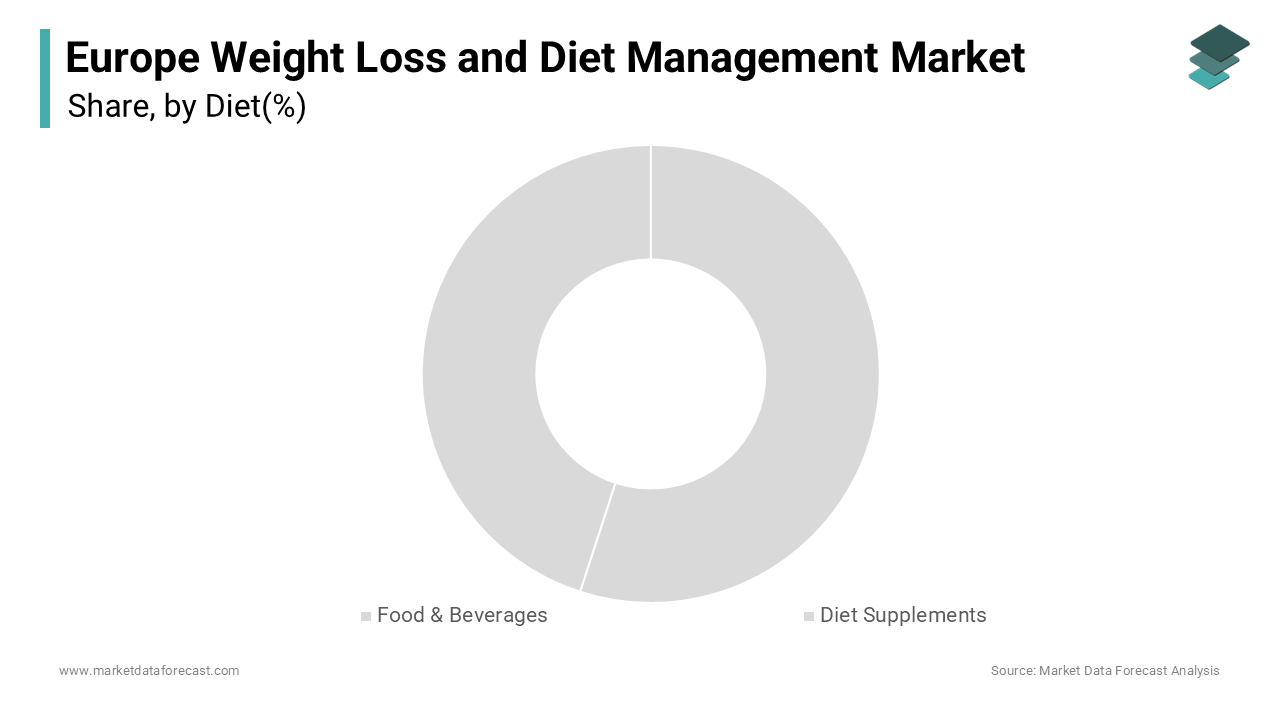
- Based on diet, the food and beverages segment dominated the Europe weight loss and diet management market and held the largest share in 2025. The dominance of the segment is attributed to the widespread adoption of meal replacement products, low-calorie ready-to-eat meals, protein-enriched snacks, and functional food products. Increasing consumer preference for convenient dietary solutions, growing demand for portion-controlled meals, and rising awareness regarding healthy eating habits continue to support segment growth.
- The diet supplements segment is projected to witness the fastest CAGR during the forecast period owing to increasing consumer interest in metabolic boosters, appetite suppressants, plant-based supplements, and personalized nutraceutical products. Growing adoption of genetic testing and microbiome-based nutrition solutions is further accelerating segment expansion.
- Based on equipment, the fitness training equipment segment accounted for the leading share of the Europe weight loss and diet management market in 2025. The growth of the segment is driven by increasing adoption of home fitness solutions, rising demand for smart exercise equipment, growing health awareness, and expanding participation in fitness activities. The integration of connected technologies and real-time performance tracking features continues to strengthen segment growth.
- The non-invasive surgical equipment segment is anticipated to register the fastest CAGR during the forecast period due to increasing demand for body contouring procedures, growing preference for minimally invasive aesthetic treatments, technological advancements in fat reduction devices, and rising consumer demand for cosmetic weight management solutions.
- Based on services, the fitness centers segment held the major share of the Europe weight loss and diet management market in 2025. The dominance of the segment is attributed to increasing gym memberships, rising participation in group fitness programs, growing availability of personalized training services, and expanding integration of nutrition counseling within fitness centers. The strong community engagement and accountability associated with fitness centers continue to support market growth.
- The consulting services segment is expected to witness the fastest growth during the forecast period owing to increasing demand for personalized dietary guidance, rising adoption of digital health coaching platforms, growing availability of virtual consultations, and expanding employer-sponsored wellness programs. The integration of professional consulting services with digital health technologies is further supporting segment expansion.
Regional Insights
- The United Kingdom dominated the Europe weight loss and diet management market in 2025 and accounted for the largest regional share owing to one of the highest obesity rates in Western Europe, strong government health initiatives, increasing adoption of digital health applications, and growing consumer awareness regarding weight management. The presence of advanced healthcare infrastructure and strong market penetration of fitness and wellness services further supports market growth.
- Germany held a substantial share of the Europe weight loss and diet management market due to its strong fitness culture, increasing demand for premium health products, growing adoption of digital health solutions, and expanding utilization of scientifically backed dietary interventions. The country’s focus on quality, innovation, and preventive healthcare continues to strengthen its market position.
- France continues to maintain a significant position in the European market owing to increasing obesity prevalence, strong demand for medically supervised weight management programs, expanding adoption of nutritional supplements, and growing investments in wellness and preventive healthcare services.
- Italy is witnessing steady growth supported by increasing health awareness, rising demand for natural and organic dietary products, expanding fitness center memberships, and growing adoption of aesthetic and non-invasive weight management treatments.
- Spain is expected to experience notable growth during the forecast period due to increasing obesity awareness, growing wellness tourism sector, expanding adoption of fitness technologies, and rising demand for dietary supplements and digital weight management solutions.
Competitive Landscape
The Europe weight loss and diet management market is highly competitive and characterized by the presence of multinational nutrition companies, dietary supplement manufacturers, fitness service providers, digital health platforms, and wellness solution providers competing through product innovation, personalized nutrition offerings, technological advancements, and strategic partnerships. Leading companies are focusing on integrating artificial intelligence into weight management solutions, expanding digital coaching platforms, developing clean-label and plant-based products, and strengthening consumer engagement through personalized wellness programs. Strategic collaborations with healthcare providers, insurers, fitness organizations, and technology companies are further strengthening market positioning across the European weight loss and diet management ecosystem. The key players operating in the Europe weight loss and diet management market include Nestlé Health Science, Herbalife Nutrition, WW International Inc., Bayer HealthCare AG, Bioniche Animal Health Canada, Sanofi Animal Health, Inc., Biogenesis Bagó S.A., Heska Corporation, Indian Immunologicals Limited, Boehringer Ingelheim GmbH, Zoetis, Novartis Animal Health, Inc., Merck & Co., Inc., and Protein Sciences Corporation.
Europe Weight Loss and Diet Management Market Size
The weight loss and diet management market size was worth USD 96.67 bn in 2025. The European market is further expected to grow at a CAGR of 8.96% from 2025 to 2033 and be worth USD 105.33 billion in 2025 and USD 209.26 billion by 2034.
Weight loss and diet management refer to the scientific and structured approach to reducing body weight and maintaining a healthy lifestyle through strategic nutritional adjustments. This market includes meal replacement shakes dietary supplements fitness programs digital health applications and professional counseling services. The region is currently grappling with a significant public health crisis related to obesity which has prompted both governmental and private sector responses. According to the World Health Organization (WHO) Regional Office for Europe, nearly 60% of adults in the European Region are classified as overweight or obese. While the overall disease burden is increasing, public health tracking highlights that trends vary significantly by age cohort, with adult prevalence climbing while some childhood cohorts show stabilization at high plateaus. NHS England and the Robert Koch Institute confirm that clinical obesity rates alone have sharply surpassed the 25% threshold, affecting approximately 30% of adults in the UK (England) and over 26% of adults in Germany, which expands the combined overweight and obese population to over half of each nation's adult demographic. The European Commission addresses obesity as a chronic risk factor via initiatives like Europe's Beating Cancer Plan. Consumer awareness regarding the link between excess weight and chronic diseases such as type 2 diabetes cardiovascular conditions and certain cancers is driving demand for structured weight management programs. Furthermore the shift towards preventive healthcare rather than reactive treatment is encouraging individuals to invest in long term wellness solutions. Technological advancements in personalized nutrition and wearable devices are also reshaping how Europeans approach diet and exercise making the market increasingly dynamic and data driven.
MARKET DRIVERS
Rising Prevalence of Obesity and Related Chronic Diseases
The escalating rates of obesity and associated comorbidities are driving the expansion of the Europe weight loss and diet management market. Sedentary lifestyles coupled with the widespread availability of high calorie processed foods have contributed to a steady increase in body mass index across the continent. According to the latest consolidated Eurostat baseline metrics, 53% of the European Union adult population is living with excess body weight, with approximately 17% classified as clinically obese and the remaining 36% categorized as pre-obese/overweight. This demographic reality places immense pressure on national healthcare systems which spend billions annually treating obesity related conditions such as hypertension and joint disorders. In response individuals are proactively seeking solutions to mitigate these health risks before they require medical intervention. The psychological burden of obesity including stigma and reduced quality of life further motivates consumers to engage in weight management programs. Governments in countries like France and Italy have launched public health campaigns promoting balanced diets and physical activity which indirectly boosts the adoption of commercial diet plans. The medical community increasingly recognizes obesity as a chronic disease requiring ongoing management rather than a temporary condition leading to sustained demand for professional support services. As the aging population grows the correlation between weight control and longevity becomes more pronounced driving older demographics to invest in specialized dietary regimes. This health driven urgency ensures a consistent and expanding customer base for weight loss providers.
Growing Consumer Awareness of Personalized Nutrition and Wellness
A profound shift in consumer mindset towards personalized nutrition and holistic wellness is significantly fuelling the growth of the Europe weight loss and diet management market. Modern consumers are moving away from one size fits all diet plans and are instead seeking tailored solutions that account for their genetic makeup metabolic rate and lifestyle preferences. According to research, a strong majority of consumers across core European dietary focus markets show an explicit intent to use personalized health and nutrition recommendations, signaling an addressable market expansion for tailored preventative functional offerings. This demand is fueled by advancements in nutritional science and the availability of direct to consumer testing kits that provide insights into food intolerances and nutrient deficiencies. Digital platforms leveraging artificial intelligence are enabling users to track their intake and receive real time feedback creating a highly engaging user experience. The rise of social media influencers and health advocates has also democratized access to nutritional knowledge empowering individuals to make informed choices. Driven by a strong cultural emphasis on natural food systems, market demand in the Nordic region heavily pivots toward organic, clean-label, and plant-based functional alternatives, steering weight management market solutions away from legacy weight-loss products toward holistic dietary options. Consumers are increasingly viewing diet management not just as a means to lose weight but as a pathway to overall vitality and mental well being. This holistic perspective encourages long term adherence to dietary programs and fosters brand loyalty among users who value transparency and scientific backing in their wellness journeys.
MARKET RESTRAINTS
Strict Regulatory Frameworks and Labeling Requirements
The stringent regulatory environment governing health claims and product safety is one of the major barriers to the Europe weight loss and diet management market. The European Food Safety Authority maintains rigorous standards for approving nutritional and health claims on food products and supplements which limits the marketing language companies can use. Due to rigorous scientific evaluation standards enforced under the EU Nutrition and Health Claims Regulation, the European Food Safety Authority (EFSA) has historically rejected more than 70% of all submitted general function claims due to a lack of statistically significant human trial evidence. This restricts the ability of brands to communicate the specific benefits of their weight loss products effectively potentially confusing consumers who seek clear guidance. Additionally the General Data Protection Regulation imposes strict rules on how digital health apps collect and process user data which can hinder the development of personalized features that rely on detailed personal information. Compliance with these regulations requires substantial legal and administrative resources which can be prohibitive for smaller startups and innovative firms. In countries like Germany and France additional national laws may impose further restrictions on the advertising of dietary supplements particularly those targeting vulnerable populations. The complexity of navigating this fragmented regulatory landscape across different member states creates operational inefficiencies and delays in product launches. Companies must invest heavily in compliance infrastructure to avoid penalties and reputational damage which can reduce profitability and slow down market entry for new innovations.
High Cost of Premium Programs and Limited Insurance Coverage
The financial burden associated with premium weight loss programs and specialized dietary products also restricts the expansion of the Europe weight loss and diet management market. Many effective weight management solutions including personalized meal delivery services genetic testing and one on one coaching come with high price tags that are inaccessible to lower income households. The Organisation for Economic Co-operation and Development (OECD) confirms that household out-of-pocket healthcare expenditures vary significantly, creating an economic barrier for lower-income tiers since state-backed health coverage across Europe routinely excludes non-essential wellness services and functional lifestyle supplements. In most European countries national health insurance systems do not cover commercial weight loss programs unless prescribed for specific medical conditions leaving the majority of consumers to bear the full cost. This economic constraint limits the market primarily to affluent urban populations who can afford discretionary spending on health and wellness. In Southern and Eastern European countries where disposable incomes are lower the penetration of premium diet services remains minimal compared to Western Europe. The lack of reimbursement options discourages long term participation as users often discontinue programs when financial pressures arise. Furthermore the perceived value of these services is sometimes questioned if results are not immediate leading to high churn rates. Without broader insurance coverage or government subsidies, the market struggles to achieve inclusive growth. Consequently, it cannot effectively address obesity issues across all socioeconomic strata.
MARKET OPPORTUNITIES
Integration of Artificial Intelligence and Digital Health Platforms
The integration of artificial intelligence and machine learning into digital health platforms offers a vast opportunity for transforming the Europe weight loss and diet management market. AI driven applications can analyze vast amounts of user data including dietary habits physical activity levels and biometric readings to provide hyper personalized recommendations that adapt in real time. EIT Health indicates that accelerating the adoption of AI-driven diagnostics and workflow automation can significantly mitigate European healthcare workforce shortages while driving multi-billion euro clinical and administrative efficiencies. For weight management this technology enables predictive analytics that can anticipate cravings or lapses allowing for proactive interventions. Virtual coaches powered by natural language processing offer 24/7 support enhancing user engagement and accountability without the high cost of human trainers. In the United Kingdom and Netherlands several startups have successfully launched AI based apps that integrate with wearable devices to create seamless feedback loops. These platforms also facilitate remote monitoring by healthcare professionals enabling hybrid care models that combine digital convenience with medical expertise. The scalability of digital solutions allows providers to reach underserved rural areas where access to nutritionists is limited. As smartphone penetration reaches near saturation in Europe the potential for mass adoption of these tools is immense. Investors are increasingly funding agritech and healthtech ventures that leverage AI indicating strong confidence in the sector growth potential and its ability to deliver measurable health improvements.
Expansion of Plant Based and Functional Food Products
The growing demand for plant based and functional food products paves the way for innovation within the Europe weight loss and diet management market. European consumers are increasingly shifting towards vegetarian and vegan diets due to environmental concerns ethical considerations and perceived health benefits. Weight management brands are capitalizing on this shift by developing low calorie high protein plant based meal replacements and snacks that appeal to health conscious consumers. Ingredients such as pea protein chickpeas and quinoa are being utilized to create satiating products that support weight loss goals while aligning with sustainability values. Functional foods enriched with fiber probiotics and prebiotics are also gaining traction as they promote gut health which is increasingly linked to weight regulation. In countries like Sweden and Denmark there is strong government support for sustainable food systems which encourages the development of eco friendly diet products. Collaborations between food manufacturers and research institutions are leading to the creation of novel ingredients that enhance metabolic health. Retailers are dedicating more shelf space to these specialized products making them more accessible to mainstream shoppers. Companies must align their weight loss solutions with broader sustainability and wellness trends to differentiate their services. This approach attracts a loyal customer base that values both personal health and planetary well-being.
MARKET CHALLENGES
Maintaining Long Term User Engagement and Adherence
Maintaining long term user engagement and adherence to prescribed programs are persistent challenges for the Europe weight loss and diet management market. Statistical evidence suggests that a majority of individuals who start a diet plan abandon it within the first few months due to lack of visible results or lifestyle incompatibility. Research confirms that fewer than 20% of individuals successfully maintain significant lifestyle-induced weight loss over a multi-year horizon, due to persistent metabolic adaptations and compensatory appetite hormone shifts. This high dropout rate poses a significant challenge for service providers who rely on subscription models for revenue stability. The monotony of restrictive diets and the psychological difficulty of changing entrenched eating habits contribute to this issue. Digital platforms struggle to keep users motivated over extended periods despite gamification features and reminders. In diverse European cultures dietary traditions vary widely making it difficult to create universally appealing meal plans that respect local culinary preferences. For instance a diet plan successful in Mediterranean countries may not resonate with consumers in Northern Europe. Providers must continuously innovate their content and support mechanisms to prevent user fatigue. The lack of immediate gratification in weight loss journeys often leads to frustration and discontinuation. Overcoming this behavioral barrier requires a deep understanding of psychology and personalized support systems which are resource intensive to develop and maintain effectively.
Misinformation and Lack of Scientific Consensus
The proliferation of misinformation and conflicting dietary advice on social media and the internet further impedes the expansion of the Europe weight loss and diet management market. This creates a challenging environment for credible weight loss providers in the region. Consumers are often exposed to fad diets unproven supplements and anecdotal success stories that lack scientific validation leading to confusion and mistrust. According to a survey by the European Consumer Organisation nearly 40 percent of Europeans find it difficult to distinguish between evidence based health information and marketing hype. This information overload can lead individuals to choose ineffective or even harmful weight loss methods undermining the efforts of professional practitioners. The rapid spread of trending diets such as keto or intermittent fasting without proper medical supervision can result in nutritional imbalances and metabolic issues. Healthcare professionals often spend considerable time correcting misconceptions held by patients which strains the patient provider relationship. Regulatory bodies struggle to monitor the vast amount of online content allowing misleading claims to persist. In countries with lower health literacy rates the impact of misinformation is more pronounced leading to poor health outcomes. Establishing trust requires companies to invest heavily in educational content and transparent communication which may not always yield immediate commercial returns. The noise created by unverified sources dilutes the message of science based weight management making it harder for reputable brands to stand out and convince consumers of the value of structured professional guidance.
| REPORT METRIC | DETAILS |
| Market Size Available | 2025 to 2034 |
| Base Year | 2025 |
| Forecast Period | 2026 to 2034 |
| CAGR | 8.96% |
| Segments Covered | By Diet, Equipment, Services and Region |
| Various Analyses Covered | Global, Regional & Country Level Analysis; Segment-Level Analysis; DROC, PESTLE Analysis; Porter’s Five Forces Analysis; Competitive Landscape; Analyst Overview of Investment Opportunities |
| Regions Covered | United Kingdom, France, Spain, Germany, Italy, Russia, Sweden, Denmark, Switzerland, the Netherlands, Turkey, and the Czech Republic |
| Market Leaders Profiled | Bayer HealthCare AG, Bioniche Animal Halth Canada, Sanofi Animal Health, Inc., Biogenesis Bago SA, Heska Corporation, Indian Immunologicals Ltd., Boehringer Ingelheim GmbH, Zoetis, Novartis Animal Health, Inc., Merck & Co. Inc. and Protein Sciences. |
SEGMENTAL ANALYSIS
By Diet Insights
The food and beverages segment dominated the Europe weight loss and diet management market and accounted for a substantial share in 2025. This dominance of the segment was driven by the widespread adoption of convenient meal replacement solutions. Modern European consumers lead busy lifestyles that often preclude the time required for preparing balanced home cooked meals. These products offer precise portion control which is critical for effective weight management without the need for complex calorie counting. In countries like the United Kingdom and Germany major supermarket chains have expanded their private label ranges of low calorie ready to eat meals and protein enriched snacks making them easily accessible. The formulation of these products has improved significantly with manufacturers focusing on high fiber content and natural ingredients to enhance satiety and taste. This shift addresses previous consumer complaints regarding poor flavor and artificial additives. The integration of functional ingredients such as probiotics and vitamins further adds value by promoting overall gut health alongside weight loss. As urbanization continues to rise across metropolitan areas in France and Italy the demand for on the go dietary solutions remains robust. The familiarity of food based interventions compared to pharmaceutical alternatives also lowers the psychological barrier to entry for new users ensuring sustained market dominance for this segment.
The proliferation of clean label and organic food products within the weight management category is a key driver sustaining the leadership of this segment. European consumers are increasingly scrutinizing ingredient lists and preferring products free from artificial preservatives colors and sweeteners. The Soil Association confirms that the UK organic market achieved consecutive record growth, with an increasing share of organic purchasing behavior filtering into functional health, wellness, and clean-label dietary categories. Brands are responding by reformulating their offerings to include plant based proteins whole grains and natural sweeteners like stevia or monk fruit. This alignment with broader sustainability and health trends resonates strongly with environmentally conscious shoppers in Nordic countries and the Netherlands. Retailers are dedicating specific shelf space to organic weight loss products signaling mainstream acceptance and encouraging trial among hesitant buyers. The transparency provided by clean labeling builds trust which is essential for long term brand loyalty in a skeptical market. Furthermore regulatory support for clear nutritional labeling in the European Union empowers consumers to make informed choices favoring brands that prioritize purity and quality. The premium pricing associated with organic diet foods also contributes to higher revenue generation for manufacturers despite lower volume compared to conventional products. This trend towards naturalness ensures that the food and beverages segment remains at the forefront of the industry by meeting evolving consumer expectations for safety and efficacy.
The diet supplements segment is predicted to witness the highest CAGR of 7.8% during the forecast period. This rapid expansion of the segment is propelled by the increasing consumer interest in metabolic boosters and natural appetite suppressants that complement lifestyle changes. Ingredients such as green tea extract caffeine glucomannan and garcinia cambogia are gaining popularity for their perceived ability to enhance fat oxidation and reduce hunger cravings. Organizations like Food Supplements Europe (FSE) notes a sharp multi-year spike in active weight management and sports nutrition usage among younger generations. The convenience of taking a pill or powder compared to strict dietary restrictions appeals to individuals seeking additional support in their weight loss journey. Social media influencers and fitness bloggers frequently endorse these supplements amplifying their visibility and perceived effectiveness among digital native consumers. In countries like Spain and Italy where cultural emphasis on body image is strong the demand for quick acting solutions fuels market growth. Manufacturers are investing in clinical studies to substantiate claims which helps mitigate regulatory scrutiny and builds consumer confidence. The availability of these products through e commerce platforms further accelerates adoption by providing discreet purchasing options and competitive pricing. Scientific research continues to validate the efficacy of certain botanical extracts. As a result, the credibility and uptake of dietary supplements are expected to rise significantly.
Technological advancements in personalized nutraceuticals are propelling the fast growth of the diet supplements segment by offering tailored solutions based on individual genetic and metabolic profiles. Companies are leveraging DNA testing and microbiome analysis to create customized supplement stacks that address specific physiological barriers to weight loss. In markets like Sweden and Switzerland where healthcare innovation is prominent consumers are willing to pay a premium for science backed personalized interventions. These customized supplements optimize nutrient absorption and efficacy reducing the trial and error approach associated with generic products. Digital health platforms integrate with supplement subscriptions to monitor progress and adjust formulations in real time creating a holistic management ecosystem. This data driven approach enhances user engagement and adherence leading to better outcomes and higher customer retention. Partnerships between supplement brands and genetic testing firms are becoming common facilitating seamless access to personalized recommendations. The ability to demonstrate tangible results through personalized metrics differentiates these products in a crowded market. As awareness of the role of genetics in obesity grows the adoption of personalized nutraceuticals will continue to accelerate establishing this niche as a high growth area within the broader supplement category.
By Equipment Insights
In 2025, the fitness training equipment segment held the majority share of the Europe weight loss and diet management market because of the sustained adoption of home gym setups following the shift towards remote work. The pandemic accelerated the trend of exercising at home and this behavior has persisted as individuals prioritize convenience and hygiene. According to sources, the revenue in the fitness equipment landscape in Europe is dominated by cardio machines such as treadmills exercise bikes and rowing machines which are essential for calorie burning. In countries like Germany and the United Kingdom spacious housing allows for dedicated workout areas encouraging investment in durable equipment. The integration of smart features such as virtual coaching and interactive displays enhances the user experience making home workouts engaging and effective. Manufacturers have responded by producing compact and foldable designs suitable for smaller urban apartments in cities like Paris and London. The one time cost of equipment is often perceived as more economical than recurring gym membership fees providing long term value. Additionally the flexibility to exercise at any time fits well with irregular work schedules common in the modern economy. Retailers have expanded their online offerings and delivery services making it easier for consumers to purchase large items. This structural shift in exercise habits ensures that fitness training equipment remains the cornerstone of active weight management strategies across the continent.
The integration of connected technology and data tracking capabilities into fitness equipment is a major factor driving its market dominance. Modern machines are equipped with sensors and Bluetooth connectivity that sync with mobile applications to monitor heart rate calories burned and performance metrics in real time. Also, the data feedback loop motivates users by providing visible progress markers and enabling goal setting. In the Netherlands and Denmark where digital literacy is high consumers actively seek equipment that integrates with their existing health tech ecosystems. Gamification features such as virtual races and leaderboards add a social dimension to solitary workouts enhancing adherence. Professional trainers also utilize this data to provide remote guidance bridging the gap between home and studio training. The ability to analyze long term trends helps users adjust their intensity and duration for optimal weight loss results. Manufacturers are collaborating with software developers to create proprietary platforms that offer personalized workout plans based on user data. This synergy between hardware and software creates a sticky user experience that discourages churn. As artificial intelligence improves the predictive capabilities of these systems the value proposition of smart fitness equipment will continue to strengthen its leading market position.
On the other hand, the non-invasive surgical equipment segment is estimated to register the fastest CAGR of 9.2% from 2026 to 2034 owing to the rising demand for body contouring procedures that require no downtime. Technologies such as cryolipolysis laser lipolysis and radiofrequency tightening allow individuals to reduce localized fat deposits and improve skin elasticity without the risks and recovery period associated with traditional surgery. The International Society of Aesthetic Plastic Surgery (ISAPS) highlights that non-surgical body contouring and non-invasive fat reduction procedures are among the fastest-growing sectors in European aesthetic medicine, reflecting a clear consumer shift away from invasive surgery. This growth is fueled by busy professionals who cannot afford extended leave for recovery. In affluent markets like Switzerland and Monaco aesthetic clinics are heavily investing in advanced non-invasive devices to meet client expectations for minimal intrusion. The perception of these treatments as lunchtime procedures makes them accessible to a broader demographic including younger individuals seeking preventive maintenance. Marketing campaigns emphasizing safety and immediate return to daily activities resonate well with risk averse consumers. The development of newer technologies with faster treatment times and enhanced comfort further boosts adoption. As societal pressure to maintain a fit appearance intensifies the appeal of quick and effective non-surgical solutions continues to rise driving robust market expansion.
Continuous technological advancements improving the clinical efficacy and safety profile of non-invasive devices are accelerating their growth in the European market. Recent innovations have enhanced the precision of energy delivery reducing the risk of side effects such as burns or uneven results. According to clinical studies published in dermatological journals newer generations of radiofrequency and ultrasound devices demonstrate significant improvements in fat reduction and skin tightening outcomes after fewer sessions. This evidence based validation increases confidence among both practitioners and patients encouraging wider adoption. In countries like France and Italy where aesthetic medicine is highly regulated stringent approval processes ensure that only effective devices reach the market. Training programs for clinicians have become more standardized ensuring consistent application and results across different clinics. The versatility of modern devices allowing for treatment of multiple areas such as abdomen thighs and arms adds to their appeal. Competitive pricing among device manufacturers has also made these technologies more accessible to mid tier clinics expanding geographic reach beyond major cities. As patient satisfaction rates improve word of mouth referrals drive further demand. The combination of proven results and minimal risk positions non-invasive equipment as a preferred choice for those seeking aesthetic enhancements alongside weight management efforts.
By Services Insights
The fitness centers segment led the Europe weight loss and diet management market and captured a 21.3% share in 2025. This leading position of the segment was attributed to its established infrastructure and strong community engagement models. Gyms provide access to a wide variety of equipment professional guidance and group classes that motivate individuals to maintain consistent exercise routines. According to EuropeActive the number of health club members in Europe exceeded 60 million with high retention rates in countries like the United Kingdom and Germany. The social aspect of group fitness classes such as spinning yoga and high intensity interval training fosters a sense of belonging and accountability which is crucial for long term adherence. Many centers offer integrated nutrition counseling and body composition analysis creating a holistic approach to weight management. The presence of certified trainers provides immediate feedback and correction ensuring safe and effective workouts. Corporate wellness programs often partner with local gyms to subsidize memberships for employees further driving enrollment. In urban areas the density of fitness centers ensures convenient access for commuters. The industry has adapted to post pandemic preferences by enhancing hygiene protocols and offering hybrid membership options that combine in person and digital experiences. This flexibility maintains relevance in a changing landscape. The tangible environment of a gym serves as a psychological cue for exercise helping individuals separate workout time from leisure time. This structured approach continues to attract millions of Europeans committed to achieving their weight loss goals through physical activity.
The diversification of service offerings within fitness centers to include holistic wellness components is a key driver of their market leadership. Modern gyms are evolving into comprehensive wellness hubs that offer spa services meditation rooms and nutritional workshops alongside traditional exercise facilities. The trend is particularly evident in Scandinavia where sauna and recovery therapies are integral parts of the fitness culture. By addressing stress management and sleep quality fitness centers tackle underlying factors that contribute to weight gain. Partnerships with dietitians and psychologists allow for multidisciplinary support teams that create personalized weight loss plans. Some premium clubs offer genetic testing and metabolic assessments to tailor exercise and diet recommendations precisely. This value added approach justifies higher membership fees and reduces churn by delivering superior results. The integration of technology such as virtual reality workouts and biometric scanning enhances the user experience and keeps members engaged. As the definition of health expands beyond mere weight loss to include overall vitality fitness centers are well positioned to capture this broader market. Their ability to adapt and innovate ensures they remain the primary destination for individuals seeking structured and supported weight management journeys.
However, the consulting services segment is anticipated to witness the fastest CAGR of 8.5% over the forecast period. This quick surge of the segment is fuelled by the rise of personalized digital health coaching. Consumers are increasingly seeking expert guidance that is tailored to their specific lifestyle constraints genetic predispositions and health goals. These services offer flexibility allowing users to receive advice via video calls chat apps and asynchronous messaging fitting seamlessly into busy schedules. In countries like the Netherlands and Sweden where digital health adoption is high virtual consulting has become a mainstream option for weight management. Personalized plans account for food preferences work schedules and travel patterns increasing the likelihood of adherence. The use of data analytics allows coaches to monitor progress in real time and make timely adjustments to diet and exercise regimes. This dynamic approach is more effective than static plans provided by traditional methods. The affordability of digital consulting compared to in person visits makes it accessible to a wider audience. As AI tools assist coaches in analyzing large datasets the precision and scalability of these services improve. The human element of accountability combined with digital convenience creates a powerful value proposition that drives rapid adoption and sustained growth in this segment.
The integration of professional consulting services into corporate wellness programs is significantly boosting the growth of this segment. Employers across Europe are recognizing the impact of employee health on productivity and healthcare costs leading to increased investment in weight management support. These programs often include access to registered dietitians behavioral therapists and fitness experts who provide group workshops and individual consultations. In large multinational corporations in Germany and France such initiatives are part of broader sustainability and social responsibility strategies. The structured nature of corporate programs ensures regular participation and peer support which enhances outcomes. Data from these programs also helps employers identify health trends and tailor interventions effectively. The stigma around weight issues is reduced when support is normalized within the workplace environment. Employees benefit from professional guidance that helps them navigate conflicting health information and develop sustainable habits. As remote work blurs the boundaries between home and office digital consulting services embedded in corporate platforms become even more valuable. This B2B channel provides a stable revenue stream for consulting firms and drives widespread adoption among working professionals.
COUNTRY ANALYSIS
United Kingdom Weight Loss and Diet Management Market Analysis
The United Kingdom was the top performer in the Europe weight loss and diet management market and accounted for an 18.2% share in 2025. The country faces one of the highest obesity rates in Western Europe which has prompted significant government intervention and public health initiatives. According to the Health Survey for England published by NHS England, 30% of adults in England are living with obesity, and 66% are classified as overweight or obese, substantially elevating the public health demand for weight management interventions. The UK market shows a high penetration of digital health apps and online coaching services due to widespread internet connectivity and tech savvy consumers. Major retailers have voluntarily restricted promotions on high fat sugar and salt products influencing consumer purchasing behavior towards healthier alternatives. The presence of leading global fitness chains and local boutique studios offers diverse options for physical activity. Private healthcare providers are expanding their bariatric and non-surgical weight loss services to meet growing demand. Consumer awareness campaigns by public health bodies have increased scrutiny of food labels and portion sizes. The regulatory environment supports innovation in digital therapeutics allowing app based interventions to be prescribed by doctors. This combination of policy support technological adoption and urgent health needs creates a dynamic and robust market environment in the United Kingdom.
Germany Weight Loss and Diet Management Market Analysis
Germany ranked second in the European market by capturing a 15.8% share in 2025. This position was driven by a strong culture of fitness and outdoor activity, which fueled robust demand for sports equipment and gym memberships. According to data financed by the Federal Ministry of Health and conducted by the Robert Koch Institute (KiGGS Study), childhood and adolescent overweight and obesity rates in Germany have stabilised at a high plateau of 15.4%, prompting targeted national prevention strategies to lower these entrenched baseline figures. German consumers are known for their preference for high quality scientifically backed products leading to strong sales of premium dietary supplements and organic meal replacements. The statutory health insurance system covers certain medical weight loss interventions for severely obese patients providing a structured pathway for clinical treatments. There is a growing trend towards integrative medicine where conventional weight loss methods are combined with naturopathic approaches. Retail pharmacies play a crucial role in distributing weight management products offering professional advice to customers. The market sees strong participation from international brands as well as local manufacturers who emphasize precision engineering in fitness equipment. Digital health applications are gaining traction with several DiGA certified apps available for prescription. The emphasis on quality and efficacy ensures that the German market remains a key driver of innovation and standards in the European region.
France Weight Loss and Diet Management Market Analysis
France holds a substantial share of the Europe weight loss and diet management market due to a strong cultural emphasis on gastronomy balanced with health consciousness. While the traditional French diet is considered healthy rising consumption of processed foods has led to increasing obesity rates particularly in urban areas. According to national epidemiological data published by Inserm (the French National Institute of Health and Medical Research) and the Obepi-Roche series, the prevalence of adult obesity in France has nearly doubled since 1997 (from 8.5% to 17%), driving a strong policy shift toward comprehensive healthcare management. The French market is unique in its preference for pharmaceutical interventions and medically supervised diets over fad diets. Strict regulations on advertising unhealthy foods to children have shaped consumer habits from a young age. There is a thriving sector for luxury wellness retreats and spa based weight loss programs that appeal to affluent consumers. The beauty and aesthetics industry heavily influences the demand for non-invasive body contouring treatments. Local brands dominate the dietary supplement market focusing on natural ingredients and herbal remedies. Government initiatives promote physical activity in schools and workplaces fostering a preventive approach. The integration of nutritionists into primary care settings ensures early intervention for weight related issues. This blend of medical rigor aesthetic appeal and regulatory protection defines the distinct character of the French market.
Italy Weight Loss and Diet Management Market Analysis
Italy is a key player in the European market, with a growing focus on combating obesity amidst its renowned culinary heritage. The Mediterranean diet is widely recognized for its health benefits but modern lifestyle changes have led to deviations from traditional eating patterns. According to the Italian National Institute of Statistics obesity rates are higher in the southern regions compared to the north indicating regional disparities in health outcomes. The Italian market sees strong demand for natural and organic weight loss products reflecting the country agricultural strengths. Fitness center membership is increasing particularly among younger demographics influenced by global wellness trends. There is a significant market for aesthetic medicine with many clinics offering non-surgical fat reduction treatments. Government campaigns promote the importance of physical activity and balanced nutrition in schools. The pharmaceutical sector plays a key role with several weight management drugs available through prescription. Local startups are developing innovative food products that combine traditional flavors with reduced calorie content. The emphasis on family and social dining presents both challenges and opportunities for dietary interventions. Community based programs are being implemented to support healthy lifestyle changes. The Italian market balances respect for tradition with the adoption of modern weight management techniques.
Spain Weight Loss and Diet Management Market Analysis
Spain is expected to showcase a promising CAGR in the Europe weight loss and diet management market during the forecast period, owing to a increasing health awareness and tourism related wellness demands. According to the Spanish Agency for Food Safety and Nutrition obesity and overweight affect more than half of the adult population prompting national strategies to address the issue. The country has a vibrant fitness culture with numerous outdoor activities and sports facilities contributing to active lifestyles. However sedentary behaviors are rising among office workers leading to increased demand for gym memberships and home exercise equipment. The market for dietary supplements is robust with a preference for natural ingredients such as olive oil extracts and citrus derivatives. Spa and wellness tourism is a significant economic driver attracting international visitors seeking weight loss retreats. Local governments are implementing urban planning measures to encourage walking and cycling. The pharmaceutical industry supports the market with accessible weight management medications. Digital health adoption is accelerating with mobile apps gaining popularity for tracking diet and exercise. Educational programs in schools aim to instill healthy habits early. The combination of climate conducive to outdoor activity and growing health consciousness creates a favorable environment for market growth in Spain.
COMPETITIVE LANDSCAPE
The competition in the Europe weight loss and diet management market is intense and characterized by a diverse mix of multinational corporations specialized niche players and emerging digital health startups. Established food and beverage giants leverage their distribution networks and brand recognition to dominate the meal replacement segment while pharmaceutical companies focus on clinical interventions and prescription medications. Digital health platforms are disrupting traditional models by offering scalable personalized coaching and data driven insights that appeal to tech savvy consumers. The market sees frequent mergers and acquisitions as larger entities seek to acquire innovative technologies and expand their service portfolios. Regulatory compliance serves as a significant barrier to entry ensuring that only credible and scientifically validated products succeed. Price competition is fierce in the supplement sector whereas premium pricing strategies prevail in personalized consulting and medical devices. Differentiation is achieved through superior user experience proven efficacy and strong community support systems. The dynamic nature of consumer preferences drives continuous innovation forcing competitors to adapt rapidly to maintain their relevance and market position in this rapidly evolving industry.
KEY MARKET PLAYERS
A few of the notable players operating in the European weight loss and diet management market include
- Bayer HealthCare AG
- Bioniche Animal Health Canada
- Sanofi Animal Health, Inc.
- Biogenesis Bagó S.A.
- Heska Corporation
- Indian Immunologicals Limited
- Boehringer Ingelheim GmbH
- Zoetis
- Novartis Animal Health, Inc.
- Merck & Co., Inc.
- Protein Sciences Corporation
Top Players in the Europe Weight Loss and Diet Management Market
Nestlé Health Science
Nestlé Health Science is a pivotal entity in the European weight management landscape leveraging its extensive research capabilities to develop medical nutrition solutions. The company offers a diverse portfolio of meal replacements and specialized dietary products designed for clinical and consumer use. Recently Nestlé Health Science has focused on expanding its digital health ecosystem by integrating personalized nutrition platforms with its product offerings. They have strengthened their position through strategic partnerships with healthcare providers to promote evidence based weight management protocols. The company continues to invest in innovation focusing on gut health and metabolic wellness to address the root causes of obesity. Their commitment to scientific rigor ensures that their products meet the stringent regulatory standards of the European market while addressing the growing demand for effective and safe dietary interventions.
Herbalife Nutrition
Herbalife Nutrition maintains a strong presence in Europe through its direct selling model which emphasizes community support and personalized coaching. The company provides a wide range of nutritional supplements meal shakes and fitness products tailored to individual weight loss goals. Herbalife has recently enhanced its digital infrastructure to better support its independent distributors with advanced training tools and customer engagement platforms. They have launched new product lines featuring clean label ingredients and plant based proteins to align with evolving consumer preferences for transparency and sustainability. The company actively participates in public health initiatives promoting active lifestyles and balanced nutrition. By focusing on education and behavioral change Herbalife aims to foster long term healthy habits among its customers thereby reinforcing its brand loyalty and market relevance across various European countries.
WW International Inc
WW International Inc formerly known as Weight Watchers is a leading provider of weight management services in Europe utilizing a holistic approach that combines diet physical activity and behavioral health. The company has transformed its digital platform to offer personalized coaching and community support through mobile applications. WW has recently integrated mindfulness and mental wellness features into its program recognizing the psychological aspects of weight management. They have expanded their partnerships with healthcare systems to prescribe their digital programs as part of clinical treatment plans. The company continues to refine its points based system using latest nutritional science to ensure flexibility and sustainability for users. By focusing on overall well being rather than just scale weight WW strengthens its position as a comprehensive lifestyle partner for millions of Europeans seeking lasting health improvements.
Top Strategies Used by Key Market Participants
Key players in the Europe weight loss and diet management market primarily employ strategies centered on digital transformation and personalization to enhance user engagement and outcomes. Companies are heavily investing in artificial intelligence and machine learning technologies to create adaptive diet plans that respond to individual metabolic data and lifestyle changes. Strategic collaborations with healthcare providers and insurance companies are becoming common to integrate weight management solutions into broader clinical care pathways. Product innovation focuses on clean label ingredients and sustainable sourcing to appeal to environmentally conscious consumers. Brands are also expanding their omnichannel presence by combining physical retail experiences with robust e commerce platforms. Marketing efforts increasingly emphasize holistic wellness and mental health support to differentiate from traditional calorie counting approaches. These strategies aim to build long term customer loyalty and improve adherence rates in a competitive and evolving market landscape.
MARKET SEGMENTATION
This research report on the European Weight Loss and Diet Management Market has been segmented and sub-segmented into the following categories:
By Diet
- Food & Beverages
- Diet Supplements
By Equipment
- Fitness Training Equipment
- Surgical Equipment
- Minimally Invasive/Bariatric Surgical Equipment
- Non-Invasive Surgical Equipment
By Services
- Fitness Centers
- Consulting Services
By Country
- UK
- France
- Spain
- Germany
- Italy
- Russia
- Sweden
- Denmark
- Switzerland
- Netherlands
- Turkey
- Czech Republic
- Rest of Europe