- Product Description Description
- Table of Contents TOC
- List of Table & Figure LOT
- Get Free Sample PDF Sample PDF
Market Size, 2025
$12.26 BnMarket Estimate, 2026
$12.79 BnMarket Forecast, 2034
$17.90 BnCAGR, 2026–2034
4.29%Europe Wheel Market Summary
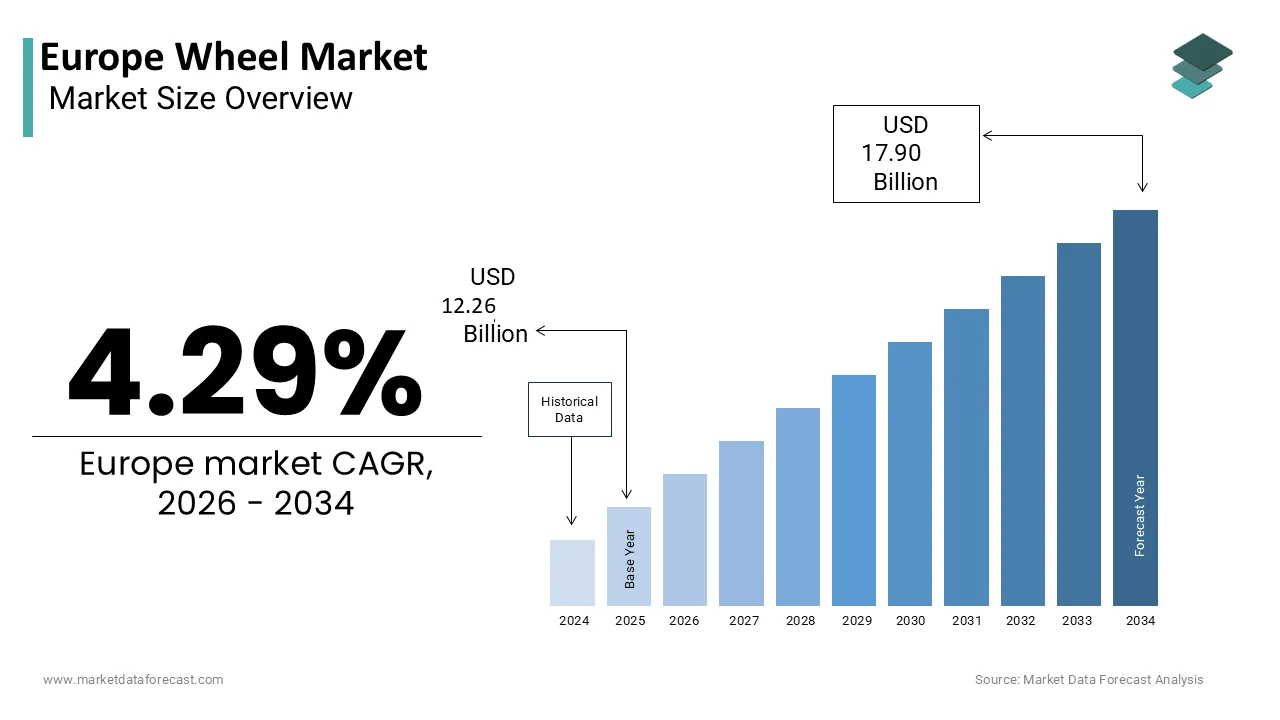
The Europe wheel market was valued at USD 12.26 billion in 2025 and is projected to reach USD 17.90 billion by 2034, growing at a CAGR of 4.29% from 2026 to 2034, driven by alloy wheel standardization, EV lightweighting requirements, and strong regulatory enforcement under UNECE safety frameworks.
Market Snapshot
2025 Market Size: USD 12.26 billion
2026 Market Size: USD 12.79 billion
2034 Forecast: USD 17.90 billion
CAGR (2026–2034): 4.29%
Base Year: 2025
Forecast Period: 2026–2034
Quick Growth Drivers
- Mandatory compliance with UNECE Regulation No. 124 for structural integrity
- Standardization of aluminum alloy wheels across EU passenger vehicles
- Rising SUV and crossover sales with larger wheel diameters
- Electrification push increasing demand for lightweight, aerodynamic wheels
- Growing consumer preference for premium finishes and custom designs
Principal Restraints
- Volatility in aluminum and magnesium prices
- High energy intensity of primary aluminum production in Europe
- Fragmented national homologation and certification processes
- Dual certification requirements post-Brexit
High-Value Opportunities
- EV-specific lightweight forged and flow-formed wheel platforms
- Carbon fiber wheels for high-performance electric vehicles
- Closed-loop recycled aluminum manufacturing systems
- Digital product passports for traceability and sustainability compliance
- Premium aftermarket customization through online configurators
Key Market Challenges
- Competitive pressure from low-cost Asian imports
- Fraudulent or inconsistent ECE certification among imports
- Margin compression due to raw material cost instability
- Technological complexity of integrating smart wheel sensors
- OEM caution around cybersecurity and data integration for connected wheels
Fastest-Growing Segments
- Carbon Fiber Wheels – highest CAGR driven by ultra-premium EV and sports car demand
- Light Commercial Vehicles (LCVs) – rapid growth from e-commerce and electric fleet expansion
- Aftermarket Channel – accelerated growth due to personalization and winter wheel swaps
- SUV & Crossover Wheels – volume dominance from large-diameter alloy demand
Regional Leadership & Dynamics
- Germany (25.3%) – Premium OEM concentration and TÜV-certified manufacturing leadership
- France (19.7%) – Strong EV incentives and high-volume passenger vehicle production
- United Kingdom – Robust aftermarket culture and motorsport-driven customization trends
- Italy – Luxury design-led wheel innovation and premium aesthetic finishes
- Spain – Cost-efficient manufacturing base serving mainstream OEM platforms
What Wins Commercially
- Lightweight forged and flow-formed aluminum solutions for EV efficiency
- High recycled aluminum content aligned with EU Circular Economy goals
- TÜV and KBA-certified designs ensuring pan-European homologation
- OEM co-development of bespoke aerodynamic wheels
- Digital retail integration with AR visualization and direct installation networks
Top Strategic Ask for Executives
Prioritize EV-optimized lightweight technologies, strengthen circular aluminum supply chains, and secure pan-European certification capabilities while investing in digital aftermarket engagement to remain competitive in a regulation-intensive and innovation-driven European automotive ecosystem.
Leading Players
Some of the companies that are playing a dominating role in the Europe wheel market include
- Maxion Wheels
- BBS Automotive GmbH
- Ronal Group GmbH
- Borbet GmbH
- ATS Wheels
- Alcoa Wheels (Arconic Corporation)
- Accuride Corporation
- CWC Group
- Momo Design S.r.l.
- Superior Industries Europe
Europe Wheel Market Size
The Europe wheel market was valued at USD 12.26 billion in 2025, is estimated to reach USD 12.79 billion in 2026, and is projected to reach USD 17.90 billion by 2034, growing at a CAGR of 4.29% from 2026 to 2034.
A wheel is a circular mechanical device designed to rotate around an axle, enabling the smooth movement of vehicles or machinery by reducing friction. Unlike commodity-driven markets, Europe’s wheel sector is shaped by stringent regulatory standards, consumer preference for premium finishes, and the region’s advanced automotive engineering culture. According to a study, a substantial majority of new passenger cars sold in the EU are equipped with aluminium alloy wheels, driven by a long-standing industry shift away from steel to improve vehicle efficiency, design, and performance. The market operates under the framework of the UN Economic Commission for Europe Regulation No 124, which mandates rigorous testing for strength, fatigue resistance, and dimensional accuracy. Furthermore, the EU consistently produces millions of new passenger and commercial vehicles annually, creating a high, recurring, and significant demand base for lightweight wheel components. This combination of regulatory rigor, material innovation, and integration with vehicle performance defines the European wheel market as a high-value, technology-intensive segment within the broader automotive supply chain.
MARKET DRIVERS
Stringent Vehicle Safety and Homologation Standards Driving Alloy Wheel Adoption
The region’s comprehensive regulatory framework for vehicle components serves as a primary driver for high-performance wheel demand and the European wheel market. This demand is particularly focused on aluminum alloy variants that meet exacting safety and durability criteria. Under UNECE Regulation No 124, all wheels sold in the EU must undergo standardized tests for radial fatigue, cornering fatigue, and impact resistance, ensuring structural integrity under real-world stress. German national safety standards require wheels to have specific official certification to be legally operated, making compliance essential for market entry. This regulatory environment favors precision-engineered alloy wheels, which offer superior strength-to-weight ratios compared to steel. Automakers like BMW and Audi specify forged aluminum wheels as standard on performance models to enhance handling and reduce unsprung mass. Additionally, the EU’s Whole Vehicle Type Approval system requires OEMs to certify entire vehicle systems, incentivizing the use of pre-validated, high-quality wheels from approved suppliers. This legal and technical ecosystem ensures consistent demand for certified, high-specification wheels across both OEM and replacement channels.
Consumer Preference for Aesthetic Customization and Premium Finishes
Strong consumer demand for visual personalization and perceived quality significantly propels the European wheel market. This is especially true in the aftermarket segment. European car owners increasingly view wheels as a key expression of individuality, with finishes such as matte black, brushed bronze, and two-tone diamond-cut surfaces commanding premium pricing. According to a study, a significant portion of younger vehicle owners choose to replace their standard wheels with custom alternatives to improve their car's appearance within the first few years of ownership. This trend is amplified by social media and automotive culture, where customized vehicles gain visibility and status. Premium brands like BBS, OZ Racing, and AEZ have capitalized on this by offering limited-edition designs co-developed with tuning firms. Moreover, OEMs now bundle bespoke wheel options into trim levels; Volkswagen’s R-Line and Mercedes’ AMG Line packages include unique alloys as standard, blurring the line between factory and aftermarket. This cultural emphasis on design ensures sustained demand for innovative finishes and exclusive styles beyond functional requirements.
MARKET RESTRAINTS
Volatility in Aluminum and Magnesium Feedstock Prices
The pronounced volatility in prices of key raw materials, particularly aluminum and magnesium, impedes the growth of the European wheel market. These materials constitute a significant portion of alloy wheel composition. These metals are subject to global supply-demand imbalances, energy costs, and geopolitical disruptions. European aluminum costs reached record highs following geopolitical instability and energy supply constraints, resulting in a substantial price increase compared to years before the global health crisis. This spike compressed margins for wheel manufacturers, many of whom operate on thin profit buffers. Unlike steel, which benefits from established recycling streams, primary aluminum production in Europe remains energy-intensive and vulnerable to electricity price fluctuations. Although recycling mitigates some risk, a notable portion of aluminum in EU wheels is recycled, foundries still rely on primary metal for specific alloys. This cost instability discourages long-term investment in capacity expansion and complicates pricing strategies, particularly for independent aftermarket brands competing on value.
Fragmented National Approval Processes and Certification Delays
Operational friction from inconsistent interpretation and implementation of homologation procedures across member states, despite EU-wide regulations, limits the expansion of the European wheel market. While UNECE Regulation No 124 provides a harmonized standard, national type approval authorities, such as KBA in Germany and RDW in the Netherlands, maintain discretion in testing protocols and documentation requirements. Manufacturers face significant administrative and financial burdens due to the lack of harmonized testing standards across different nations, which extends the time required to bring new products to the broader market. This fragmentation disproportionately impacts small and medium enterprises that lack the resources to navigate multiple jurisdictions. Furthermore, post-Brexit, UK approvals no longer align with EU standards, forcing dual certification for pan-European sales. These delays stifle innovation, increase time-to-market, and create barriers to entry, ultimately limiting consumer choice and slowing the adoption of next-generation lightweight or sustainable wheel technologies.
MARKET OPPORTUNITIES
Integration of Lightweight Wheels in Electric Vehicle Platforms
The growing demand for ultra-lightweight wheels tailored to electric vehicles, where reducing unsprung mass directly enhances range and handling, is a major growth area for the European wheel market. EVs are typically heavier than their internal combustion counterparts due to battery packs, increasing tire wear, and energy consumption. Adopting lighter wheel components contributes to the overall efficiency of electric vehicles, helping to extend the distance a vehicle can travel on a single charge by reducing the total mass the powertrain must move. European automakers are responding. Tesla’s Model Y features forged aluminum wheels, while Porsche’s Taycan offers optional carbon-fiber-reinforced polymer rims. Suppliers like Ronal and Borbet have launched EV-specific lines using flow-formed and forged processes to cut weight without compromising strength. As the EU targets zero-emission car sales by 2035, this segment will expand rapidly. Lightweight wheels thus transition from aesthetic upgrades to functional necessities, opening high-margin avenues for technologically advanced manufacturers aligned with OEM electrification roadmaps.
Expansion of Sustainable and Circular Wheel Manufacturing
The region’s push toward circular economy principles enables wheel producers to differentiate through eco-conscious manufacturing, which provides fresh prospects for theEuropeane wheel market. European regulations prioritize high rates of reuse and recovery for end-of-life vehicles, with metallic components like wheels contributing significantly to these targets due to their material composition. Leading companies are leveraging this by incorporating high percentages of post-consumer recycled aluminum. Premium wheel manufacturers are enhancing the sustainability of their products by incorporating recycled metal into their production processes while maintaining certified structural standards. According to the European Environment Agency, recycling aluminum saves 95% of the energy required for primary production. Brands like AEZ now market “green wheels” with verified low carbon footprints, appealing to environmentally conscious consumers. Additionally, digital product passports, mandated under the EU Battery Regulation, are being adapted for wheels to track material origin and recyclability. This alignment with Green Deal objectives not only meets regulatory expectations but also creates brand value in a market increasingly influenced by sustainability credentials.
MARKET CHALLENGES
Intense Competition from Low-Cost Asian Imports
The influx of competitively priced imports from China, India, and Turkey, which benefit from lower labor costs and state-supported industrial policies, is one of the major challenges for wheel manufacturers and the European wheel market. Foreign-made aluminum wheel shipments to the European Union have grown substantially in total value due to rising market prices, even as the overall physical quantity of these imports has recently seen a slight decline. Despite carrying ECE markings, these products suffer from inconsistent quality and, in some cases, fraudulent certification. German motor transport authorities have ordered the removal of certain imported wheels from the market after they failed safety inspections for structural integrity and fatigue resistance. Such incidents erode consumer trust, yet price-sensitive buyers continue to opt for cheaper alternatives, pressuring domestic producers on margins. European manufacturers struggle to compete on cost alone, forcing them to emphasize safety, traceability, and design, factors less valued in budget segments. This competitive imbalance, driven by lax enforcement of dumping and fraud, threatens to destroy local production and destroy market safety protocols.
Technological Complexity in Developing Next-Generation Smart Wheels
The emergence of “smart wheels”, embedded with sensors for tire pressure, load, temperature, and road condition monitoring, poses a formidable technical and integration issue that negatively impacts theEuropeane wheel market. Despite their potential in autonomous transportation, successful implementation depends on reliable V2X communication, stringent data security, and durable performance under extreme operating conditions. Advanced wheel designs featuring integrated sensor technology remain an emerging segment of the European automotive supply chain as manufacturers navigate the high costs and technical hurdles of new digital architectures. Integrating electronics into rotating assemblies demands novel sealing, power management, and wireless protocols that comply with EU cybersecurity regulations like UNECE R155. Moreover, OEMs remain cautious about adding failure points to critical safety components. Without standardized interfaces and clear ROI for consumers, smart wheel adoption remains limited to niche luxury applications. This technological gap risks leaving traditional wheel makers behind as mobility evolves toward data-driven platforms, demanding unprecedented collaboration between metallurgists, software engineers, and cybersecurity experts.
REPORT COVERAGE
| REPORT METRIC | DETAILS |
| Market Size Available | 2025 to 2034 |
| Base Year | 2025 |
| Forecast Period | 2026 to 2034 |
| Segments Covered | By Material, Vehicle Type, Sales Channel, and Region. |
| Various Analyses Covered | Global, Regional, and Country-Level Analysis, Segment-Level Analysis, Drivers, Restraints, Opportunities, Challenges; PESTLE Analysis; Porter’s Five Forces Analysis, Competitive Landscape, Analyst Overview of Investment Opportunities |
| Countries Covered | UK, France, Spain, Germany, Italy, Russia, Sweden, Denmark, Switzerland, Netherlands, Turkey, Czech Republic, Rest of Europe |
| Market Leaders Profiled | Continental AG, Goodyear Tire & Rubber Company, Michelin Group, Bridgestone Corporation, Pirelli & C. S.p.A., Sumitomo Rubber Industries, Ltd., Apollo Tyres Ltd., Hankook Tire & Technology Co., Ltd., Yokohama Rubber Company, Toyo Tire & Rubber Co., Ltd., Accuride Corporation, Maxion Wheels, BBS Automotive GmbH, RonAL Group GmbH, ATS Wheels, SSI Wheel Production GmbH, Alcoa Wheels, CWC Group, Momo Design S.r.l. |
SEGMENTAL ANALYSIS
By Material Insights
The aluminum segment led the European wheel market and captured a substantial share in 2025. The leading position of the segment is attributed to its optimal balance of lightweight properties, corrosion resistance, design versatility, and compliance with EU vehicle efficiency standards. Unlike steel, aluminum reduces unsprung mass, improving fuel economy and handling, critical factors as automakers strive to meet the EU’s CO₂ fleet targets of 95 grams per kilometer. Most new passenger vehicles in the European Union are now factory-equipped with aluminum wheels, with the material becoming the standard choice for high-end automotive segments. The material’s superior thermal conductivity also enhances brake cooling, a safety advantage valued by performance-oriented brands like BMW and Audi. Furthermore, aluminum’s recyclability, requiring only 5% of the energy needed for primary production, aligns with the EU Circular Economy Action Plan, making it the preferred choice for both OEMs and environmentally conscious consumers seeking aesthetic and functional superiority.
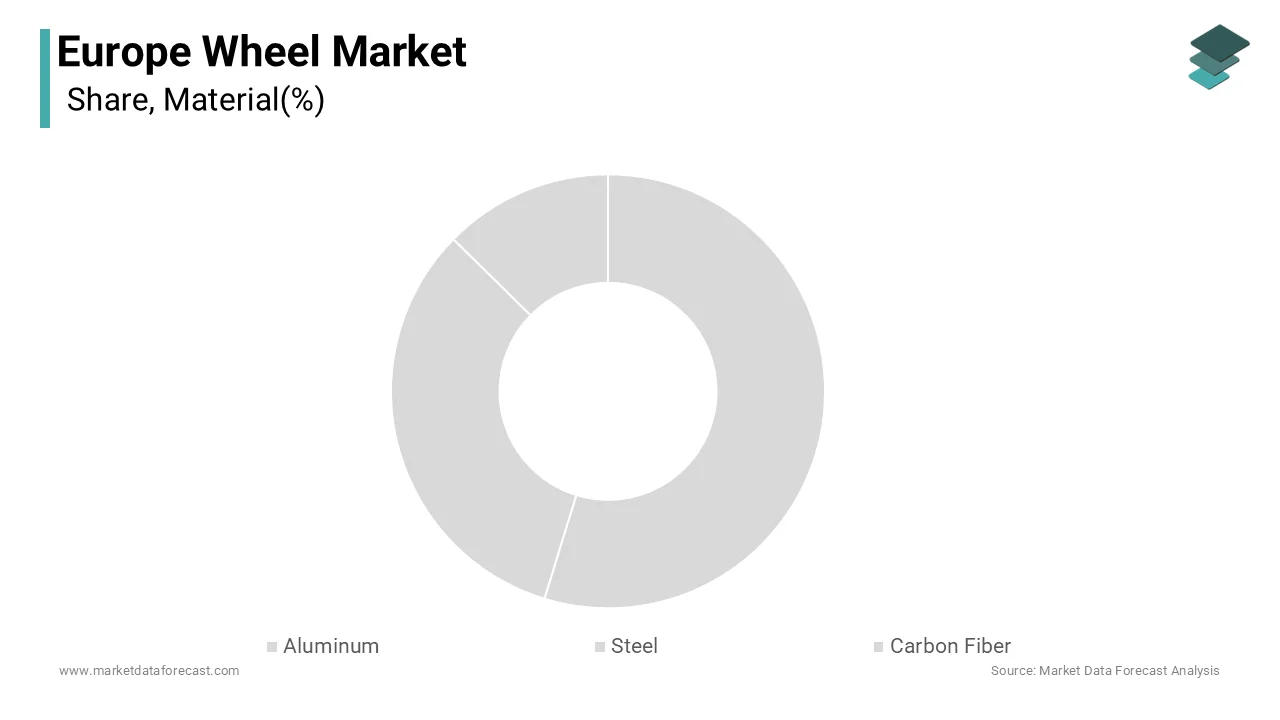
The carbon fiber segment is predicted to witness the highest CAGR of 14.2% from 2026 to 2034 due to demand from high-performance electric vehicles and luxury sports cars, where extreme weight reduction directly translates into extended range and dynamic agility. A single carbon fiber wheel can weigh less than its forged aluminum counterpart, significantly lowering rotational inertia. High-performance electric vehicles are increasingly adopting lightweight materials like carbon fiber to enhance driving dynamics and efficiency. Advanced wheel technologies and powertrain optimizations in top-tier electric sports cars have resulted in significant improvements to both standing-start acceleration and total driving range on a single charge. Manufacturers like BBS and HRE have established dedicated European production lines using resin transfer molding to ensure structural integrity while meeting TÜV safety standards. Additionally, Formula One’s halo effect, where race-bred technologies trickle down to road cars, enhances consumer perception of carbon fiber as a symbol of cutting-edge engineering. Ultra-premium EVs are moving from the sidelines to the mainstream, becoming a crucial necessity for major automakers driven by the need for weight efficiency.
By Vehicle Type Insights
The SUVs and crossovers segment was the largest segment in theEuropeane wheel market and occupied a 42.7% share in 2025. The prominence of the SUVs and crossovers segment is driven by a profound shift in European consumer preference toward higher-riding, versatile vehicles that combine passenger comfort with light utility. These vehicles typically feature larger wheel diameters, 18 to 22 inches, as standard, increasing both unit value and material consumption per vehicle. Automakers capitalize on this by offering aggressive spoke designs and two-tone finishes to enhance visual presence, driving demand for premium aluminum alloys. Furthermore, SUVs’ higher gross vehicle weight necessitates wheels with reinforced load ratings, pushing manufacturers to adopt advanced flow-forming and forging techniques. This confluence of volume, size, and specification ensures SUVs remain the cornerstone of European wheel demand across OEM and aftermarket channels.
The light commercial vehicles (LCVs) segment is estimated to register the fastest CAGR of 9.8% during the forecast period, owing to the explosive expansion of e-commerce and last-mile delivery networks across urban Europe. According to sources, driven by consumer preference for higher driving positions, versatility, and stylish design, sport utility vehicles have risen from a niche market share to become the leading vehicle type in the European passenger car market. These vehicles operate under intense duty cycles, demanding durable, corrosion-resistant wheels capable of carrying heavy payloads. While traditionally fitted with steel wheels for cost reasons, rising adoption of aluminum variants, offering better heat dissipation and reduced unsprung mass, is gaining traction, especially in electric LCVs like the Volkswagen ID Buzz Cargo. The EU’s Urban Mobility Framework further incentivizes fleet modernization, with cities like Paris and Amsterdam mandating zero-emission deliveries. This regulatory and logistical shift transforms LCVs from utilitarian afterthoughts into high-volume, high-specification wheel consumers.
By Sales Channel Insights
The OEM channel segment dominated theEuropeane wheel market and accounted for a significant share in 2025. The dominance of the segment is credited to the deep integration of wheel specifications into vehicle design, safety certification, and brand identity during manufacturing. Automakers treat wheels as critical performance components, not mere accessories, subjecting them to rigorous validation for load capacity, fatigue resistance, and aerodynamic efficiency. UNECE Regulation No 124 mandates stringent, standardized testing for aftermarket replacement wheels rather than original equipment (OEM) wheels, creating high technical and compliance hurdles for non-supplier alternatives. This regulatory framework has become increasingly strict, requiring compliance for market access within the European Union. Premium brands like Mercedes-Benz and Volvo often co-develop bespoke wheel designs with suppliers such as Ronal and Borbet, embedding them into trim levels as standard equipment. Furthermore, the rise of EVs has intensified OEM control, as wheel weight and aerodynamics directly impact certified range figures. This technical and regulatory lock-in ensures that the majority of wheel value is captured at the point of vehicle assembly, making OEM the foundational channel of the European market.
The aftermarket channel segment is anticipated to witness the fastest CAGR of 8.5% from 2026 to 2034. The swift growth of the segment is propelled by rising consumer interest in personalization, performance enhancement, and seasonal wheel swaps, particularly winter alloy sets. European car owners, particularly within younger demographics, are increasingly opting to personalize their vehicles by upgrading to custom alloy wheels shortly after purchase to enhance both aesthetic appeal and functional performance. The proliferation of online retailers like Tirendo and Oponeo has democratized access, offering home delivery and installation partnerships with local garages. Additionally, stricter EU noise and emissions regulations have spurred demand for lighter, more aerodynamic aftermarket wheels that improve real-world efficiency. Certification bodies like TÜV and KBA now offer streamlined homologation for pre-approved designs, reducing legal risk. This blend of digital convenience, cultural customization, and regulatory alignment positions the aftermarket as a dynamic and rapidly expanding frontier in the European wheel landscape.
COUNTRY LEVEL ANALYSIS
Germany Wheel Marketet Analysis
Germany outperformed other countries in the European wheel market and captured a 25.3% share in 2025. The prominence of the German market is driven by the country’s concentration of premium automakers, including BMW Mercedes Benz and Audi, that specify high-performance aluminum and forged wheels as standard across their lineups. According to the German Association of the Automotive Industry, domestic passenger car production in Germany saw significant growth in 2023, with manufacturers producing over four million vehicles that generally require four to six wheels. Germany also hosts leading wheel suppliers like Borbet and ATS Wheels, whose factories supply both OEM and aftermarket channels withTÜV-certifiedd products. The nation’s stringent vehicle safety standards and culture of automotive excellence ensure consistent demand for technically advanced wheels. Furthermore, Germany’s extensive Autobahn network encouragesperformance-orientedd driving, which reinforces consumer preference for lightweight,t responsive alloys. This ecosystem of manufacturing regulation and driving culture solidifies Germany’s role as the technological nucleus of the European wheel industry.
Franc Wheel Marketet Analysis
France was the second largest country in the European wheel market by accounting for a 19.7% share in 2025. The expansion of the French market is fuelled by high vehicle production volumes and aggressive electrification policies. French automakers Stellantis and Renault produce a large number of vehicles annually, including best-selling models like the Peugeot 208 and Renault Zoe, which increasingly feature aluminum wheels even in base trims. According to sources, the government’s bonus-malus system provides financial incentives for low-emission vehicles, indirectly promoting lighter wheels to improve efficiency. France also leads in LCV adoption, with urban delivery fleets expanding rapidly in Pari,s Ly, and Marseille due to e-commerce growth. The country’s strong aftermarket sector, supported by national chains like Norauto, ensures robust replacement demand. This combination of industrial-scale policy support and urban logistics creates a balanced and resilient wheel market across OEM and aftermarket segments.
United Kingdom Wheel Marketet Analysis
The United Kingdom continues to be a major player in the European wheel market owing to its vibrant aftermarket culture and motorsport heritage. British new car buyers are increasingly prioritizing aesthetic and performance customization, with a rising number of individuals selecting enhanced alloy wheels as a popular vehicle modification shortly after purchase, according to the Society of Motor Manufacturers and Traders. The UK hosts major aftermarket brands like OZ Racing and Team Dynamics, whose products are popular in tuning and track communities. Despite Brexit, UK regulations remain aligned with UNECE standards,s ensuring continued access to European certification frameworks. Additionally, ly the rise of electric performance models from Jaguar and Lotus has accelerated demand for lightweight forged wheels. The country’s extensive network of specialist fitment centers and online retailers supporthe ts rapid adoption of new trends. This focus on individuality, performance,e and digital retail makes the UK trend-settingng force in European wheel aesthetics and consumer behavior.
Italy Wheel Market Analysis
Italy witnessed a steady growth in tEuropeanope wheel market due to its global reputation for automotive design and luxury craftsmanship. Italian brands Ferrari, Lamborghini, i and Alfa Romeo use wheels as key visual signatures, often co-designing them with historic suppliers like BBS and OZ Group. According to a study, Italy’s automotive federation, the country’s emphasis on style extends to mass market vehicles, with even entry-level Fiats featuring distinctive alloy designs. Italy also leads in two-tone diamond cut finishes, which command premium pricing across Europe. The domestic aftermarket thrives on aesthetic upgrades, with Milan and Rome serving as hubs for custom wheel imports and modifications. Furthermore, Italian foundries specialize in low volume high precision casting techniques that cater to niche performance segments. This fusion of artistry, engineering, ng and consumer taste establishes Italy as the aesthetic conscience of the European wheel market.
Spain Wheel Market Analysis
Spain is likely to expand in tEuropeanope wheel market during the forecast period by serving as a critical manufacturing base for cost-efficient wheel production. The country hosts major plants for SEAT, Renault, and Nissa,n producina g significant number of vehicles in 2023. These facilities rely heavily on regional wheel suppliers like Ronal Spain and Superior Industries, which leverage lower operational costs to serve both domestic assembly lines and export markets. Spain’s warm climate reduces demand for winter steel wheels, accelerating year-round aluminum adoption. Additionally, the growth of tourism and rental fleets in coastal regions drives replacement demand for durable yet affordable alloys. Spain is a vital hub in Europe’s wheel supply chain for mainstream and budget vehicles, thanks to its strategic location and economies of scale, despite a lower focus on premium segments.
COMPETITIVE LANDSCAPE
TheEuropeane wheel market features intense competition among established OEM suppliers, independent aftermarket brands,s and low-cost importers. Domestic manufacturers like Borbet and Ronal compete on engineering precision, sustainability credentials,s and regulatory compliance while facing pressure from Asian producers offerinlower-priceded alternatives. The market is bifurcated between high-value OEM channels, where technical specifications and safety validation dominate, and the dynamic aftermarket driven by aesthetics and digital convenience. Certification remains a critical differentiator as counterfeit or non-compliant wheels pose safety risks and reputational damage. Innovation in materials such as carbon fiber and smart sensor integration is emerging,g but is limited to niche segments. Success hinges on balancing cost efficiency with adherence to UNECE standards while navigating volatile raw material prices and evolving EV platform requirements in a highly fragmented yet regulation-heavy landscape.
KEY MARKET PLAYERS
Some of the companies that are playing a dominating role in the global Europe Wheel Market include
- Continental AG
- Goodyear Tire & Rubber Company
- Michelin Group
- Bridgestone Corporation
- Pirelli & C. S.p.A.
- Sumitomo Rubber Industries, Ltd.
- Apollo Tyres Ltd.
- Hankook Tire & Technology Co., Ltd.
- Yokohama Rubber Company
- Toyo Tire & Rubber Co., Ltd.
- Accuride Corporation
- Maxion Wheels (NBP Group)
- BBS Automotive GmbH
- RonAL Group GmbH
- ATS Wheels
- SSI Wheel Production GmbH
- Alcoa Wheels (Arconic Corporation)
- CWC Group
- Momo Design S.r.l.
TOP LEADING PLAYERS IN THE MARKET
- Borbet GmbH is a leading German manufacturer of aluminum and steel wheels with deep integration into European OEM supply chains. The company supplies precision-engineered wheels to premium automakers, including BMW Mercedes Benz and Volkswagen, emphasizing lightweight construction and aerodynamic efficiency. Borbet has strengthened its position by investing in low-carbon casting technologies and expanding its flow forming production capacity to meet rising demand for EV-specific wheels. It also achieved full compliance with the EU’s EcoDesign requirements for recyclability and energy efficiency. These initiatives reinforce Borbet’s reputation as a technologically advanced and sustainability-focused supplier, enabling it to influence global wheel standards through its European manufacturing excellence.
- Ronal AG is a Swiss-based global leader in aluminum wheel design and production with major facilities across Germany, France,e and Spain. The company serves both OEM and high-end aftermarket segments, known for its innovative surface finishes and structural optimization. Ronal has reinforced its market presence by launching a dedicated line of forged wheels for electric vehicles that reduce unsprung mass. It also implemented a closed-loop recycling system at its plants, achieving over 90 percent recycled aluminum content in new products. These actions align with EU circular economy mandates and position Ronal as a pioneer in sustainable premium wheel solutions for global automotive platforms.
- AEZ Wheels is a prominent European aftermarket brand headquartered in Germany,y specializing in customized alloy wheels for passenger and light commercial vehicles. The company distinguishes itself through rapid design cycles, seasonal collections,s and digital configurator tools that cater to consumer personalization trends. AEZ has strengthened its position by obtaining TÜV certification for its entire product range,ge ensuring compliance with UNECE safety standards across all EU markets. It also partnered with online retailers to offdirect-to-consumermer delivery and installation networks. These strategies enhance accessibility and trust, making AEZ a key driver of aesthetic innovation and regulatory compliance in the European replacement wheel segment.
TOP STRATEGIES USED BY THE KEY MARKET PARTICIPANTS
Key players in the European wheel market are primarily focused on lightweighting through advanced forging and flow forming techniques to support electric vehicle range optimization. Companies are investing in closed-loop recycling systems to achieve high percentages of post-consumer aluminum content in compliance with EU circular economy directives. Strategic partnerships with OEMs for co-developed EV-specific wheels ensure long-term contracts and technical relevance. Digital transformation through online configurators, augmented reality preview, and direct-to-consumer logistics enhances aftermarket engagement. Additionally, firms are pursuing TÜV and KBA certifications to guarantee pan-European homologation and build consumer trust in an increasingly regulated and safety-conscious environment.
MARKET SEGMENTATION
This research report on the europe wheel market is segmented and sub-segmented into the following categories.
By Material
- Aluminum
- Steel
- Carbon Fiber
- Others
By Vehicle Type
- Passenger Cars
- SUVs & Crossovers
- Light Commercial Vehicles (LCVs)
- Heavy Commercial Vehicles (HCVs)
By Sales Channel
- OEM
- Aftermarket
By Country
- Germany
- France
- United Kingdom
- Italy
- Spain
- Rest of Europe