- Product Description Description
- Table of Contents TOC
- List of Table & Figure LOT
- Get Free Sample PDF Sample PDF
Market Size, 2025
$8.78 BnMarket Estimate, 2026
$9.11 BnMarket Forecast, 2034
$12.24 BnCAGR, 2026–2034
3.76%Europe Wooden Toys Market Report Summary
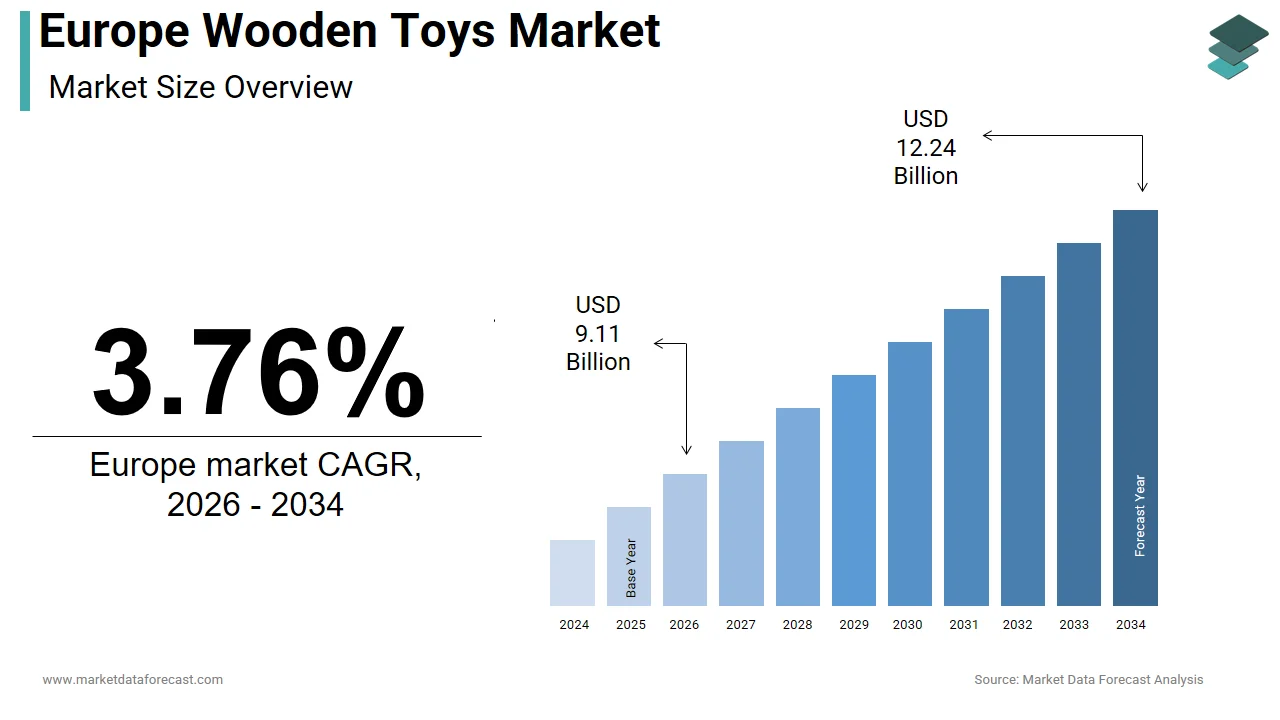
The Europe wooden toys market was valued at USD 8.78 billion in 2025, is estimated to reach USD 9.11 billion in 2026, and is projected to reach USD 12.24 billion by 2034, growing at a CAGR of 3.76% from 2026 to 2034. Market growth is driven by increasing consumer preference for eco-friendly and sustainable toys, rising awareness of child safety, and growing demand for educational and developmental play products. Wooden toys are gaining popularity due to their durability, non-toxic nature, and ability to support cognitive and motor skill development. The shift away from plastic toys and the emphasis on Montessori-style learning approaches are further supporting market growth across Europe.
Key Market Trends
- Rising demand for eco-friendly and sustainable toy materials.
- Increasing popularity of educational and developmental toys.
- Growing preference for non-toxic and child-safe products.
- Expansion of Montessori and STEM-based learning toys.
- Shift from plastic to wooden toys among environmentally conscious consumers.
Segmental Insights
- Based on product type, the educational toys segment dominated the Europe wooden toys market by capturing 38.7% share in 2025, driven by increasing focus on early childhood development.
- Based on wood type, the hardwood segment held the largest share of 65.7% in 2025, supported by its durability and premium quality.
- Based on age group, the 1 to 3 years segment led the market with 33.2% share in 2025, driven by high demand for safe and developmental toys for toddlers.
Regional Insights
The Europe wooden toys market is witnessing steady growth across major countries due to sustainability trends and strong consumer awareness.
- Germany led the regional market in 2025 with 25.7% share, supported by its strong craftsmanship heritage and preference for high-quality toys.
- France followed with 18.5% share in 2025, driven by demand for premium and aesthetically designed toys.
- The United Kingdom holds a significant position due to a growing preference for sustainable products and a modern, environmentally conscious consumer base.
Competitive Landscape
The Europe wooden toys market is moderately competitive, with a mix of established toy manufacturers and niche artisanal brands. Market players are focusing on sustainability, product innovation, and educational value to differentiate their offerings. Strategic partnerships, eco-friendly product lines, and expansion of online distribution channels are shaping competitive dynamics across the region.
Prominent companies operating in the Europe wooden toys market include Hasbro Inc., Westwork Designs, Wood-Expressions, ABAfactory, Djeco, LEGO Group, The Wooden Wagon Inc., Melissa & Doug, Roy Toy Manufacturing, Bajo, Hape International, and Bella Luna Toys.
Europe Wooden Toys Market Size
The Europe wooden toys market was valued at USD 8.78 billion in 2025, is estimated to reach USD 9.11 billion in 2026, and is projected to reach USD 12.24 billion by 2034, growing at a CAGR of 3.76% from 2026 to 2034.
Wooden toys are playthings constructed primarily from wood and wood products, sometimes incorporating minor components of other materials. This market represents a distinct niche within the broader toy industry, prioritizing durability, tactile sensory experiences, and environmental sustainability over electronic features or plastic disposability. The definition extends beyond simple blocks to include complex educational puzzles, role playing sets, and Montessori aligned learning tools that foster cognitive development without digital interference. As per Eurostat data, the European Union recorded approximately 3.56 million live births in 2024, establishing the fundamental demographic baseline for potential consumers in this sector. The median age of the EU population stands at 44.7 years, indicating a mature consumer base where parents often possess higher disposable income and place a premium on quality and safety for their offspring. Furthermore, reports from the European Environment Agency and the Global E-waste Monitor show that Europe generates a massive volume of electronic waste each year, the highest per capita in the world. This trend has heightened parental concerns over plastic and electronic waste, accelerating a market shift toward sustainable and biodegradable wooden alternatives. The market is deeply rooted in a cultural renaissance of traditional craftsmanship, where toys are viewed as heirlooms rather than transient goods. Unlike mass produced plastic items, wooden toys in Europe are frequently associated with forest stewardship, with a significant portion of raw material sourced from sustainably managed forests certified under schemes like FSC. This alignment with ecological values defines the market identity, positioning it as a conscious choice for families seeking to minimize their environmental footprint while providing safe, non toxic play experiences for children.
MARKET DRIVERS
Escalating Parental Preference for Non Toxic and Safe Materials
Parents are increasingly demanding chemical-free playthings, which makes safety the top driver for the European wooden toys market. This shift is fueled by a desire to avoid synthetic hazards like phthalates, bisphenol A, and microplastics. Modern European consumers are increasingly educated about the potential health risks associated with prolonged exposure to plasticizers and volatile organic compounds, leading to a decisive shift toward natural materials. According to the European Chemicals Agency, hundreds of substances have been identified as being of very high concern due to their hazardous properties. Many of these chemicals have historically been used in plastic toy manufacturing, leading to increased caution among parents and caregivers regarding synthetic materials. In response, families are actively seeking products made from solid wood finished with water based, non toxic paints and natural oils. Research indicates that a vast majority of parents in Western Europe now rank material composition as a primary factor when selecting toys for young children, significantly influencing purchasing trends toward safer alternatives. This demand is further amplified by strict EU regulations such as the Toy Safety Directive, which mandates rigorous testing, yet parents often perceive wood as inherently safer due to its natural origin and lack of industrial additives. The tactile warmth and absence of sharp edges in well crafted wooden toys also reduce physical injury risks, appealing to safety conscious demographics. Consequently, manufacturers who certify their products as free from harmful chemicals and utilize organic finishes are witnessing robust sales growth, as trust in natural materials becomes a primary purchasing determinant in the regional marketplace.
Growing Alignment with Montessori and Waldorf Educational Philosophies
The widespread adoption of child-centered educational methodologies like Montessori and Waldorf further boosts the growth of the Europe wooden toys market. These programs explicitly advocate for the use of simple, open-ended wooden playthings to stimulate imagination and cognitive growth. These pedagogical approaches argue that toys with fixed functions or electronic distractions limit creative potential, whereas wooden blocks, figures, and puzzles encourage active problem solving and sensory exploration. A study shows that enrollment in Montessori and Waldorf-inspired kindergartens has grown steadily across Europe over the last decade, creating a strong demand for specific wooden learning aids in both institutional and home settings. Parents influenced by these philosophies prioritize toys that can be used in multiple ways, such as a wooden block serving as a car, a building element, or a food item, thereby extending the product lifecycle and value. Consumer spending patterns reveal that households following alternative education methods invest more per individual toy than the average consumer, reflecting a clear preference for high-quality, long-lasting products over a high volume of disposable items. This trend is not limited to private schools but has permeated mainstream parenting culture, with public discourse increasingly favoring "slow play" and digital detoxification for young children. The emphasis on sustainability within these educational frameworks further reinforces the preference for wood, as it aligns with teachings about nature and respect for the environment. This philosophical shift ensures a steady and growing stream of demand for wooden toys that support developmental milestones without relying on batteries or screens.
MARKET RESTRAINTS
Substantial Price Disparity Compared to Plastic Alternatives
The significantly higher price point of wooden toys, relative to plastic alternatives, is the main barrier to the Europe wooden toys market. As a result, market penetration is restricted within price-sensitive demographic segments. The production of wooden toys involves expensive raw materials, labor intensive crafting processes, and stringent quality control measures to ensure smooth finishes and safety, all of which inflate the final retail price. The cost of sustainably sourced timber has also risen due to global supply chain disruptions and increased demand from the construction and furniture sectors, further squeezing margins for toy manufacturers. The economic reality confines the wooden toy market largely to affluent demographics or special occasion gifts, preventing it from becoming an everyday staple for the majority. High prices currently restrict volume growth and market share expansion. This will continue until production efficiencies lower costs or consumer willingness to pay a premium becomes widespread.
Vulnerability to Environmental Degradation and Moisture Damage
The inherent susceptibility of natural wood to environmental factors is also a critical technical issue affecting the Europe wooden toys market. Factors such as moisture, humidity, and temperature fluctuations can compromise product integrity and safety. Unlike plastic, which is impervious to water and resistant to warping, wood can swell, crack, or develop mold if not properly treated or stored, posing potential hygiene risks for children. As per sources, many regions in Northern and Western Europe experience high levels of humidity and frequent rainfall throughout the year, creating challenging conditions for wooden products left outdoors or in damp play areas. Manufacturers must invest heavily in specialized sealing, varnishing, and treatment processes to mitigate these risks, which adds to production costs and complexity. Despite these treatments, there remains a consumer perception that wooden toys are less durable in wet environments, limiting their use in bathrooms, gardens, or sandboxes where plastic dominates. Incidents of splintering or finish degradation due to improper care can lead to safety recalls and reputational damage for brands. Furthermore, the maintenance requirements for wooden toys, such as occasional oiling or cleaning with specific agents, may deter busy parents seeking low maintenance solutions. This vulnerability restricts the functional versatility of wooden toys compared to the all weather resilience of plastics, confining them primarily to indoor dry play scenarios and narrowing their application scope in diverse European climates.
MARKET OPPORTUNITIES
Integration of Smart Technology with Traditional Wooden Designs
The hybridization of traditional wooden aesthetics with embedded smart technology paves the way for the growth of the Europe wooden toys market. These "phygital" toys blend tactile play with digital interactivity to appeal to modern tech-savvy families. This innovation allows manufacturers to retain the eco friendly and sensory benefits of wood while incorporating features like augmented reality, sound sensors, or connectivity apps that enhance educational value without compromising the natural feel. Companies can develop wooden puzzles that trigger animated stories on tablets when solved or building sets that interact with virtual worlds, bridging the gap between screen time and physical play. This approach addresses parental concerns about excessive device usage by making technology a supplementary tool rather than the primary focus. By leveraging technologies like NFC chips or QR codes embedded discreetly within wooden structures, brands can offer downloadable content, progress tracking, and personalized learning paths. This fusion opens new revenue streams through software subscriptions and content updates, transforming a one time hardware purchase into an ongoing service relationship. It positions wooden toys as forward thinking and relevant in a digital age, attracting a broader demographic that might otherwise dismiss traditional wood as outdated.
Expansion of Circular Economy Models and Toy Rental Services
The burgeoning circular economy movement offers a lucrative opportunity for the European wooden toys market. This growth is driven by the establishment of rental and subscription services that capitalize on the durability and longevity of wooden products. Given that wooden toys are designed to withstand generations of use, they are ideally suited for sharing economies where items are circulated among multiple families, reducing waste and lowering the cost barrier for consumers. Startups and established brands can launch platforms where parents subscribe to receive curated boxes of high quality wooden toys, returning them as children outgrow specific developmental stages. Research indicates that the toy rental market in Europe is projected to grow significantly driven by cost conscious and environmentally aware parents who prefer access over ownership. This model democratizes access to premium wooden toys, allowing families to enjoy high end products without the prohibitive upfront cost. It also aligns perfectly with the sustainability ethos of the wooden toy sector, emphasizing resource efficiency and waste reduction. Companies can build loyal customer bases and create recurring revenue streams by implementing robust sanitization and logistics networks. These measures insulate them from the volatility of traditional retail sales.
MARKET CHALLENGES
Stringent Regulatory Compliance and Certification Complexities
The intricate and rigorous landscape of regulatory compliance holds back the expansion of the Europe wooden toys market. This is particularly true regarding chemical safety, sourcing certification, and labeling requirements that vary across member states. Manufacturers must navigate a complex web of standards including the EU Toy Safety Directive, REACH regulations, and FSC or PEFC certification for wood sourcing, each demanding extensive documentation and testing. The requirement to test for heavy metals, allergens, and mechanical hazards for every new design or batch adds time and financial burden to the product development cycle. Furthermore, discrepancies in national enforcement and interpretation of these rules can lead to market fragmentation, where a product approved in one country faces rejection in another. The constant evolution of safety standards, driven by emerging scientific data on toxicology, forces companies to continuously update their processes and formulations, risking obsolescence of existing inventory. Failure to maintain perfect compliance can result in severe penalties, product recalls, and irreversible brand damage. This regulatory intensity favors large corporations with dedicated legal and quality assurance teams, potentially stifling innovation from smaller artisanal producers who form the heart of the traditional wooden toy sector.
Supply Chain Volatility and Raw Material Sourcing Constraints
Securing a consistent and affordable supply of high quality, sustainably sourced timber amidst global supply chain disruptions and competing industrial demands remains an impediment to the Europe wooden toys market. The availability of specific wood types like beech, maple, and rubberwood, which are preferred for their grain and hardness, is increasingly constrained by deforestation concerns, climate change impacts on forestry, and competition from the construction and bioenergy sectors. European manufacturers relying on imported timber are particularly vulnerable to geopolitical tensions, trade tariffs, and logistical bottlenecks that inflate costs and extend lead times. The push for local sourcing to reduce carbon footprints often clashes with the limited capacity of European forests to meet industrial demand without compromising biodiversity goals. Fluctuations in raw material prices make long term pricing strategies difficult, forcing companies to either absorb margins or pass costs to consumers, risking demand erosion. Additionally, the verification of sustainable sourcing credentials requires robust traceability systems, which can be complex and costly to implement across international supply chains. This instability threatens the reliability of production schedules and the ability to meet growing market demand, posing a strategic risk to the sector's scalability.
REPORT COVERAGE
| REPORT METRIC | DETAILS |
| Market Size Available | 2025 to 2034 |
| Base Year | 2025 |
| Forecast Period | 2026 to 2034 |
| Segments Covered | By Product Type, Wood Type, Age Group, and Country. |
| Various Analyses Covered | Global, Regional, and Country-Level Analysis, Segment-Level Analysis, Drivers, Restraints, Opportunities, Challenges; PESTLE Analysis; Porter’s Five Forces Analysis, Competitive Landscape, Analyst Overview of Investment Opportunities |
| Countries Covered | UK, France, Spain, Germany, Italy, Russia, Sweden, Denmark, Switzerland, Netherlands, Turkey, Czech Republic, and the Rest of Europe. |
| Market Leaders Profiled | Hasbro Inc., Westwork Designs, Wood-Expressions, ABAfactory, Djeco, LEGO Group, The Wooden Wagon Inc., Melissa & Doug, Roy Toy Manufacturing, Bajo, Hape International, Bella Luna Toys, and Others. |
SEGMENTAL ANALYSIS
By Product Type Insights
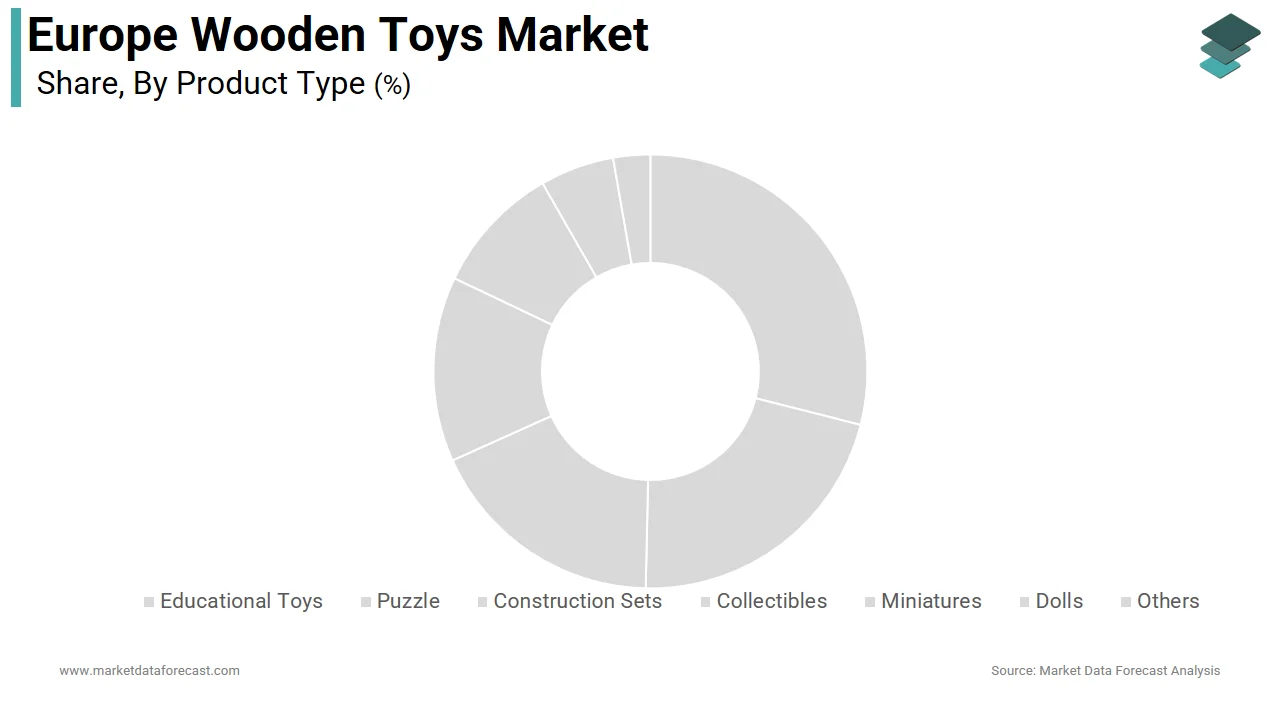
The educational toys segment led the Europe wooden toys market and occupied a 38.7% share in 2025. This prominence of the segment is attributed to the strong alignment of these products with early childhood development goals and the increasing prioritization of skill based learning over passive entertainment by European parents. A key force behind the supremacy of educational wooden toys is their seamless integration into formal and informal early childhood education curricula across Europe, which emphasize hands on learning and cognitive stimulation. Governments and educational institutions increasingly recognize the value of tactile tools in developing fine motor skills, spatial awareness, and logical reasoning in young children. These tools are preferred because they provide immediate sensory feedback without the distractions of lights or sounds, allowing children to focus deeply on the learning task. Furthermore, the durability of wood ensures these toys withstand rigorous classroom use, making them a cost effective investment for schools and daycares. The endorsement of such materials by child development experts reinforces parental confidence, driving households to replicate school environments at home. This symbiotic relationship between educational policy and consumer preference solidifies the market position of educational wooden toys as an essential component of early learning infrastructure. A further key factor sustaining the dominance of this segment is the growing societal movement among European parents to limit screen time and promote screen free play for young children to safeguard mental health and attention spans. As digital device usage among toddlers rises, there is a counter reaction where families actively seek analog alternatives that foster imagination and social interaction. Wooden educational toys are viewed as the ideal solution because they offer infinite play possibilities without batteries or interfaces, encouraging creativity and narrative building. Consequently, parents are willing to invest in high quality wooden sets that can grow with the child, offering long term value. The perception of wooden toys as "healthy" and "wholesome" creates a powerful emotional driver that transcends price sensitivity, ensuring that educational wooden toys remain the top choice for families dedicated to holistic child development in the digital age.
The construction sets segment is on the rise and is expected to be the fastest growing segment in the market by witnessing a CAGR of 7.2% during the forecast period due to the rising popularity of STEM (Science, Technology, Engineering, and Mathematics) education and the enduring appeal of open ended building systems that foster engineering mindsets from a young age. In addition, the accelerated growth of wooden construction sets is directly linked to the intensified focus on STEM education across European national agendas, which aim to cultivate future innovators and engineers by introducing foundational concepts in early childhood. Policymakers and educators are increasingly advocating for toys that teach structural integrity, balance, and geometric principles through play, and wooden building blocks are perfectly suited for this purpose. Unlike plastic bricks that often snap together rigidly, wooden sets rely on gravity and balance, offering a more intuitive understanding of physics and engineering challenges. Parents, aware of the competitive future job market, are proactively purchasing these sets to give their children a head start in developing critical thinking and engineering skills. The versatility of wooden construction sets, which allow for the creation of complex structures ranging from simple towers to intricate bridges, supports sustained interest and repeated play. This educational imperative transforms construction sets from mere toys into essential learning investments, driving their rapid adoption in both household and institutional settings across the continent. An additional driver for the fast paced growth of this segment is the increasing consumer demand for sustainable materials and aesthetically pleasing designs that complement modern home interiors. Modern European consumers, particularly millennials and Gen Z parents, prioritize eco friendly products that align with their environmental values while also looking good in living spaces. Wooden construction sets, often made from sustainably sourced beech or maple with natural finishes, fulfill both criteria effectively. The visual appeal of natural wood grain and the tactile warmth of the material make these sets attractive display pieces when not in use, encouraging parents to keep them accessible rather than stored away. Furthermore, the longevity of wooden construction sets allows them to be passed down through generations, enhancing their perceived value and sustainability credentials. Brands that highlight the carbon neutral nature of their wood sourcing and use non toxic plant based dyes are seeing accelerated sales growth. This convergence of environmental consciousness and interior design trends positions wooden construction sets as a lifestyle choice, expanding their market beyond traditional toy aisles into boutique and design focused retail channels, thereby fueling their exceptional growth rate.
By Wood Type Insights
The hardwood segment was the largest segment in the Europe wooden toys market and captured a 65.7% share in 2025. This supremacy of the segment is credited to the superior durability, density, and safety profile of hardwoods like beech, maple, and oak, which are essential for producing high quality, long lasting toys that withstand rigorous play. The main reason for the dominance of hardwood is its exceptional mechanical strength and resistance to wear and tear, which allows toys to maintain their structural integrity and aesthetic appeal over decades of use. Hardwoods possess a dense cellular structure that makes them highly resistant to denting, splintering, and cracking, qualities that are critical for safety and longevity in children's products. The density ensures that wooden blocks, cars, and puzzles can survive being dropped, thrown, and chewed on without compromising safety or function. The ability of hardwood toys to endure generations of use fosters a culture of heirloom ownership, where items are passed down within families, reinforcing the perception of value and quality. The preference for long term utility over short term disposability aligns perfectly with the characteristics of hardwood, making it the material of choice for manufacturers aiming to produce premium, safe, and enduring playthings that justify higher price points. Also supporting this segment is its capacity to be machined to an extremely smooth finish, minimizing the risk of splinters and ensuring a safe tactile experience for young children. The tight grain structure of hardwoods allows for precise cutting and polishing, resulting in surfaces that are gentle on sensitive skin and safe for mouthing, a common behavior in infants and toddlers. Manufacturers can apply non toxic, water based finishes that penetrate the dense wood fibers effectively, creating a protective barrier against moisture and bacteria without altering the natural feel. The inherent stability of hardwood also reduces the likelihood of warping or splitting due to humidity changes, maintaining safety standards over time. Consumer trust in hardwood is further bolstered by its historical reputation for safety in traditional European toy making, where centuries of craftsmanship have refined processing techniques. This strong correlation between material density and perceived safety ensures that hardwood remains the preferred option for regulatory compliance and consumer peace of mind, solidifying its dominant market position.
The softwood segment is expected to exhibit a noteworthy CAGR of 6.5% from 2026 to 2034 owing to increasing cost competitiveness, advancements in treatment technologies, and a growing niche for lightweight, large scale play structures made from sustainably managed pine and spruce. Moreover, the rapid growth of the softwood segment is primarily fueled by its significant cost advantage over hardwood, making wooden toys more accessible to a broader range of consumers and enabling mass market penetration. Softwoods like pine and spruce grow faster and are more abundant in European forests, resulting in lower raw material costs and more affordable final products. The economic efficiency allows manufacturers to produce larger items such as play kitchens, climbing frames, and ride on toys at price points that compete with mid range plastic alternatives. In an economic climate where inflation impacts household budgets, the availability of budget friendly wooden options is crucial for expanding the customer base. Furthermore, the lighter weight of softwood reduces shipping costs and carbon emissions associated with logistics, appealing to eco conscious brands looking to optimize their supply chains. By lowering the entry barrier for wooden toy ownership, softwood is democratizing access to natural playthings, driving its accelerated adoption across diverse socioeconomic groups in Europe. A key enabler of the softwood segment's rapid expansion is the development of advanced treatment and finishing technologies that mitigate the traditional weaknesses of softwood, such as susceptibility to dents and moisture. Modern industrial processes now allow for the thermal modification and resin impregnation of softwoods, significantly enhancing their hardness and durability to levels approaching those of hardwoods. Additionally, new nano coating technologies provide superior water resistance and antimicrobial properties, addressing hygiene concerns and extending the lifespan of softwood products in various environments. These innovations have shifted consumer perception, with parents increasingly recognizing treated softwood as a viable and safe alternative for everyday play. Manufacturers are leveraging these technical improvements to market softwood toys as "engineered for durability," combining affordability with performance. The ability to produce large, complex structures like playhouses and outdoor climbing sets from lightweight yet strengthened softwood opens new product categories that were previously cost prohibitive. This technological evolution is unlocking the potential of softwood, driving its fast growth as a versatile and reliable material in the modern wooden toy landscape.
By Age Group Insights
The age group of 1 to 3 years segment held the majority share of 33.2% of the Europe wooden toys market in 2025. This leading position of the segment is driven by the critical developmental milestones occurring during toddlerhood and the intense parental focus on safe, sensory rich playthings for this vulnerable demographic. The dominance of this segment is also due to the rapid cognitive and motor development that occurs during toddlerhood, creating an urgent demand for toys that support grasping, stacking, and sensory exploration. Children in this age group are transitioning from passive observation to active manipulation of their environment, requiring toys that are safe to mouth, easy to hold, and stimulating to the senses. Wooden toys, with their natural textures, varying weights, and warm temperatures, provide superior sensory feedback compared to cold, uniform plastics. Parents and caregivers actively seek out wooden rattles, stacking rings, and shape sorters that encourage fine motor skill development and hand eye coordination. The safety aspect is paramount, as wooden toys for this age are typically made from single pieces of solid wood with no small detachable parts, reducing choking hazards. This alignment with biological needs and safety requirements ensures that the 1 to 3 years segment remains the largest and most consistent revenue generator for the wooden toy industry. Further boosting this segment is the heightened level of parental vigilance and willingness to invest in premium quality products for infants and toddlers, who are perceived as most vulnerable to chemical and physical harms. Parents of children aged 1 to 3 are often first time buyers or are in a phase of intense protective instinct, leading them to choose materials they perceive as pure and non toxic. The market responds with high end wooden teething rings, push walkers, and bath toys that guarantee safety and durability. The gifting culture also plays a significant role, as friends and family often purchase high quality wooden sets for birthdays and holidays for children in this age bracket, viewing them as thoughtful and lasting gifts. The emotional connection parents feel to ensure the best start for their young children translates into robust sales volumes for wooden toys tailored to toddlers. This combination of safety anxiety, developmental focus, and gifting traditions creates a powerful demand engine that keeps the 1 to 3 years segment at the forefront of the market.
The above 6 years segment is predicted to witness the highest CAGR of 7.8% over the forecast period. This swift growth of the segment is supported by the rising complexity of play, the integration of wooden toys into advanced STEM learning, and a nostalgic resurgence of board games and strategy based wooden sets among older children and pre teens. The accelerated growth in the above 6 years category is also propelled by the increasing incorporation of wooden toys into advanced STEM education and strategy based learning activities that challenge older children's cognitive abilities. As children enter school age, their play evolves from simple manipulation to complex problem solving, rule based games, and engineering projects, areas where wooden toys excel. Wooden gears, pulleys, and architectural models allow children to experiment with mechanical principles in a hands on manner, fostering a deeper understanding of engineering concepts. Furthermore, the revival of classic wooden board games like chess, checkers, and Go is gaining traction as parents seek to reduce screen time and promote face to face social interaction and strategic thinking. These toys offer a level of sophistication and aesthetic appeal that resonates with older children who are developing more refined tastes. The alignment of wooden toys with academic goals and social development needs for this age group is driving rapid adoption, making it the fastest expanding segment in the market. A significant factor fueling the growth of this segment is the cultural shift toward "unplugging" and the nostalgia for traditional, non digital play experiences that foster social interaction and community among older children and pre teens. In response to concerns about social isolation and digital addiction, there is a growing movement among parents and educators to reintroduce classic wooden toys that encourage group play and communication. Wooden toys such as elaborate dollhouses, train sets, and collaborative building projects serve as focal points for social gathering and imaginative role play, offering an alternative to solitary video gaming. The aesthetic maturity of wooden toys also appeals to older children who may view plastic toys as childish, allowing them to engage in play that feels more sophisticated and respectful of their growing independence. This trend is supported by the design of modern wooden toys that feature sleek, contemporary styles fitting seamlessly into the bedrooms and playrooms of older kids. The combination of social benefits, aesthetic appeal, and the desire for meaningful interaction is driving a renaissance in wooden play for the above 6 years demographic, propelling its rapid market expansion.
COUNTRY LEVEL ANALYSIS
Germany Wooden Toys Market Analysis
Germany dominated the Europe wooden toys market and held a 25.7% share in 2025 because of a profound cultural heritage of craftsmanship, a robust manufacturing base, and a consumer base that deeply values quality, safety, and sustainability in children's products. The German market is characterized by the presence of iconic toy manufacturing regions like the Erzgebirge, which has produced wooden toys for centuries, fostering a strong domestic industry. German parents are among the most discerning in Europe, strictly adhering to safety standards and preferring toys made from locally sourced, FSC certified wood. The "Made in Germany" label carries significant weight, assuring consumers of non toxic finishes and superior durability. Furthermore, the widespread adoption of Waldorf and Montessori educational methods in German kindergartens creates a steady institutional demand for high quality wooden learning materials. Government subsidies for sustainable manufacturing and a strong network of specialized retailers further bolster the market. The convergence of tradition, rigorous quality control, and environmental consciousness makes Germany the primary engine of the European wooden toy sector, setting trends and standards for the rest of the continent.
France Wooden Toys Market Analysis
France followed closely behind in the regional market and occupied a share of 18.5% in 2025. This position of the French market is propelled by a strong appreciation for artisanal design, educational value, and a growing commitment to eco friendly consumption patterns among its population. The French market is also driven by a cultural emphasis on "l'art de vivre" which extends to children's play, favoring aesthetically pleasing and intellectually stimulating wooden toys over mass produced plastic items. The presence of numerous small scale artisan workshops across regions like the Jura Mountains contributes to a diverse and high quality supply chain that caters to niche and luxury segments. French parents are highly influenced by pediatric recommendations that advocate for simple, open ended toys to foster creativity, leading to strong demand for wooden blocks, puzzles, and role playing sets. The government's support for local craftsmanship and strict regulations on imported toy safety further protect and promote the domestic wooden toy industry. Additionally, the gifting culture in France, particularly during holidays and birthdays, favors premium wooden toys as cherished presents. The combination of artistic heritage, educational focus, and environmental awareness ensures France remains a pivotal and rapidly evolving market for wooden toys in Europe.
United Kingdom Wooden Toys Market Analysis
The United Kingdom maintains a major share of the regional market due to a dynamic blend of traditional toy manufacturing heritage and a modern, progressive consumer base that is increasingly vocal about plastic reduction and mental health benefits of analog play. The UK market is heavily influenced by the "Plastic Free" movement, with many parents actively seeking wooden alternatives to minimize environmental impact and exposure to synthetic materials. The presence of historic brands and a thriving sector of independent toy shops in cities like London and Edinburgh supports a diverse retail landscape. British consumers are also highly responsive to educational trends, with a strong uptake in wooden toys that support the Early Years Foundation Stage curriculum. The rise of subscription boxes and online direct to consumer brands specializing in curated wooden toy collections has further expanded market reach. Despite economic pressures, the willingness of UK parents to invest in high quality, durable toys that can be handed down remains strong. The convergence of environmental activism, educational priority, and a robust retail ecosystem drives the continued significance of the UK in the European wooden toy landscape.
Italy Wooden Toys Market Analysis
Italy expanded steadily in the European market owing to its world renowned design expertise, rich history of woodworking, and a cultural predisposition towards high quality, aesthetically driven children's products. The Italian market is unique in its fusion of traditional craftsmanship with modern design innovation, producing wooden toys that are often considered pieces of art. Italian parents place a high value on the visual appeal and tactile quality of toys, preferring items that complement their home decor and reflect a sense of style. The strong influence of the Catholic Church and family centered culture also promotes the tradition of gifting durable, meaningful toys that can be preserved as heirlooms. Regions like Trentino Alto Adige are hubs for high quality timber processing, ensuring a reliable supply of premium raw materials. The market is also buoyed by a growing awareness of the benefits of slow play and digital detoxification, aligning with the natural characteristics of wooden toys. The synergy of design excellence, material quality, and cultural values positions Italy as a key influencer and substantial market for premium wooden toys in Europe.
Sweden Wooden Toys Market Analysis
Sweden is predicted to grow notably in the European market from 2026 to 2034 due to its pioneering role in the global wooden toy industry, progressive educational policies, and an unwavering national commitment to sustainability and child welfare. As the birthplace of iconic wooden toy brands, Sweden has a deep seated cultural connection to wood as a primary material for play, reinforced by vast forest resources and a green economy. The Swedish preschool system, which is globally acclaimed, extensively utilizes wooden materials for play based learning, creating a massive institutional market. The concept of "friluftsliv" or open air life encourages the use of durable wooden toys that can withstand outdoor elements, expanding the application scope beyond indoor play. Swedish consumers are highly educated about the lifecycle of products and prefer toys that are biodegradable and sourced from responsible forestry. The government's support for green initiatives and the strong presence of cooperative retail models further facilitate the distribution of high quality wooden toys. This holistic alignment of culture, policy, and consumer values makes Sweden a critical and influential market that often sets the benchmark for the rest of Europe.
COMPETITIVE LANDSCAPE
The competition in the Europe wooden toys market is characterized by a diverse mix of historic artisanal manufacturers and large multinational corporations vying for dominance through quality and sustainability credentials. Traditional family owned businesses in Germany and France leverage centuries of craftsmanship and local heritage to maintain strong loyalty among consumers who value authenticity and durability. Conversely global giants utilize their extensive distribution networks and massive marketing budgets to introduce affordable wooden ranges that compete directly with specialized niche brands. The rivalry intensifies as companies strive to prove their environmental commitments through transparent supply chains and certified sustainable materials which have become critical differentiators. Price competition exists but is often secondary to perceived value regarding safety and educational merit. Innovation in design particularly the fusion of digital interactivity with physical wooden components has emerged as a new battleground for capturing the attention of modern families. This dynamic environment forces all participants to continuously elevate their standards in material sourcing product safety and aesthetic appeal to retain market share.
KEY MARKET PLAYERS
The leading companies operating in the Europe wooden toys market include:
- Hasbro Inc.
- Westwork Designs
- Wood-Expressions
- ABAfactory
- Djeco
- LEGO Group
- The Wooden Wagon Inc.
- Melissa & Doug
- Roy Toy Manufacturing
- Bajo
- Hape International
- Bella Luna Toys
TOP PLAYERS IN THE MARKET
Hape International stands as a global leader in sustainable wooden toy manufacturing with its European headquarters in Germany driving significant innovation across the continent. The company contributes extensively to the global market by pioneering the use of eco friendly materials such as bamboo and FSC certified wood while maintaining rigorous safety standards that exceed international requirements. Recently Hape has strengthened its market position by launching comprehensive digital campaigns that highlight the educational benefits of their STEM focused wooden construction sets for modern families. They have also expanded their production facilities in Europe to reduce carbon emissions associated with logistics and ensure faster delivery to regional retailers. Their commitment to plastic free packaging and the development of new product lines that blend traditional craftsmanship with contemporary design aesthetics has resonated strongly with environmentally conscious European consumers. Hape continues to reinforce its reputation as a pioneer in safe and sustainable play solutions worldwide. They achieve this by actively participating in major industry trade shows and forging strategic partnerships with educational institutions.
Although primarily known for plastic bricks the LEGO Group maintains a influential presence in the Europe wooden toys market through its dedicated range of sustainable wooden products and its massive global distribution network. The company contributes to the global landscape by leveraging its brand trust to introduce high quality wooden DUPLO compatible sets and classic wooden train systems that appeal to generations of fans. Recent actions to strengthen their position include a substantial investment in sourcing wood from responsibly managed forests and the introduction of bio based finishes that eliminate harmful chemicals from their wooden product lines. LEGO has also integrated their wooden toys into broader sustainability initiatives aiming to make all core products from sustainable materials by 2030. They have launched interactive digital experiences that complement their physical wooden sets encouraging hybrid play patterns that engage tech savvy children. LEGO utilizes its unparalleled retail footprint and marketing power to effectively promote wooden alternatives to plastic. This ensures these products remain visible and desirable in a competitive European marketplace focused on environmental responsibility
Djeco is a renowned French manufacturer celebrated for its artistic approach to wooden toys and puzzles making it a key player in the European market with a strong global footprint. The company distinguishes itself by collaborating with independent artists to create visually stunning wooden games and puzzles that serve as both educational tools and decorative objects. Their contribution to the global market involves exporting these unique designs to over eighty countries setting trends in aesthetic driven toy manufacturing. Recently Djeco has strengthened its market position by expanding its eco responsible production methods including the use of recycled cardboard for packaging and water based inks for all wooden components. They have launched new collections focused on mindfulness and emotional development using wooden figures and story telling sets that resonate with modern parenting trends. The company has also enhanced its digital presence through virtual workshops and online communities that engage parents and educators in creative play activities. By consistently blending artistry with sustainability Djeco maintains a loyal customer base and solidifies its status as a leader in the premium wooden toy sector across Europe and beyond.
TOP STRATEGIES USED BY KEY MARKET PARTICIPANTS
Key players in the Europe wooden toys market primarily focus on sustainability certification and eco friendly sourcing to align with stringent European environmental regulations and consumer values. Companies actively pursue Forest Stewardship Council certification to guarantee responsible forestry practices and enhance brand credibility among green conscious buyers. Another major strategy involves product innovation through the integration of STEM learning elements into traditional wooden designs to appeal to education focused parents seeking developmental benefits. Manufacturers are increasingly adopting direct to consumer sales channels via e commerce platforms to bypass retail intermediaries and build stronger relationships with end users. Strategic collaborations with influencers and parenting bloggers help amplify brand messages regarding the safety and tactile benefits of wood over plastic. Furthermore, leading firms invest in advanced manufacturing technologies to improve precision and reduce waste during production processes. These combined approaches allow market participants to differentiate their offerings and capture growing demand for high quality sustainable playthings.
MARKET SEGMENTATION
This research report on the Europe wooden toys market has been segmented and sub-segmented into the following categories.
By Product Type
- Educational Toys
- Puzzle
- Construction Sets
- Collectibles
- Miniatures
- Dolls
- Others
By Wood Type
- Softwood
- Hardwood
By Age Group
- Below 1 year
- Between 1–3 years
- Between 4–5 years
- Above 6 years
By Country
- United Kingdom
- France
- Spain
- Germany
- Italy
- Russia
- Sweden
- Denmark
- Switzerland
- Netherlands
- Rest of Europe