- Product Description Description
- Table of Contents TOC
- List of Table & Figure LOT
- Get Free Sample PDF Sample PDF
Market Size, 2025
$1.83 BnMarket Estimate, 2026
$1.92 BnMarket Forecast, 2034
$2.78 BnCAGR, 2026–2034
4.73%Europe Zinc Oxide Market Summary
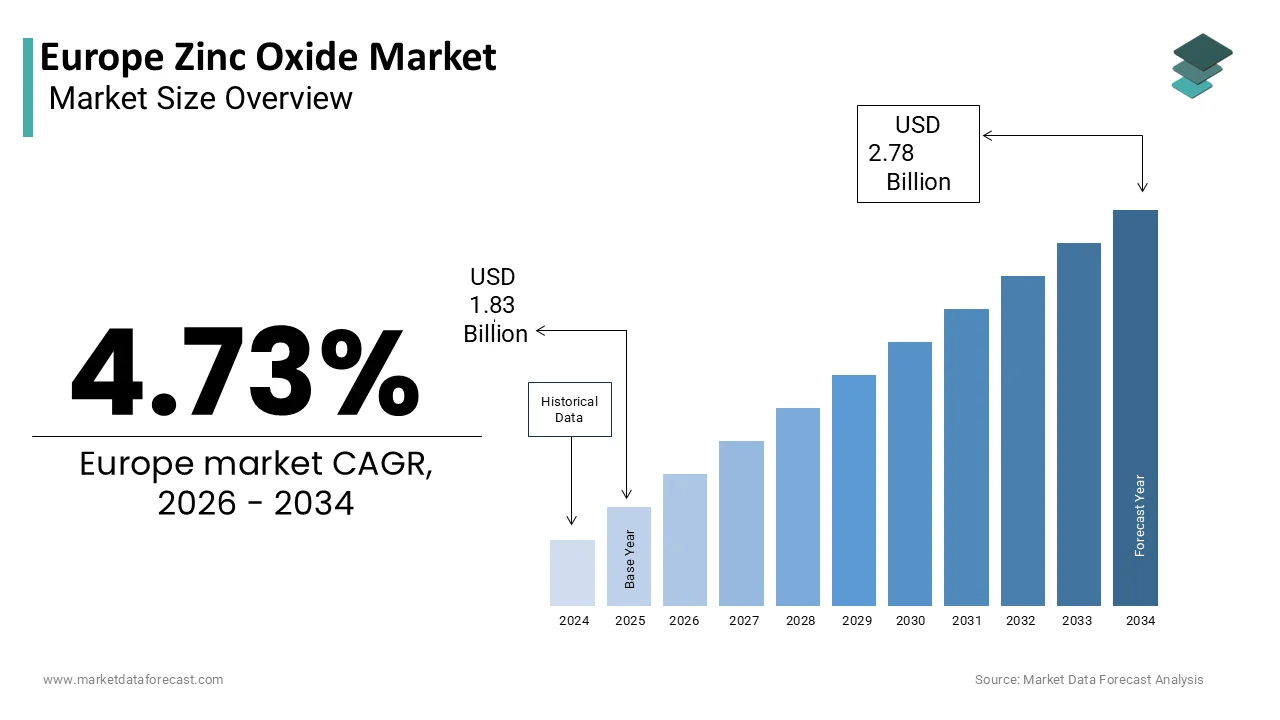
The Europe zinc oxide market was valued at USD 1.83 billion in 2025 and is projected to reach USD 2.78 billion by 2034, growing at a CAGR of 4.73% from 2026 to 2034, driven by sustained tire manufacturing demand, regulatory approval in dermal applications, and expansion into antimicrobial and specialty functional materials.
Market Snapshot
- 2025 Market Size: USD 1.83 Billion
- 2026 Market Size: USD 1.92 Billion
- 2034 Forecast: USD 2.78 Billion
- CAGR (2026–2034): 4.73%
- Base Year: 2025
- Forecast Period: 2026–2034
Quick Growth Drivers
- Persistent demand from tire and automotive rubber manufacturing
- Regulatory endorsement for pharmaceutical and sunscreen applications
- Growth in mineral-based personal care formulations
- Rising adoption in antimicrobial coatings and healthcare infrastructure
- Expansion of circular economy-driven wet chemical recovery processes
Principal Restraints
- Environmental scrutiny of zinc emissions from tire wear
- REACH regulatory pressure on nano zinc oxide forms
- Limited domestic zinc production and import dependency
- Rising carbon costs under EU climate policies
High-Value Opportunities
- Development of low-dosage, high-surface-area zinc oxide for sustainable tires
- Functionalized and nano-structured grades for antimicrobial applications
- Wet-process zinc oxide derived from recycled batteries and industrial residues
- Expansion in mineral sunscreen demand amid restrictions on chemical UV filters
- Circular economy-compliant production aligned with EU Green Deal objectives
Key Market Challenges
- Scientific ambiguity around nano zinc oxide safety
- High energy intensity of indirect (French) production process
- Potential inclusion under EU Emissions Trading System
- Cost volatility linked to global zinc concentrate supply chains
- Regulatory fragmentation in cosmetic nano-labeling enforcement
Fastest-Growing Segments
- Wet Chemical Process – fastest CAGR of 9.3% driven by circular economy alignment
- Pharmaceuticals & Cosmetics Application – fastest CAGR of 8.7% due to mineral UV filter demand
- Antimicrobial & Healthcare Coatings (Emerging) – rapid expansion in post-pandemic infrastructure upgrades
Regional Leadership & Dynamics
- Germany (22.4%) – largest market supported by integrated chemical and tire manufacturing ecosystem
- France – strong cosmetics and pharmaceutical consumption with progressive nano oversight
- Italy – diversified SME-driven rubber, ceramics, and agriculture demand base
- Netherlands – logistics and refining hub anchored by Rotterdam and Chemelot clusters
- Sweden – leader in recycled zinc oxide and green hydrometallurgical routes
What Wins Commercially
- High-purity indirect-process zinc oxide for pharma and premium tire use
- Surface-modified grades enabling dosage reduction
- Circular and recycled zinc oxide aligned with EU sustainability targets
- Strong REACH compliance and nano-grade documentation
- Strategic partnerships with tire and dermal product manufacturers
Top Strategic Ask for Executives
Accelerate investment in low-emission production technologies and recycled zinc oxide recovery while co-developing sustainable tire and dermal formulations to balance regulatory compliance with functional indispensability in Europe’s performance-critical sectors.
Leading Players
Some of the companies that are playing a dominating role in the Europe zinc oxide market include
Umicore,
Solvay,
Brenntag,
EverZinc,
Nabaltec AG,
Dowa Holdings,
Aditya Birla Group,
Zinc Nacional,
Zochem,
and Korea Zinc.
Europe Zinc Oxide Market Size
The Europe zinc oxide market was valued at USD 1.83 billion in 2025, is estimated to reach USD 1.92 billion in 2026, and is projected to reach USD 2.78 billion by 2034, growing at a CAGR of 4.73% from 2026 to 2034.
The zinc oxide is an inorganic compound widely utilized across multiple industrial and consumer sectors in Europe due to its multifunctional properties, including UV absorption, antimicrobial activity,y and catalytic efficiency. In the European context, zinc oxide serves as an additive in rubber manufacturing, pharmaceuticals cosmetics a, cosmetics, agrochemicals, and advanced materials, such as varistors and sensors. According to Eurostat, over 175 million passenger cars were registered in the European Union in 2025, reflecting sustained demand for replacement tires and original equipment. As per the European Chemicals Agency, zinc oxide is classified under REACH regulations with specific handling protocols for nano forms, yet remains approved for use in medical and dermal applications under strict concentration limits. The European Rubber Manufacturers Association noted that more than 90% of European tire plants continue to rely on zinc oxide despite ongoing reformulation efforts driven by environmental concerns. This duality between regulatory scrutiny and functional indispensability defines the current trajectory of theEuropeane zinc oxide market.
Market Drivers
Persistent Demand from the Tire and Automotive Rubber Sector
The growing prominence of demand from the tire and automotive industries is the primary factor escalating the growth of Europe zinc oxide market. Zinc oxide functions as an essential activator in the sulfur-based vulcanization process, which enhances the durability, elasticity, and heat resistance of rubber compounds. According to the European Tyre and Rubber Manufacturers Association, approximately 320 million tires were produced in the EU in 2023, with each passenger car tire requiring between 2 and 3 kilograms of zinc oxide on average. Despite growing pressure to reduce zinc emissions from tire wear, the industry has not yet identified a commercially viable substitute that matches zinc oxide’s performance across all parameters. Germany alone hosts six of the world’s top ten tire manufacturing facilities, including those operated by Continental and Michelin, which collectively consume over 45000 metric tons of zinc oxide annually, as per national industrial consumption data. Regulatory bodies such as the German Environment Agency acknowledge that while zinc runoff from roads contributes to aquatic toxicity,y complete elimination remains technically unfeasible without compromising tire safety. Consequently, manufacturers are investing in high surface area, ea low dosage zinc oxide grades that maintain performance, while reducing environmental load with a strategy that sustains baseline demand even amid sustainability mandates.
Regulatory Endorsement in Medical and Dermatological Applications
Zinc oxide continues to enjoy strong regulatory acceptance in Europe for use in over-the-counter dermatological and pediatric formulations due to its non-irritant and protective properties. The regulatory endorsement in medical and dermatological applications is additionally elevating the growth of Europe zinc oxide market. The European Medicines Agency classifies zinc oxide as a Category A excipient, meaning it is generally recognized as safe for topical use in concentrations up to 25%. As per the European Commission’s CosIng database,se zinc oxide is permitted in sunscreens as a UV filter at concentrations up to 25% and is one of only two mineral filters alongside titanium dioxide approved under the EU Cosmetic Regulation. In 2023, the French National Agency for Medicines and Health Products Safety reported that over 1200 dermal products containing zinc oxide were authorized for sale, including diaper rash cream,s, wound healing ointments and barrier lotions. Demand is further amplified by rising consumer preference for mineral-based sun protection amid concerns about chemical UV filters such as oxybenzone, which have been restricted in several EU countries. Spain’s AgenciaEspañolaa de Medicamentos y Productos Sanitarios noted a 28% year on year increase in registrations of zinc oxide-based sun care products between 2022 and 2023. This regulatory stability, combined with public health recommendations, ensures consistent pharmaceutical and cosmetic demand unaffected by volatility in industrial sectors.
MARKET RESTRAINTS
Environmental Regulations Targeting Zinc Emissions from Tire Wear
The tightening environmental policies aimed at reducing zinc discharge into aquatic ecosystems, ms primarily through tire abrasion is hampering the growth of Europe zinc oxide market. According to the European Environment Agency, road transport accounts for approximately 40% of anthropogenic zinc emissions in urban waterways, with tire wear being the dominant source. In 2023, the European Chemicals Agency proposed classifying zinc oxide as a substance of very great concern under REACH due to its persistent and toxic effects on freshwater organisms,s particularly in nano form. Althoughthe proposal was deferred pending further data, it has accelerated industry efforts to develop low zinc or zinc-free rubber formulations. The Swedish Environmental Research Institute found that zinc concentrations in stormwater runoff near major highways exceeded EU water quality standards by up to threefold in 2022.
Supply Chain Vulnerability Due to Limited Domestic Zinc Production
The reliance on imported zinc feedstock creates structural vulnerability for the continent’s minimal primary zinc mining capacity, which is additionally restraining the growth of Europe zinc oxide market. According to the International Lead and Zinc Study Group, Europe produces less than 8% of global refined zinc, with the majority sourced from Australia, Peru, and Kazakhstan. The European Commission’s 2023 Raw Materials list includes zinc, as a strategically important but non-essential material, yet acknowledges supply concentration risks. In 2022, the closure of the Budel smelter in the Netherlands was the last primary zinc refinery in Western Europe, which eliminated a key domestic source of high-purity zinc metal used in specialty oxide production. Geopolitical instability in key supplier regions such as Central Asia and trade policy shifts, including potential carbon border adjustments under the EU CBAM, further threaten input cost stability. Producers of high-grade pharmaceutical or electronic-grade zinc oxide are especially exposed as they require consistent purity levels that may be disrupted by volatile sourcing conditions, thereby constraining downstream innovation and pricing predictability.
MARKET OPPORTUNITIES
Development of Low Zinc and Functionalized Zinc Oxide Grades for Sustainable Tires
The pioneering next-generation formulations that reduce overall zinc content while enhancing functional performance are greatly influencing new opportunities for the growth of Europe zinc oxide market. Companies are engineering surface-modified and high surface area zinc oxide particles that achieve equivalent vulcanization activation at 30 to 50% lower dosages. This innovation aligns with the European Green Deal’s circular economy action plan, which encourages eco-design in mobility products. Major tire makers, including Bridgestone Europe and Goodyear Dunl, op have partnered with chemical suppliers, such as Umicore and Grillo Werke, to co-develop these optimized oxides. These developments not only mitigate regulatory risk but also create premium product segments with higher margins, transforming compliance pressure into a catalyst for technological dominance and export potential beyond Europe.
Expansion into Antimicrobial Coatings and Healthcare Infrastructure
The proven biocidal efficacy is a strategic opportunity in post pandemic healthcare and public hygiene applications, which is additionally escalating the growth of Europe zinc oxide market. Zinc oxide nanoparticles disrupt microbial cell membranes and inhibit viral replication, making them suitable for high-touch surface coatings in hospitals, schools, ls and public transport. According to the European Centre for Disease Prevention and Control, copper-zinc-based antimicrobial surfaces reduced healthcare-associated infection rates by up to 35% in clinical trials conducted across five EU member states in 2023. The Italian National Institute of Health mandated the use of antimicrobial wall and door finishes in all newly constructed public hospitals starting in 2025,with zinc oxide-based paints among the approved options. Similarly, the Dutch Ministry of Health launched a pilot program in Amsterdam, integrating zinoxide-infused polymers into handrails and elevator buttons in metro stations. With the EU allocating 3.2 billion euros under the HERA Incubator program to strengthen pathogen preparedness infrastructure, demand for passive antimicrobial materials is projected to grow significantly, ly offering zinc oxide producers high-value non-industrial growth vector aligned with public health resilience goals.
MARKET CHALLENGES
Scientific and Public Ambiguity Around Nano Zinc Oxide Safety
The safety profile of nano-sized zinc oxide remains contested within European scientific and regulatory communities, creating uncertainty for product developers, which is a challenge for the European zinc oxide market players. The European Food Safety Authority concluded in 2022 that nano zinc oxide should no longer be used as a food additive due to genotoxicity concerns, although this ruling does not apply to topical applications. However, divergent interpretations persist across agencies. While the European Chemicals Agency permits nano zinc oxide in cosmetics under strict particle size and coating requirements, the French Agency for Food, Environmental, and Occupational Health suspended several sunscreen authorizations in 2023 pending additional inhalation risk assessments. As per the Joint Research Centre of the European Commission, many nano zinc oxide studies published between 2020 and 2025reported conflicting outcomes on ecotoxicity depending on dispersion method and environmental matrix. This scientific ambiguity complicates formulation strategies for manufacturers who must navigate inconsistent national enforcement and shifting consumer perceptions. Brands increasingly avoid labeling products as “nano” even when compliant, leading to underreporting and market fragmentation.
Energy Intensity and Carbon Footprint of Conventional Production Methods
The traditional indirect or French process for producing high-purity zinc oxide is highly energy-intensive, requiring zinc metal vaporization at temperatures exceeding 1000 degrees Celsius, typically powered by natural gas. According to the European Environment Agency, this method emits approximately 2.8 metric tons of carbon dioxide per metric ton of zinc oxide produced,d placing it under scrutiny under the EU’s Fit for 55 climate package. As per the European Zinc Association, only European zinc oxide capacity currently utilizes renewable energy or waste heat recovery systems. The impending inclusion of zinc compounds under the EU Emissions Trading System could increase production costs by 15 to 22% by 2,,027 based on current carbon price trajectories. While alternative methods, such as the wet chemical or direct process, do offer lower emissions, they struggle to achieve the purity required for pharmaceutical or electronics applications. Pilot projects by companies like Silberline in Belgium aim to electrify zinc oxide reactors using green hydrogen but face scalability hurdles.
REPORT COVERAGE
| REPORT METRIC | DETAILS |
| Market Size Available | 2025 to 2034 |
| Base Year | 2025 |
| Forecast Period | 2026 to 2034 |
| Segments Covered | By Process, Application, and Region. |
| Various Analyses Covered | Global, Regional, and Country-Level Analysis, Segment-Level Analysis, Drivers, Restraints, Opportunities, Challenges; PESTLE Analysis; Porter’s Five Forces Analysis, Competitive Landscape, Analyst Overview of Investment Opportunities |
| Countries Covered | UK, France, Spain, Germany, Italy, Russia, Sweden, Denmark, Switzerland, Netherlands, Turkey, Czech Republic, Rest of Europe |
| Market Leaders Profiled | Brenntag AG, Umicore S.A., Solvay S.A., Nabaltec AG, EverZinc (Nyrstar/Trafigura), KCM SA (Korea Zinc Company), Zochem LLC, Mayer & Cie. GmbH & Co. KG, Aditya Birla Group (ZincOx International), Dowa Metals & Mining Co., Ltd., TSPC (Titanium & Specialties Production Company), Zinc Nacional S.A., Xiamen Hongcheng New Materials Co., Ltd., Shandong Yuanliang Chemical Co., Ltd., Huludao Huasheng Zinc-&-Oxide Co., Ltd., Shanxi Wenhua Group Co., Ltd., Kool Chem Technologies LLP, Metalic LLP, Alpha Chemicals Company |
SEGMENTAL ANALYSIS
By Process Insights
The indirect or French process segment was the largest by accounting for 54.2% of Europe's zinc oxide market share in 2025 due to its ability to yield high-purity material exceeding 99.5% ZnO, essential for pharmaceutical, cosmetic, and specialty rubber applications. This method involves vaporizing refined zinc metal in graphite crucibles followed by controlled oxidation, resulting in fine particles with consistent morphology. According to the European Zinc Association, over 90% of zinc oxide used in EU-authorized dermatological products is produced via the indirect process owing to stringent pharmacopeial standards set by the European Directorate for the Quality of Medicines. Germany’s Federal Institute for Drugs and Medical Devices requires all topical zinc oxide to meet Ph Eur monograph specifications, which are reliably achieved only through this route. Additionally, major tire manufacturers such as Continental and Michelin specify indirect process zinc oxide in their premium tire formulations to ensure uniform vulcanization kinetics. The European Chemical Industry Council notes that,t despite higher energy consumption, this process remains irreplaceable for high-value applications where impurity thresholds for lead, cadmium, and iron must remain below 10 parts per million with a benchmark unattainable via direct methods.
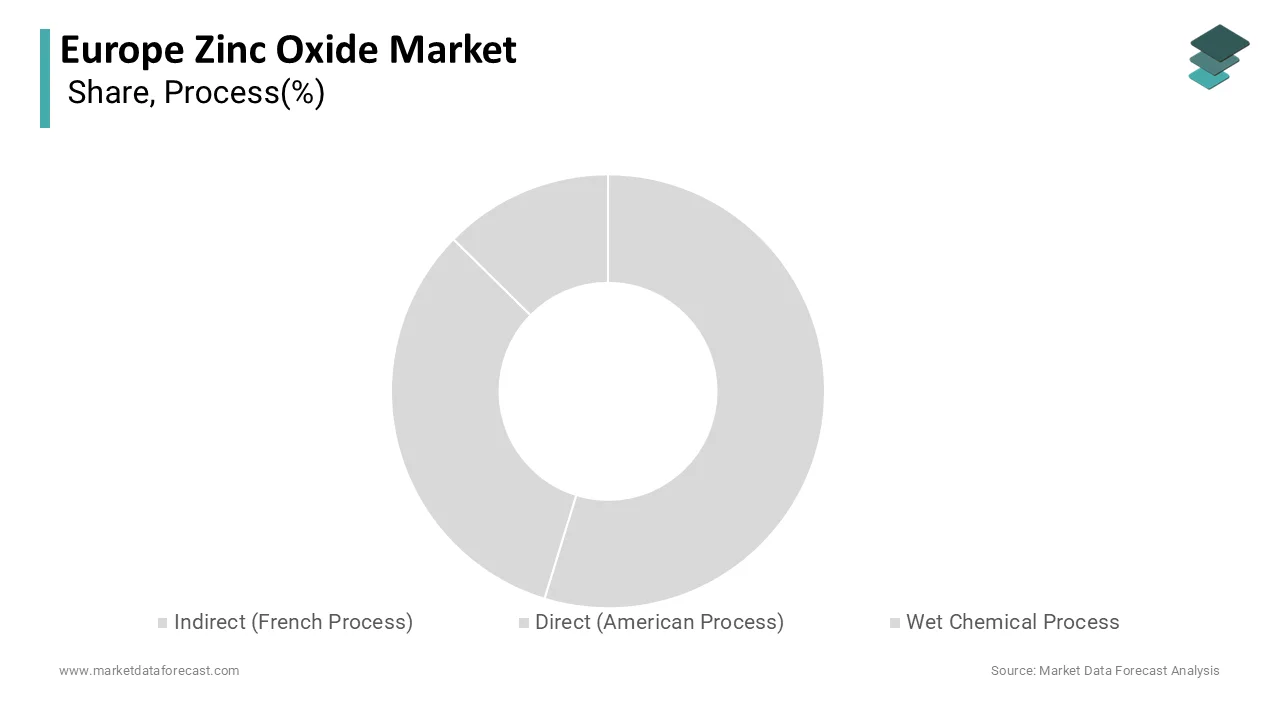
The wet chemical process segment is more likely to witness the fastest CAGR of 9.3% during the forecast period, with its compatibility with circular economy principles, es as it enables recovery of zinc from industrial waste streams such as electric arc furnace dust and spent batteries. The process yields ultrafine and doped zinc oxide suitable for advanced applications,ons including UV filters with enhanced transparency and antimicrobial coatings with controlled ion release. The European Battery Alliance has endorsed wet chemical recycling as a core component of its 2030 battery sustainability roadmap, targeting 70% material recovery fromend-of-life lithium-ionn units. Furthermore, the German Environment Agency certified wet-derived zinc oxide for use in organic agriculture in 2025, provided heavy metal content remains below regulatory limits. These dual advantages, resource efficiency and functional tunability,y are driving adoption among specialty chemical producers seeking to align with EU Green Deal objectives while accessing premium markets.
By Application Insights
The rubber and tires segments accounted for a dominant share of the European zinc oxide market in 2025, with its irreplaceable role in sulfur vulcanization. Each metric ton of tire rubber requires 3 to 5 kilograms of zinc oxide to activate cross-linking reactions that impart elasticity, heat resistance, and durability. According to the European Tyre and Rubber Manufacturers Association, the EU produced 325 million tires in 2023, including 210 million passenger car units, each containing an average of 2.4 kilograms of zinc oxide. Germanyalone hosts six global tire plants operated by Bridgestone, Continental, and Goodyear, consuming over 48000 metric tons annually, as per national industrial statistics. The industry has not identified a technically viable substitute that matches zinc oxide’s catalytic efficiency across diverse rubber compounds. The European Chemicals Agency acknowledges that while zinc runoff from tire wear contributes to aquatic toxicity,y complete elimination would compromise vehicle safety standards mandated under UNECE Regulation 117. Consequently, manufacturers are optimizing rather than eliminating usage through high surface area grades that maintain performance at reduced dosages, thereby sustaining baseline demand even amid regulatory headwinds.
The pharmaceuticals and cosmetics application segment is deemed to register the fastest CAGR of 8.7% during the forecast period, with the rising consumer preference for mineral-based personal care products and regulatory endorsement of zinc oxide as a safe dermal agent. As per the European Commission’s CosIng database, zinc oxide is one of only two inorganic UV filters permitted in sunscreens at concentrations up to 25,% with no requirement for nano labeling if particle size exceeds 100 nanometers. In 2023, France’s National Agency for Medicines and Health Products Safety authorized 310 new dermal formulations containing zinc oxide, including barrier cream,s wound healing gels, ls and pediatric ointments. Spain’s Agencia Española de Medicamentos reported a 33% increase in sunscreen product registrations featuring nano zinc oxide between 2022 and 2023 r,e reflectinggrowing avoidance of chemical filters like octinoxate,e banned in several Mediterranean regions. Additionally, the European Medicines Agency classifies zinc oxide as a Category A excipient, ensuring seamless approval pathways.
COUNTRY LEVEL ANALYSIS
Germany Zinc Oxide Market Analysis
Germany was the top performer of the European zinc oxide market by holding 22.4% of the share in 2025, with its integrated chemical industry, robust automotive sector, and stringent quality standards. The country hosts leading producers, such as Grillo Werke and Chemische Fabrik Budenheim, which supply high-purity zinc oxide to both domestic and pan-European customers. According to the German Federal Statistical Office, the nation manufactured 4.8 million metric tons of rubber products in 2023, with tire production alone consuming over 50000 metric tons of zinc oxide. The Federal Institute for Risk Assessment mandates that all pharmaceutical-grade zinc oxide comply with European Pharmacopoeia monographs requiring trace metal levels below 5 parts per million, where a standard achievable only through the indirect process.
France Zinc Oxide Market Analysis
France's zinc oxide market growth is driven by its strong pharmaceutical and cosmetics sector, coupled with progressive environmental regulations. As per the French Ministry of Ecological Transition, zinc oxide is exempt from the national ban on nano plastic additives in rinse-off cosmetics due to its biodegradability and low bioaccumulation potential. Moreover, France’s National Research Agency allocated 15 million euros in 2025to develop bio-based zinc oxide composites for medical dressings, leveraging the compound’s antimicrobial properties.
Italy Zinc Oxide Market Analysis
Italy's zinc oxide market growth is expected to have significant growth opportunities in the coming years he dense network of small and medium enterprises in rubber, ceramics, and pharmaceuticals. The Italian Rubber Association reported that over 1200 SMEs utilize zinc oxide in technical rubber goods, ranging from seals to conveyor belts, consuming nearly 14000 metric tons in 2023. Italy is also a major producer of ceramic tiles, accounting for 28% of EU output according to Confindustria Ceramica, with zinc oxide used as a flux to lower sintering temperatures and enhance glaze brilliance. The Ministry of Health maintains a positive list of approved excipients for over-the-counter medicines, which includes zinc oxide in concentrations up to 40% for dermatological use. In 2025, the Italian National Institute of Health launched a pilot program to incorporate zinc oxide into hospital surface coatings to reduce nosocomial infections. Additionally, southern regions such as Sicily are exploring zinc oxide-enriched fertilizers to combat zinc-deficient soils affecting olive and citrus yields. This diversified application base insulates Italy from sector-specific downturns and sustains steady demand.
Netherlands Zinc Oxide Market Analysis
The Netherlands zinc oxide market growth is likely to grow with its role as a logistics and chemical processing hub with strategic access to North Sea ports. The Port of Rotterdam handles over 12 million metric tons of zinc concentrates annually, as the primary feedstock entry point for European zinc oxide producers. Companies like Umicore operate advanced refining and oxide production facilities in the Chemelot industrial cluster utilizing imported zinc to manufacture high purity grades for electronics and catalysts. The Dutch National Institute for Public Health and the Environment permits zinc oxide in sunscreens and diaper creams under strict particle size controls aligned with EU Cosmetic Regulation. In 2023, the Netherlands Environmental Assessment Agency approved a circular pilot converting steelmaking dust from Tata Steel into agricultural grade zinc oxide reducing landfill dependency.
Sweden Zinc Oxide Market Analysis
Sweden's zinc oxide market growth is driven by sustainable metallurgy and green technology adoption. The Swedish Environmental Protection Agency classifies zinc oxide derived from recycled sources as a priority material under the National Resource Strategy,m aimingor 50% secondary content in industrial chemicals by 2030. Boliden’s Ronnskar smelter produces over 8000 metric tons of high-purity zinc oxide annually using hydrometallurgical routes with 90% renewable energy. The Royal Institute of Technology in Stockholm developed a novel sol-gel method in 2025, yielding doped zinc oxide nanoparticles for antimicrobial textiles now being scaled by Swedish textile innovators.
COMPETITIVE LANDSCAPE
The European zinc oxide market features a moderately concentrated competitive landscape dominated by established chemical producers with integrated capabilities and stringent quality controls. Competition is primarily based on product purity, application-specific performance, and adherence to evolving environmental and health regulations rather than price alone. Large players leverage decades of metallurgical expertise to serve demanding sectors such as pharmaceuticals and premium tire manufacturing, where consistency and traceability are non-negotiable. At the same time, niche suppliers focusing on recycled or specialty grades are gaining traction by aligning with circular economy mandates and green procurement policies. Regulatory complexity acts as a significant barrier to entry, particularly under REACH and pharmacopeial frameworks requiring extensive documentation and testing. Innovation in low zinc formulations and alternative production routes is intensifying as companies seek to balance performance with sustainability. Customer relationships are long term and technically embedded, making switching costs high and reinforcing loyalty among key industrial users across rubber cocosmeticsand agriculture segments.
KEY MARKET PLAYERS
Some of the companies that are playing a dominating role in the global Europe Zinc Oxide Market include
- Brenntag AG
- Umicore S.A.
- Solvay S.A.
- Nabaltec AG
- EverZinc (Nyrstar/Trafigura)
- KCM SA (Korea Zinc Company)
- Zochem LLC
- Mayer & Cie. GmbH & Co. KG
- Aditya Birla Group (ZincOx International)
- Dowa Metals & Mining Co., Ltd.
- TSPC (Titanium & Specialties Production Company)
- Zinc Nacional S.A.
- Xiamen Hongcheng New Materials Co., Ltd.
- Shandong Yuanliang Chemical Co., Ltd.
- Huludao Huasheng Zinc-&-Oxide Co., Ltd.
- Shanxi Wenhua Group Co., Ltd.
- Kool Chem Technologies LLP
- Metalic LLP
- Alpha Chemicals Company
TOP LEADING PLAYERS IN THE MARKET
- Grillo Werke AG is a leading German producer of specialty zinc chemicals with a strong footprint in high-purity zinc oxide for rubber, pharmaceutical,l and agricultural applications. The company operates integrated production facilities in Duisburg and supplies both European and global markets with indirect process zinc oxide meeting stringent pharmacopeial and industrial standards. The company also partnered with Continental AG in 2025to co-develop low-dosage zinc oxide grades that maintain vulcanization efficiency while minimizing environmental impact, aligning with EU tire regulations.
- Umicore SA, headquartered in Belgium, is a global materials technology group with significant capabilities in zinc oxide production derived from recycled sources. The company leverages its expertise in metal refining to produce high-performance zinc oxide for catalysts, electronics, and specialty rubber applications across Europe. Umicore has prioritized circular economy integration by recovering zinc from end-of-life batteries and industrial residues at its Hoboken facility. The company inaugurated a new pilot plant dedicated to producing nanostructured zinc oxide for antimicrobial coatings under the EU Horizon Europe program, reinforcing its commitment to advanced functional materials and sustainable chemistry.
- Chemische Fabrik Budenheim KG is a German specialty chemicals manufacturer renowned for its pharmaceutical and feed-grade zinc oxide produced via the indirect French process. The company serves global markets with products compliant with European Pharmacopoeia, USP, and other international standards, ensuring consistent quality for sensitive applications. Budenheim has strengthened its position through vertical integration, securing high-purity zinc feedstock and investing in emission control technologies. The company expanded its R&D collaboration with the University of Mainz to develop surface-modified zinc oxide for next-generation sunscreens that enhance UV scattering, while eliminating whitening effects, thereby addressing key consumer preferences in dermal care.
TOP STRATEGIES USED BY THE KEY MARKET PARTICIPANTS
Key players in theEuropeane zinc oxide market pursue strategies centered on product differentiation, regulatory compliancee and sustainability innovation. Companies are investing in advanced production techniques such as surface modification annano-structuringng to enhance functionality in high-value applications like antimicrobial coatings and transparent sunscreens. Vertical integration with secure zinc feedstock sources ensures supply stability amid geopolitical volatility. Leading firms actively collaborate with downstream industries,,n g tiremanufacturers and pharmaceutical dedevelopersto coco-engineertimized formulations that meet evolving environmental standards. Emphasis on circular economy models is evident through initiatives to recover zinc from industrial waste and end-of-life products using hydrometallurgical and wet chemical processes. Additionally, companies are upgrading emission control systems and transitioning to renewable energy to align with EU climate policies and avoid future carbon costs. These strategies collectively reinforce technical leadership while mitigating regulatory and reputational risks.
MARKET SEGMENTATION
This research report on the europe zinc oxide market is segmented and sub-segmented into the following categories.
By Process
- Indirect (French Process)
- Direct (American Process)
- Wet Chemical Process
By Application
- Rubber & Tires
- Pharmaceuticals & Cosmetics
- Ceramics
- Chemicals
- Agriculture
- Others
By Country
- Germany
- France
- Italy
- Netherlands
- Sweden
- Rest of Europe