- Product Description Description
- Table of Contents TOC
- List of Table & Figure LOT
- Get Free Sample PDF Sample PDF
Market Size, 2025
$463.48 BnMarket Estimate, 2026
$489.4 BnMarket Forecast, 2034
$756.8 BnCAGR, 2026–2034
5.6%Global Food Packaging Market Size
The size of the global food packaging market was worth USD 463.48 billion in 2025. The global market is anticipated to grow at a CAGR of 5.60% from 2026 to 2034 and be worth USD 756.84 billion by 2034 from USD 489.43 billion in 2026.
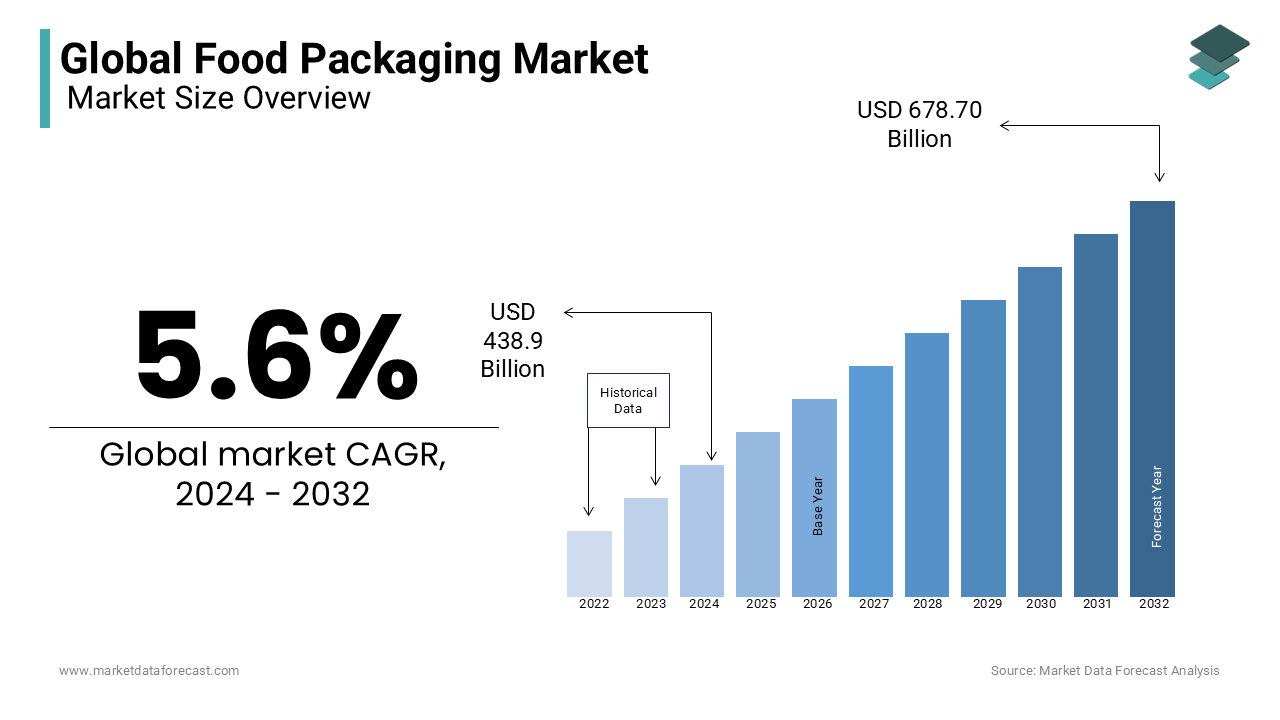
Food packaging encompasses the technologies, materials, and systems designed to contain, protect, preserve, and present food products from production to consumption. This sector is integral to the global supply chain, ensuring product safety, extending shelf life, and providing essential consumer information. The market includes a diverse range of materials such as plastics, paper and paperboard, glass, and metal, each selected for specific barrier properties and sustainability profiles. According to the Food and Agriculture Organization of the United Nations, approximately 33% of all food produced globally is lost or wasted, with inadequate packaging being a significant contributing factor in developing regions. Furthermore, as per the data from the World Health Organization, foodborne diseases affect an estimated 600 million people annually, highlighting the critical role of protective packaging in preventing contamination and ensuring public health. The definition extends beyond physical containment to include active and intelligent packaging solutions that monitor freshness and interact with the food environment. Regulatory frameworks such as the European Union’s Packaging and Packaging Waste Regulation drive innovation towards circular economy models. The market is characterized by a tension between the need for durable, cost-effective materials and the urgent demand for environmentally sustainable alternatives. This dynamic landscape reflects a broader societal shift towards responsible consumption, where packaging is evaluated not only for functionality but also for its environmental footprint and recyclability.
MARKET DRIVERS
Rising Demand for Convenience and Ready-to-Eat Foods
The escalating consumer preference for convenience and ready-to-eat foods is one of the major factors propelling the growth of the global food packaging market. Modern lifestyles characterized by urbanization and dual-income households have reduced the time available for meal preparation, driving demand for packaged meals that are easy to store, transport, and consume. According to the International Labour Organization, the average working hours in many developed nations remain high, with full-time employees working an average of 40 hours per week, limiting time for cooking. This temporal pressure necessitates food options that offer maximum convenience without compromising on quality or safety. According to NielsenIQ, sales of ready-to-eat meals increased by 9% year-on-year in 2024 across major global markets. Packaging plays a crucial role in this segment by providing portion control, microwaveability, and resealability. Flexible packaging formats such as pouches and trays are particularly favored for their lightweight nature and ease of use. The rise of food delivery services further amplifies this demand, requiring packaging that maintains temperature and integrity during transit. Manufacturers are responding by innovating with materials that offer superior barrier properties while remaining user-friendly. This structural shift in consumer behavior ensures sustained demand for advanced food packaging solutions that cater to the needs of busy individuals.
Urbanization and Expansion Of Retail Infrastructure
Rapid urbanization and the expansion of modern retail infrastructure significantly drive the adoption of standardized food packaging solutions, which is another major market driver. As populations migrate to cities, the distance between food production sites and consumers increases, necessitating robust packaging to ensure product integrity during long distribution chains. According to the United Nations Department of Economic and Social Affairs, 68% of the world’s population is projected to live in urban areas by 2050, up from 55% in 2018. This demographic shift creates a reliance on supermarkets and hypermarkets where packaged goods dominate shelves due to their longer shelf lives and branding opportunities. According to the World Bank, the expansion of organized retail in emerging economies has grown by 12% annually, facilitating the widespread availability of packaged foods. Supermarkets require uniform packaging for efficient stacking, storage, and display, driving manufacturers to adopt standardized formats. Additionally, urban consumers are more exposed to global food trends and branded products, increasing demand for aesthetically appealing and informative packaging. The need for traceability and labeling compliance in formal retail channels further necessitates sophisticated packaging solutions. This transition from traditional open markets to modern retail environments ensures that food packaging remains a critical component of the global food supply chain.
MARKET RESTRAINTS
Stringent Environmental Regulations and Plastic Bans
The implementation of stringent environmental regulations and bans on single-use plastics is a significant restraint on the food packaging market, particularly for conventional plastic materials. Governments worldwide are introducing legislation to reduce plastic waste and promote sustainable alternatives, forcing manufacturers to reformulate products and invest in new technologies. According to the European Commission, the Single-Use Plastics Directive mandates a reduction in the consumption of certain plastic products and requires member states to achieve specific recycling targets. According to the United Nations Environment Programme, over 100 countries have introduced some form of regulation on single-use plastics, creating a complex regulatory landscape for global companies. Compliance with these regulations often involves higher production costs and extensive research and development efforts to identify viable alternatives. For instance, the transition to biodegradable or compostable materials requires changes in supply chains and manufacturing processes, which can be costly and time-consuming. Small and medium-sized enterprises may struggle to absorb these costs, leading to market consolidation. Additionally, inconsistent regulations across different regions create challenges for multinational corporations seeking to standardize their packaging strategies. These regulatory pressures limit the use of cost-effective conventional plastics and impose financial burdens on the industry, slowing down growth in certain segments.
Volatility in Raw Material Prices
Volatility in raw material prices is further hindering the expansion of the food packaging market. The industry relies heavily on petroleum-based plastics, paper pulp, aluminum, and glass, all of which are subject to fluctuating global commodity prices. According to the International Monetary Fund, global food and energy price indices experienced significant volatility in recent years, with energy prices influencing the cost of plastic production. According to the World Bank, the price of crude oil is a key input for plastic manufacturing, which fluctuated by over 30% in 2024 and directly impacts production costs for packaging manufacturers. Similarly, the paper and pulp industry faces price instability due to supply chain disruptions and changing demand dynamics. These fluctuations make it difficult for manufacturers to predict costs and set stable prices for their customers. Long-term contracts with food producers often lock in prices, leaving packaging companies exposed to margin compression when raw material costs rise. Additionally, geopolitical tensions and trade restrictions can exacerbate supply chain disruptions, leading to shortages and further price spikes. This economic uncertainty discourages investment in new capacity and innovation, as companies prioritize cost management over expansion. The inability to fully pass on cost increases to consumers due to competitive pressures further strains profitability.
MARKET OPPORTUNITIES
Development of Biodegradable And Compostable Materials
The development of biodegradable and compostable materials presents a substantial opportunity for the food packaging market growth. Consumers and regulators are increasingly demanding sustainable alternatives to conventional plastics, which is driving investment in bio-based polymers derived from renewable resources such as corn starch, sugarcane, and cellulose. According to the European Bioplastics Association, the global production capacity of bioplastics is expected to increase by 25% over the next five years, with food packaging being the largest application segment. According to the Good Food Institute, sales of products packaged in compostable materials grew by 15% in 2024, reflecting strong consumer preference for eco-friendly options. Innovations in material science are improving the performance of biodegradable packaging, enhancing barrier properties against moisture and oxygen to match those of traditional plastics. Companies are also exploring novel sources such as algae and mushroom mycelium to create unique and sustainable packaging solutions. These materials offer the advantage of decomposing naturally in industrial composting facilities, reducing landfill waste and environmental impact. Brands that adopt these materials can differentiate themselves in the market and appeal to environmentally conscious consumers. As production scales up and costs decrease, biodegradable packaging is poised to become a mainstream choice, offering significant growth potential for early adopters.
Integration of Smart and Active Packaging Technologies
The integration of smart and active packaging technologies offers lucrative opportunities for enhancing food safety and consumer engagement. Smart packaging incorporates sensors and indicators that monitor the condition of the food, such as temperature, freshness, and spoilage, providing real-time information to consumers and retailers. According to the Institute of Food Technologists, smart packaging can reduce food waste by up to 20% by enabling better inventory management and informing consumers about product quality. According to Statista, the market for smart packaging is projected to grow at a compound annual growth rate of 8% through 2030. Active packaging goes a step further by interacting with the food to extend shelf life, for example, by absorbing oxygen or releasing antimicrobial agents. These technologies are particularly valuable for perishable items such as meat, dairy, and fresh produce. Near Field Communication (NFC) tags and Quick Response (QR) codes enable consumers to access detailed product information, sourcing details, and recipes via smartphones, enhancing transparency and trust. Retailers can use data from smart packaging to optimize supply chains and reduce losses. As technology costs decline and consumer awareness grows, the adoption of smart and active packaging is expected to accelerate, creating new revenue streams and value propositions for manufacturers.
MARKET CHALLENGES
Complexity of Recycling Infrastructure and Contamination
The complexity of recycling infrastructure and high levels of contamination pose significant challenges to the food packaging market expansion. While many packaging materials are technically recyclable, the actual recovery rates are hindered by inadequate collection systems and consumer confusion about disposal methods. According to the Organisation for Economic Co-operation and Development, only 9% of plastic waste globally is successfully recycled, with the rest ending up in landfills or the environment. According to the Ellen MacArthur Foundation, food residue and mixed materials in packaging often contaminate recycling streams, rendering them unusable. Multi-layer packaging, commonly used for snacks and beverages, is particularly difficult to recycle due to the combination of different materials that are hard to separate. This limitation forces many municipalities to reject such items, leading to increased waste. The lack of standardized labeling and recycling guidelines across different regions further exacerbates the problem, causing inconsistency in consumer behavior. Investment in advanced sorting technologies and chemical recycling processes is required to handle complex packaging structures, but these solutions are currently expensive and not widely available. Until recycling infrastructure improves and contamination rates decrease, the industry will face criticism for its environmental impact and struggle to meet circular economy targets.
High Costs of Sustainable Alternatives
The high costs associated with sustainable packaging alternatives present a persistent challenge to their widespread adoption in the food packaging market. Bio-based, biodegradable, and recycled materials often command a premium price compared to conventional virgin plastics due to limited production scale and complex manufacturing processes. According to McKinsey and Company, sustainable packaging materials can cost 20% to 50% more than traditional options, posing a significant barrier for price-sensitive manufacturers and retailers. According to the Consumer Goods Forum, while many companies have committed to sustainability goals, cost remains the primary obstacle to achieving them. Small and medium-sized food producers, who operate on thin margins, find it difficult to absorb these additional costs without passing them on to consumers, who may be unwilling to pay higher prices. Additionally, the performance of some sustainable materials may not yet match that of conventional plastics, requiring additional layers or treatments that further increase costs. The lack of economies of scale for newer materials such as polylactic acid (PLA) keeps prices elevated. Without significant technological advancements and government subsidies to lower production costs, the transition to sustainable packaging will remain slow and uneven. This financial disparity creates a competitive disadvantage for companies prioritizing sustainability, hindering overall market transformation.
REPORT COVERAGE
| REPORT METRIC | DETAILS |
| Market Size Available | 2025 to 2034 |
| Base Year | 2025 |
| Forecast Period | 2026 to 2034 |
| CAGR | 5.6% |
| Segments Covered | By Materials, Product, Application, and Region |
| Various Analyses Covered | Global, Regional, & Country Level Analysis; Segment-Level Analysis, DROC, PESTLE Analysis, Porter’s Five Forces Analysis, Competitive Landscape, Analyst Overview of Investment Opportunities |
| Regions Covered | North America, Europe, APAC, Latin America, Middle East & Africa |
| Market Leaders Profiled | Mondi Group, Crown Holdings Inc, DS Smith Plc, Amcor plc, Berry Global Inc, Orora Ltd, Owens-Illinois Inc, Ardagh Group S.A, Ball Corporation, CPMC Holdings Ltd, International Paper Co, Sealed Air Corp, and Others. |
SEGMENTAL ANALYSIS
By Materials Insights
The plastics segment dominated the market by holding 41.4% of the global market share in 2025. The dominance of the plastics segment in the global market can be credited to the material's versatility, lightweight nature, and superior barrier properties that extend shelf life. The unparalleled versatility and ability of plastics to provide superior barrier protection against moisture, oxygen, and contaminants is further boosting the dominating position of the plastics segment in the global market. Plastic materials such as polyethylene terephthalate (PET), polypropylene (PP), and polyethylene (PE) can be engineered into various forms, including films, bottles, and trays, to suit diverse food applications. According to the American Chemistry Council, plastic packaging reduces food waste by extending shelf life by up to 50% compared to unpackaged alternatives. According to the Plastics Industry Association, replacing plastic with other materials would increase the weight of packaging by four times, leading to higher transportation emissions and costs. The ability of plastics to maintain product freshness while being lightweight makes them indispensable for both perishable and non-perishable goods. Furthermore, advancements in multi-layer films allow for customized barrier properties that protect sensitive ingredients without compromising quality. This functional superiority ensures that plastics remain the preferred material for a wide range of food products, from beverages to fresh produce, driving consistent demand across the industry.
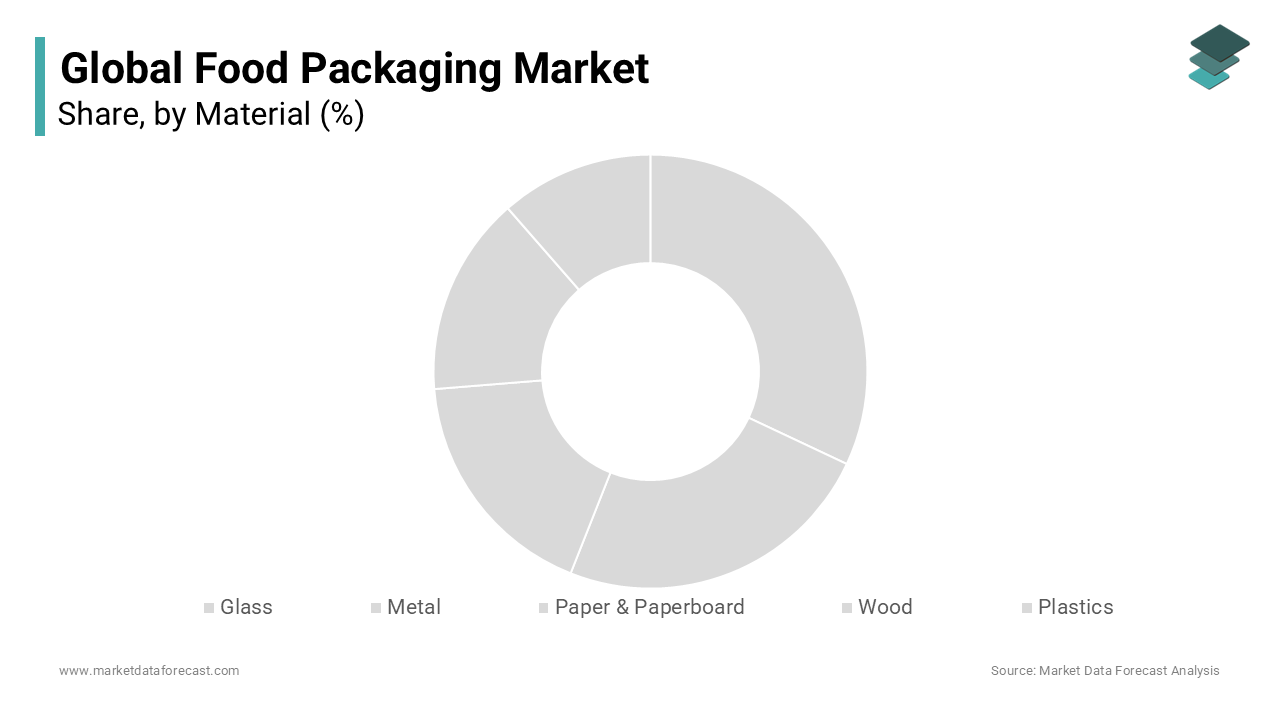
However, the paper and paperboard segment is anticipated to be the fastest-growing segment with a CAGR of 6.2% over the forecast period, owing to the increasing consumer preference for sustainable and biodegradable packaging solutions and stringent regulatory pressures against single-use plastics. The shifting consumer preferences towards sustainable and biodegradable packaging options are also supporting the expansion of the paper and paperboard segment in the global market. Environmental awareness has led many shoppers to actively avoid plastic packaging in favor of materials perceived as eco-friendly and easily recyclable. According to NielsenIQ, 73% of global consumers say they would definitely or probably change their consumption habits to reduce their environmental impact, with packaging being a key factor. According to the Forest Stewardship Council, certified sustainable paper packaging sales increased by 12% in 2024, reflecting strong market demand. Paper and paperboard are widely recognized as renewable resources that can be recycled multiple times, aligning with circular economy principles. Brands are responding by transitioning to paper-based containers, cartons, and wraps to enhance their sustainability credentials and appeal to conscious consumers. The tactile appeal and premium perception of paper packaging also contribute to its popularity in high-end food segments. As education on recycling improves and infrastructure expands, the adoption of paper-based solutions continues to rise, which is driving robust growth in this segment.
By Product Insights
The rigid packaging segment held the leading position in the food packaging market by product type with 46.6% of the global market share in 2025. The superior structural integrity and ability of rigid packaging to protect contents during storage and transport are primarily driving the dominance of the rigid packaging segment in the global market. Rigid formats such as glass jars, metal cans, and hard plastic containers offer robust protection against physical damage, contamination, and environmental factors. According to the Glass Packaging Institute, glass containers provide an impermeable barrier that preserves flavor and quality indefinitely, making them ideal for sauces, beverages, and preserved foods. According to the Metal Packaging Manufacturers Association, metal cans have a shelf life of up to five years, ensuring long-term stability for perishable goods. This durability is essential for global supply chains where products may undergo rough handling and varying temperature conditions. Rigid packaging also allows for efficient stacking and storage, optimizing warehouse space and logistics efficiency. The ability to withstand high pressure and temperature during sterilization processes further enhances its suitability for canned and bottled products. These protective qualities ensure that rigid packaging remains the preferred choice for manufacturers seeking to maintain product quality and safety throughout the distribution network.
However, the flexible packaging segment is the fastest growing segment in the food packaging market and is expected to register a CAGR of 6.5% over the forecast period, due to the rising demand for convenience, cost- efficiency, and lightweight materials that reduce transportation costs and environmental impact. The rapid growth of the flexible packaging segment is further likely to be driven by the increasing consumer demand for convenience and portability in food products. Flexible formats such as pouches, sachets, and wraps are easy to open, reseal, and carry, aligning with busy lifestyles and on-the-go consumption habits. According to the Flexible Packaging Association, sales of stand-up pouches grew by 10% in 2024, driven by their use in snacks, beverages, and ready-to-eat meals. According to Kantar Worldpanel, 55% of households prefer flexible packaging for its ease of storage and disposal compared to rigid containers. The ability of flexible packaging to conform to the shape of the product reduces wasted space and allows for portion control, appealing to health-conscious consumers. Innovations in spouted pouches and zip-locks further enhance usability, making them suitable for liquids and semi-solids. The lightweight nature of flexible materials also reduces shipping weights, lowering logistics costs and carbon emissions. These functional benefits ensure that flexible packaging continues to gain market share across various food categories.
By Application Insights
The dairy products segment occupied the leading share of 26.2% of the global market in 2025. The leading position of the dairy products segment is attributed to the high global consumption of milk, yogurt, cheese, and other dairy items, which require specialized packaging to maintain freshness and prevent spoilage. The high global consumption of dairy items and their inherent perishability, which demands effective packaging solutions, is further boosting the dominance of the dairy products segment in the global market. Dairy products are staple foods in many diets worldwide, providing essential nutrients such as calcium and protein. According to the International Dairy Federation, global milk production exceeded 900 million tons in 2024, creating a massive demand for packaging materials. According to the Food and Agriculture Organization, dairy products have a short shelf life and are highly susceptible to bacterial growth, requiring packaging with excellent barrier properties against light, oxygen, and moisture. Aseptic packaging technologies, such as Tetra Pak cartons, have revolutionized the industry by allowing milk to be stored without refrigeration for extended periods. The rise in consumption of value-added dairy products like flavored yogurts and cheeses further drives demand for diverse packaging formats. The need to maintain product quality and safety from farm to table ensures that dairy remains the largest application segment for food packaging, with continuous innovation in materials and designs to meet evolving consumer needs.
On the other hand, the meat, poultry, and seafood segment is predicted to witness the fastest CAGR of 7.2% over the forecast period, owing to the rising protein consumption, the need for extended shelf life, and advancements in modified atmosphere packaging technologies. The rising global protein consumption and rapid urbanization that increase demand for packaged protein products are further contributing to the rapid growth of the meat, poultry, and seafood segment in the global market. As incomes rise in developing economies, diets shift towards higher meat and fish intake, requiring efficient packaging to handle increased volumes. According to the Organisation for Economic Co-operation and Development, global meat consumption is expected to increase by 14% by 2030, driven by population growth and urbanization. According to the World Bank, urban populations are more likely to purchase packaged meats from supermarkets due to convenience and safety concerns. Modified atmosphere packaging (MAP) and vacuum sealing technologies are widely adopted to extend shelf life and maintain freshness, reducing food waste. The growth of e-commerce for fresh foods also drives demand for robust and insulated packaging solutions that ensure product integrity during delivery. These trends create a robust market for advanced packaging technologies that cater to the specific needs of perishable protein products.
REGIONAL ANALYSIS
Asia Pacific Food Packaging Market Analysis
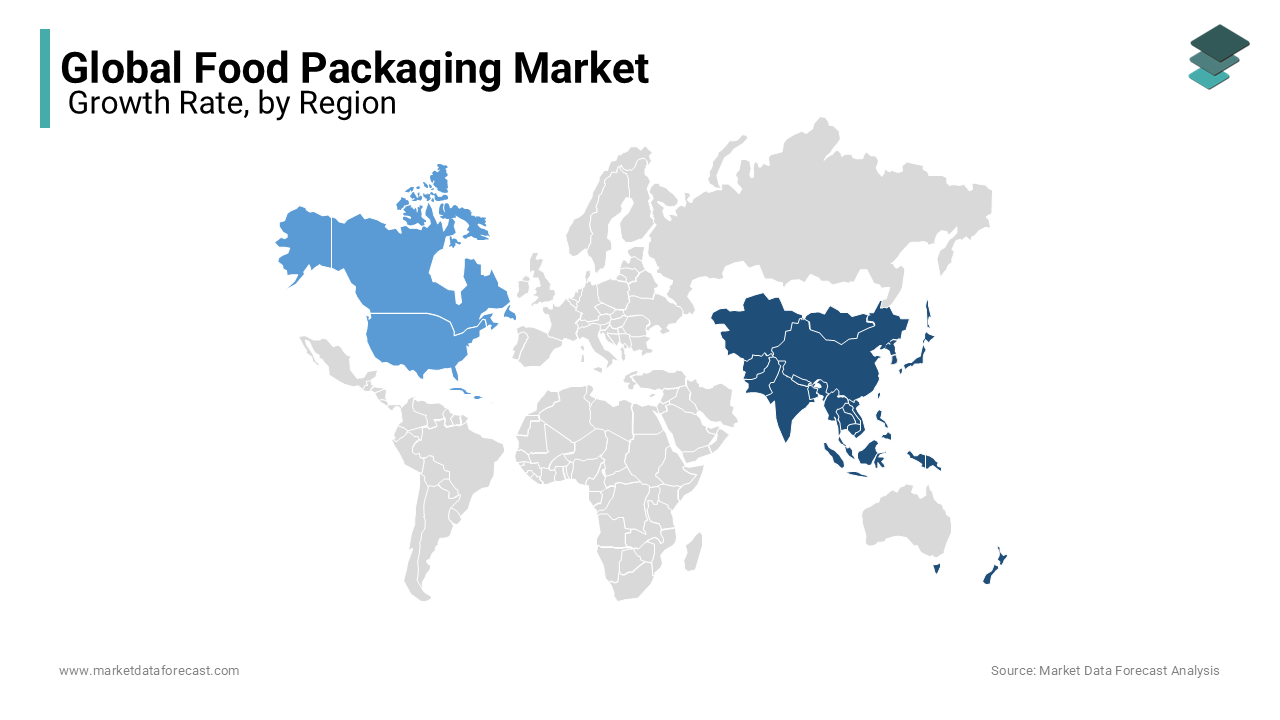
Asia Pacific dominated the food packaging market worldwide in 2025 with 36.1% of the global market share. The region’s dominance is driven by rapid population growth, urbanization, and the expansion of the middle class in countries such as China, India, and Indonesia. According to the United Nations Department of Economic and Social Affairs, the Asia Pacific is home to 60% of the world’s population, creating a vast consumer base for packaged foods. According to the Asian Development Bank, the middle class in the region is expected to double by 2030, driving demand for convenient and safe food options. The growth of modern retail infrastructure and e-commerce platforms further accelerates the adoption of packaged goods. Government initiatives to improve food safety standards and reduce waste also support market growth. The presence of major manufacturing hubs ensures a steady supply of packaging materials. These demographic and economic factors establish Asia Pacific as the largest and most dynamic market for food packaging globally.
North America Food Packaging Market Analysis
North America accounted for the second biggest share of the global market in 2025. The North American market is characterized by high consumer awareness of sustainability and a strong demand for convenient and healthy food options. The United States and Canada are key contributors, driven by advanced retail networks and stringent food safety regulations. According to the Environmental Protection Agency, recycling rates for packaging materials in North America are among the highest globally, influencing material choices. According to the Consumer Brands Association, demand for sustainable and recyclable packaging has grown by 15% in recent years. The prevalence of private label brands and the rise of meal kit services also drive innovation in packaging formats. Technological advancements in smart and active packaging are widely adopted to enhance product quality and safety. The mature market focuses on value addition and differentiation through packaging design and functionality. These factors sustain North America’s strong position in the global food packaging landscape.
Europe Food Packaging Market Analysis
Europe held a notable share of the food packaging market in 2025. The European market is defined by strict environmental regulations and a strong commitment to circular economy principles. The European Union’s Packaging and Packaging Waste Regulation drives the transition towards reusable and recyclable materials. According to Eurostat, the recycling rate for packaging waste in the EU reached 64% in 2024, setting a high standard for sustainability. According to the European Bioplastics Association, the demand for bio-based packaging materials is growing rapidly, supported by government incentives. Consumer preference for organic and locally sourced foods also influences packaging trends, favoring natural and minimalist designs. The region is a leader in innovation, with significant investment in smart packaging and digital tracking systems. These regulatory and consumer-driven factors ensure that Europe remains a key market for sustainable and advanced food packaging solutions.
Latin America Food Packaging Market Analysis
Latin America is anticipated to record a healthy CAGR in the food packaging market over the forecast period, owing to the economic variability, but it shows promising growth due to urbanization and changing dietary habits. Brazil and Mexico are the primary markets, driven by a growing middle class and increased consumption of processed foods. According to the Economic Commission for Latin America and the Caribbean, urbanization rates in the region exceed 80%, facilitating the spread of modern retail channels. According to NielsenIQ, sales of packaged foods in Latin America grew by 7% in 2024, driven by convenience and affordability. The expansion of supermarket chains and e-commerce platforms enhances access to packaged goods. Local manufacturers are investing in capacity expansion to meet rising demand. Despite economic challenges, the fundamental drivers of population growth and urbanization support steady market progress. The potential for growth remains high as infrastructure improves and incomes rise.
Middle East and Africa Food Packaging Market Analysis
The Middle East and Africa region is projected to account for a notable share of the food packaging market during the forecast period. The Middle East and African market is shaped by improving healthcare and food safety standards, particularly in Gulf Cooperation Council countries. According to the World Health Organization, efforts to reduce foodborne illnesses are driving the adoption of safer packaging solutions. According to the African Development Bank, investment in food processing infrastructure is increasing, supporting demand for packaging materials. The young and growing population in Africa presents long-term growth opportunities as urbanization accelerates. In the Middle East, high disposable incomes and a preference for imported luxury foods drive demand for premium packaging. Regulatory frameworks are evolving to support food safety and sustainability. International companies are entering the market through partnerships with local distributors. As awareness of hygiene and convenience grows, the region is expected to witness accelerated growth in the coming years.
COMPETITION OVERVIEW
The Food Packaging Market features a highly competitive landscape characterized by the presence of large multinational corporations and numerous regional players. Competition is intense as companies strive to differentiate themselves through innovation, sustainability, and cost efficiency. Large players leverage economies of scale and extensive distribution networks to dominate mainstream segments while smaller firms focus on niche markets and specialized solutions. Regulatory pressures regarding plastic waste and recycling drive continuous investment in sustainable alternatives. Price sensitivity among food manufacturers encourages competition for cost-effective materials and production methods. Technological advancements in smart and active packaging provide opportunities for differentiation and value addition. Collaborations between packaging suppliers and brand owners are common to develop customized and eco-friendly solutions. Intellectual property protection for new materials and designs plays a crucial role in maintaining competitive advantages. The market requires constant adaptation to changing consumer preferences and environmental standards. Agility and innovation are essential for sustaining growth and capturing market share in this dynamic industry.
KEY MARKET PLAYERS
A few major players of the global food packaging market include
- Mondi Group
- Crown Holdings Inc
- DS Smith Plc
- Amcor plc
- Berry Global Inc
- Orora Ltd
- Owens-Illinois Inc
- Ardagh Group S.A
- Ball Corporation
- CPMC Holdings Ltd
- International Paper Co
- Sealed Air Corp
Top Strategies Used by the Key Market Participants
Key players in the Food Packaging Market employ several strategic initiatives to maintain competitiveness and drive growth. Sustainability is a primary focus, with companies investing in recyclable and biodegradable materials to meet regulatory demands. Mergers and acquisitions allow firms to expand their geographic reach and diversify product portfolios efficiently. Innovation in smart packaging technologies enhances consumer engagement and product traceability. Strategic partnerships with food manufacturers enable co-development of customized solutions that address specific needs. Investment in automation and digital manufacturing improves operational efficiency and reduces costs. Companies also prioritize circular economy principles by increasing the use of post-consumer recycled content. These strategies collectively strengthen market positions and address evolving consumer and regulatory expectations effectively.
Leading Players in the Food Packaging Market
- Amcor plc is a global leader in responsible packaging solutions with a significant presence in the food and beverage sector. The company develops innovative and sustainable packaging materials that enhance product safety and extend shelf life. Amcor contributes to the global market by providing lightweight and recyclable options that reduce environmental impact. Recent actions include the acquisition of specialty packaging firms to expand its portfolio in high-growth regions. The company invests heavily in research and development to create circular economy solutions such as mono-material structures. Amcor collaborates with major brands to design custom packaging that meets specific sustainability goals. Their commitment to achieving one hundred percent reusable, recyclable, or compostable packaging by 2025 strengthens their market position. By focusing on innovation and customer partnership, Amcor maintains its leadership in the competitive global packaging landscape.
- Berry Global Group Inc is a prominent manufacturer of plastic packaging products serving diverse industries, including food and healthcare. The company offers a wide range of rigid and flexible packaging solutions designed for durability and efficiency. Berry Global contributes to the global market by leveraging its extensive manufacturing network to deliver cost-effective products. Recent actions involve expanding production capacities in emerging markets to meet rising demand for convenient food packaging. The company focuses on incorporating recycled content into its products to support sustainability initiatives. Berry Global also engages in strategic partnerships with retailers to develop private-label packaging solutions. Their emphasis on operational excellence and customer-centric innovation helps them retain key accounts. By prioritizing sustainable practices and technological advancement, Berry Global strengthens its competitive edge in the food packaging industry.
- Sonoco Products Company is a diversified global provider of consumer packaging, industrial products, and protective solutions. The company specializes in rigid paper-based packaging and metal containers for food applications. Sonoco contributes to the global market by offering reliable and versatile packaging options that ensure product integrity. Recent actions include investments in advanced recycling technologies to improve the sustainability of their paper and plastic products. The company has expanded its presence in the fresh food sector through targeted acquisitions and facility upgrades. Sonoco emphasizes supply chain resilience by optimizing its global manufacturing footprint. Their focus on digital printing and smart packaging technologies enhances brand engagement for clients. By combining traditional expertise with modern innovation, Sonoco reinforces its position as a trusted partner in the food packaging market.
DETAILED SEGMENTATION OF THE GLOBAL FOOD PACKAGING MARKET IS INCLUDED IN THIS REPORT
This research report on the global food packaging market has been segmented and sub-segmented based on material, product, application, & region.
By Material
- Glass
- Metal
- Paper & Paperboard
- Wood
- Plastics
- Polypropylene,
- Polyethylene
- PET
- Others
By Product
- Rigid
- Semi-Rigid
- Flexible
By Application
- Fruits & Vegetables
- Bakery & Confectionery
- Dairy Products
- Meat
- Poultry & Seafood
- Sauces
- Dressings and Condiments
- Others
By Region
- North America
- Europe
- Asia Pacific
- Latin America
- Middle East & Africa