- Product Description Description
- Table of Contents TOC
- List of Table & Figure LOT
- Get Free Sample PDF Sample PDF
Market Size, 2025
$6.80 BnMarket Estimate, 2026
$7.35 BnMarket Forecast, 2034
$13.73 BnCAGR, 2026–2034
8.12%Executive Summary: Eubiotics Market
- Market Scope: Comprehensive eubiotics market analysis covering product types, livestock user categories, regional leadership frameworks, and antibiotic-free animal nutrition trends.
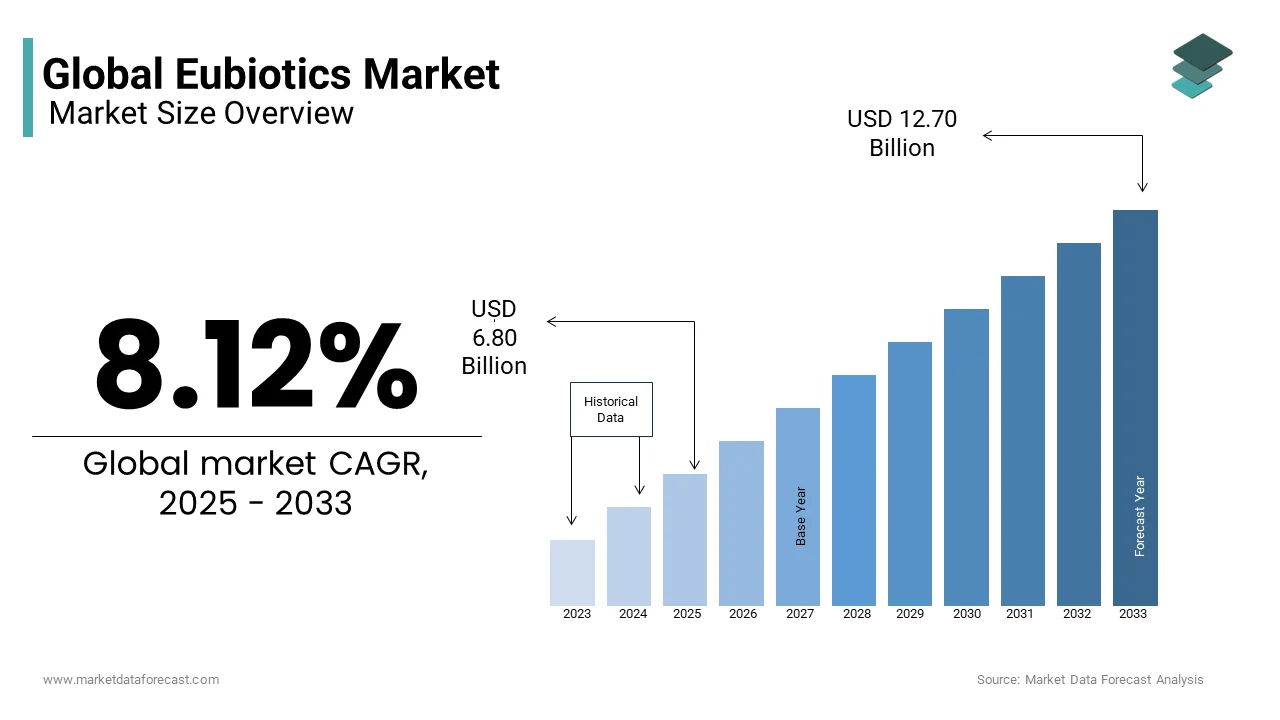
- Market Valuation: Valued at USD 6.80 billion (2025), estimated at USD 7.35 billion (2026), and projected to reach USD 13.73 billion by 2034, registering a robust CAGR of 8.12% (2026–2034).
- Primary Growth Drivers: Global ban on antibiotic growth promoters, rising demand for natural feed additives, increasing livestock disease prevalence, adoption of precision glycans and microbial muramidase, and heightened focus on animal welfare. Key challenges include regulatory hurdles and supply chain disruptions.
Key Market Segment Metrics (2026–2034)
| Category | Leading Segment (2025 Position) | Fastest-Growing Segment |
|---|---|---|
| By Product Type | Probiotics (represent the largest type segment) | Next-generation alternatives (precision glycans and microbial muramidase) |
| By Livestock / User Category | Poultry (constitutes the biggest user category) | Poultry segment (fastest-growing livestock segment) |
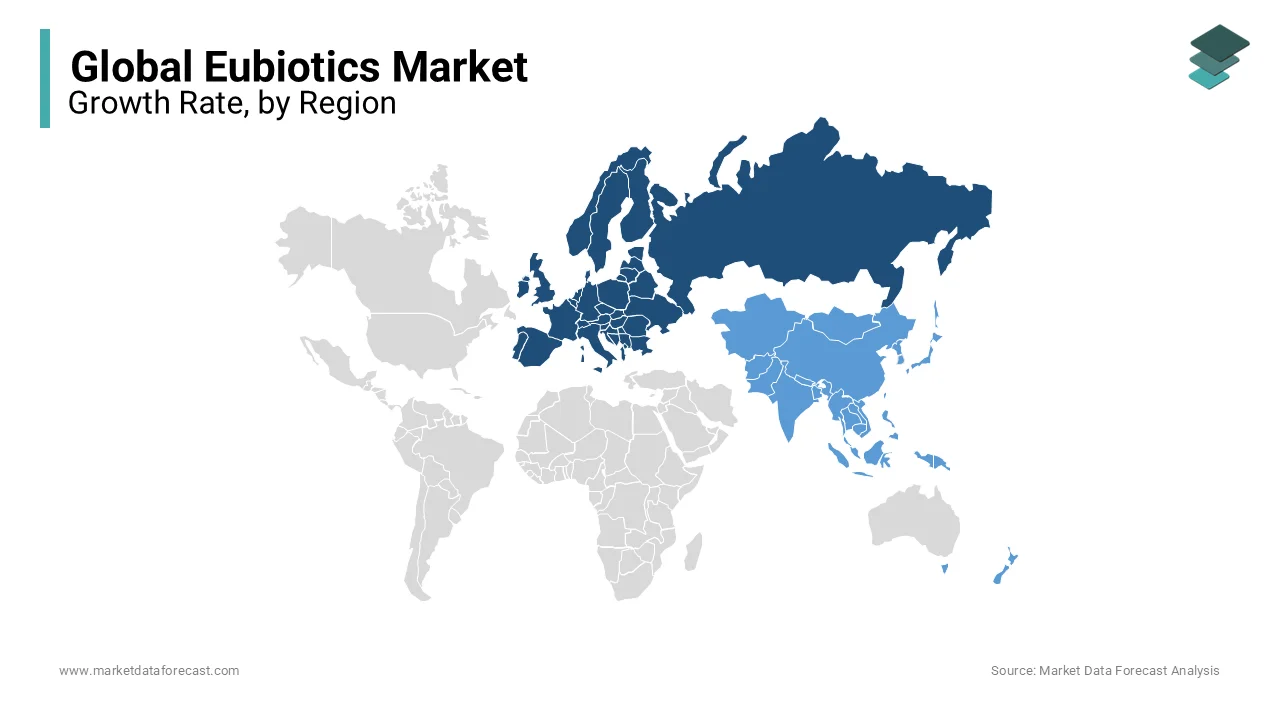
| By Region / Country | Europe (dominated the global eubiotics market in 2025, propelled by strict regulations) | Asia-Pacific (predicted to grow at a rapid pace due to investments in developing economies) |
Major Market Players & Market Structure
Market Structure: Highly competitive global animal nutrition landscape featuring major life science and chemical enterprises focusing on probiotic formulations, lifecycle assessment platforms, and disease surveillance initiatives.
Key Companies: Addcon, Royal DSM, dsm-firmenich, BASF SE, CHR. Hansen A/S, Kemin Industries Inc., Cargill Incorporated, E. I. Du Pont De Nemours and Company, Novus International, Behn Meyer Group, and Beneo Group.
Global Eubiotics Market Size
The global Eubiotics market size was valued at USD 6.80 billion in 2025 and is anticipated to reach USD 7.35 billion in 2026 to reach USD 13.73 billion by 2034, growing at a CAGR of 8.12% during the forecast period from 2026 to 2034.
The eubiotics are non-antibiotic feed additives, including probiotics, prebiotics, organic acids, synbiotics, and phytogenics designed to modulate gut microbiota enhance nutrient absorption and support immune function in livestock poultry and aquaculture production systems. These functional ingredients serve as crucial alternatives to antimicrobial growth promoters following global regulatory restrictions on prophylactic antibiotic use in animal husbandry. According to the World Organisation for Animal Health, 78 countries have implemented partial or complete bans on antibiotic growth promoters as of 2025 creating structural demand for eubiotic solutions across 68% of global meat production volume. The Food and Agriculture Organization documented that livestock sector contributes 14.5% of anthropogenic greenhouse gas emissions with eubiotic supplementation demonstrated to reduce enteric methane output by 12 to 18% in ruminants, according to peer reviewed meta analyses published in Journal of Dairy Science 2025. Unlike commodity feed ingredients eubiotics function through biological mechanisms requiring strain specific validation dose optimization and matrix compatibility testing making technical service and regulatory navigation as valuable as active ingredient supply.
MARKET DRIVERS
Global Regulatory Restrictions on Prophylactic Antibiotic Use
The government mandates prohibiting antibiotic growth promoters create non-discretionary baseline demand for eubiotic alternatives, as producers seek compliant solutions maintaining productivity without therapeutic interventions. The global regulatory restrictions on prophylactic antibiotic use is accelerating the growth of the eubiotics market. According to the World Organisation for Animal Health 2025, global database 78 nations have enacted partial or complete AGP bans covering 68% of worldwide meat production with China, India, Brazil, and Vietnam implementing phased restrictions between 2023 and 2025, representing 42% of newly regulated production volume. European Union ban established in 2006 serves as longitudinal case study with Danish Veterinary and Food Administration documenting that post ban eubiotic adoption reached 94% of broiler operations within 3 years while maintaining flock performance through Bacillus subtilis and lactic acid bacteria supplementation protocols. This regulatory compulsion transforms purchasing from discretionary optimization to mandatory compliance creating recession resistant demand correlated with enforcement intensity rather than economic cycles.
Consumer Demand for Antibiotic Free Protein and Sustainability Credentials
The retail and foodservice procurement policies responding to consumer preferences drive premium positioning for eubiotic supported production systems, enabling price differentiation and supply chain integration beyond farm gate economics. The consumer demand for antibiotic free protein and sustainability credentials is also boosting the growth of the eubiotics market. McDonald’s Tyson Foods and JBS committed to 100% no antibiotics ever sourcing for chicken products by 2025, generating contractual demand for validated eubiotic programs across integrated supply chains. The eubiotic supplemented swine diets reduced nitrogen excretion by 15% and improved feed conversion ratio by 4.2% translating to measurable Scope 3 emission reductions valued under emerging carbon pricing mechanisms. Retailer private label programs including Costco, Kirkland, Signature, and Tesco Finest mandate third party welfare and antibiotic stewardship certification requiring documented eubiotic protocols as prerequisite for supplier approval. This downstream pull creates value based purchasing less sensitive to raw material cost fluctuations than commodity feed additives ensuring sustained premium positioning for technically validated solutions delivering verifiable sustainability and welfare outcomes.
MARKET RESTRAINTS
Strain Specific Efficacy Variability and Reproducibility Gaps
Biological nature of live microorganism based eubiotics creates inherent performance inconsistency across environments genotypes and management conditions undermining buyer confidence versus deterministic chemical additives. Bacillus licheniformis strain A improved average daily gain by 6.8% in nursery pigs fed corn soybean meal diets but showed zero response in wheat barley based formulations demonstrating matrix dependency preventing universal application recommendations. This variability forces nutritionists to conduct costly site specific validation trials averaging 45000 dollars per location before adoption delaying commercialization and limiting scalability versus standardized synthetic alternatives. Manufacturers struggle to guarantee consistent outcomes across diverse customer conditions creating liability concerns and eroding trust, particularly among large scale operators requiring predictable return on investment calculations for feed additive expenditures.
Regulatory Authorization Complexity and Time to Market Delays
The stringent safety and efficacy validation requirements for novel eubiotic strains create extended development timelines and substantial capital barriers, limiting innovation velocity and entry for smaller players. The regulatory authorization complexity and time to delays is hindering the growth of the eubiotics market. According to European Food Safety Authority FEEDAP Panel 2025, activity report average authorization timeline for new probiotic strains reached 42 months from dossier submission to approval with many applications requiring supplementary data requests adding 12 to 18 months to review process. United States FDA Center for Veterinary Medicine requires full new animal drug application for microbial products making health claims involving 3 to 5 year review cycle and estimated 2.8 million dollar development cost per strain according to industry association Animal Nutrition Association of America economic assessment. Brazil MAPA requires in country efficacy trials lasting minimum 18 months even for strains already approved in EU or US duplicating validation costs and delaying market access by 2 to 3 years, according to the study. These fragmented requirements prevent global harmonization forcing manufacturers to maintain region specific product portfolios and validation datasets increasing operational complexity and reducing economies of scale in R&D investment.
MARKET OPPORTUNITIES
Precision Microbiome Modulation Through Multi Omics Integration
The advanced sequencing technologies and bioinformatics enable strain selection and combination design based on host genotype baseline microbiota composition is solely contributed to fuel the growth of the eubiotics market. DSM Firmenich launched microbiome profiling service in Q1 2025 analyzing customer flock fecal samples to recommend customized synbiotic blends achieving 11% greater feed efficiency improvement versus standard product recommendations in validation trials across 28 European farms. Chr Hansen partnered with Iowa State University developing genomic selection tool identifying piglets most responsive to Bifidobacterium infantis supplementation enabling genetic line specific program design that increased treatment effect size. Contract research organizations including Eurofins and SGS now offer commercial microbiome analytics packages priced at 180 dollars per sample making personalized eubiotic programming accessible to mid-sized integrators previously excluded by prohibitive research costs.
Circular Economy Valorization of Agro Industrial Byproducts
The upcycling food processing residues into prebiotic substrates and fermentation media is additionally to bolster the growth of the eubiotics market. According to ReFED 2025 Food Waste Monitor, North America and Europe generate 89 million metric tons of fruit vegetable grain and dairy processing byproducts annually containing recoverable oligosaccharides fibers and proteins suitable for eubiotic production. Spanish startup BioSintia produces galactooligosaccharides from cheese whey permeate achieving 92% purity comparable to synthetic GOS at 45% lower carbon footprint validated through ISO 14040 life cycle assessment, as per the European Dairy Association. Upcycled Food Association certified eubiotic ingredients grew in 2025 with major feed manufacturers incorporating upcycled prebiotics into sustainable product lines targeting retailer carbon reduction commitments. This emergence of waste valorization economics and marketing differentiation creates sustainable competitive advantage for suppliers integrating circular principles into core business models rather than treating sustainability, as peripheral CSR initiative disconnected from unit economics.
MARKET CHALLENGES
Shelf Life Stability and Cold Chain Dependency for Live Cultures
The viability loss during storage transport and feed processing compromises delivered dose consistency by creating quality assurance gaps between manufacturer specifications and on farm efficacy. The shelf life stability and cold chain dependency for live cultures is a major challenge for the growth of the eubiotics market. According to Journal of Applied Poultry Research 2025, stability study commercial Bacillus spore products lost 28 to 45% viability after 90 days ambient storage despite labeled 24 month shelf life with degradation accelerated by humidity exceeding 60% relative common in tropical distribution environments. Retail inventory turnover variability exacerbates degradation with products sitting 60 to 90 days in distributor warehouses before sale consuming significant portion of viable shelf life. These stability challenges force nutritionists to overformulate by 30 to 50% above target dose increasing cost per effective unit and creating formulation uncertainty.
Antimicrobial Resistance Gene Transfer Risk and Biosafety Concerns
The potential for probiotic strains to harbor or transfer antimicrobial resistance genes raises regulatory scrutiny and consumer safety concerns is potentially to restrict the growth of the eubiotics market. WHO Advisory Group on Integrated Surveillance of Antimicrobial Resistance included feed probiotics in 2025, priority monitoring list citing documented cases of vancomycin resistance gene transfer from Enterococcus faecium supplements to pathogenic Enterococcus in swine gut environments, according to Lancet Microbe 2025 case series. Chinese Ministry of Agriculture implemented mandatory AMR gene screening for all new microbial feed additive applications in March 2025 by adding 6 month safety assessment requirement and excluding strains with any acquired resistance markers regardless of transferability evidence. Consumer advocacy groups including Foodwatch and Center for Science in Public Interest petitioned regulators in 2025 to restrict probiotic use in food animals citing AMR concerns, generating negative media coverage. This biosafety dimension creates regulatory headwinds and reputational risks requiring disproportionate investment in genomic safety characterization and communication strategies.
REPORT COVERAGE
| REPORT METRIC | DETAILS |
| Market Size Available | 2025 to 2034 |
| Base Year | 2025 |
| Forecast Period | 2026 to 2034 |
| CAGR | 8.12% |
| Segments Covered | Based on type, based on Livestock |
| Various Analyses Covered | Global, Regional & Country Level Analysis, Segment-Level Analysis, DROC, PESTLE Analysis, Porter’s Five Forces Analysis, Competitive Landscape, Analyst Overview on Investment Opportunities |
| Regions Covered | North America, Europe, APAC, Latin America, Middle East & Africa |
| Market Leaders Profiled | Addcon, Royal DSM, BASF SE, CHR. Hansen A/S, Kemin Industries Inc., Cargill Incorporated, E. I. Du Pont De Nemours and Company, Novus International, Behn Meyer Group, Beneo Group. |
SEGMENTAL ANALYSIS
By Type Insights
The lactobacilli species segment was accounted in holding 44.9% of the eubiotics market share in 2025 due to decades of safety validation extensive regulatory approvals and established manufacturing infrastructure enabling rapid commercialization. According to the survey, 47 Lactobacillus strains hold QPS status representing 68% of all approved microbial feed additives streamlining authorization timelines versus novel genera requiring full toxicological assessment. United States FDA Center for Veterinary Medicine has issued 34 GRAS notifications for Lactobacillus species since 2020, reflecting regulatory familiarity reducing review cycles to average 14 months versus 28 months for Bacillus or Enterococcus submissions, according to study. This regulatory precedence creates lower barriers to entry enabling smaller manufacturers to compete while giving established players portfolio breadth covering multiple species and strain combinations.
The bifidobacteria segment is likely to grow at a fastest CAGR of 14.8% during the forecast period with the specialized efficacy in early life gut programming and premium positioning in high value neonatal nutrition applications. Chr Hansen launched dedicated Bifidobacterium program for sow piglet dyad nutrition in Q2 2025, achieving 42% adoption rate among top 20 European swine integrators within 12 months. Human infant formula crossover knowledge transfers to animal nutrition with 67% of swine nutritionists citing pediatric microbiome research as rationale for Bifidobacteria selection, according to the study. Retailer animal welfare certification programs including Global Animal Partnership Step 3 and above require documented neonatal gut health protocols creating compliance driven demand for validated early life interventions. This specialization enables differentiation in commoditized probiotic market capturing margin expansion opportunities unavailable to broad spectrum Lactobacillus platforms competing primarily on volume and cost efficiency.
By Prebiotics Insights
The fructo oligosaccharides segment held a dominant share of the eubiotics market in 2025 due to lowest cost per effective dose mature global supply chains and extensive regulatory approvals enabling widespread adoption across price sensitive livestock sectors. FOS holds GRAS status in US QPS in EU and positive listing in China, Feed Additive Catalog since 2018 by eliminating regulatory barriers across major contributors and enabling immediate commercialization without novel ingredient notification delays. Manufacturing process utilizing enzymatic transfructosylation from sucrose achieves 95% purity with consistent batch to batch specification reducing quality variability concerns versus plant extracted prebiotics subject to agricultural seasonality. Feed formulators prioritize FOS as baseline prebiotic in standard rations reserving premium alternatives for specialized applications where cost sensitivity dominates purchasing decisions particularly in poultry and swine sectors operating on thin margins.
The galacto oligosaccharides segment is likely to grow at a fastest CAGR of 16.2% during the forecast period with the valorization of cheese whey permeate creating cost competitive supply aligned with sustainability mandates and circular economy procurement preferences. Fonterra launched whey derived GOS brand Vivinal in Q1 2025 achieving Upcycled Food Certification and securing supply agreements with three major European feed manufacturers targeting retailer Scope 3 emission reduction commitments. Production cost advantage of 38% versus traditional enzymatic synthesis from lactose enables competitive pricing against FOS while delivering superior bifidogenic selectivity documented in Journal of Dairy Science 2025 comparative fermentation study. Carbon pricing mechanisms under EU ETS expansion create additional 12 to 18 euro per ton cost advantage for upcycled GOS versus virgin substrate production, according to European Commission Joint Research Centre modeling. Retailer sustainable sourcing policies including Tesco Planet Pledge and Carrefour Act for Food mandate minimum upcycled ingredient content in private label animal feed creating compliance driven demand independent of functional superiority considerations.
By Livestock Insights
The poultry segment was the largest by holding 43.8% of the eubiotics market share in 2025 due to short production cycles by enabling rapid ROI demonstration massive global production volume and intensive management systems amenable to standardized additive programs. Integrated poultry operations controlling feed mill to processing facilitate uniform eubiotic implementation across entire supply chain with Tyson Foods JBS and Pilgrim’s Pride mandating probiotic programs in 94% of contract grower feeds, according to the study. High stocking densities and biosecurity pressures create continuous disease challenge environment, where preventive eubiotic intervention delivers measurable mortality reduction and feed conversion improvements translating directly to profit margins.
The aquaculture segment is likely to grow at a fastest CAGR of 18.4% during the forecast period with the production intensification increasing disease pressure and regulatory restrictions on antibiotic therapeutics in aquatic environments. According to the survey, global aquaculture production reached 98 million metric tons with stocking densities increasing 34% since 2020 elevating stress induced immunosuppression and pathogen transmission risks necessitating preventive gut health interventions. Shrimp farming in Ecuador Vietnam and India faces Early Mortality Syndrome outbreaks causing 28% annual production losses driving Vibrio inhibiting probiotic demand with Bacillus subtilis and Pediococcus acidilactici strains. Consumer seafood sustainability certifications including ASC and BAP require documented responsible antimicrobial use creating audit driven eubiotic adoption independent of direct economic returns. This convergence of biological necessity regulatory compulsion and certification requirements creates multi vector growth momentum exceeding terrestrial livestock sectors, where AGP alternatives have longer adoption history.
REGIONAL ANALYSIS
North America Eubiotics Market Analysis
North America was the top performer of the global eubiotics market by holding 28.4% of share in 2025 with the integrated poultry and swine production systems advanced regulatory frameworks and strong consumer driven antibiotic free protein demand. FDA CVM streamlined GRAS pathway enabled 34 new probiotic approvals between 2023 and 2025, accelerating innovation velocity versus EU EFSA timelines. Retailer procurement policies from Costco Walmart and Whole Foods mandate third party welfare and antibiotic stewardship certification creating downstream pull for validated eubiotic programs across supply chains. Canadian Food Inspection Agency harmonized feed additive regulations with US in 2024, facilitating cross border trade and reducing duplication for multinational suppliers. However, Mexico represents regulatory divergence with COFEPRIS maintaining separate approval process adding 12 to 18 month delay for entry versus USMCA partners.
Europe Eubiotics Market Analysis
Europe eubiotics market was ranked second by holding 26.3% of share in 2025 with distinguished by longest standing AGP ban most stringent regulatory validation requirements and leadership in sustainability linked eubiotic innovation. EFSA FEEDAP Panel authorized 89 microbial feed additives between 2020 and 2025 with average review timeline of 42 months setting global gold standard for safety and efficacy validation. Denmark, Netherlands, and France lead adoption with integrated cooperatives mandating eubiotic protocols across member farms. However regulatory complexity fragments market with member state interpretations of novel food and feed additive classifications creating compliance variability.
Asia Pacific Eubiotics Market Analysis
Asia Pacific eubiotics market growth is likely to grow with the massive production volume rapid regulatory modernization and intensifying disease pressures in tropical aquaculture and poultry systems. Chinese Ministry of Agriculture revised Feed Additive Catalog in January 2025, adding 28 new microbial strains while removing 12 previously permitted species reflecting active regulatory evolution and market reshaping. Indian broiler sector adopted eubiotics at 67% penetration rate in 2025 driven by coccidiosis vaccine compatibility requirements and export preparation for Middle East destinations. Shrimp farming intensification in Vietnam and Ecuador creates aquatic eubiotic hotspots with Vibrio management programs becoming standard practice post EMS crisis. However, fragmented smallholder production representing 45% of regional output limits eubiotic adoption due to cost sensitivity and technical knowledge gaps. Import dependency for specialized strains exposes supply chains to currency volatility and geopolitical tensions affecting affordability in developing countries.
Latin America Eubiotics Market Analysis
Latin America eubiotics market growth is propelling with the export oriented poultry and swine production requiring eubiotic compliance for EU and Asian market access alongside emerging domestic demand. Chilean salmon industry mandatory antibiotic reduction plan implemented January 2025 triggered mass eubiotic adoption with AquaChile reporting many farm implementation within 6 months. Argentine beef sector initiated grass fed eubiotic supplementation trials in 2025 targeting methane reduction claims for premium export positioning. However, currency instability in Argentina and Brazil creates procurement volatility with eubiotic imports fluctuating. Infrastructure gaps in cold chain distribution compromise live culture viability in tropical regions forcing reliance on spore forming Bacillus products over vegetative Lactobacillus limiting product diversity.
Middle East and Africa Eubiotics Market Analysis
Middle East and Africa eubiotics market growth is driven by the heat stress mitigation needs and government subsidy programs supporting feed additive imports. South African commercial swine and poultry operations mirror European standards with Rainbow Chicken and Astral Foods mandating eubiotic programs for retailer compliance. Kenyan and Nigerian aquaculture sectors show emerging tilapia probiotic adoption addressing Streptococcus outbreaks in intensive cage systems. Halal certification requirements create additional compliance layer for microbial products requiring ethanol free processing verification adding cost and complexity for international suppliers targeting Muslim majority areas.
COMPETITIVE LANDSCAPE
Competition in eubiotics market intensifies as multinational ingredient suppliers specialty biotechnology firms and regional feed additive manufacturers vie for position across fragmented regulatory environments and livestock segments. Established players leverage extensive strain libraries regulatory approvals and global manufacturing scale dominating volume segments, however face margin pressure from commoditization in mature poultry applications. Specialty biotech companies differentiate through precision microbiome analytics novel strain discovery and targeted life stage solutions capturing premium niches but constrained by capital intensity and validation timelines. Competitive dynamics vary significantly by segment with poultry featuring price driven consolidation versus aquaculture and neonatal nutrition, where efficacy differentiation commands premiums. Technology adoption creates emerging divide between firms integrating genomics and digital services gaining predictive positioning versus traditionalists relying on empirical validation. Consolidation accelerates as R&D costs for strain validation regulatory approval and precision tools exceed mid-sized operator capabilities concentrating innovation capacity among few vertically integrated incumbents.
KEY MARKET PLAYERS
A few of the market players that are dominating the global eubiotics market are
- Addcon
- Royal DSM
- BASF SE
- DSM Firmenich
- CHR
- Hansen A/S
- Kemin Industries Inc.
- Cargill Incorporated
- E. I. Du Pont De Nemours
- Company
- Novus International Inc.
- Behn Meyer Group
- Beneo Group.
Top Players In The Market
- DSM Firmenich operates as a leading global eubiotics supplier leveraging integrated probiotic prebiotic and enzyme platforms to deliver comprehensive gut health solutions across poultry swine and aquaculture sectors. The company combines decades of strain validation expertise with advanced encapsulation technologies ensuring viability through feed processing and storage. Recent strategic actions include launching microbiome profiling service in Q1 2025 enabling customized synbiotic recommendations based on customer specific flock metagenomic analysis. DSM Firmenich expanded Bacillus subtilis production capacity at Brazilian facility in March 2025 securing supply for Latin American poultry integrators amid regional AGP transition. Strategic partnerships with contract research organizations accelerate field validation across diverse geographic conditions reducing time to market for region specific formulations.
- Chr Hansen maintains significant global eubiotics presence through specialized Bifidobacterium and Lactobacillus strain portfolios targeting neonatal gut programming and premium livestock nutrition applications. The company leverages proprietary genomic selection tools identifying strains with superior colonization persistence and functional traits validated through peer reviewed publications. Recent actions, include launching dedicated sow piglet dyad nutrition program in Q2 2025 achieving rapid adoption among European swine integrators seeking documented welfare outcomes. Manufacturing investments in Danish and French facilities enhanced spore forming bacteria capacity supporting heat stable product lines for pelleted feed applications. These moves strengthen differentiation in high value segments, where efficacy justification supports premium pricing versus commodity probiotics, while building defensible intellectual property through strain specific validation data and precision matching algorithms inaccessible to generic competitors.
- Kemin Industries serves global eubiotics market through integrated botanical probiotic and organic acid platforms emphasizing multi modal gut health approaches beyond single strain interventions. The company combines phytogenic expertise with microbial fermentation capabilities creating synergistic blends addressing inflammation pathogen exclusion and microbiome modulation simultaneously. Strategic acquisitions of regional botanical extract producers in India and Brazil secured localized raw material supply chains reducing import dependency and currency exposure. These initiatives leverage formulation synergy expertise creating stickier customer relationships through integrated programs versus standalone ingredient sales, while addressing stability and efficacy variability challenges through multi component redundancy and matrix protected delivery systems.
Major Strategies Used By Key Market Participants
Key players employ vertical integration strategies combining strain discovery fermentation manufacturing and encapsulation to control quality consistency and capture full value chain margins. Companies invest heavily in genomic selection and microbiome analytics enabling precision strain matching and personalized program design moving beyond empirical trial and error approaches. Strategic partnerships with universities contract research organizations and integrators accelerate field validation across diverse conditions generating region specific efficacy data supporting regulatory submissions and customer confidence. Multi modal formulation approaches combining probiotics prebiotics organic acids and phytogenics create synergistic products addressing multiple gut health endpoints simultaneously increasing switching costs versus single ingredient commodities. Manufacturing technology investments in spore formation microencapsulation and shelf-life stabilization overcome viability challenges by enabling ambient distribution and feed processing compatibility. Regulatory affairs capabilities navigate fragmented global authorization requirements maintaining approved strain portfolios across major countries, reducing time to market for new products. Sustainability positioning through upcycled substrates and carbon footprint verification aligns with retailer procurement policies and ESG investor expectations creating premium positioning opportunities. Digital service platforms offering microbiome profiling dose optimization and performance monitoring transform transactional ingredient sales into ongoing advisory relationships increasing customer lifetime value.
RECENT MARKET NEWS
In January 2025, DSM Firmenich, a global nutrition and bioscience company, launched microbiome profiling service for customized synbiotic recommendations. This service launch is anticipated to allow DSM Firmenich to enable precision eubiotic programming and strengthen the Eubiotics Market.
MARKET SEGMENTATION
This research report on the global eubiotics market has been segmented and sub-segmented into the following categories.
By Type
- Probiotics
- Prebiotics
- Organic Acids
- Essential Oils
By Livestock
- Ruminant
- Poultry
- Swine
- Aquaculture
- Horses
- Others
By Region
- North America
- Europe
- Asia-Pacific
- Latin America
- The Middle East and Africa