- Product Description Description
- Table of Contents TOC
- List of Table & Figure LOT
- Get Free Sample PDF Sample PDF
Market Size, 2025
$90.63 BnMarket Estimate, 2026
$98.88 BnMarket Forecast, 2034
$198.47 BnCAGR, 2026–2034
9.1%Global Hospice Market Report Summary
The global hospice market was valued at USD 90.63 billion in 2025, is estimated to reach USD 98.88 billion in 2026, and is projected to reach USD 198.47 billion by 2034, growing at a CAGR of 9.10% from 2026 to 2034. Market growth is driven by the increasing aging population, rising prevalence of chronic and terminal illnesses, and growing demand for palliative and end-of-life care services. Hospice care focuses on improving the quality of life for patients with life-limiting conditions through pain management, emotional support, and holistic care approaches. The shift toward patient-centric care, expansion of home-based healthcare services, and increasing awareness of hospice benefits are further supporting market growth globally.
Key Market Trends
- Rising demand for palliative and end-of-life care services.
- Increasing preference for home-based hospice care.
- Growing prevalence of chronic and terminal diseases.
- Expansion of patient-centric and holistic care models.
- Increasing awareness and acceptance of hospice services.
Segmental Insights
- Based on service type, the nursing services segment dominated the global hospice market by capturing 36.6% share in 2025, driven by the essential role of skilled nursing in palliative care.
- Based on care type, the acute care segment led the market with 66.7% share in 2025, supported by the need for intensive symptom management.
- Based on end user, the home settings segment held the largest share of 74.8% in 2025, reflecting the strong preference for receiving end-of-life care in familiar environments.
Regional Insights
The global hospice market is witnessing strong growth across regions due to increasing healthcare demand and demographic changes.
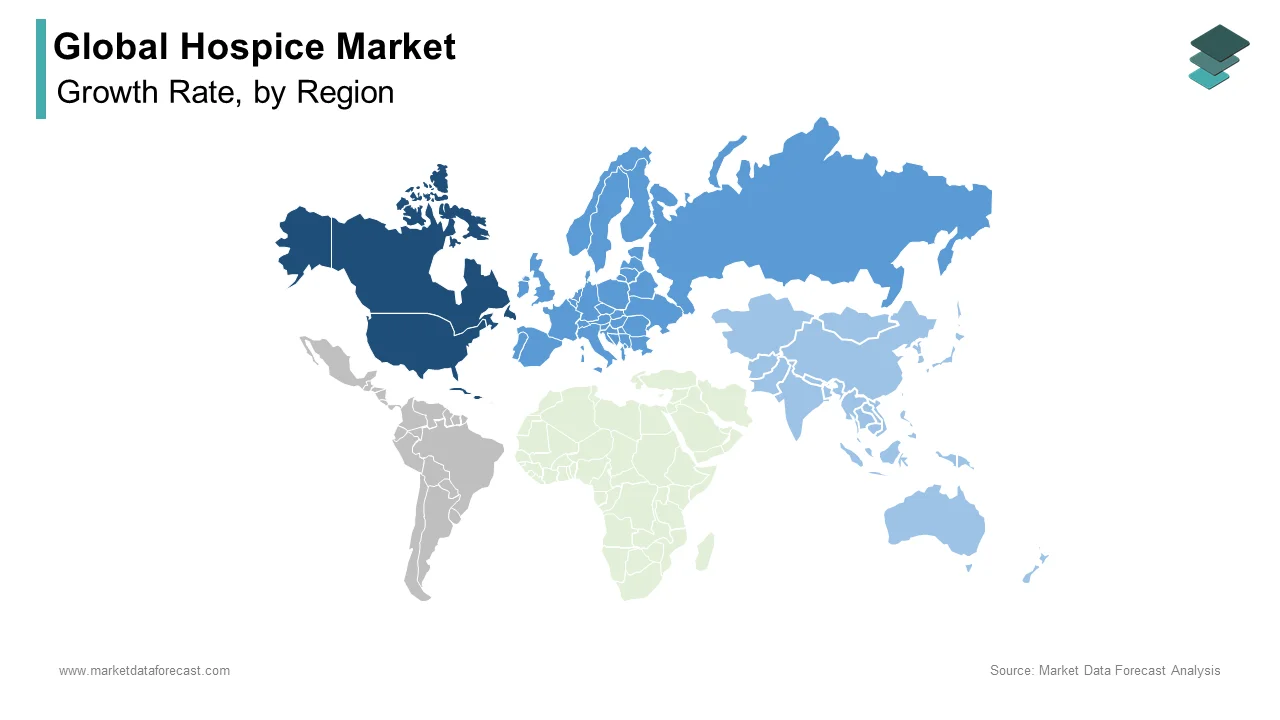
- North America led the market in 2025 with 50.7% share, supported by advanced healthcare systems and high adoption of hospice services.
- Europe held the second-largest position, driven by a mix of developed and emerging palliative care systems across the region.
- Asia-Pacific is expected to register the fastest growth due to expanding healthcare infrastructure and increasing awareness of hospice care.
Competitive Landscape
The global hospice market is moderately fragmented, with the presence of numerous regional and international service providers. Market players are focusing on expanding service offerings, improving patient care quality, and strengthening home-based care capabilities. Strategic partnerships, acquisitions, and investments in palliative care infrastructure are shaping competitive dynamics across the market.
Prominent companies operating in the global hospice market include Amedisys, Covenant Care, Dierksen Hospice, National Association for Home Care & Hospice, LHC Group, Inc., Oklahoma Palliative & Hospice Care, Alzheimer's Association, Curo Health Services, Vitas Healthcare, Kindred at Home, Seasons Hospice and Palliative Care, Samaritan Health Services, Accord Palliative and Hospice Care, Inc., Extendicare, HCR ManorCare USA, Inc., and AccentCare.
Global Hospice Market Size
The size of the global hospice market was worth USD 90.63 billion in 2025. The global market is anticipated to grow at a CAGR of 9.10% from 2026 to 2034 and be worth USD 198.47 billion by 2034 from USD 98.88 billion in 2026.

Hospice care represents a specialized multidisciplinary approach to medicine focused on providing palliative support rather than curative treatment for individuals facing life-limiting illnesses. This model prioritizes pain management, symptom control, and psychosocial support to ensure dignity and quality of life during the final stages of existence. The philosophy extends beyond the patient to include comprehensive bereavement services for families, which is creating a holistic ecosystem of care. In the United States, Medicare hospice benefits were utilized by millions of beneficiaries in 2023, as per the Centers for Medicare and Medicaid Services. The demographic shift towards an aging population is evident, with people aged 65 and older projected to reach tens of millions by 2040, according to the United States Census Bureau. As per the National Hospice and Palliative Care Organization, cancer remains the primary diagnosis for hospice admission. Furthermore, as per the Kaiser Family Foundation, a large majority of Americans express a preference to pass away in their own homes, though only a smaller portion achieve this goal without hospice intervention. The average length of stay has stabilized, while the median remains significantly lower, indicating late referrals. This disparity highlights the critical need for earlier integration of palliative principles into standard oncology and geriatric care pathways globally.
MARKET DRIVERS
Escalating Global Prevalence of Chronic and Degenerative Diseases
The rising incidence of chronic conditions such as cancer, dementia, and cardiovascular diseases is propelling the expansion of the global hospice market. As per the World Health Organization, noncommunicable diseases account for the majority of global deaths. As per the International Agency for Research on Cancer, cancer diagnoses continue to climb, which is creating a substantial pool of patients requiring end-of-life management. As per Alzheimer's Disease International, dementia represents a rapidly growing segment with millions of people affected globally, and the number is expected to increase significantly in the coming decades. These conditions often involve prolonged decline periods requiring intensive symptom management and caregiver support that acute care hospitals are ill-equipped to provide long-term. As per the Global Heart Journal, heart failure affects millions worldwide and frequently leads to recurrent hospitalizations that hospice care can mitigate through home-based interventions. The complexity of managing multiple comorbidities in elderly patients necessitates a coordinated care approach that hospice teams specialize in delivering. As life expectancy increases in developing nations, the burden of these chronic illnesses shifts, creating new demand centers for palliative infrastructure. The inability of traditional curative models to address the holistic needs of this growing patient population drives families and providers toward hospice alternatives.
Increasing Preference for Home-Based Care and Death with Dignity
A profound cultural shift towards preferring death in familiar surroundings rather than institutional settings is further contributing to the hospice market expansion worldwide. As per the American Society of Clinical Oncology, a large majority of patients wish to spend their final days at home surrounded by family. Hospice programs facilitate this preference by providing nursing care, medical equipment, and medication management directly in the patient's residence. The psychological comfort of remaining in one's own environment reduces anxiety and depression compared to hospital stays, as documented by the Journal of Pain and Symptom Management. As per the National Alliance for Caregiving, family caregivers report higher satisfaction levels when hospice teams assist with daily living activities and provide respite care, reducing caregiver burnout. As per Health Affairs, home hospice is more cost-effective than inpatient hospital care during the last month of life. Legislative movements supporting death with dignity laws in various regions further normalize the conversation around end-of-life choices. The integration of telehealth technologies has enhanced the viability of home care by allowing remote monitoring of vital signs and virtual consultations with physicians. This alignment of patient values with service delivery models ensures sustained growth in demand for home-based hospice solutions.
MARKET RESTRIANTS
Persistent Misconceptions and Cultural Stigma Surrounding End-of-Life Care
Deep-seated misconceptions about hospice care being synonymous with giving up or hastening death remain a major restraint for the hospice market growth. A significant portion of the population and even some medical professionals view hospice referral as an admission of defeat rather than a transition to comfort-focused care. As per the National Hospice and Palliative Care Organization, many Americans believe hospice is only for the last few days of life, leading to delayed referrals until patients are too frail to benefit fully. As per the Centers for Medicare and Medicaid Services, late entry limits the duration of care received, with a notable portion of patients dying within days of admission. Cultural taboos surrounding death discussions prevent families from initiating conversations about advance directives and care preferences early in the disease trajectory. Physicians often hesitate to introduce the topic due to fear of destroying patient hope or damaging the therapeutic relationship, resulting in missed opportunities for palliative integration. Religious beliefs in certain communities may interpret palliative sedation or pain management as interfering with divine will, creating resistance to standard hospice protocols. The lack of public awareness campaigns effectively countering these myths perpetuates the stigma. Educational gaps in medical schools regarding palliative communication skills further exacerbate the problem, leaving clinicians ill-prepared to navigate these sensitive discussions. Until these perceptual barriers are dismantled, a large segment of eligible patients will remain underserved.
Stringent Regulatory Reimbursement Structures and Funding Limitations
Rigid reimbursement policies and inadequate funding mechanisms severely constrain the operational flexibility and financial viability of many hospice providers, which further hampers the expansion of the global hospice market. In the United States, the Medicare hospice benefit operates under a per diem payment model that caps daily reimbursement rates regardless of the intensity of services required, creating financial strain during high acuity periods. As per the Centers for Medicare and Medicaid Services, the Affordable Care Act introduced an aggregate cap that limits total reimbursement per beneficiary annually, forcing providers to absorb costs for patients with extended stays. This structure discourages the acceptance of patients with unpredictable trajectories or those requiring expensive medications and therapies. As per the European Association for Palliative Care, fragmentation in national health systems leads to inconsistent coverage levels across countries. As per the National Council of Nonprofits, reliance on charitable donations and volunteer labor creates sustainability risks as economic downturns reduce philanthropic giving. Administrative burdens associated with compliance reporting and audit requirements consume significant resources that could otherwise be directed toward patient care. The inability to bill separately for certain high-cost items like continuous home care or general inpatient care further erodes margins. These financial constraints limit the ability of organizations to expand services, invest in technology, or recruit specialized staff.
MARKET OPPORTUNITIES
Integration of Advanced Telehealth and Remote Monitoring Technologies
The widespread adoption of telehealth and remote patient monitoring systems offers a promising opportunity for the hospice market. Digital platforms enable real-time tracking of pain levels, vital signs, and medication adherence, allowing clinical teams to intervene proactively before crises occur. As per the Journal of Telemedicine and Telecare, remote monitoring devices have been shown to reduce emergency department visits among hospice patients by facilitating timely adjustments to care plans. Virtual visit capabilities allow specialists to consult with patients in rural or underserved areas where physical access to palliative experts is limited, bridging geographical disparities. The implementation of artificial intelligence algorithms can predict symptom exacerbations based on historical data patterns, optimizing resource allocation and staffing schedules. Mobile applications empower family caregivers with instant access to educational resources, medication reminders, and direct communication lines to nurses, improving confidence and care quality. The global telehealth market is projected to expand significantly, and hospice providers leveraging these tools can differentiate themselves through superior responsiveness. Data analytics derived from remote monitoring can also inform population health strategies and improve clinical outcomes documentation for regulatory reporting. As broadband infrastructure improves globally, the potential for fully virtual hospice models becomes increasingly viable. This technological evolution promises to lower operational costs while simultaneously elevating the patient and family experience.
Expansion of Pediatric and Specialized Disease-Specific Hospice Programs
Developing specialized hospice programs tailored to pediatric populations and specific disease trajectories offers substantial growth potential beyond traditional adult cancer care. Pediatric palliative care addresses the unique physiological and psychological needs of children with life-limiting conditions, a segment that remains critically underserved globally. As per the World Health Organization, millions of children die annually requiring palliative care, yet only a small portion receive appropriate services. Establishing dedicated pediatric units with child life specialists and play therapists can capture this unmet demand and build community trust. Similarly, creating disease-specific pathways for conditions like amyotrophic lateral sclerosis, advanced heart failure, or end-stage renal disease allows for targeted expertise and better symptom management protocols. As per the Journal of Palliative Medicine, programs focusing on non-cancer diagnoses have been shown to increase referral rates as physicians feel more confident in the provider's ability to manage complex symptoms. Partnerships with children's hospitals and specialty clinics can create seamless referral networks that identify candidates earlier in the disease course. Customizing care environments to be child-friendly reduces trauma for young patients and their siblings. Expanding into these niches not only diversifies revenue streams but also fulfills a moral imperative to serve vulnerable populations often overlooked by generalist providers. The success of such specialized programs can serve as a model for broader market differentiation.
MARKET CHALLENGES
Critical Shortage of Specialized Palliative Care Workforce
The severe scarcity of trained physicians, nurses, and social workers specializing in palliative and hospice care is a major challenge to the growth of the hospice market. As per the American Board of Hospice and Palliative Medicine, projections indicate a deficit of thousands of palliative care physicians in the United States alone by 2030. The demanding emotional nature of the work contributes to high burnout rates, with many hospice nurses reporting symptoms of compassion fatigue as documented by Hospice News. Recruitment challenges are exacerbated by the limited number of fellowship programs and specialized training tracks available in medical and nursing schools. Rural areas face acute shortages, with some regions having no accessible hospice providers within many miles, as per the National Rural Health Association. The reliance on interdisciplinary teams means that a shortage in any single role, such as grief counselors or chaplains, can disrupt the entire care delivery model. Competitive salaries in acute care settings often draw potential candidates away from the hospice sector, creating a persistent retention issue. The aging workforce itself compounds the problem as experienced practitioners retire without sufficient replacements entering the pipeline. Addressing this gap requires substantial investment in education, loan repayment programs, and mental health support for staff. Without a robust workforce strategy, the industry risks being unable to meet the surging demand driven by demographic shifts.
Complexities in Coordinating Care across Fragmented Healthcare Systems
Navigating the fragmented landscape of modern healthcare systems is further challenging the expansion of the hospice market globally. Patients often transition between multiple settings, including acute hospitals, skilled nursing facilities, and home care, leading to disjointed communication and medication errors. As per the Agency for Healthcare Research and Quality, a notable portion of hospice patients experience unplanned hospital readmissions due to poor care coordination. Electronic health record systems frequently lack interoperability, preventing the smooth exchange of critical patient data between hospice agencies and referring physicians. The absence of standardized referral protocols results in delays and confusion regarding eligibility criteria and covered services. Social determinants of health, such as housing instability or lack of family support, further complicate care planning and require resources that many hospice organizations do not possess. Coordinating with durable medical equipment vendors and pharmacy services adds another layer of complexity that can delay the initiation of care. The siloed nature of insurance payers often leads to authorization delays for necessary treatments or equipment. Effective care coordination requires dedicated liaison roles and sophisticated case management software, investments that strain already tight budgets. Until healthcare systems achieve greater integration and data sharing capabilities, hospice providers will continue to face inefficiencies that compromise patient outcomes and operational effectiveness.
REPORT COVERAGE
| REPORT METRIC | DETAILS |
| Market Size Available | 2025 to 2034 |
| Base Year | 2025 |
| Forecast Period | 2026 to 2034 |
| Segments Covered | By Service Type, Care Type, End-User, and Region |
| Various Analyses Covered | Global, Regional & Country Level Analysis, Segment-Level Analysis, Drivers, Restraints, Opportunities, Challenges, PESTLE Analysis, Porter's Five Forces Analysis, Competitive Landscape, Analyst Overview of Investment Opportunities, COVID-19 Impact |
| Regions Covered | North America, Europe, Asia Pacific, Latin America, Middle East & Africa |
| Market Leader Profiled | Amedisys, Covenant Care., Dierksen Hospice, National Association for Home Care & Hospice., LHC Group, Inc, Oklahoma Palliative & Hospice Car., Alzheimer's Association, Curo Health Services, VITAS Healthcare, Seasons Hospice and Palliative Care, Samaritan Health Services., Accord Palliative and Hospice Care, Inc, EXTENDICARE., HCR ManorCare USA, Inc., AccentCare, and Others. |
SEGMENTAL ANALYSIS
By Service Type
The nursing services segment led the market by capturing 36.6% of the global market share in 2025. The dominance of the nursing care services segment in the global market is attributed to the fundamental role nurses play as the primary coordinators of patient care, managing pain, administering medications, and monitoring symptom progression around the clock. The interdisciplinary nature of hospice care relies heavily on nursing assessments to determine the immediate needs of patients and adjust care plans dynamically. Nurses serve as the critical link between patients, families, physicians, and other therapists, ensuring that all aspects of the care plan are executed seamlessly. The high frequency of nurse visits drives significant revenue volume compared to other episodic services. As per the National Hospice and Palliative Care Organization, registered nurses account for a large portion of the clinical workforce in hospice agencies, reflecting their centrality to operations. The complexity of managing polypharmacy and complex wound care in terminal patients necessitates skilled nursing intervention that cannot be delegated to lower-level staff. Furthermore, regulatory requirements mandate regular nursing evaluations to maintain certification for reimbursement, solidifying the continuous demand for these services. The emotional support and education provided by nurses to family caregivers also add immense value, making them indispensable to the hospice model.
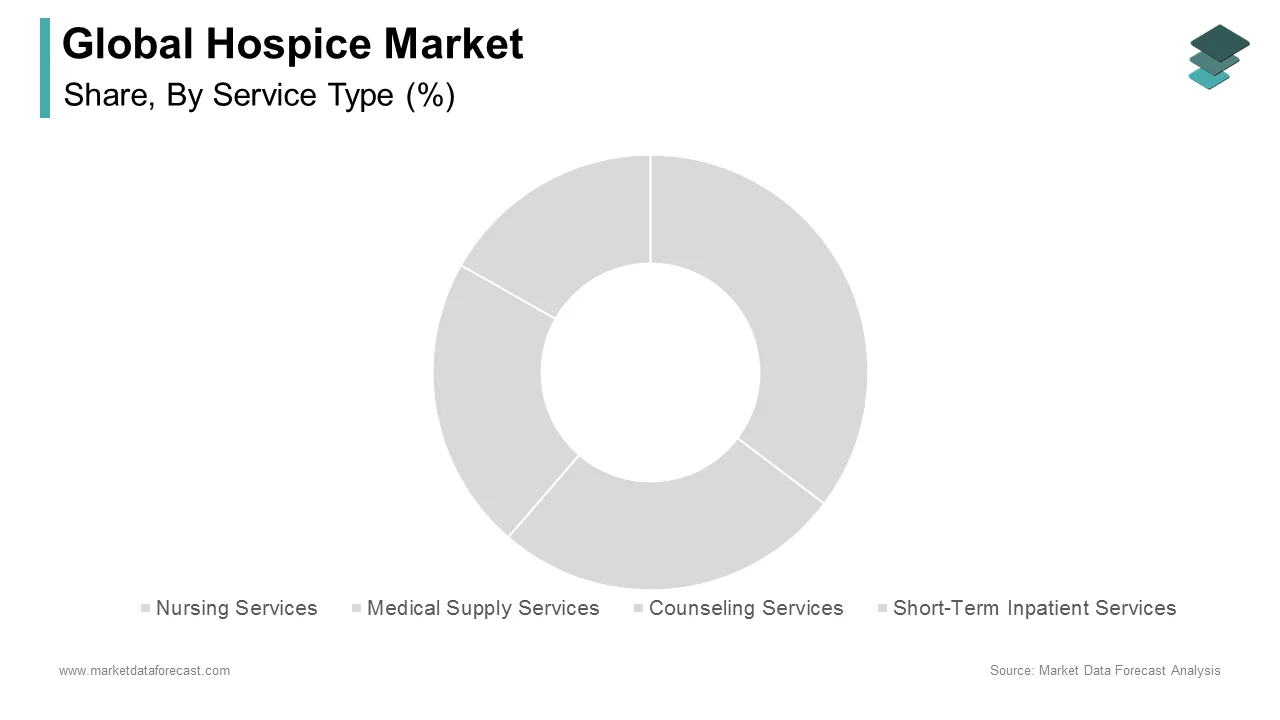
However, the counseling services segment is projected to be the fastest-growing segment in the hospice market and grow at a CAGR of 10.6% over the forecast period, owing to a growing recognition of the profound psychological and emotional impact of terminal illness on both patients and their loved ones. The integration of mental health support into standard palliative care protocols is becoming a benchmark for quality, moving beyond physical symptom control to address existential distress, anxiety, and depression. Regulatory bodies and accreditation organizations increasingly emphasize the necessity of robust psychosocial support, prompting agencies to expand their counseling teams. The rising prevalence of complicated grief and the long-term mental health consequences for bereaved families have spurred investment in extended bereavement programs. As societal stigma surrounding mental health diminishes, more families actively seek professional counseling to navigate the end-of-life journey. The shortage of specialized palliative psychologists has created a supply-demand gap that new entrants and existing players are rushing to fill. As per the American Psychological Association, demand for geriatric and palliative mental health services has surged in recent years. The shift towards value-based care models rewards providers who demonstrate improved quality of life metrics, which are heavily influenced by effective counseling interventions.
By Care Type Insights
The acute care segment led the market by holding 66.7% of the global market share in 2025. The leading position of the acute care segment in the global market can be credited to the high intensity of resources required to manage crises that cannot be handled in a home setting. GIP is utilized when a patient experiences severe symptoms such as uncontrolled pain, acute respiratory distress, or intractable nausea that necessitate 24-hour nursing monitoring and frequent physician interventions. The reimbursement rates for inpatient care are significantly higher than those for routine home care, reflecting the substantial costs of staffing, facility overhead, and medical supplies. Hospitals and dedicated hospice inpatient units serve as critical safety nets for the broader hospice ecosystem, stabilizing patients until they can return to lower levels of care. As per the Medicare Payment Advisory Commission, although GIP represents a small percentage of total hospice days, it accounts for a disproportionate share of total expenditures due to its high daily cost. The complexity of modern palliative care often involves managing multiple comorbidities that can decompensate rapidly, requiring the advanced capabilities of an acute care environment. The scarcity of alternative facilities capable of providing this level of specialized palliative support consolidates demand within established inpatient units. The regulatory framework strictly defines eligibility for GIP, ensuring that it is reserved for true crises, which maintains its high value perception among providers and payers.
On the other side, the respite care segment is emerging as the fastest-growing segment within the hospice care type category and is estimated to exhibit a CAGR of 9.7% over the forecast period due to the increasing awareness of caregiver burnout and the critical need to provide relief to family members who serve as primary caregivers. Respite care allows patients to be temporarily transferred to an inpatient facility for up to five days, giving family caregivers a much-needed break to rest, attend to personal matters, or recover from physical and emotional exhaustion. The aging population and the rise in single-child families have reduced the availability of informal caregiving networks, intensifying the reliance on formal respite services. Legislative efforts in various regions are expanding coverage and reducing barriers to accessing respite care, making it more accessible to a broader demographic. The recognition that caregiver health directly impacts patient outcomes has led to a paradigm shift where supporting the caregiver is seen as an integral part of patient care. As per the AARP Public Policy Institute, the number of family caregivers providing high-intensity care has increased in the last decade, creating a surging demand for relief services. Hospice providers are increasingly marketing respite care as a key benefit to attract enrollments, which is highlighting its role in sustaining the home care model.
By End User Insights
The home settings segment represented the overwhelming leader in the hospice market end user segmentation by accounting for 74.8% of the global market share in 2025. The dominance of the home settings segment in the global market is driven by the fundamental preference of the vast majority of patients to receive end-of-life care in the comfort and familiarity of their own residences. The hospice philosophy was originally designed to enable death with dignity at home, and this model remains the gold standard for care delivery. Providing care at home avoids the sterile and often traumatic environment of hospitals, allowing patients to remain surrounded by loved ones and personal belongings. The cost structure of home care is also significantly lower than institutional care, making it the preferred option for payers and government health programs aiming to control expenditures. As per the Kaiser Family Foundation, a large majority of Americans state a preference to die at home, yet only about half achieve this, indicating a massive existing base and potential for further penetration. The flexibility of home care allows for personalized schedules and routines that enhance the quality of life for the patient. Advances in portable medical equipment and telehealth have further strengthened the viability of home care, enabling complex treatments to be administered outside of facilities. The emotional and psychological benefits of staying in one's own environment are well documented, reinforcing the demand for home-based services.
The hospice care centres segment is estimated to record a CAGR of 8.44% over the forecast period in the global market, owing to the increasing need for specialized residential facilities that bridge the gap between home care and acute hospital settings. These centers provide a homelike environment specifically designed for end-of-life care, offering 24-hour professional support for patients whose symptoms cannot be managed at home but who do not require the intensive medical interventions of a hospital. The rising number of patients living alone or lacking sufficient family caregiver support has created a surge in demand for these residential options. Families are increasingly seeking alternatives to nursing homes, which are often perceived as too clinical or ill-equipped for specialized palliative needs. The development of purpose-built hospice houses by nonprofit organizations and healthcare systems is accelerating, with new facilities opening regularly across North America and Europe. As per the National Hospice and Palliative Care Organization, the number of freestanding hospice houses has grown in recent years to meet rising demand. These centers offer a unique value proposition combining the comfort of home with the security of constant professional care. The trend towards privatization and the entry of large healthcare chains into the hospice sector are also fuelling the construction of new care centers.
REGIONAL ANALYSIS
North America Hospice Market Analysis
North America led the market by accounting for 50.7% of the global market share in 2025. The region's dominance is anchored by the mature healthcare infrastructure in the United States and Canada, where hospice care is deeply integrated into the standard continuum of care. The establishment of the Medicare Hospice Benefit in the United States created a robust reimbursement framework that has fueled decades of market growth and provider proliferation. High public awareness and acceptance of palliative care principles characterize the region, with a strong cultural emphasis on patient autonomy and death with dignity. The presence of numerous large national hospice providers alongside thousands of community-based nonprofits creates a competitive and innovative landscape. Regulatory standards are rigorous, ensuring high quality of care and driving continuous improvement in service delivery. The aging baby boomer generation is entering the age range where hospice utilization peaks, guaranteeing sustained demand. As per the National Hospice and Palliative Care Organization, millions of patients received hospice care in the US in the most recent reporting year. The region also leads in the adoption of technology such as electronic health records and telehealth in hospice settings. Extensive research funding and academic programs in palliative medicine further solidify North America's position as the center of global hospice innovation and practice.
Europe Hospice Market Analysis
Europe held the second-largest position in the global hospice market due to a diverse landscape of developed and emerging palliative care systems. The region boasts a strong tradition of hospice innovation, particularly in the United Kingdom, where the modern hospice movement originated. Countries like the UK, Germany, and France have well-established networks of hospice services, while Eastern European nations are rapidly developing their capacities. The European Association for Palliative Care plays a pivotal role in harmonizing standards and promoting best practices across the continent. Government funding models vary significantly, with some nations integrating hospice fully into national health services while others rely heavily on charitable donations. The aging population in Europe is one of the oldest globally, creating immense pressure on healthcare systems to provide efficient end-of-life care. Public awareness campaigns have successfully reduced stigma in many Western European countries, leading to higher utilization rates. As per the Atlas of Palliative Care in Europe, accessibility to palliative care has improved markedly, though disparities remain between regions. The focus on home care is particularly strong in Northern Europe, aligning with societal preferences for aging in place. The region is also a hub for academic research and policy development in palliative medicine, influencing global trends.
Asia Pacific Hospice Market Analysis
Asia Pacific is the fastest-growing region in the global hospice market, owing to a vast array of cultures and healthcare systems, ranging from highly advanced networks in Japan and Australia to nascent stages of development in South Asia and Southeast Asia. Rapidly aging populations in countries like Japan, China, and South Korea are creating an unprecedented demand for end-of-life care services. Historically, cultural taboos surrounding death and a preference for curative treatment until the very end have hindered hospice adoption, but these attitudes are slowly shifting. Governments are beginning to recognize the economic and social imperative of developing palliative care infrastructure to manage the burden of chronic diseases. As per the World Health Organization, the Asia Pacific region has been identified as a priority area for scaling up palliative care access. Urbanization and changing family structures are eroding traditional caregiving models, creating a need for formal hospice services. As per the Asia Pacific Hospice Palliative Care Network, the number of palliative care services in the region has grown significantly in the last decade. Pilot programs and legislation in countries like India and Thailand are laying the groundwork for broader implementation. The region represents a massive untapped market with significant potential for growth as awareness and infrastructure improve.
Latin America Hospice Market Analysis
Latin America holds a modest but growing share of the global hospice market, with significant variations in development across countries. Brazil, Argentina, and Mexico are the regional leaders, possessing more established palliative care networks compared to smaller nations. The region faces challenges such as unequal access to opioids, limited funding, and cultural barriers, but progress is being made through grassroots advocacy and policy reforms. The Pan American Health Organization has been instrumental in promoting palliative care as a human right and encouraging member states to develop national plans. Religious influences, particularly Catholicism, play a complex role, sometimes hindering discussions on end-of-life but also providing a strong network of charitable institutions that deliver care. The growing burden of noncommunicable diseases is highlighting the need for palliative services, yet supply remains far below demand. As per the Latin American Association of Palliative Care, only a small fraction of patients in need currently receive specialized care. However, the number of training programs and specialized units is increasing, signaling a positive trend. The region is seeing a rise in civil society organizations advocating for better pain management and hospice access. While still in the early stages of market maturity, Latin America represents a frontier for future growth as healthcare systems evolve.
Middle East and Africa Hospice Market Analysis
The Middle East and Africa region holds the smallest share of the global hospice market, reflecting the early stage of palliative care development in many areas. The market is highly fragmented, with pockets of advanced practice in Gulf Cooperation Council countries and South Africa, while many low-income nations have virtually no specialized services. Cultural and religious factors heavily influence perceptions of death and dying, often emphasizing hope and curative treatment over palliative approaches. However, there is a growing recognition among health ministries of the need to address the suffering of patients with terminal illnesses. The African Palliative Care Association is working to build capacity and advocate for policy changes across the continent. Access to essential medicines, particularly opioids, remains a critical barrier in many African nations due to restrictive regulations and supply chain issues. As per the Worldwide Hospice Palliative Care Alliance, millions of people in the region die in pain each year without access to relief. Initiatives to integrate palliative care into primary health systems are gaining traction as a pragmatic solution to resource constraints. The region faces a severe shortage of trained professionals, relying heavily on volunteers and community health workers. Despite these hurdles, the growth potential is immense as awareness rises and international support increases.
COMPETITIVE LANDSCAPE
The competition in the hospice market is characterized by a fragmented landscape comprising large national chains, numerous regional providers, and small community-based organizations. Large corporations leverage economies of scale and sophisticated technology infrastructures to dominate urban markets while smaller entities compete through personalized service and deep community roots. Intense rivalry exists for qualified nursing staff and clinical personnel, leading to increased wage pressures and recruitment challenges across the sector. Providers differentiate themselves by emphasizing quality metrics such as patient satisfaction scores and family bereavement support programs to attract referrals from physicians and hospitals. Regulatory compliance and reimbursement changes create barriers to entry that favor established players with robust administrative capabilities. Mergers and acquisitions activity remains high as companies seek to achieve critical mass and expand into new territories strategically. The shift towards value-based care models forces competitors to focus on outcome improvements and cost efficiency to maintain profitability. Innovation in care delivery methods, including virtual visits and remote monitoring, serves as a key battleground for gaining a competitive advantage. This dynamic environment drives continuous improvement in service standards while shaping the future structure of the industry.
KEY MARKET PLAYERS
Some of the major market players in the global hospice market are
- Amedisys
- Covenant Care
- Dierksen Hospice
- National Association for Home Care & Hospice
- LHC Group, Inc.
- Oklahoma Palliative & Hospice Care
- Alzheimer's Association
- Curo Health Services
- Vitas Healthcare
- Kindred at Home
- Seasons Hospice and Palliative Care
- Samaritan Health Services
- Accord Palliative and Hospice Care, Inc.
- Extendicare
- HCR ManorCare USA, Inc.
- AccentCare
TOP PLAYERS IN THE MARKET
- Kindred at Home stands as a premier provider of hospice and palliative care services across the United States with a vast national footprint. The organization delivers comprehensive end-of-life support through an extensive network of clinicians dedicated to patient comfort and family education. Recent strategic initiatives include significant investments in proprietary technology platforms that enhance remote patient monitoring and streamline care coordination among interdisciplinary teams. The company has actively expanded its geographic reach by opening new branches in underserved rural communities to improve access for diverse populations. Kindred at Home also focuses on integrating advanced data analytics to predict patient needs and optimize resource allocation effectively. Their commitment to quality is evident through rigorous staff training programs and partnerships with major health systems to ensure seamless care transitions. These efforts solidify their reputation as a leader in delivering compassionate and high-quality hospice care nationwide.
- Amedisys Inc operates as a leading healthcare company specializing in home health and hospice services with a strong emphasis on clinical excellence. The firm provides personalized care plans that address the physical, emotional, and spiritual needs of patients facing terminal illnesses. Amedisys has recently strengthened its market position by acquiring regional hospice providers to expand its service coverage and enhance local community presence. The company leverages sophisticated electronic health record systems to improve documentation accuracy and facilitate real-time communication between caregivers and physicians. Strategic collaborations with accountable care organizations allow Amedisys to participate in value-based payment models that reward superior patient outcomes. Their focus on workforce development includes robust recruitment initiatives and continuous education programs to retain top nursing talent. These actions demonstrate their dedication to advancing the standard of hospice care while ensuring sustainable growth in a competitive landscape.
- Vitas Healthcare functions as the largest provider of hospice care in the United States, offering specialized services for patients with life-limiting conditions. The company distinguishes itself through a highly integrated model that combines medical expertise with compassionate support for families throughout the grieving process. Vitas has recently invested heavily in innovative pain management technologies and telehealth solutions to enhance symptom control and accessibility for patients in remote areas. Their strategy involves forming strategic alliances with hospital systems to facilitate early referrals and smooth transitions from acute care to hospice settings. Vitas also prioritizes community outreach programs to educate the public about the benefits of early hospice enrollment and advance care planning. The organization maintains a strong focus on diversity and inclusion, ensuring culturally competent care for various demographic groups. These proactive measures reinforce their leadership role and commitment to improving the end-of-life experience for countless individuals.
TOP STRATEGIES USED BY KEY MARKET PARTICIPANTS
Key players in the hospice market primarily utilize strategic acquisitions to expand their geographic footprint and consolidate regional market presence rapidly. Companies invest heavily in advanced technology platforms, including electronic health records and telehealth tools, to improve care coordination and operational efficiency. Forming strategic partnerships with hospital systems and accountable care organizations enables providers to secure steady referral streams and integrate seamlessly into broader care continua. Major participants focus on workforce development by offering competitive compensation and comprehensive training programs to attract and retain skilled nurses and caregivers amidst labor shortages. Diversification of service offerings to include specialized palliative care programs for non-cancer diagnoses helps organizations capture broader patient demographics. Providers also engage in extensive community education campaigns to raise awareness about hospice benefits and reduce stigma associated with end-of-life care. These collective strategies aim to enhance service quality, drive volume growth, and ensure financial sustainability in an evolving healthcare environment.
MARKET SEGMENTATION
This research report on the global hospice market has been segmented and sub-segmented based on service type, care type, end-user, and region.
By Service Type
- Nursing Services
- Medical Supply Services
- Counseling Services
- Short-Term Inpatient Services
- Physician Services
- Physical Therapy
- Speech Therapy
- Spiritual Therapy
By Care Type
- Acute Care
- Respite Care
By End User
- Home Settings
- Hospitals
- Specialty Nursing Homes
- Hospice Care Centres
By Region
- North America
- Europe
- Asia-Pacific
- Latin America
- Middle East and Africa