- Product Description Description
- Table of Contents TOC
- List of Table & Figure LOT
- Get Free Sample PDF Sample PDF
Market Size, 2025
$6.07 BnMarket Estimate, 2026
$6.58 BnMarket Forecast, 2034
$12.55 BnCAGR, 2026–2034
8.41%Global Palliative Care Market Size
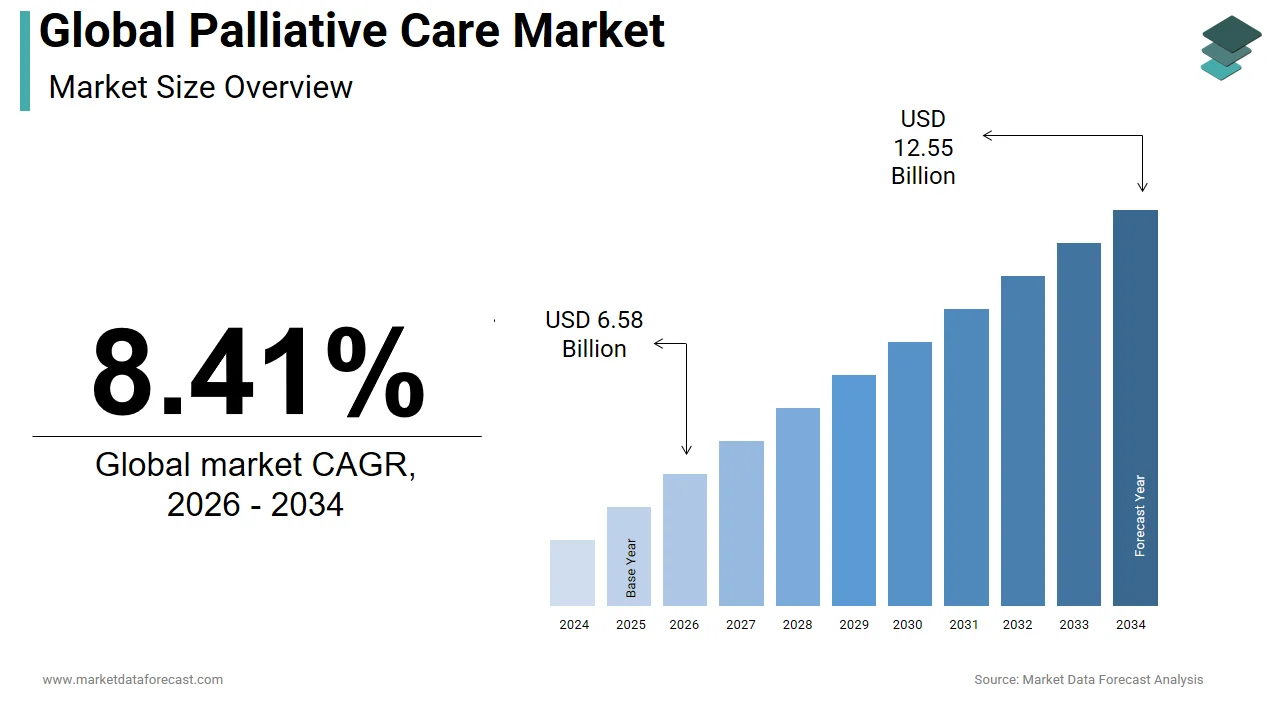
The global palliative care market was valued at USD 6.07 billion in 2025, is estimated to reach USD 6.58 billion in 2026, and is projected to reach USD 12.55 billion by 2034, growing at a CAGR of 8.41% from 2026 to 2034.
Palliative care is a specialized procedure for chronically ill people and their families. The care team is a specifically appointed team of doctors and nurses who work with the patient's doctors to provide the extra care and attention required by the patients. These caregivers aim to reduce the disease's symptoms and the stress that chronic illness may induce in the patient. Usually, this service is required by people with cancer, chronic obstructive pulmonary disease, Alzheimer's and others. Palliative care professionals strive to provide the best quality of life to patients and reduce their suffering.
MARKET DRIVERS
The global palliative care market is majorly driven by the increasing geriatric population and the cases of chronic and life-threatening diseases worldwide.
In addition, the market is propelled by establishing more palliative care centers in various locations and the hike in awareness about the importance and need of the palliative care market due to the adoption of sedentary lifestyles. Furthermore, the market is rising due to the expansion of healthcare professionals and experts in palliative care. Furthermore, the growing adoption of home healthcare and the need for palliative care in clinics and hospitals, along with government initiatives and investments in better reimbursement policies, technological advancements, and innovative therapies in the palliative care market, is leading the market to grow. In addition, the need to provide a decent quality of life to the elderly and the growing number of patients worldwide further promotes market growth.
As chronic illnesses like cancer, organ failure, tuberculosis, and other terminal diseases keep increasing, there is a raising need for palliative care services. According to WHO, approximately 40 million people need palliative care annually, and around 78% are from low-economy countries. However, only 14% of the need is met, and the rest are without service. Therefore, the need to expand the reach of palliative care and reach more people due to rising cases of communicable and non-communicable diseases, which require the assistance of the palliative market, is pushing the market forward.
MARKET RESTRAINTS
The lack of proper government funding and initiatives in developing countries, the high costs associated with the treatment, and the scarcity of palliative care centers in various regions are estimated to hinder the growth of the palliative care market.
REPORT COVERAGE
| REPORT METRIC | DETAILS |
| Market Size Available | 2025 to 2034 |
| Base Year | 2025 |
| Forecast Period | 2026 to 2034 |
| Segments Covered | By Condition, Age Group, Provider & Region |
| Various Analyses Covered | Global, Regional & Country Level Analysis, Segment-Level Analysis, Drivers, Restraints, Opportunities, Challenges, PESTLE Analysis, Porter’s Five Forces Analysis, Competitive Landscape, Analyst Overview of Investment Opportunities |
| Regions Covered | North America, Europe, Asia Pacific, Latin America, Middle East & Africa |
SEGMENT ANALYSIS
By Condition Insights
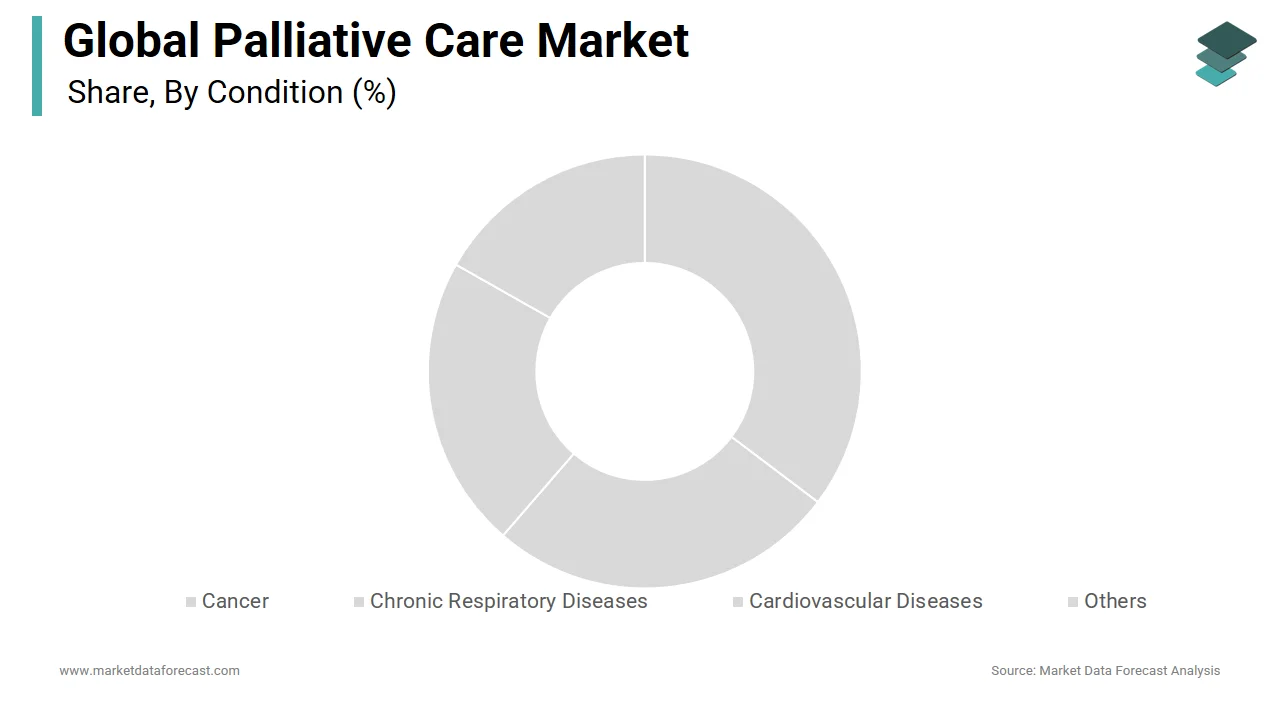
The cancer segment is expected to hold the largest share of the market during the forecast period. According to WHO statistics, cancer is the leading cause of death worldwide, with over 10 million deaths reported in 2020 and killing every 1 in 6 persons. Therefore, the prevalence of cancer and the rising need for a palliative specialist in cancer cases make the segment lead the market.
By Age Group Insights
The adult segment is expected to continue dominating the market during the forecast period, and this dominance is due to the prevalence of chronic diseases in the elderly population as they are more prone to such conditions, along with the fact that more adult patients with life-threatening diseases approach palliative care is making the segment dominate the market.
By Provider Insights
The hospitals and clinics segment is expected to dominate the market throughout the forecast period. The factors such as the increasing hospital inpatient care treatment for the elderly and the severely ill population drive the segment growth. In addition, the favorable government initiatives toward improving palliative care in hospitals have led to the rise in this segment.
REGIONAL ANALYSIS
North America is expected to dominate the market during the forecast period due to the presence of key market players in the region and the number of chronic diseases in the area which are on the rise. Additionally, good reimbursement policies, insurance, and facilities for palliative care services are boosting the market in the area. Furthermore, the region's specialized palliative care for cancer patients is also helping the market develop. For example, in countries like the US, 72% of the hospitals have 50 or more beds assigned solely for palliative care and palliative teams.
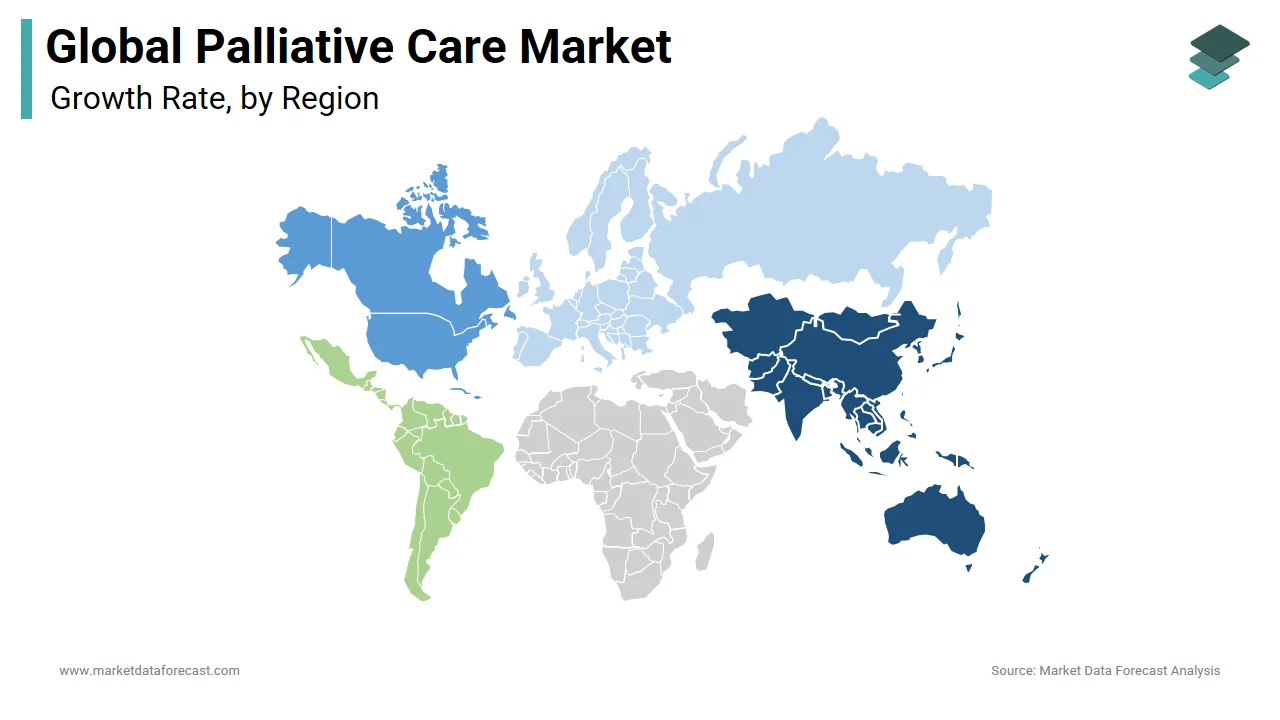
The Asia Pacific is expected to grow lucratively during the forecast period. The rising public awareness and demand for palliative care and advanced healthcare facilities, along with government initiatives and investments in hospitals on an excellent palliative team and equipment for palliative care, are pushing the market to grow.
TOP COMPANIES IN THIS MARKET
Some of the companies that are playing a dominating role in the global palliative care market include
- Chemed Corporation (Vitas Healthcare)
- Kindred Healthcare LLC (Gentiva Healthcare Group Inc.)
- Public Sector Pension Investment Board
- Home Instead Inc.
- Filmore Capital Partners LLC (Golden Living Centers / GGNSC Holdings LLC)
- Amedisys Inc.
- Genesis HealthCare (Skilled Healthcare Group Inc.)
- Senior Care Centers of America Inc.
- Seymour Health
- UCLA Health
GLOBAL PALLIATIVE CARE MARKET NEWS
- In June 2022, Contessa Health and Texas-based Baylor Scott & White Health teamed up to create continuous care in the home model that incorporates palliative care components. To provide complete, coordinated treatment to patients' homes, including hospital-level care, palliative care, and supportive care, the move aims to provide innovative alternative care models.
MARKET SEGMENTATION
This research report on the global palliative care market has been segmented and sub-segmented based on condition, age group, provider, and region.
By Condition
- Cancer
- Chronic Respiratory Diseases
- Cardiovascular Diseases
- Others
By Age Group
- Pediatric
- Nursing Homes
- Hospitals & Clinics
- Others
- Adult
- Nursing Homes
- Hospitals And Clinics
- Others
By Provider
- Nursing Homes
- Hospitals & Clinics
- Others
By Region
- North America
- Europe
- Asia-pacific
- Latin America
- Middle East and Africa