- Product Description Description
- Table of Contents TOC
- List of Table & Figure LOT
- Get Free Sample PDF Sample PDF
Market Size, 2025
$12.6 BnMarket Estimate, 2026
$13.76 BnMarket Forecast, 2034
$27.82 BnCAGR, 2026–2034
9.2%Global Home Healthcare Software Market Report Summary
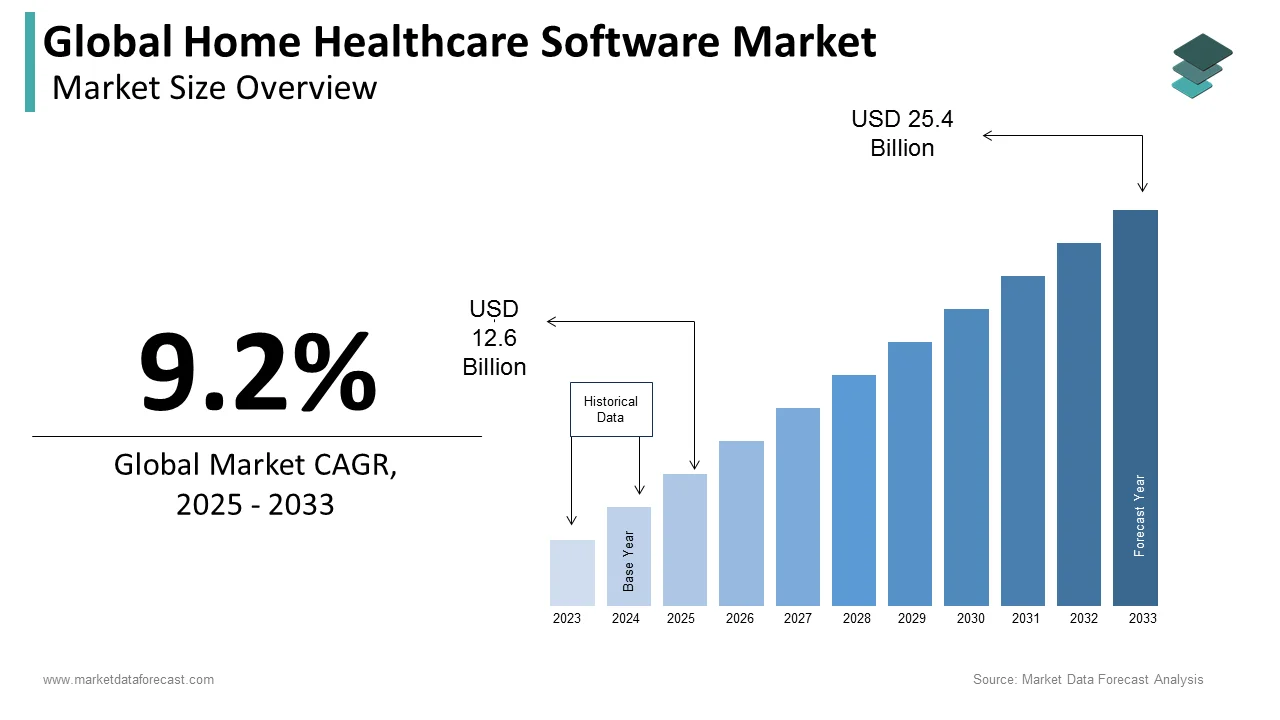
The global home healthcare software market was valued at USD 12.6 billion in 2025 and is projected to grow from USD 13.76 billion in 2026 to USD 27.82 billion by 2034, registering a CAGR of 9.2% from 2026 to 2034. Market growth is driven by the increasing demand for home-based healthcare services, the growing aging population, and rising adoption of digital health technologies. Home healthcare software enables providers to streamline clinical workflows, improve patient care coordination, manage electronic health records, and optimize caregiver scheduling. Expanding telehealth services, remote patient monitoring, and value-based care initiatives are further accelerating market growth.
Key Market Trends
- Increasing adoption of digital home healthcare management platforms.
- Growing integration of telehealth, remote patient monitoring, and mobile health applications.
- Rising demand for care coordination, electronic health records (EHRs), and workflow automation.
- Expansion of AI-powered analytics and predictive care management solutions.
- Increasing focus on data security, regulatory compliance, and interoperability.
Segmental Insights
- Based on software type, the clinical management segment dominated the global home healthcare software market in 2025, driven by increasing demand for patient record management, care planning, medication tracking, and clinical documentation solutions.
- Based on service, the skilled nursing segment held the largest market share in 2025, supported by the growing need for specialized home-based nursing care, chronic disease management, and post-acute care services.
- Based on mode of delivery, the on-premises software segment accounted for the largest share of the market in 2025, owing to strict data sovereignty requirements, enhanced control over sensitive patient information, and strong preference among large healthcare systems and government-affiliated home care agencies.
Regional Insights
The global home healthcare software market continues to expand across major regions, supported by increasing healthcare digitization, growing home healthcare adoption, and rising investments in digital health infrastructure.
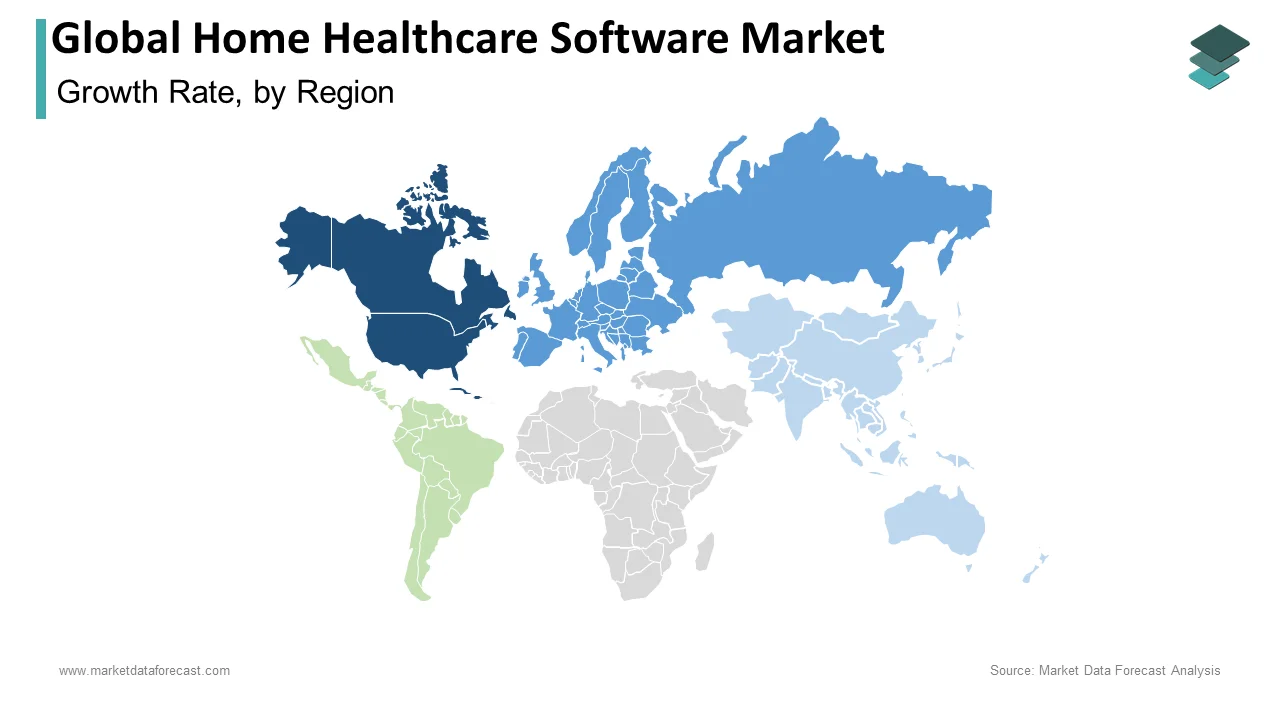
- North America dominated the global market in 2025 by accounting for 45.8% share, driven by advanced healthcare IT infrastructure, widespread adoption of home healthcare services, favorable reimbursement policies, and increasing demand for remote patient management solutions.
- Europe held the second-largest position with 28.2% share in 2025, supported by expanding home-based care programs, increasing healthcare digitalization, and growing emphasis on aging population management.
- Asia-Pacific is projected to register the fastest growth during the forecast period, driven by large population bases, rapid healthcare modernization, increasing investments in digital health, and expanding access to home healthcare services.
Competitive Landscape
The global home healthcare software market is highly competitive, with leading healthcare IT companies focusing on cloud computing, interoperability, artificial intelligence, and integrated care management platforms. Market participants are investing in workflow automation, telehealth integration, remote patient monitoring, and advanced analytics to strengthen their market position. Strategic partnerships, acquisitions, product innovation, and expansion into emerging healthcare markets continue to shape the competitive landscape.
Prominent companies operating in the global home healthcare software market include Allscripts Healthcare Solutions, AlayaCare, Carestream Health, GE Healthcare, MatrixCare, NextGen Healthcare Information Systems LLC, Siemens Healthcare, Novarad Corporation, MEDITECH, Cerner Corporation, Agfa HealthCare, WellSky, Medical Information Technology, Inc. (MEDITECH), and ContinuLink.
Global Home Healthcare Software Market Size
The global home healthcare software market was worth US$ 12.6 billion in 2025 and is anticipated to reach a valuation of US$ 27.82 billion by 2034 from US$ 13.76 billion in 2026, and it is predicted to register a CAGR of 9.2% during the forecast period 2026 to 2034.
Home Healthcare Software is a specialized digital platform designed to help agencies manage and deliver medical or non-medical care directly to a patient's home. These sophisticated systems encompass electronic visit verification, remote patient monitoring integration, intelligent scheduling, and automated billing functionalities. The fundamental necessity for such digital infrastructure is deeply rooted in shifting global demographic paradigms and the escalating prevalence of chronic illnesses. The World Health Organization projects that the global population of people aged 60 years and older will reach 1.4 billion by 2030, requiring major transformations in health and social care systems. Furthermore, the burden of chronic conditions necessitates continuous monitoring outside traditional clinical environments. According to the Centers for Disease Control and Prevention, six in ten adults in the United States live with at least one chronic disease that lasts a year or more and requires ongoing medical attention. This demographic reality forces healthcare systems to transition from reactive hospital-based care to proactive home-based models. Digital platforms serve as the central nervous system for this transition, ensuring that dispersed care teams remain coordinated and compliant with regulatory mandates. By automating routine administrative tasks, these solutions allow clinicians to dedicate more time to direct patient care, ultimately enhancing health outcomes and preserving the dignity of individuals aging in place.
MARKET DRIVERS
Consumer Preference for Aging in Place
The profound consumer preference for aging in place fundamentally accelerates the adoption of comprehensive digital management platforms, which drives the growth of the home healthcare software market. Modern patients overwhelmingly express a desire to receive medical treatment within the comfort of their own residences rather than in institutional facilities. According to the AARP Home and Community Preferences Survey, 75 percent of older adults express a strong preference to remain in their current homes as they age. This massive demographic shift requires home care agencies to manage complex care plans remotely and efficiently. Software solutions enable agencies to coordinate multiple caregivers, track medication adherence, and monitor vital signs without requiring constant physical presence. Studies demonstrate that structured home health services significantly lower 30-day hospital readmission rates among older adults compared to traditional post-discharge care. To support this decentralized care model, agencies must deploy robust scheduling and electronic visit verification systems to ensure compliance with state and federal regulations. These digital tools provide families with transparent access to care logs, fostering trust and enabling real-time communication between the patient, the caregiver, and the primary physician. Consequently, the deep-rooted societal desire for independent living directly drives the procurement of advanced software capable of orchestrating complex home-based medical services.
Healthcare Workforce Shortage and Automation
The severe global deficit of clinical staff and direct care workers necessitates operational efficiency through advanced digital automation, which in turn propels the expansion of the home healthcare software market. Healthcare systems worldwide are grappling with an acute shortage of registered nurses and home health aides, making it impossible to rely solely on manual administrative processes. The World Health Organization projects that the global health and care workforce will face a shortfall of 11 million workers by the year 2030. This critical labor shortage forces home care agencies to maximize the productivity of their existing staff through intelligent software solutions. Automated scheduling algorithms optimize routing and match caregivers with patients based on specific clinical skills and geographic proximity, thereby reducing travel time and preventing caregiver burnout. According to the U.S. Bureau of Labor Statistics, employment for home health and personal care aides is projected to grow 17 percent, adding hundreds of thousands of jobs to the market. By automating documentation, billing, and compliance reporting, software platforms eliminate hours of tedious paperwork, allowing clinicians to see more patients per shift. This technological leverage is no longer a luxury but an absolute operational necessity to maintain service continuity and deliver quality care amidst a persistent and worsening labor crisis.
MARKET RESTRAINTS
High Implementation and Integration Costs
The substantial financial burden associated with initial deployment and system integration severely restricts adoption among smaller care providers, which hampers the growth of the home healthcare software market. Developing and deploying a comprehensive software ecosystem requires significant capital investment encompassing software licensing, hardware upgrades, staff training, and ongoing technical support. According to the National Association for Home Care and Hospice, the vast majority of home care agencies operate as small businesses with narrow profit margins, making large capital expenditures highly risky. Furthermore, integrating new platforms with legacy electronic health records and existing billing systems is a notoriously complex and time-consuming endeavor. Studies published in the Journal of Medical Internet Research emphasize that upfront acquisition costs and interoperability hurdles remain the leading barriers to digital health adoption among smaller clinical entities. Many smaller agencies lack dedicated information technology departments to manage these transitions, leading to prolonged implementation timelines and temporary disruptions in daily operations. The fear of hidden costs and the potential for operational downtime during the migration phase causes many providers to delay digital transformation. The fragmented care provider landscape currently faces high financial and technical entry requirements that stifle widespread market penetration. This will continue until software vendors can provide more affordable, modular solutions featuring seamless integration capabilities.
Data Privacy and Cybersecurity Risks
Navigating the labyrinth of strict healthcare data privacy laws and escalating cyber threats creates significant compliance and operational risks, which hinder the expansion of the home healthcare software market. Home healthcare software platforms process highly sensitive protected health information, making them prime targets for malicious cyberattacks and ransomware campaigns. According to the United States Department of Health and Human Services, the healthcare sector experienced a record number of data breaches affecting over 133 million individuals in the year 2023 alone. Compliance with stringent regulatory frameworks such as the Health Insurance Portability and Accountability Act in the United States and the General Data Protection Regulation in Europe requires continuous investment in advanced encryption, access controls, and security audits. According to a study, healthcare has the highest financial penalty of any sector, with data breaches averaging over 10.9 million dollars per incident. Furthermore, the decentralized nature of home care means that data is frequently accessed via mobile devices and unsecured home wireless networks, exponentially increasing the attack surface. Software developers must constantly allocate substantial resources to patch vulnerabilities and ensure compliance, which diverts funds from product innovation. The persistent threat of severe financial penalties and reputational damage forces many providers to adopt overly cautious approaches to digital adoption, thereby restraining the overall expansion of the sector.
MARKET OPPORTUNITIES
AI and Predictive Analytics Integration
The incorporation of intelligent predictive algorithms into care platforms unlocks unprecedented capabilities for proactive clinical intervention and risk mitigation, which is likely to boost the growth of the home healthcare software market. By analyzing continuous streams of patient-generated health data, software systems can now identify subtle physiological deteriorations before they escalate into medical emergencies. Research confirms that hospital readmissions among Medicare beneficiaries account for $26 billion in annual spending. Artificial intelligence modules integrated into home healthcare software can evaluate historical patient data alongside real-time vital signs to generate dynamic risk scores indicating the likelihood of adverse events such as falls or sepsis. The proactive capability transforms home care from a purely reactive service into a highly sophisticated clinical extension of the hospital. Software vendors that successfully embed machine learning models into their platforms will provide agencies with a powerful competitive differentiator, enabling them to guarantee better patient outcomes, secure value-based care contracts, and significantly lower overall healthcare expenditures for payers and patients alike.
Shift Toward Value-Based Care
The global transition toward value-based reimbursement frameworks creates a lucrative environment for software that demonstrably improves patient outcomes and reduces costs and is expected to accelerate the expansion of the home healthcare software market. Traditional fee-for-service models are rapidly being replaced by alternative payment structures that financially reward providers for keeping patients healthy and out of the hospital. According to the Health Care Payment Learning & Action Network, healthcare payments tied to value-based care and alternative payment models hover at approximately 34 percent of the total market. Home healthcare software platforms are uniquely positioned to thrive in this environment by providing the rigorous data tracking and outcome measurement required to prove clinical efficacy. These systems automatically generate the quality metrics and compliance documentation necessary for agencies to participate in accountable care organizations and bundled payment initiatives. By enabling agencies to capture and report on specific quality measures, software vendors can directly tie their product value to the financial success of their clients. This alignment of technological capability with macroeconomic healthcare incentives opens vast new revenue streams for software developers who can prove their platforms drive measurable cost savings and superior health outcomes.
MARKET CHALLENGES
Interoperability and Data Exchange Issues
The persistent inability of disparate digital systems to communicate seamlessly creates dangerous information gaps and severe workflow inefficiencies, which challenge the growth of the home healthcare software market. Home healthcare providers must constantly exchange critical patient information with hospitals, primary care physicians, pharmacies, and durable medical equipment suppliers. However, the current technological landscape is heavily fragmented, with different organizations utilizing proprietary electronic health record systems that cannot easily share data. Sources emphasize that inadequate data interoperability remains a primary barrier to delivering fully coordinated and safe patient care. This lack of seamless data exchange forces caregivers to manually reenter clinical information, leading to transcription errors, medication conflicts, and delayed treatments. As per the Office of the National Coordinator for Health Information Technology, the economic burden of poor data interoperability costs the United States healthcare system billions of dollars annually in wasted administrative time and duplicated medical tests. Software developers face the monumental challenge of building complex application programming interfaces and adopting universal data standards like Fast Healthcare Interoperability Resources to bridge these technological divides. Until the industry achieves true semantic interoperability, home care agencies will continue to struggle with disjointed workflows. This lack of standardization compromises the continuity of care and limits the overall clinical effectiveness of digital health interventions.
Digital Divide Among Older Adults and Caregivers
The significant digital divide among older adults and non-clinical caregivers severely limits the effective utilization of advanced patient-facing health applications, which impedes the expansion of the home healthcare software market. While software platforms offer sophisticated remote monitoring and patient engagement tools, these features are rendered useless if the end users lack the digital literacy required to operate them. A study reveals that 25 percent of older adults do not use the internet, while 39 percent do not own a smartphone. Furthermore, many informal family caregivers who assist with managing home care software are themselves older adults or individuals without formal medical training. The National Alliance for Caregiving shows that 60 percent of family caregivers experience severe emotional and financial stress while managing a loved one's care. When software interfaces are overly complex or require frequent troubleshooting, patients and caregivers simply abandon the technology, leading to incomplete data collection and fragmented care plans. Software developers face the ongoing challenge of designing exceptionally intuitive, accessible, and voice-enabled interfaces that accommodate users with cognitive impairments or limited technological experience. Overcoming this profound digital divide is essential to ensure that the benefits of home healthcare software are equitably distributed across all demographic segments.
REPORT COVERAGE
| REPORT METRIC | DETAILS |
| Market Size Available | 2025 to 2034 |
| Base Year | 2025 |
| Forecast Period | 2026 to 2034 |
| Segments Covered | By Type of Software, Service, Mode of Delivery, and Region. |
| Various Analyses Covered | Global, Regional and Country-Level Analysis, Segment-Level Analysis, Drivers, Restraints, Opportunities, Challenges; PESTLE Analysis; Porter’s Five Forces Analysis, Competitive Landscape, Analyst Overview of Investment Opportunities |
| Regions Covered | North America, Europe, Asia Pacific, Latin America, Middle East & Africa |
| Market Leaders Profiled | Allscripts Healthcare Solutions, Carestream Health, GE Healthcare, NextGen Healthcare Information System LLC, Siemens Healthcare, Novarad Corporation, MEDITECH, Cerner Corporation, Agfa Healthcare, WellSky, Medical Information Technology, Inc. (Meditech), Continulink, and Others. |
SEGMENTAL ANALYSIS
By Type of Software Insights
The clinical management segment dominated the home healthcare software market and accounted for a substantial share in 2025. This dominance of the segment was primarily driven by the absolute necessity for comprehensive electronic health records and seamless care coordination among dispersed medical teams. Home healthcare delivery involves multiple caregivers, physicians, and family members who require instant access to accurate patient information to ensure safe and effective treatment. These sophisticated platforms allow registered nurses to document wound care assessments, update medication administration records, and track patient vital signs in real time directly from mobile devices at the patient bedside. This continuous flow of accurate clinical data prevents dangerous communication gaps, reduces redundant testing and ensures that the care delivered at home perfectly aligns with the directives of the primary care physician, thereby significantly enhancing overall patient safety and clinical outcomes.
The systemic shift toward value-based care models fundamentally accelerates the adoption of clinical management software by requiring precise tracking and reporting of clinical outcomes. Traditional fee-for-service reimbursement is rapidly being replaced by alternative payment structures that financially reward home health agencies for keeping patients healthy and out of the hospital. According to the Centers for Medicare and Medicaid Services, value-based purchasing programs now tie a significant portion of home health reimbursement to specific quality measures such as the improvement in mobility and the management of acute episodes. Clinical management software is essential for capturing the granular data required to prove compliance with these stringent quality metrics. According to the Health Care Payment Learning & Action Network, alternative payment models account for approximately 34 percent of total healthcare payments in the United States. These platforms automatically generate the required outcome reports, identify patients at high risk for deterioration, and facilitate timely interventions that prevent costly hospital readmissions. By enabling agencies to demonstrably prove their clinical efficacy, software vendors provide the critical infrastructure needed for providers to thrive in a value-driven healthcare economy.
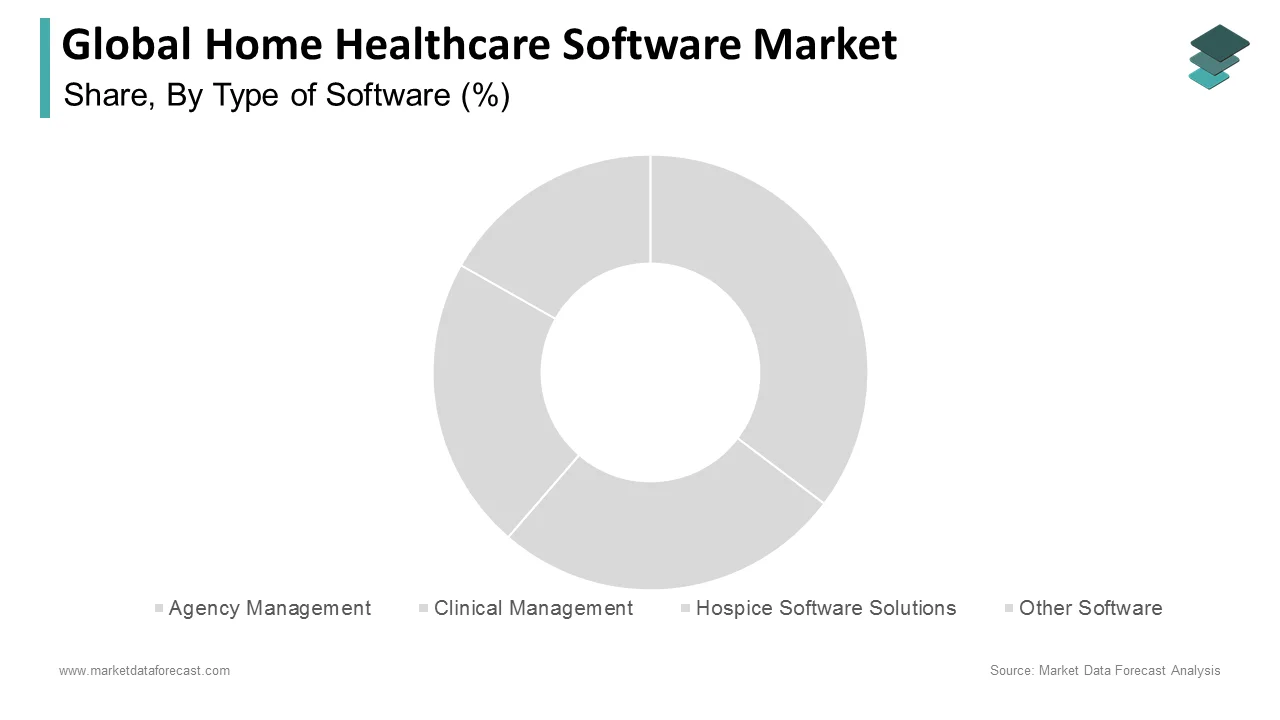
The agency management segment is predicted to witness the highest CAGR of 14.5% from 2026 to 2034 due to the urgent need for billing automation to reduce administrative burden and minimize claim denials. Home healthcare billing is notoriously complex, involving intricate coding rules, strict documentation requirements, and frequent changes in payer policies that often lead to delayed payments and rejected claims. The Healthcare Financial Management Association indicates that reworking a single denied claim costs up to $25 or more, as initial medical claim denial rates push past 10% across the sector. Agency management software addresses this critical financial vulnerability by integrating automated coding checks, real-time eligibility verification, and seamless electronic claims submission directly to clearinghouses. This automation not only recovers lost revenue but also drastically reduces the need for large administrative billing staff, allowing agency owners to redirect their financial resources toward expanding clinical services and improving patient care quality.
The mandatory implementation of electronic visit verification to ensure regulatory compliance and prevent fraud is a key factor behind the rapid expansion of agency management software. Government payers have strictly mandated the use of electronic visit verification to confirm that caregivers are physically present at the patient location during the billed service time, thereby eliminating billing fraud and ensuring patient safety. Under the 21st Century Cures Act, the Centers for Medicare & Medicaid Services enforces a federal mandate requiring electronic visit verification for all Medicaid-funded personal care and home health services. Agency management platforms integrate GPS tracking, biometric authentication, and mobile timestamping to automatically verify caregiver location and service duration. The seamless integration with payroll systems ensures that caregivers are compensated accurately and promptly while providing families and regulatory bodies with transparent and undeniable proof of service delivery. The strict regulatory enforcement makes this software feature an absolute operational necessity, driving rapid procurement across the industry.
By Service Insights
The skilled nursing segment led the home healthcare software market and captured a significant share in 2025. This leading position of the segment was attributed to the high prevalence of chronic diseases that require continuous professional medical oversight and complex clinical interventions in the home setting. Patients discharged from hospitals often require specialized nursing care for wound management, intravenous medication administration, and the monitoring of severe comorbidities that cannot be safely managed by unlicensed caregivers. According to the World Health Organization, noncommunicable diseases are responsible for 74% of all deaths globally, placing an immense, long-term strain on healthcare infrastructure. Skilled nursing software platforms are specifically designed to handle the intense documentation requirements associated with these complex clinical tasks, including detailed wound measurement tracking and strict medication reconciliation protocols. These specialized platforms enable registered nurses to efficiently manage heavy caseloads, track patient progress against specific clinical goals, and communicate critical changes to the prescribing physician, ensuring that vulnerable patients receive the highest standard of continuous professional medical care in their residences.
The critical focus on reducing hospital readmissions through post-acute professional care strengthens the top position of skilled nursing software by providing the tools necessary to ensure safe and effective transitional care. Hospital readmissions are not only detrimental to patient health but also result in severe financial penalties for healthcare institutions under modern value-based reimbursement frameworks. The Agency for Healthcare Research and Quality indicates that approximately 14% to 15% of Medicare hospitalizations result in a readmission within 30 days of discharge. Skilled nursing software facilitates this by enabling nurses to conduct comprehensive transitional care assessments, verify patient understanding of discharge instructions, and monitor early warning signs of clinical deterioration remotely. These platforms ensure that all clinical data from the hospital stay is seamlessly integrated into the home care plan, allowing the skilled nurse to proactively address medication discrepancies, arrange for necessary durable medical equipment, and provide intensive patient education, thereby safeguarding the patient's health and protecting the financial integrity of the broader healthcare system.
The respiratory therapy segment is estimated to register the fastest CAGR of 13.8% during the forecast period owing to the rising global incidence of chronic obstructive pulmonary disease and the increasing need for home ventilation management. Patients with severe respiratory conditions often require long-term oxygen therapy, noninvasive ventilation, and continuous pulmonary rehabilitation, which must be meticulously monitored and adjusted by specialized respiratory therapists. According to the Global Initiative for Chronic Obstructive Lung Disease, chronic obstructive pulmonary disease is the third leading cause of death worldwide, and the prevalence of severe cases requiring home-based respiratory support is steadily increasing due to aging populations and historical smoking trends. Respiratory therapy software enables therapists to track patient adherence to oxygen protocols, monitor the usage hours of home ventilators, and record daily peak flow measurements and symptom diaries submitted by the patient. This specialized software empowers respiratory therapists to manage complex caseloads remotely, ensuring that patients with severe lung diseases maintain optimal respiratory function and quality of life while safely aging in place.
Technological advancements in portable home oxygen and noninvasive ventilation monitoring devices necessitate sophisticated software integration, which propels this segment. Modern home respiratory equipment is now highly connected, capable of transmitting detailed usage data and machine performance metrics directly to cloud-based clinical platforms. According to the American Association for Respiratory Care, the proliferation of smart home oxygen concentrators and advanced bilevel positive airway pressure devices has generated massive amounts of continuous physiological data that requires specialized analytical software for clinical interpretation. Respiratory therapy software platforms ingest this continuous stream of device data to generate comprehensive compliance reports, identify equipment malfunctions, and track the patient's physiological response to varying pressure settings and oxygen flow rates. This seamless connectivity between advanced hardware and specialized clinical software transforms respiratory therapy from an episodic intervention into a continuous managed care program, significantly improving patient outcomes and driving rapid adoption of these specialized digital solutions across the home healthcare landscape.
By Mode of Delivery Insights
In 2025, the on-premises software segment held the majority share of the home healthcare software market because of the strict adherence to data sovereignty and the desire for localized security protocols among large healthcare systems and government-affiliated home care agencies. Many large institutions remain highly cautious about storing sensitive protected health information on external servers due to the severe financial and reputational risks associated with cloud data breaches. On-premises solutions allow organizations to implement their own rigorous firewalls, strict access controls, and customized encryption protocols without relying on the security posture of a third-party vendor. The IBM Security Cost of a Data Breach Report shows that healthcare breach costs remain the highest of any sector, prompting risk-averse IT departments to prioritize tight control over their data infrastructure. Furthermore, strict regional data privacy laws in certain jurisdictions mandate that patient data must not cross physical or national borders, reinforcing the necessity for localized server installations. This deep-rooted preference for physical data control ensures that on-premises software retains a substantial and dominant share of the overall market deployment base.
The necessity for seamless integration with complex legacy hospital information systems has made this segment's lead much stronger. Large integrated delivery networks often operate massive electronic health record systems that were installed decades ago and are deeply embedded within the local hospital network architecture. On-premises home health software can be installed directly within the same local network as the main hospital servers, enabling high-speed, zero-latency data exchange and deep integration with existing laboratory and radiology databases. This technical reality forces many large health systems to continue utilizing on-premises home care software to maintain operational stability and ensure that their dispersed home care teams remain perfectly synchronized with the central hospital clinical workflows.
The cloud-based software segment is anticipated to witness the fastest CAGR of 19.4% between 2026 and 2034. Moreover, the strategic shift from massive upfront capital expenditure to predictable operational subscription models is the primary factor driving the rapid growth of this segment. Small and medium-sized home care agencies often lack the substantial financial resources required to purchase expensive servers, hire dedicated IT maintenance staff, and fund continuous hardware upgrades. Cloud-based platforms eliminate the need for physical hardware maintenance and automatically provide users with the latest software updates, security patches, and new features without requiring additional capital outlays. This financial flexibility allows agencies to scale their software usage up or down based on patient census, ensuring that they only pay for the resources they actually consume, thereby making advanced digital capabilities accessible to providers of all sizes.
The critical requirement for ubiquitous remote accessibility and real-time data synchronization fuels this segment. Home healthcare is inherently decentralized, with nurses, therapists, and aides constantly traveling between patient residences, requiring immediate access to clinical records, care plans, and scheduling information from any location. Cloud-based platforms provide this essential mobility by hosting all data in centralized secure data centers that synchronize instantly across all user devices. Furthermore, cloud platforms allow family members and remote physicians to securely view patient progress logs and communicate with the care team through web portals. This unparalleled accessibility and continuous connectivity drastically improve care coordination and response times, making cloud-based delivery the undisputed future of home health software deployment.
REGIONAL ANALYSIS
North America Home Healthcare Software Market Analysis
North America was the top performer in the global market and occupied a 45.8% share in 2025. Advanced digital infrastructure and favorable reimbursement policies have contributed to the supremacy of the region’s market. The United States leads this regional dominance with a highly mature home care ecosystem supported by substantial government funding and private investments. According to research by AARP, the vast majority of older adults in the United States prefer to stay in their own homes as they age, driving a structural shift toward home-based care delivery models. The implementation of mandatory electronic visit verification by federal authorities has further accelerated the adoption of comprehensive agency management software across the country. As per the Centers for Medicare and Medicaid Services, the transition toward value-based care models requires home health agencies to meticulously track clinical outcomes and patient satisfaction metrics to secure adequate reimbursement. This regulatory and financial environment compels providers to invest heavily in sophisticated clinical management systems that ensure compliance and optimize operational efficiency. Furthermore, the presence of major technology companies and a strong culture of healthcare innovation continuously drive the development of next-generation software solutions. The integration of artificial intelligence and predictive analytics into these platforms is particularly advanced in this region, enabling proactive care interventions that significantly reduce hospital readmission rates and improve overall patient quality of life.
Europe Home Healthcare Software Market Analysis
Europe was positioned second in the home healthcare software market and secured a 28.2% share in 2025. This position of the European market was supported by strong public healthcare systems and stringent data protection standards. Germany and the United Kingdom act as the primary innovation hubs within the region, leveraging their advanced manufacturing capabilities and prestigious academic research networks. According to the European Commission, the Horizon Europe program has allocated substantial funding specifically for digital health and remote monitoring initiatives, driving international collaborative research and software development. The region is characterized by a strong emphasis on ethical technology and patient privacy, which shapes the development of highly secure and transparent home care platforms. National health services in countries like the United Kingdom are actively integrating remote care software into routine clinical pathways to address chronic workforce shortages and manage rapidly aging populations. This strategic alignment of public health priorities with technological innovation ensures steady market growth while maintaining the highest standards of clinical safety and data sovereignty across the diverse European continent.
Asia Pacific Home Healthcare Software Market Analysis
The Asia Pacific is a rapidly expanding region in the global market due to massive population bases and aggressive digital health modernization. China and Japan lead the regional adoption driven by urgent demographic shifts and substantial government investments in smart healthcare infrastructure. According to the World Health Organization, non-communicable chronic diseases account for more than half of all deaths in every country across the Asia-Pacific region, severely straining local healthcare infrastructures. The Chinese government has explicitly integrated digital health into its national strategy, funding the construction of smart hospitals and remote care networks across rural provinces to bridge the urban-rural healthcare divide. As per the Japanese Ministry of Health, Labour and Welfare, the super-aging society demographic, where a massive percentage of the population is aged 65 or older, has accelerated the deployment of automated monitoring and care coordination software to support elderly individuals living alone. Furthermore, a booming startup ecosystem in countries like India and South Korea is producing economical and highly mobile care applications tailored for emerging markets. This unique combination of government backing, demographic urgency, and vibrant technological entrepreneurship positions the region for unprecedented growth.
Latin America Home Healthcare Software Market Analysis
Latin America occupies a developing position in the global market owing to gradual digital transformation and growing private healthcare investments. Brazil and Mexico serve as the primary regional anchors where expanding middle-class populations and modernizing public health systems are creating new opportunities for advanced care software. According to the Pan American Health Organization, noncommunicable diseases are the primary cause of mortality in the Americas, accounting for 65% of all deaths in the region. The Brazilian public health system has recently initiated pilot programs to integrate cloud-hosted care software in primary care clinics, aiming to improve the triage and management of patients with complex chronic conditions in remote areas. The Mexican Institute of Social Security (IMSS) leverages its digital platforms to streamline administrative workflows and increase remote appointment scheduling across its national network. Despite challenges related to uneven internet connectivity and varying regulatory frameworks across different nations, the region demonstrates a strong commitment to leveraging technology to bridge historical healthcare disparities and improve overall population health outcomes.
Middle East and Africa Home Healthcare Software Market Analysis
The Middle East and Africa region is anticipated to grow significantly in the home healthcare software market during the forecast period. Wealthy Gulf nations heavily drive rapid technological adoption, whereas other areas focus predominantly on foundational healthcare access. The United Arab Emirates and Saudi Arabia are at the forefront of regional innovation, leveraging massive sovereign wealth funds to build world-class smart city healthcare ecosystems that include comprehensive home care networks. According to the World Bank, healthcare infrastructure investment in the Gulf Cooperation Council countries has increased significantly, supporting the procurement of advanced digital management systems and remote monitoring platforms. The national health strategies in these countries explicitly mandate the integration of digital tools into all clinical workflows, creating a highly favorable environment for software vendors. Conversely, in regions of Africa south of the Sahara, the market is primarily driven by international health organizations and non-governmental organizations deploying mobile care applications to manage infectious diseases and maternal health. This dual-track development ensures steady market expansion as high-income nations pursue cutting-edge innovations while low-resource settings adopt essential digital tools.
COMPETITIVE LANDSCAPE
The competitive landscape of the home healthcare software market is characterized by a mix of established enterprise vendors and agile niche providers specializing in specific care verticals. Large players differentiate themselves through comprehensive end-to-end suites that cover everything from referral management to billing and clinical documentation. Smaller competitors often focus on superior user experience and specialized features for particular segments such as pediatric home care or hospice services. Interoperability remains a key battleground as agencies demand seamless integration with hospital systems and wearable devices to ensure coordinated care. Regulatory compliance features such as electronic visit verification and secure data handling are essential baseline requirements that all participants must meet to remain viable. Price competition is moderate as buyers prioritize reliability and support over low cost given the critical nature of healthcare operations. Innovation in artificial intelligence and predictive analytics is becoming a major differentiator as providers seek tools that improve clinical outcomes and operational efficiency. Strategic partnerships with medical device manufacturers are increasingly common to create integrated ecosystems that streamline remote patient monitoring and data analysis for home-based care teams.
KEY MARKET PLAYERS
Some of the companies that are playing a dominating role in the global home healthcare software market include
- Allscripts Healthcare Solutions
- AlayaCare
- Carestream Health
- GE Healthcare
- MatrixCare
- NextGen Healthcare Information System LLC
- Siemens Healthcare
- Novarad Corporation
- MEDITECH
- Cerner Corporation
- Agfa Healthcare
- WellSky
- Medical Information Technology, Inc. (Meditech)
- Continulink
TOP PLAYERS IN THE MARKET
- MatrixCare provides comprehensive electronic health record and agency management solutions specifically designed for post-acute and home care providers. The company focuses on streamlining clinical workflows through intuitive interfaces that reduce documentation time for nurses and therapists. MatrixCare recently enhanced its platform by integrating advanced predictive analytics tools that help agencies identify high-risk patients prone to hospital readmissions. Strategic partnerships with remote patient monitoring device manufacturers allow seamless data ingestion into patient charts, improving care coordination. The firm actively invests in user experience improvements to ensure compliance with evolving federal regulations such as electronic visit verification mandates. By prioritizing interoperability with hospital systems, MatrixCare enables smooth care transitions and strengthens its position as a trusted technology partner for large integrated delivery networks seeking to optimize home-based care operations.
- WellSky delivers an end-to-end continuum of care software suite that connects hospitals, health systems, and home health agencies. The company emphasizes care coordination by enabling real-time data exchange between disparate healthcare settings to prevent gaps in treatment. WellSky recently expanded its capabilities by acquiring specialized technology firms focused on palliative care and hospice management, thereby broadening its service offerings. The platform utilizes artificial intelligence to automate referral processing and schedule optimization, which significantly reduces administrative burdens for care teams. WellSky also focuses on value-based care tools that help providers track quality metrics required for Medicare reimbursement. These strategic enhancements allow healthcare organizations to manage complex patient populations more effectively while ensuring regulatory compliance and operational efficiency across the entire care journey.
- AlayaCare offers a unified cloud-based platform that combines electronic health records, billing, and workforce management for home care agencies. The company is known for its mobile-first approach, which empowers caregivers to access patient information and document visits directly from smartphones. AlayaCare recently launched new features focused on caregiver retention, including simplified scheduling interfaces and automated payroll integration to improve staff satisfaction. The platform supports robust electronic visit verification capabilities, ensuring agencies meet strict state and federal compliance requirements without manual effort. AlayaCare continuously updates its software to include telehealth functionalities, allowing virtual consultations between patients and clinicians. By focusing on ease of use and comprehensive functionality, AlayaCare helps small to medium-sized agencies scale their operations efficiently while maintaining high standards of patient care and regulatory adherence.
TOP STRATEGIES USED BY KEY MARKET PARTICIPANTS
Key players in the home healthcare software market primarily focus on strategic acquisitions to expand their functional capabilities and integrate specialized modules such as hospice or palliative care into their core platforms. Companies invest heavily in developing interoperable application programming interfaces to ensure seamless data exchange with hospital electronic health records and remote patient monitoring devices. Enhancing user experience through mobile-optimized interfaces is a critical strategy to improve caregiver adoption and reduce documentation time in the field. Providers also prioritize compliance features such as electronic visit verification and automated billing checks to help agencies navigate complex regulatory landscapes. Developing predictive analytics tools allows vendors to offer value-added services that help clients reduce hospital readmissions and participate in value-based care models. Additionally, companies are shifting toward cloud-based subscription models to lower entry barriers for smaller agencies and provide continuous software updates without significant capital expenditure.
MARKET SEGMENTATION
This research report on the global home healthcare software market has been segmented and sub-segmented based on the type of software, service, mode of delivery, and region.
By Type of Software
- Agency Management
- Clinical Management
- Hospice Software Solutions
- Other Software
By Service
- Rehabilitation
- Infusion Therapy
- Respiratory Therapy
- Pregnancy Care
- Skilled Nursing
- Others
By Mode of Delivery
- Cloud-Based Software
- On-Premises Software
- Others
By Region
- North America
- Europe
- Asia-Pacific
- Latin America
- Middle East and Africa