- Product Description Description
- Table of Contents TOC
- List of Table & Figure LOT
- Get Free Sample PDF Sample PDF
Market Size, 2025
$7.71 BnMarket Estimate, 2026
$8.64 BnMarket Forecast, 2034
$21.38 BnCAGR, 2026–2034
12%Global Chronic Disease Management Market Size
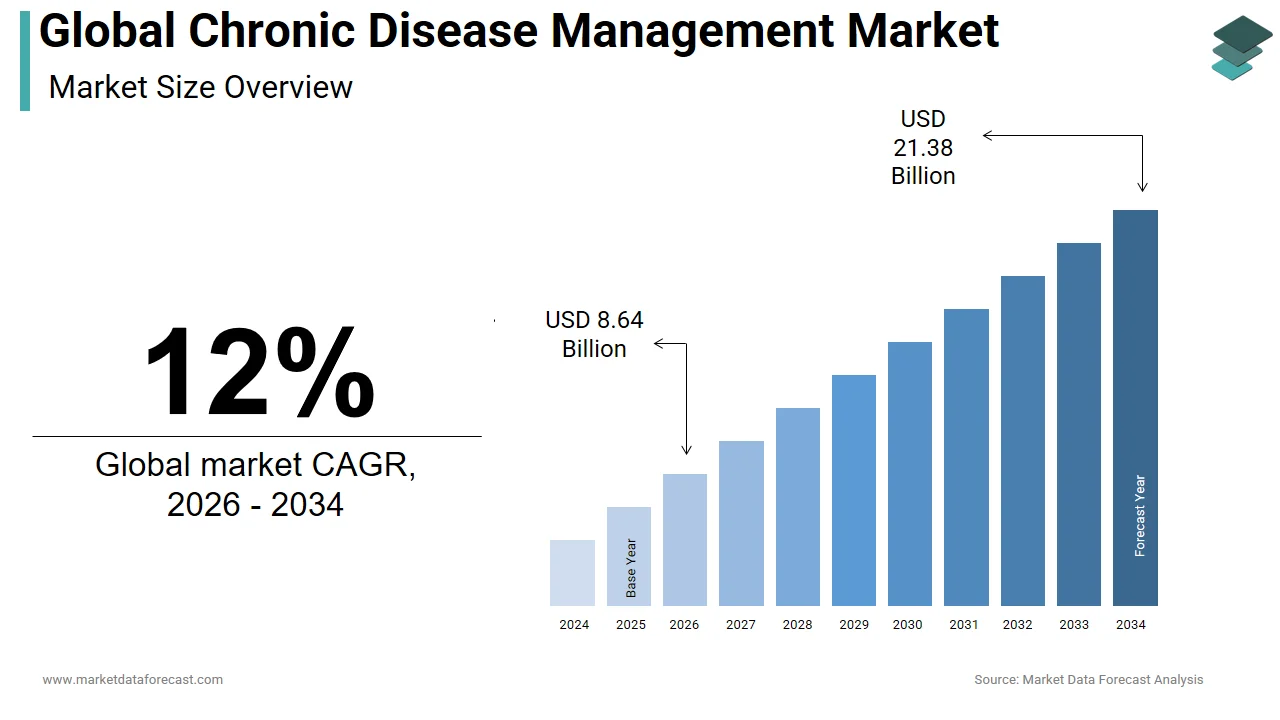
The global chronic disease management market was valued at USD 7.71 billion in 2025. The global market is projected to grow from USD 8.64 billion in 2026 to reach USD 21.38 billion by 2034, exhibiting a compound annual growth rate (CAGR) of 12% from 2026 to 2034.
Chronic disease management is a healthcare solution, digital platforms, and clinical practices aimed at improving long-term outcomes for individuals with non-communicable diseases such as diabetes, cardiovascular disorders, chronic respiratory illnesses, and cancer. The growing demand stems from the escalating global burden of chronic conditions, which account for approximately 74% of all deaths worldwide, as stated by the World Health Organization. According to the Centers for Disease Control and Prevention, six in ten adults in the United States live with at least one chronic disease, and four in ten have two or more.
MARKET DRIVERS
Rising Prevalence of Lifestyle-Related Disorders
The increasing incidence of lifestyle-related disorders such as diabetes, obesity, and hypertension is elevating the growth of the chronic disease management market. The International Diabetes Federation reported that in 2021, 537 million adults worldwide were living with diabetes, and this figure is projected to reach 643 million by 2030. Rising sedentary behavior, poor dietary habits, and reduced physical activity are fueling the demand for long-term disease monitoring and intervention programs. This surge is creating urgent demand for structured care models, AI-driven health monitoring, and personalized management programs that can help reduce complications, improve quality of life, and minimize healthcare system strain.
Expansion of Digital Health and Remote Monitoring
The growing integration of telemedicine, wearable devices, and AI-driven platforms is accelerating the adoption of chronic disease management solutions, which is another attribute to elevate the growth of the chronic disease management market. According to the World Health Organization, over 60% of member states adopted telehealth policies during the COVID-19 pandemic, expanding digital access to healthcare. Wearable devices such as continuous glucose monitors and smart cardiac sensors are empowering patients to manage their conditions outside traditional clinical settings.
MARKET RESTRAINTS
High Cost of Long-Term Management Programs
The affordability remains a key restraint in the chronic disease management market. Patients in low- and middle-income countries face significant challenges in accessing consistent care, as advanced monitoring devices and long-term treatment plans are often financially burdensome. As per the World Bank, out-of-pocket health expenditures exceed 30% of total health spending in many developing regions, leading to poor adherence and late-stage disease complications. This cost barrier slows the adoption of chronic management solutions and widens disparities in healthcare delivery across socioeconomic groups.
Fragmented Healthcare Infrastructure
The lack of integrated healthcare systems capable of managing long-term conditions effectively is limiting the growth of the chronic disease management market. According to the Organisation for Economic Co-operation and Development, chronic diseases account for 70–80% of primary care consultations in developed nations, yet coordination between primary care, specialists, and digital platforms remains limited. In many regions, data fragmentation between hospitals, insurers, and technology providers prevents the development of unified patient care pathways. This leads to duplication of services, poor communication across providers, and ineffective follow-up, resulting in higher costs and poorer health outcomes.
MARKET OPPORTUNITIES
Integration of Artificial Intelligence in Chronic Care
Artificial intelligence enhances the quality of treatment for chronic disease by enabling predictive analytics, early detection, and personalized interventions, which is gearing up for growth opportunities in the coming years. As per the National Institutes of Health, AI algorithms can improve disease risk prediction models by up to 20–30% compared to traditional methods. For instance, AI-powered diagnostic tools are being used in diabetes management to predict hypoglycemia episodes before they occur. Similarly, cardiovascular monitoring platforms equipped with machine learning can detect arrhythmias with high precision.
Expansion of Value-Based Care Models
The global healthcare sector is increasingly shifting toward value-based care that focuses on outcomes rather than volume, which is expected to fuel the growth of chronic disease management market. According to the Centers for Medicare and Medicaid Services, value-based payment models in the U.S. already cover over 40% of healthcare spending. These frameworks incentivize providers to reduce hospitalizations and improve patient outcomes, aligning directly with chronic disease management goals. Similarly, countries in the Asia-Pacific, including India and Singapore, are piloting community-based care models focused on reducing the economic burden of long-term diseases. This evolution creates opportunities for digital health firms, device manufacturers, and healthcare providers to embed chronic management programs into broader healthcare reimbursement systems.
MARKET CHALLENGES
Patient Adherence and Behavioral Barriers
Ensuring patient adherence to prescribed therapies and lifestyle modifications is limiting the growth of the chronic disease management market. According to the World Health Organization, adherence to long-term therapy for chronic illnesses in developed countries averages only 50%, leading to preventable complications and higher healthcare costs. Behavioral inertia, lack of motivation, and limited patient education are factors behind poor compliance. In diabetes care, for example, missed insulin doses or irregular glucose monitoring can lead to severe complications such as kidney failure and cardiovascular disease.
Data Privacy and Security Concerns
The rapid adoption of digital health solutions for chronic disease management introduces significant challenges in safeguarding sensitive health data, which additionally limits the growth of the chronic disease management market. The International Telecommunication Union recorded a 38% increase in cyberattacks on healthcare systems during the pandemic, raising concerns about patient confidentiality. Genomic, biometric, and behavioral data collected through chronic management platforms are highly valuable but also vulnerable to breaches. Weak regulatory frameworks in developing countries exacerbate these risks, deterring patients and providers from fully adopting digital care solutions.
REPORT COVERAGE
| REPORT METRIC | DETAILS |
| Market Size Available | 2025 to 2034 |
| Base Year | 2025 |
| Forecast Period | 2026 to 2034 |
| Segments Covered | By Disease Type, Type, End User, and Region. |
| Various Analyses Covered | Global, Regional and Country-Level Analysis, Segment-Level Analysis, Drivers, Restraints, Opportunities, Challenges; PESTLE Analysis; Porter’s Five Forces Analysis, Competitive Landscape, Analyst Overview of Investment Opportunities |
| Regions Covered | North America, Europe, APAC, Latin America, Middle East & Africa |
| Market Leaders Profiled | ZeOmega, Cedar Gate Technologies, Pegasystems Inc, Cognizant TriZetto Software Group Inc,, Infosys Ltd, Hinduja Global Solutions Ltd, NXGN Management, LLC, Medecision, Health Catalyst, Altruista Health, Vivify Health, Inc, Epic Systems Corporation, cliexa, Inc, Casenet, LLC, Allscripts Healthcare, LLC, ExlServings Holdings, Inc, Koninklijke Philips N.V |
SEGMENTAL ANALYSIS
By Disease Type Insights
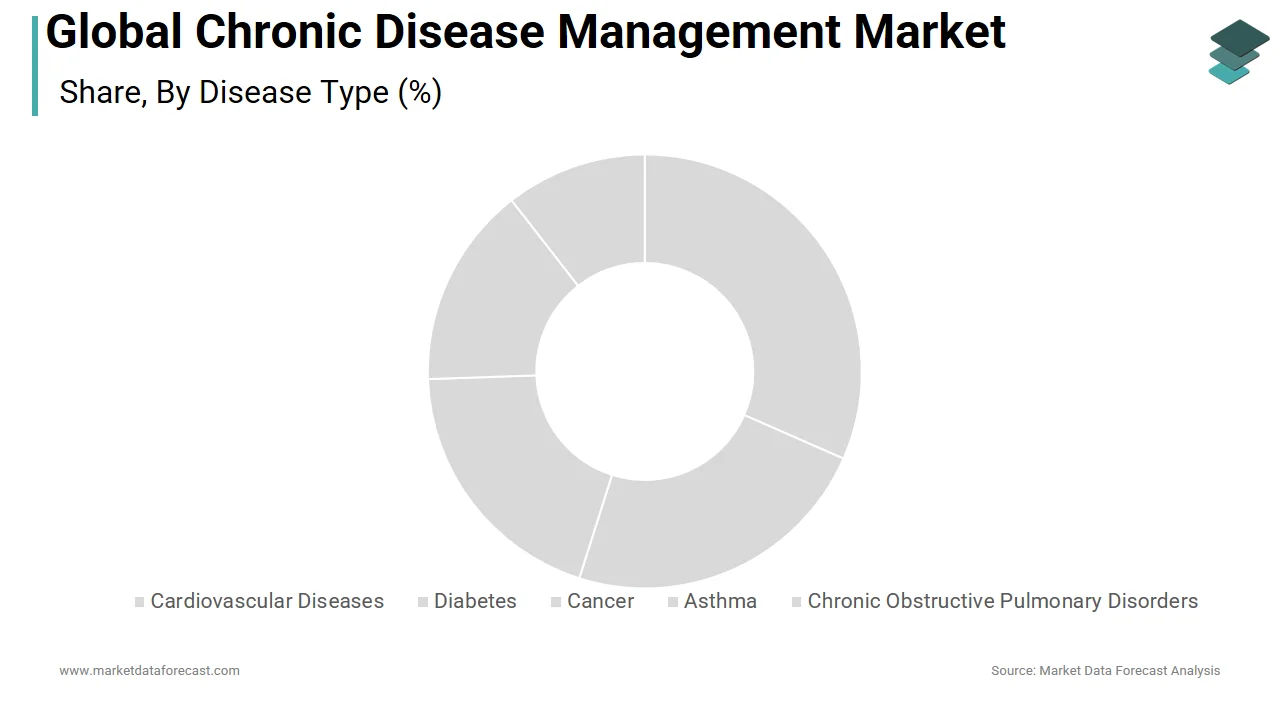
The cardiovascular diseases (CVDs) segment accounted in holding 30.1% of the chronic disease management market share in 2024. The rising prevalence of hypertension, sedentary lifestyles, and obesity are major factors fueling demand for long-term cardiac care programs. According to the American Heart Association, nearly half of U.S. adults (about 121.5 million) have some form of cardiovascular disease. Digital monitoring solutions such as remote ECG devices and AI-enabled arrhythmia detection platforms are being rapidly adopted, ensuring the dominance of CVD management solutions.
The diabetes management segment is projected to expand at a CAGR of 13.3% during the forecast period, with the rising incidence and the growing adoption of continuous glucose monitoring (CGM) systems. This alarming growth is leading to widespread use of AI-driven predictive tools for glycemic control and personalized therapy planning. Additionally, the World Health Organization warns that diabetes-related mortality has surged by 70% since 2000, emphasizing the urgency of structured management solutions.
By Type Insights
The solutions segment held 60.1% of the chronic disease management market share in 2024, with the surge in adoption of digital platforms, electronic health record (EHR) integration, and AI-driven patient monitoring systems. According to the World Health Organization, chronic diseases account for 74% of all global deaths, fueling urgent demand for structured management systems. The proliferation of mobile health applications, remote patient monitoring tools, and personalized care platforms has reinforced solutions as the backbone of disease management.
The services category is expected to expand at a CAGR of 12.3% during the forecast period, with the rising emphasis on patient engagement, education, and coordinated care. As perthe Centers for Disease Control and Prevention, six in ten adults in the United States have at least one chronic condition with the need for continuous professional support. Services such as teleconsultations, care coordination, nutrition counseling, and behavioral health interventions are being increasingly integrated into chronic management programs.
By End User Insights
The healthcare providers segment was the largest and held 55.3% of the chronic disease management market share in 2024. According to the OECD, chronic diseases account for 70–80% of primary care consultations in developed economies, demonstrating their dominance in provider workloads. Hospitals and clinics are leveraging EHRs, telehealth platforms, and remote monitoring systems to streamline long-term care. Additionally, the World Health Organization emphasizes the importance of integrated provider networks for chronic disease outcomes, further consolidating their role.
The healthcare payers segment is likely to grow with an expected CAGR of 11.3% from 2025 to 2033, with the global shift toward value-based reimbursement models that incentivize preventive and long-term disease management. According to the Centers for Medicare and Medicaid Services, value-based care accounted for more than 40% of U.S. healthcare payments in 2022. Payers are increasingly investing in disease management programs to reduce costly hospitalizations and emergency admissions.
REGIONAL ANALYSIS
North America Chronic Disease Management Market Analysis
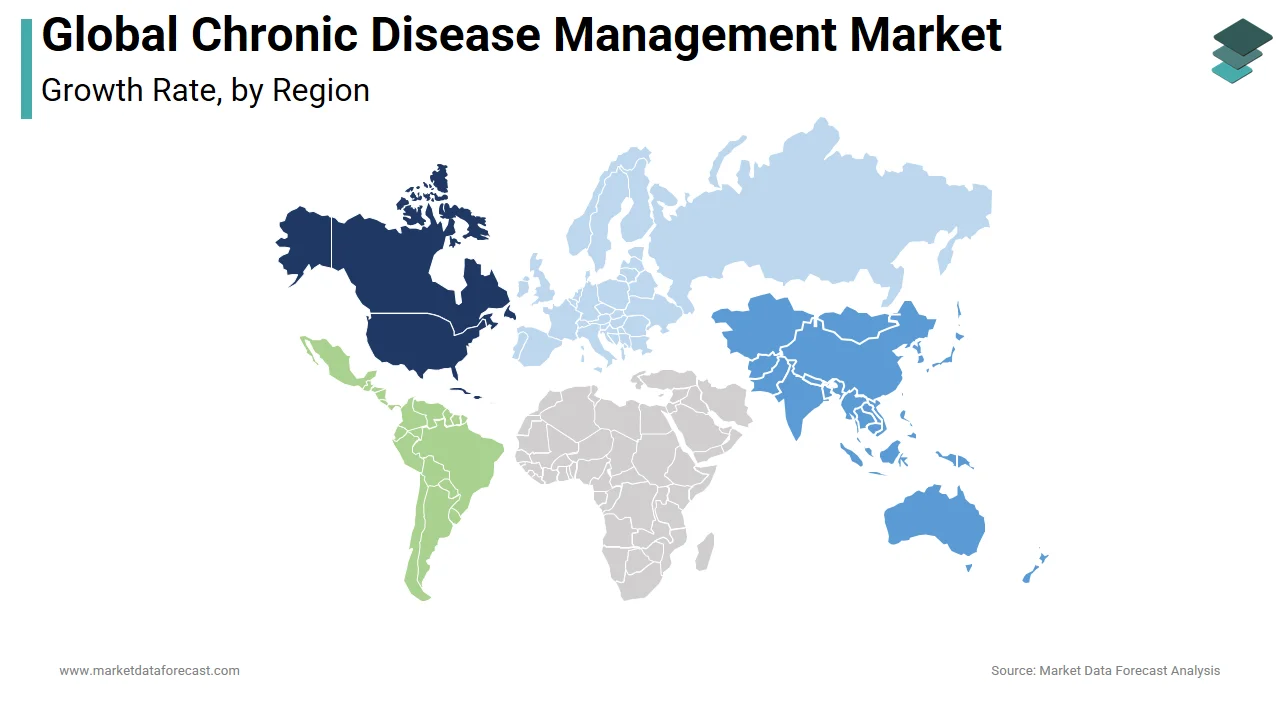
North America was the top performer of the chronic disease management market with 40.2% of share in 2024, with high disease prevalence and advanced healthcare infrastructure. The CDC confirms that chronic diseases are responsible for 90% of the USD 4.1 trillion in annual U.S. healthcare expenditures. Extensive adoption of digital health, supportive reimbursement policies, and strong investment in AI-enabled care pathways solidify North America’s position.
Europe Chronic Disease Management Market Analysis
Europe was positioned second by capturing 25.3% of the global chronic disease management market share in 2024, with the aging populations and well-established public health systems. According to Eurostat, nearly 21% of the European Union’s population was aged 65 or older in 2022. Chronic conditions such as cancer and diabetes are managed through national programs, while increasing adoption of telehealth in countries like Germany and France accelerates market growth.
Asia Pacific Chronic Disease Management Market Analysis
Asia Pacific chronic disease management market growth is likely to grow with rapid expansion fueled by urbanization, rising incomes, and high chronic disease incidence. As per World Health Organization, China and India together account for more than 200 million people with diabetes. Growing investment in digital health startups and supportive government initiatives in countries like Singapore and Australia are accelerating adoption across this region.
Latin America Chronic Disease Management Market Analysis
Latin America's chronic disease management market growth is expected to have significant growth opportunities in the coming years, with Brazil and Mexico as key contributors. As per the Pan American Health Organization, non-communicable diseases account for 81% of all deaths in the region. Government-backed programs to expand primary care access, coupled with rising mobile health adoption, are boosting chronic disease management initiatives.
Middle East & Africa Chronic Disease Management Market Analysis
The Middle East & Africa chronic disease management market growth is driven by the growing healthcare investments in Gulf countries and the rising burden of diabetes and cardiovascular diseases. Expanding digital infrastructure and government-led health transformation programs, particularly in Saudi Arabia and the UAE, are propelling regional market development.
COMPETITIVE LANDSCAPE
The chronic disease management market is highly competitive, with a mix of global healthcare technology giants and regional digital health providers vying for dominance. Competition is intensifying as rising chronic disease prevalence compels governments, payers, and providers to adopt scalable solutions. Established firms such as Philips, Oracle Health, and Allscripts maintain dominance through expansive product portfolios and partnerships, while emerging players and startups are introducing disruptive innovations in telehealth, AI-driven analytics, and wearable integration. The Asia Pacific region has become a focal point for competitive expansion due to its rapidly aging population and high chronic disease burden.
KEY MARKET PLAYERS
Some of the companies that are playing a dominating role in the global chronic disease management market include
- ZeOmega
- Cedar Gate Technologies
- Pegasystems Inc.
- Cognizant TriZetto Software Group Inc.
- Infosys Ltd.
- Hinduja Global Solutions Ltd.
- NXGN Management, LLC
- Medecision
- Health Catalyst
- Altruista Health
- Vivify Health, Inc.
- Epic Systems Corporation
- cliexa, Inc.
- Casenet, LLC
- Allscripts Healthcare, LLC
- ExlService Holdings, Inc.
- Koninklijke Philips N.V.
Top Players in the Chronic Disease Management Market
- Philips Healthcare has been instrumental in advancing digital platforms for chronic disease management in Asia Pacific, particularly in remote patient monitoring and telehealth solutions. The company expanded its digital health ecosystem in India and Southeast Asia by deploying AI-powered cardiac and diabetes monitoring systems tailored to local healthcare needs. In 2023, Philips collaborated with Apollo Hospitals in India to integrate predictive analytics into chronic care pathways, enabling real-time decision-making for clinicians.
- Cerner, now operating as Oracle Health, plays a significant role in the Asia Pacific by driving electronic health record integration and chronic care management platforms across hospitals and clinics. In 2023, the company partnered with Australian healthcare networks to enhance data-driven care coordination for cardiovascular and diabetes patients. Its emphasis on predictive population health analytics supports governments and payers in managing long-term care costs.
- Allscripts Healthcare Solutions has strengthened its footprint in the Asia Pacific market through partnerships with local providers to implement integrated care platforms. In 2022, Allscripts expanded its Sunrise EHR solutions into Singapore and Australia, which is embedding chronic disease management modules that facilitate long-term monitoring and patient engagement. Its strategy emphasizes personalized care planning, clinical decision support, and real-time analytics.
Top Strategies Used by Key Market Participants
Key players in the chronic disease management market are pursuing strategies centered on digital innovation, collaborations, and service diversification. Many companies are integrating AI and remote monitoring technologies to enhance chronic care pathways and reduce hospital readmissions. Firms are also investing in interoperability and cloud-based platforms to connect patients, providers, and payers seamlessly. Moreover, acquisitions and regional collaborations are being leveraged to enhance disease-specific care modules, particularly for diabetes and cardiovascular diseases. The shift toward value-based care is further driving these companies to embed preventive, personalized, and patient-centered care models into their chronic disease platforms.
MARKET SEGMENTATION
This research report on the global chronic disease management market has been segmented and sub-segmented into the following categories.
By Disease Type
- Cardiovascular Diseases
- Diabetes
- Cancer
- Asthma
- Chronic Obstructive Pulmonary Disorders
- Others
By Type
- Solutions
- Services
By End User
- Healthcare Providers
- Healthcare Payers
- Others
By Region
- North America
- Europe
- Asia Pacific
- Latin America
- The Middle East and Africa