Global Sleep Apnea Devices Market Size, Share, Trends & Growth Forecast Report By Diagnostic Devices (Positive Airway Pressure (PAP) Devices, Facial Interfaces, Adaptive Servo-Ventilation Instruments (ASV), Airway Clearance Systems, Oxygen Concentrators, Accessories and Oral Appliances), Therapeutic Devices (Polysomnography Devices, Respiratory Polygraphs, Oximeters and Actigraphy Systems), End-User and Region (North America, Europe, Asia Pacific, Latin America, and Middle East & Africa), Industry Analysis From 2024 to 2033
Global Sleep Apnea Devices Market Size
The global sleep apnea devices market is estimated to grow from USD 10.05 billion in 2024 to USD 19.75 billion in 2033, representing a CAGR of 7.8%.
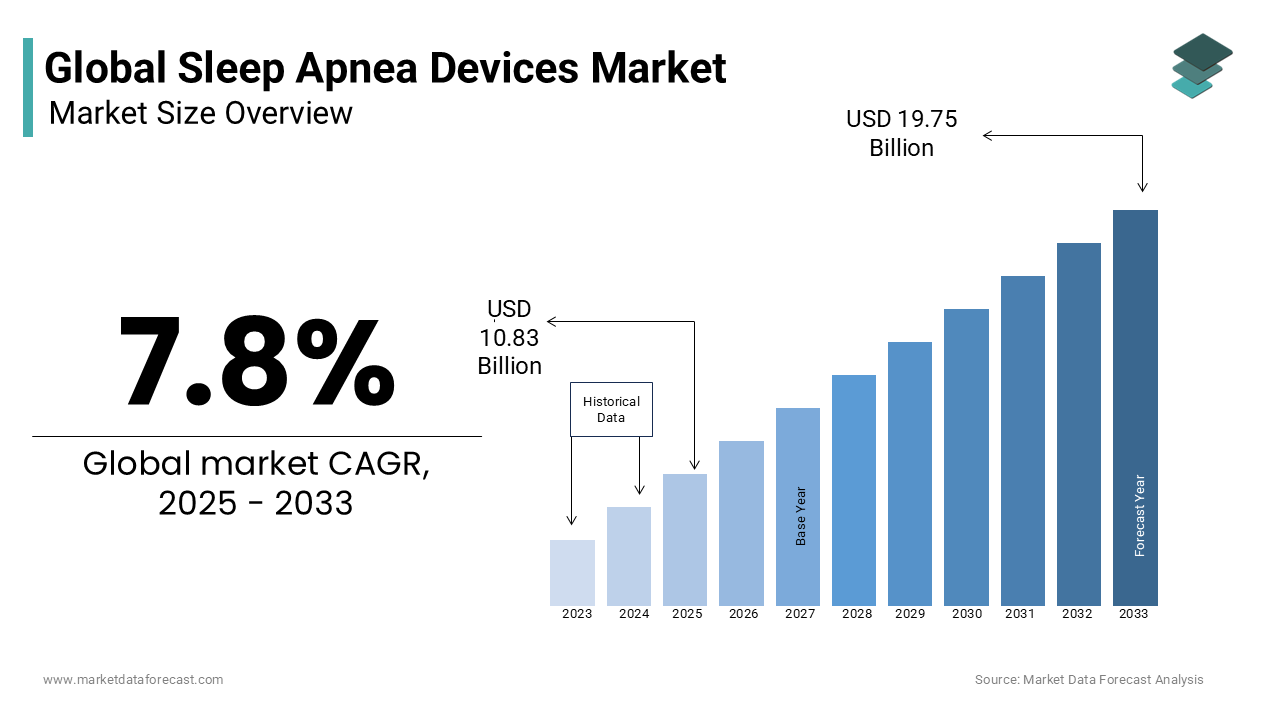
The Sleep Apnea Devices are designed to diagnose and treat obstructive, central, and mixed sleep apnea, primarily through non-invasive ventilation systems such as continuous positive airway pressure (CPAP), bilevel positive airway pressure (BiPAP), and adaptive servo-ventilation (ASV) devices. These devices function by maintaining airway patency during sleep, preventing recurrent breathing interruptions that lead to fragmented sleep and cardiovascular strain. According to the World Health Organization, an estimated 100 million people globally suffer from moderate to severe obstructive sleep apnea (OSA), with prevalence rising in parallel with obesity and aging populations. As per the American Academy of Sleep Medicine, untreated OSA is associated with a 2.5-fold increased risk of hypertension and a 1.7-fold higher incidence of type 2 diabetes.
MARKET DRIVERS
Rising Global Prevalence of Obesity and Metabolic Disorders
Obesity is a primary physiological contributor to obstructive sleep apnea, with excess adipose tissue around the upper airway increasing the likelihood of collapse during sleep. The rising obese population across the globe is substantially levelling up the growth of the Sleep Apnea Devices Market. According to the World Health Organization, global obesity rates have nearly tripled since 1975, with over 650 million adults classified as obese in 2023. In the United States, the Centers for Disease Control and Prevention reports that 41.9% of adults are obese, a key factor behind the nation’s estimated 29.4 million undiagnosed sleep apnea cases. The correlation is particularly strong: as per a 2023 meta-analysis published in The Lancet Respiratory Medicine, individuals with a BMI over 30 have a 4.2 times higher risk of developing moderate to severe OSA compared to those with normal weight.
Increasing Integration of Digital Health and Remote Monitoring Technologies
The adoption of the advanced technologies in the healthcare sector is gearing up the growth of the Sleep Apnea Devices Market. The incorporation of cloud-based analytics, artificial intelligence, and wireless connectivity into sleep apnea devices is transforming patient management and adherence tracking. According to the U.S. Food and Drug Administration, over 80% of newly cleared CPAP devices since 2021 include built-in Bluetooth or Wi-Fi for real-time data transmission to clinicians. ResMed’s AirView platform, for example, enables remote monitoring of therapy usage and pressure efficacy for over 3.5 million patients globally, as reported by the company in 2023. A study by the European Respiratory Society found that patients using connected devices demonstrated a 27% higher adherence rate over six months compared to those on standard models
MARKET RESTRAINTS
Low Diagnosis and Awareness Rates in Developing Regions
The widespread underdiagnosis of sleep apnea in low- and middle-income countries is hampering the growth of the Sleep Apnea Devices Market. According to the International Journal of Chronic Obstructive Pulmonary Disease, over 80% of OSA cases in India and Southeast Asia remain undiagnosed due to a lack of public awareness and insufficient diagnostic infrastructure. In sub-Saharan Africa, there is an average of only 0.3 sleep laboratories per 10 million people, as reported by the African Sleep Disorders Network. Cultural perceptions often dismiss snoring and daytime fatigue as normal aging phenomena, delaying medical consultation.
High Upfront Costs and Limited Insurance Reimbursement
The financial burden associated with sleep apnea devices significantly limits patient access, especially in regions with fragmented or underfunded healthcare systems that is also to limit the growth of the Sleep Apnea Devices Market. In the United States, a standard CPAP machine costs between USD 500 and USD 3,000, with additional expenses for masks, tubing, and humidifiers, as noted by the American Academy of Sleep Medicine. While Medicare and major insurers cover CPAP therapy, pre-authorization requirements and deductibles often deter initiation. In Canada, provincial health plans vary in coverage, with some requiring patients to pay out-of-pocket for replacement parts, leading to therapy discontinuation. According to a 2023 patient compliance study by the Canadian Thoracic Society, 34% of users discontinued CPAP within the first year due to financial strain.
MARKET OPPORTUNITIES
Expansion of Home-Based Sleep Testing and Tele-Sleep Medicine
The shift toward decentralized diagnostics is creating new opportunity for the growth of sleep apnea devices market. Portable home sleep testing (HST) devices, which measure respiratory effort, oxygen saturation, and airflow, are increasingly replacing in-lab polysomnography for initial OSA screening. According to the American Thoracic Society, HST usage increased by 45% in the U.S. between 2020 and 2023, driven by convenience and cost-efficiency. The U.S. Centers for Medicare & Medicaid Services expanded reimbursement for HST in 2023 by enabling broader adoption. In Japan, the Ministry of Health, Labour and Welfare approved insurance coverage for home-based testing in 2022, leading to a 30% rise in diagnoses within a year, as reported by the Japanese Respiratory Society. Companies like Philips and Fisher & Paykel have integrated HST with therapy devices, offering seamless diagnostic-to-treatment pathways.
Development of Compact, Quiet, and User-Friendly Devices
The manufacturers are capitalizing on consumer demand for discreet, comfortable, and aesthetically refined sleep apnea devices among younger and tech-savvy users is also to enhance the growth opportunities for the growth of the Sleep Apnea Devices Market. According to a 2023 patient preference survey by the European Sleep Research Society, 68% of new CPAP users cited noise level and device size as key factors in treatment acceptance. In response, ResMed launched the AirMini, a palm-sized CPAP device weighing just 300 grams, which achieved over 1.2 million units in global sales by 2023, as reported in its annual innovation review. Similarly, Philips’ DreamStation Go integrates whisper-quiet motor technology and travel-friendly design, appealing to mobile professionals. These advancements improve compliance, which is a 2023 study in Sleep Medicine Reviews found that patients using compact devices had a 31% higher adherence rate over 90 days.
MARKET CHALLENGES
Persistent Patient Non-Adherence to Long-Term Therapy
The long-term adherence remains a systemic challenge with the clinical outcomes that is ascribed to inhibit the growth of the Sleep Apnea Devices Market. According to the Journal of Clinical Sleep Medicine, only 46% of patients use their CPAP devices for the recommended four hours per night over 70% of nights, the threshold for therapeutic benefit. Common reasons include mask discomfort, nasal congestion, claustrophobia, and perceived inconvenience. A 2023 multicenter study in France found that 38% of patients discontinued use within the first three months. In Australia, the National Asthma Council reported that adherence drops to 52% after one year, even with telemonitoring support. This non-compliance reduces the perceived value of devices among payers and clinicians, discouraging investment in new technologies.
Regulatory and Cybersecurity Risks in Connected Devices
The growing scrutiny over data privacy and cybersecurity vulnerabilities is also to impede the growth of the sleep apnea devices market. In 2023, the U.S. Food and Drug Administration issued a safety communication advising manufacturers to address software flaws in wireless-enabled CPAP devices that could allow unauthorized access to therapy settings. Philips recalled over 4 million devices globally due to potential cybersecurity risks and sound abatement foam degradation, as reported by the company’s 2023 recall update. The European Union’s Medical Device Regulation (MDR) now mandates rigorous cybersecurity testing for all connected medical devices, increasing time-to-market and development costs. According to the Healthcare Information and Management Systems Society, 62% of healthcare providers delayed adopting smart CPAP systems in 2023 due to data security concerns
REPORT COVERAGE
| REPORT METRIC | DETAILS |
| Market Size Available | 2024 to 2033 |
| Base Year | 2023 |
| Forecast Period | 2024 to 2033 |
| Segments Covered | By Product, Diagnostic Devices, End-User, and Region |
| Various Analyses Covered | Global, Regional, & Country Level Analysis; Segment-Level Analysis, Drivers, Restraints, Challenges, Opportunities, PESTLE Analysis; Porter's Five Forces Analysis; Competitive Landscape, Analyst Overview of Investment Opportunities |
| Regions Covered | North America, Europe, Asia Pacific, Latin America, Middle East & Africa |
| Key Market Players | ResMed, Inc. (U.S.), Philips Healthcare (Netherlands), Fisher & Paykel Healthcare Ltd. (New Zealand), SomnoMed Ltd. (Australia), Compumedics Limited (Australia), Weinmann Medical Devices GmbH (Germany) and Whole You, Inc. (U.S.) |
SEGMENTAL ANALYSIS
By Product Insights
The PAP devices segment was accounted in holding 44.3% of the sleep apnea devices market share in 2024 with the both diagnostic and treatment tools by enabling auto-titrating models to assess airway resistance and deliver therapy simultaneously. According to the American Academy of Sleep Medicine, over 85% of diagnosed obstructive sleep apnea patients in the U.S. are prescribed CPAP or APAP devices, making them the gold standard in management. The integration of auto-adjusting algorithms allows devices to respond dynamically to breathing patterns, enhancing comfort and efficacy.
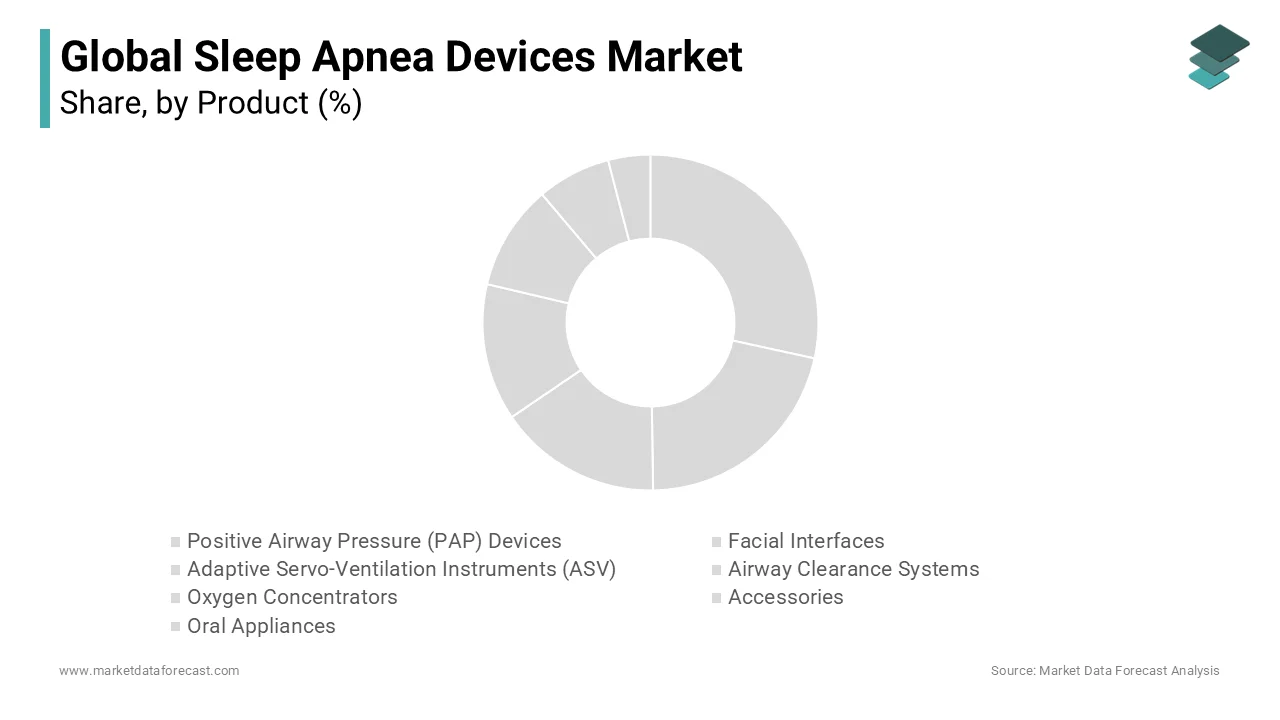
The oral appliances segment is likely to grow with a CAGR of 9.8% from 2025 to 2033 owing to the rising demand for non-invasive, portable alternatives to PAP therapy. These mandibular advancement devices (MADs) reposition the lower jaw to prevent airway collapse during sleep and are particularly effective for mild to moderate OSA. A 2023 study published in Sleep found that 71% of patients using custom-fitted oral appliances achieved a 50% reduction in apnea-hypopnea index (AHI), with higher long-term adherence compared to CPAP. In Australia, referrals to dental sleep specialists increased by 40% between 2021 and 2023, as reported by the Australian Dental Association, reflecting interdisciplinary collaboration. The U.S. Food and Drug Administration has cleared over 60 oral appliance models, and Medicare now reimburses select devices, expanding access.
By Diagnostic Devices Insights
The polysomnography (PSG) devices segment held 37.4% of the sleep apnea devices market share in 2024. These multi-channel systems remain the clinical benchmark for diagnosing sleep apnea, measuring brain activity, eye movement, muscle tone, heart rate, and respiratory effort during overnight monitoring. According to the American Thoracic Society, Level I in-lab PSG is required for definitive diagnosis in complex cases involving comorbid insomnia, narcolepsy, or central sleep apnea. In Japan, over 450 certified sleep laboratories conduct more than 300,000 PSG studies annually, as reported by the Japanese Society of Sleep Research, ensuring diagnostic accuracy before device prescription. Despite the rise of home testing, PSG remains indispensable for pediatric cases and patients with cardiovascular or neurological conditions.
The actigraphy systems segment is likely to grow with an expected CAGR of 11.2% from 2025 to 203 due to their utility in long-term sleep pattern monitoring and circadian rhythm assessment. These wrist-worn devices use accelerometry to estimate sleep-wake cycles over days or weeks, providing clinicians with real-world data beyond single-night studies. According to a 2023 multicenter trial by the European Insomnia Network, actigraphy demonstrated 88% concordance with patient-reported sleep logs in tracking treatment adherence and sleep efficiency. The U.S. National Institutes of Health has incorporated actigraphy into large-scale studies like the Sleep Heart Health Study, validating its reliability. In the UK, the NHS piloted actigraphy for 10,000 patients with suspected circadian disorders in 2023, as reported by Public Health England, to reduce reliance on polysomnography.
By End-Users Insights
The home care setting segment was the largest and held 58.2% of the sleep apnea devices market share in 2024. The convenience of home-based CPAP therapy, coupled with insurance coverage and telemonitoring support, has made long-term treatment feasible outside clinical environments. According to the U.S. Centers for Medicare & Medicaid Services, over 3.2 million Americans received home CPAP services in 2023, a 12% increase from the previous year. In Canada, provincial health programs increasingly mandate home titration for stable OSA patients, reducing hospital bed occupancy. The integration of mobile apps such as ResMed’s MyAir that provide feedback and motivational prompts has improved adherence by 29%, as per a 2023 study in Thorax.
The sleep laboratories segment is likely to grow with a CAGR of 8.7% from 2025 to 2033 owing to the renewed investment in comprehensive diagnostic capabilities and specialized care. In South Korea, the number of accredited sleep centers increased from 180 to 267 between 2020 and 2023, as noted by the Korean Academy of Sleep Medicine, reflecting government-backed expansion. The U.S. Accreditation Commission for Sleep Facilities reported a 15% rise in accredited labs since 2021, fueled by demand for precision diagnostics and surgical planning. Additionally, sleep labs are evolving into multidisciplinary hubs, integrating neurology, cardiology, and ENT specialists.
REGIONAL ANALYSIS
North America Sleep Apnea Devices Market Insights
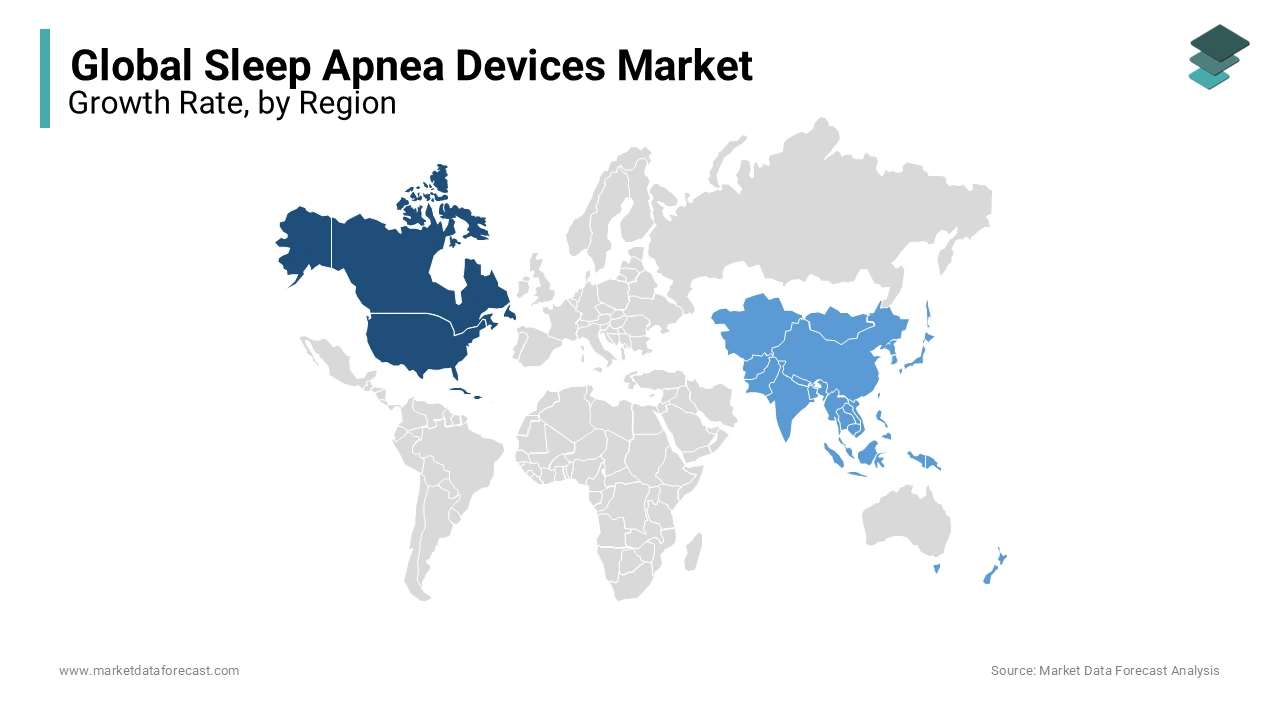
North America was the top performer of the sleep apnea devices market with 43.2% of the share in 2024. Over 5 million individuals using CPAP therapy, according to the American Academy of Sleep Medicine. Robust insurance coverage under Medicare and private payers ensures broad access, while the FDA’s expedited clearance pathways accelerate innovation. Canada has expanded home sleep testing through provincial health programs, reducing diagnostic wait times. Telehealth integration, exemplified by the Veterans Health Administration’s national sleep telemedicine network, supports remote monitoring for over 400,000 veterans.
Europe Sleep Apnea Devices Market Insights
Europe sleep apnea devices market was positioned second by holding 33.2% of the share in 2024. Western European nations like Germany, France, and the UK have well-established reimbursement frameworks, with Germany’s statutory insurers funding over 1.1 million CPAP devices annually, according to the German Medical Association. The UK’s NHS has integrated sleep apnea screening into primary care pathways for patients with hypertension and atrial fibrillation. However, Southern and Eastern Europe lag in infrastructure; Romania has only 12 sleep labs for 19 million people, as reported by the Romanian Society of Pneumology. The EU’s Medical Device Regulation (MDR) has increased compliance costs, slowing market entry.
Asia Pacific Sleep Apnea Devices Market Insights
Asia Pacific sleep apnea devices market is swiftly emerging as a high-growth region amid rising urbanization and healthcare modernization. China is rapidly expanding its diagnostic capacity, with the National Health Commission mandating sleep disorder screening in 500 tertiary hospitals by 2025. India’s market is driven by private hospitals and tele-sleep startups like SleepWell and Breathing Space, which conducted over 200,000 home sleep tests in 2023, according to the Indian Sleep Research Society. Rising middle-class awareness, coupled with increasing prevalence of obesity and diabetes, which is accelerating demand, though affordability and specialist shortages remain constraints in rural areas.
Latin America Sleep Apnea Devices Market Insights
Latin America sleep apnea devices market growth is likely to have steady growth opportunities throughout the forecast period. Brazil is serving over 150,000 patients in 2023, according to the Brazilian Ministry of Health. Argentina and Chile have integrated sleep medicine into pulmonology training, increasing specialist availability. However, access remains limited; in Peru, only 5% of OSA cases are diagnosed, as reported by the Peruvian Thoracic Society. Private clinics in Mexico City and São Paulo offer advanced diagnostics, but out-of-pocket costs deter widespread use.
Middle East & Africa Sleep Apnea Devices Market Insights
The Middle East and Africa sleep apnea devices market growth is rapidly escalating in the next coming years. In Saudi Arabia, Vision 2030 includes a national sleep health initiative, with USD 300 million allocated to expand diagnostic centers and train specialists by 2030, according to the Saudi Ministry of Health. The UAE has established advanced sleep labs in Dubai and Abu Dhabi, serving both local and medical tourism patients.
KEY MARKET PLAYERS
Companies leading the global sleep apnea devices market are ResMed, Inc. (U.S.), Philips Healthcare (Netherlands), Fisher & Paykel Healthcare Ltd. (New Zealand), SomnoMed Ltd. (Australia), Compumedics Limited (Australia), Weinmann Medical Devices GmbH (Germany) and Whole You, Inc. (U.S.). These players focus on various strategies such as mergers, acquisitions, product launches, and partnerships.
RECENT HAPPENINGS IN THE MARKET
- In February 2021, the U.S. Food and Drug Administration approved the promotion of another treatment prescription-only designed to relieve snoring and mild obstructive sleep apnea. This device can be used while a person is awake.
- In October 2020, Acurable launched the AcuPebble SA100, a small wearable device that allows for a fully automatic and remote diagnosis of obstructive sleep apnea (OSA).
- In October 2019, ResMed Company released a new AirFit N30 for treating sleep apnea. AirFit N30 is the very lightest CPAP mask. It also features elastic headgear and a cradle cushion under the nasal bridge for a comfortable experience; irrespective of how the wearer moves or sleeps, the seal is secured due to the mask's innovative design's curved cushion.
- In September 2016, Respicardia, Inc., a medical technology company, received U.S. FDA approval for its Remede system. It is for the treatment of moderate to severe central sleep apnea. With this product approval, the company's market presence in the United States has seen significant growth, and its revenue generation flow has also rushed high.
- In October 2015, Koninklijke Philips Company released a sleep apnea solution containing a DreamMapper patient engagement app, DreamWear mask, and Dreamstation PAP device.
MARKET SEGMENTATION
This research report on the global sleep apnea devices market has been segmented and sub-segmented based on product type, diagnostic devices, end-users, and region.
By Product
- Positive Airway Pressure (PAP) Devices
- CPAP Devices
- APAP Devices
- BPAP Devices
- Facial Interfaces
- Masks
- Nasal Masks
- Nasal Pillow Masks
- Full-Face Masks
- Masks
- Adaptive Servo-Ventilation Instruments (ASV)
- Airway Clearance Systems
- Oxygen Concentrators
- Stationary Concentrators
- Portable Concentrators
- Accessories
- Pillows
- Chin Restraints
- Mask Cleaning Wipes
- Other Accessories
- Oral Appliances
- Mandibular Advancement Devices
- Tongue Retaining Devices
By Diagnostic Devices
- Polysomnography Devices
- Ambulatory PSG Devices
- Clinical PSG Devices
- Respiratory Polygraphs
- Oximeters
- Single-Channel Screening Devices (Pulse Oximeters)
- Fingertip Pulse Oximeters
- Handheld Pulse Oximeters
- Wrist-Worn Pulse Oximeters
- Tabletop Pulse Oximeters
- Actigraphy Systems
By End-User
- Home Care Setting
- Sleep Laboratories
- Hospitals
By Region
- North America
- Europe
- Asia Pacific
- Latin America
- The Middle East and Africa
Frequently Asked Questions
What is the projected value of the global sleep apnea devices market by 2033?
By 2033, the global market size for sleep apnea devices is estimated to value worth USD 19.75 billion.
What is the growth rate of the sleep apnea devices market?
With the growing prevalence of sleep apnea, the market for sleep apnea devices is estimated to rise at a CAGR of 7.8% CAGR during the forecast period worldwide.
Which region led the sleep apnea devices market in 2024?
The North American regional market dominated the sleep apnea devices market in 2024.
Which are the significant players operating in the sleep apnea devices market?
ResMed, Inc. (U.S.), Philips Healthcare (Netherlands), Fisher & Paykel Healthcare Ltd. (New Zealand), SomnoMed Ltd. (Australia), Compumedics Limited (Australia), Weinmann Medical Devices GmbH (Germany) and Whole You, Inc. (U.S.) are some of the promising companies in the global sleep apnea devices market.
Related Reports
Access the study in MULTIPLE FORMATS
Purchase options starting from
$ 2500
Didn’t find what you’re looking for?
TALK TO OUR ANALYST TEAM
Need something within your budget?
NO WORRIES! WE GOT YOU COVERED!
Call us on: +1 888 702 9696 (U.S Toll Free)
Write to us: sales@marketdataforecast.com