- Product Description Description
- Table of Contents TOC
- List of Table & Figure LOT
- Get Free Sample PDF Sample PDF
Market Size, 2025
$7.96 BnMarket Estimate, 2026
$8.6 BnMarket Forecast, 2034
$15.91 BnCAGR, 2026–2034
8%Executive Summary: Global Hair Straightener Market
- Market Scope: Comprehensive global hair straightener market analysis covering plate types, end-user settings, distribution channels, regional leadership frameworks, and thermal protection technologies.
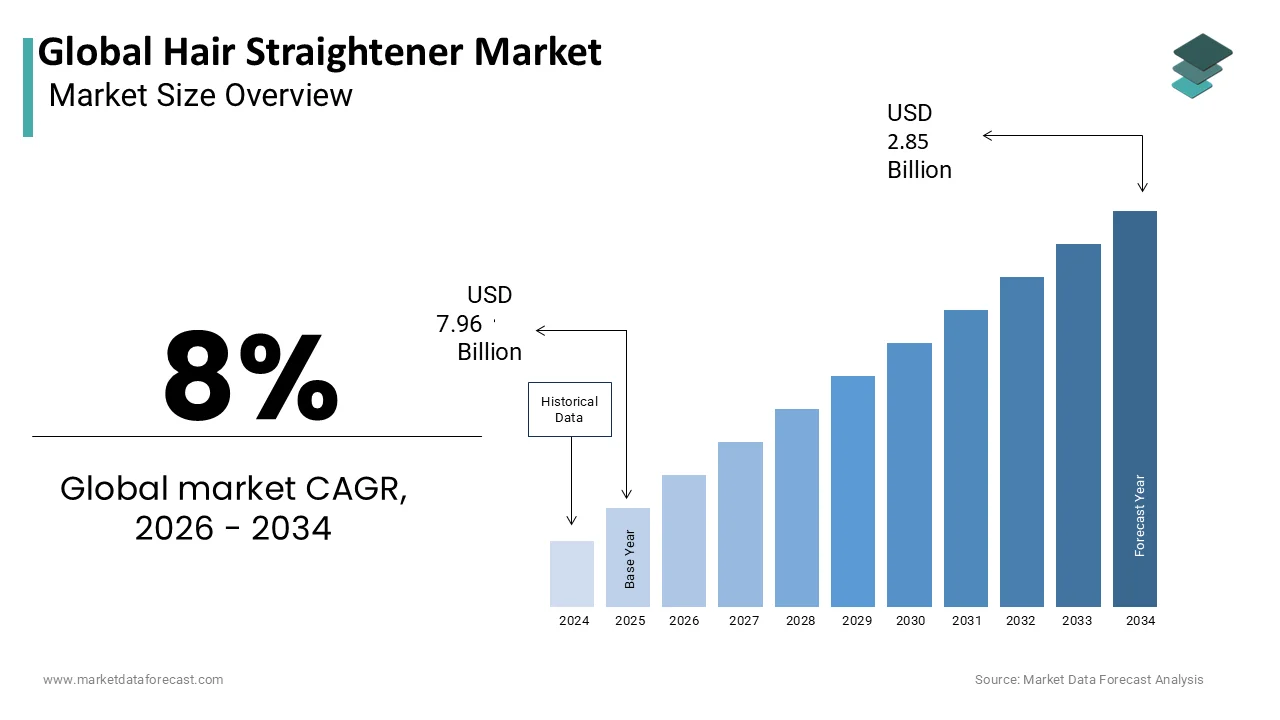
- Market Valuation: Valued at USD 7.96 billion (2025), estimated at USD 8.60 billion (2026), and projected to reach USD 15.91 billion by 2034, growing at a robust CAGR of 8% (2026–2034).
- Primary Growth Drivers: Escalating demand for advanced thermal protection and ionic technologies, rising prevalence of professional salon culture and at-home styling, digital democratization of styling tutorials, and the integration of IoT and smart temperature control features.
Key Market Segment Metrics (2026–2034)
| Category | Leading Segment (2025 Position) | Fastest-Growing Segment |
|---|---|---|
| By Plate Type | Ceramic plates (dominated in 2025 due to exceptionally uniform heat distribution, safety profile, and broad affordability) | Tourmaline plates (projected to register the fastest CAGR through massive negative ion emission and internal moisture preservation) |
| By End-User | Household segment (held the largest market share in 2025 driven by digital styling tutorials, social media, and intuitive safety features) | Commercial segment (anticipated to witness the fastest CAGR of 9.2% fueled by rapid premium salon network expansion and rapid heat recovery needs) |
| By Distribution Channel | Online distribution segment (led the global market with a 42.7% share in 2025 via product comparisons, reviews, and discount strategies) | Specialty stores segment (experiencing the fastest CAGR of 8.5% driven by immersive experiential retail, testing zones, and expert consultations) |
| By Region | North America (top performer with a 30.2% share in 2025, driven by mature consumers and smart styling tool adoption), followed closely by Europe (25.9% share) | Asia-Pacific (rapidly expanding due to surging disposable incomes, emerging middle classes, and massive digital retail growth) |
Major Market Players & Market Structure
Market Structure: Highly fragmented yet competitive global styling device landscape featuring legacy tech brands and major innovators competing intensely on proprietary heating algorithms, smart IoT integration, hair health validation, and eco-friendly compliance.
Key Companies: Panasonic Corporation, Philips, Wahl Group, Andis, Tescom, The Procter & Gamble Company, Dyson Ltd, Conair Corporation, Spectrum Brands, Inc., and Beurer GmbH.
Global Hair Straightener Market Size
The global hair straightener market was valued at USD 7.96 billion in 2025, is estimated to reach USD 8.60 billion in 2026, and is projected to reach USD 15.91 billion by 2034, growing at a CAGR of 8% from 2026 to 2034.
A hair straightener (also commonly known as a flat iron) is an electrical styling tool used to temporarily flatten and smooth wavy, curly, or frizzy hair. This market is fundamentally driven by the universal desire for aesthetic versatility and manageable grooming routines. The American Academy of Dermatology states that excessive heat styling can cause structural damage to the hair shaft, while independent industry data shows manufacturing has shifted toward ceramic and tourmaline technologies to distribute heat more evenly. Furthermore, research shows a significant behavioral shift toward protective styling, with a major percentage of consumers actively seeking specialized treatments to prevent thermal and structural hair damage. This evolving consumer consciousness dictates the trajectory of product innovation, moving away from basic heating elements toward intelligent temperature control systems that preserve hair integrity while delivering salon-quality results.
MARKET DRIVERS
Escalating Demand for Advanced Thermal Protection Technologies
The consumer imperatives for devices that minimize structural harm during styling are fuelling the expansion of the hair straightener market. According to the International Journal of Cosmetic Science, ionic hair dryers minimize thermal exposure and friction by using negative ions to accelerate water evaporation and seal the hair cuticle, significantly reducing frizz and overall drying time. Research reports from consumer intelligence bodies indicate that a strong majority of styling tool purchasers prioritize adjustable heat controls and safety features to avoid structural hair degradation and customize tools to their hair type. The integration of keratin-infused plates has also surged. This scientific validation drives consumer confidence, transforming hair straighteners from mere aesthetic tools into essential hair care instruments. Consequently, brands investing in proprietary heat distribution algorithms and negative ion emission witness accelerated adoption rates, particularly among demographics with chemically treated or naturally curly hair textures requiring precise thermal management to maintain follicle health.
Rising Prevalence of Professional Salon Culture and At-Home Styling
The democratization of salon-quality aesthetics within domestic environments is a key growth enabler for the hair straightener market. According to a study, the frequency of at-home hair styling sessions has grown significantly as consumers invest in premium, salon-grade tools to achieve professional results at home. Research emphasizes that stylist recommendations are a primary driver for retail revenue, with a substantial portion of clients purchasing professional-tier styling tools directly from salons to preserve their styles between visits. This behavioral transition is heavily supported by the proliferation of digital tutorials, with major video platforms hosting millions of dedicated hair straightening tutorials that educate consumers on proper technique and tool selection. The desire for convenience, coupled with the economic advantage of reducing frequent salon visits, fuels the continuous acquisition of high-performance straightening irons. This dynamic expands the total addressable consumer base beyond traditional beauty enthusiasts to include everyday professionals seeking efficient morning routines and reliable aesthetic maintenance.
MARKET RESTRAINTS
Severe Thermal Damage and Long-Term Hair Health Concerns
The well-documented physiological impact of prolonged heat exposure on human hair is a significant barrier to the expansion of the hair straightener market. Research shows that prolonged exposure to high-temperature styling tools above 150°C degrades the hair's natural protein structure, inducing severe structural changes that lead to irreversible brittleness and split ends. Trichological studies and hair care research confirm that applying heat exceeding 185°C causes immediate moisture loss from the hair cortex and cracks the protective hair cuticle, drastically increasing the risk of severe hair breakage. These documented physiological consequences have triggered a counter movement among consumers who are increasingly adopting heatless styling alternatives, such as silk wrapping or chemical smoothing treatments. The growing awareness of cumulative thermal trauma acts as a significant psychological barrier to purchase, compelling manufacturers to continuously prove the safety of their devices through rigorous dermatological testing, which inherently increases research and development expenditures and slows down rapid market penetration.
Stringent Regulatory Compliance and Environmental Safety Standards
Navigating the complex web of international environmental and safety regulations imposes substantial operational friction on manufacturers, which hampers the expansion of the hair straightener market. In accordance with the European Commission Ecodesign regulations implemented in May 2025, electrical styling appliances sold in the EU must feature automated power management systems that restrict standby mode power draw to a maximum of 0.5 Watts. According to the UN Global E-waste Monitor, global electronic waste has surged to over 62 million metric tonnes annually, with discarded small personal care appliances and beauty tools heavily contributing to the fastest-growing solid waste streams in the world. Furthermore, the Restriction of Hazardous Substances Directive strictly limits the use of specific heavy metals in heating elements, forcing companies to reformulate their internal components. Navigating this complex web of international compliance requires substantial financial investment and operational restructuring. Smaller enterprises often struggle to absorb these compliance costs, leading to market consolidation and restricting the entry of innovative but undercapitalized startups, thereby temporarily stifling the diversity of product offerings available to the end consumer.
MARKET OPPORTUNITIES
Integration of Smart Technology and Internet of Things Connectivity
The convergence of personal grooming with advanced digital ecosystems paves the way for premium product development, which is expected to boost the growth of the hair straightener market. Research indicates that the integration of Internet of Things (IoT) ecosystems into personal care electronics is growing at a rapid double-digit compound annual growth rate, fueled by strong consumer demand for customizable, app-connected, and data-driven grooming routines. Brands introducing artificial intelligence-driven temperature modulation, which automatically adjusts the heating element in real time to prevent localized overheating, are capturing significant market share. This technological convergence not only enhances user safety but also generates valuable consumer data, allowing companies to offer tailored product recommendations and subscription-based maintenance services, thereby creating new, highly lucrative revenue streams beyond the initial hardware sale.
Expansion into Emerging Markets with Rising Disposable Incomes
Geographic diversification into developing economies offers substantial growth potential as global wealth distribution evolves, which is likely to accelerate the growth of the hair straightener market. Macroeconomic research compiled by the Brookings Institution demonstrates that the global middle-class population is projected to expand to nearly 5 billion individuals by 2030, with the vast majority of that growth concentrated in emerging markets, subsequently creating an enormous consumer base for personal care items. In regions such as Latin America, where diverse hair textures are prevalent, the demand for specialized straightening tools capable of managing thick, coarse hair is experiencing a 25 percent year-on-year growth. Localized marketing campaigns that address specific regional hair care challenges, combined with the expansion of e-commerce infrastructure, enable global brands to penetrate these high-growth territories effectively. Establishing manufacturing hubs within these regions also reduces logistical costs, allowing companies to offer competitively priced, high-quality devices that cater to the aspirational spending habits of the newly affluent demographic.
MARKET CHALLENGES
Intense Market Saturation and Proliferation of Counterfeit Products
The ubiquity of styling tools has inadvertently fostered a highly saturated landscape vulnerable to illicit trade, which holds back the expansion of the hair straightener market. Comprehensive data published by the Organisation for Economic Co-operation and Development (OECD) shows that global trade in counterfeit goods accounts for up to 3.3% of total world trade, with consumer electronics and electrical personal appliances being frequently seized product categories. Anti-counterfeiting coalitions and brand protection experts warn that unregulated e-commerce marketplaces present a major risk for fake hair straighteners and beauty electronics, which bypass critical quality testing and lack the built-in thermal safety mechanisms of authentic brands. This rampant proliferation of inferior imitations severely dilutes brand equity and erodes consumer trust in legitimate manufacturers. When consumers experience product failure or injury from a fake device, the reputational damage frequently extends to the authentic brand it mimics. Combating this illicit trade requires continuous investment in anti-counterfeiting technologies, such as blockchain verification and unique serialization, which diverts critical resources away from product innovation and places a persistent strain on corporate profitability and brand integrity.
Volatility in Raw Material Supply Chains and Component Shortages
Manufacturers face persistent vulnerability due to the fragility of global supply networks for specialized components, which slows down the expansion of the hair straightener market. Furthermore, the ongoing global semiconductor shortage affects the production of microcontrollers required for digital temperature displays and smart connectivity features. This supply-side vulnerability forces manufacturers to either absorb the inflated material costs, thereby compressing their profit margins, or pass the expenses onto the consumer, which risks pricing out price-sensitive demographics and stalling overall market growth during periods of economic uncertainty.
REPORT COVERAGE
| REPORT METRIC | DETAILS |
| Market Size Available | 2025 to 2034 |
| Base Year | 2025 |
| Forecast Period | 2026 to 2034 |
| Segments Covered | By Plate Type, End-user, Distribution Channel, and Region |
| Various Analyses Covered | Global, Regional & Country Level Analysis, Segment-Level Analysis, DROC, PESTLE Analysis, Porter’s Five Forces Analysis, Competitive Landscape, Analyst Overview on Investment Opportunities |
| Regions Covered | North America, Europe, Asia-Pacific, Latin America, the Middle East, and Africa |
| Market Leaders Profiled | Panasonic Corporation, Philips, Wahl Group, Andis, Tescom, The Procter & Gamble Company, Dyson Ltd, Conair Corporation, Spectrum Brands, Inc., and Beurer GmbH |
SEGMENTAL ANALYSIS
By Plate Type Insights
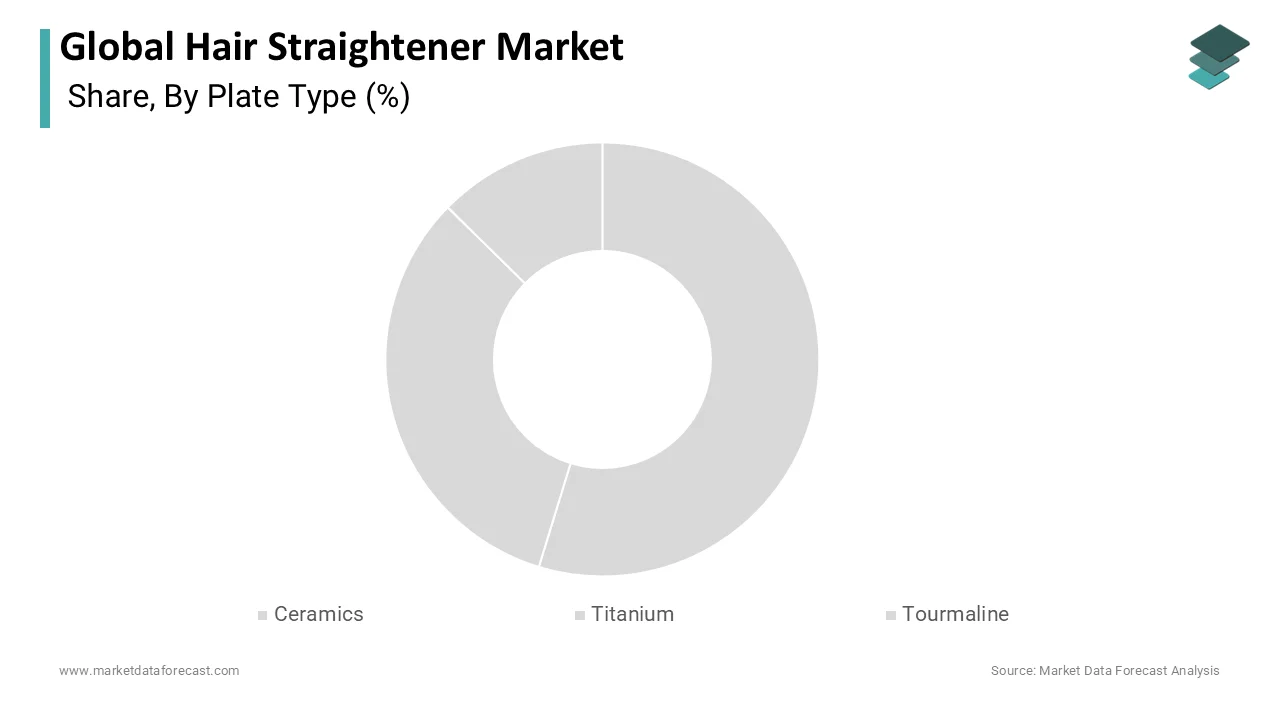
The ceramic plate segment dominated the hair straightener market and accounted for a substantial share in 2025. This dominance of the segment was mainly driven by the fact that it provides exceptionally uniform heat distribution across the hair shaft, which significantly reduces the risk of localized thermal damage. Research into thermal hair appliances shows that high-quality ceramic heating elements provide excellent heat distribution and minimize temperature drops during styling, allowing for a highly consistent and predictable application of heat across the hair shaft. This precise thermal regulation prevents the extreme hot spots that typically cause severe cuticle degradation and protein denaturation in human hair. The inherent safety profile of ceramic materials makes them the preferred choice for individuals with fine, chemically treated, or highly vulnerable hair textures. Furthermore, ceramic plates emit a gentle far infrared heat that penetrates the hair shaft from the inside out, locking in natural moisture while smoothing the outer cuticle. This scientific advantage translates directly into consumer trust, driving massive retail volumes as buyers prioritize long-term hair health over rapid styling speeds. The widespread clinical validation of these safety benefits cements the leading position of ceramic plates in the global market.
A further major factor securing the dominance of ceramic plates is its exceptional affordability, combined with ubiquitous global availability. A study confirms that entry-level ceramic hair straighteners generally represent the most cost-effective and budget-friendly segment of the thermal tool market, offering a lower price point than advanced titanium or mineral-infused alternatives. Also, the widespread distribution network eliminates the friction typically associated with purchasing specialized beauty appliances. The manufacturing process for ceramic plates is highly standardized and scalable, allowing brands to produce massive volumes at low marginal costs. Consequently, retailers can offer aggressive promotional pricing and bundled deals, which heavily stimulate impulse purchases. This massive entry point creates a continuous pipeline of consumers who eventually upgrade to premium models, ensuring that the ceramic segment maintains its overwhelming volume leadership through sheer market penetration and economic accessibility.
The tourmaline segment is estimated to register the fastest CAGR during the forecast period due to its unparalleled ability to emit massive quantities of negative ions, which effectively neutralize the positive ions responsible for severe hair frizz. Materials testing confirms that crushing the semi-precious gemstone tourmaline into ceramic styling plates significantly amplifies the natural output of negative ions when heated, which neutralizes positive static charges and smooths the hair cuticle. Consumer testing panels reveal that individuals with coarse, frizzy, or highly porous hair observe an immediate reduction in static electricity and flyaways when switching to ion-emitting tools, as the negative ions flatten lifted cuticle scales. This immediate and visible transformation drives intense word-of-mouth marketing and high customer satisfaction rates. The crushed tourmaline gemstone infused into the plates acts as a semi-permanent ion generator that remains active even at lower temperature settings. This allows users to achieve sleek, salon-quality finishes without subjecting their hair to extreme heat levels. The rising consumer demand for frizz-free aesthetics in humid climates further accelerates adoption. Consequently, the unique electrochemical properties of tourmaline directly address the most common styling complaints, propelling this segment to the highest growth velocity in the industry.
A different factor accelerating the tourmaline segment is its unique capacity to emit gentle infrared heat that styles the hair from the inside out, preserving vital internal moisture. The profound benefit appeals strongly to the growing demographic of health-conscious consumers who refuse to compromise their hair health for aesthetic styling. The technology effectively seals the cuticle while hydrating the inner layers, leaving the hair remarkably shiny and resilient post-styling. Furthermore, tourmaline requires less overall energy to reach optimal styling temperatures, which reduces the total thermal exposure time by approximately twenty-five percent. This dual action of internal hydration and rapid external smoothing perfectly aligns with modern consumer demands for efficient, protective styling. The scientific superiority of this moisture-locking mechanism ensures that the tourmaline segment continues to outpace all other plate materials in rapid market expansion.
By End-User Insights
In 2025, the household segment held the largest share of the global market because of the explosive proliferation of digital styling tutorials and the immense influence of social media beauty communities. Consumer testing panels reveal that individuals with coarse, frizzy, or highly porous hair observe an immediate reduction in static electricity and flyaways when switching to ion-emitting tools, as the negative ions flatten lifted cuticle scales. The digital democratization of styling knowledge empowers individuals to achieve complex, salon-quality looks within the comfort of their own homes. The visual nature of these platforms allows consumers to see real-time results on diverse hair textures, building confidence and reducing the intimidation factor associated with thermal tools. Furthermore, the interactive nature of online communities enables users to share tips, troubleshoot issues, and recommend specific models, creating a powerful peer-driven marketing ecosystem. This continuous loop of digital education and social validation fuels relentless demand for personal-use devices, cementing the household segment as the undisputed leader in overall market volume and consumer engagement.
Also, a key reason supporting the top spot for this segment is the integration of highly intuitive safety features designed specifically for untrained, everyday consumers. These engineered safety enhancements remove the psychological barriers to entry for cautious buyers and parents purchasing tools for teenagers. Additionally, the development of smart thermal sensors automatically adjusts the plate temperature based on the speed of the user's hand movement, preventing localized overheating if the user pauses or moves too slowly. Manufacturers have successfully transformed a potentially hazardous professional tool into a secure, everyday household essential by prioritizing user safety and eliminating the learning curve. Consequently, this has allowed them to secure an overwhelming market share in the personal segment.
The commercial segment is anticipated to witness the fastest CAGR of 9.2% from 2026 to 2034, owing to the rapid global expansion of premium salon networks and specialized texture studios that require heavy-duty styling equipment. Moreover, salon owners are aggressively upgrading their inventory to professional models that offer rapid heat recovery times of under five seconds between passes. This intense operational demand necessitates the frequent replacement and expansion of commercial styling tools. Furthermore, the rising consumer willingness to pay for premium salon smoothing services allows business owners to invest heavily in top-tier equipment. This relentless commercial expansion and the specific operational requirements of high-volume salons directly propel the commercial segment to the fastest growth trajectory in the industry.
The fast expansion of this segment is further helped by the uncompromising demand for extreme durability and rapid heating capabilities essential for fast-paced professional environments. Also, the massive increase in daily revenue potential justifies the premium price point of commercial equipment. The rapid heating technology, which brings plates to optimal temperatures in under ten seconds, is critical for maintaining tight scheduling in busy salons. Furthermore, commercial models often feature extended warranties of up to three years, providing business owners with financial security against equipment failure. This continuous cycle of high-volume purchasing, driven by the need for speed and indestructible reliability, ensures the commercial segment expands at the highest velocity.
By Distribution Channel Insights
The online distribution segment led the global market and captured a 42.7% share in 2025. This leading position of the segment was attributed to factors such as offering consumers unparalleled product comparison capabilities and immediate access to global brands that may not be available locally. The frictionless shopping experience is further enhanced by access to millions of verified customer reviews, which provide authentic insights into long-term product performance and durability. Furthermore, online platforms eliminate geographical barriers, allowing consumers in remote areas to purchase premium international brands directly from official manufacturer storefronts. The online channel effectively captures the largest portion of consumer spending by providing a comprehensive, transparent, and globally connected shopping environment. As a result, it firmly cements its position as the undisputed leader in the distribution landscape.
Furthermore, another main driver holding up this segment's lead is the implementation of aggressive discounting strategies and the emergence of innovative subscription-based retail models. The financial incentives create a compelling value proposition that drives massive traffic to digital storefronts. Additionally, online retailers utilize sophisticated algorithms to offer personalized discount codes at the exact moment a consumer shows hesitation, effectively recovering abandoned shopping carts. The combination of deep financial discounts, flexible payment options, and innovative subscription models creates an irresistible economic advantage for digital platforms. This relentless focus on price competitiveness and customer retention strategies ensures that the online channel maintains its overwhelming leadership in global market share.
The specialty stores segment is likely to experience the fastest CAGR of 8.5% over the forecast period. This is because its offer an immersive experiential retail environment that allows consumers to physically test the ergonomics and weight of styling devices before purchasing. Specialty retailers capitalize on this tactile requirement by creating interactive demonstration zones where shoppers can test the heating speed and plate glide on synthetic hair samples. This hands-on experience builds immense consumer confidence and justifies the higher price points of advanced models. Furthermore, the physical presence of the product allows consumers to immediately take possession of their purchase, eliminating the waiting period associated with shipping. This focus on physical interaction and immediate gratification drives the rapid expansion of the specialty retail channel.
In addition, this segment's quick growth is further driven by the provision of expert consultation and personalized product matching delivered by highly trained beauty staff. The personalized approach transforms a simple transaction into a comprehensive hair care solution, significantly increasing the average transaction value. The trust established through face-to-face expert advice is particularly crucial for consumers investing in high-end, technologically advanced straighteners. Furthermore, specialty stores often host exclusive masterclasses and brand ambassador events, creating a community atmosphere that fosters intense brand loyalty. Specialty stores offer an irreplaceable value proposition by leveraging human expertise to demystify complex styling technologies. This unique advantage drives their exceptionally rapid growth in the distribution landscape.
COUNTRY LEVEL ANALYSIS
North America Hair Straightener Market Analysis
North America was the top performer in the global market and accounted for a 30.2% share in 2025. Its highly mature and technologically advanced consumer base has contributed to the supremacy of the region’s market. The regional market is characterized by an intense demand for smart, connected styling tools that integrate seamlessly with digital ecosystems. The integration of app-connected ecosystems in hair care is rising, highlighted by premium launches like the Bluetooth-enabled Dyson Airwrap i.d., which syncs with mobile applications to offer customized styling profiles. North American consumers demonstrate a high willingness to invest in premium hair styling tools equipped with advanced heat protection, automatic thermal sensors, and hair-protecting plate technologies. The strong presence of major domestic manufacturers fosters fierce competition, driving rapid cycles of product innovation and feature enhancement. Furthermore, the widespread adoption of clean beauty standards has pushed regional brands to develop tools that minimize environmental impact without sacrificing performance. North American consumers increasingly prioritize hair health and heat-damage prevention, driving a general market demand for hair styling tools that feature advanced safety and temperature control features. This relentless pursuit of technological superiority and clinical validation ensures that North America remains a highly lucrative and influential hub for premium styling device development and consumption.
Europe Hair Straightener Market Analysis
Europe was positioned second in the hair straightener market and occupied a 25.9% share in 2025. This position of the European market was propelled by its stringent regulatory environment and profound focus on sustainable manufacturing practices. The European market is heavily influenced by the European Commission Ecodesign Directive, which mandates strict energy efficiency and recyclability standards for all personal care electronics. Driven by stringent EU sustainability frameworks and consumer demand, leading hair styling brands in the European market widely implement energy-saving automatic shut-off mechanisms and eco-friendlier packaging solutions. As per the European Cosmetic and Perfumery Association, consumers in this region exhibit a strong preference for long-lasting, durable devices over cheap, disposable alternatives, aligning with the broader circular economy initiatives. This regulatory pressure has forced manufacturers to innovate in material science, leading to the development of bio-based plastics and ethically sourced mineral plates. Furthermore, the region has a deeply entrenched culture of professional hair care, with a high density of certified salons driving consistent commercial demand. Studies indicate a growing consumer segment that is willing to pay a price premium for personal care products that carry verified sustainable, eco-friendly, or carbon-neutral manufacturing credentials. This unique combination of strict environmental compliance and a sophisticated, quality-driven consumer base defines the distinct and highly regulated European market landscape.
Asia Pacific Hair Straightener Market Analysis
The Asia Pacific region holds a rapidly expanding position in the global market due to a large population base and surging disposable incomes across emerging economies. The market status shows an explosive transition from basic grooming tools to advanced, multi-functional styling devices as the middle class expands. According to market research leaders like Euromonitor International, rising disposable income in China and India is a major driver of premium personal care electronics sales. Research shows that the highly diverse hair textures across Asia-Pacific require brands to develop hair tools with versatile, smart heat-control settings to cater to varying regional hair needs. This diverse demographic requirement fuels intense product diversification and localized marketing campaigns. Furthermore, the massive proliferation of digital commerce and social media beauty influencers in the region accelerates trend adoption cycles to unprecedented speeds. A study confirms that Asia-Pacific leads the world in digital retail growth, which directly benefits online sales of beauty and styling appliances. This potent combination of massive demographic scale, rising wealth, and digital connectivity ensures that the Asia Pacific remains the most dynamic and fastest-growing engine of global market expansion.
Latin America Hair Straightener Market Analysis
Latin America occupies a significant position in the global market owing to a deeply ingrained cultural emphasis on personal grooming and aesthetic presentation. The regional market has an exceptionally high frequency of salon visits and a strong domestic culture of daily heat styling to manage diverse, naturally voluminous hair textures. According to sources, hair straighteners and anti-frizz tools are a staple of the daily routine for millions of women in countries like Brazil and Mexico due to regional climate conditions. As per studies, the market is highly sensitive to pricing, driving massive volume sales for affordable, entry-level ceramic models, while simultaneously fostering a growing niche for premium imported brands among the upper middle class. The high humidity levels in the region also create a specific demand for advanced ionic and tourmaline technologies capable of combating severe frizz and maintaining sleek styles throughout the day. This unique climatic challenge, combined with an unwavering cultural commitment to aesthetic perfection, creates a resilient and highly specialized market environment that consistently drives robust regional demand.
Middle East and Africa Hair Straightener Market Analysis
The Middle East and Africa region is an emerging region in the global market due to a strong preference for ultra-premium luxury brands and a thriving high-end salon culture. The market in this region is heavily skewed toward the Gulf Cooperation Council countries, where immense disposable wealth drives the consumption of the most expensive, technologically advanced styling devices available. The regional demand is also heavily influenced by specific cultural hair care practices, requiring tools that can effectively smooth extremely thick, coarse, and chemically treated hair textures without causing breakage. This stark contrast between ultra luxury consumption and basic utility needs defines the complex and highly stratified regional market landscape.
COMPETITIVE LANDSCAPE
The competitive landscape of the styling device sector is intensely fragmented yet dominated by a few legacy technology brands that continuously dictate industry innovation standards. Rivalry is exceptionally fierce, compelling manufacturers to engage in relentless cycles of research and development to introduce proprietary heating algorithms and advanced sensor integrations. Companies compete aggressively on the dual fronts of scientific hair health validation and aesthetic design superiority, recognizing that modern consumers demand both safety and visual appeal. Price competition remains intense in the entry-level segments, where numerous regional players flood the market with affordable alternatives, forcing established brands to emphasize durability and comprehensive warranty coverage. Furthermore, the battle for consumer attention has shifted heavily toward digital ecosystems, with brands developing exclusive mobile applications that offer personalized styling routines and device maintenance tracking. This digital integration creates high switching costs and fosters intense brand loyalty. The market also witnesses significant competitive maneuvering through strategic acquisitions of niche technology startups and prominent partnerships with fashion influencers. Ultimately, survival requires a delicate balance of continuous technological disruption, premium brand positioning, and an unwavering commitment to consumer hair health, ensuring that only the most innovative enterprises maintain leadership status in the dynamic global industry.
KEY MARKET PLAYERS
Some of the companies that are playing a dominating role in the Global Hair Straightener Market include
- Panasonic Holdings Corporation
- Koninklijke Philips N.V.
- Wahl Clipper Corporation
- Andis Company
- Tescom Co., Ltd.
- The Procter & Gamble Company
- Dyson Ltd.
- Conair Corporation
- Spectrum Brands Holdings, Inc.
- Beurer GmbH
TOP LEADING PLAYERS IN THE MARKET
- Dyson operates as a premier technology-driven enterprise in the styling sector, focusing exclusively on intelligent heat control and advanced motorized airflow integration. The company revolutionized the industry by introducing devices that measure air temperature over forty times a second to prevent extreme heat damage. Recently, Dyson strengthened its market position by launching a new series of intelligent attachments that automatically adjust thermal settings based on the specific hair profile uploaded to their companion mobile application. This continuous investment in proprietary digital ecosystems and sensor technology solidifies their reputation as the ultimate innovator in premium hair care, attracting a highly loyal consumer base willing to invest heavily in scientifically validated styling solutions.
- Conair Corporation maintains a massive global footprint by offering a comprehensive portfolio of styling tools that cater to every possible demographic and price point. The company excels in democratizing advanced styling technologies, bringing features like tourmaline ionic emission and ceramic heat distribution to highly affordable consumer segments. To strengthen its position, Conair recently expanded its professional-grade ceramic line by integrating advanced dual-voltage capabilities and enhanced ergonomic designs specifically tailored for international travel. By continuously refreshing its extensive product catalog with modern aesthetics and improved safety features, Conair ensures its enduring relevance and accessibility, securing its status as a foundational pillar of the global personal care appliance industry.
- GHD operates as a prestigious salon heritage brand that bridges the gap between professional salon performance and luxurious domestic styling experiences. The company is renowned for pioneering the single-pass straightening technology that maintains a constant optimal styling temperature to maximize hair shine and health. Recently, GHD strengthened its market presence by launching a revolutionary predictive technology line that utilizes artificial intelligence to predict the optimal heat setting for each individual section of hair. This strategic focus on integrating machine learning into thermal styling, combined with their iconic brand aesthetic, continuously elevates their prestige and ensures they remain the preferred choice for discerning consumers and elite salon professionals worldwide.
TOP STRATEGIES USED BY KEY MARKET PARTICIPANTS
Key participants primarily utilize aggressive technological innovation and strategic brand collaborations to maintain competitive superiority. Companies heavily invest in research and development to integrate artificial intelligence and advanced sensor technologies into their styling devices, ensuring optimal heat control and minimizing hair damage. Furthermore, market leaders actively pursue partnerships with elite global salon networks and prominent digital beauty influencers to validate their products and drive consumer trust. Expanding into emerging geographic markets through localized product adaptations and establishing robust electronic commerce infrastructure are also critical strategies employed to capture new demographics and sustain long-term profitable growth across the industry.
MARKET SEGMENTATION
This research report on the global hair straightener market has been segmented and sub-segmented into the following categories.
By Plate Type
- Ceramics
- Titanium
- Tourmaline
- Other
By End-User
- Household/Personal
- Commercial
By Distribution Channel
- Hypermarkets/Supermarkets
- Specialty stores
- Franchise store
- Online
By Region
- North America
- Europe
- Asia Pacific
- Latin America
- Middle East and Africa