- Product Description Description
- Table of Contents TOC
- List of Table & Figure LOT
- Get Free Sample PDF Sample PDF
Market Size, 2025
$69.84 MnMarket Estimate, 2026
$75.64 MnMarket Forecast, 2034
$143.25 MnCAGR, 2026–2034
8.31%Executive Summary: Hibiscus Extract Market
- Market Scope: Comprehensive global analysis of the hibiscus extract market covering grade segments, product forms, application sectors, standardized extraction technologies, and clean-label natural colorant trends.
- Market Valuation: Valued at USD 1.18 billion (2025), estimated at USD 1.28 billion (2026), and projected to reach USD 2.47 billion by 2034, registering a robust CAGR of 8.6% (2026–2034).
- Primary Growth Drivers: Rising consumer demand for natural antioxidants in functional foods and beverages, expanding nutraceutical applications leveraging anthocyanins, and increasing adoption in premium skincare formulations as plant-based actives. Key opportunities are backed by clean-label colorants and standardized extraction technologies.
Key Market Segment Metrics (2026–2034)
| Category | Leading Segment (2025 Position) | Fastest-Growing Segment |
|---|---|---|
| By Grade & Form | Food Grade Hibiscus Extract (dominated with a 52.4% share) & Powder Form (captured 58.7% share) | Cosmetic Grade (projected to be the fastest-growing segment at a CAGR of 10.9%) & Liquid Extracts for RTD Formulations |
| By Application & Sector | Beverages (led applications with 38.2% share in 2025) | Skincare Products (expanding rapidly at a CAGR of 11.3%) & Nutraceuticals |
| By Region / Production | Asia-Pacific (occupied 57.3% of regional production concentrated in India, China, and Thailand) | Europe (commands premium value segments through certified organic standards and cosmeceuticals) |
Major Market Players & Market Structure
Market Structure: Highly competitive global botanical extract landscape featuring specialized ingredient manufacturers competing intensely on contract farming partnerships, GMP-certified extraction, and proprietary anti-aging skincare complexes.
Key Companies: Martin Bauer Group, Naturex S.A., Indena S.p.A., Bio-Botanica Inc., Shaanxi Undersun Biomedtech Co. Ltd., Xi’an Lyphar Biotech Co. Ltd., Arjuna Natural Extracts Pvt. Ltd., Synthite Industries Ltd., Kancor Ingredients Pvt. Ltd., and Sabinsa Corporation.
Global Hibiscus Extract Market Size
The global hibiscus extract market size was valued at USD 69.84 million in 2025 and is expected to reach USD 143.25 million by 2034 from USD 75.64 million in 2026. The market is projected to grow at a CAGR of 8.31%.
Hibiscus is a type of shrub that belongs to the family of Malvaceae. It is a species of flowering plant, and one of them is Hibiscus sabdariffa plant. It is also referred to as the Roselle plant. Hibiscus consists of essential fatty acids and antioxidants such as flavonoids. Hibiscus also acts as a moisturizing agent and anti-aging agent. It is also used as a source of vitamin C and acts as an antibacterial agent. The Hibiscus is used in the cosmetics industry for hair treatments. Hibiscus extract has a large number of compounds that prevent free radical damage, improving general health and wellness. Furthermore, it's believed hibiscus extract offers qualities that slow down aging and improve the moisture, firmness, and wrinkles of the skin. It is currently a common ingredient in functional beverages, herbal teas, and nutritional supplements with a focus on health and wellness. Hibiscus extract is increasingly being used in the cosmetics and skincare industry due to its capacity to rejuvenate and moisturize the skin. Hibiscus sabdariffa flowers' deep red calyces are extracted in a hydroalcoholic solution, and after that, they are processed into a flexible spray-dried powder that is soluble in water, making it perfect for usage in beverage applications.
MARKET DRIVERS
The increase in demand for hibiscus extract for the cosmetics industry is one of the major driving factors to the growth of the hibiscus extract market. The leaves and the flowers of the hibiscus plant may be advantageous for healthy hair. As it helps to increase the circulation of blood to hair follicles may benefit from it. Natural pigments, anti-oxidants, and vitamins found in hibiscus leaves and flowers may be advantageous for the health of hair. This led to an increase in demand for hibiscus extract. Hibiscus extract can be added to cosmetic products like serums, creams, and lotions by manufacturers. This extract has significant value in skincare products due to its moisturizing, anti-aging, and skin-rejuvenating characteristics. This is due to the presence of antioxidizing agents, which also act as a moisturizing agent. The extract is believed to function as an anti-solar agent by absorbing the sun's ultraviolet rays, which damage skin.
The increase in demand for hibiscus extract from the food and beverage industry drives the hibiscus extract market growth. Hibiscus tea often has fewer nutrients, but it still contains a variety of healthy ingredients. The powder is typically mixed with hot or cold water to create a simple, mildly sour tea, but it is also widely utilized as an essential part of a variety of products, such as drinks and sweets. Jams, relishes, sauces, and baked items can all be used to add color and flavor.
The increase in demand for organic and herbal products in the cosmetics and personal care industry is creating opportunities in the hibiscus extract market growth over the forecasting period. This is due to an increase in demand for clean-label and traceable products. Modern customers want to know the source of the products that a company is using, hence increasing the demand for hibiscus extract as it is extracted organically. This is due to an increase in health awareness about the diseases caused by the consumption of contaminated food and allergic reactions to cosmetic products. Consumers can monitor the path of food products from source to consumption to ensure their safety and quality because of the development and availability of technology. According to consumer preference, multiple companies are attracting customers with clean-label organic products, including hibiscus extract. For instance, Mane Kancor, a well-known manufacturer of flower extracts, uses a cloud-based traceability technology that enables the company to share souring information with its customers. Additionally, the increase in awareness about the health benefits associated with the consumption of hibiscus extract increases the demand for hibiscus extract across the globe.
MARKET RESTRAINTS
Despite the advantages of the hibiscus extract, the limited consumer's awareness of the advantages associated with the hibiscus is one of the major restraining factors to the hibiscus extract market. Additionally, the increased regulatory restrictions in the food, beverage, and beauty industries hinder the market growth for hibiscus extract. For manufacturers and suppliers, the process of complying with labeling laws and safety requirements may provide challenges. Maintaining product efficacy, maintaining legal requirements, and developing consumer confidence required for specific expertise and resources. Additionally, the composition of the extract may vary due to factors such as the variance in the hibiscus type and extraction procedure, among other processing processes, making it difficult to maintain constant quality and standardization. Hibiscus flowers only bloom in its season. This makes it difficult to maintain the demand and supply chain of hibiscus.
REPORT COVERAGE
| REPORT METRIC | DETAILS |
| Market Size Available | 2025 to 2034 |
| Base Year | 2025 |
| Forecast Period | 2026 to 2034 |
| CAGR | 8.31% |
| Segments Covered | By Form, Source, Application, Sales Channel, and Region. |
| Various Analyses Covered | Global, Regional and Country Level Analysis; Segment-Level Analysis; DROC; PESTLE Analysis; Porter’s Five Forces Analysis; Competitive Landscape; Analyst Overview of Investment Opportunities |
| Regions Covered | North America, Europe, APAC, Latin America, Middle East & Africa |
| Market Leaders Profiled | Archer Daniels Midland Company, Synthite Industries Ltd., Nexira, Cargill, Incorporated, Martin Bauer Group, Indena S.p.A, FutureCeuticals, Inc, Shaanxi Jiahe Phytochem Co., Ltd, Hunan Nutramax Inc, Organic Herb Inc, Herbal Bio Solutions. |
SEGMENTAL ANALYSIS
By Source
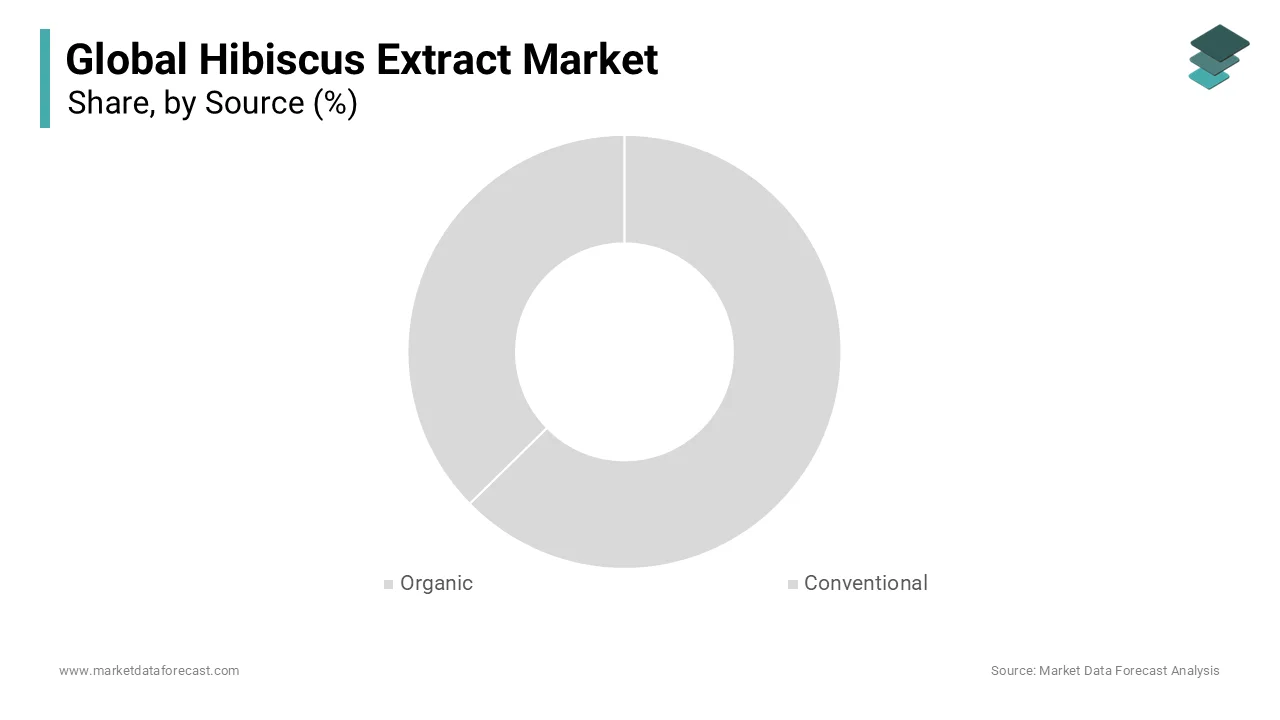
Among these, the organic segment dominates the hibiscus extract market. The organic segment is expected to show its dominance in the market for hibiscus extract over the forecasting period. This is due to an increase in demand for organic and herbal products in the cosmetic industry. The increase in the use of clean-labeled products increases the segmental growth of hibiscus extract. The conventional segment is expected to show the fastest CAGR growth in the market for hibiscus extract over the forecasting period as it is more affordable for consumers.
By Form
Among these, the liquid segment dominates the hibiscus extract market. The liquid segment is expected to show its dominance in the hibiscus extract market over the forecasting period. This is due to its ease of convenience to use in the food and beverage industry. The powder segment is expected to show the fastest CAGR growth in the market for the hibiscus extract over the forecasting period.
By Application
Among these, the food and beverage segment dominates the hibiscus extract market. The food and beverage segment is expected to show its dominance in the market for hibiscus extract over the forecasting period. This is due to an increase in demand for hibiscus extract in the food and beverage industry to manufacture various food products. Juices, teas, and smoothies are some of the products that use hibiscus extract in the food and beverage industry. These products contain it because of its beneficial effects on health, including its ability to reduce cholesterol and blood pressure. The pharmaceutical segment is expected to show the fastest CAGR growth in the market for hibiscus extract over the forecasting period.
By Sales Channel
The direct sales segment is gaining traction over the hibiscus extract market shares owing to an increasing focus on healthy lifestyles. The retail sales segment has the fastest growth opportunities during the forecast period with the rising medicinal uses.
REGIONAL ANALYSIS
Regionally, the Asia Pacific region dominates the Hibiscus Extract Market demand. This region is one of the major cultivators of the hibiscus across the globe. Emerging countries such as India, China, and Thailand, use hibiscus extract in Ayurvedic treatments and traditional beverages. Additionally, the increase in demand for organic and herbal products across the globe increases the demand for hibiscus extract. The increase in the use of hibiscus extract in the cosmetic industry increases the market, resulting in the regional growth of the market. Additionally, the increase in disposal income and the increase in the use of environmentally friendly products increases the demand for hibiscus extract.
The European region is expected to show the fastest CAGR growth in the market for the hibiscus extract over the forecasting period. This is due to an increase in the use of organic products such as hibiscus extract in the cosmetic and food and beverage industries. Additionally, the increase in the awareness associated with the health benefits offered by the hibiscus extract increases the regional market growth. Hibiscus extract is highly used in the European cosmetics industry because of its excellent anti-aging and moisturizing properties. Additionally, increased hibiscus extract utilization in this market is being driven by the rising demand for functional beverages and herbal teas. The demand for hibiscus extract in Europe is increasing as a result of consumers' preference for products with clean labels and their willingness to spend more on natural ingredients.
KEY MARKET PLAYERS
Key market players of Global Hibiscus Extract Market Archer Daniels Midland Company, Synthite Industries Ltd., Nexira, Cargill, Incorporated, Martin Bauer Group, Indena S.p.A, FutureCeuticals, Inc, Shaanxi Jiahe Phytochem Co., Ltd, Hunan Nutramax Inc, Organic Herb Inc, Herbal Bio Solutions.
RECENT HAPPENINGS IN THE MARKET
- In April 2025, Shaklee Corporation, a producer of health and wellness products, was purchased by The Hain Celestial Group, Inc. Hibiscus flower powder is a component of the Shaklee product line and is used in a range of beverages and dietary supplements.
MARKET SEGMENTATION
This research report on the global hibiscus extract market has been segmented and sub-segmented based on form, source, application, sales channel and region.
By Source
- Organic
- Conventional
By Form
- Liquid
- Powder
By Application
- Food and beverage
- Pharmaceuticals
- Cosmetics
By Sales Channel
- Direct Sales
- Retail Sales
By Region
- North America
- Europe
- Asia-pacific
- Middle-East and Africa
- Latin America