- Product Description Description
- Table of Contents TOC
- List of Table & Figure LOT
- Get Free Sample PDF Sample PDF
Market Size, 2025
$5,710 MnMarket Estimate, 2026
$6,138.25 MnMarket Forecast, 2034
$10,947 MnCAGR, 2026–2034
7.50%Global Human Growth Hormone (HGH) Market Size, Growth, Trends & Forecast (2026–2034)
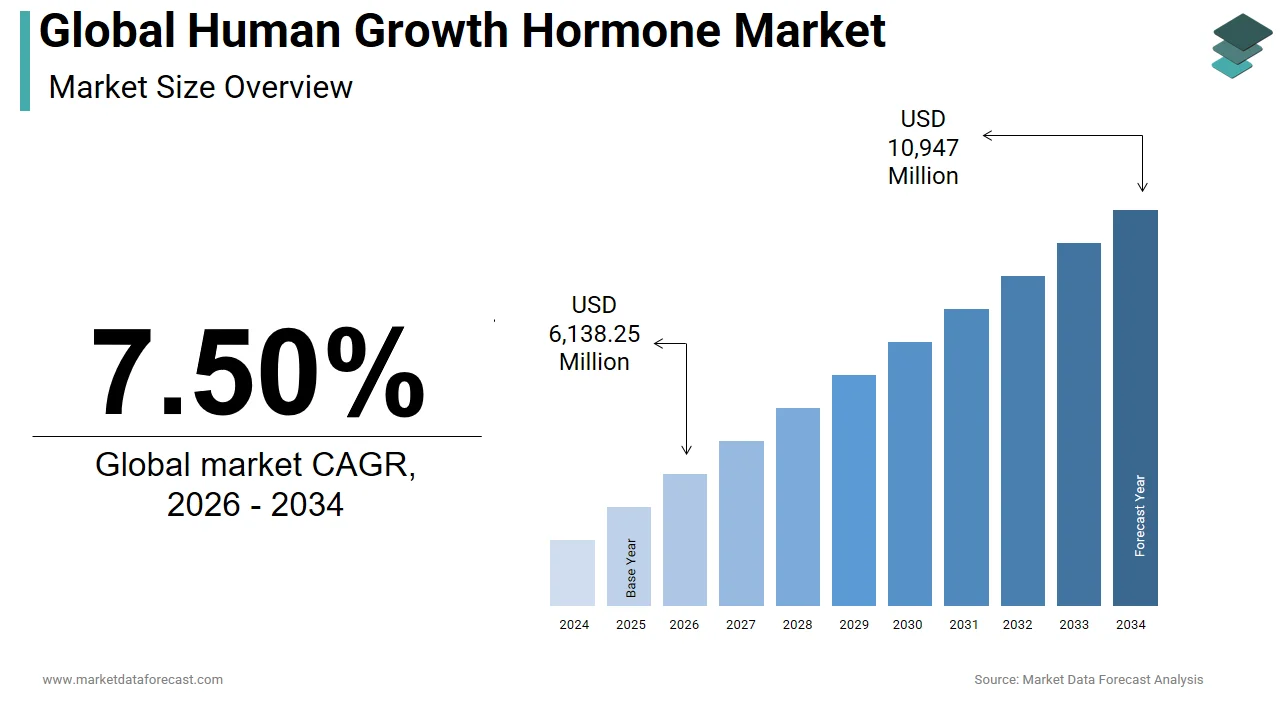
The global human growth hormone market was valued at USD 5,710 million in 2025, stands at USD 6,138.25 million in 2026, and is projected to expand to USD 10,947 million by 2034, growing at a compound annual growth rate (CAGR) of 7.50% from 2026 to 2034. Driven by rising incidences of growth disorders in children, expanded biotechnology R&D, and broader adoption of advanced drug delivery systems, the HGH market is experiencing steady worldwide acceleration.
Key Executive Metrics (At-a-Glance)
- 2025 Base Valuation: USD 5,710 Million
- 2026 Current Valuation: USD 6,138.25 Million
- 2034 Forecast Valuation: USD 10,947 Million
- Compound Annual Growth Rate (CAGR): 7.50% (2026–2034)
- Dominant Application Segment: Growth Hormone Deficiency (holding the major share owing to pediatric conditions and early diagnoses)
- Dominant Distribution Channel: Hospital and Retail Pharmacies (capturing the largest volume share)
- Fastest-Growing Distribution Channel: Online Pharmacies / ePharmacy (expanding rapidly across emerging and developed markets)
- Regional Leader: North America (anchored by favorable government reimbursement and robust R&D infrastructure)
- Fastest-Growing Regional Market: Europe (projected to record high growth supported by public-private health awareness initiatives and targeted treatments)
Core Market Drivers
- Rising Pediatric Health Disorders: An increasing prevalence of growth disorders and hormone deficiencies in children driven by dietary changes and genetic factors.
- Biotechnology & R&D Advancements: Heightened investments from both government bodies and private sectors into endocrinology, lower production costs, and advanced delivery formats.
Primary Market Restraints & Challenges
- High Treatment Costs & Side Effects: High expenses associated with long-term HGH therapy alongside potential adverse side effects and strict regulatory approval protocols.
- Manufacturing Fluctuations: Complexities and supply chain adjustments faced by pharmaceutical entities in maintaining consistent recombinant drug productivity.
Global Human Growth Hormone Market Segmentation Breakdown
| Segment Category | Leading Sub-Segment | Growth Dynamics & Sub-Categories |
|---|---|---|
| By Application | Growth Hormone Deficiency (Major global share) | Sub-segmented into Turner Syndrome, Idiopathic Short Stature, Prader-Willi Syndrome, and Others. |
| By Distribution Channel | Hospital and Retail Pharmacy (Largest share) | Online Pharmacies/ePharmacy and Specialty Clinics represent rapidly scaling alternative channels. |
| By Region | North America (Dominant market share) | Comprises Europe (fastest-growing), Asia Pacific, Latin America, and the Middle East & Africa. |
Major Industry Players Profiled
Key biopharmaceutical companies spearheading the global HGH market include Pfizer Inc., Novo Nordisk A/S, Anhui Anke Biotechnology Co., Ltd., Eli Lilly and Company, GeneScience Pharmaceuticals Co., Ltd., Genentech, Inc., Novartis AG, Biopartners GmbH, Zhongshan Hygiene Biopharm Co., Ltd., Merck KGaA, Ipsen S.A., and Lifetech Labs.
 Download Free Sample Report
Global Human Growth Hormone Market Size
The size of the global human growth hormone market was worth USD 5,710 million in 2025. The global market is anticipated to grow at a CAGR of 7.50% from 2026 to 2034 and be worth USD 10,947 million by 2034, up from USD 6,138.25 million in 2026.
The growth hormone plays a vital role in regulating body composition and primarily spurs growth in children. However, when there is an issue producing these hormones by pituitary glands, they may not correctly develop bone and muscles. In these cases, human growth hormone injections are prescribed by doctors.
MARKET DRIVERS
The growing number of health disorders among children, primarily due to changes in food habits is one of the key factors driving the growth of the global HGH market. In addition, the rise in awareness of treatment procedures is propelling the market's growth. Besides, the market is growing with a surge in the research institutes in the biotechnology field, leveraging the demand of the global human growth hormone market. Rising neuropsychiatric cases and increasing government funds for R & D in the endocrinology sector fuel market demand. In addition, advanced technologies are introduced in the healthcare domain to improve the services' quality helping the HGH market grow. With the growing number of approvals by the FDA and other government organizations, public and private organizations have taken some initiatives to promote healthcare-related services and policies among the developed and underdeveloped countries and accelerate the human growth hormone market. Increasing older people is one-factor fostering market demand.
Rising disposable income in the urban population and people's demand the effective treatment procedures is to set up growth opportunities for the market. The increasing consumption rate of these drugs in significant applications is likely to boost the market's growth. In addition, the growing prevalence of adopting the latest technologies in producing the pills at low cost may positively impact the HGH market demand.
MARKET RESTRAINTS
The ongoing usage of the medicines is likely to produce side effects impacting the global HGH market growth negatively. Strict government rules in approving the drugs are restraining the market growth. The pharmaceutical companies facing ups and downs while producing drugs impede the market's growth. The treatment's cost culture is very high and will likely limit the demand for human growth hormone. Fluctuations in the productivity of drugs in pharmaceutical companies are also hindering the growth of the global human growth hormone market.
REPORT COVERAGE
| REPORT METRIC | DETAILS |
| Market Size Available | 2025 to 2034 |
| Base Year | 2025 |
| Forecast Period | 2026 to 2034 |
| Segments Analysed | By Application, Distribution Channel, and Region |
| Various Analyses Covered | Global, Regional & Country Level Analysis, Segment-Level Analysis, Drivers, Restraints, Opportunities, Challenges; PESTLE Analysis; Porter’s Five Forces Analysis; Competitive Landscape, Analyst Overview of Investment Opportunities |
| Regions Analysed | North America, Europe, Asia Pacific, Latin America, the Middle East, and Africa |
SEGMENTAL ANALYSIS
By Application Insights
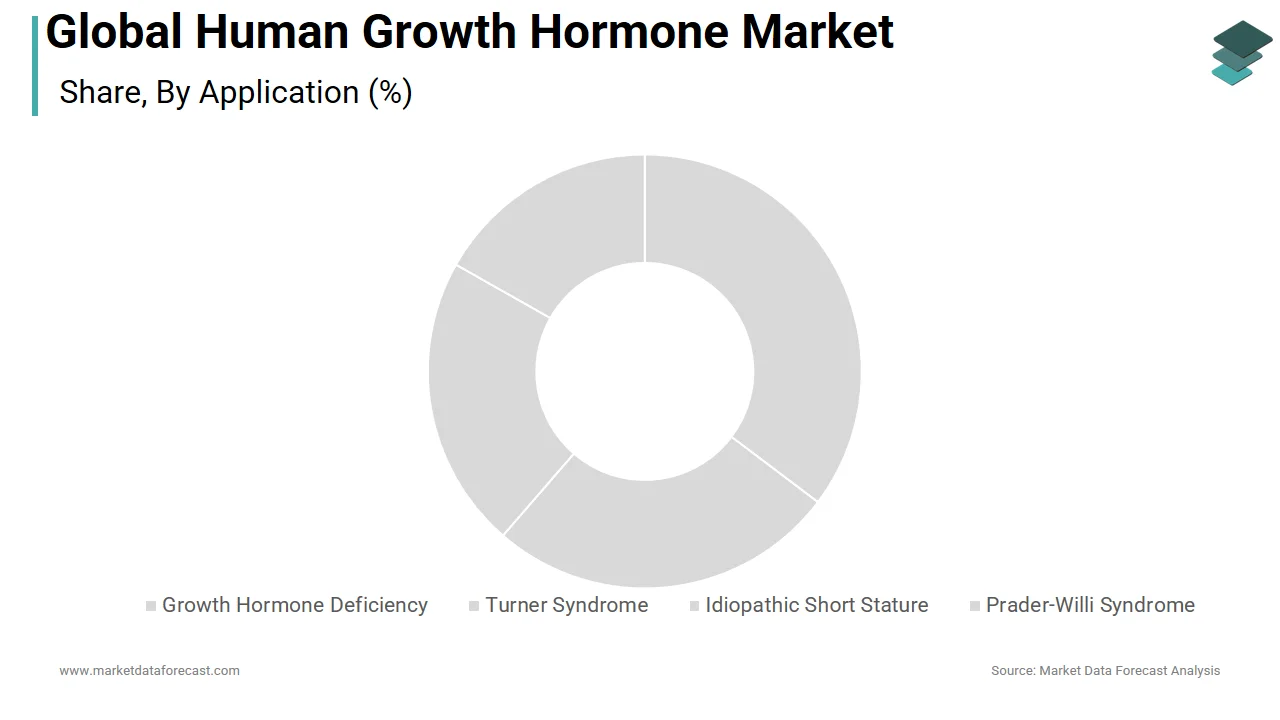
Based on the application, the growth hormone deficiency segment is predicted to hold the major share of the worldwide market during the forecast period owing to the increasing birth rate every year and a rise in incidences of various diseases in children. Additionally, awareness among people regarding early-stage diagnosis and the associated treatment propels segmental growth. According to the Human Growth Foundation, around 4,000 to 10,000 children have a growth hormone deficiency.
By Distribution Channel Insights
Based on distribution channels, the hospitals and retail pharmacies segment held the largest share of the global HGH market in 2023 and is expected to grow promisingly during the forecast period owing to the growing construction activities of hospitals with the latest equipment. For example, according to the Children’s Hospital of Philadelphia (CHOP), growth hormone prescriptions had increased from 5.1 patients per 10,000 advantages in 2001 to 14.6 per 10,000 in 2016.
The online pharmacy segment is projected to account for a significant share of the HGH market during the forecast period. In existing countries like India and China, the trend of online pharmacies is increasing daily. In addition, the high perforation of pharmacies is also growing in North America and Europe.
REGIONAL ANALYSIS
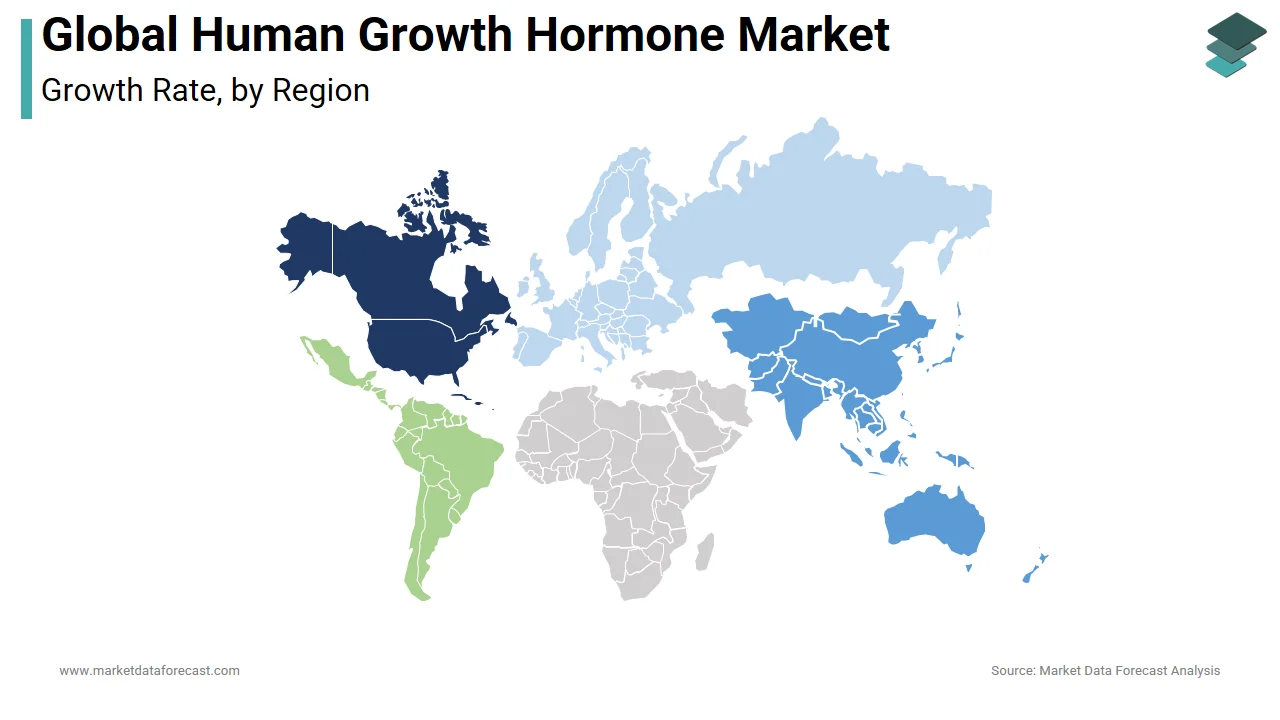
Geographically, The North American HGH market holds the most significant share of the global human growth hormone market with the rise in capital income and an increasing number of research institutes to develop new products. Supportive reimbursement policies and increasing government assistance in improving healthcare infrastructure are major factors boosting North America's market growth. The United States is leading with the largest share in the market with favorable government reimbursement policies. In addition, increased healthcare expenditure and technological advancements are propelling the market demand. Canada is expected to have rapid market growth. According to a published article in the Journal of Clinical Endocrinology and Metabolism in November 2016, around 6,000 Adult Growth Hormone Deficiency cases are registered annually in the U.S.
The Asia Pacific Human growth hormone market follows North America in leading dominant shares of the HGH market due to the latest technological developments. Increasing incidences of genetic disorders are ascribed to bolster the growth of this market. Also, the growing number of healthcare centers, even in rural areas, is increasing the market's demand to an extent. Increasing occurrences of genetic disorders and a rise in healthcare expenses are fueling the market growth. China is leading the market demand with technological advancements and increased disposable income. Japan is expected to have rapid growth in the human growth hormone market. Growing research and development activities with an increase in huge investments from the government are propelling the market growth.
The European HGH Market will grow at the highest CAGR in foreseen years, increasing support from public and private organizations. The increasing prevalence of the treatment of short stature is escalating the European regional market. The market in this region is driven by factors like private and public sectors showcasing their support in bringing awareness among humans. In addition, growing hormone deficiency disorders, increasing government expenses, and the growing significance of growth hormones for treating patients with Idiopathic Short Stature are propelling the market's demand. Germany is predicted to lead the market, followed by the UK.
The human growth hormone market in Latin America is expected to grow steadily. This is because the top companies' key players aim to increase their ability to produce to escalate the supply chain amid the rural areas, augmenting the market demand.
The Middle East and Africa HGH market anticipate having a prominent growth rate in the coming years. According to the Annals of Saudi Medicine's survey in 2015, the regular rate is registered as 0.2 per 10000 children in Saudi Arabia. In Kuwait, the growth hormone deficiency rate accounts for 38%, whereas the idiopathic short stature and Turner syndrome account for 20% and 12%.
KEY MARKET PLAYERS
Some of the companies that are playing a dominating role in the global human growth hormone market include
- Pfizer Inc.
- Novo Nordisk A/S
- Anhui Anke Biotechnology Co., Ltd.
- Eli Lilly and Company
- GeneScience Pharmaceuticals Co., Ltd.
- Genentech, Inc.
- Novartis AG
- Biopartners GmbH
- Zhongshan Hygiene Biopharm Co., Ltd.
- Merck KGaA
- Ipsen S.A.
- Lifetech Labs
MARKET SEGMENTATION
This research report on the North America human growth hormone market is segmented and sub-segmented into the following categories.
By Application
- Growth Hormone Deficiency
- Turner Syndrome
- Idiopathic Short Stature
- Prader-Willi Syndrome
- Others
By Distribution Channel
- Hospital and Retail Pharmacy
- Online Pharmacy / ePharmacy
- Specialty Clinics
By Region
- North America
- United States
- Canada
- Rest of North America
- Europe
- United Kingdom
- Germany
- France
- Spain
- Italy
- Rest of EU
- Asia Pacific
- India
- Japan
- China
- South Korea
- ANZ
- Rest of APAC
- Latin America
- Mexico
- Brazil
- Argentina
- Rest of LATAM
- Middle East
- Africa