- Product Description Description
- Table of Contents TOC
- List of Table & Figure LOT
- Get Free Sample PDF Sample PDF
Market Size, 2025
$30.92 BnMarket Estimate, 2026
$33.15 BnMarket Forecast, 2034
$57.91 BnCAGR, 2026–2034
7.22%Executive Summary: Hybrid Seeds Market
- Market Scope: Comprehensive global hybrid seeds market analysis covering global food demand, high-yield crop requirements, climate-resilient technologies, genomic/digital breeding investments, and precision farming partnerships.
- Market Valuation: Valued at USD 30.92 billion (2025), estimated at USD 33.15 billion (2026), and projected to reach USD 57.91 billion by 2034, registering a steady CAGR of 7.22% (2026–2034).
- Primary Growth Drivers: Rising food demand, climate-resilient technology adoption, genomic breeding advancements, government funding initiatives, and shifting consumer preferences toward plant-based foods. Key challenges include high seed costs, proprietary genetics dependency, and extreme weather vulnerability.
Key Market Segment Metrics (2026–2034)
| Category | Leading Segment (Position) | Fastest-Growing Segment |
|---|---|---|
| By Crop, Farm Type, Seed Treatment & Region | Cereals & Grains (dominate crop type segment with highest market share) & Indoor farms (lead farm type segment due to urbanization trends) & Asia-Pacific (held major regional share in 2025) | Treated seeds (prominent growth opportunities alongside rising organic attention) & Europe (anticipated to register fastest growth rate fueled by public agricultural investments) |
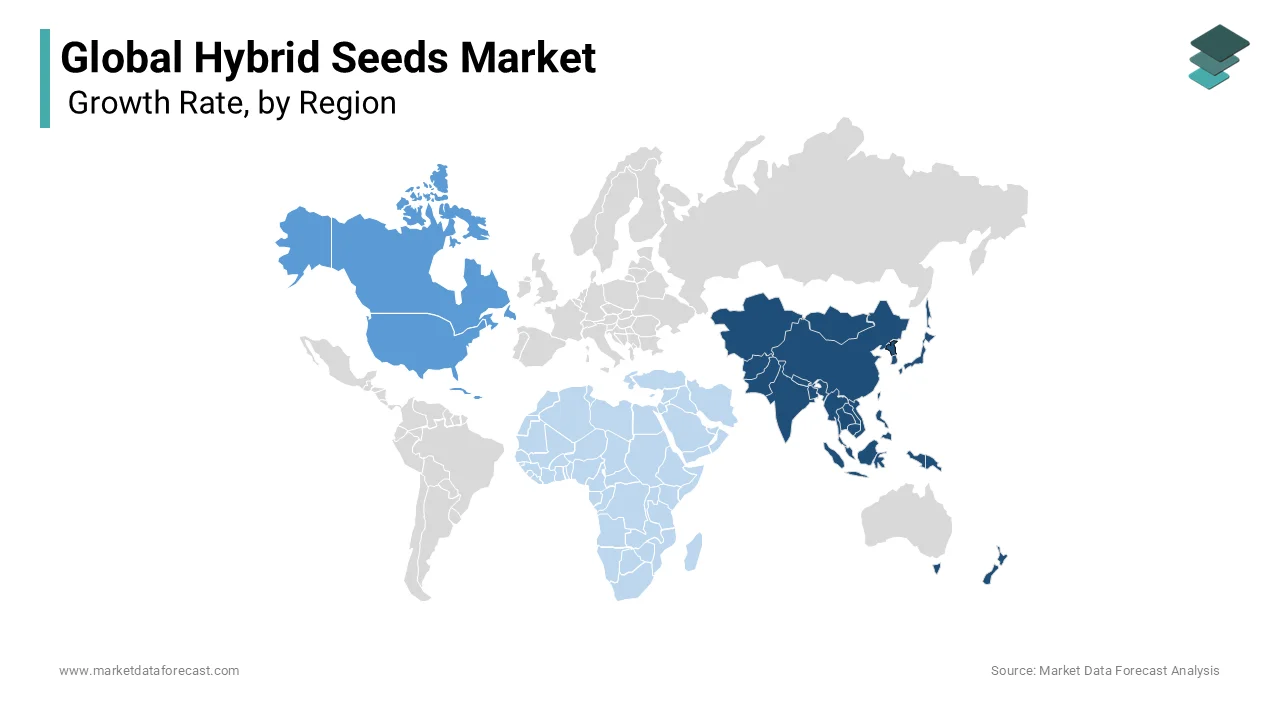
| By Regional Leadership | Asia-Pacific (major regional share driven by rapid tech adoption and government initiatives in India and China) and North America (prominent growth supported by high disposable income and R&D funding) | Europe (fastest-growing regional market driven by Eastern European public investments) |
Major Market Players & Market Structure
Market Structure: Highly competitive global agricultural biotechnology and seed production landscape featuring multinational leaders driving genomic breeding innovations, global distribution partnerships, and reduced-input crop platforms.
Key Companies: E. I. du Pont de Nemours and Company, Syngenta AG, Bayer (formerly Monsanto), Dow AgroSciences LLC, KWS, Advanta Limited, Land O' Lakes Inc., Takii & Co. Ltd., Mahyco, and Biostadt India Ltd.
Global Hybrid Seeds Market Size
The global hybrid seeds market size was valued at USD 30.92 billion in 2025 and is anticipated to reach a valuation of USD 33.15 billion in 2026 from USD 57.91 billion by 2034, registering at a CAGR of 7.22% from 2026 to 2034.

Current Intro Definition of the Hybrid Seeds Market
The hybrid seeds are first generation progeny derived from controlled cross pollination between two genetically distinct parent lines to exploit heterosis or hybrid vigor for enhanced agronomic performance. This agricultural input segment is fundamental to modern food security systems as these seeds deliver superior yield potential, uniformity, and stress tolerance compared to open pollinated varieties. According to the Food and Agriculture Organization of the United Nations, global cereal production must increase by 70% between 2020 and 2050 to meet rising caloric demands, a target heavily dependent on genetic improvements rather than arable land expansion. As per the World Bank, arable land per capita has declined from 0.38 hectares in 1970 to 0.18 hectares in 2024, necessitating intensification strategies where hybrid genetics play a pivotal role. As per the International Service for the Acquisition of Agri biotech Applications, adoption rates for hybrid maize is increasing in major producing nations like the United States and Brazil, demonstrating widespread reliance on this technology. Unlike conventional breeding, hybrid seed production requires specialized technical infrastructure and precise synchronization of parental flowering, creating high barriers to entry but ensuring consistent quality.
MARKET DRIVERS
Declining Arable Land Availability Necessitates Yield Intensification
The decreasing arable land availability is intensifying the growth of the hybrid seeds market. According to the World Bank, global arable land per person decreased to 0.18 hectares in 2024 from 0.20 hectares just a decade prior, creating an absolute physical constraint that compels farmers to maximize output per unit area through superior genetics. Hybrid seeds consistently demonstrate yield advantages ranging from 15 to 25% over open pollinated varieties in field trials conducted by the International Maize and Wheat Improvement Center across diverse agroecological zones in 2024. As per the study, achieving the required 70% increase in global food production by 2050 depends primarily on yield enhancement since land expansion that accounts for less than 10% of projected growth. The United States Department of Agriculture confirms that hybrid maize yields have increased at an annual rate of 1.9% since 2000 largely attributable to genetic improvements delivered through hybrid platforms. This structural scarcity of productive land transforms hybrid seeds from optional inputs into essential components of viable farming operations worldwide. Without continuous genetic intensification enabled by hybridization, global food systems face mathematical impossibility in meeting future demand within planetary boundaries.
Climate Volatility Demands Resilient Genetic Solutions
The climate volatility that demands resilient genetic solutions is additionally promoting the growth of the hybrid seeds market. As per the Consultative Group on International Agricultural Research, new drought tolerant hybrid maize varieties maintained 22% higher yields than standard checks during severe water deficit conditions in sub-Saharan Africa field trials completed in 2024. Bayer Crop Science released 14 new hybrid corn varieties in 2024, featuring enhanced root architecture and stay green characteristics that demonstrated 18% better performance under terminal drought stress according to company agronomic data. In Australia, the Grains Research and Development Corporation reported that hybrid canola adoption reached 85% in 2024 primarily because hybrids exhibit superior establishment and recovery following erratic rainfall patterns compared to open pollinated alternatives. Farmers increasingly view hybrid seeds as insurance products against climatic uncertainty rather than mere yield maximizers. This risk mitigation function sustains premium pricing even when commodity markets soften because the cost of crop failure far exceeds incremental seed investment.
MARKET RESTRAINTS
High Production Costs Limit Affordability for Smallholders
The high production costs limit affordability for smallholders, which is a significant factor restraining the growth of the hybrid seeds market. The World Bank indicates that rural credit penetration remains below 20% in most low income countries preventing farmers from financing premium inputs even when return on investment exceeds 200%. As per the Syngenta Foundation, 42% of intended hybrid purchases were abandoned at point of sale in East Africa during 2024 due to price sensitivity despite extension messaging about productivity gains. This affordability gap creates dualistic agricultural systems where commercial farms capture genetic gains while smallholders remain trapped in low productivity equilibria. Until production efficiencies improve or innovative financing mechanisms scale, significant portions of global cropland will remain outside hybrid adoption curves regardless of agronomic superiority.
Regulatory Fragmentation Delays Variety Commercialization
The regulatory fragmentation delays variety commercialization, which is additionally declining the growth of the hybrid seeds market. The European Commission’s plant reproductive material legislation requires 2 years of official field trials before catalog listing adding significant time and cost burdens that disadvantage smaller breeding programs lacking multi location testing networks. The International Seed Federation estimates that regulatory compliance consumes some of total variety development budgets diverting resources from actual breeding innovation. These delays mean farmers access improved genetics years after initial discovery reducing cumulative productivity gains. Harmonization efforts like Eastern and Southern Africa seed trade regulations show promise but implementation gaps persist. Until mutual recognition agreements become norm rather than exception, regulatory friction will continue suppressing varietal turnover and limiting farmer choice.
MARKET OPPORTUNITIES
Digital Breeding Technologies Accelerate Genetic Gain Cycles
The digital breeding technologies are likely to amplify the growth of the hybrid seeds market in coming years. According to the CGIAR System Organization, integration of genomic selection and doubled haploid technologies has reduced hybrid breeding cycle times from 8 years to 4 years for maize and wheat as of 2024 enabling twice as many varietal releases per decade. As per the survey, marker assisted selection accuracy for complex traits like drought tolerance improved from 45% to 78% between 2020 and 2024 through machine learning algorithms trained on multi environment phenotyping datasets. Corteva Agriscience deployed AI driven predictive breeding models in 2024 that identified optimal parental combinations with 92% accuracy before field testing eliminating 60% of unproductive crosses, according to the studies. This technological convergence transforms breeding from empirical art to data driven engineering dramatically increasing probability of breakthrough varieties reaching market faster. Companies mastering these tools gain sustainable competitive advantages through accelerated innovation velocity, while public sector partnerships ensure smallholder relevant traits receive equivalent attention to commercial priorities.
Vegetable Hybrid Penetration in Emerging Markets Remains Underexploited
The vegetable hybrid penetration in emerging countries is also to escalate the growth of the hybrid seed market. The vegetable consumption in developing Asia grows at 4.2% annually, outpacing staple cereals creating demand pull for high value hybrid seeds among peri urban commercial growers. Breeders who develop locally adapted hybrids for indigenous vegetables can capture first mover advantages in areas, where competition remains nascent and farmer awareness is rapidly evolving through digital extension channels.
MARKET CHALLENGES
Counterfeit Seed Proliferation Undermines Trust and Returns
Counterfeit seed proliferation undermines trust and returns, which is to act as a major barrier for the growth of the hybrid seeds market. According to the study, 38% of Tanzanian farmers experienced complete crop failure from counterfeit hybrid seeds in 2024, eroding confidence in formal seed systems and driving reversion to saved open pollinated varieties. Bayer Crop Science estimates brand protection enforcement costs exceed annually, across emerging countries, diverting resources from research and development. Authentication technologies like QR codes and DNA fingerprinting show promise but adoption remains fragmented and verification infrastructure inadequate in remote areas. Until supply chain integrity improves through coordinated regulatory enforcement and traceability systems, legitimate breeders face persistent revenue leakage while farmers bear disproportionate risks from fraudulent products masquerading as improved genetics.
Genetic Erosion Threatens Long Term Breeding Sustainability
The genetic erosion threatens long term breeding sustainability that is additionally to impede the growth of the hybrid seeds market. According to the Food and Agriculture Organization of the United Nations, 75% of crop genetic diversity was lost during the 20th century as commercial hybrids replaced locally adapted landraces narrowing the germplasm base available for future breeding. The International Maize and Wheat Improvement Center warns that effective population sizes in commercial hybrid maize breeding pools have declined to fewer than 50 founders in some programs increasing vulnerability to novel pathogens and limiting response to selection pressure. Private sector breeding programs prioritize short term commercial returns over long term base broadening creating collective action problems. Without coordinated conservation and utilization strategies, hybrid breeding faces diminishing returns as genetic variance necessary for continued improvement contracts irreversibly.
REPORT COVERAGE
| REPORT METRIC | DETAILS |
| Market Size Available | 2025 to 2034 |
| Base Year | 2025 |
| Forecast Period | 2026 to 2034 |
| CAGR | 7.22% |
| Segments Covered | By Crop Type, Duration, Seed Treatment, Farm Type, Region |
| Various Analyses Covered | Global, Regional & Country Level Analysis, Segment-Level Analysis, DROC, PESTLE Analysis, Porter’s Five Forces Analysis, Competitive Landscape, Analyst Overview of Investment Opportunities |
| Regions Covered | North America, Europe, APAC, Latin America, Middle East & Africa |
| Market Leaders Profiled | E. I. du Pont de Nemours and Company, Syngenta AG, Monsanto, Dow AgroSciences LLC, and KWS. Other players include Advanta Limited, Land O' Lakes, Inc., Takii & Co. Ltd., Mahyco, and Biostadt India Ltd. |
SEGMENTAL ANALYSIS
By Crop Insights
The cereals and grains segment was the largest by accounting for 58.3% of the global hybrid seeds market share in 2025 due to their foundational role in human nutrition and livestock feed systems. As per the study, hybrid maize adoption exceeds 95% in North America and 85% in Latin America as of 2024 because yield advantages over open pollinated varieties consistently range between 20 and 30% under commercial management conditions. In China, the Ministry of Agriculture and Rural Affairs documented that hybrid rice cultivation covered 17 million hectares in 2024, producing 58% of national rice output despite occupying only 54% of total rice area demonstrating superior productivity per unit land. This dominance stems from biological suitability of cereals for heterosis exploitation combined with decades of public and private breeding investment creating mature technology platforms. Unlike high value vegetables where hybrid premiums are justified by quality traits, cereal hybrids compete primarily on caloric efficiency making them indispensable for feeding growing populations within finite arable land constraints.

The fruits and vegetables segment is projected to grow at a CAGR of 9.8% from 2026 to 2034 with the rapid urbanization and changing consumer preferences toward fresh produce. As per the United Nations Department of Economic and Social Affairs, 68% of global population will reside in urban areas by 2050 creating concentrated demand nodes requiring intensive peri urban vegetable production systems where hybrid seeds deliver essential yield density and quality consistency. In India, hybrid tomato area expanded by 24% annually from 2020 to 2024 as farmers responded to urban retail chain contracts specifying uniform size color and shelf life parameters achievable only through hybrid genetics, according to the recent studies. Rijk Zwaan introduced 18 new hybrid pepper varieties in 2024, specifically bred for protected cultivation systems serving urban markets demonstrating breeder responsiveness to this demand shift. Unlike cereals where hybrids optimize calories, vegetable hybrids optimize marketable quality attributes commanding premium prices that justify higher seed costs and drive segment growth beyond staple crop trajectories.
By Duration Insights
The medium term hybrid varieties segment held a significant share of the global hybrid seeds market share in 2025. As per the International Maize and Wheat Improvement Center, medium duration hybrid maize varieties averaging 110 to 120 days to physiological maturity demonstrated 18% higher average yields than short term counterparts, while avoiding 25% greater late season drought exposure risk associated with long duration types in multi-location trials. The risk adjusted superiority makes medium term hybrids default choice for commercial farmers, who cannot afford catastrophic crop failure from early frost or drought yet seek better returns than conservative short season options provide. Breeders consequently allocate majority of research resources to this segment reinforcing its market leadership through continuous incremental improvement.
The short term hybrid varieties segment is likely to grow at a fastest CAGR of 11.2% from 2026 to 2034 owing to the increasing frequency of terminal droughts and heatwaves compressing effective growing seasons globally. In Australia, the Grains Research and Development Corporation reported short duration hybrid canola adoption surged in 2024, as farmers adapted to increasingly unreliable autumn break rainfall patterns requiring faster establishment and earlier flowering to avoid spring moisture deficits. Unlike historical perception of short duration hybrids as low yielding compromises, modern genetics now deliver near parity with longer season options while providing essential climate insurance driving accelerated adoption as weather volatility intensifies.
By Seed Treatment Insights
The treated hybrid seeds segment was the largest by accounting for a dominant share of the global hybrid seeds market in 2025. The United States Environmental Protection Agency confirmed that commercial corn and soybean acres planted treated hybrid seeds in 2024 because untreated alternatives required additional insecticide applications. As per the Syngenta Seedcare, biological seed treatment adoption grew in 2024, as chemical regulations tightened demonstrating category resilience through innovation. This regulatory and economic alignment makes treated seeds default standard because untreated options carry unacceptable agronomic and financial risks in modern production systems.
The untreated hybrid seeds segment is expected to witness a fastest CAGR of 14.5% from 2026 to 2034 owing to the accelerating regulatory bans on synthetic seed treatment active ingredients, particularly in European Union and allied jurisdictions. Organic certification bodies, including Ecocert and USDA National Organic Program prohibit synthetic seed treatments entirely creating dedicated untreated hybrid supply chains serving expanding organic acreage, which grew 12% globally in 2024 according to FiBL statistics. This regulatory forced transition creates artificial but substantial market segment growth independent of farmer preference or agronomic rationale.
By Farm Type Insights
The outdoor farms segment was the largest by holding 44.9% of the global hybrid seeds market share in 2025 with the land use statistics reflecting overwhelming predominance of open field agriculture across all major crop producing regions. In Brazil, the outdoor hybrid soybean and corn plantings reached 72 million hectares in 2024 season, making it world’s largest single country for field crop hybrid seeds, entirely within open field systems. Even in Netherlands global leader in protected agriculture, outdoor hybrid potato and sugar beet area exceeds greenhouse vegetable area by factor of 8, according to the study. This sheer scale differential ensures outdoor farm segment maintains market leadership regardless of growth rates in alternative systems. Hybrid breeding programs have optimized genetics for outdoor conditions over century, creating deep technological lock in that indoor systems cannot replicate at comparable scale.
The indoor farms segment is esteemed to register a fastest CAGR of 24.3% from 2026 to 2034 with the record venture capital and sovereign wealth fund commitments to controlled environment agriculture infrastructure. Signify and Philips Lighting partnered with seed companies in 2024 to develop LED spectrum specific hybrid lettuce and herb varieties, achieving 45% higher biomass under artificial lighting versus field bred alternatives, according to research. Unlike outdoor farms where hybrid adoption is mature, indoor farms represent greenfield market where every new facility installation creates incremental seed demand. This infrastructure led growth trajectory continues as capital deploys into built assets requiring ongoing seed inputs for operational viability.
REGIONAL ANALYSIS
North America Hybrid Seeds Market Analysis
North America was the top performer in the global hybrid seeds market by holding 32.4% of the share in 2025. As per the studies, hybrid canola seed sales reached CAD 1.8 billion in 2024 with 98% of western Canadian acreage planted to hybrids reflecting complete technological assimilation over three decades. Corteva Agriscience and Bayer Crop Science collectively invested USD 2.4 billion in North American hybrid breeding and biotechnology R&D in 2024, maintaining innovation velocity despite maturity. The Land Grant University system provides public sector breeding complement ensuring genetic diversity and regional adaptation for crops underserved by private sector. Precision agriculture integration is most advanced here with 78% of hybrid seed purchases linked to variable rate prescription maps, according to survey.
Europe Hybrid Seeds Market Analysis
Europe hybrid seeds market was the second largest by holding 23.4% of the share in 2025 with the regulatory trendsetter and high value specialty crop hub amid significant policy driven disruption. As per the study, hybrid vegetable seed sales reached EUR 3.2 billion in 2024 with Netherlands France and Spain accounting for 68% of regional value reflecting concentration in high value horticulture, where hybrid premiums are most justifiable. The European Commission’s Farm to Fork strategy targets reduction in pesticide use by 2030, driving demand for disease resistant hybrid varieties that reduce chemical dependency with KWS and Syngenta, launching 28 new resistant hybrid varieties in 2024.
Asia Pacific Hybrid Seeds Market Analysis
Asia Pacific hybrid seeds market growth is likely to grow substantially throughout the forecast period with the smallholder adoption and dietary transformation. As per the research, hybrid maize area expanded by 14% annually between 2020 and 2024, reaching 12 million hectares as poultry and dairy feed demand stimulated commercial production beyond traditional subsistence rice and wheat systems. Public sector institutions like IRRI and CIMMYT maintain strong presence ensuring smallholder relevant varieties complement private sector offerings.
Latin America Hybrid Seeds Market Analysis
Latin America hybrid seeds market growth is expected to have steady growth in coming years. Market status is characterized by rapid technological adoption in export-oriented commodity sectors alongside emerging smallholder engagement creating diverse demand profile distinct from temperate regions. Embrapa’s tropical hybrid breeding program released 22 new varieties in 2024 specifically addressing cerrado biome challenges including aluminum toxicity and irregular rainfall patterns unavailable from temperate breeding programs. Central American and Caribbean smallholder hybrid maize programs supported by CIMMYT and USAID reached 450000 farmers in 2024 improving food security in climate vulnerable regions. This tropical specialization creates unique value proposition where Latin American developed hybrids serve global countries with similar agroecologies positioning region as innovation exporter beyond domestic consumption.
Middle East and Africa Hybrid Seeds Market Analysis
Middle East and Africa hybrid seeds market growth is likely to grow with the national food security agendas and climate adaptation strategies. The Saudi Arabian Ministry of Environment Water and Agriculture allocated SAR 3.2 billion in 2024 for hybrid seed import substitution and local production initiatives targeting wheat barley and vegetable self-sufficiency under Vision 2030 framework. In Ethiopia, hybrid teff varieties developed by Ethiopian Institute of Agricultural Research achieved 2.1 tons per hectare versus 0.9 tons for traditional varieties in 2024 trials catalyzing government promotion programs. Despite challenges, region’s strategic importance ensures sustained donor and government investment making it focal point for next decade hybrid seed market development.
COMPETITIVE LANDSCAPE
Competition in the hybrid seeds market is characterized by extreme consolidation among multinational corporations controlling proprietary germplasm and biotechnology platforms alongside thousands of regional specialists serving niche crops and local adaptation needs. Top tier companies leverage massive research budgets exceeding two billion dollars annually maintaining innovation velocity that smaller players cannot match independently. However, regional firms compete effectively through superior local knowledge established distribution networks and varieties specifically adapted to microenvironments that global breeding programs overlook. Public sector institutions remain significant competitors in staple crops for developing countries offering royalty free hybrids that pressure private sector pricing in price sensitive segments. Competition increasingly occurs at trait and service level rather than germplasm alone as genetic differentiation narrows across major crops. Digital integration creates new competitive dimensions where seed recommendations linked to field specific data lock in customers through ecosystem value beyond seed performance. Regulatory compliance capabilities constitute significant barrier favoring incumbents with resources to navigate complex global approval processes. Future competition will reward companies balancing global scale efficiencies with local responsiveness, while integrating biological digital and service components into holistic value propositions transcending traditional seed sales models.
KEY MARKET PLAYERS
These are playing a notable role in the global hybrid seeds market.
- Companies such as E. I. du Pont de Nemours and Company
- Syngenta AG
- Bayer Crop Science
- Bayer (formerly Monsanto)
- Monsanto
- Corteva Agriscience
- Dow AgroSciences LLC
- KWS
- Advanta Limited
- Land O' Lakes, Inc.
- Takii & Co. Ltd.
- Mahyco
- Biostadt India Ltd.
Top Players In The Market
- Bayer Crop Science maintains extensive global involvement through comprehensive hybrid seed portfolios spanning maize soybean canola and vegetables across all major agricultural regions. The company invested USD 2.1 billion in hybrid breeding research during 2024 focusing on climate resilient traits and digital breeding acceleration technologies. Recent expansion of short duration hybrid maize pipelines addresses accelerating terminal drought risks in sub Saharan Africa and South Asia strengthening food security positioning. Bayer launched 18 new hybrid vegetable varieties in 2024 specifically bred for protected cultivation systems serving urban markets. Strategic partnerships with African public sector institutions enable localized variety development ensuring smallholder relevance alongside commercial offerings. These integrated investments reinforce technological dominance, while addressing diverse regional needs from industrial agriculture to subsistence farming systems worldwide.
- Corteva Agriscience contributes significantly to global hybrid seeds market through industry leading maize and sunflower genetics combined with advanced seed treatment technologies enhancing field performance. Corteva released 14 new drought tolerant hybrid corn varieties in 2024 featuring enhanced root architecture demonstrating 18% better performance under terminal stress conditions. Strategic acquisition of Stoller Group in March 2024 integrated biological seed treatment capabilities expanding functional value proposition beyond genetic traits alone. Partnership agreements with CGIAR centers ensure tropical adaptation of elite germplasm for emerging markets. Digital platform integration connects hybrid variety recommendations to field specific soil and weather data enabling precision placement. These innovations strengthen competitive positioning through differentiated technology stacks addressing both yield potential and risk management needs, across diverse global production environments.
- Syngenta Group maintains pivotal global presence through integrated hybrid seed and crop protection portfolio leveraging synergies between genetics and chemistry for comprehensive farmer solutions. Strategic investment in vertical farming optimized hybrid lettuce and herb varieties achieved 45% higher biomass under LED lighting versus field bred alternatives. Partnership with Chinese Academy of Agricultural Sciences accelerates hybrid wheat development for world’s largest wheat consuming region. Manufacturing footprint expansion in Argentina and Kenya strengthens regional supply chain resilience reducing import dependency. These actions demonstrate commitment to integrated solutions addressing regulatory environmental and productivity challenges simultaneously across diverse agricultural systems worldwide.
Top Strategies Used By Key Market Participants
Key players prioritize genomic selection and doubled haploid technologies reducing breeding cycle times from eight years to four years, enabling faster varietal turnover and accelerated genetic gain delivery to farmers. Companies establish public private partnerships with CGIAR centers and national agricultural research systems accessing diverse germplasm and local adaptation expertise, while sharing benefits with developing country stakeholders. Biological seed treatment integration expands functional value beyond pest protection addressing nutrient efficiency and stress tolerance, as chemical regulations tighten globally. Digital breeding platforms incorporating machine learning and environmental modeling improve parental selection accuracy reducing costly field trial failures and accelerating innovation velocity. Regional manufacturing footprint expansion reduces supply chain vulnerability to climate disruptions and trade barriers, while lowering logistics costs for price sensitive markets. Trait stacking strategies combine multiple resistance genes and quality attributes creating differentiated products commanding premium pricing despite commodity market volatility. Smallholder focused business models, including micro packaging and agrodealer networks unlock underserved segments in emerging markets where growth potential exceeds saturated developed regions. These interconnected strategies create sustainable competitive advantages through ecosystem integration rather than standalone product superiority.
MARKET SEGMENTATION
This research report on the global hybrid seeds market is segmented and sub-segmented based on crop type, Duration, Seed treatment, Farm type, and Region.
By Crop Type
- Cereals & Grains
- Fruits & Vegetables
- Oilseeds
By Duration
- Short-Term
- Medium-Term
- Long-Term
By Seed Treatment
- Treated
- Untreated
By Farm Type
- Indoor farms
- Outdoor farms
By Region
- North America
- Europe
- Asia Pacific
- Latin America
- The Middle East and Africa