- Product Description Description
- Table of Contents TOC
- List of Table & Figure LOT
- Get Free Sample PDF Sample PDF
Market Size, 2025
$537.7 MnMarket Estimate, 2026
$626.5 MnMarket Forecast, 2034
$2125.7 MnCAGR, 2026–2034
16.5%Global Hydroponics Market Size, Growth, Trends & Forecast (2026–2034)
The global hydroponics market size was valued at USD 537.73 million in 2025, is anticipated to reach USD 626.46 million in 2026, and is projected to scale up to USD 2,125.68 million by 2034, registering a compound annual growth rate (CAGR) of 16.5% during the forecast period from 2026 to 2034. Driven by rapid urbanization, dwindling arable land, stringent environmental regulations on pesticide and water usage, and technological innovations in indoor farming, the hydroponics industry continues to expand rapidly worldwide.
Key Executive Metrics (At-a-Glance)
- 2025 Base Valuation: USD 537.73 Million
- 2026 Current Valuation: USD 626.46 Million
- 2034 Forecast Valuation: USD 2,125.68 Million
- Compound Annual Growth Rate (CAGR): 16.5% (2026–2034)
- Dominant Product Type: Liquid Hydroponics Systems (holding a significant market share backed by superior nutrient delivery efficiency and automation compatibility)
- Dominant Application/Crop Segment: Lettuce & Leafy Vegetables (commanding a 45.5% major market share supported by rapid growth cycles and retail demand)
- Fastest-Growing Application/Crop Segment: Strawberries (propelled by year-round demand, disease avoidance, and high per-kilogram value)
- Dominant Region: Europe (projected to account for a 34.7% market share, driven by advanced greenhouse infrastructure and sustainability regulations)
Core Market Drivers
- Urban Land Scarcity: Surging urban populations and shrinking agricultural land boosting vertical and space-efficient food production systems.
- Regulatory Pressure: Stringent European Union frameworks restricting agrochemical inputs and fertilizer runoff, accelerating adoption of closed-loop hydroponic compliance models.
- Technological Innovation: Advanced LED grow lights and IoT-driven automation optimizing resource utilization and year-round yield performance.
Primary Market Restraints & Challenges
- High Capital Intensity & Energy Costs: Substantial upfront investment requirements and heavy electricity dependency for climate control and artificial lighting in temperate climates.
Global Hydroponics Market Segmentation Breakdown
| Segment Category | Leading Sub-Segment (2025 Base) | Fastest-Growing Sub-Segment (2026–2034) |
|---|---|---|
| By Equipment | LED Grow Lights (capturing 38.7% share for energy efficiency and year-round photosynthesis) | Control Systems (expanding at a 16.3% CAGR driven by AI and real-time sensor networks) |
| By Type | Liquid Hydroponics Systems (dominant share due to superior water and nutrient delivery efficiency) | Aggregate-Based Hydroponics (expanding at a 12.7% CAGR for fruiting crop robustness) |
| By Crop Type | Lettuce & Leafy Vegetables (commanding 45.5% share due to rapid growth cycles and shelf-life alignment) | Strawberries (growing at an 18.1% CAGR propelled by disease avoidance and premium urban markets) |
| By Input Type | Nutrient Solutions (holding a substantial share due to continuous crop cycle consumption) | Growth Media (growing at a 13.9% CAGR driven by circular bio-based substrate innovations) |
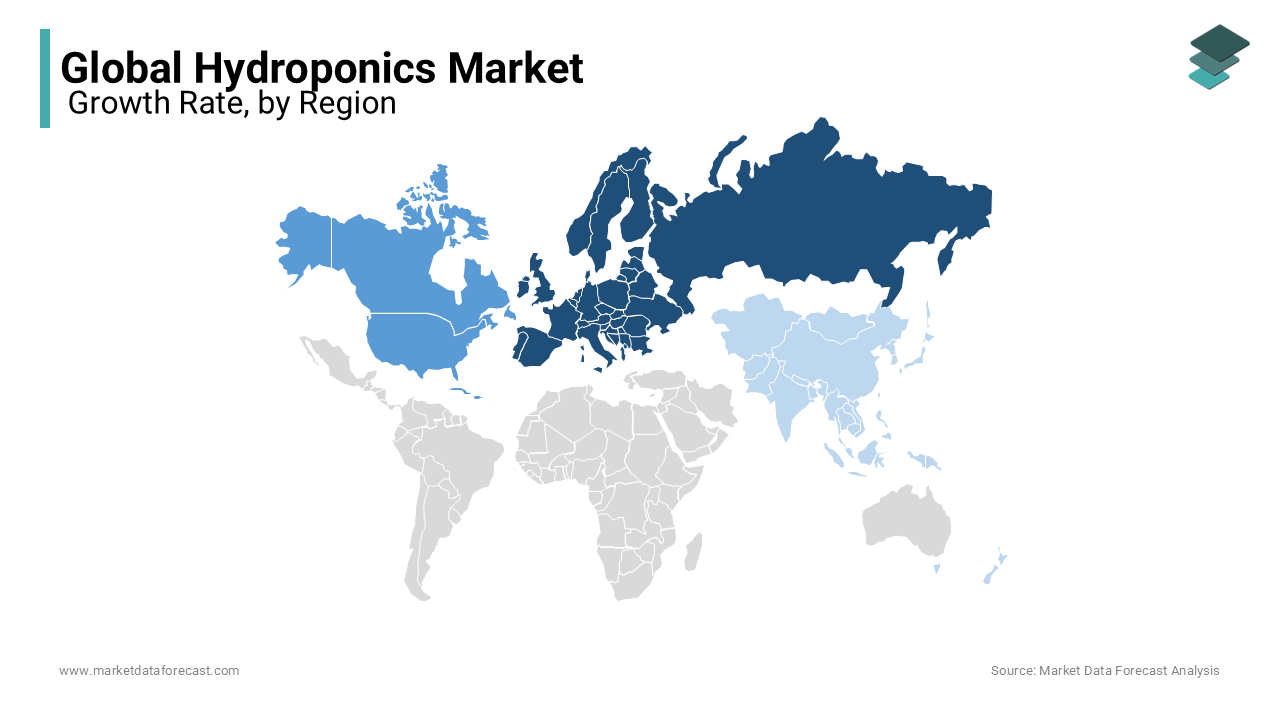
| By Region | Europe (leading with 34.7% share supported by advanced infrastructure and green deal policies) | North America & Asia-Pacific (rapid scaling via venture capital and smart farming initiatives) |
Major Industry Players Profiled
Key enterprises shaping the competitive global hydroponics market include ScottsMiracle-Gro, Signify Holding B.V., Priva Holding B.V., Argus Control Systems, LumiGrow, Inc., Hydrodynamics International, American Hydroponics, Advanced Nutrients, Emerald Harvest, Freight Farms, AeroFarms, Green Sense Farms, Gotham Greens, and Bright Farms.
 Download Free Sample Report
Global Hydroponics Market Size
The global hydroponics market size was valued at USD 537.73 million in 2025 and is anticipated to reach USD 626.46 million in 2026 from USD 2125.68 million by 2034, growing at a CAGR of 16.5% during the forecast period from 2026 to 2034.

Current Introduction of the Hydroponics Market
Hydroponics refers to soilless crop cultivation systems in which plants derive essential nutrients from precisely formulated aqueous solutions, supported by inert substrates or aerated root zones. This method enables year-round production with significantly reduced water and land use compared to conventional agriculture. In Europe, the adoption of hydroponics is increasingly aligned with urban resilience and circular economy imperatives. A significant majority of the European Union population lives in urban areas, creating a structural disconnection from traditional agricultural land. Concurrently, agriculture represents a substantial portion of total EU freshwater abstraction, driving the strategic adoption of water-efficient technologies like hydroponics. The Netherlands leads in commercial, sustainable greenhouse horticulture by utilizing advanced, recirculating nutrient systems for most of its commercial vegetable production. Notably,y the EU's Horizon Europe program is heavily investing in research and innovation for controlled environment agriculture, specifically targeting the integration of renewable energy and closed-loop water systems. These contextual factors position hydroponics not merely as an alternative growing technique but as an engineered response to demographic density, ty climate vulnerability, and resource scarcity across the continent.
MARKET DRIVERS
Urban Land Scarcity and the Rise of Vertical Food Production Systems
The accelerating concentration of populations in cities has rendered traditional peri-urban farming increasingly unviable due to land competition and zoning restrictions, thereby enabling investment in vertical hydroponic farms. This acceleration drives the growth of the hydroponics market. UN DESA data indicates that over half of the global population resides in urban areas, with that share expected to rise significantly by the end of the decade. High urbanization levels in specific EU nations, such as Belgium and the Netherlands, far exceed the regional average, with the vast majority of their inhabitants living in urban areas. In these highly developed, densely populated countries, the amount of available agricultural land per person has reduced significantly due to high levels of artificial land cover. Under such constraints, hydroponic systems offer a spatially efficient alternative capable of producing more yield per square meter than field cultivation,n as demonstrated by pilot studies from the Technical University of Berlin. A critical enabler is the repurposing of underutilized urban infrastructure. Through city-supported initiatives, significant rooftop spaces in Paris, such as at the Paris Expo Porte de Versailles, have been transformed into large-scale commercial aeroponic farms, with policies actively promoting the integration of food production into new urban developments. The city of Milan integrates innovative farming modules into social housing and suburban areas to enhance food security and foster social inclusion in lower-income neighborhoods. These municipal strategies transform land scarcity from a constraint into an innovation driver, positioning hydroponics as a core component of next-generation urban planning and food system localization.
Stringent EU Regulations on Pesticide Use and Water Quality
The European Union’s regulatory tightening on agrochemical inputs and nutrient runoff has elevated hydroponics as a compliance-oriented cultivation model that inherently minimizes environmental externalities. This fuels the expansion of the hydroponics market. The European Commission aimed to significantly lower the use and risk of chemical pesticides by the end of the decade compared to a mid-2010s baseline, although this proposal was ultimately withdrawn due to political disagreement. Conventional open field systems struggle to meet this target without yield penalties, whereas hydroponic environments operate in controlled settings that exclude pests and diseases at the source. Equally influential is the Nitrates Directive, ve which restricts nitrogen application in vulnerable zones covering a portion of EU agricultural land. Hydroponic systems reduce environmental impact by utilizing closed-loop nutrient recirculation, which minimizes water consumption and prevents leaching compared to conventional agriculture, according to recent sustainability studies. Due to stringent environmental regulations on nitrate leaching, a significant portion of Denmark’s commercial lettuce production has transitioned to indoor hydroponic systems to maintain high-quality output and regulatory compliance. These regulatory pressures are not merely environmental but economic, as non-compliance incurs subsidy reductions under the Common Agricultural Policy. Consequently, hydroponics transitions from a niche alternative to a strategic necessity for producers seeking long-term operational viability within Europe’s evolving agri-environmental framework.
MARKET RESTRAINTS
High Capital Intensity and Energy Dependency of Commercial Installations
Substantial upfront investment and continuous energy demand, particularly in temperate climates requiring artificial lighting and climate control, restrict the growth of the hydroponics market. Initial capital investment for establishing a commercial, technology-driven indoor vertical farm in Europe is considerable, often requiring significant high-level capital to achieve, particularly for advanced automated, multi-layer systems. This includes expenses for LED lighting, climate control,l automation, and recirculation infrastructure, which are prohibitive for small and medium enterprises without grant support. Energy consumption further constrains profitability. In Northern European locations with limited natural light, hydroponic leafy green production requires substantial electricity input, with energy usage for lighting and environmental control being a major operational component, especially during winter months. The high energy cost of operating indoor hydroponic systems in Northern Europe results in electricity expenses per kilogram of lettuce that often exceed the market value of field-grown produce, creating a significant economic challenge for profitability compared to traditional agriculture. Until capital costs decline and clean energy access becomes standard, the economic viability of hydroponics will remain restricted to high-value crops and subsidized pilot projects rather than broad agricultural transformation.
Lack of Standardized Nutrient Protocols and Crop Performance Data
The absence of universally validated nutrient formulations and environmental set points across diverse hydroponic systems leads to inconsistent yields and undermines grower confidence, which hinders the expansion of the hydroponics market. Unlike conventional agriculture, which benefits from decades of publicly funded agronomic research, ch hydroponic protocols remain largely proprietary or anecdotal, with limited peer-reviewed validation across geographies and cultivars. The knowledge gap is exacerbated by the lack of centralized performance databases. The Netherlands enjoys a unique, specialized hydroponic benchmarking platform through Wageningen University that most EU counterparts simply do not have. In Southern Europe, for instance,,ce where water salinity varies dramatically, nutrient recipes calibrated for Dutch conditions often cause iron and calcium deficiencies in tomato crops. Furthermore, the European Committee for Standardization has yet to establish official guidelines for hydroponic nutrient solution composition, leaving producers to rely on vendor recommendations that may prioritize product sales over agronomic accuracy. Reproducibility and scalability will remain challenges for the sector until open access and best practices are fully adopted.
MARKET OPPORTUNITIES
Integration with Renewable Energy and Waste Heat Recovery Systems
The convergence of hydroponics with decentralized renewable energy and industrial symbiosis offers a transformative opportunity to decarbonize production and reduce operational costs, which is predicted to boost the growth of the hydroponics market. Driven by national climate policies and subsidies, Dutch commercial greenhouse operators are rapidly transitioning from natural gas, increasingly adopting geothermal energy and industrial residual heat to sustain year-round, high-tech cultivation. This integration reduces natural gas consumption while stabilizing energy expenses.
A second pathway is co-location with solar and wind microgrids. The EU’s Clean Energy Package encourages on-site renewable generation for energy-intensive facilities, and hydroponic farms qualify under Annex I as energy communities. The Danish agritech startup Nordic Harvest operates a large, multi-level vertical farm near Copenhagen that utilizes locally sourced wind power, operating as a sustainable urban food production site by growing crops in a closed-loop system powered by renewable energy. Similarly,y in Spain, the Andalusian regional government subsidizes hydroponic installations that pair photovoltaic canopies with crop production,n enabling dual land use. Falling European solar prices are turning hydroponic farms into "smart" grid participants. These facilities no longer just drain power; they enhance grid efficiency and produce food with nearly zero net emissionsPolicy-Drivenen Expansion of Urban Agriculture in EU Municipal Frameworks.
Municipal governments across the region are institutionalizing hydroponics through urban planning mandates, funding mechanisms, and public procurement preferences, which provide fresh prospects for the hydroponics market. This approach creates stable demand and reduces market entry risk. The mission involves 112 cities (100 in the EU, 12 in Horizon Europe associated countries) that are developing Climate City Contracts to reach neutrality by 2030. These cities serve as innovation hubs for testing cross-sectoral solutions. Vienna's Food Action Plan and the ÖkoKauf Wien program set strict standards for sustainable purchasing. Currently, the average share of organic food in public schools and kindergartens is approximately 50%. Rotterdam's Floating Farm is a "proof of concept" for climate-resilient agriculture. It uses circular systems where cow manure is repurposed,d and rainwater is harvested. While it currently houses approximately 40 cows, the owners have expressed plans to expand into floating vertical farming for vegetables. These initiatives are reinforced by national laws. Cities are evolving hydroponics from a commercial endeavor to a public utility for food security by embedding it within local infrastructure and regulations.
MARKET CHALLENGES
Vulnerability to Systemic Failures in Recirculating Water Networks
Hydroponic systems relying on closed-loop nutrient circulation are acutely vulnerable to cascading failures triggered by power outages, equipment malfunctions, or pathogen incursions, whicchallenges the growth of the hydroponics market. These failures can decimate entire crops within hours. Unlike soil-based systems, which buffer against short term stresso, rs, hydroponic roots depend entirely on continuous oxygenated nutrient flow. Pathogen risks are equally severe. The recirculating nature of nutrient solutions enables the rapid spread of waterborne diseases such as Pythium and Fusarium. European hydroponic tomato greenhouses are experiencing higher rates of root diseases, driven by warmer ambient temperatures that favor pathogen growth. Despite available pathogen control tech, high costs and complexity hinder real-time monitoring adoption in European hydroponics. A large majority of European agricultural production remains unprotected by insurance against climate-induced crop failures, with only a small minority of producers having coverage. Institutional investment and widespread adoption will remain stalled until fail-safe redundancies and affordable biosecurity become the industry standard.
Limited Consumer Understanding and Premium Pricing Barriers
Many consumers remain unaware of hydroponics’ environmental benefits and perceive its products as overpriced or less nutritious than soil-grown counterparts, which slows down the expansion of the hydroponics market. European consumer awareness of hydroponic farming methods remains limited, with many citizens holding the belief that traditional soil-grown produce is more nutritious, even though scientific findings indicate that hydroponic leafy greens offer comparable or better nutritional value. This knowledge gap sustains a price resistance that constrains market expansion. In Germany, hydroponically grown lettuce generally commands a higher retail price than conventionally field-grown counterparts, reflecting the premium associated with controlled-environment agriculture. Higher production costs justify this premium. However, it limits consumption to affluent urban demographics, preventing widespread adoption. Retailers report that shelf life advantages and reduced waste are rarely communicated effectively at the point of sale. A small minority of French supermarkets actively promote the specific sustainability benefits of hydroponic produce on product labels, despite growing interest in environmental labeling within the country. Hydroponics risks remaining a specialized segment rather than a primary food system pillar if it fails to implement unified consumer education and value-driven pricing.
REPORT COVERAGE
| REPORT METRIC | DETAILS |
| Market Size Available | 2025 to 2034 |
| Base Year | 2025 |
| Forecast Period | 2026 to 2034 |
| CAGR | 16.5% |
| Segments Covered | By Equipment, Type, Crop Type, Input Type, and Region |
| Various Analyses Covered | Global, Regional, and Country Level Analysis; Segment-Level Analysis, DROC; PESTLE Analysis; Porter’s Five Forces Analysis; Competitive Landscape; Analyst Overview of Investment Opportunities |
| Regions Covered | North America, Europe, APAC, Latin America, Middle East & Africa |
| Market Leaders Profiled | ScottsMiracle-Gro, Argus Control Systems, LumiGrow, Inc., Hydrodynamics International, American Hydroponics, Advanced Nutrients, Emerald Harvest, Freight Farms, AeroFarms, Green Sense Farms, Gotham Greens, Bright Farms. |
SEGMENTAL ANALYSIS
By Equipment Insights
The LED grow lights segment led the hydroponics market by accounting for a 38.7% share in 2025. The leading position of the LED grow lights segment is driven by its critical role in enabling year-round photosynthesis in controlled environments, particularly in high latitude regions with limited natural light. An additional driver is energy efficiency. Modern horticultural LEDs consume less electricity than high-pressure sodium lamps while delivering tailored spectral outputs that optimize chlorophyll absorption and flowering responses. Driven by research from Wageningen University & Research and high energy prices, Dutch commercial greenhouses are rapidly transitioning from traditional lighting to more energy-efficient LED systems to reduce energy consumption. A further reinforcing factor is regulatory alignment. The European Union’s tightened Ecodesign regulations have established higher energy efficiency standards for horticultural lighting, forcing the market to phase out older, less efficient lighting technologies in favor of modern, high-efficiency LED alternatives. Supported by EU environmental policies, new greenhouse installations in France and Germany are increasingly prioritizing high-spectrum LED lighting to maximize energy efficiency and comply with stricter energy standards. Furthermore, advances in heat dissipation and dimming control allow dynamic light recipes that adjust intensity based on crop stage and ambient conditions, ns enhancing both yield and energy responsiveness in an era of volatile electricity pricing.
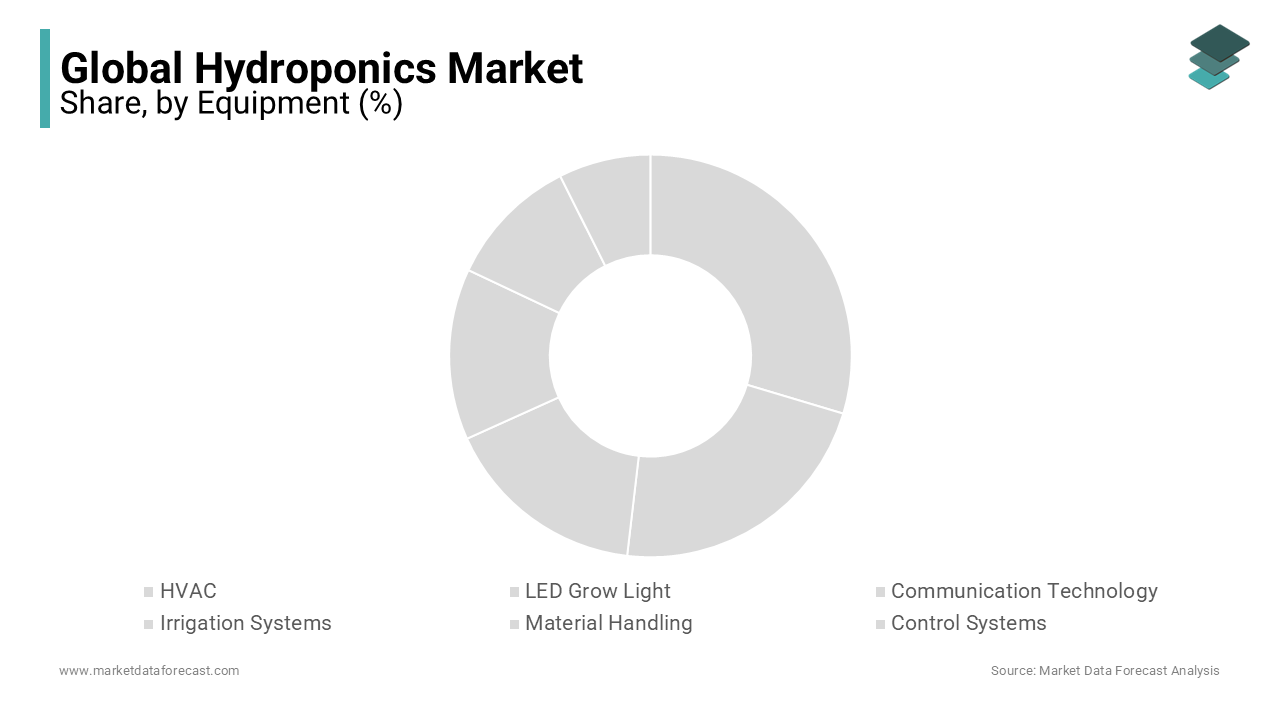
The control systems segment is predicted to witness the highest CAGR of 16.3% from 2026 to 2034 due to the industry’s shift from manual monitoring to autonomous environmental regulation. A further growing factor is the integration real-timeime sensor networks. Modern control platforms aggregate data from pH, conductivity,coconductivity ty temperature, humidity, and CO2 sensors to auto-adjust irrigation, lighting, i, ng and ventilation. Danish commercial tomato growers are increasingly adopting AI-driven climate control systems to enhance operational precision and stabilize production, reflecting a broader national trend towards high-tech agricultural automation. These systems have cut nutrient waste while maintaining optimal root zone conditions. A different driver is interoperability with digital agronomy platforms. Companies like Priva and Hoogendoorn offer open API architectures that connect farm management software with utility grid,s, enabling demand response participation. Spanish hydroponic farms are participating in demand response programs, allowing them to gain financial benefits by adjusting energy consumption during high-demand periods, aligning with Spain's rising renewable energy integration. High energy operational costs in Northern Europe make the adoption of intelligent, automated control systems for indoor agriculture financially imperative, providing a scalable solution for managing resource expenditure.
By Type Insights
The liquid hydroponics systems segment dominated the hydroponics market by capturing a significant share in 2025. The leading position of the liquid hydroponics systems segment is attributed to its superior nutrient delivery efficiency and adaptability tohigh-densityy leafy green and herb production. One more reason for growth here is water use optimization. Liquid systems recirculate nutrient solutions, achieving notable water savings compared to open field agriculture. The closed-loop model aligns with national water security strategies and reduces dependency on rainfall variability. An added boost for this segment is automation compatibility. Liquid systems integrate seamlessly with robotic transplanters, harvesters,, rs and inline sensors, enabling fully mechanized workflows. The scalability of liquid hydroponics from urban vertical farms to industrial greenhouses ensures its continued dominance across diverse production scales and geographies.
The aggregate-based hydroponics segment is estimated to register the fastest CAGR of 12.7% over the forecast period, owing to titsrobustness in fruiting crop cultivation and reduced technical complexity. Also helping this segment is the suitability for vine crops. Aggregate media provide superior root anchorage and moisture buffering for heavy feeding plants like tomatoes, cucumbers,s and peppers. The physical stability of substrates also minimizes root disturbance during extended growing cycles exceeding several months. In addition, this segment is helped by a lower system failure risk. Unlike liquid systems that require constant pump operation, aggregate systems retain moisture during short power outages,s reducing crop loss vulnerability. This resilience appeals to new entrants and regions with unreliable electricity infrastructure, e-accelerating adoption beyond traditional hydroponic hubs.
By Crop Insights
The lettuce and leafy vegetables segment held the majority share of 45.5% of the hydroponics market in 2025. The supremacy of the lettuce and leafy vegetables segment is credited to its rapid growth cycle, shallow root systems, and consistent market demand from retail and food service sectors. Along with that, this segment gains from supply chain alignment. Leafy greens have a short shelf life, making local hydroponic production economically compelling. Domestic hydroponic lettuce production is increasingly concentrated near metropolitan areas to minimize the time between harvest and retail delivery, which helps maintain freshness and lower transport-related environmental impacts. Major European grocery chains are expanding their private label offerings to include greens grown in local vertical and urban farms, reflecting a strategic shift toward tech-enabled, sustainable produce sourcing. One more reason for growth here is nutritional consistency. Hydroponic systems enable precise control over nitrate and antioxidant levels critical for premium health-positioned brands. Hence, this quality differentiation sustains premium pricing and retailer partnerships.
The strawberry segment is anticipated to witness the fastest CAGR of 18.1% from 2026 to 2034. The rapid expansion of this segment is propelled by year-round market demand, high per-kilogram value, and compatibility with vertical farming. An added boost for this segment is disease avoidance. Soil-borne pathogens like Verticillium wilt and Phytophthora severely limit conventional strawberry yields. Hydroponic systems eliminate this risk, enablinmulti-cyclele production. In the Netherlands, advanced, year-round, high-tech hydroponic strawberry production significantly increases the frequency of harvests compared to traditional, seasonal open-field methods. These controlled, soilless systems achieve substantially higher, consistent yields per unit of land. The production method also results in more uniform fruit quality and requires fewer pesticides, as confirmed by research into high-tech greenhouse techniques. Moreover, this segment is backed by urban premium markets. In Berlin, startups like Infarm supply hyperlocal strawberries to gourmet retailers with harvest-to-shelf times under 4 hours preservingg flavor and aroma compounds that degrade rapidly post-harvest,, st as documented by the German Institute for Food Technologies. This freshness premium, combined with aesthetic consistency,y makes strawberries the flagship high-value crop for next-generation hydroponic ventures.
By Input Insights
The nutrient solutions segment was the largest segment in the hydroponics market by occupying a substantial share in 2025 because of its continuous consumption throughout the crop cycle and central role in yield determination. Also helping this segment isformulation precision. Modern hydroponic nutrients are chelated andpH-bufferedd to ensure immediate ion availability. Hydroponic tomato plants fed with tailored nutrient blends produce fruits with improved nutritional quality and higher dry matter content compared to those given generic fertilizers. This quality enhancement directly influences marketability in premium fresh and processing segments. In addition, this segment is helped byregulatory compliance. The European Union (EU) 2019/1009 regulation establishes stringent, standardized purity requirements regarding heavy metals and contaminants for liquid fertilizers used in soilless systems. A growing majority of commercial hydroponic nutrient brands are adopting CE certification to comply with updated European regulations, enhancing cross-border trade and trust. This standardization has reduced input failure rates and supported the professionalization of hydroponic farming across diverse climatic zones.
The growth media segment is likely to experience the fastest CAGR of 13.9% over the forecast period. The swift growth of this segment is fuelled by the expansion of substrate-based systems and sustainability innovations in material sourcing. Moreover, this segment is backed by the shift toward circular substrates. Traditional rockwool is being replaced by bio-based alternatives like coco coir, hemp fifiberand composted green waste. These materials reduce landfill burden and align with corporate sustainability reporting requirements. Furthermore, a major force in this segment is performance consistency. Advanced substrates now undergo rigorous quality control for water retention on air porosity, nd cation exchange capacity. Scaling commercial hydroponics requires consistent inputs, driving the strategic importance of engineered growth media.
REGIONAL ANALYSIS
Europe Market Analysis
Europe was the top performer in the hydroponics market by accounting for a 34.7% share in 2025. The dominance of the European market is driven by advanced greenhouse infrastructure, stringent sustainability regulations, and strong public support for urban agriculture. The Netherlands continues to solidify its role as a global leader in high-tech hydroponic agriculture by expanding advanced greenhouse systems and increasing the scale of operations to boost tomato production efficiency. The EU’s Green Deal and Farm to Fork Strategy incentivize soilless systems through subsidies for water recycling, renewable energy integration,n and pesticide reduction. New French environmental legislation mandates that public institutions, including schoolsand community cafeterias, significantly increase their sourcing of local and sustainable produce, accelerating demand for fresh, locally grown products, including those from urban agricultural sources. Germany is refining its national building regulations to support the integration of urban and vertical farming, reducing administrative barriers to foster commercial indoor food production within industrial and urban zones. Europe’s leadership stems not from climate advantage but from institutional alignment between policy science and entrepreneurial innovation.
North America Market Analysis
North America was the second largest country in the global hydroponics market by holding a share of 29.7% in 2025. The expansion of this region is propelled by technological adoption and venture capital funding, particularly in the United States and Canada. The U.S. Department of Agriculture is funding numerous pilot projects designed to implement, measure, and verify climate-smart agricultural practices that reduce greenhouse gas emissions, encompassing diverse approaches to sustainable food production. The commercial vertical farming industry is rapidly expanding across the United States, utilizing urban, controlled-environment, and soil-free growing mechanisms to produce lettuce and herbs year-round, with significant, high-tech operations concentrated in key regional hubs. Canada is promoting the modernization of its agricultural sector by incentivizing the adoption of energy-efficient lighting, automated technologies, and controlled-environment systems to enhance productivity and sustainability in local, indoor food production. Retailers are increasingly integrating locally grown, indoor-farmed greens into their supply chains, making hydroponically grown leafy greens and herbs widely available in urban supermarkets to meet consumer demand for fresh, sustainable produce. The region’s strength lies in scalable business models and data-driven agronomy rather than policy mandates.
Asia Pacific Market Analysis
Asia Pacific is a lucrative region in the hydroponics market, which is led by Japan, South Korea, China, and Australia. Japan is a global leader in vertical farming and plant factory technology, utilizing large-scale, automated, soil-less environments to grow fresh produce for commercial retail and institutional clients. South Korea heavily subsidizes smart farming and hydroponic initiatives to strengthen national food security and boost agricultural production, particularly in regions constrained by terrain or limited land. Under national modernization plans, China has designated smart, soilless cultivation as a strategic technology, establishing numerous state-supported demonstration zones to promote high-tech agricultural production by 2024–2025. Australia utilizes controlled-environment horticulture and hydroponics to significantly reduce water usage, enabling consistent, year-round production in arid regions. The region combines top-down policy with bottom-up entrepreneurship.
Middle East and Africa Market Analysis
The Middle East and Africa expanded gradually in the hydroponics market, with concentrated activity in Israel, the United Arab Emirates,s and South Africa. Israel is recognized as a global leader in arid-zone agriculture, leveraging advanced research to cultivate high-yield produce in desert conditions by combining brackish water, solar power, and hydroponic technology. The UAE is actively transforming its agricultural sector through national strategies focused on increasing local, sustainable produce using high-tech hydroponic and vertical farming, with major investments centered in urban and desert hubs. The UAE is accelerating the use of technology-enabled agriculture by deploying, with government support, specialized greenhouses that utilize seawater and artificial intelligence to create optimal growing climates for improved local food production. South Africa’s adoption is driven export-orientedted berry producers seeking pesticide-free certification for EU markets. Despite modest volume, this region demonstrates extreme innovation under resource constraints, making it a laboratory foclimate-resilientnt food systems.
Latin America Market Analysis
Latin America is likely to grow in the hydroponics market from 2026 to 2034, with leadership from Mexico, Brazil, and Chile. Agricultural producers in Mexico's Central Highlands are increasingly adopting climate-controlled greenhouse technologies to maintain a steady supply of vine vegetables for international markets. Favorable climate and low energy costs enable year-round production at competitive prices. Urban centers in Brazil are seeing a rise in technology-driven vertical farms that utilize soilless cultivation methods to provide fresh produce to local metropolitan populations. Farming operations in the desert regions of Chile are turning to hydroponic systems to significantly lower their reliance on scarce water resources while cultivating specialized crops. Growth is export and urban-driven rather than policy-led, creating a market responsive to global demand shifts and local food access gaps.
COMPETITIVE LANDSCAPE
The Hydroponics Market features a competitive landscape shaped by the convergence of agricultural technology, engineering, ng and data science. Competition is not centered on price alone but on system reliability, energy efficiency, ancrop-specificic performance validation. Established players from the Netherlands,, German,y, and North America dominate through decades of greenhouse expertise while agile startups introduce innovations in vertical farming and AI-driven agronomy. The market is fragmented by crop type, facility,, le and regional climate, leading to specialized rather than universal solutions. Regulatory pressures in Europe and water scarcity in arid regions further segment demand toward customized configurations. Barriers to entry remain high due to capital intensity, technical complexity, ty, and the need for agronomic support networks. As a result, leaders differentiate through service depth,h integration capabilities nd scientific credibility rather than hardware alone, fostering a collaborative yet intensely innovative environment where cross-industry partnerships are as critical as proprietary technology.
KEY MARKET PLAYERS
These are some of the major key players in this global hydroponics market.
- ScottsMiracle-Gro
- Signify Holding B.V.
- Priva Holding B.V.
- Argus Control Systems
- LumiGrow, Inc
- Hydrodynamics International
- American Hydroponics
- Advanced Nutrients
- Emerald Harvest
- Freight Farms
- AeroFarms
- Green Sense Farms
- Gotham Greens
- Bright Farms
Top Players In The Market
- Signify Holding B.V. is a leading innovator in horticultural lighting with its Philips GreenPower LED portfolio serving commercial hydroponic farms worldwide. The company specializes in spectral tuning technology that optimizes plant morphology, yield, and energy efficiency across crops like lettuce, tomato, and strawberry. Signify has deepened its integration with climate control and irrigation systems through open protocol partnerships, enabling holistic environmental management. Partnering with elite institutions like Wageningen University allows Signify to test and verify its lighting in various hydroponic environments, cementing its status as a leader in science-backed indoor farming.
- Priva Holding B.V. is a Dutch technology firm renowned for its climate and irrigation control systems tailored for hydroponic greenhouses and vertical farms. Its Connext and Compact CC platforms unify data from sensors, actuators, nd utility meters to automate hheatingg ventilation, and nutrient dosing with high precision. Priva emphasizes interoperability by supporting international communication standards such as Modbus and KNX, allowing seamless integration with third-party hardware. Priva strengthens the operational resilience of hydroponic growers against volatile energy and water markets through advanced system intelligence and resource optimization.
- Argus Control Systems Ltd. is a Canadian pioneer in environmental automation for controlled agriculture with installations across North America, Europe, and the Middle East. The company’s Compass software platform delivers end-to-end control of lighting, irrigation, C O2, and thermal systems within hydroponic facilities. Argus distinguishes itself through customizable logic engines that adapt to unique crop protocols and facility layouts rather than enforcing rigid templates. Argus optimizes high-value hydroponic production by combining flexible, transparent, and predictive technology, ensuring stable yields while reducing input waste.
Top Strategies Used by the Key Market Participants
Key players in the Hydroponics Market focus on developing integrated automation ecosystems that synchronize lighting, climate, irrigation,n and data analytics into unified control platforms. They invest heavily in spectral science and energy-efficient hardware to reduce operational costs and enhance crop quality. Strategic collaborations with research universities and agricultural cooperatives generate field-validated protocols that build user confidence. Companies also prioritize open architecture and interoperability standards to avoid vendor lock-in and support modular farm expansion. Additionally, they align product roadmaps with sustainability mandates by enabling water recycling, renewable energy integration,n and pesticide-free production, thereby positioning hydroponics as a climate-resilient food solution.
MARKET SEGMENTATION
This research report on the global hydroponics market is segmented and sub-segmented into the following categories.
By Equipment
- HVAC
- LED Grow Light
- Communication Technology
- Irrigation Systems
- Material Handling
- Control Systems
By Type
- Aggregate
- Closed Systems
- Open Systems
- Liquid
- Nutrient Film Technique (NFT)
- Floating Hydroponics
- Aeroponics
By Crop Type
- Tomato
- Lettuce & Leafy Vegetables
- Cucumber
- Pepper
- Strawberry
By Input Type
- Nutrients
- Growth Medium
By Region
- North America
- Europe
- Asia-Pacific
- Latin America
- Middle East and Africa