- Product Description Description
- Table of Contents TOC
- List of Table & Figure LOT
- Get Free Sample PDF Sample PDF
Market Size, 2025
$33.91 BnMarket Estimate, 2026
$36.79 BnMarket Forecast, 2034
$70.66 BnCAGR, 2026–2034
8.5%Global Commercial Greenhouse Market Size, Growth, Trends & Forecast (2026–2034)
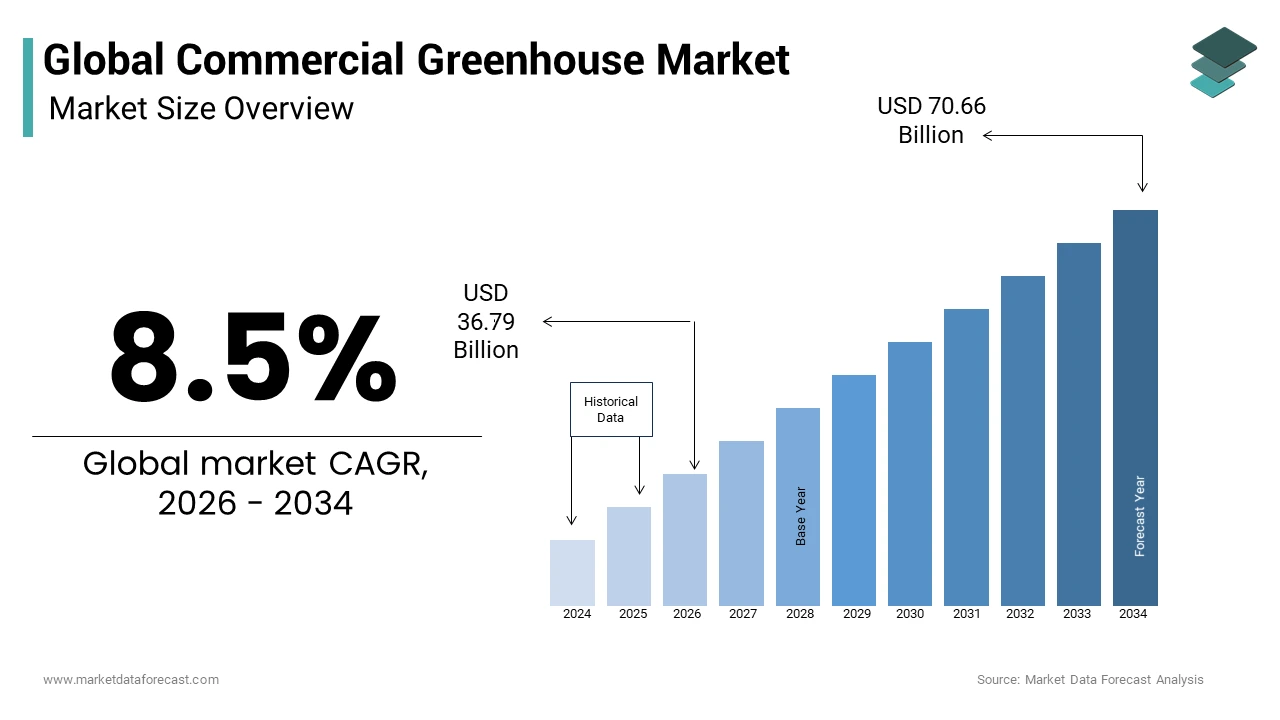
The global commercial greenhouse market size was valued at USD 33.91 billion in 2025, is anticipated to reach USD 36.79 billion in 2026, and is projected to expand up to USD 70.66 billion by 2034, registering a compound annual growth rate (CAGR) of 8.50% during the forecast period from 2026 to 2034. Growth is propelled by shifting global dietary preferences, escalating population pressures, unpredictable climate and meteorological patterns undermining conventional farming reliability, and rapid technological advancements in precision agriculture and automated climate management.
Key Executive Metrics (At-a-Glance)
- 2025 Base Valuation: USD 33.91 Billion
- 2026 Current Valuation: USD 36.79 Billion
- 2034 Forecast Valuation: USD 70.66 Billion
- Compound Annual Growth Rate (CAGR): 8.50% (2026–2034)
- Dominant Type Segment: Glass Greenhouse (36.5% share in 2025)
- Fastest-Growing Type Segment: Plastic Greenhouse (13.3% CAGR)
- Dominant Offering Segment: Hardware Segment (65.7% share in 2025)
- Fastest-Growing Offering Segment: Software Segment (14.1% CAGR)
- Dominant Crop Type Segment: Fruits and Vegetables (63.4% share in 2025)
- Fastest-Growing Crop Type Segment: Flowers and Ornamentals (13.5% CAGR)
- Dominant End User Segment: Commercial Growers (36.3% share in 2025)
- Fastest-Growing End User Segment: Research and Educational Institutes (15.1% CAGR)
- Dominant Regional Market: North America (32.6% share in 2025)
- Fastest-Growing / Expanding Regional Hubs: Asia Pacific (Leading global capacity expansions) & Europe (Focusing on energy self-sufficiency and circular economy policies)
Core Market Drivers
- Demographic Pressures & Dietary Shifts: Growing global population coupled with a pronounced transition toward fresh vegetables, leafy greens, and premium fruits requiring high-yield, uninterrupted supply chains.
- Climate Volatility & Resource Scarcity: Extreme thermal anomalies, erratic precipitation, and water constraints undermining open-field farming, necessitating climate-independent, recirculating enclosed systems.
Primary Market Restraints & Challenges
- High Capital Expenditure & Energy Intensity: Significant upfront construction outlays ($150–$250/m² for glass structures) and elevated utility demands for climate control and supplemental lighting.
- Skilled Labor Shortages & Regulatory Fragmentation: Global deficit of horticultural technicians proficient in automated systems, compounded by inconsistent international environmental compliance standards.
Global Commercial Greenhouse Market Segmentation Breakdown
| Segment Category | Largest (Dominant) Sub-Segment | Fastest-Growing Sub-Segment |
|---|---|---|
| By Type | Glass Greenhouse (36.5% share, 2025) | Plastic Greenhouse (13.3% CAGR) |
| By Offering | Hardware Segment (65.7% share, 2025) | Software Segment (14.1% CAGR) |
| By Crop Type | Fruits and Vegetables (63.4% share, 2025) | Flowers and Ornamentals (13.5% CAGR) |
| By End User | Commercial Growers (36.3% share, 2025) | Research and Educational Institutes (15.1% CAGR) |
| By Region | North America (32.6% share, 2025) | Asia Pacific & Europe (Leading capacity & circular tech expansions) |
Major Industry Players Profiled
Key corporations leading the global commercial greenhouse market include Sotrafa, Berry Global, NETAFIM, Certhon, Richeal Group SA, Stuppy Greenhouse, Argus Control Systems Ltd., The Glasshouse Company, Luiten Greenhouse BV, and Agra Tech, Inc.
Global Commercial Greenhouse Market Size
The global commercial greenhouse market was valued at USD 33.91 billion in 2025 and is anticipated to reach USD 36.79 billion in 2026 from USD 70.66 billion by 2034, growing with a CAGR of 8.5% from 2026 to 2034.
Commercial greenhouse encompasses controlled environment agriculture facilities designed for the mass cultivation of crops under regulated climatic conditions. These structures utilize advanced glazing, climate control mechanisms, and automated irrigation to optimize plant growth irrespective of external weather patterns. As traditional farming confronts mounting environmental pressures, enclosed agricultural systems have emerged as critical infrastructure for securing consistent food production. According to the Food and Agriculture Organization, approximately 38% of global land area is dedicated to agriculture, yet arable land per capita has declined by 15% since the 1970s due to soil degradation and urban expansion. As per the United Nations Department of Economic and Social Affairs, the global population will reach 9.7 billion by 2050, intensifying pressure on existing food networks. Concurrently, according to the World Resources Institute, crop yields in open field systems have stagnated in 24% of major agricultural regions over the past decade due to erratic precipitation and temperature fluctuations. Water scarcity further complicates conventional farming, as according to the United Nations Environment Programme, agriculture consumes nearly 70% of global freshwater withdrawals, with irrigation efficiency remaining below 50% in many developing economies. These structural constraints have accelerated the adoption of enclosed cultivation frameworks that reduce resource dependency while maximizing spatial productivity. Commercial greenhouses address these systemic vulnerabilities by enabling continuous harvest cycles, precise nutrient delivery, and minimized water runoff.
MARKET DRIVERS
Escalating global population and shifting dietary preferences are fundamentally reshaping agricultural demand parameters, which is majorly driving the growth of the commercial greenhouse market worldwide. According to the United Nations, the global population continues to expand at an annual rate of 0.9%, with the United Nations projecting an addition of 2 billion individuals by the middle of the century. This demographic surge coincides with a pronounced dietary transition toward fresh vegetables, leafy greens, and premium fruits. As per the World Health Organization, daily vegetable consumption recommendations range between 400 and 500 grams per person, yet actual global intake averages only 270 grams, leaving a substantial consumption gap. Commercial greenhouse facilities directly address this deficit by enabling consistent cultivation of perishable crops that traditionally suffer from seasonal interruptions and after harvest deterioration. Enclosed cultivation systems demonstrate yield efficiencies that exceed traditional field production by 3 to 5 times per square meter, as documented by the Food and Agriculture Organization. These structures maintain optimal humidity, temperature, and carbon dioxide concentrations, allowing continuous harvest cycles that align with modern retail expectations for uninterrupted supply. Furthermore, according to United Nations Habitat data, urbanization has concentrated 56% of the global population within city boundaries, intensifying logistical demands for localized fresh produce distribution. The commercial greenhouse sector capitalizes on this convergence by establishing cultivation hubs near metropolitan consumption centers, thereby reducing transit times and preserving nutritional integrity.
Unpredictable meteorological patterns and prolonged environmental extremes are systematically undermining conventional farming reliability, which is further boosting the global market expansion. According to the Intergovernmental Panel on Climate Change, the frequency of extreme heat events has increased significantly since 1980, with 2023 recording the highest global average temperatures in modern history. These thermal anomalies directly compromise crop physiology, reduce pollination success, and accelerate soil moisture depletion. As per the Food and Agriculture Organization, climate related crop losses currently average 21% annually across major staple producing regions, with certain tropical zones experiencing yield reductions exceeding 30% during severe drought cycles. Commercial greenhouses provide a structural buffer against these atmospheric disruptions by isolating cultivation zones from external weather variability. Controlled environment facilities maintain precise thermal regulation, with internal temperature deviations restricted to less than 2 degrees Celsius regardless of external conditions. According to the World Meteorological Organization, precipitation patterns have shifted dramatically, with 40% of agricultural territories now experiencing irregular rainfall distribution. Enclosed cultivation systems circumvent this uncertainty through recirculating irrigation frameworks that reduce water consumption by up to 90% compared to conventional field irrigation. Additionally, greenhouse operators can manipulate light spectra and photoperiods to optimize photosynthetic activity during periods of natural sunlight deficiency. This climate independence transforms agricultural production from a weather reliant enterprise into a predictable manufacturing process.
MARKET RESTRAINTS
Substantial capital expenditure and prolonged financial recovery timelines are restraining the expansion of the global market. The financial architecture required to establish advanced controlled environment facilities presents a formidable barrier for prospective agricultural operators. Constructing a fully equipped commercial greenhouse demands significant upfront investment in structural materials, climate control machinery, automated irrigation networks, and monitoring infrastructure. As per the World Bank, the average capital expenditure for a modern commercial cultivation facility ranges between 150 and 250 dollars per square meter, depending on technological sophistication and regional construction standards. These initial outlays frequently exceed the financing capacity of medium scale agricultural enterprises, limiting market participation to well capitalized institutional operators. Financial recovery timelines further complicate investment decisions, with payback periods extending between 5 and 8 years under optimal operating conditions. According to the International Finance Corporation, agricultural lending institutions apply risk premiums averaging 3.5% above standard commercial rates due to the specialized nature of greenhouse assets. Equipment depreciation accelerates financial pressure, as climate control systems and automated ventilation components require replacement within 10 to 12 years. Additionally, utility infrastructure upgrades necessary to support high capacity heating and cooling networks often add 20% to baseline construction budgets. These compounded financial requirements restrict market accessibility and slow deployment rates in emerging economies where capital markets remain underdeveloped.
Elevated energy consumption for climate control and supplemental lighting constrains operational profitability, which is further hampering the global market expansion. Operational energy demands represent a persistent constraint that directly influences profitability and environmental compliance within enclosed cultivation facilities. Maintaining optimal growing conditions requires continuous heating, cooling, ventilation, and humidity regulation, particularly in regions experiencing extreme seasonal temperature variations. According to the International Energy Agency, commercial greenhouse operations consume an average of 45 to 60 kilowatt hours per square meter annually, with heating requirements accounting for approximately 70% of total energy expenditure in temperate climates. Supplemental lighting further amplifies consumption, as modern cultivation protocols utilize high intensity discharge and light generating diode arrays that operate for 12 to 16 hours daily during winter months. These energy requirements generate substantial operational costs, with utility expenses frequently representing 15 to 25% of total production expenditures. According to the European Environment Agency, greenhouse heating alone contributes 1.2 million metric tons of carbon dioxide equivalent annually across continental Europe, prompting stringent emission regulations and carbon pricing mechanisms. Volatile energy markets exacerbate financial uncertainty, as natural gas and electricity prices have experienced fluctuations exceeding 30% within individual fiscal years in multiple jurisdictions. Operators must navigate these energy intensity challenges through efficiency upgrades and thermal storage systems. Until energy consumption profiles align more closely with sustainable operational benchmarks, power dependency will continue to constrain market scalability.
MARKET OPPORTUNITIES
Integration of precision agriculture technologies and automated climate management unlocks operational efficiency, which is a notable opportunity for the global commercial greenhouse market. The convergence of digital monitoring frameworks and automated environmental control systems is unlocking unprecedented efficiency gains within enclosed cultivation operations. Modern commercial greenhouses increasingly deploy sensor networks that continuously track temperature, humidity, carbon dioxide concentration, substrate moisture, and nutrient levels in real time. As per the World Economic Forum, precision agriculture adoption in controlled environment facilities has expanded by 18% annually, with data analytics platforms reducing resource waste by up to 35%. Automated climate management algorithms adjust ventilation rates, shading positions, and irrigation schedules without manual intervention, minimizing human error and optimizing physiological conditions for rapid crop development. Machine learning models now predict microclimate shifts up to 48 hours in advance, allowing operators to preemptively modify environmental parameters before stress conditions emerge. According to the Food and Agriculture Organization, digitally integrated greenhouse operations achieve yield uniformity rates exceeding 92%, compared to 78% in manually managed facilities. Robotic harvesting and planting systems further enhance throughput, with autonomous platforms reducing labor requirements by 40% while maintaining consistent quality standards. Cloud hosted data repositories enable remote facility monitoring and multiple location performance benchmarking, empowering operators to scale operations with minimal incremental overhead.
Expansion into urban and suburban cultivation shortens supply chains and enhances distribution resilience, which is another prominent opportunity for the global market. Metropolitan food distribution networks are increasingly vulnerable to logistical bottlenecks, prompting a strategic shift toward localized cultivation frameworks. Urban populations continue to expand rapidly, with United Nations Habitat data confirming that city dwellers will comprise 68% of the global demographic by 2050. This spatial concentration intensifies demand for fresh produce while simultaneously exposing traditional rural supply chains to extended transit durations, fuel price volatility, and refrigeration failures. Commercial greenhouses positioned within urban and suburban zones directly address these distribution vulnerabilities by establishing cultivation centers within 50 kilometers of primary consumption markets. As per the World Resources Institute, localized greenhouse production reduces food transportation distances by an average of 85%, decreasing after harvest spoilage rates from 25% to under 8%. These proximate cultivation facilities enable daily harvest and delivery cycles, ensuring retailers receive peak freshness inventory while eliminating the need for extended refrigerated transport infrastructure. Municipal zoning policies increasingly support agricultural integration within urban boundaries, with over 120 cities globally implementing regulatory frameworks that streamline permit approvals for enclosed cultivation projects. Real estate developers are incorporating greenhouse structures into multi purpose commercial districts, transforming vacant industrial spaces into productive agricultural hubs.
MARKET CHALLENGES
Skilled labor shortages in horticultural technology operations impede facility optimization, which is a significant challenge to the commercial greenhouse market growth. The operational complexity of modern controlled environment facilities demands a specialized workforce capable of managing integrated climate systems, automated irrigation networks, and digital monitoring platforms. Traditional agricultural labor pools increasingly lack the technical competencies required to maintain sophisticated greenhouse infrastructure, creating a persistent talent deficit across the sector. According to the International Labour Organization, the horticultural industry faces a skilled worker shortfall exceeding 1.2 million positions globally, with vacancy rates in climate control maintenance and precision agronomy roles surpassing 18%. Educational institutions have struggled to align curriculum development with industry requirements, resulting in only 22% of agricultural graduates possessing direct experience with automated cultivation technologies. This competency gap forces operators to allocate 30% of operational budgets toward external technical consultants and emergency repair services. Furthermore, the demographic composition of agricultural workforces continues to age, with Eurostat data indicating that 45% of European horticultural workers are above 50 years of age, while youth participation remains below 12%. Training programs require extended onboarding periods of 6 to 9 months before personnel achieve independent system management capabilities, delaying facility optimization timelines. The sector must address this human capital constraint through targeted vocational partnerships and continuous training initiatives.
Regulatory fragmentation regarding greenhouse emissions and resource usage standards complicates compliance, which is further challenging the expansion of the global market. Commercial greenhouse operators must navigate a complex and inconsistent regulatory landscape that varies significantly across national and regional jurisdictions. Environmental compliance requirements encompass carbon emission thresholds, water extraction permits, nutrient discharge limits, and structural safety certifications, each governed by distinct administrative frameworks. As per the Organisation for Economic Cooperation and Development, regulatory divergence increases compliance administration costs by approximately 28% for multinational cultivation enterprises operating across multiple jurisdictions. Certain regions impose strict carbon pricing mechanisms that add 15 to 22 dollars per metric ton to heating operational expenses, while neighboring territories maintain entirely unregulated emission frameworks. Water usage regulations demonstrate similar inconsistency, with some authorities requiring recirculation rates exceeding 80%, whereas others permit direct discharge into municipal drainage systems without treatment verification. According to the European Commission, greenhouse operators spend an average of 1400 hours annually navigating permit applications, environmental audits, and policy updates. This regulatory uncertainty complicates strategic facility planning, as compliance requirements frequently undergo revisions within 3 annual cycles, forcing operators to modify infrastructure configurations prematurely. Standardized international guidelines remain underdeveloped, leaving market participants to interpret ambiguous environmental mandates through localized legal counsel.
REPORT COVERAGE
| REPORT METRIC | DETAILS |
| Market Size Available | 2025 to 2034 |
| Base Year | 2025 |
| Forecast Period | 2026 to 2034 |
| CAGR | 8.5% |
| Segments Covered | By Type, Crop Type, Offering, End User, and Region |
| Various Analyses Covered | Global, Regional, and Country Level Analysis, Segment-Level Analysis, DROC, PESTLE Analysis, Porter’s Five Forces Analysis, Competitive Landscape, Analyst Overview of Investment Opportunities |
| Regions Covered | North America, Europe, APAC, Latin America, Middle East & Africa |
| Market Leaders Profiled | Sotrafa, Berry Global, NETAFIM, Certhon, Richeal Group SA, Stuppy Greenhouse, Argus Control Systems Ltd., The Glasshouse Company, Luiten Greenhouse BV, Agra Tech, Inc. |
SEGMENTAL ANALYSIS
By Type Insights
The glass greenhouse segment led the market by holding 36.5% of the global market share in 2025. The glass greenhouse segment maintains market leadership through superior light transmittance properties that exceed 90% across the visible spectrum, enabling optimal photosynthetic activity for high value crops. According to the Food and Agriculture Organization, glass structures demonstrate operational lifespans averaging 25 to 30 years, significantly outlasting alternative materials and reducing long term capital replacement cycles. According to the World Meteorological Organization, the durability of tempered and laminated glass panels withstands extreme weather events including hail impact forces up to 25 millimeters in diameter. Commercial operators prioritize glass configurations for research facilities and premium produce cultivation because the material permits precise spectral control and minimal thermal degradation over time. According to the European Environment Agency, modern double glazed greenhouse systems achieve thermal insulation values of 1.2 to 1.6 W per square meter Kelvin, reducing heating energy consumption by 30% compared to single layer alternatives. Additionally, glass surfaces facilitate easier sanitation protocols, minimizing pathogen retention and supporting integrated pest management strategies that align with stringent food safety regulations across developed economies.
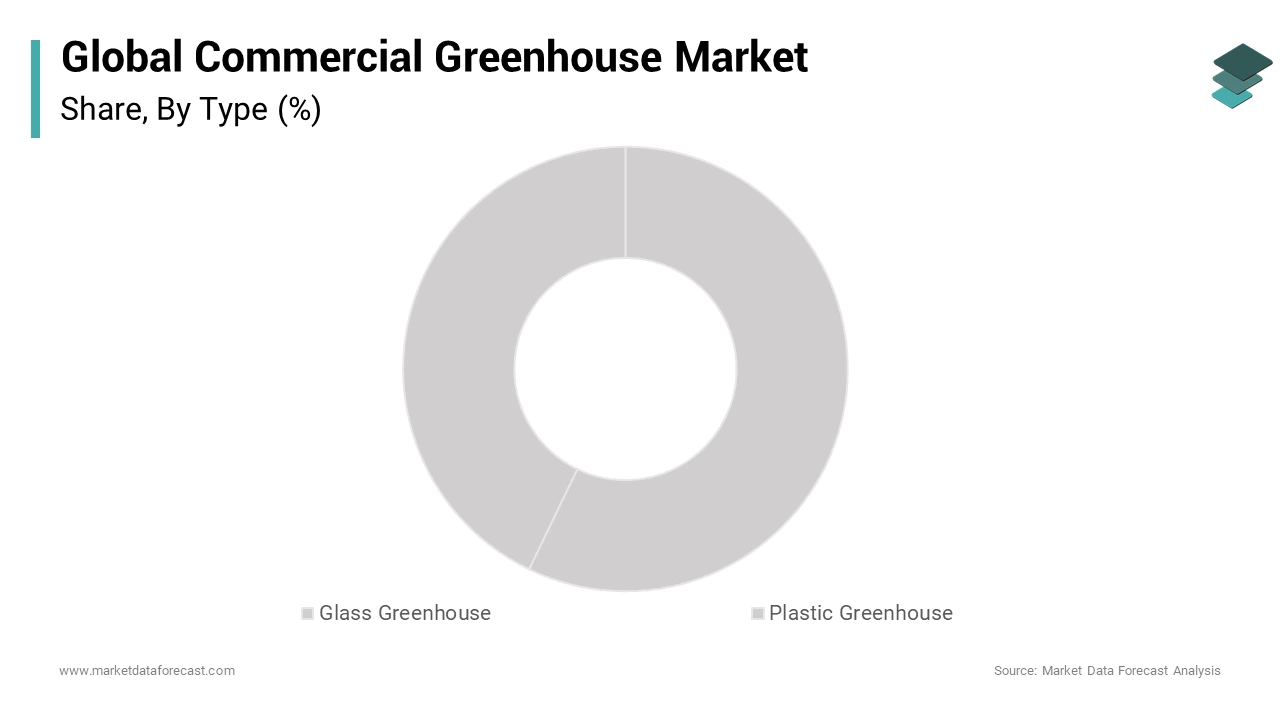
However, the plastic greenhouse segment is on the rise and is estimated to register a CAGR of 13.3% during the forecast period owing to the substantially lower initial investment requirements and rapid deployment capabilities that align with emerging market expansion strategies. According to the International Finance Corporation, polyethylene film installations cost approximately 40 to 60 dollars per square meter compared to 150 to 250 dollars for glass equivalents, enabling small and medium scale growers to enter controlled environment agriculture with manageable capital outlays. According to the Plastics Industry Association, advanced polymer formulations incorporating ultraviolet stabilizers and infrared blocking additives extend functional service life to 5 to 7 years. The World Bank notes that plastic greenhouse adoption in Asia Pacific and Latin America has increased by 18% annually, supported by government subsidy programs targeting food security objectives. Polycarbonate multiwall panels offer impact resistance ten times greater than glass while maintaining light diffusion properties that reduce plant scorching during peak solar exposure. Modular design frameworks allow incremental capacity expansion without disrupting ongoing production cycles, a critical advantage for operators managing seasonal demand fluctuations and evolving crop portfolios.
By Offering Insights
The hardware segment led the market by holding 65.7% of the global market share in 2025. Hardware components form the foundational infrastructure of controlled environment agriculture, encompassing climate control machinery, irrigation networks, lighting arrays, and sensor deployments that enable precise cultivation management. According to the International Energy Agency, climate control systems account for nearly 70% of operational energy consumption in temperate zone facilities, driving continuous innovation in high efficiency heat pumps and thermal storage solutions. According to the Food and Agriculture Organization, modern irrigation hardware integrates drip emitters, fogging nozzles, and recirculation pumps that achieve water application efficiencies exceeding 95%. Lighting systems utilizing light generating diode technology deliver photosynthetically active radiation with spectral tuning capabilities that optimize morphological development across diverse crop species. According to the World Economic Forum, sensor deployments in commercial greenhouses have expanded by 22% annually, enabling real time monitoring of substrate moisture, nutrient concentration, and atmospheric carbon dioxide levels. Hardware durability requirements mandate corrosion resistant materials and sealed enclosures rated for continuous operation in high humidity environments, ensuring reliability across multi-year production cycles and minimizing unplanned downtime that could compromise harvest schedules.
On the other end, the software segment is predicted to showcase a CAGR of 14.1% during the forecast period in the global market. Cloud based and web based software platforms are experiencing rapid adoption as commercial greenhouse operators prioritize data driven decision making and remote facility management capabilities. According to the World Economic Forum, precision agriculture software adoption in controlled environment facilities has expanded by 18% annually, with analytics platforms reducing resource waste by up to 35% through optimized irrigation scheduling and climate parameter adjustments. According to the Food and Agriculture Organization, machine learning algorithms now predict microclimate shifts up to 48 hours in advance, allowing operators to preemptively modify environmental settings before stress conditions emerge. Cloud hosted repositories enable multi location performance benchmarking and centralized protocol management, empowering enterprises to scale operations with minimal incremental administrative overhead. According to the International Telecommunication Union, broadband connectivity improvements in rural agricultural zones have accelerated software deployment, with 5G networks now supporting sub second latency for real time equipment control applications. Subscription based licensing models reduce upfront technology investment barriers, while application programming interfaces facilitate integration with existing enterprise resource planning and supply chain management systems.
By Crop Insights
The fruits and vegetables segment held 63.4% of the global market share in 2025. The fruits and vegetables category maintains market leadership through consistent consumer demand for fresh, pesticide reduced produce and the economic advantages of high value crop cultivation within controlled environments. According to the World Health Organization, daily vegetable consumption recommendations range between 400 and 500 grams per person, yet actual global intake averages only 270 grams, creating substantial production opportunities for greenhouse operators. According to the Food and Agriculture Organization, enclosed cultivation systems demonstrate yield efficiencies that exceed traditional field production by 3 to 5 times per square meter for crops such as tomatoes, cucumbers, and leafy greens. According to the World Resources Institute, climate independent production enables continuous harvest cycles that align with modern retail expectations for uninterrupted supply, reducing after harvest spoilage rates from 25% to under 8% through localized distribution frameworks. Premium pricing for greenhouse grown berries and specialty herbs further enhances profitability, with retail margins exceeding 40% for certified organic and residue free product lines. According to United Nations Habitat data, urbanization trends concentrating 56% of the global population within city boundaries intensify logistical demands for proximate fresh produce sources.
On the other side, the flowers and ornamentals segment is estimated to showcase a CAGR of 13.5% during the forecast period. The flowers and ornamentals category experiences sustained growth driven by rising disposable incomes, expanding floral gifting cultures, and increasing demand for interior landscaping solutions across commercial and residential properties. According to the International Trade Centre, global cut flower imports exceeded 12 billion dollars in 2024, with greenhouse cultivated varieties commanding price premiums of 25 to 40% due to consistent quality and extended vase life characteristics. Controlled environment production enables precise manipulation of photoperiod and temperature to induce flowering outside natural seasonal windows, allowing growers to target high value holiday and event markets with predictable inventory availability. According to the World Floriculture Organization, greenhouse grown perennials and annuals demonstrate survival rates exceeding 95% during retail distribution, compared to 78% for field produced equivalents, reducing waste and enhancing retailer profitability. Advanced substrate formulations and automated fertigation systems optimize nutrient delivery for ornamental species with diverse physiological requirements, supporting portfolio diversification strategies that mitigate market volatility risks. According to the United Nations Conference on Trade and Development, e commerce platforms have expanded direct to consumer sales channels, with online floral orders growing by 22% annually.
By End User Insights
The commercial growers segment dominated the market with 36.3% of the global market share in 2025. Commercial grower operations represent the largest end user category through their scale driven procurement of greenhouse infrastructure and continuous investment in productivity enhancing technologies. According to the Food and Agriculture Organization, commercial greenhouse enterprises manage average facility sizes exceeding 5 hectares, enabling economies of scale that justify capital intensive automation and climate control system deployments. According to the World Bank, these operators prioritize yield optimization and resource efficiency metrics, with leading facilities achieving water use efficiencies of 90% through recirculating irrigation frameworks. Commercial growers leverage long term supply contracts with retail chains and food service distributors, providing revenue visibility that supports strategic infrastructure planning and technology adoption cycles. According to the International Labour Organization, professional management teams within commercial operations possess specialized horticultural and business competencies that accelerate implementation of advanced cultivation protocols and quality assurance systems. Access to institutional financing and equipment leasing programs further enables commercial growers to modernize facilities without compromising working capital requirements, a critical advantage in capital intensive controlled environment agriculture.
On the other hand, the research and educational institutes segment is estimated to register a CAGR of 15.1% during the forecast period in the global market. Academic and public sector research facilities are experiencing accelerated greenhouse infrastructure investment driven by expanding agricultural science curricula and government funded food security initiatives. According to the United Nations Educational Scientific and Cultural Organization, enrollment in agricultural technology programs has increased by 15% annually across emerging economies, creating demand for teaching facilities that demonstrate modern controlled environment cultivation techniques. According to the Consultative Group on International Agricultural Research, research greenhouses serve as living laboratories for developing climate resilient crop varieties and testing precision agriculture technologies before commercial deployment. Public private partnerships increasingly fund demonstration facilities that showcase sustainable production methods to smallholder farmers, accelerating technology transfer and adoption across diverse agricultural systems. The World Bank notes that educational greenhouse projects frequently qualify for development assistance grants and concessional financing, reducing capital barriers for institutional procurement. Advanced research facilities integrate genomic analysis platforms and phenotyping sensors that generate valuable intellectual property, creating additional revenue streams through licensing agreements and collaborative research contracts with commercial seed and agrochemical enterprises.
REGIONAL ANALYSIS
North America Market Analysis
North America held 32.6% of the global market in 2025 and maintains the leading position in the global commercial greenhouse market. The North American region is expected to showcase robust technological integration and steady expansion in urban agriculture over the next few years. According to the United States Department of Agriculture, greenhouse vegetable production in the United States and Canada has expanded by 8% annually over the past five years, driven by retail partnerships that prioritize consistent quality and food safety certification. Commercial operators leverage automation and robotics for planting, harvesting, and monitoring tasks, reducing labor dependency and enhancing operational efficiency across large scale facilities. According to the Food and Drug Administration, greenhouse grown produce experiences significantly lower pathogen contamination risks compared to field cultivated equivalents, supporting premium positioning in retail channels. Energy cost management remains a strategic priority, with operators increasingly adopting combined heat and power systems and renewable energy integration to mitigate utility expense volatility. Research institutions and private enterprises collaborate on developing climate adaptive crop varieties and resource efficient cultivation protocols that address regional water scarcity challenges.
Europe Market Analysis
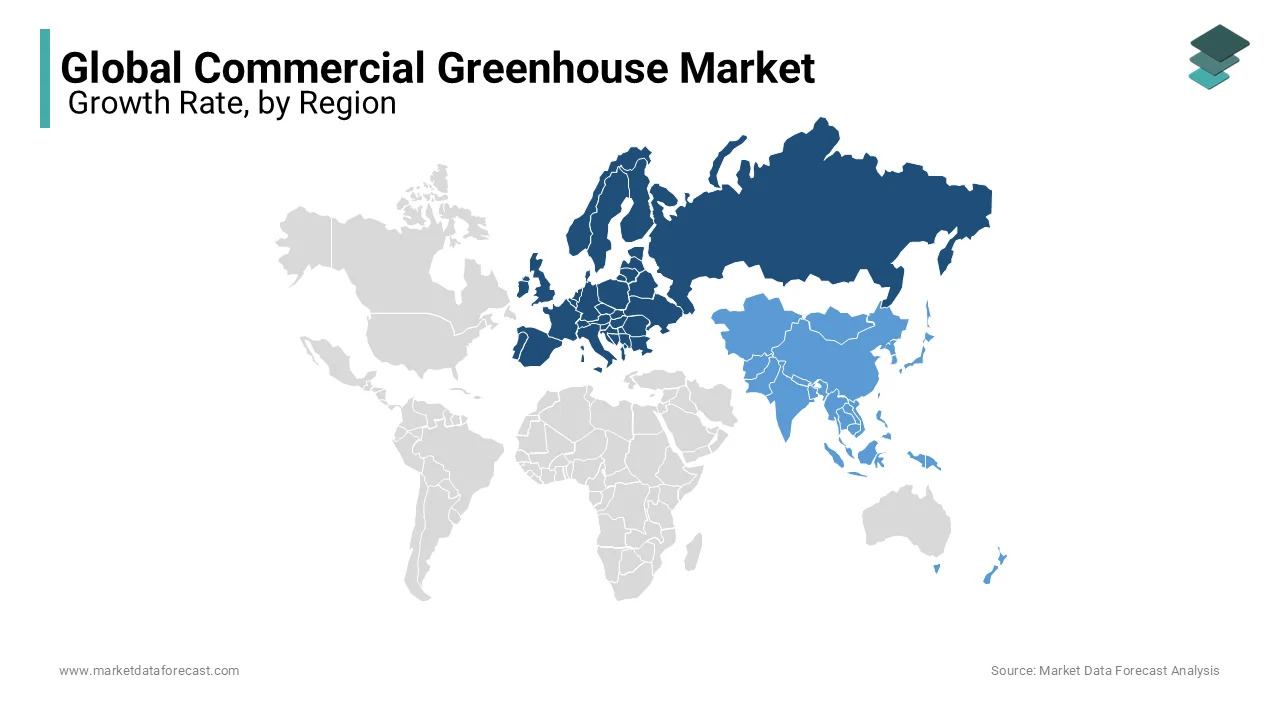
The European region is anticipated to advance its focus on automation, energy self-sufficiency, and highly integrated sustainability policies in controlled environment farming over the next few years. According to Eurostat, the Netherlands alone accounts for over 40% of European greenhouse vegetable exports, demonstrating the region's leadership in high technology controlled environment agriculture. According to the European Environment Agency, greenhouse operators increasingly adopt circular economy principles, utilizing waste heat from industrial processes and recapturing carbon dioxide for crop enhancement applications. Regulatory frameworks promoting reduced pesticide usage and water conservation drive adoption of integrated pest management and recirculating irrigation systems across member states. According to the European Commission, research funding programs such as Horizon Europe allocate substantial resources to developing climate resilient greenhouse technologies and resource efficient cultivation methods. Urban agriculture initiatives in major metropolitan centers expand market opportunities for localized production facilities that minimize transportation emissions and enhance food system resilience.
Asia Pacific Market Analysis
The Asia Pacific region is projected to lead global capacity expansions and witness unprecedented infrastructure deployment across emerging economic hubs over the next few years. According to the Food and Agriculture Organization, China and India have implemented national programs supporting greenhouse infrastructure development, with subsidy schemes covering 30 to 50% of capital investment costs for qualified projects. Urbanization trends concentrating over 50% of the regional population in metropolitan areas intensify demand for proximate fresh produce sources, creating opportunities for peri urban greenhouse facilities. According to the Asian Development Bank, improved rural broadband connectivity enables adoption of precision agriculture software and remote monitoring systems across small and medium scale operations. Climate variability challenges including monsoon unpredictability and extreme heat events accelerate adoption of controlled environment cultivation as a risk mitigation strategy. Regional trade agreements facilitate cross border technology transfer and equipment sourcing, reducing capital barriers for greenhouse infrastructure deployment across emerging economies.
COMPETITIVE LANDSCAPE
The commercial greenhouse market features a moderately consolidated competitive landscape characterized by established technology providers and specialized engineering firms competing on innovation, service quality, and geographic reach. Leading participants differentiate through integrated solution offerings that combine structural design, climate control, irrigation, and digital management platforms into cohesive operational frameworks. Competitive intensity varies by region with mature markets emphasizing technology upgrades and efficiency improvements while emerging economies focus on infrastructure deployment and capacity building. Price competition remains secondary to performance reliability and total cost of ownership considerations given the capital intensive nature of greenhouse investments. Strategic collaborations between equipment manufacturers, software developers, and research institutions accelerate technology adoption and knowledge transfer across the sector. New entrants face barriers related to technical expertise, customer relationships, and capital requirements for large scale project execution. Market participants increasingly emphasize sustainability credentials and resource efficiency metrics to align with regulatory expectations and evolving customer preferences across diverse agricultural applications.
KEY MARKET PLAYERS
These are some of the major key players involved in the global commercial greenhouse market.
- Sotrafa
- Berry Global
- NETAFIM
- Priva Group
- Certhon
- Richeal Group, SA
- Stuppy Greenhouse
- Argus Control Systems Ltd.
- The Glasshouse Company
- Luiten Greenhouse B.V.
- Agra Tech, Inc.
Top Three Players In The Market
- Richel Group SA maintains a prominent position in the global commercial greenhouse market through comprehensive engineering solutions and turnkey facility deployment capabilities. The company specializes in designing and constructing high technology greenhouse structures that integrate advanced climate control, irrigation, and automation systems for commercial scale operations. Recent strategic initiatives include partnerships with technology providers to enhance digital monitoring platforms and expand service offerings in emerging markets. Richel Group actively participates in research collaborations focused on resource efficient cultivation methods and climate adaptive greenhouse designs. The organization emphasizes sustainability through modular construction approaches that minimize material waste and facilitate facility expansion. Client engagements span diverse crop portfolios including vegetables, flowers, and research applications across multiple geographic regions.
- Priva Group contributes significantly to the commercial greenhouse sector through innovative climate control and resource management technologies that optimize growing conditions and operational efficiency. The company develops integrated software platforms that enable precise monitoring and adjustment of temperature, humidity, carbon dioxide levels, and irrigation schedules across large scale facilities. Recent actions include expanding cloud based analytics capabilities and enhancing interoperability with third party equipment through open application programming interfaces. Priva Group invests in research and development focused on energy efficient climate solutions and artificial intelligence driven decision support tools. The organization maintains a global service network providing installation, commissioning, and technical support to commercial greenhouse operators. Strategic partnerships with equipment manufacturers and research institutions accelerate technology adoption and knowledge transfer across the controlled environment agriculture sector.
- Argus Control Systems Limited supports commercial greenhouse operations through advanced environmental control hardware and software solutions that enable precise cultivation management. The company specializes in developing scalable control architectures that integrate sensors, actuators, and user interfaces for monitoring and adjusting greenhouse conditions in real time. Recent initiatives include enhancing mobile application functionality for remote facility management and expanding data analytics capabilities for predictive climate optimization. Argus Control Systems emphasizes system reliability and ease of use through intuitive interfaces and robust communication protocols. The organization collaborates with greenhouse manufacturers and technology providers to ensure seamless integration of control systems within diverse facility configurations. Client support services include training programs, technical documentation, and responsive maintenance assistance to maximize operational uptime and cultivation performance.
Top Strategies Used By Key Market Participants
Key players in the commercial greenhouse market prioritize technology integration through strategic partnerships with software developers and equipment manufacturers to deliver comprehensive controlled environment solutions. Companies invest heavily in research and development focused on energy efficiency, automation, and data analytics to enhance operational productivity and resource optimization. Market participants expand geographic presence through localized manufacturing facilities and regional service centers to reduce delivery timelines and support customer requirements. Strategic acquisitions enable technology portfolio diversification and access to specialized expertise in emerging cultivation methods. Companies emphasize sustainability credentials through circular economy practices, renewable energy integration, and water conservation technologies that align with regulatory expectations and consumer preferences. Customer centric service models including training programs, technical support, and performance monitoring enhance client retention and long term partnership value.
MARKET SEGMENTATION
This research report on the global commercial greenhouse market is segmented and sub-segmented into the following categories.
By Type
- Glass Greenhouse
- Horticulture Glass
- Others
- Plastic Greenhouse
- Polyethylene
- Polycarbonate
- Polymethyl-methacrylate
By Offering
- Hardware
- Climate Control Systems
- Lighting Systems
- Irrigation Systems
- Sensors
- Others
- Software
- Cloud-based
- Web-based
- Services
- System Integration & Consulting
- Managed Services
- Assisted Professional Services
By Crop Type
- Fruits and Vegetables
- Tomato
- Lettuce
- Bell and Chilli Pepper
- Strawberry
- Cucumber
- Herbs
- Flowers and Ornamentals
- Perennials
- Annuals
- Ornamentals
By End-User
- Commercial Growers
- Research and Educational Institutes
- Retail Gardens
- Others
By Region
- North America
- Europe
- Asia Pacific
- Latin America
- Middle East and Africa