- Product Description Description
- Table of Contents TOC
- List of Table & Figure LOT
- Get Free Sample PDF Sample PDF
Market Size, 2025
$1.89 BnMarket Estimate, 2026
$2.03 BnMarket Forecast, 2034
$3.71 BnCAGR, 2026–2034
7.8%Global Hysteroscopy Instruments Market Report: Size, Share, Trends & Forecast (2026–2034)
- Market Scope: Comprehensive global industry evaluation covering product classes (hysteroscopes, resectoscopes, handheld tools), usability types, diagnostic/operative applications, end-user settings, and regional distributions.
- Market Valuation: Valued at USD 1.89 billion in 2025, estimated at USD 2.03 billion in 2026, and projected to reach USD 3.71 billion by 2034, registering a strong compound annual growth rate (CAGR) of 7.8% from 2026 to 2034.
- Primary Growth Drivers: Rising incidence of gynecological disorders (such as abnormal uterine bleeding, polyps, and fibroids), preference shifts toward minimally invasive and office-based procedures, and technological innovations including miniaturized scopes, 3D imaging, and high-definition visualization systems.
Global Hysteroscopy Instruments Market Segment Metrics (2026–2034)
| Category | Leading Segment / Position | Fastest-Growing Segment |
|---|---|---|
| By Product | Hysteroscopes (accounts for a major market share due to critical diagnostic necessity and optical advancements) | Resectoscopes & Handheld Instruments (growing on increased demand for specialized tissue removal and myomectomy) |
| By Usability | Reusable Instruments (maintains a substantial base share across traditional hospital surgical suites) | Disposable Instruments (accelerating fastest due to cross-contamination risk reduction and outpatient efficiency) |
| By Application | Operative Hysteroscopy (dominates revenue contribution through therapeutic interventions like polypectomy and myomectomy) | Operative & Diagnostic Interventions (expanding via early preventive care frameworks and specialized fertility clinics) |
| By End-User | Hospitals (captured the largest share backed by advanced infrastructure and complex surgical capabilities) | Ambulatory Surgery Centers & Clinics (registering high growth driven by the shift toward office-based gynecology) |
| By Region | North America (led global deployment supported by high healthcare expenditure, established systems, and favorable reimbursement) | Asia-Pacific (projected to record the highest CAGR driven by surging healthcare infrastructure, medical tourism, and a large population base) |
Major Global Hysteroscopy Instruments Market Players & Industry Structure
Market Structure: A competitive medical technology landscape dominated by multinational device manufacturers emphasizing visualization precision, ergonomic miniaturization, and broad portfolios encompassing both rigid/flexible diagnostic scopes and single-use operational components.
Key Companies: KARL STORZ, Olympus, Richard Wolf, Stryker, Hologic, Medtronic, Ethicon, B. Braun, Boston Scientific, MedGyn Products, CooperSurgical, Cook Medical, Medicon, Maxer Medizintechnik, and Hospiline Equipments.
 Download Free Sample Report
Global Hysteroscopy Instruments Market Size
The global hysteroscopy instruments market stood at USD 1.89 billion in 2025 and is expected to reach USD 2.03 billion in 2026, expanding to USD 3.71 billion by 2034, registering a CAGR of 7.8% from 2026 to 2034.

The hysteroscopy instruments market is pivotal in modern gynecological care, offering alternatives to major abdominal surgeries for conditions such as abnormal uterine bleeding and intrauterine adhesions. According to the American College of Obstetricians and Gynecologists, hysteroscopy is considered the gold standard for diagnosing intrauterine abnormalities due to its high accuracy and direct visualization capabilities. This clinical preference drives consistent demand for advanced hysteroscopes and associated operative instruments. According to the Centers for Disease Control and Prevention, approximately 14% of women of reproductive age experience abnormal uterine bleeding, which creates a substantial patient pool requiring diagnostic and therapeutic intervention. These statistics underscore the critical need for efficient and precise hysteroscopic tools in healthcare settings. The shift toward outpatient procedures further amplifies the requirement for compact and user-friendly instrument designs. As healthcare providers prioritize patient recovery times and reduced hospital stays, the adoption of hysteroscopy continues to expand. This market ensures that gynecologists have access to reliable technologies for managing complex uterine conditions with minimal invasiveness and optimal clinical outcomes.
MARKET DRIVERS
Rising Prevalence of Uterine Pathologies and Abnormal Bleeding
The increasing incidence of uterine disorders primarily drives the hysteroscopy instruments market forward. According to the World Health Organization, uterine fibroids affect up to 70% of white women and 80% of black women by age 50, creating a vast demographic requiring regular monitoring and intervention. This widespread prevalence necessitates frequent use of hysteroscopic devices for both diagnosis and myomectomy procedures. According to the Journal of Minimally Invasive Gynecology, endometrial polyps are found in approximately 25% of women undergoing evaluation for abnormal uterine bleeding. These findings highlight the critical role of hysteroscopy in identifying and removing benign growths that impact quality of life. The aging population in developed regions further contributes to the rising burden of endometrial hyperplasia and cancer, which require precise histological sampling via hysteroscopy. Healthcare systems are increasingly adopting hysteroscopy as a first-line diagnostic tool to avoid unnecessary hysterectomies. This clinical shift drives hospitals to invest in high-definition hysteroscopes and disposable instrumentation kits. The direct correlation between disease prevalence and procedural volume ensures sustained demand for innovative hysteroscopic solutions across global healthcare facilities.
Shift Toward Minimally Invasive and Outpatient Procedures
The growing preference for minimally invasive surgical techniques significantly boosts the growth of the hysteroscopy instruments market by reducing healthcare costs and improving patient satisfaction. According to the Society of Gynecologic Surgeons, hysteroscopic procedures can be performed in outpatient settings with local anesthesia, reducing recovery time from weeks to days. This efficiency appeals to both patients and payers who seek cost-effective alternatives to traditional laparotomy or hysterectomy. According to the American Association of Gynecologic Laparoscopists, over 60% of diagnostic hysteroscopies are now conducted in office-based settings rather than operating rooms. This trend drives demand for portable and easy-to-sterilize hysteroscopic instruments suitable for clinic environments. Manufacturers are responding by developing smaller-diameter scopes and integrated fluid management systems that enhance safety and ease of use. The ability to perform immediate therapeutic interventions during diagnostic exams reduces the need for multiple visits and additional surgeries. Hospitals are prioritizing the procurement of advanced hysteroscopic towers that support high-resolution imaging and seamless data integration. This operational advantage reinforces the market position of hysteroscopy as a preferred modality for gynecological care.
MARKET RESTRAINTS
High Cost of Advanced Hysteroscopic Equipment
The substantial financial investment required for acquiring advanced hysteroscopic systems is a significant restraint on the hysteroscopy instruments market. As per the Healthcare Financial Management Association, a complete high-definition hysteroscopic tower with integrated video processing can cost between 30,000 and 50,000 dollars, posing a barrier for smaller clinics and rural hospitals. These high upfront costs limit the accessibility of state-of-the-art diagnostic tools in resource-constrained settings. According to the Journal of Clinical Economics, maintenance and repair expenses for delicate optical components can add 10% to 15% to the annual operational budget. This ongoing financial burden discourages some healthcare providers from upgrading their equipment regularly. Budget constraints often force institutions to rely on older-generation devices that may lack superior imaging capabilities or ergonomic features. The high cost of disposable accessories such as sheaths and electrodes further increases the per-procedure expense. Insurance reimbursement rates for outpatient hysteroscopy do not always cover the full cost of premium instruments, affecting profitability. Consequently, many facilities delay purchases or opt for refurbished equipment, slowing the adoption of new technologies. This economic barrier restricts market penetration in lower-income regions and smaller private practices.
Risk of Procedural Complications and Safety Concerns
The potential for serious complications associated with hysteroscopic procedures further inhibits the global market growth. According to the American Journal of Obstetrics and Gynecology, uterine perforation occurs in approximately 1% to 2% of operative hysteroscopies, leading to potential legal liabilities and increased insurance premiums for practitioners. These safety concerns make some clinicians hesitant to adopt complex operative hysteroscopy without extensive training. Furthermore, according to the Society for Gynecologic Endoscopy, fluid overload syndrome, although rare, remains a critical risk during prolonged resectoscopic procedures. This complication requires rigorous monitoring systems and trained staff, adding to the operational complexity of hysteroscopic suites. The fear of adverse events influences hospital purchasing decisions, often favoring established brands with proven safety records over newer entrants. Regulatory bodies impose strict guidelines on device design and usage protocols to mitigate these risks, increasing compliance costs for manufacturers. Patient anxiety regarding potential complications can also reduce the willingness to undergo hysteroscopic procedures, affecting procedural volumes. Manufacturers must invest heavily in safety features such as pressure monitoring and automatic shut-off mechanisms. These requirements increase product development costs and time-to-market, restraining rapid innovation and expansion.
MARKET OPPORTUNITIES
Integration of Digital Imaging and Artificial Intelligence
The incorporation of digital imaging and artificial intelligence into hysteroscopic systems is a substantial opportunity for the hysteroscopy instruments market. According to the Radiological Society of North America, AI algorithms can assist in real-time detection of endometrial lesions, improving diagnostic accuracy and reducing operator dependency. This technological enhancement attracts healthcare institutions aiming to standardize care quality and minimize diagnostic errors. According to the Journal of Medical Internet Research, cloud-based storage of hysteroscopic videos facilitates remote consultation and second opinions, expanding access to specialized care. These digital capabilities create new revenue streams through software subscriptions and data analytics services. Manufacturers are developing smart hysteroscopes with enhanced image processing and automated reporting features. This innovation differentiates products in a competitive market and appeals to tech-savvy practitioners. The ability to integrate hysteroscopic data with electronic health records improves workflow efficiency and patient management. Hospitals are increasingly willing to invest in digital platforms that offer long-term value beyond hardware functionality. This convergence of optics and informatics opens avenues for partnerships with technology firms and drives continuous product evolution.
Expansion into Emerging Markets with Improving Healthcare Infrastructure
The rapid development of healthcare infrastructure in emerging economies offers a notable opportunity for the hysteroscopy instruments market. According to the World Bank, healthcare expenditure in countries like India and Brazil has grown by over 8% annually, enabling greater investment in diagnostic equipment. This financial growth allows hospitals in these regions to upgrade from basic diagnostic tools to advanced operative hysteroscopic systems. Additionally, according to the International Federation of Gynecology and Obstetrics, training programs for minimally invasive gynecological surgery are expanding in Asia and Latin America. These initiatives create a skilled workforce capable of utilizing sophisticated hysteroscopic instruments effectively. Local governments are prioritizing women's health initiatives, leading to increased screening and treatment of uterine conditions. Manufacturers are introducing cost-effective models tailored to the needs of these markets without compromising essential features. Partnerships with local distributors facilitate market entry and after-sales support. The large untreated patient population in emerging regions represents a significant untapped demand for hysteroscopic procedures. As awareness of minimally invasive options grows, the adoption rate of hysteroscopy is expected to rise sharply. This geographic expansion diversifies revenue sources and reduces dependence on saturated mature markets.
MARKET CHALLENGES
Stringent Regulatory Requirements for Device Approval
Strict regulatory standards for medical device approval are a major challenge to the hysteroscopy instruments market. The Food and Drug Administration mandates rigorous clinical data and biocompatibility testing for new hysteroscopic devices, which can delay market entry by several years. According to the Medical Device Innovation Consortium, the average time for premarket approval of Class II gynecological devices exceeds 18 months, impacting the speed of innovation commercialization. These delays hinder manufacturers from quickly capitalizing on emerging clinical trends and technological advancements. Additionally, the European Union Medical Device Regulation imposes stricter post-market surveillance requirements, increasing operational costs for companies selling in Europe. Compliance with varying global regulations requires dedicated resources and expertise, burdening smaller manufacturers. The complexity of demonstrating substantial equivalence for modified devices adds layers of difficulty to the approval pathway. Changes in regulatory guidelines often necessitate redesigns or additional testing, further extending timelines. This regulatory environment can discourage investment in novel device development due to uncertainty regarding approval outcomes. Consequently, the pace of new product launches may slow down, limiting the variety of options available to clinicians. Companies must navigate these complexities carefully, which diverts resources from research and development activities.
Shortage of Skilled Professionals for Operative Hysteroscopy
The limited availability of trained professionals proficient in operative hysteroscopy poses a significant challenge to the hysteroscopy instruments market. According to the American Board of Obstetrics and Gynecology, fellowship training in minimally invasive gynecologic surgery is available in only a fraction of residency programs, resulting in a shortage of highly skilled specialists. This workforce gap restricts the number of facilities that can offer complex hysteroscopic procedures safely. According to the Journal of Surgical Education, the learning curve for operative hysteroscopy is steep, requiring extensive hands-on practice to master fluid management and tissue resection techniques. The scarcity of trained personnel means that even hospitals equipped with advanced devices may underutilize them. This limitation affects patient access to specialized care and reduces the overall utilization rate of hysteroscopic instruments. Healthcare systems face difficulties in maintaining consistent service levels due to staffing shortages. The lack of adequate human resources hampers the market potential as device manufacturers cannot fully realize sales opportunities without a corresponding base of skilled users. Addressing this training deficit requires substantial investment in simulation-based education and mentorship programs. Until this gap is closed, the market growth will remain constrained by human resource limitations.
REPORT COVERAGE
| REPORT METRIC | DETAILS |
| Market Size Available | 2026 to 2034 |
| Base Year | 2025 |
| Forecast Period | 2026 to 2034 |
| Segments Covered | By Product, Usability, Application, End-User, Region |
| Various Analyses Covered | Global, Regional & Country-Level Analysis, Segment-Level Analysis; DROC, PESTLE Analysis, Porter's Forces Analysis, Competitive Landscape, Analyst Overview of Investment Opportunities |
| Regions Covered | North America, Europe, APAC, Latin America, Middle East & Africa |
| Market Leader Profiled | KARL STORZ, Olympus, Richard Wolf, Stryker, Hologic, Medtronic, Ethicon |
SEGMENTAL ANALYSIS
By Product Insights
The hysteroscope segment dominated the hysteroscopy instruments market by capturing the highest share of the global market in 2025 due to its fundamental role as the primary visualization tool in all diagnostic and operative procedures. According to the American College of Obstetricians and Gynecologists, direct visual inspection via hysteroscope is the gold standard for evaluating intrauterine pathology, ensuring its ubiquitous presence in gynecological practices. This clinical mandate drives consistent procurement of both rigid and flexible scopes across healthcare facilities. According to the Journal of Minimally Invasive Gynecology, over 90% of outpatient hysteroscopic evaluations utilize high-definition rigid hysteroscopes due to their superior image quality and durability. This preference for rigid systems sustains high demand for premium optical instruments with enhanced resolution capabilities. The transition toward office-based hysteroscopy has also increased the adoption of smaller-diameter scopes that require less cervical dilation. Manufacturers are continuously innovating with chip-on-tip technology to improve image clarity while reducing device size. The essential nature of the hysteroscope as the core component of the procedure ensures it remains the largest revenue generator. Hospitals prioritize investing in advanced hysteroscopic towers that integrate seamlessly with video processing units. The widespread training of residents in hysteroscopic techniques further cements the dominance of this product segment. As procedural volumes rise, the replacement and upgrade cycle for hysteroscopes drives sustained market leadership.
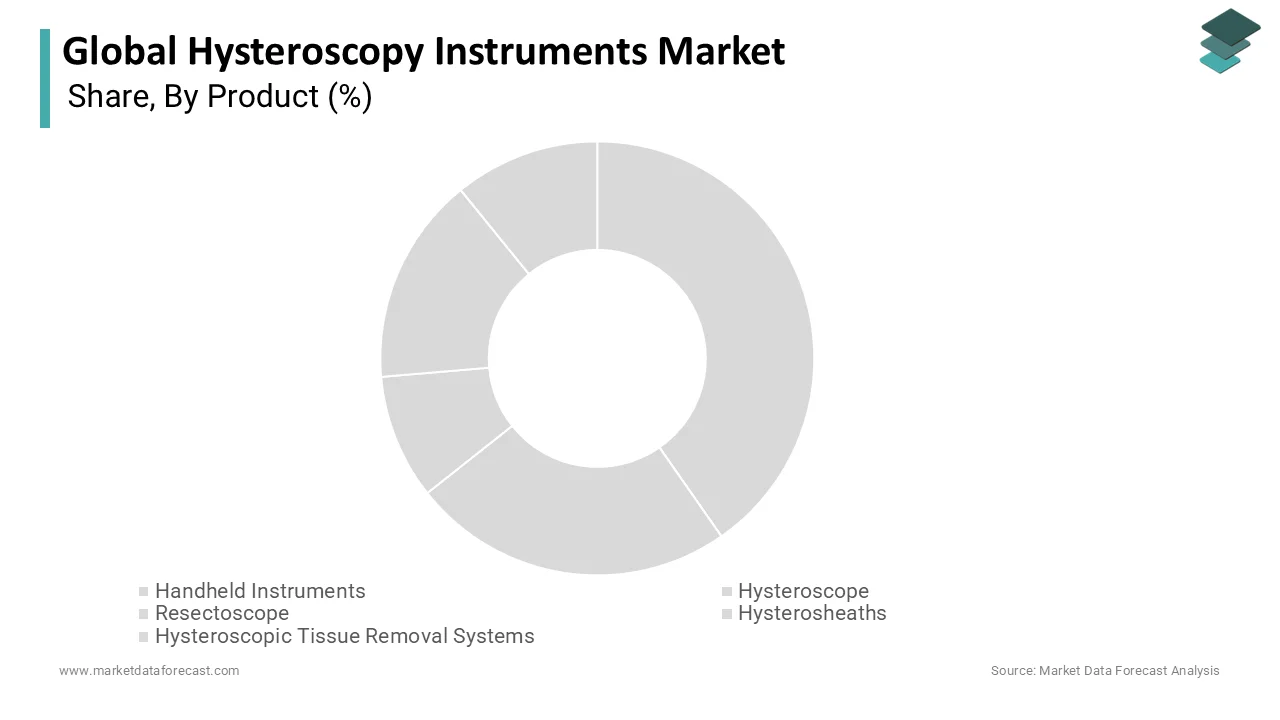
On the other side, the hysteroscopic tissue removal systems segment is estimated to record a promising CAGR of 15.4% over the forecast period in the global market owing to their efficiency in managing complex intrauterine pathologies. According to the Society of Gynecologic Surgeons, mechanical tissue removal systems reduce operative time by up to 40% compared to traditional resectoscopic methods, appealing to surgeons seeking improved workflow efficiency. This time savings allows for higher patient throughput and reduced anesthesia exposure. According to the American Journal of Obstetrics and Gynecology, tissue removal systems significantly lower the risk of fluid overload complications by minimizing the need for continuous irrigation during myomectomy. This safety advantage encourages wider adoption in both hospital and ambulatory settings. The ability to remove large fibroids in pieces without morcellation outside the body reduces the risk of tissue dissemination. Manufacturers are introducing single-use disposable blades and sheaths that enhance convenience and reduce sterilization burdens. The growing prevalence of uterine fibroids necessitates effective surgical solutions that preserve fertility, driving demand for these advanced systems. Insurance reimbursement policies increasingly favor minimally invasive techniques with proven safety profiles, supporting market growth. As more clinicians become trained in using these devices, the segment continues to outpace traditional instrument categories.
By Usability Insights
The reusable instruments segment occupied the largest share of the global market in 2025. The dominance of the reusable instruments segment in the global market can be credited to their cost-effectiveness and environmental sustainability in high-volume settings. According to the Healthcare Financial Management Association, reusable hysteroscopes and forceps can reduce per-procedure costs by up to 60% compared to single-use alternatives over their lifespan. This economic advantage makes them the preferred choice for large hospitals and academic centers with high procedural volumes. According to the Association for the Advancement of Medical Instrumentation, proper sterilization protocols ensure reusable devices maintain structural integrity and performance for hundreds of cycles. This durability supports long-term return on investment for healthcare providers. The established infrastructure for central sterile supply departments facilitates efficient cleaning and maintenance of reusable instruments. Many surgeons prefer the tactile feedback and weight balance of high-quality reusable steel instruments over plastic disposables. Regulatory guidelines support the reuse of critical devices when validated sterilization methods are employed. The lower carbon footprint associated with reusable instruments aligns with hospital sustainability goals. Despite the rise of disposables, the financial pressure on healthcare systems ensures that reusable instruments remain the dominant choice for routine diagnostic and minor operative procedures.
On the other hand, the disposable instruments segment is the fastest-growing segment in the global hysteroscopy instruments market and is predicted to witness a CAGR of 13.3% over the forecast period owing to the growing concerns about infection control and operational efficiency. According to the Centers for Disease Control and Prevention, healthcare-associated infections affect approximately 1 in 31 hospital patients, driving strict adherence to sterile processing standards that favor single-use devices. This focus on patient safety eliminates the risk of cross-contamination between patients. According to the Journal of Hospital Infection, the cost of reprocessing reusable instruments, including labor, water, and energy,y can exceed the purchase price of disposable equivalents in low-volume settings. This economic shift encourages small clinics and ambulatory surgery centers to adopt disposable hysteroscopes and accessories. The convenience of ready-to-use devices reduces turnaround time between procedures and eliminates storage requirements for sterile inventory. Manufacturers are developing eco-friendly disposable materials to address environmental concerns. The rise of office-based hysteroscopy, py where sterilization facilities may be limited, further accelerates the adoption of disposables. Regulatory bodies are increasingly scrutinizing sterilization validation processes, making disposables an attractive compliance solution. As procedural volumes shift to outpatient settings, the demand for disposable instruments continues to surge.
By Application Insights
The diagnostic segment captured the dominant share of the global hysteroscopy instruments market in 2025 due to the high prevalence of abnormal uterine bleeding and the need for accurate initial evaluation. According to the Centers for Disease Control and Prevention, approximately 14% of women of reproductive age suffer from abnormal uterine bleeding, creating a vast patient pool requiring diagnostic hysteroscopy. This high incidence rate ensures consistent demand for diagnostic scopes and biopsy forceps. Furthermore, according to the American College of Obstetricians and Gynecologists, hysteroscopy is recommended as the first-line diagnostic tool for evaluating intrauterine abnormalities detected by ultrasound or sonohysterography. This guideline-driven approach standardizes the use of diagnostic hysteroscopy across clinical practices. The ability to directly visualize the endometrial cavity allows for precise identification of polyps, fibroids, and adhesions. Diagnostic procedures are often performed in office settings with minimal anesthesia, increasing accessibility and patient acceptance. The low risk profile of diagnostic hysteroscopy encourages early intervention and monitoring. Insurance coverage for diagnostic evaluations is generally comprehensive, supporting financial viability for providers. As awareness of uterine health increases, more women seek diagnostic evaluations for symptoms such as infertility and pelvic pain. This broad application base sustains the leading position of diagnostic hysteroscopy in the market.
However, the operative segment is predicted to showcase a prominent CAGR of 14.1% over the forecast period in the global market owing to the shift from hysterectomy to uterus-preserving surgeries. According to the World Health Organization, uterine fibroids are the most common benign tumors in women, with millions of procedures performed annually to manage symptoms. This high burden drives demand for operative hysteroscopic tools such as resectoscopes and morcellators. According to the Journal of Minimally Invasive Gynecology, hysteroscopic myomectomy and polypectomy have replaced open surgeries in over 70% of eligible cases due to faster recovery and lower complication rates. This trend encourages hospitals to invest in advanced operative instrumentation. The development of bipolar resection technology has improved safety by reducing thermal injury risks, expanding the scope of operable conditions. Surgeons are increasingly performing complex procedures such as septum resection and adhesiolysis using hysteroscopic techniques. Training programs are focusing on operative skills to meet the growing demand for specialized care. Reimbursement policies favor minimally invasive operative procedures that reduce hospital stay durations. As technological advancements enable safer and more efficient tissue removal, the operative segment continues to accelerate its growth trajectory.
COUNTRY LEVEL ANALYSIS
North America Hysteroscopy Instruments Market Analysis
North America had a significant share of the global market in 2025 and is likely to maintain its strong market growth trajectory over the next few years due to continuous advancements in healthcare technology and steady procedural volumes. North America holds the dominant position in the global Hysteroscopy Instruments Market due to its advanced healthcare infrastructure and high adoption of minimally invasive gynecological techniques. According to the American College of Obstetricians and Gynecologists, over 500,000 hysteroscopic procedures are performed annually in the United States, creating substantial demand for high-quality instruments. This high procedural volume drives continuous innovation and product launches by major manufacturers. Furthermore, according to the Centers for Medicare and Medicaid Services, robust reimbursement coverage is provided for both diagnostic and operative hysteroscopy, ensuring financial viability for healthcare providers. This supportive payment environment encourages hospitals and clinics to invest in state-of-the-art hysteroscopic towers and disposable accessories. The presence of leading medical device companies in the region fosters strong distribution networks and after-sales support. High patient awareness of uterine health issues leads to early diagnosis and treatment. The regulatory framework managed by the Food and Drug Administration ensures high safety and efficacy standards for marketed devices. Academic institutions in North America drive clinical research and training in advanced hysteroscopic techniques. These factors collectively sustain the region's leadership in the global market.
Europe Hysteroscopy Instruments Market Analysis
Europe is likely to experience steady and resilient market expansion over the next few years, supported by rigorous regulatory compliance and aging demographic trends. Europe occupies a significant share of the Hysteroscopy Instruments M,arket characterized by strong regulatory standards and universal healthcare coverage. According to the European Society of Gynaecological Endoscopy, hysteroscopy is widely integrated into national healthcare guidelines across member states, ensuring consistent access to diagnostic and therapeutic procedures. This standardization drives steady demand for compliant and high-quality instruments. Additionally, according to the National Health Service in the United Kingdom, an emphasis is placed on cost-effective outpatient treatments, promoting the use of office hysteroscopy and disposable instruments. This focus on efficiency supports the growth of the disposable segment in the region. Countries like Germany and France have well-established gynecological care networks with high utilization rates of minimally invasive surgeries. The European Union Medical Device Regulation imposes strict quality controls, encouraging manufacturers to maintain high production standards. Collaborative research initiatives among European universities foster innovation in hysteroscopic technologies. The aging population in Europe increases the prevalence of uterine pathologies, sustaining long-term demand. While budget constraints exist in some countries, the overall commitment to women's health ensures a stable market environment.
Asia-Pacific Hysteroscopy Instruments Market Analysis
Asia-Pacific is likely to witness the fastest regional growth over the next few years, driven by rapidly expanding healthcare expenditure and rising patient awareness. The Asia-Pacific region represents a rapidly growing segment in the Hysteroscopy Instruments Market driven by improving healthcare infrastructure and rising awareness of women's health. According to the World Health Organization, healthcare expenditure in countries like China and India has grown by over 10% annually, enabling greater investment in diagnostic equipment. This financial growth allows hospitals to upgrade from basic diagnostic tools to advanced operative hysteroscopic systems. Additionally, according to the International Federation of Gynecology and Obstetrics, training programs for minimally invasive gynecological surgery are expanding across the region. These initiatives create a skilled workforce capable of utilizing sophisticated hysteroscopic instruments effectively. The large population base with a high prevalence of uterine fibroids and infertility creates significant untapped demand. Governments are prioritizing maternal and reproductive health initiatives, leading to increased screening and treatment. Local manufacturers are emerging to provide cost-effective alternatives to imported devices. The rise of medical tourism in countries like Thailand and Singapore drives demand for high-quality private healthcare services. As insurance coverage expands and out-of-pocket payments decrease, access to hysteroscopic procedures improves. This dynamic environment supports rapid market expansion in the Asia-Pacific region.
Latin America Hysteroscopy Instruments Market Analysis
Latin America is likely to achieve gradual market acceleration over the next few years as public sector healthcare modernization initiatives take effect. Latin America holds a smaller but growing share of the Hysteroscopy Instruments Market, characterized by gradual improvements in healthcare access and regulatory alignment. According to the Pan American Health Organization, several countries in the region are updating their medical device regulations to facilitate the import and registration of advanced gynecological instruments. This regulatory progress encourages international manufacturers to enter the market. Additionally, according to the Brazilian Ministry of Health, programs have been initiated to support minimally invasive surgeries in public hospitals, fostering a nascent demand for hysteroscopic equipment. While private healthcare sectors in countries like Mexico and Colombia lead in adopting advanced technologies, public sector adoption is slowly increasing. The high prevalence of uterine fibroids and limited access to hysterectomy services in rural areas creates a need for uterus-preserving options. Economic challenges remain a barrier to rapid growth, but increasing foreign investment in healthcare infrastructure is mitigating these issues. Regional partnerships with global pharmaceutical and device companies help bridge technology gaps. The focus on improving maternal health outcomes drives government interest in modernizing gynecological care. Latin America is gradually integrating into the global hysteroscopy market with potential for future acceleration.
Middle East and Africa Hysteroscopy Instruments Market Analysis
Middle East and Africa is likely to register progressive market development over the next few years driven by strategic healthcare investments and national transformation projects. The Middle East and Africa region represents a nascent segment in the Hysteroscopy Instruments Market with potential for future growth driven by strategic healthcare investments. According to the Gulf Cooperation Council, countries like Saudi Arabia and the United Arab Emirates are investing billions in healthcare transformation projects that include women's health and minimally invasive surgery capabilities. These initiatives lay the groundwork for increased adoption of hysteroscopic instruments in both public and private sectors. Additionally, according to the African Union, initiatives have been launched to strengthen reproductive health services, which may eventually encompass advanced diagnostic tools like hysteroscopes. Currently, the region relies heavily on imports for hysteroscopic devices due to limited local manufacturing capacity. However, growing awareness of uterine health and increasing collaboration with international medical institutions are raising interest in the field. The high prevalence of infectious diseases and genetic conditions in specific populations creates a targeted demand for accurate diagnostic tools. Regulatory bodies are beginning to develop guidelines for medical devices, although implementation varies by country. As economic diversification efforts continue, the region may see increased investment in specialized gynecological care. The market remains in early stages but shows signs of long-term potential as healthcare infrastructure matures.
COMPETITIVE LANDSCAPE
The competition in the Hysteroscopy Instruments Market is characterized by intense rivalry among established medical device manufacturers and emerging specialized firms. Major players compete on the basis of technological superiority, product durability, and comprehensive service offerings. The market features a mix of large multinational corporations and niche manufacturers focusing on specific instrument types such as resectoscopes or disposable scopes. Continuous innovation drives competitive dynamics as companies strive to launch devices with improved image quality and ease of use. Regulatory hurdles create barriers to entry but also encourage high standards of quality and performance. Price competition remains moderate due to the critical nature of the devices and the preference for proven reliability. Collaborative efforts between manufacturers and healthcare providers shape product development priorities and adoption patterns. Intellectual property disputes occasionally arise as firms protect their proprietary designs and manufacturing processes. The landscape is further influenced by consolidation activities where larger entities acquire smaller firms to broaden their portfolios. This dynamic environment pushes companies to differentiate through unique value propositions and strong clinical support networks, ensuring sustained growth and market relevance.
KEY MARKET PLAYERS
Some of the companies that are playing a dominating role in the Global Hysteroscopy Instruments Market include:
- KARL STORZ
- Olympus
- Richard Wolf
- Stryker
- Hologic
- Medtronic
- Ethicon
- B. Braun
- Boston Scientific
- MedGyn Products
- CooperSurgical
- Cook Medical
- Medicon
- Maxer Medizintechnik
- Hospiline Equipments
TOP LEADING PLAYERS IN THE MARKET
- Karl Storz SE & Co. KG maintains a prominent position in the Hysteroscopy Instruments Market through its comprehensive portfolio of high-quality endoscopic equipment. The company is renowned for its durable rigid hysteroscopes and advanced video processing systems that deliver superior image clarity. Karl Storz recently introduced new integrated tower solutions that streamline workflow in operating rooms and outpatient clinics. These innovations enhance procedural efficiency and support the growing demand for minimally invasive gynecological surgeries. The company actively collaborates with training centers to educate surgeons on advanced hysteroscopic techniques. By focusing on ergonomic design and optical precision, Karl Storz ensures high satisfaction among clinical users. Its global distribution network provides reliable access to instruments and spare parts. The company continues to invest in research to develop next-generation visualization technologies. This commitment to excellence reinforces its reputation as a trusted partner for healthcare providers seeking reliable hysteroscopic solutions.
- Olympus Corporation contributes significantly to the market by offering innovative flexible and rigid hysteroscopes known for their durability and ease of use. The company leverages its extensive expertise in optical technology to deliver devices with enhanced visualization capabilities. Olympus recently expanded its product line with disposable hysteroscopes designed for office-based procedures to improve infection control. These products address the rising demand for single-use instruments in ambulatory settings. The company engages in strategic partnerships with healthcare institutions to drive adoption of its digital imaging platforms. Olympus focuses on developing lightweight and ergonomic instruments to reduce surgeon fatigue during prolonged procedures. Its commitment to quality assurance ensures consistent performance across all product lines. The company supports clinicians with comprehensive educational resources and technical assistance. This customer-centric approach strengthens its position as a key provider of advanced gynecological endoscopy tools in the region.
- Richard Wolf GmbH plays a vital role in the market by delivering specialized hysteroscopic instruments and resectoscopes for complex operative procedures. The company utilizes robust engineering to create devices that withstand rigorous sterilization cycles and frequent use. Richard Wolf recently launched new bipolar resection systems that enhance safety and precision during myomectomy and polypectomy. These advancements help surgeons achieve better hemostasis and reduce operative time. The company participates in international conferences to showcase its latest technological innovations and clinical outcomes. Richard Wolf also focuses on expanding its manufacturing capabilities to meet global demand for high-precision instruments. By prioritizing modularity and compatibility with existing hospital infrastructure, the company offers flexible solutions for diverse clinical needs. Its strong emphasis on German engineering quality builds trust among medical professionals. This dedication to innovation and reliability continues to influence standards of care in hysteroscopic surgery worldwide.
TOP STRATEGIES USED BY KEY MARKET PARTICIPANTS
Key players in the Hysteroscopy Instruments Market primarily focus on product innovation and strategic expansion to maintain competitive advantage. Companies invest heavily in research and development to create devices with enhanced visualization and ergonomic features. Launching disposable hysteroscopes allows firms to address infection control concerns and capture the growing outpatient segment. Strategic partnerships with training institutions facilitate surgeon education and promote adoption of advanced techniques. Mergers and acquisitions serve as another critical strategy enabling companies to broaden their product portfolios and enter new geographic markets. By acquiring specialized technology firms, established players integrate novel features such as digital imaging and AI-assisted diagnostics. Regulatory compliance is pursued through rigorous testing and adherence to global standards. Companies also prioritize customer support and service networks to build brand loyalty. These combined efforts help manufacturers strengthen their market presence and respond effectively to evolving clinical demands in the gynecological sector.
MARKET SEGMENTATION
This research report on the global hysteroscopy instruments market has been segmented based on product, usability, application, and end-user.
By Product
- Handheld Instruments
- Forceps
- Scissors
- Dilators
- Others
- Hysteroscope
- Rigid
- Flexible
- Resectoscope
- Unipolar
- Bipolar
- Hysterosheaths
- Hysteroscopic Tissue Removal Systems
By Usability
- Reusable Instruments
- Disposable Instruments
By Application
- Diagnostic
- Operative
- Myomectomy
- Polypectomy
- Endometrial Ablation
- Tubal Sterilization
By End-User
- Hospitals
- Clinics
- Ambulatory Surgery Centers
By Region
- North America
- Europe
- Asia Pacific
- Latin America
- Middle East and Africa