- Product Description Description
- Table of Contents TOC
- List of Table & Figure LOT
- Get Free Sample PDF Sample PDF
Market Size, 2025
$31.42 BnMarket Estimate, 2026
$34.78 BnMarket Forecast, 2034
$78.44 BnCAGR, 2026–2034
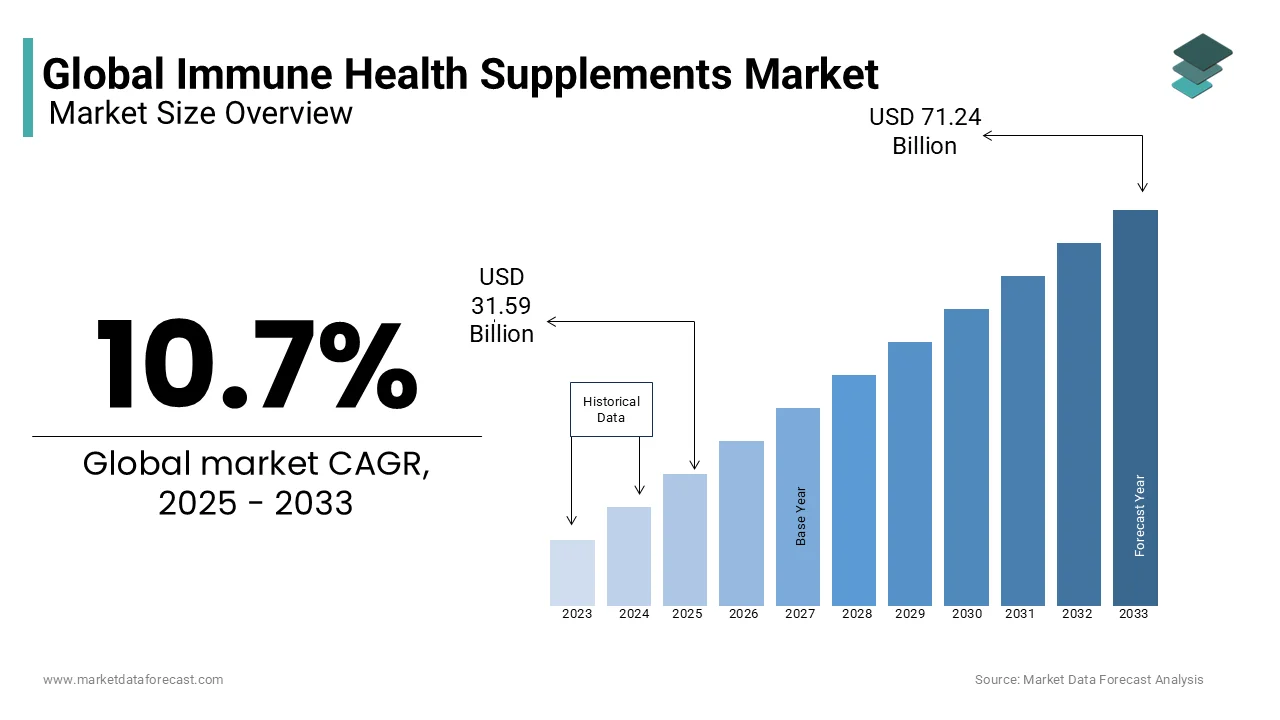
10.7%Global Immune Health Supplements Market Size
The global immune health supplements market size was valued at USD 31.42 billion in 2025 and is projected to reach USD 78.44 billion by 2034 from USD 34.78 billion in 2026, growing at a CAGR of 10.7%.
The Immune health supplements constitute a distinct segment of the dietary supplement industry, comprising formulations specifically engineered to support or modulate the human immune system through bioactive nutrients and botanicals. Key ingredients include vitamins C and D, zinc, selenium, probiotics, beta-glucans, and plant-derived compounds such as elderberry and echinacea. Global health trends and clinical evidence have significantly reinforced consumer reliance on immune-targeted formulations. As per the National Institutes of Health, vitamin D insufficiency affects an estimated 1 billion individuals worldwide, with deficient individuals facing a 36% greater likelihood of acute respiratory infections based on pooled clinical trial data. Additionally, as per the Council for Responsible Nutrition, 78% of American adults cite immune support as their foremost motivation for supplement use, surpassing other wellness goals. This alignment of public health needs, clinical validation, and proactive consumer behaviour continues to anchor the relevance and expansion of immune health supplements in preventive care strategies.
MARKET DRIVERS
Rising Global Burden of Micronutrient Deficiencies Amplifies Preventive Supplementation
Micronutrient inadequacies in vitamins A,,, C, D and zinc remain pervasive across both developed and developing regions, which is directly fueling demand for immune health supplements as a practical public health intervention. The rising global burden of micronutrient deficiencies is surging the growth of the immune health supplements market. According to the World Health Organisation, vitamin A deficiency affects approximately 190 million preschool-aged children globally, significantly impairing mucosal immunity and increasing susceptibility to infectious diseases such as measles and diarrhoea. high-income countries, suboptimal vitamin D status persists despite fortified food programs, where data from the National Health and Nutrition Examination Survey indicate that 29% of U.S. adults exhibit serum 25-hydroxyvitamin D levels below 20 nanograms per millilitre, a threshold associated with compromised immune response. Zinc deficiency is linked to reduced natural killer cell activity and delayed wound healing. Clinical trials synthesised by the Cochrane Collaboration demonstrate that daily zinc supplementation reduces the incidence of acute respiratory infections in children under five. These epidemiological realities have prompted national health bodies, including Public Health England and Health Canada, to issue guidance endorsing targeted supplementation for at-risk groups.
Integration of Immune Support into Employer-Sponsored Wellness Programs
The corporate wellness initiatives have evolved to prioritise immune resilience as a core component of workforce health strategy, significantly expanding access and normalisation of immune health supplements. The integration of immune support into employer-sponsored wellness programs. According to the Society for Human Resource Management, 74% of U.S. employers offered wellness benefits in 2023 that explicitly included immune-supporting supplements such as vitamin D and elderberry formulations. Large multinational corporations, including Johnson and Johnson and Unilever, now distribute curated supplement kits to employees during flu season, citing internal data showing a 19% reduction in sick leave days among participants. Moreover, the U.SCentresrs for Disease Control and Prevention recognises employer-led supplementation as a non-pharmaceutical intervention that complements vaccination campaigns in reducing workplace transmission. This institutional endorsement transforms individual consumer behaviour into structured, scalable demand across corporate populations.
MARKET RESTRAINTS
Regulatory Fragmentation and Inconsistent Health Claim Approvals Across Jurisdictions
The immune health supplements market faces headwinds from divergent regulatory frameworks that govern ingredient approval, labelling, and permissible health claims.The European Food Safety Authority has authorised only a narrow set of immune-related claims for vitamins C, D, and zinc, while rejecting over 85% of botanical submissions due to insufficient human trial evidence. The U.S. Food and Drug Administration permits structure-function claims without premarket validation, creating a permissive yet legally ambiguous environment where marketing assertions often outpace clinical substantiation. This regulatory asymmetry complicates multinational product development, for instance, elderberry extracts widely marketed for immune support in North America cannot carry similar messaging in Germany or France without violating national food law. The supplement manufacturers report delays exceeding nine months when adapting formulations for European markets. These inconsistencies not only inflate compliance costs estimated at 1.2 million U.S. dollars per product line by the Global Regulatory Compliance Institute but also erode consumer trust when the same product conveys different benefits across borders, ultimately stifling innovation and market harmonisation.
Scientific Scepticism and Evolving Clinical Evidence Undermine Consumer Confidence
The immune health supplements confront persistent scrutiny from the medical and scientific communities due to variable clinical outcomes and overstated marketing narratives. The scientific awareness and evolving clinical evidence undermining consumer confidence are a challenge for the growth of the immune health supplements market. Similarly, the Cochrane Database of Systematic Reviews concluded in 2022 that echinacea products show inconsistent effects on cold prevention, with efficacy highly dependent on plant species and extraction method. This scientific ambiguity is amplified by media coverage; major health news outlets in 2023 published contradictory reports on the same immune supplement within a six-month period.
MARKET OPPORTUNITIES
Personalised Immune Nutrition Powered by Advances in Nutrigenomics and Digital Health
The emergence of nutrigenomics, microbiome science, and digital health platforms is a paradigm shift from one-size-fits-all immune supplements to precision formulations tailored to individual genetic and metabolic profiles. This factor is expected to bolster the growth of the immune health supplements market. According to the National Institutes of Health, over 300 single-nucleotide polymorphisms have been identified that influence immune response to nutrients such as vitamin D and zinc by enabling targeted supplementation based on DNA analysis. Direct-to-consumer testing firms like Viome and Zoe now integrate immune health scores into their gut microbiome reports, recommending specific probiotic and polyphenol blends to modulate inflammatory markers. Clinical validation is advancing rapidly, where a randomised trial published in Nature Communications demonstrated that individuals receiving genotype-guided vitamin D dosing achieved optimal serum levels 2.3 times faster than those on standard regimens.
Expansion into Pediatric and Geriatric Populations Through Clinically Validated Formulations
The immune health supplements are increasingly penetrating age-specific demographics, for children and older adults, where immune vulnerability is clinically pronounced and preventive strategies are prioritised by caregivers and healthcare systems. According to the World Health Organisation, children under five account for 67% of global pneumonia deaths, driving demand for safe immune modulators such as probiotics and vitamin D drops. In Europe, the European Society for Paediatric Gastroenterology, Hepatology and Nutrition recommends specific Lactobacillus and Bifidobacterium strains to reduce respiratory infection incidence by up to 32% in daycare settings. The National Institute on Ageing reports that daily supplementation with 25 micrograms of vitamin D and 20 milligrams of zinc significantly improved vaccine response and reduced infection duration in adults over 70. Regulatory bodies are responding to approved pediatric immune supplement formulations in 2023 alone, while the European Medicines Agency issued new guidance on geriatric biomarker endpoints for immune trials. The life stage-specific clinical evidence opens substantial new avenues for product differentiation and therapeutic relevance.
MARKET CHALLENGES
Ingredient Sourcing Volatility and Supply Chain Fragility for Botanical Actives
The immune health supplements market faces acute vulnerability due to its heavy reliance on botanical ingredients such as elderberry, echinacea, and andrographis, whose cultivation is highly sensitive to climatic shifts, geopolitical instability, and agricultural constraints. The ingredient sourcing volatility and supply chain fragility for botanical actives are one of the challenges for the growth of the mmune health supplements market. According to the Food and Agriculture Organisation of the United Nations, extreme weather events disrupted over 40% of global elderberry harvests in 2022, causing raw material prices to surge by 65% within a single year. Similarly, echinacea is a perennial herb primarily grown in the United States and Canada, which saw a 28% decline in arable yield between 2020 and 2023 due to prolonged droughts in the Midwest. Moreover, geopolitical tensions have restricted access to key sourcing regions; for instance, sanctions and export controls have limited imports of andrographis paniculata from Southeast Asia.
Consumer Confusion Stemming from Proliferation of Unsubstantiated Product Claims
The inundated with immune health supplements featuring exaggerated or poorly defined benefits, leading to widespread consumer uncertainty and erosion of category credibility. The consumer confusion stemming from the proliferation of unsubstantiated product claims is also limiting the growth of the immune health supplements market. According to a 2023 audit by the U.S. Government Accountability Office, nearly 58% of best-selling immune supplements on major e-commerce platforms made claims such as “boosts immunity” or “fights viruses” without referencing specific mechanisms or clinical evidence. This ambiguity is exacerbated by the absence of standardised terminology; the International Scientific Association for Probiotics and Prebiotics found that over 200 distinct strain-specific immune benefits are marketed globally, yet fewer than 30 have replicated human trial data. The public understanding remains fragmented, as adults cannot distinguish between supplements that support general immune function and those proven to prevent specific infections.
REPORT COVERAGE
| REPORT METRIC | DETAILS |
| Market Size Available | 2025 to 2034 |
| Base Year | 2025 |
| Forecast Period | 2026 to 2034 |
| CAGR | 10.7% |
| Segments Covered | By Ingredient Type, Form, Source Type, Sales Channel, and Region |
| Various Analyses Covered | Global, Regional, & Country Level Analysis; Segment-Level Analysis, DROC, PESTLE Analysis, Porter’s Five Forces Analysis, Competitive Landscape, Analyst Overview of Investment Opportunities |
| Regions Covered | North America, Europe, Asia Pacific, Latin America, and the Middle East & Africa |
| Market Leaders Profiled | Alticor Inc. (Amway), Koninklijke DSM N.V., Cellderm Technologies Inc., EuroPharma Inc., Glanbia, Plc, USANA Health Sciences, Bayer AG, Nutramax Laboratories, Vital Nutrients, Bio-Tech Pharmacal Inc.c, Seroyal International Inc., Danisco A/S, Kerry Group, NOW Foods, NutriGo Inc.Inc., and others |
SEGMENTAL ANALYSIS
By Ingredient Type Insights
The vitamins segment accounted in holding 42.3% of the immune health supplements market share in 2025 with anchored in decades of clinical research validating the role of vitamins C and D in modulating immune cell function and reducing infection risk. Vitamin D alone is implicated in the regulation of over 200 immune-related genes, and serum sufficiency has been associated with a 36% lower risk of acute respiratory infections as confirmed by a pooled analysis of 25 randomised trials in The BMJ. In the United States, the National Health and Nutrition Examination Survey reveals that 48% of adults regularly consume vitamin C supplements for immune support. Moreover, vitamins benefit from established manufacturing infrastructure, GRAS status, and inclusion in multivitamin formulations, ensuring broad retail and pharmacy availability.
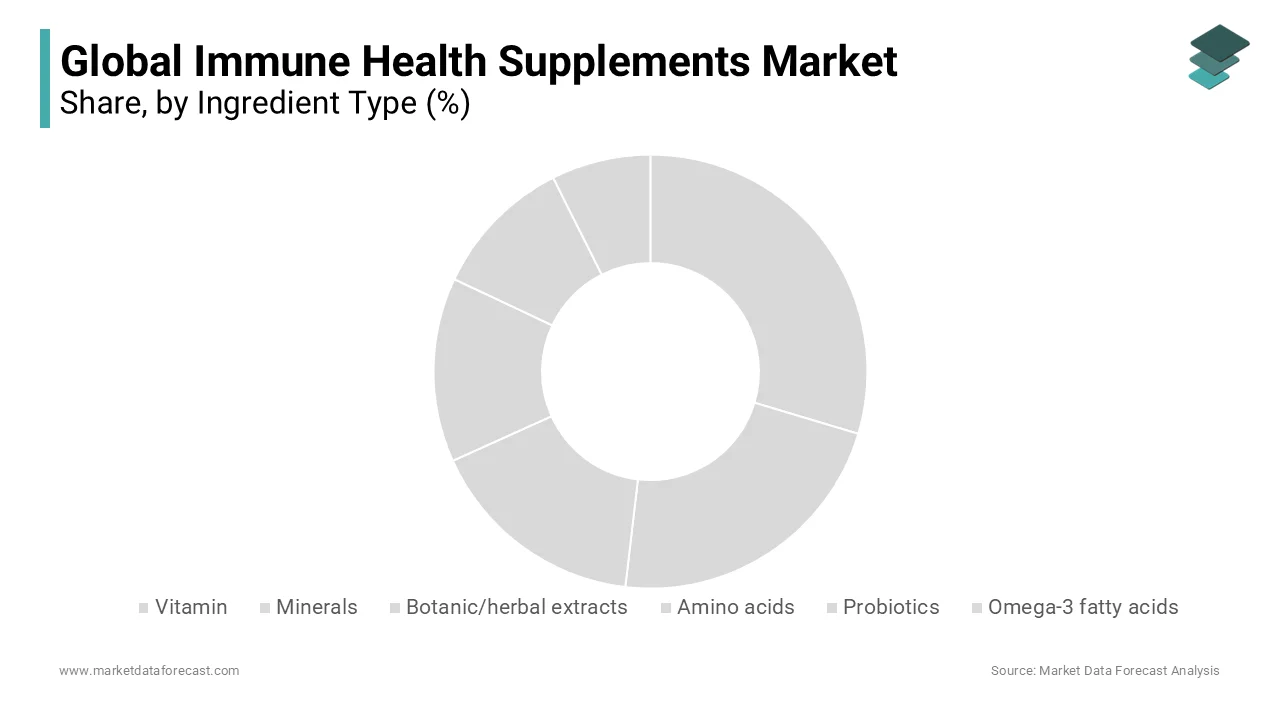
The probiotics segment is expected to witness the fastest CAGR of 13.7% throughout the forecast period, with the evidence linking gut microbiota composition to systemic immune regulation and specific strains demonstrating clinically measurable effects on infection frequency and vaccine response. As per the European Society for Paediatric Gastroenterology, Hepatology and Nutrition, daily intake of Lactobacillus rhamnosus GG reduces the incidence of upper respiratory tract infections in children over six-month period. Similarly, a 2023 meta-analysis in the journal Gut Microbes found that Bifidobacterium lactis HN019 supplementation enhanced natural killer cell activity by 35% in adults over 60. Regulatory recognition is advancing; Health Canada approved 22 new probiotic immune health claims in 2023, while the U.S. Food and Drug Administration granted investigational new drug status to a defined probiotic consortium for respiratory immune modulation. Consumer awareness is also surging; 71% of global supplement users now associate gut health with immunity, according to the International Food Information Council.
By Form Insights
The tablets segment was the largest by holding 39.2% of the immune health supplements market share in 202,4 with their superior shelf stability, ty precise dosing, and compatibility with high volume manufacturing processes. Unlike liquids or powder, tablets offer extended shelf li, often exceeding 24 months without refrigeration or special packaging, which is an advantage for global distribution. According to the U.S. Pharmacopoeia, over 90% of vitamin D and zinc immune formulations are delivered as compressed tablets due to their resistance to oxidation and moisture degradation. Consumer preference further reinforces this trend, where a survey by the Council for Responsible Nutrition found that 64% of adults aged 35 and above prefer tablets for daily immune supplementation owing to ease of swallowing and portability. Additionally, tablets allow for advanced delivery technologies such as enteric coating, which protects sensitive ingredients like probiotics from stomach acid until they reach the intestines. Regulatory agencies, including the European Medicines Agency, recognise tablet formulations as the benchmark for bioequivalence studies, facilitating faster approvals.
The liquid immune supplements segment is likely to grow at the fastest CAGR of 15.2% throughout the forecast period, which is rising demand for enhanced bioavailability, faster absorption and suitability for pediatric and geriatric populations who struggle with solid dosage forms. Clinical studies confirm that liquid vitamin D3 solutions achieve peak serum concentrations 30% faster than equivalent tablet doses, as demonstrated in a 2023 pharmacokinetic trial published in the Journal of Nutritional Science. Innovations in stabilisation technology have also addressed historical concerns; modern liquid formulations now use amber glass packaging and nitrogen flushing to extend shelf life to 18 months without preservatives.
By Source Type Insights
The plant-based immune health supplements segment held a prominent share of the global immune health supplements market in 2025 from the broad availability of bioactive phytochemicals, such as polyphenols in elderberry, andrographolides in Andrographis paniculata, and bbeta-glucansin medicinal mushrooms that demonstrate clinically relevant immunomodulatory effects. Regulatory acceptance further reinforces adoption, where the European Food Safety Authority has authorised immune health claims for over 15 plant-based compounds, including echinacea purpurea and black elderberry, based on human intervention trials. Additionally, plant sources offer scalable cultivation with lower environmental impact. Agricultural data from the Food and Agriculture Organisation shows that herbal crops require 40% less water per kilogram of active compound compared to animal-derived alternatives.
The plant-based segment is projected to expand at a CAGR of 12.9% throughout the forecast period from converging forces of scientific validation, regulatory tailwinds, and shifting dietary norms. Clinical research is increasingly substantiating traditional botanicals, where a 2023 randomised controlled trial published in The American Journal of Clinical Nutrition found that daily consumption of standardised elderberry extract reduced the duration of influenza symptoms by 3.1 days compared to placebo. Simultaneously, advances in extraction technology have enhanced the consistency of modern supercritical CO2 methods, yielding Andrographis extracts with 95% andrographolide purity by enabling reliable dosing and reproducible outcomes. The plant-based immune supplements are positioned for sustained acceleration, with sustainability metrics becoming integral to brand value and clinical evidence closing historical credibility gaps.
REGIONAL ANALYSIS
North America Market Analysis
North America was the largest by holding 39.2% of the global immune health supplements market share in 2025. The United States accounts for the overwhelming majority of regional demand, supported by a culture of preventive self-care and extensive retail penetration. Regulatory clarity under the Dietary Supplement Health and Education Act enables rapid product innovation while maintaining safety oversight. Additionally, employer-sponsored wellness programs increasingly include immune supplements, with 74% of large U.S. companies offering them as part of health benefits, as per the survey.
Europe Market Analysis
Europe was ranked second by holding 28.3% of the immune supplements market share in 2025. Germany and the United Kingdom are the major contributors to the growth of the immune health supplements market in this region. The European Food Safety Authority’s rigorous evaluation process has authorised 12 specific immune health claims by creating a high-trust environment where only clinically substantiated products thrive. Moreover, the European Commission’s Farm to Fork Strategy promotes plant-based and sustainable ingredients by aligning with rising demand for botanical immune actives like elderberry and echinacea.
Asia Pacific Market Analysis
Asia Pacific immune health supplements market is growing due to rising health consciousness and expanding middle-class populations. Japan and South Korea lead regional adoption, where immune supplements are deeply integrated into daily wellness routines. In China, the National Health Commission included specific immune-supporting nutrients in its 2023 Dietary Guidelines for Chronic Disease Prevention, boosting retail demand.
Latin America Market Analysis
Latin America's immune health supplements market growth is likely to grow, with Brazil and Mexico emerging as key growth engines. Brazil's growth is driven by a strong culture of natural health products and expanding pharmacy retail chains. Over 45 million Brazilians used immune supplements in 2023, with vitamin C and propolis blends being particularly popular due to their alignment with traditional herbal practices. Mexico’s immune health supplements market growth is propelled by rising disposable incomes and increased health literacy. Government initiatives also play a role; Colombia’s Ministry of Health launched a national micronutrient fortification program in 2022 that included public education on zinc and vitamin A for immune resilience.
Middle East and Africa Market Analysis
The Middle East and Africa growth is likely to have steady growth opportunities in next coming years. The United Arab Emirates and Saudi Arabia's growth is likely to grow with the Vision 2030 health diversification goals. Saudi Arabia has integrated immune nutrition into primary care protocols, with over 200 public health centres distributing vitamin D and zinc kits to at-risk populations. Egypt and Morocco are witnessing rising interest in herbal immune tonics like thyme and nigella sativa, rooted in traditional medicine.
COMPETITIVE LANDSCAPE
The immune health supplements market features a highly fragmented yet dynamic competitive environment comprising multinational nutrition companies, specialised ingredient suppliers, and agile direct-to-consumer brands. Competition is primarily driven by scientific credibility, product differentiation, and brand trust rather than price alone. Large players leverage clinical research and regulatory expertise to secure health claims, while smaller firms focus on novel botanicals or delivery formats to capture niche audiences. Barriers to entry remain moderate due to relatively low manufacturing complexity, but are rising as consumers demand transparency, clinical validity, and clean label formulatE-commercemmerce has intensified rivalry by enabling rapid brand proliferation and global reach, yet also increases vulnerability to unsubstantiated claims and quality inconsistencies. Strategic partnerships with hhealthcare providers retaretailers digital health platforms are becoming essential to build legitimacy and drive rrepeat purchases
KEY MARKET PLAYERS
Some of the key players dominating the global immune health supplements market are
- Alticor Inc. (Amway)
- Koninklijke DSM N.V
- Cellderm Technologies Inc.
- EuroPharma Inc.
- Glanbia, Plc
- USANA Health Sciences
- Bayer AG
- Nutramax Laboratories
- Vital Nutrients
- Bio-Tech Pharmacal Inc.
- Seroyal International Inc.
- Danisco A/S
- Kerry Group
- NOW Foods
- NutriGold Inc.
TOP STRATEGIES USED BY THE KEY MARKET PLAYERS
Key players in the immune health supplements market prioritise clinical substantiation through human trials to support health claims and differentiate products. They invest in vertically integrated supply chains to ensure ingredient purity and traceability from source to finished product. Companies increasingly adopt digital platforms for personalised nutrition recommendations based on lifestyle and biomarker data. Strategic acquisitions of niche botanical or probiotic innovators enable rapid portfolio diversification. Additionally, they align formulations with regional regulatory frameworks and cultural preferences to enhance global market access and consumer relevance.
TOP PLAYERS IN THE MARKET
- BASF SE is a global leader in nutritional ingredients, shigh-purityvitamins and carotenoids that serve as foundational actives in immune health supplements. The company leverages its extensive chemical synthesis expertise to produce vitamin D3, vitamin C, and beta-glucans used by major supplement brands worldwide. In recent years, BASF has expanded its immune portfolio through strategic investments in clinical research demonstrating the efficacy of its ingredients in respiratory health. It also launched a digital traceability platform in 2023, enabling customers to verify the origin and quality of immune actives, reinforcing trust in an increasingly scrutinised supply chain.
- DSM Firmenich AG plays a pivotal role in the immune health supplements market through its science-backed micronutrient and probiotic solutions. The company offers branded ingredients such as Quali D vitamin D and lifeinU Bifidobacterium longum BL04, both supported by human clinical trials on immune outcomes. DSM Firmenich has strengthened its position by integrating sensory and nutritional science to improve supplement palatability and compliance.
- Nestlé Health Science actively shapes the immune health supplements landscape through its consumer-facing brands and medical nutrition portfolio. Products like Vital Proteins and Garden of Life feature immune-focused formulations with vitamins D and C, zinc, and elderberryy tailored for diverse demographics. The company has reinforced its scientific credibility by publishing peer-reviewed studies on its proprietary blends and expanding into personalised immune nutrition via its Persona platform.
MARKET SEGMENTATION
This research report on the global immune health supplements market has been segmented and sub-segmented based on ingredient type, form, source type, sales channel, and region.
By Ingredient Type
- Vitamins
- Vitamin C
- Vitamin D
- Vitamin B complex
- Multivitamins
- Zinc
- Selenium
- Others
- Minerals
- Herbal/Botanical Extracts
- Amino Acids
- Probiotics
- Omega-3 Fatty Acids
- Others
By Form
- Soft Gels/Pills
- Tablets
- Powder
- Liquid
- Others
By Source Type
- Plant-Based
- Animal-Based
By Sales Channel
- Online Retailing
- Store-Based Retailing
- Hypermarkets/Supermarkets
- Pharmacies/Drug Stores
- Independent Health Stores
- Others
By Region
- North America
- Europe
- Asia-Pacific
- Latin America
- Middle East & Africa