- Product Description Description
- Table of Contents TOC
- List of Table & Figure LOT
- Get Free Sample PDF Sample PDF
Market Size, 2025
$15.94 BnMarket Estimate, 2026
$16.93 BnMarket Forecast, 2034
$27.39 BnCAGR, 2026–2034
6.2%Executive Summary: Europe Immune Health Supplements Market
- Market Scope: Comprehensive regional market evaluation of immune health supplements in Europe covering ingredient types, delivery forms, sales channels, and country-level distribution frameworks.
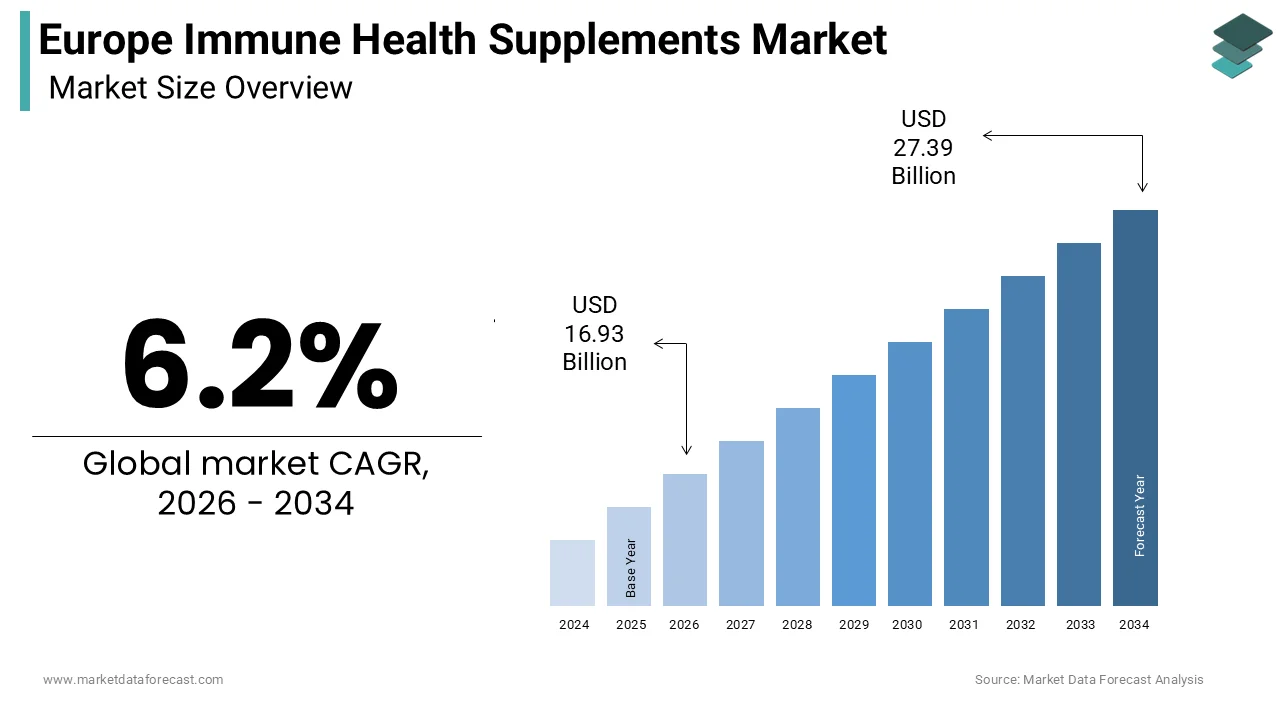
- Market Valuation: Valued at USD 15.94 billion (2025), estimated at USD 16.93 billion (2026), and projected to reach USD 27.39 billion by 2034, registering a solid CAGR of 6.2% (2026–2034).
- Primary Growth Drivers: Persistent micronutrient deficiencies (such as widespread vitamin D insufficiencies during winter months), post-pandemic self-care behavior shifts, and the rise of personalized wellness and functional formulations. Key operational factors include institutional guidance recommending daily supplementation and increasing integration with clinical pharmacy channels.
Key Market Segment Metrics (2026–2034)
| Category | Leading Segment (2025 Position) | Fastest-Growing Segment |
|---|---|---|
| By Ingredient Type | Vitamins (dominated with 41.6% market share backed by strong scientific consensus and EFSA authorizations) | Probiotics (projected to register a CAGR of 10.2% driven by gut-immune axis research and live culture trends) |
| By Form | Soft Gels and Pills (collectively held 49.5% share due to dosing precision, familiarity, and pharmacy norms) | Liquid Formats (estimated to record a CAGR of 13.2% owing to rapid absorption and child/geriatric-friendly use) |
| By Sales Channel | Store-Based Retailing (commanded the highest share at 56.5% through trusted pharmacy and retail networks) | Online Retailing (promising CAGR of 13.4% driven by e-commerce penetration and subscription models) |
| By Country / Region | Germany (held a leading share of 19.4% backed by a heavily regulated pharmacy-dominated model) | United Kingdom, France, and Italy (showcasing strong e-commerce, botanical preferences, and traditional phytotherapy) |
Major Market Players & Market Structure
Market Structure: Highly competitive European health supplement ecosystem featuring global science-led corporations and agile regional herbal brands competing on clinical credibility, clean-label transparency, EFSA compliance, and pharmacy channel trust.
Key Companies: Alticor Inc (Amway), EuroPharma Inc, Nutramax Laboratory, General Nutrition Centers, Pfizer, Abbott, Bayer AG, Sanofi, and LivaNova PLC.
Europe Immune Health Supplements Market Size
The immune health supplements market size in Europe was valued at USD 15.94 billion in 2025. The European market size is predicted to progress at a CAGR of 6.2% from 2026 to 2034 and be worth USD 27.39 billion by 2034 from USD 16.93 billion in 2026.
Immune health supplements comprise dietary products formulated with vitamins, minerals, botanicals, and bioactive compounds intended to support or modulate the body’s natural defense mechanisms. These include standalone or synergistic ingredients such as vitamin C, vitamin D, zinc, elderberry, echinacea, and probiotics delivered via capsules, tablets, powders, or functional beverages. Unlike pharmaceuticals, these supplements are regulated under the EU’s Food Supplements Directive and positioned as complementary wellness tools rather than therapeutic agents. Consumer interest has intensified in the post pandemic era as public awareness of nutritional immunology grows. According to Eurostat, surveys show that a significant share of adults in the EU reported using dietary supplements in 2023, with immune support cited as a primary motivation in national health surveys. This behavioral shift aligns with broader lifestyle trends emphasizing preventive self-care and holistic well-being. The European Food Safety Authority maintains a rigorous approval process for health claims, with only a limited number of immune-related statements authorized, such as vitamin D’s role in normal immune function, creating a tightly controlled messaging environment. Concurrently, rising rates of subclinical micronutrient deficiencies further fuel demand. As per the European Commission’s Joint Research Centre, many European adults exhibit serum vitamin D levels below 50 nanomoles per liter during winter months, a threshold associated with compromised immune responsiveness.
MARKET DRIVERS
Persistent Micronutrient Deficiencies Drive Preventive Supplementation
Widespread insufficiencies in key immune-supporting nutrients across European populations serve as a primary driver of the European immune health supplements market. Vitamin D deficiency is particularly acute due to limited sunlight exposure at northern latitudes and indoor lifestyles. As per the European Commission’s Joint Research Centre, many adults in Germany, France, and the Netherlands exhibited serum 25-hydroxyvitamin D concentrations below recommended thresholds during late winter 2023, levels linked to increased susceptibility to respiratory infections. Similarly, the European Food Safety Authority noted in its 2023 micronutrient intake report that average dietary zinc intake among women aged 18 to 50 in Southern Europe often falls short of recommended levels due to declining meat consumption and reliance on phytate-rich plant proteins that inhibit absorption. These gaps are clinically relevant. As per a longitudinal study by the Karolinska Institute in Sweden, individuals with baseline vitamin D below 50 nanomoles per liter had a higher risk of upper respiratory tract infections over a 6 month period. Public health messaging has amplified this link. Germany’s Federal Institute for Risk Assessment issued updated guidance in early 2024 recommending daily vitamin D supplementation from October to March for all adults. Such institutional validation transforms private health behavior into a normalized preventive practice, which is sustaining consistent demand for evidence-aligned immune formulations.
Rise of Personalized and Functional Wellness Fuels Product Innovation
European consumers increasingly seek immune supplements tailored to their age, lifestyle, and physiological needs, which reflects a broader shift toward personalized nutrition and is further contributing to the European immune health supplements market expansion. This trend is supported by digital health platforms, genetic testing services, and AI-driven wellness apps that recommend specific nutrient profiles based on individual biomarkers or habits. According to the European Consumer Organisation’s 2023 Lifestyle and Health Survey, a majority of supplement users aged 25 to 45 prefer products labeled for specific life stages such as “immune support for active adults” or “winter defense for seniors.” Manufacturers respond with segmented offerings, such as probiotic blends targeting gut barrier integrity or vitamin C plus bioflavonoid complexes for frequent travelers. The Netherlands’ National Institute for Public Health documented strong growth in sales of multi-ingredient immune sachets combining vitamin D, zinc, and elderberry between 2022 and 2023, driven by e-commerce personalization algorithms. Furthermore, functional formats like gummies and effervescent tablets now account for a significant share of immune supplement sales in France and Italy, reflecting demand for convenience and sensory experience. This convergence of customization, convenience, and scientific storytelling positions immune health not as a reactive measure but as an integrated dimension of daily self-care.
MARKET RESTRAINTS
Stringent EU Health Claim Regulations Limit Marketing Differentiation
The European Union’s restrictive framework for nutrition and health claims significantly constrains how immune health supplements can be promoted, which is a significant restraint to the growth of the European immune health supplements market. Under Regulation EC No 1924/2006, only a narrow set of immune-related claims have received EFSA authorization, primarily those linking vitamin C, vitamin D, zinc, and selenium to “normal immune function.” As per the European Commission’s 2023 compliance review, most submitted immune health claims involving botanicals such as echinacea, elderberry, or medicinal mushrooms were rejected due to insufficient human trial evidence meeting EFSA’s causality standards. This forces manufacturers to rely on vague terms such as “wellness support” or “seasonal defense,” which lack scientific resonance and reduce perceived efficacy. According to a 2024 audit by Germany’s Federal Office of Consumer Protection, many online immune supplement listings used non-compliant language, leading to product delisting or fines. Consequently, companies face a paradox: while consumer demand for immune benefits is high, the legal inability to substantiate specific outcomes suppresses conversion and discourages investment in novel ingredient development. Until the regulatory pathway accommodates emerging science on microbiome modulation or polyphenol immunomodulation, the market remains confined to a handful of approved nutrients, limiting innovation and competitive distinction.
Consumer Skepticism Toward Supplement Efficacy Undermines Trust
Despite heightened interest in immune health, a significant portion of the European population remains doubtful about the tangible benefits of dietary supplements, which is creating persistent adoption barriers and hampering the European immune health supplements market expansion. According to the 2023 Eurobarometer survey on food and health, many EU respondents believed that “most supplements offer no real health benefit beyond a placebo effect,” with skepticism highest in Nordic and Benelux countries. This perception stems from inconsistent messaging, conflicting media reports, and past controversies involving exaggerated claims. The European Consumer Organisation highlighted in its 2024 report that a large share of consumers who discontinued immune supplements cited “no noticeable difference” as the primary reason. Moreover, clinical ambiguity fuels doubt. While vitamin D’s role is well established, the evidence for popular botanicals such as echinacea remains mixed. As per a meta-analysis published by the University of Copenhagen in 2023, echinacea reduced cold duration only marginally, with high inter-study variability. Without clear experiential or measurable outcomes, many consumers revert to whole food sources or dismiss supplementation altogether. Rebuilding trust requires transparent labeling, third-party verification, and real-world outcome tracking, as these elements are still inconsistently applied across the fragmented retail landscape.
MARKET OPPORTUNITIES
Integration of Immune Supplements into Clinical and Pharmacy Channels
Pharmacies and healthcare professionals are emerging as trusted gateways for immune health supplements, which is creating a highly credible distribution channel that bridges wellness and clinical validation and is a promising opportunity in the European immune health supplements market. Across Europe, pharmacists are legally permitted to recommend evidence-based supplements, particularly for vulnerable groups such as the elderly or chronically ill. As per the European Association of Pharmaceutical Full‑line Wholesalers, a majority of immune supplements sold in Germany, France, and Italy are dispensed through pharmacies where staff provide personalized advice aligned with medication regimens. In Spain, the Ministry of Health launched a pilot program in 2023, training community pharmacists to screen for vitamin D deficiency and recommend appropriate supplementation, a model now expanding to Portugal and Greece. This professional endorsement counters consumer skepticism and ensures alignment with public health priorities. Furthermore, hospital outpatient clinics in Sweden and the Netherlands have begun integrating immune support protocols for cancer and respiratory patients using standardized supplement kits developed in collaboration with nutritionists. These institutional endorsements transform supplements from discretionary purchases into medically informed components of preventive care, accelerating acceptance among cautious or older demographics.
Expansion of Plant-Based and Clean Label Immune Formulations
The convergence of veganism, sustainability, and clean label preferences is unlocking new product development avenues in immune health supplements across Europe. Consumers increasingly reject synthetic additives, artificial colors, and animal-derived excipients, favoring transparent formulations with recognizable ingredients. As per the European Vegetarian Union’s 2023 market scan, many new immune supplements launched in Western Europe featured plant-based capsules, non-GMO certification, and the absence of titanium dioxide or magnesium stearate. Elderberry, turmeric, ginger, and acerola cherry are gaining prominence as natural alternatives to isolated ascorbic acid, offering polyphenol-rich matrices with added antioxidant benefits. According to Finland’s Food Authority, strong growth in sales of organic certified immune gummies between 2022 and 2023, driven by parental demand for child-friendly yet additive-free options. Additionally, algae-derived vitamin D3 and lichen-sourced B12 enable fully vegan immune stacks, meeting the needs of Europe’s estimated millions of vegans. Brands such as Germany’s Vivo Life and France’s Nutri&Co have built loyal followings by emphasizing traceability, biodegradable packaging, and 3rd party purity testing. This ethical and sensory alignment positions immune supplements not just as health aids but as expressions of conscious consumption.
MARKET CHALLENGES
Inconsistent Quality and Adulteration Risks Erode Consumer Confidence
The lack of uniform manufacturing standards across the European supplement sector exposes consumers to variable product quality and occasional adulteration, which is undermining trust in immune health claims and challenging the European immune health supplements market growth. While the EU mandates Good Manufacturing Practices for food supplements, enforcement varies significantly by member state. As per the European Anti-Fraud Office, inspections in 2024 found that a notable share of imported immune supplements, particularly those containing herbal extracts, failed to meet declared potency or contained undeclared pharmaceuticals. In Italy’s 2023 market surveillance campaign, some echinacea products tested contained less than half of the labelled active compounds. Such inconsistencies are exacerbated by the rise of direct-to-consumer brands bypassing traditional quality gatekeepers. A study by the University of Ghent found that online-only immune supplements were more likely to deviate from label claims than pharmacy-distributed counterparts. Without mandatory batch testing, certification, or blockchain traceability, most consumers cannot verify authenticity. This opacity fuels cynicism even toward reputable brands and deters long-term adherence, particularly among scientifically literate users who prioritize reproducibility over marketing narratives.
Seasonal Demand Volatility Complicates Supply Chain and Innovation Planning
Immune health supplement consumption in Europe remains heavily concentrated in autumn and winter months, which is creating pronounced demand spikes that strain production logistics and discourage year-round innovation, further challenging the regional market expansion. As per retail analytics, sales of vitamin D, zinc, and elderberry products surge significantly between October and February compared to summer lows. This seasonality forces manufacturers to maintain excess capacity or risk stockouts during peak periods, as occurred in late 2022 when panic buying depleted vitamin C inventories across UK and German pharmacies. Conversely, underutilized facilities during off-seasons reduce return on investment for advanced delivery systems such as liposomal or time-release formats. According to the European Health Ingredients Association, in its 2024 industry briefing, many small to mid-sized supplement firms avoid R&D in immune categories due to unpredictable cash flow cycles. Moreover, seasonal framing reinforces the misconception that immune support is situational rather than continuous, limiting uptake of daily maintenance regimens. Until consumer education shifts toward year-round immune resilience, supported by messaging on gut health, stress management, and chronic inflammation, the market will remain trapped in a reactive cyclical pattern that stifles sustainable growth and scientific advancement.
REPORT COVERAGE
| REPORT METRIC | DETAILS |
| Market Size Available | 2025 to 2034 |
| Base Year | 2025 |
| Forecast Period | 2026 to 2034 |
| CAGR | 6.2% |
| Segments Covered | By Ingredient Type, Form, Sales Channel, And Region |
| Various Analyses Covered | Global, Regional & Country Level Analysis; Segment-Level Analysis; DROC, PESTLE Analysis; Porter’s Five Forces Analysis; Competitive Landscape; Analyst Overview of Investment Opportunities |
| Regions Covered | UK, France, Spain, Germany, Italy, Russia, Sweden, Denmark, Switzerland, Netherlands, Turkey, and the Czech Republic |
| Market Leaders Profiled | Alticor Inc (Amway), EuroPharma Inc, Nutramax Laboratory, General Nutrition Centers, Pfizer, Abbott, Bayer AG, Sanofi, and LivaNova PLC |
SEGMENTAL ANALYSIS
By Ingredient Type Insights
The vitamins segment dominated the market by holding 41.6% of the regional market share in 2025. The dominating position of the vitamins segment in the European immune health supplements market is driven by the strong scientific consensus around the immunomodulatory roles of vitamins C, D, and A, coupled with widespread public awareness and regulatory acceptance. Vitamin D in particular has become a cornerstone of preventive self-care due to chronic insufficiency across latitudes with limited UVB exposure. As per the European Commission’s Joint Research Centre, many adults in Northern and Central Europe exhibit serum 25-hydroxyvitamin D levels below 50 nanomoles per liter during winter months, a threshold associated with impaired innate immune responses. National health bodies have reinforced this link; Germany’s Federal Institute for Risk Assessment issued updated guidance in early 2024 recommending daily vitamin D supplementation from October to March for all adults. Similarly, vitamin C remains a staple due to its role in neutrophil function and antioxidant defense. Surveys confirm that a majority of European supplement users cite vitamin C as their primary immune ingredient. The EFSA’s authorization of specific immune health claims for these vitamins enables clear labeling and consumer trust to ensure consistent demand across age groups and retail channels.
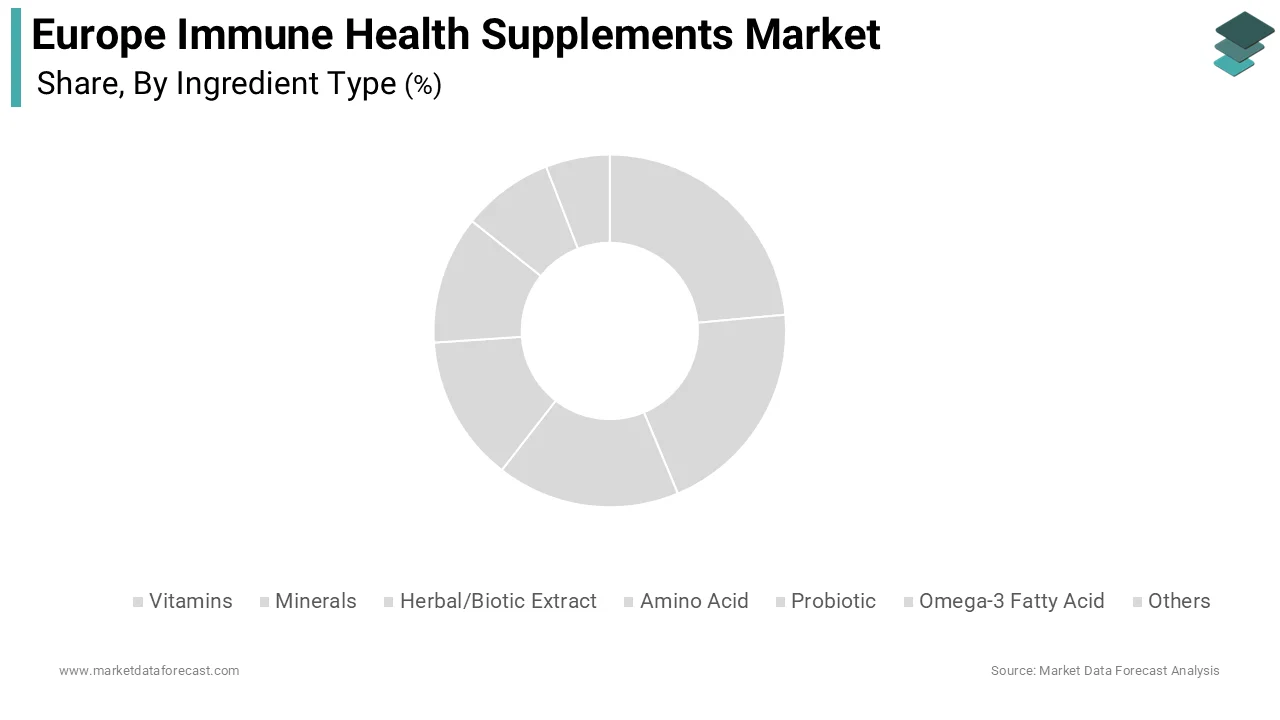
The probiotic segment is the fastest growing within ingredient types and is predicted to register a CAGR of 10.2% over the forecast period. The evolving scientific understanding of the gut immune axis and rising consumer interest in microbiome-based wellness are propelling the growth of the probiotics segment in the European market. Over 70% of the body’s immune cells reside in the gut-associated lymphoid tissue, which makes microbial balance a critical determinant of systemic defense. As per the European Society for Clinical Nutrition and Metabolism, clinical trials published in 2023 demonstrated that specific strains such as Lactobacillus rhamnosus GG and Bifidobacterium lactis HN019 reduced the incidence of upper respiratory infections in adults. Regulatory clarity has also improved; while general probiotic claims remain restricted, the EU Novel Food Catalogue now includes strain-specific dossiers enabling targeted messaging. France’s National Agency for Food Safety approved new immune-linked probiotic strains in 2024 for use in dietary supplements. Additionally, clean label trends favor live cultures over synthetic isolates. Denmark’s Technical University reported that a majority of Danish consumers prefer “fermented” or “live culture” immune products over traditional vitamin pills. This convergence of science, personalization, and natural positioning positions probiotics as the vanguard of next-generation immune support.
By Form Insights
The soft gels and pills segments collectively held 49.5% of the regional market share in 2025. The dominance of these segments in this regional market is attributed to consumer familiarity, precise dosing, stability of active ingredients, and ease of integration into daily routines. Soft gels are particularly favoured for oil-soluble nutrients such as vitamin D and omega-3 fatty acids, as they protect against oxidation and enhance bioavailability. As per retail audits, most vitamin D immune formulations are delivered in soft gel format due to superior absorption compared to dry powders. Pills and capsules also align with pharmacy dispensing norms. Germany’s Federal Association of Pharmacists noted that a large majority of immune supplements recommended by pharmacists are in solid oral form owing to shelf-life reliability and compatibility with medication regimens. Furthermore, manufacturing scalability ensures cost efficiency. According to the European Health Ingredients Association. Capsule filling lines operate at high-capacity utilization year-round, which is enabling consistent supply during seasonal demand surges. This combination of technical performance, consumer habit, and distribution alignment solidifies soft gels and pills as the default delivery system for immune health.
The liquid segment is the fastest growing by form and is estimated to record a CAGR of 13.2% over the forecast period, owing to the increasing demand for rapid absorption, customizable dosing, and child-friendly formats that bypass swallowing difficulties. Liquids offer immediate bioavailability and allow flexible titration for sensitive populations such as the elderly or those on polypharmacy. As per the UK’s Office for National Statistics, a notable share of adults over 65 report difficulty swallowing tablets, making liquid vitamin D and zinc solutions increasingly prescribed in geriatric care. Innovation in taste masking and preservation has further boosted appeal. Sweden’s National Food Agency documented strong growth in sales of elderberry-based immune syrups between 2022 and 2023 following reformulations using natural sweeteners and citric acid stabilization. E-commerce platforms amplify this trend by enabling subscription models for functional shots and droppers. France saw significant growth in online liquid immune supplement sales in 2023, according to national digital commerce data. With clean-label liquids now featuring organic glycerin bases and no alcohol or artificial preservatives, they resonate strongly with health-conscious urban consumers seeking immediacy and sensory experience.
By Sales Channel Insights
The store-based retailing segment commanded the highest share of 56.5% of the regional market in 2025. The growth of the store-based retailing segment in the European market is attributed to the high consumer trust in physical points of sale, where professional advice, product authenticity, and immediate availability reinforce purchasing confidence. In countries such as Germany, Italy, and Spain, a majority of immune supplements are purchased through pharmacies where pharmacists provide personalized recommendations aligned with health status and medications. As per the European Association of Pharmaceutical Full-line Wholesalers, pharmacy channel sales of vitamin D and zinc combinations grew significantly in 2023, driven by post pandemic preventive counseling. Supermarkets also play a key role in mainstream adoption. Carrefour and Tesco private label immune ranges achieved strong growth by offering affordable entry-level options with EFSA-compliant labeling. The tactile experience of in-store browsing, combined with promotional displays during cold and flu season, further drives impulse and replenishment purchases. Unlike digital platforms, store-based retail offers sensory validation, critical factors in a category where efficacy perceptions heavily influence repeat buying.
The online retailing segment is estimated to register a promising CAGR of 13.4% over the forecast period, owing to the digital health literacy, algorithm driven personalization, and convenience amid urbanization and time scarcity. E-commerce enables access to niche formulations such as vegan probiotic blends or liposomal vitamin C that may not be stocked locally. As per Eurostat, internet penetration across EU households was high in 2023, and a majority of adults aged 25 to 54 used online platforms for health product research. Subscription models further enhance retention. Dutch e-retailers reported that many immune supplement buyers opted for auto-replenishment every three months, ensuring consistent usage. Social media and influencer content amplify discovery. Campaigns featuring “immune stacks” drove notable spikes in online sales of multi-ingredient sachets in France and Italy during autumn 2023, according to national digital analytics firms. Moreover, direct-to-consumer brands leverage first-party data to tailor bundles based on location, seasonality, and purchase history, creating hyper-relevant offerings unmatched by static retail shelves. As digital trust grows through verified reviews, secure payment, and transparent sourcing, online channels are redefining how Europeans engage with preventive nutrition.
REGIONAL ANALYSIS
Germany Immune Health Supplements Market Analysis
Germany was a promising regional segment in the European immune health supplements market in 2025 and held a leading share of 19.4%. The leading position of Germany in the European market is rooted in a highly regulated pharmacy-dominated distribution model where supplements are treated as quasi-medical products requiring professional guidance. A large majority of immune supplements are sold through Apotheken, ensuring quality control and evidence-based recommendations. The Federal Institute for Risk Assessment actively issues seasonal advisories, including its 2024 winter bulletin endorsing daily vitamin D supplementation for all adults. Germany also exhibits a high prevalence of subclinical deficiencies. As per the Robert Koch Institute, many adults have insufficient vitamin D levels from November to March. Strong consumer health literacy and willingness to pay premium prices for certified products further sustain demand. Domestic manufacturers such as Abtei and Doppelherz leverage this trust through science-backed formulations and extensive clinical communication, making Germany both a consumption leader and innovation benchmark.
France Immune Health Supplements Market Analysis
France held 16.2% of the European immune health supplements market share in 2025. The growth of France in the European market is driven by the strong preference for plant-based and natural immune ingredients. French consumers prioritize botanicals such as echinacea, acerola, and propolis, often combined with vitamins in synergistic formulas. As per the French Agency for Food, Environmental and Occupational Health and Safety, a majority of new immune supplement launches in 2023 featured organic certification and clean label declarations. The country’s robust parapharmacie network serves as a key retail channel where trained advisors curate personalized regimens. Public health campaigns also play a role. The Ministry of Solidarity and Health’s 2023 “Winter Immunity” initiative promoted zinc and vitamin C intake among schoolchildren, boosting pediatric immune syrup sales. France also leads in probiotic innovation, with Institut Pasteur-affiliated startups developing strain-specific formulations validated through local clinical trials. This blend of scientific heritage, natural orientation, and trusted retail infrastructure cements France’s position as a trendsetter in holistic immune wellness.
United Kingdom Immune Health Supplements Market Analysis
The United Kingdom is predicted to account for a prominent share of the European immune health supplements market during the forecast period. The high e-commerce penetration and openness to functional formats are driving the UK market growth. British consumers readily adopt gummies, effervescent tablets, and immune shots driven by convenience and sensory appeal. As per the UK Office for National Statistics, a significant share of supplement users under 45 purchase primarily online, with subscription models gaining traction for daily maintenance. The National Health Service’s cautious stance on supplementation paradoxically fuels private demand, as many consumers turn to digital influencers and private health blogs for immune advice. Post Brexit, the UK has maintained alignment with EFSA claim standards but allows slightly more flexibility in product naming, spurring innovation in branded stacks such as “Immunity+” or “Defense Complex.” Retailers such as Holland and Barrett drive category growth through in-house clinical teams that validate formulations before listing. With London serving as a hub for health tech startups, the UK also pioneers AI-driven personalization tools that recommend immune regimens based on lifestyle data, accelerating adoption among digitally native demographics.
Italy Immune Health Supplements Market Analysis
Italy is expected to exhibit a healthy CAGR in the European immune health supplements market over the forecast period, owing to the strong regional variation and emphasis on traditional herbal knowledge integrated with modern science. Southern regions show higher uptake of elderberry and myrtle extracts, while the North favors vitamin D and omega-3 combinations, reflecting climatic and dietary differences. As per Italy’s National Institute of Statistics, a significant share of adults reported taking at least one immune supplement during winter 2023, with pharmacists remaining the primary source of advice. The Italian Medicines Agency enforces strict labeling rules yet permits references to “traditional use” for certain botanicals, enabling culturally resonant messaging. Domestic brands such as Aboca and Esi Pharma leverage centuries-old phytotherapeutic heritage while investing in clinical validation. Italy’s aging population drives demand for easy-to-swallow liquid and powder formats. This fusion of empirical tradition, scientific rigor, and demographic need creates a uniquely resilient and diversified immune supplement ecosystem.
Spain Immune Health Supplements Market Analysis
Spain is estimated to command a notable share of the European immune health supplements market during the forecast period, with distinctive strength in seasonal and family-oriented immune products. Spanish consumers exhibit high responsiveness to public health messaging. During the 2023 flu season, the Ministry of Health’s campaign linking vitamin D to respiratory resilience triggered a surge in supplement sales. Pharmacies remain central, but supermarket chains such as Mercadona have expanded private-label immune ranges, making basic formulations widely accessible. Spain leads Europe in children’s immune gummies, with many parents reporting regular use, according to the Spanish Agency for Food Safety. The Mediterranean diet context also shapes preferences, with omega-3 from algal sources and polyphenol-rich olive leaf extract increasingly incorporated into adult immune blends. Regional health authorities in Catalonia and Andalusia have piloted school-based micronutrient programs, further normalizing preventive supplementation. This combination of institutional endorsement, retail democratization, and cultural alignment with natural health positions Spain as a dynamic and rapidly evolving market within Southern Europe.
COMPETITION OVERVIEW
Competition in the Europe immune health supplements market is characterized by a dual dynamic between global science-led brands and agile local players emphasizing natural heritage and regional botanicals. Incumbents like Bayer and Nestlé compete on clinical credibility, supply chain transparency, and pharmacy channel dominance, while smaller firms differentiate through organic certification, vegan formulations, and traditional plant knowledge. The regulatory environment under EFSA creates high barriers to health claim communication, favoring companies with robust dossier capabilities. At the same time, e-commerce democratizes entry, enabling direct-to-consumer brands to capture niche segments through social media storytelling and personalized bundles. Consumer skepticism toward efficacy drives demand for third-party testing, batch traceability, and real-world outcome data. Success increasingly depends not on scale alone but on the ability to balance scientific substantiation with sensory appeal, ethical sourcing, and seamless digital engagement across fragmented yet discerning national markets.
KEY MARKET PLAYERS
A few major players of the Europe immune health supplements market include
- Alticor Inc (Amway)
- EuroPharma Inc
- Nutramax Laboratory
- General nutrition centers
- Pfizer
- Abbott
- Bayer AG
- Sanofi
- LivaNova PLC
Top strategies used by the key market participants
Key players in the Europe immune health supplements market focus on clean label formulation using organic non-GMO and allergen-free ingredients to meet stringent consumer expectations. They invest in clinical validation and third-party certifications to build trust in a highly scrutinized category. Companies leverage digital personalization tools and subscription models to enhance customer retention and usage consistency. Strategic partnerships with pharmacies, healthcare professionals, and e-commerce platforms ensure multi-channel accessibility. Additionally, they align product innovation with seasonal demand cycles and public health guidance to maintain relevance and regulatory compliance across diverse national markets.
Leading Players in the Europe Immune Health Supplements Market
- Bayer AG is a leading force in the Europe immune health supplements market through its well-established One A Day and Berocca brands, which emphasize scientifically backed formulations centered on vitamins C, D, and B complex. The company leverages its pharmaceutical heritage to position immune supplements as part of an integrated preventive health strategy. In recent years, Bayer has expanded its portfolio to include probiotic and plant-based immune blends tailored to European dietary preferences. It has also invested in digital health platforms that offer personalized nutrient assessments linked to seasonal wellness plans. Bayer’s R&D collaborations with European universities on micronutrient bioavailability further reinforce its credibility. These initiatives strengthen its presence not only across EU retail and pharmacy channels but also in global markets seeking science-led immune support solutions.
- Nestlé Health Science plays a pivotal role in the Europe immune health supplements landscape by integrating clinical nutrition expertise with consumer wellness. Its Garden of Life and Pure Encapsulations brands cater to clean label and professional channels, respectively offering certified organic probiotics, vitamin D3, and elderberry formulations. The company emphasizes transparency through traceable sourcing and third-party testing, which resonates strongly with European consumers. Nestlé has recently enhanced its manufacturing capabilities in Switzerland to produce allergen-free immune gummies and powders compliant with strict EU labeling standards. It also partners with healthcare practitioners to distribute evidence-based immune protocols, particularly for aging and post illness recovery. This dual focus on scientific rigor and natural positioning supports its influence across both European and international markets.
- Glanbia Nutritionals contributes significantly to the Europe immune health supplements market as a key ingredient innovator and finished product manufacturer specializing in protein fortified and functional immune formulations. The company supplies bioactive peptides, probiotics, and vitamin premixes to major European supplement brands while also developing proprietary delivery systems like spray-dried vitamin D for enhanced stability. Glanbia has prioritized sustainability by launching algae-derived omega-3 and vegan vitamin D3 sourced from lichen, meeting rising demand for plant-based immune solutions. In 2024, it expanded its R&D center in Germany to accelerate the development of gut immune axis-focused blends combining prebiotics, postbiotics, and zinc. Through these science-driven and eco-conscious innovations, Glanbia strengthens its role as an enabler of next-generation immune health products across Europe and beyond.
MARKET SEGMENTATION
This research report on the European immune health supplements market is segmented and sub-segmented into the following categories.
By ingredient type
- Vitamins
- Minerals
- Herbal/Biotic Extract
- Amino Acid
- Probiotic
- Omega-3 Fatty Acid
- Others
By Forms
- Soft Gels/Pills
- Tablets
- Powder
- Liquid
By Sales Channels
- Online Retailing
- Store-Based Retailing
By Age Group
- Children
- Adult
- Old Age
By Country
- UK
- France
- Spain
- Germany
- Italy
- Russia
- Sweden
- Denmark
- Switzerland
- Netherlands
- Turkey
- Czech Republic
- Rest Of Europe