- Product Description Description
- Table of Contents TOC
- List of Table & Figure LOT
- Get Free Sample PDF Sample PDF
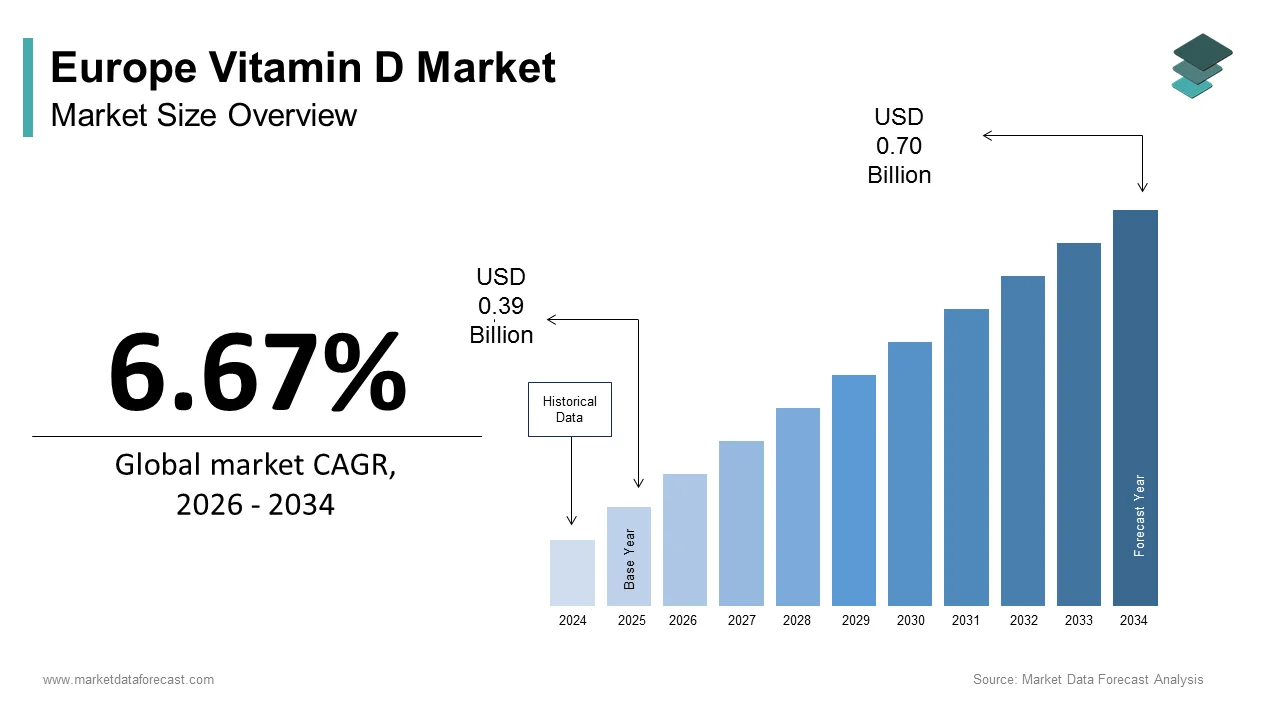
Market Size, 2025
$0.39 BnMarket Estimate, 2026
$0.42 BnMarket Forecast, 2034
$0.70 BnCAGR, 2026–2034
6.67%Executive Summary: Europe Vitamin D Market
- Market Scope: Comprehensive market analysis covering nutritional supplements, retail pharmacy infrastructure, preventive health trends, and over-the-counter consumption patterns.
- Market Valuation: Valued at USD 0.39 billion (2025), estimated at USD 0.42 billion (2026), and projected to reach USD 0.70 billion by 2034, registering a steady CAGR of 6.88% (2026–2034).
- Primary Growth Drivers: Rising health awareness, self-medication adoption, expanding retail pharmacy networks, digital platform accessibility, and a preventive health focus toward immune support. Key challenges include fragmented regulatory frameworks and counterfeit product circulation.
Key Market Segment Metrics (2026–2034)
| Category | Leading Segment (Position) | Fastest-Growing Segment |
|---|---|---|
| By Segment, Formulation & Channel | Analgesics segment (dominated with a 28.4% share in 2025) & Tablets (led formulation types with 45.9% share in 2024) & Pharmacies (majority distribution share in 2025) | Vitamins and minerals (projected CAGR of 9.3%) & Liquid formulations (CAGR of 8.7%) & Online drug stores (fastest CAGR of 19.7%) |
| By Region / Country | Saudi Arabia (leading country with a 36.5% market share in 2025, followed by the UAE at 12.7%) | Expanding urban retail and digital pharmacy markets across connected regional territories |
Major Market Players & Market Structure
Market Structure: Highly competitive global healthcare and consumer wellness ecosystem featuring multinational pharmaceutical leaders driving localized formulations, digital health initiatives, and pharmacist training programs.
Key Companies: GlaxoSmithKline, Johnson & Johnson, Novartis, Bayer, Pfizer, Sanofi, Takeda, and Haleon.
 Download Free Sample Report
Europe Vitamin D Market Size
The size of the European vitamin D market was expected to be worth USD 0.39 billion in 2025 and is anticipated to be worth USD 0.70 billion by 2034, from USD 0.42 billion in 2026, growing at a CAGR of 6.67% during the forecast period.
Vitamin D is a fat-soluble nutrient and prohormone essential for maintaining strong bones and supporting the immune system. This sector is defined by a critical public health imperative rather than mere consumer preference, as the geographic latitude of Europe limits natural ultraviolet B radiation exposure for a significant portion of the year. According to the European Food Safety Authority, a substantial proportion of the European population fails to achieve adequate serum concentrations of twenty five hydroxyvitamin D, particularly during winter months when cutaneous synthesis is negligible. As per data from the International Osteoporosis Foundation, vitamin D insufficiency is a pervasive issue affecting all age groups, with prevalence rates exceeding forty percent in several Northern and Central European nations. The market definition extends beyond over-the-counter tablets to include clinical interventions for rickets, osteomalacia, and emerging therapeutic applications in immune modulation. Regulatory frameworks such as the European Union regulation on nutrition and health claims strictly govern labeling and dosage recommendations, ensuring that products meet rigorous safety and efficacy standards. The interplay between national health policies, which vary significantly from mandatory fortification in some Nordic countries to voluntary schemes elsewhere, creates a complex landscape where healthcare providers play a pivotal role in driving adoption through prescription and dietary counseling.
MARKET DRIVERS
High Prevalence of Deficiency Due to Geographic and Lifestyle Factors
The high prevalence of vitamin D deficiency driven by specific geographic limitations and modern sedentary lifestyles serves as a primary factor driving the expansion of the Europe vitamin D market. The continent's northern latitude means that from October to March, the sun's angle is too low to trigger sufficient vitamin D synthesis in the skin, creating a seasonal dependency on exogenous sources. As per the European Commission's Joint Research Centre, over seventy percent of the European population lives in regions where solar UVB radiation is insufficient for vitamin D production for at least half the year. This biological reality is compounded by behavioral shifts where individuals spend increasing amounts of time indoors due to urbanization and the rise of desk-based employment, further reducing natural exposure. The World Health Organization Regional Office for Europe notes that sedentary behavior has increased markedly in recent decades, correlating with lower serum vitamin D levels across all demographics. Consequently, health authorities in countries like the United Kingdom and Germany have issued explicit guidelines recommending daily supplementation for the general population during autumn and winter. This medical endorsement transforms vitamin D from an optional wellness product into a public health necessity, driving consistent demand for supplements in pharmacies and retail outlets. The widespread recognition of deficiency risks among clinicians ensures a steady stream of recommendations, sustaining market growth independent of fleeting wellness trends.
Growing Awareness of Immune Function and Chronic Disease Prevention
The growing awareness of the critical role vitamin D plays in immune function and chronic disease prevention has significantly accelerated consumer demand and fueled the growth of the Europe vitamin D market. Consequently, clinical prescribing patterns have risen throughout Europe. Recent scientific discourse has shifted focus from bone health alone to the broader immunomodulatory effects of the vitamin, highlighting its potential to reduce susceptibility to respiratory infections and autoimmune conditions. As per the European Centre for Disease Prevention and Control, research indicating correlations between adequate vitamin D status and reduced severity of viral respiratory illnesses has prompted heightened public interest and proactive supplementation behaviors. This paradigm shift is evident in sales data, where immune support formulations containing vitamin D have seen double-digit growth rates compared to traditional bone health products. The European Society for Clinical Nutrition and Metabolism emphasizes that maintaining optimal vitamin D levels is essential for regulating inflammatory responses, a message that resonates deeply with an aging population concerned about longevity and vitality. Furthermore, media coverage and public health campaigns have successfully educated consumers about the silent nature of deficiency, encouraging testing and supplementation even in the absence of overt symptoms. Studies indicate that self-reported supplement usage has risen sharply as individuals seek to bolster their defenses against prevalent health threats. This expanded understanding of vitamin D as a cornerstone of holistic health drives volume growth across diverse consumer segments ranging from young adults to the elderly.
MARKET RESTRAINTS
Stringent Regulatory Restrictions on Health Claims and Fortification
Stringent regulatory restrictions on health claims and food fortification policies hamper the expansion of the Europe vitamin D market. This also acts as a formidable barrier to consumer education efforts within the European Union. Unlike other regions with more flexible labeling laws, the European Food Safety Authority maintains a rigorous approval process for any health claim associated with vitamins, permitting only a narrow set of scientifically substantiated statements regarding bone health and immune function. As per the European Commission, many proposed claims linking vitamin D to cancer prevention or mood enhancement have been rejected due to insufficient evidence, limiting the marketing angles available to manufacturers and stifling innovation in product positioning. Additionally, the lack of harmonized mandatory fortification policies across member states creates a fragmented market where some nations allow broad addition of vitamin D to staple foods while others restrict it to specific categories like margarine or infant formula. This regulatory patchwork complicates supply chain logistics and prevents the implementation of pan-European strategies that could effectively address population-wide deficiencies. The European Consumer Organisation emphasizes that confusing labeling and restricted communication hinder consumer understanding of the benefits, leading to underconsumption despite high deficiency rates. Manufacturers face significant compliance costs to navigate these varying national rules, which discourages smaller players from entering the market and limits the diversity of available products. These constraints slow the translation of scientific knowledge into commercial success and public health improvement.
Risk of Toxicity and Consumer Skepticism Regarding Supplementation
The risk of toxicity associated with excessive intake and prevailing consumer skepticism regarding the necessity of supplementation present significant restraints on market penetration in certain European demographics and the Europe vitamin D market. Although vitamin D toxicity is rare, the fat-soluble nature of the vitamin means it can accumulate in the body to harmful levels if taken indiscriminately. This accumulation can lead to hypercalcemia and potential kidney damage. As per the German Federal Institute for Risk Assessment, cases of inadvertent overdosing have risen due to the availability of high-dose supplements and the concurrent consumption of multiple fortified products, prompting cautionary advisories from health professionals. This safety concern fosters hesitation among consumers who fear unintended consequences, leading some to avoid supplementation entirely despite medical recommendations. Furthermore, a segment of the population remains skeptical about the efficacy of synthetic vitamins compared to natural sources, believing that diet and limited sun exposure are sufficient regardless of geographic reality. Research reveals that trust in nutritional supplements varies widely across Europe, with significant portions of the population in Southern countries believing their sun exposure negates the need for additional intake. This misconception persists despite evidence showing that lifestyle factors often prevent adequate synthesis. The fear of adverse effects combined with doubts about necessity creates a psychological barrier that marketers struggle to overcome, limiting the addressable market to only the most convinced or medically advised individuals.
MARKET OPPORTUNITIES
Integration of Vitamin D into Functional Foods and Beverages
The integration of vitamin D into a wider array of functional foods and beverages opens up major possibilities for the Europe vitamin D market. This approach aims to increase daily intake levels through convenient and enjoyable delivery mechanisms. Moving beyond traditional pills and drops, manufacturers can leverage the clean label trend to fortify everyday items such as plant-based milks, yogurts, cereals, and even sparkling waters with bioavailable forms of the vitamin. As per the European Plant-Based Foods Association, the rapid growth of the dairy alternative sector provides an ideal vehicle for fortification, as many consumers switching to almond, oat, or soy milk seek products with nutritional profiles comparable to cow's milk, which is naturally or legally fortified in some regions. This approach addresses the compliance issue by making supplementation passive and habitual rather than an active medical intervention. The European Innovation Partnership on Healthy Diet for Healthy Lives supports initiatives that reformulate common foods to address nutrient gaps without altering taste or texture. Data from retail analytics firms indicates that fortified functional foods are outpacing traditional supplements in growth rates among younger demographics who prefer food-first solutions. Companies can embed vitamin D into popular snacks and breakfast items. By doing so, they can reach consumers who typically avoid pill-based regimens. This strategy aligns with the European Union's farm-to-fork strategy, which encourages healthier food environments, opening avenues for public-private partnerships to subsidize fortification projects and expand market reach into mainstream grocery channels.
Expansion of Personalized Nutrition and Direct-to-Consumer Testing
The expansion of personalized nutrition services, combined with direct-to-consumer blood testing kits, offers a lucrative opportunity to tailor vitamin D supplementation to individual physiological needs and boost the growth of the Europe vitamin D market. This approach also serves to drive premium product sales. Advances in micro sampling technology allow users to measure their serum twenty five hydroxyvitamin D levels at home and receive customized dosage recommendations via digital platforms. As per the European Molecular Biology Laboratory, the democratization of biomarker testing is shifting healthcare toward preventative and personalized models, empowering individuals to manage their micronutrient status proactively. This data-driven approach eliminates the guesswork associated with standard dosing and mitigates fears of toxicity by ensuring intake matches actual deficiency levels. Companies offering subscription-based services that combine testing with tailored monthly supplement deliveries are gaining traction in markets like the Netherlands and Sweden, where digital health adoption is high. The European Digital Health Observatory notes a surge in telehealth utilization, creating a fertile ground for integrated nutrition solutions that connect test results directly to product fulfillment. This model fosters strong customer loyalty and higher lifetime value as users engage in continuous monitoring and adjustment. Furthermore, the aggregation of anonymized data provides valuable insights into regional deficiency patterns, enabling targeted public health interventions and optimized inventory management. Brands can differentiate themselves and command higher prices in a crowded marketplace. They achieve this by positioning vitamin D as a precise medical intervention instead of a generic commodity.
MARKET CHALLENGES
Variability in National Healthcare Policies and Reimbursement Structures
The variability in national healthcare policies and reimbursement structures across European member states is a complex challenge to the Europe vitamin D market. This fragmentation hinders the establishment of a unified market strategy and complicates efforts to ensure equitable access to vitamin D therapies. Some countries, such as Finland and Sweden, have implemented successful nationwide fortification programs and include high-dose prescriptions in their national reimbursement lists. In contrast, others rely almost exclusively on out-of-pocket purchases for over-the-counter supplements. As per the Organisation for Economic Co-operation and Development, these disparities create unequal health outcomes where populations in nations with robust public health interventions exhibit significantly lower deficiency rates compared to those relying on individual initiative. The lack of a cohesive European-wide policy means that manufacturers must navigate a labyrinth of differing pricing controls, prescription requirements, and advertising regulations that fragment the market and increase operational costs. In countries where vitamin D is not reimbursed, cost becomes a prohibitive factor for low-income households, who are often at the highest risk of deficiency. The European Public Health Alliance argues that this fragmentation undermines collective efforts to address the epidemic of insufficiency and places an undue burden on individuals. Consequently, market growth is uneven, with saturation occurring in proactive markets while potential remains untapped in regions with passive policy stances. This inconsistency hampers the ability of global players to scale efficiently and complicates the messaging required to educate diverse populations with varying levels of government support.
Scientific Debate Over Optimal Dosage and Target Serum Levels
The ongoing scientific debate over optimal dosage and target serum levels of vitamin D creates confusion among healthcare providers and consumers, and thereby limits the growth of the Europe vitamin D market. This confusion hinders consistent adoption and adherence to supplementation regimens. Despite consensus on the importance of the vitamin, significant disagreement persists regarding the threshold for sufficiency, with some expert bodies advocating for serum levels above fifty nanomoles per liter while others recommend targets exceeding seventy five nanomoles per liter. As per the Endocrine Society and conflicting guidelines from various European national osteoporosis societies, this lack of uniformity leads to divergent prescribing practices where one physician may recommend a modest daily dose while another prescribes high weekly boluses. The Institute of Medicine and other regulatory entities continue to review emerging evidence, resulting in evolving recommendations that can erode confidence in established protocols. Data from clinical practice audits reveal that this ambiguity often results in patient non-compliance as individuals become uncertain about the correct regimen to follow or skeptical of changing advice. The media frequently amplifies these scientific disagreements, portraying vitamin D guidance as fluctuating and unreliable, which deters proactive supplementation. This intellectual friction slows the translation of research into clear public health mandates and complicates the development of standardized products that meet all regional criteria. Until a harmonized European consensus emerges, the market will struggle with fragmented demand patterns. Hesitant consumer behavior driven by uncertainty will also be a factor.
REPORT COVERAGE
| REPORT METRIC | DETAILS |
| Market Size Available | 2025 to 2034 |
| Base Year | 2025 |
| Forecast Period | 2026 to 2034 |
| CAGR | 6.67% |
| Segments Covered | By Analog, Application, End User, And Region |
| Various Analyses Covered | Global, Regional & Country Level Analysis; Segment-Level Analysis; DROC, PESTLE Analysis; Porter’s Five Forces Analysis; Competitive Landscape; Analyst Overview of Investment Opportunities |
| Regions Covered | UK, France, Spain, Germany, Italy, Russia, Sweden, Denmark, Switzerland, Netherlands, Turkey, and the Czech Republic |
| Market Leaders Profiled | Nestlé S.A, BASF, Pfizer, Inc, Koninklijke DSM N.V., ADM Alliance Nutrition, Inc., and Kraft Foods Group |
SEGMENTAL ANALYSIS
By Analog Insights
The Vitamin D3 segment dominated the Europe vitamin D market and accounted for a substantial share in 2025. The dominance of the segment is driven by the superior biological efficacy of cholecalciferol compared to ergocalciferol, as clinical evidence consistently demonstrates that D3 raises and maintains serum twenty five hydroxyvitamin D levels more effectively over time. A major factor that aids this segment is the strong endorsement from European medical societies and regulatory bodies, which increasingly recommend D3 as the preferred form for supplementation due to its higher affinity for vitamin D binding proteins. As per the European Food Safety Authority, scientific opinions have solidified the status of D3 as the standard for correcting deficiency, leading healthcare providers to prescribe it overwhelmingly in clinical settings. Furthermore, the source of D3, traditionally lanolin from sheep wool, aligns well with the extensive livestock farming infrastructure present across nations like Ireland and the United Kingdom, ensuring a robust and cost-effective supply chain. Data from national health surveys in Germany and France indicate that over ninety percent of over-the-counter vitamin supplements sold contain D3, reflecting deep consumer trust and awareness. The growing availability of vegan D3 derived from lichen has further expanded its reach, removing previous barriers for plant-based consumers who previously relied on the less potent D2. This combination of clinical superiority, supply chain stability, and formulation versatility secures the leading position of Vitamin D3 in the regional market.
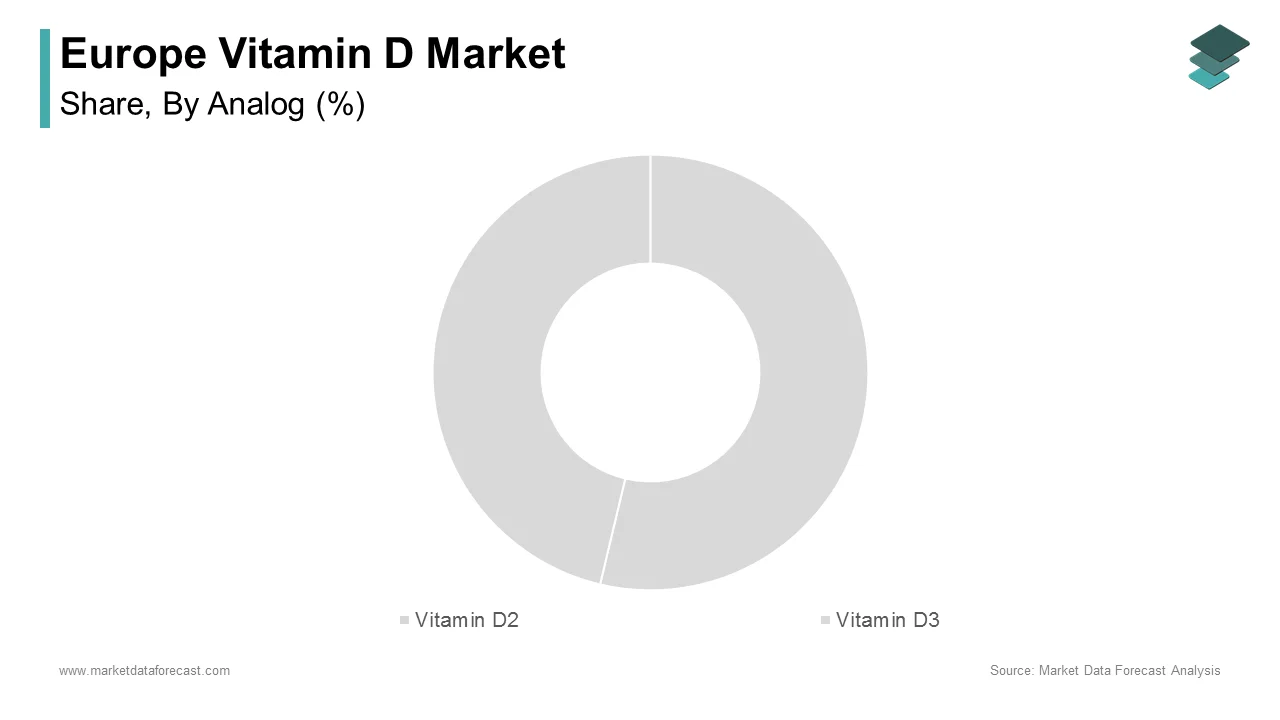
The Vitamin D2 segment is estimated to register the fastest CAGR of 6.2% from 2026 to 2034 due to specific niche demands in pharmaceutical applications and the expanding vegan food sector. While historically considered less potent, D2 remains the only form approved for certain high-dose prescription treatments in specific European jurisdictions and is essential for fortifying foods where animal-derived ingredients are strictly prohibited. An additional driver is the rapid expansion of the plant-based food industry in Europe, where manufacturers require a non-animal source of vitamin D to fortify products like mushroom-based meats, almond milks, and cereals while maintaining clean label credentials. As per the European Plant-Based Foods Association, sales of vegan alternatives have surged, creating a dedicated demand stream for ergocalciferol produced via UV irradiation of yeast or fungi. Besides, some pharmaceutical formulations for treating severe hypoparathyroidism continue to utilize D2 analogs due to distinct metabolic pathways that offer therapeutic advantages in rare conditions. Research from academic institutions in the Netherlands highlights that D2 stability in certain aqueous food matrices can be superior to D3, making it the preferred choice for beverage fortification projects. The development of bioengineered yeast strains capable of producing high yields of D2 has also reduced production costs, making it more competitive. This specialized utility in vegan fortification and specific medical therapies drives the accelerated growth of the D2 segment despite the overall dominance of D3.
By Application Insights
The pharmaceuticals segment led the Europe vitamin D market and captured a 55.8% share in 2025 because of the critical role of high-dose prescriptions in treating clinically diagnosed deficiencies and bone disorders. This supremacy is also supported by the established healthcare infrastructure, where general practitioners routinely screen for vitamin D levels and prescribe therapeutic doses that far exceed what is available in over-the-counter supplements or fortified foods. A further reason for this growth is the high prevalence of osteoporosis and rickets among specific demographics, necessitating regulated medical intervention rather than self-medication. As per the International Osteoporosis Foundation, millions of Europeans suffer from osteoporosis, a condition where high-dose vitamin D therapy combined with calcium is the standard of care to prevent fractures and improve bone density. National health systems in countries like Germany and the United Kingdom reimburse these prescription medications, ensuring high patient adherence and consistent volume sales independent of economic fluctuations. Furthermore, the strict regulatory environment in Europe limits the dosage strength of over-the-counter products, funneling patients with severe insufficiency directly into the pharmaceutical channel. A study indicates that prescription volumes for vitamin D analogs remain stable and high, particularly during winter months when deficiency rates peak. The trust placed in medically supervised treatment plans ensures that the pharmaceutical segment remains the primary revenue generator, underpinned by clinical guidelines that mandate aggressive repletion strategies for at risk populations.
The functional food and beverage segment is anticipated to witness the fastest CAGR of 7.8% during the forecast period, owing to the consumer shift toward preventative health and the desire for convenient nutrition delivery. Also, this segment is boosted by the innovation in food technology that allows for the seamless integration of vitamin D into everyday items without compromising taste or texture, making supplementation a passive part of daily diets. One more point that adds strength is the rising popularity of fortified dairy alternatives and breakfast cereals as consumers seek to address nutrient gaps through whole foods rather than pills. As per the European Commission's reports on food reformulation, there is a strong policy push encouraging manufacturers to fortify staple foods to combat widespread micronutrient deficiencies across the population. The success of mandatory fortification programs in Nordic countries has served as a model, inspiring voluntary initiatives in Southern and Central Europe, where deficiency rates are also high. Retail data from major supermarket chains in France and Spain shows double-digit growth in sales of vitamin D fortified plant milks and yogurts, reflecting changing consumer preferences. Additionally, the launch of vitamin D-enhanced beverages such as juices and sparkling waters appeals to younger demographics who prioritize wellness but dislike swallowing tablets. The alignment with the "food first" philosophy and the convenience of on-the-go consumption formats positions this segment as the most dynamic area of expansion in the market.
By End User Insights
The adult end user segment was the largest in the Europe vitamin D market and occupied a 60.2% over the forecast period. The swift expansion of the segment is fuelled by the high susceptibility of the working-age and aging population to deficiency. Added support for this segment comes from the physiological reality that skin's capacity to synthesize vitamin D decreases with age, coupled with lifestyle factors such as indoor employment and limited sun exposure that characterize modern adult life in Europe. This segment is also shaped by the widespread recognition among healthcare providers that adults, particularly those over fifty, require regular supplementation to maintain bone health and muscle function. As per Eurostat, the median age of the European population continues to rise, expanding the demographic cohort most at risk for osteomalacia and falls associated with low vitamin D levels. National health campaigns in countries like the United Kingdom explicitly advise all adults to take daily supplements during autumn and winter, creating a massive addressable market. Data from public health surveys point out that self-reported supplement usage is highest among adults aged forty to sixty-five who are proactive about managing long-term health risks. Furthermore, the correlation between low vitamin D status and chronic conditions such as cardiovascular disease and diabetes has heightened awareness among middle-aged consumers. The sheer size of the adult population, combined with sustained medical guidance, ensures this segment remains the primary driver of market volume.
The pregnant women segment is likely to experience the fastest CAGR of 8.5% between 2026 and 2034. The rapid expansion of the segment is propelled by intensified clinical focus on maternal and fetal health outcomes linked to vitamin D status. A further reason for this growth is emerging research highlighting the critical role of adequate vitamin D levels during pregnancy in preventing complications such as preeclampsia, gestational diabetes, and low birth weight. In addition, this area is supported by the update of prenatal care guidelines across Europe, which now universally recommend routine screening and supplementation for expectant mothers. As per the European Board and College of Obstetrics and Gynaecology, recent consensus statements emphasize that optimal vitamin D status is essential for fetal skeletal development and immune system programming, prompting obstetricians to prescribe higher doses more frequently. Public health initiatives in nations like Sweden and the Netherlands have launched targeted education campaigns informing pregnant women about the risks of deficiency, leading to increased uptake of prenatal vitamins containing vitamin D. Data from hospital records show a significant rise in the prescription rates of vitamin D supplements during the first trimester visits. Additionally, the growing trend of conscious parenting has led women to proactively seek out high-quality supplements to ensure the best start for their babies. This convergence of updated medical protocols, government advocacy, and heightened maternal awareness drives the exceptional growth rate of this specific end-user group.
REGIONAL ANALYSIS
Germany Vitamin D Market Analysis
Germany was the top performer in the Europe vitamin D market and held a 22.7% share in 2025. The leading position of the German market is driven by its robust healthcare system and high awareness of bone health issues. The country functions as a central hub for pharmaceutical consumption, characterized by a dense network of physicians who actively screen for and treat vitamin D deficiency. A further driving force behind this dominance is the statutory health insurance system, which covers prescription vitamin D therapies for at-risk groups, ensuring high accessibility and adherence to treatment regimens. As per the Robert Koch Institute, national health surveys reveal that a significant portion of the German population suffers from insufficiency, prompting aggressive public health responses and clinical interventions. The presence of major pharmaceutical manufacturers within the country further streamlines supply chains and promotes physician education on optimal dosing strategies. German clinical guidelines are among the most detailed in Europe, recommending specific supplementation protocols for various age groups and risk profiles, which reinforces prescribing habits. Data from the National Association of Statutory Health Insurance Physicians shows that millions of prescriptions for vitamin D are issued annually, reflecting the deep integration of these supplements into standard care. The country's aging demographic also contributes significantly, as older adults are prone to falls and fractures requiring pharmacological support. This combination of regulatory support, cultural acceptance of medical treatment, and economic capacity ensures Germany remains the largest and most influential market for vitamin D in the region.
United Kingdom Vitamin D Market Analysis
The United Kingdom followed closely behind Germany in the European vitamin D market and captured a share of 18.5% in 2025. The growth of the UK market is attributed to its unique top-down approach, where the government directly educates the population, creating a broad base of informed consumers who purchase over-the-counter products without needing a prescription. It is distinguished by its proactive national public health campaigns and clear governmental guidelines. The market status is defined by the explicit advice from the National Health Service, which recommends that everyone in the UK consider taking a daily vitamin D supplement during the autumn and winter months. As per Public Health England, the "Healthy Start" scheme provides free vitamins containing vitamin D to low-income families and pregnant women, ensuring equitable access and driving volume in the subsidized sector. The cultural habit of supplement taking is deeply entrenched, with retail data showing that vitamin D is one of the most purchased single-nutrient supplements in British pharmacies. Furthermore, the high latitude of the UK means natural synthesis is impossible for half the year, reinforcing the necessity of exogenous intake. Data from the Office for National Statistics emphasizes that supplement usage rates are among the highest in Europe, driven by decades of consistent messaging. The combination of strong institutional guidance, widespread retail availability, and a climate that necessitates supplementation ensures the UK remains a critical high-volume market.
France Vitamin D Market Analysis
France is another major player in the Europe vitamin D market due to its rapidly aging population and sophisticated pharmaceutical landscape. The market is influenced by a strong tradition of medicalized prevention where doctors play a pivotal role in recommending supplements to elderly patients to prevent frailty and fractures. A major factor is the demographic shift toward an older society, where conditions such as osteoporosis are prevalent and managed through comprehensive care plans that include high-dose vitamin D. As per the French National Institute of Health and Medical Research, studies linking vitamin D deficiency to increased mortality and morbidity in the elderly have spurred clinical action and updated geriatric guidelines. The French healthcare system provides reimbursement for prescribed vitamin D, particularly for post menopausal women and institutionalized elderly, ensuring steady demand. Clinical practices in France often favor intermittent high-dose regimens, which are uniquely popular in this market compared to daily dosing elsewhere. Data from the National Authority for Health reveals that prescription rates for vitamin D analogs remain consistently high, reflecting the urgency to manage bone health in an aging nation. Additionally, the strong presence of dermo cosmetic brands incorporating vitamin D into skincare for psoriasis management adds a secondary revenue stream. The cultural emphasis on longevity and quality of life motivates families to seek effective treatments, sustaining market growth.
Italy Vitamin D Market Analysis
Italy is moving ahead steadfastly in the Europe vitamin D market owing to the unique dynamic of high sun exposure coexisting with widespread deficiency due to lifestyle and cultural factors. The market is also supported by a growing realization among Italian clinicians that, despite the sunny climate, actual serum levels in the population remain suboptimal due to sun avoidance behaviors and dietary habits. An additional driving factor is the increasing medical consensus that clothing coverage, sunscreen use, and indoor lifestyles negate the benefits of geographic latitude, prompting a shift in prescribing patterns. As per the Italian Society of Osteoporosis, Mineral Metabolism and Skeletal Diseases, prevalence studies show that deficiency is rampant even in Southern regions, challenging the assumption that sun alone is sufficient. The Italian healthcare system has begun to integrate vitamin D screening more routinely into primary care, especially for women and the elderly. Data from the National Institute of Statistics indicates a rising trend in supplement sales as public awareness campaigns debunk the "sun myth." Furthermore, the fortification of dairy products is gaining traction as a voluntary strategy among manufacturers to address gaps. The combination of correcting misconceptions, an aging population, and evolving clinical practices transforms Italy from a low-priority market into a significant growth engine for vitamin D products.
Sweden Vitamin D Market Analysis
Sweden is predicted to expand in the European market during the forecast period by serving as a global benchmark for successful mandatory fortification policies and high public awareness. The market status reveals decades of government-led initiatives that have effectively reduced the incidence of rickets and severe deficiency through the mandatory addition of vitamin D to milk fats and spreads. The driving factor is this longstanding regulatory framework, which ensures that the entire population receives a baseline level of vitamin D through staple foods, creating a mature and stable market environment. As per the Swedish Food Agency, the fortification program is regularly evaluated and adjusted to maintain optimal population status, demonstrating a commitment to evidence-based public health. While the baseline is high, there is still significant demand for supplements among specific groups, such as immigrants from darker-skinned backgrounds and the elderly who require higher doses than food can provide. Data from the Public Health Agency of Sweden shows that supplement usage is highly targeted and medically driven rather than speculative. The high level of trust in state recommendations means that when authorities advise additional supplementation, compliance is exceptionally high. Sweden's approach illustrates how policy can shape a market, ensuring that while total volume might be lower than in larger nations, the penetration rate and appropriateness of use are unparalleled, making it a key strategic market for premium and specialized formulations.
COMPETITION OVERVIEW
The competition in the Europe vitamin D market is characterized by intense rivalry among multinational ingredient giants, specialized pharmaceutical companies, and numerous private label manufacturers striving for dominance in a highly regulated environment. Major players leverage their extensive research capabilities and global supply chains to introduce innovative formulations that address specific health needs, such as bone density and immune support, while maintaining strict compliance with European Food Safety Authority guidelines. The landscape is fragmented with many regional actors competing on price and local brand loyalty, particularly in the over-the-counter supplement sector. Competitive dynamics are heavily influenced by the ability to secure sustainable and vegan-certified raw materials, which have become critical differentiators for modern consumers. The shift toward preventative health has intensified the race to develop superior delivery mechanisms like liquid drops and chewables that offer better absorption and convenience. Regulatory compliance regarding health claims and fortification levels adds another layer of complexity, forcing companies to invest substantially in legal and scientific validation. Price wars are common in commodity segments, but premium niches remain resilient due to the critical nature of efficacy and trust. Overall, the market demands continuous adaptation to scientific advancements and evolving consumer preferences to sustain growth and market relevance.
KEY MARKET PLAYERS
A few major players of the Europe vitamin D market include
- Nestlé S.A
- BASF
- Pfizer, Inc
- Koninklijke DSM N.V
- ADM Alliance Nutrition, Inc
- Kraft Foods Group
Top Strategies Used by Key Market Participants
Key players in the Europe vitamin D market primarily employ product innovation strategies focused on developing advanced delivery systems such as liposomal formulations and gummies that improve bioavailability and consumer adherence. Companies invest heavily in research and development to create vegan-certified vitamin D3 sourced from lichen to capture the growing plant-based consumer segment. Another major strategy involves strategic partnerships with public health bodies and government agencies to support mandatory fortification programs, which drive volume sales through staple foods. Market participants frequently engage in vertical integration by securing raw material supplies and expanding manufacturing capacities to ensure cost stability and mitigate supply chain disruptions. Firms also focus on digital marketing and educational campaigns to raise awareness about deficiency risks and the benefits of supplementation among target demographics. Sustainability initiatives, such as obtaining non-GMO and organic certification,s serve as crucial tactics to differentiate products in a competitive landscape. Additionally, companies optimize their distribution networks to enhance availability in pharmacies and online retail channels, ensuring easy access for consumers across the region.
Leading Players in the Europe Vitamin D Market
- DSM-Firmenich operates as a global leader in nutrition and health solutions with a profound impact on the Europe vitamin D market through its extensive portfolio of high-purity cholecalciferol and ergocalciferol. The company contributes significantly to the global supply chain by producing sustainable vitamin D3 derived from lanolin and lichen, catering to both pharmaceutical and food fortification sectors. Recent actions to strengthen their market position include the launch of innovative micro-encapsulation technologies that enhance the stability and bioavailability of vitamin D in complex food matrices like plant-based beverages. DSM-Firmenich has also expanded its production capacity in the Netherlands to meet the rising demand for vegan-certified vitamin D sources across Europe. The firm actively collaborates with public health organizations to support national fortification programs aimed at eradicating deficiencies. DSM-Firmenich ensures compliance with stringent European regulations by integrating sustainability into its sourcing and manufacturing processes. This approach also provides premium ingredients that enable customers to develop effective, clean-label products for diverse consumer needs.
- BASF SE stands as a dominant force in the Europe vitamin D market, leveraging its chemical expertise to manufacture high-quality vitamin D3 precursors and finished products for various applications. The company plays a critical role in the global market by supplying essential raw materials to blenders and formulators who produce finished supplements and fortified foods worldwide. Recent actions to strengthen their market position involve investing in advanced biotechnological processes to improve the efficiency and environmental footprint of vitamin D production at their German facilities. BASF has also introduced new stabilized forms of vitamin D designed specifically for use in gummy supplements and functional beverages, which are rapidly growing categories in Europe. The firm prioritizes supply chain resilience by diversifying its raw material sources and optimizing logistics networks to ensure consistent delivery despite global disruptions. BASF engages in strategic partnerships with key industry players to co-develop novel delivery systems that maximize nutrient absorption. Their commitment to rigorous quality control and regulatory compliance reinforces their reputation as a reliable partner for major European brands seeking to enhance their product portfolios with effective and safe vitamin D solutions.
- Glanbia plc functions as a key player in the Europe vitamin D market, specializing in the development of customized nutritional ingredients and finished consumer health products containing vitamin D. Their contribution to the global market is defined by a strong focus on innovation in bone health and immune support formulations that combine vitamin D with calcium and other synergistic nutrients. Recent actions to strengthen their market position include the acquisition of specialized nutrition companies to broaden their ingredient portfolio and expand their direct-to-consumer supplement brands across European markets. Glanbia has launched new clinically backed vitamin D formulations tailored for specific demographics such as the elderly and pregnant women, addressing unique physiological needs. The company invests heavily in research to validate the efficacy of its products through clinical trials, which builds trust with healthcare professionals and regulators. Glanbia also emphasizes sustainability by sourcing raw materials responsibly and reducing carbon emissions in its manufacturing operations. This holistic approach allows them to offer comprehensive solutions that meet the evolving demands of European consumers and manufacturers seeking high-performance and ethically produced vitamin D ingredients.
MARKET SEGMENTATION
This research report on the Europe vitamin D market has been segmented and sub-segmented based on Analog, Application, End User & region.
By Analog
- Vitamin D2
- Vitamin D3
By Application
- Pharmaceuticals
- Functional Food and Beverage
- Personal Care
- Pet Feed
- Animal Feed
By End User
- Adult
- Children
- Pregnant Women
By Region
- UK
- France
- Spain
- Germany
- Italy
- Russia
- Sweden
- Denmark
- Switzerland
- Netherlands
- Turkey
- Czech Republic
- Rest of Europe