- Product Description Description
- Table of Contents TOC
- List of Table & Figure LOT
- Get Free Sample PDF Sample PDF
Market Size, 2025
$6.06 BnMarket Estimate, 2026
$6.42 BnMarket Forecast, 2034
$10.15 BnCAGR, 2026–2034
5.9%Global Insomnia Market Size, Growth, Trends & Forecast (2026–2034)
The size of the global insomnia market was valued at USD 6.06 billion in 2025, is anticipated to reach USD 6.42 billion in 2026, and is projected to scale up to USD 10.15 billion by 2034, registering a compound annual growth rate (CAGR) of 5.9% during the forecast period from 2026 to 2034. Driven by surging mental health challenges, changing modern lifestyles, and increasing R&D investments in advanced sleep therapeutics, the market continues to expand steadily.
Key Executive Metrics (At-a-Glance)
- 2025 Base Valuation: USD 6.06 Billion
- 2026 Current Valuation: USD 6.42 Billion
- 2034 Forecast Valuation: USD 10.15 Billion
- Compound Annual Growth Rate (CAGR): 5.9% (2026–2034)
- Dominant Therapy Type Segment: Pharmacological Therapy (led by high prescription and OTC sleep aid demand)
- Dominant Drug Class Segment: Orexin Antagonists (favored for minimal cognitive impairment and fewer side effects)
- Dominant Distribution Channel Segment: Hospitals & Retail Pharmacies (backed by professional diagnostics and expert prescription governance)
- Dominant Region: North America (accounting for the highest market share due to widespread sleep disorder prevalence and advanced healthcare frameworks)
- Fastest-Growing Region: Asia-Pacific (propelled by high performance pressures, changing work schedules, and an aging demographic)
Core Market Drivers
- Rising Mental Health Issues: Escalating global rates of stress, anxiety, and depression disrupting regular circadian rhythms and sleep cycles.
- Lifestyle & Demographic Shifts: High consumption of caffeine, electronic screen exposure, night-shift culture, and a growing senior population prone to chronic sleep loss.
- Therapeutic Innovation: Development of advanced treatment classes like dual orexin receptor antagonists and digital prescription therapeutics.
Primary Market Restraints & Challenges
- Drug Addiction & Tolerance Fears: Potential dependency associated with long-term pharmacological use discouraging patient compliance.
- Lack of Universal Efficacy & Awareness: Variable patient response to sleep therapies alongside a widespread tendency among adults to treat chronic sleep deprivation as a trivial issue.
Global Insomnia Market Segmentation Breakdown
| Segment Category | Leading Sub-Segment / Scope | Key Focus Areas |
|---|---|---|
| By Therapy Type | Pharmacological Therapy (Dominant) & Non-Pharmacological Therapy | OTC/prescription sleep aids, CBT, hypnotherapy, medical devices |
| By Drug Class | Orexin Antagonists (Dominant) | Melatonin antagonists, benzodiazepines, antidepressants, nonbenzodiazepines |
| By Distribution Channel | Hospitals & Retail Pharmacies (Dominant) | Online pharmacies, drug stores, clinic dispensaries |
| By Region | North America (Leader) & Asia-Pacific (Fastest-Growing) | Europe, Latin America, and Middle East & Africa expansions |
Major Industry Players Profiled
Key market competitors steering the global landscape include Astellas Pharma Inc., Aurobindo Pharma Limited, Biocodex, Eisai Co. Ltd., Mallinckrodt Pharmaceuticals, Merck & Co. Inc., Neurim Pharmaceuticals Inc., Pfizer Inc., Sanofi S.A., Sumitomo Dainippon Pharma Co. Ltd., Takeda Pharmaceutical Company Limited, and Vanda Pharmaceuticals Inc.
 Download Free Sample Report
Global Insomnia Market Size
The size of the global insomnia market was worth USD 6.06 billion in 2025. The global market is anticipated to grow at a CAGR of 5.9% from 2026 to 2034 and be worth USD 10.15 billion by 2034 from USD 6.42 billion in 2026.

Insomnia is a health condition wherein the patient cannot achieve a proper sleep schedule and either goes to bed too late or wakes up too early, leading to reduced rest time. Insomnia can occur for multiple reasons and may affect an individual's mood/energy/focus, and health. An average person requires around 7-8 hours of sleep in a day to feel well-rested. When this minimum requirement is not met, the body faces several consequences like lethargy, underperformance at the workplace/school/college, an inactive brain leading to slow reaction time, and several mental health problems like anxiety and depression. In addition, insomnia can result from various triggers like stress from daily life, irregular sleeping habits, jobs with odd timings, etc. Acute insomnia only lasts a few days to weeks; however, chronic insomnia may last for months. High consumption of caffeine and the ingestion of several medications which consume caffeine can also result in insomnia, and small changes in the sleeping arrangements, especially for adults, can also cause sleep loss.
MARKET DRIVERS
The rising mental health problems in the current generations majorly drive the global insomnia market growth.
The growing stress and difficulty in managing daily situations lead people to fall into a late sleep cycle and become insomniacs. According to CDC statistics, more than 1 in every 5 U.S. adults have a mental illness, and according to WHO, 20% of the world's children and adolescents are dealing with a mental illness, with suicide being the second most common reason for death in 15-29-year-olds. The growing cases of insomnia are also expected to support the market's growth. According to Healthline's recent 2019 review, around 75% of the 60 and older populations suffer from insomnia, and around 20% of preteens also suffer, and in every ten persons, has symptoms of chronic insomnia. It is a pervasive problem, and its prevalence has recently increased.
The growing research and development in the treatment for insomnia support the market's growth. In addition, the new advancements in treatment and the growing awareness and purchase of drugs and services support the market's growth. The growing awareness about psychotherapy, cognitive behavioral therapies, and medicines like triazolam, lorazepam, etc., support market growth. In addition, the rising interest in nonmedicinal treatments like yoga, meditation, hypnotherapy, etc., supports the market's growth. In addition, the growth of chronic conditions leading to insomnia, like high Blood pressure, High sugar, cancer, and menopause, supports the market's growth. Latest techniques like Transcranial alternating current stimulation, a non-invasive brain stimulation, are also expected to help treat insomnia.
Additionally, insomnia can cause several serious health hazards upon long-term presence, like asthma, chronic pains, obesity, substance abuse, low immune response, diabetes, B.P., and mental health problems, leading to more awareness about the problem. The growing changes in lifestyles are also leading to more insomnia prevalence. The growing alcohol and cigarette consumption and club culture, especially among the gen z generations, support the market's growth. In addition, the growing night shift and movies and show-watching culture are leading to more cases of insomnia. The rising senior population also contributes to this demand, as insomnia is more common among the older population.
MARKET RESTRAINTS
Even though insomnia medication can be helpful in treatment, it can become addictive upon long-term use and may lead to similar effects as substance abuse. Therefore, the fear of medicine addiction discourages people from approaching insomnia treatment. Additionally, not all patients react accordingly to the insomnia treatment procedures like therapies and medications, and for some, it may prove ineffective, indicating that more research is required in the field, leading to a drawback to market growth. Many adults avoid insomnia problems as something trivial and continue with their daily lives. However, the lack of awareness regarding the ill effects of this problem and the busy life schedules which don't allow for proper investment of time in personal care can also lead to a restraint in market growth.
REPORT COVERAGE
| REPORT METRIC | DETAILS |
| Market Size Available | 2025 to 2034 |
| Base Year | 2025 |
| Forecast Period | 2026 to 2034 |
| Segments Analysed | By Therapy Type, Drug Class, Distribution Channel and Region |
| Various Analyses Covered | Global, Regional & Country Level Analysis, Segment-Level Analysis, Drivers, Restraints, Opportunities, Challenges, PESTLE Analysis, Porter’s Five Forces Analysis, Competitive Landscape, Analyst Overview on Investment Opportunities |
| Regions Analysed | North America, Europe, Asia Pacific, Latin America, Middle East, and Africa |
| Market Leader Profiled | Astellas Pharma Inc., Aurobindo Pharma Limited, Biocodex, Eisai Co. Ltd., Mallinckrodt Pharmaceuticals, Merck & Co. Inc., Neurim Pharmaceuticals Inc., Pfizer Inc., Sanofi S.A., Sumitomo Dainippon Pharma Co. Ltd. (Sumitomo Chemical Co. Ltd.), Takeda Pharmaceutical Company Limited and Vanda Pharmaceuticals Inc. |
SEGMENTAL ANALYSIS
By Therapy Type Insights
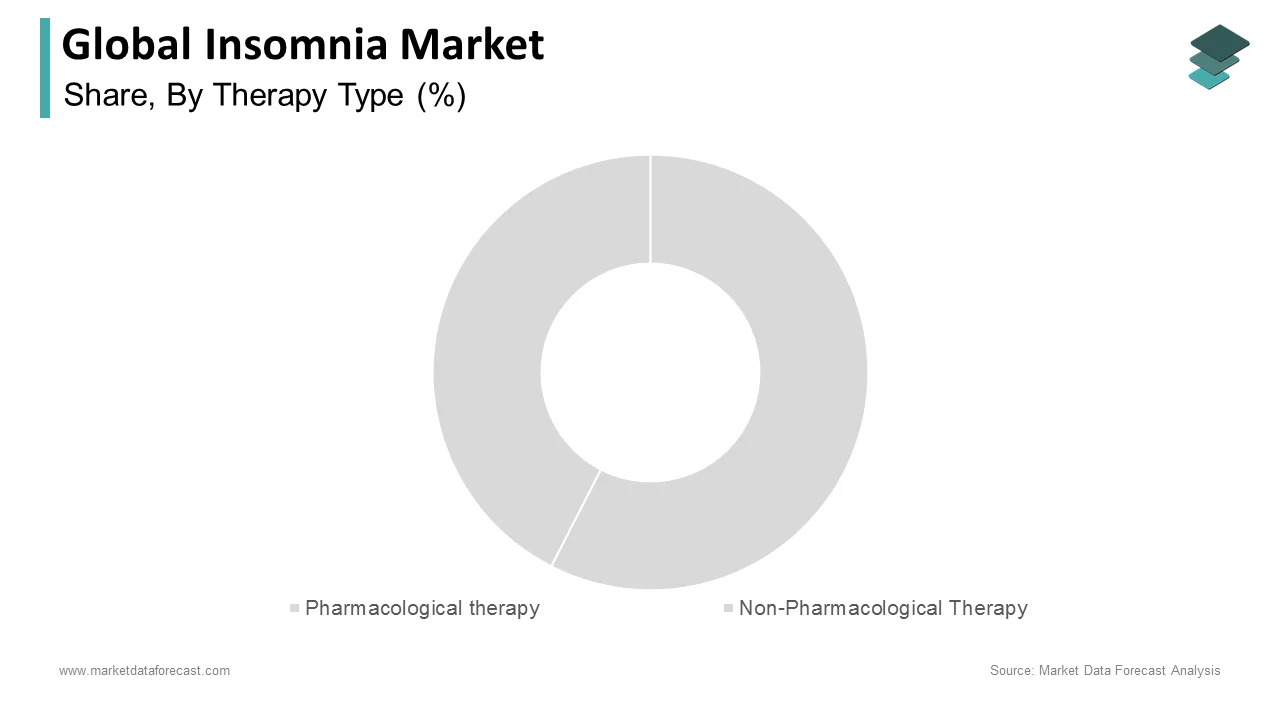
The pharmacological segment is expected to dominate the market during the forecast period due to the rising cases of prescription-based medicine for insomnia support the rise of this segment. The growing cases of acute insomnia requiring over-the-counter drugs and chronic ones needing prescription drugs support the segment's growth. Medicines are the most effective and fast solution to insomnia, leading to more demand for the segment.The non-pharmacological therapy segment is also expected to grow due to the rising cases of people preferring nonmedicinal treatment, as insomnia medicines can become addictive. The more natural methods with lesser side effects, like CBT, talk therapy, etc., are on the rise due to increased preference supporting the market's growth.
By Drug Class Insights
The Orexin Antagonist segment is expected to dominate the market during the forecast period due to fewer side effects and less risk of getting attached to the drug. In addition, unlike several other insomnia drugs, these drugs also create limited cognitive impairment and make it easier for the patient to wake up on adequate stimulation from the outside. The antidepressants and benzodiazepine segments are also expected to grow due to the commonality of some drugs like doxepin and Temazepam. These are often recommended by doctors due to their compelling nature and advised to patients with chronic insomnia.
By Distribution Channel Insights
The hospital segment is expected to dominate the market during the forecast period due to the high credibility associated with hospitals and the fact that most insomnia meds are given on prescription and diagnosis. In addition, due to the presence of several qualified physicians in psychology at hospitals, it is the most common end user of the market. The drug stores and online segments are also expected to grow due o the increasing usage of over-the-counter drugs and precautions for insomnia.
REGIONAL ANALYSIS
North America Insomnia Market Analysis
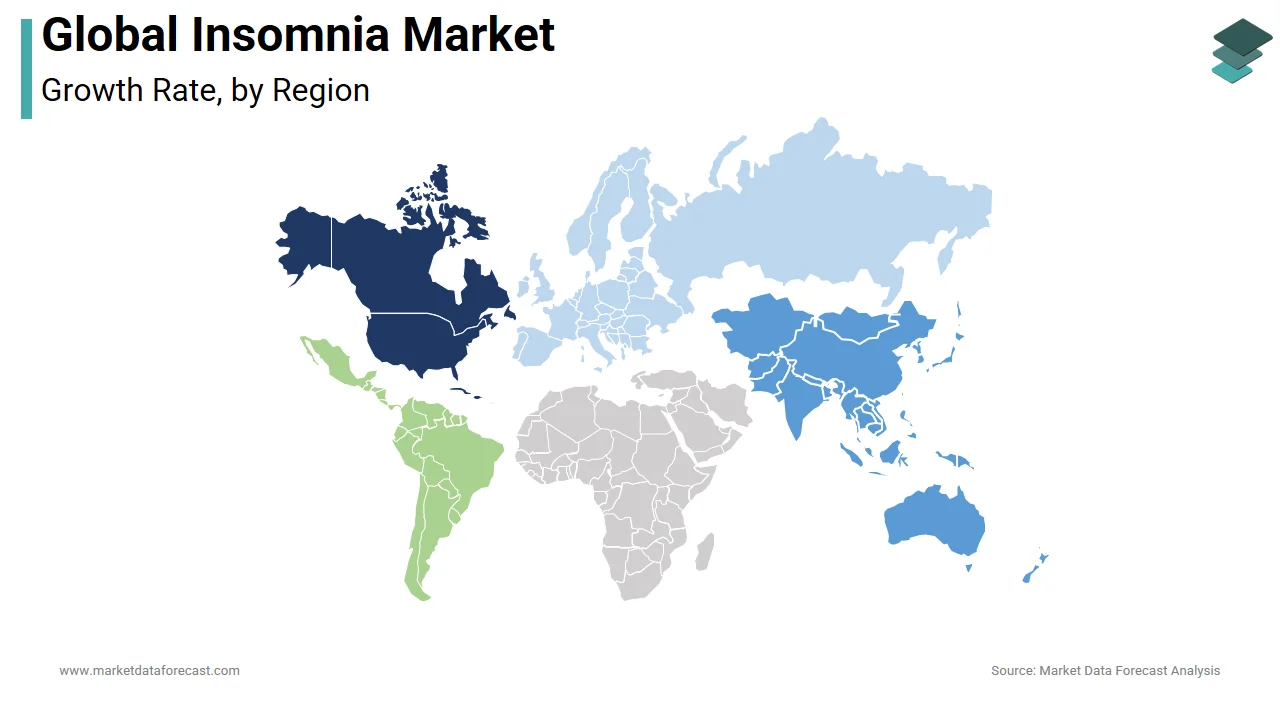
The North American Region is expected to dominate the market during the forecast period due to good healthcare services, centers for insomnia treatments, and stressful job schedules. In addition, several regional key market players and the high investment in insomnia treatment support the market's growth. Furthermore, the rising chronic cases and insomnia problems in the U.S. also support the market's growth. According to statistics, 50 to 70 million people in the U.S. have sleep disorders, and around 9 to 15% of U.S. adults deal with insomnia. Therefore, the high awareness and investment in the field support the market growth in the region. In addition, there have also been several product launches and innovations in treatment for insomnia in the region, supporting the market's growth.
Asia-Pacific Insomnia Market Analysis
The Asia-Pacific market is also expected to grow due to the rising geriatric population in the region facing issues with sleep. Additionally, the rising chronic diseases in the region and odd work timings support the market's growth. Many Asian citizens work for international agencies while being remote to their countries and have odd sleep schedules, leading to insomnia problems supporting the market growth in the region. The high pressure for performance in the region also supports the market's growth. The extended school hour systems in countries like South Korea, Japan, etc., also lead to more teenagers losing sleep and supporting the need for the market.
KEY PLAYERS MARKET
Some of the companies that are playing a dominating role in the global insomnia market include
- Astellas Pharma Inc.
- Aurobindo Pharma Limited
- Biocodex
- Eisai Co. Ltd.
- Mallinckrodt Pharmaceuticals
- Merck & Co. Inc.
- Neurim Pharmaceuticals Inc.
- Pfizer Inc.
- Sanofi S.A.
- Sumitomo Dainippon Pharma Co. Ltd. (Sumitomo Chemical Co. Ltd.)
- Takeda Pharmaceutical Company Limited
- Vanda Pharmaceuticals Inc.
GLOBAL INSOMNIA MARKET NEWS
- In May 2023, Researchers discovered that rapid eye movement (REM) sleep behavior disorder is significantly reduced by sleep medicines, frequently used to treat insomnia or difficulty falling and staying asleep. In addition, the study's results revealed that these drugs, often referred to as dual orexin receptor antagonists, would have fewer side effects.
- In May 2023, the 21st floor of the Grand InterContinental Seoul Parnas, a five-star hotel in southern Seoul, provided excellent service for visitors from February to April. The mattresses in the rooms had sleep-detecting technology called Somnum, created by the Korean digital healthcare business HoneyNaps, as part of the "Explore New Sleep" package. It monitors the visitors' biosignals as they sleep and uses an artificial intelligence (A.I.) algorithm to analyze the acquired polysomnographic results.
- In May 2023, ALPHARETTA, GA, a leader in global sleep health, acquired Somryst, the first Prescription Digital Therapeutic (PDT) that has received FDA clearance and provides people with chronic insomnia with an efficient first-line treatment. The Nox value-based healthcare programs are strengthened by this acquisition, which aims to reframe sleep as a crucial and effective intervention tool for managing chronic health disorders.
- In December 2022, Synopsis According to the company's regulatory application, the U.S. Food and Drug Administration (USFDA) has permitted Triazolam tablets in strengths of 0.125 mg and 0.25 mg. On Friday, Zydus Lifesciences Ltd. announced that the U.S. health agency had given its generic version of Triazolam pills, used to treat insomnia temporarily, the get-ahead to go on sale. According to the company's regulatory application, the U.S. Food and Drug Administration (USFDA) has permitted Triazolam tablets in strengths of 0.125 mg and 0.25 mg.
MARKET SEGMENTATION
This research report on the global Insomnia Market has been segmented based on therapy type, drug class, distribution channel, and region.
By Therapy type
- Pharmacological therapy
- Over-the-counter sleep aids
- Prescription sleep aids
- Non-Pharmacological Therapy
- cognitive behavioral therapy
- Hypnotherapy
- Medical devices
- Others
By Drug Class
- Melatonin Antagonist
- Benzodiazepines
- Antidepressants
- Orexin Antagonist
- Nonbenzodiazephines
- Others
By Distribution Channel
- Retail Pharmacies
- Hospitals
- Online Pharmacies
- Drug Stores
By Region
- North America
- Europe
- Asia-Pacific
- Latin America
- MEA