- Product Description Description
- Table of Contents TOC
- List of Table & Figure LOT
- Get Free Sample PDF Sample PDF
Market Size, 2025
$3.18 BnMarket Estimate, 2026
$3.34 BnMarket Forecast, 2034
$4.90 BnCAGR, 2026–2034
4.91%Italy Wet Pet Food Market Size, Growth, Trends & Forecast (2026–2034)
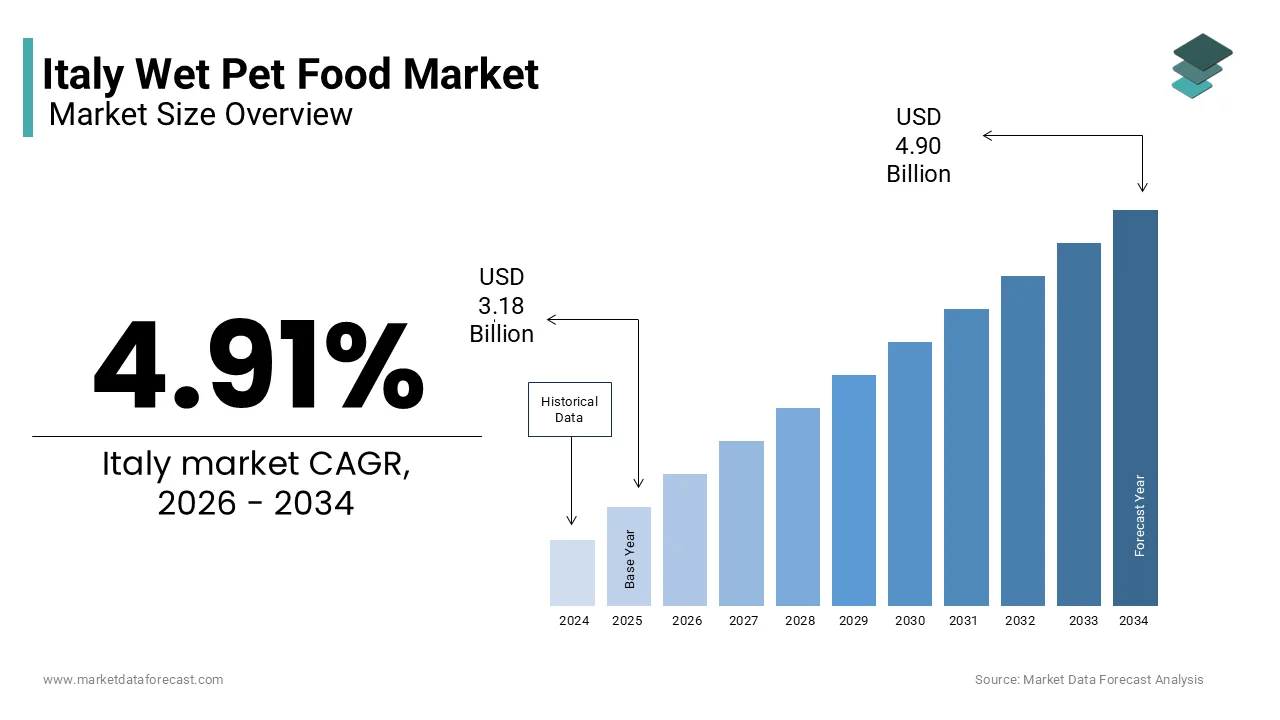
The Italy wet pet food market size was valued at USD 3.18 billion in 2025, is estimated to reach USD 3.34 billion in 2026, and is projected to scale up to USD 4.90 billion by 2034, growing at a compound annual growth rate (CAGR) of 4.91% from 2026 to 2034. Propelled by high pet humanization, deep cultural integration of animals into family life, rising premiumization, and specialized health needs for senior or indoor pets, the market continues to expand dynamically across residential and commercial sectors.
Key Executive Metrics (At-a-Glance)
- 2025 Base Valuation: USD 3.18 Billion
- 2026 Current Valuation: USD 3.34 Billion
- 2034 Forecast Valuation: USD 4.90 Billion
- Compound Annual Growth Rate (CAGR): 4.91% (2026–2034)
- Top Performing Segment: Cat Food (Driven by a high urban cat population and the physiological need for moisture-rich diets to support renal health).
Core Market Drivers
- Pet Humanization & Cultural Bond: Over 70% of Italian pet owners treat companions as family members, fueling demand for natural, high-meat premium diets.
- Health & Hydration Benefits: Increasing senior pet populations require moisture-rich wet food to prevent urinary tract issues and support digestion.
Primary Market Restraints & Challenges
- Economic Pressures & Inflation: High inflation rates eroding household disposable incomes, forcing price-sensitive consumers toward dry kibble or private labels.
- Packaging Waste & Supply Chain Volatility: Environmental concerns regarding single-use metal cans and multi-layer pouches, coupled with raw material scarcity for fish and poultry.
Italy Wet Pet Food Market Segmentation Highlights
| Segment Category | Largest Segment | Fastest-Growing / Key Segment |
|---|---|---|
| By Type | Cat Food Segment | Dog Food Segment (Fastest-growing at 5.2% CAGR) |
| By Application | Residential Segment | Commercial Segment (Fastest-growing at 6.2% CAGR) |
| By Distribution Channel | Offline Retailers | Online Retailers (Fastest-growing at 10.2% CAGR) |
Major Industry Players Profiled
Key global and domestic leaders shaping the Italy wet pet food market include Nestlé S.A., Mars Incorporated, Monge & C. S.p.A., Affinity Petcare S.A., Hill’s Pet Nutrition, Inc., Farmina Pet Foods, Almo Nature S.p.A., Agras Pet Foods S.p.A. (Schesir), Morando S.p.A., Vitakraft Italia S.p.A., Sanypet S.p.A. (Forza10), Camon S.p.A., United Petfood Italia S.r.l., VAFO Group, Dechra Pharmaceuticals PLC, and Virbac SA.
Italy Wet Pet Food Market Size
The Italy wet pet food market size was valued at USD 3.18 billion in 2025 and is estimated to reach USD 4.90 billion by 2034 from USD 3.34 billion in 2026, growing at a CAGR of 4.91%.
Italy is likely to experience steady market expansion over the next few years, driven by rising pet humanization and premium product adoption. The Italy wet pet food market is characterized by high palatability and moisture content, which aligns with the physiological needs of pets and the culinary preferences of Italian owners. According to the Italian National Institute of Statistics, approximately 65% of households in Italy own at least one pet, reflecting a deep cultural integration of animals into family life. As per data from Assalco, the association representing the Italian pet food industry, cat ownership exceeds dog ownership in urban areas, driving specific demand for wet formats that support renal health and hydration. The market is influenced by strong regional traditions of fresh food consumption, which translate into a preference for high-quality meat and fish ingredients in pet diets. Regulatory frameworks under the European Union ensure strict safety and labeling standards, while local manufacturing capabilities support a robust supply chain. Consequently, the Italy Wet Pet Food Market serves as a dynamic component of the broader European landscape, where premiumization and humanization trends drive continuous product innovation and value growth.
MARKET DRIVERS
Deep Cultural Integration and Humanization of Pets
The profound cultural bond between Italians and their companion animals fuels the Italy wet pet food market expansion. According to Eurispes, the Italian consumer research institute, over 70% of pet owners consider their animals as full family members, leading to increased willingness to spend on high-quality nutritious diets. As per statistics from Assalco, spending on premium pet food has increased by 12% annually, as owners seek products with recognizable natural ingredients such as chicken, beef, and fish that reflect their own culinary standards. This emotional connection directly influences market dynamics because wet food is perceived as more appetizing and closer to fresh meat than dry kibble. The Italian tradition of valuing fresh and authentic food extends to pets, driving demand for wet formats that offer superior texture and aroma. Manufacturers respond by developing recipes with high meat content and no artificial additives, catering to discerning consumers. This cultural predisposition ensures sustained demand for wet pet food, as owners prioritize the sensory enjoyment and health of their companions, treating them with the same care as human relatives.
Health Benefits and Hydration Requirements for Aging Pets
The increasing prevalence of senior pets and the associated need for specialized nutritional support further contributes to the Italy wet pet food market growth, due to its high moisture content and ease of digestion. According to the European Pet Food Industry Federation, the population of senior dogs and cats in Italy has grown by 15% over the last five years, creating a larger demographic requiring diets that support kidney function and dental health. As per data from veterinary associations in Italy, wet food provides up to 80% moisture, which is critical for preventing urinary tract issues and dehydration in older animals who may have reduced thirst drives. This clinical necessity directly drives market expansion, as veterinarians recommend wet diets for managing chronic conditions such as renal insufficiency and obesity. The soft texture of wet food also benefits pets with dental problems, making it a preferred choice for aging populations. Pet owners are increasingly educated about these health benefits, leading to higher adoption rates of therapeutic and senior-specific wet formulas. Consequently, the health-driven segment ensures steady growth, as the pet population ages and owners seek functional foods that enhance longevity and quality of life.
MARKET RESTRAINTS
Economic Volatility and Inflationary Pressures
Persistent economic instability and rising inflation rates hampers the Italy wet pet food market growth. According to the Italian National Institute of Statistics, the inflation rate reached 8.7% in recent years, eroding household disposable income and forcing consumers to prioritize essential human food expenses over premium pet care. As per data from Istat, retail sales of non-essential goods, including luxury pet food items, declined by 5%, as families switched to more affordable dry food alternatives or private-label brands. This financial pressure directly impacts market dynamics because wet pet food is typically more expensive per calorie than dry kibble, due to higher packaging and transportation costs. Price-sensitive consumers may reduce the frequency of wet food feeding or mix it with cheaper dry food to manage budgets. Manufacturers face challenges in maintaining profit margins while keeping prices accessible, leading to potential formulation compromises. Consequently, economic constraints limit the growth of the premium wet segment, as consumers trade down to value options, thereby restraining overall market value expansion despite stable volume demand.
Environmental Concerns Regarding Packaging Waste
Growing environmental awareness and stringent regulations regarding single-use packaging pose a notable restraint on the wet pet food market, which relies heavily on metal cans and plastic pouches. According to the European Environment Agency, packaging waste from the food sector accounts for a significant portion of municipal solid waste, prompting calls for sustainable alternatives in Italy. As per data from Legambiente, the national environmental organization, over 60% of Italian consumers express concern about the recyclability of pet food packaging, influencing their purchasing decisions toward eco-friendly options. This perception directly affects market dynamics, as traditional wet food formats are viewed as less sustainable compared to bulk dry food or refillable systems. The complexity of recycling multi-layer pouches and the energy intensity of can production create reputational risks for brands that do not adopt circular economy principles. Regulatory pressures, such as the EU Packaging and Packaging Waste Regulation, require manufacturers to invest in costly redesigns and recycling infrastructure. These compliance costs and consumer hesitancy slow down the adoption of wet formats among environmentally conscious segments. Until viable sustainable packaging solutions are widely available and accepted, this environmental barrier will continue to constrain market growth and brand loyalty.
MARKET OPPORTUNITIES
Expansion of Premium Natural and Organic Formulations
The rising demand for natural, organic, and free-from-additive pet food is a significant opportunity for manufacturers to introduce high-value wet products that align with healthy lifestyle trends. According to the Italian Organic Farming Association, the market for organic food products in Italy has grown by 10% annually, reflecting a broader consumer shift toward clean-label items. As per statistics from Nielsen IQ, sales of natural pet food products have increased by 18%, as owners seek transparency in ingredient sourcing and avoidance of artificial preservatives. This trend directly benefits the wet food segment because moist formats allow for the inclusion of fresh meats and vegetables without the need for excessive processing or synthetic binders. Manufacturers can leverage Italy’s strong agricultural heritage to source local high-quality ingredients such as Tuscan chicken or Adriatic fish, creating unique selling propositions. Certification by organic bodies enhances brand credibility and justifies premium pricing. Retailers are expanding shelf space for natural pet food lines, catering to this niche. Consequently, this segment offers substantial growth potential, as manufacturers innovate with clean-label recipes that appeal to health-conscious pet owners willing to pay for superior quality and ethical production standards.
Development of Functional and Therapeutic Wet Diets
The increasing focus on preventive healthcare and specific dietary needs creates opportunities for functional wet pet foods that address conditions such as weight management, allergies, and digestive sensitivity. According to the European Society of Veterinary Internal Medicine, the prevalence of food sensitivities and obesity in companion animals is rising, driving demand for specialized therapeutic diets. As per data from veterinary clinics in Italy, prescriptions for hypoallergenic and weight-control wet foods have increased by 20%, as veterinarians recognize the efficacy of moist diets in managing these conditions. This clinical demand directly drives market expansion, as manufacturers collaborate with veterinary professionals to develop science-backed formulations. Wet food allows for precise nutrient density and palatability, which is crucial for pets with reduced appetites due to illness. The ability to incorporate functional ingredients such as probiotics, omega-3 fatty acids, and joint supplements into wet formats enhances their therapeutic value. Pet owners are increasingly proactive about health management, seeking products that offer medical benefits beyond basic nutrition. This specialization allows brands to differentiate themselves and capture loyal customer bases in the high-margin veterinary channel, ensuring sustained growth in the functional wet food segment.
MARKET CHALLENGES
Supply Chain Disruptions and Raw Material Scarcity
The reliance on specific high-quality protein sources such as fish and poultry makes the wet pet food market vulnerable to supply chain disruptions and raw material scarcity, which is a notable challenge to the Italy wet pet food market. According to the Food and Agriculture Organization of the United Nations, global fish stocks have declined by 10% in recent decades, affecting the availability and cost of key ingredients like tuna and salmon used in premium wet foods. As per data from the Italian Ministry of Agricultural, Food and Forestry Policies, fluctuations in livestock feed costs have increased the price of meat by 15%, impacting the profitability of wet food manufacturers. These supply-side pressures directly affect market dynamics by forcing producers to either raise prices, risking consumer backlash, or reformulate products, potentially compromising quality. Geopolitical tensions and trade restrictions further complicate the sourcing of ingredients from international markets. Climate change impacts on agriculture also threaten the consistency of vegetable and grain supplies used in some formulations. Consequently, manufacturers face ongoing challenges in maintaining stable production costs and product consistency, requiring robust risk management strategies and diversified sourcing networks to mitigate the impact of volatile raw material markets.
Intense Competition from Private Label Brands
The proliferation of high-quality private-label wet pet food brands offered by major supermarket chains poses a significant challenge to established national and international brands. According to the Italian Distribution Observatory, private-label products now account for over 30% of total pet food sales in large retail outlets, due to their competitive pricing and improving quality standards. As per data from Euromonitor International, consumers increasingly perceive private-label wet foods as comparable to branded equivalents in terms of ingredient quality and palatability, leading to brand-switching behavior. This competitive dynamic directly impacts market dynamics by eroding the market share and pricing power of established brands. Supermarkets leverage their distribution strength to promote private labels through prominent shelf placement and promotional discounts, attracting price-sensitive consumers. Established manufacturers must invest heavily in marketing and innovation to differentiate their products and justify premium pricing. The inability to clearly communicate unique value propositions leads to commoditization and margin compression. Consequently, the rise of private labels forces branded players to continuously innovate and enhance brand loyalty to maintain their position in an increasingly crowded and price-competitive retail environment.
REPORT COVERAGE
| REPORT METRIC | DETAILS |
| Market Size Available | 2025 to 2034 |
| Base Year | 2025 |
| Forecast Period | 2026 to 2034 |
| CAGR | 4.91% |
| Segments Covered | By Type, Application, Distribution Channel, and Region |
| Various Analyses Covered | Global, Regional, & Country Level Analysis; Segment-Level Analysis; DROC; PESTLE Analysis; Porter’s Five Forces Analysis; Competitive Landscape; Analyst Overview of Investment Opportunities |
| Market Leaders Profiled | Nestlé S.A., Mars Incorporated, Monge & C. S.p.A., Affinity Petcare S.A., Hill’s Pet Nutrition, Inc., Farmina Pet Foods, Almo Nature S.p.A., Agras Pet Foods S.p.A. (Schesir), Morando S.p.A., Vitakraft Italia S.p.A., Sanypet S.p.A. (Forza10), Camon S.p.A., United Petfood Italia S.r.l., VAFO Group, Dechra Pharmaceuticals PLC, and Virbac SA. |
SEGMENTAL ANALYSIS
By Type Insights
The cat food segment held the major share of the Italy wet pet food market in 2025. The dominance of cat food segment in the Italian market can be credited to the high prevalence of indoor cats and their specific physiological requirement for moisture-rich diets to maintain urinary tract health. According to Assalco, cat ownership in Italy has surpassed dog ownership in urban areas, with over 7.5 million cats residing in Italian households, creating a larger target audience for feline-specific products. As per data from veterinary associations, indoor cats are prone to lower water intake, making wet food essential for preventing kidney disease and obesity, which are common health issues in sedentary felines. This biological necessity directly drives market dominance, because cat owners are highly educated about these risks and consistently purchase wet food as a preventive measure. The solitary nature of cats also makes them ideal candidates for single-serve wet food portions, which reduce waste and ensure freshness. Manufacturers respond by developing a wide variety of flavors and textures to cater to the notoriously selective palate of cats, ensuring repeat purchases. Consequently, the cat food segment leads the market, due to the critical health role wet food plays in feline care and the large population of indoor pets requiring specialized nutrition.
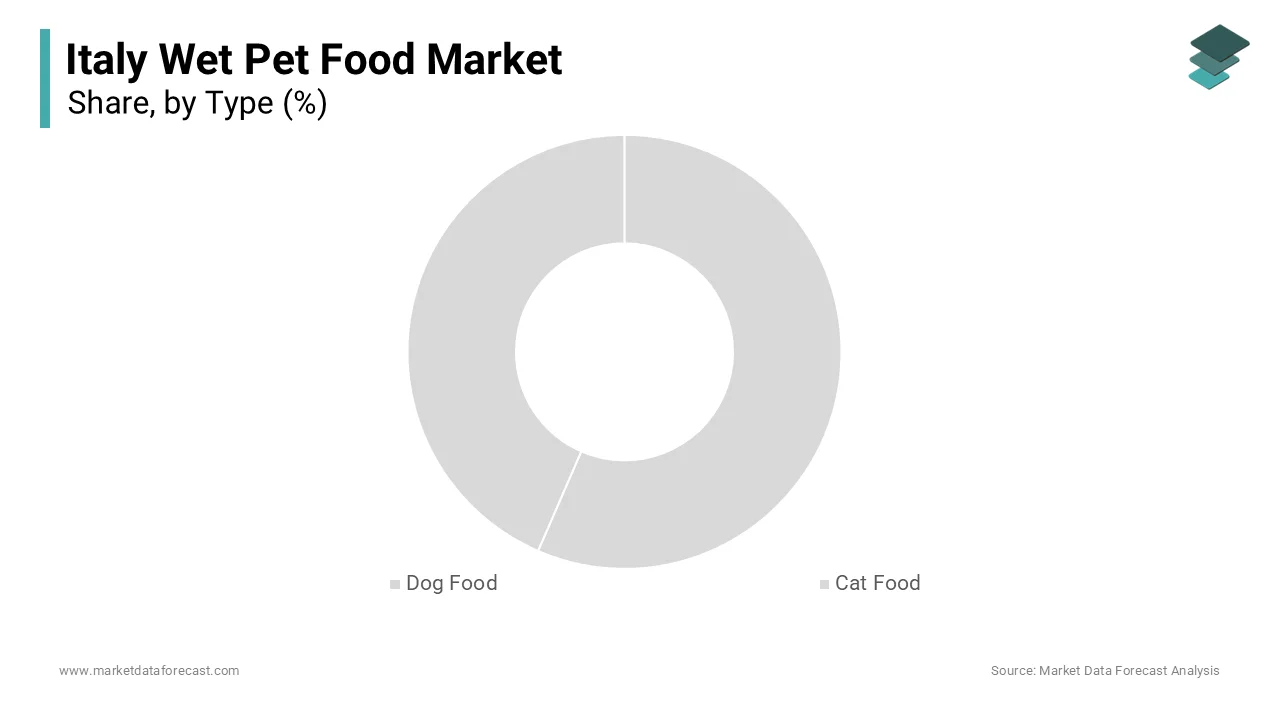
However, the dog food is likely to maintain its upward trajectory as the fastest-growing category over the next few years and estimated to grow at a CAGR of 5.2% over the forecast period owing to the rising participation in canine sports and the increasing focus on active lifestyles and performance nutrition for canine companions. According to the Italian Kennel Club, the number of registered purebred dogs engaged in sports and outdoor activities has increased by 10% in recent years, creating demand for high-energy wet food formulations. As per data from pet nutrition experts, wet food provides easily digestible proteins and fats that support muscle recovery and endurance, making it a preferred choice for active dogs post-exercise. This functional benefit directly drives market growth, as owners seek specialized diets that enhance their dog’s physical performance and vitality. The rise of hiking, running, and agility training among dog owners in Italy fosters a culture of performance-oriented care where nutrition plays a central role. Manufacturers develop sport-specific wet food lines with added electrolytes and joint support ingredients, catering to this niche but expanding demographic. Consequently, the dog food segment grows rapidly, as the humanization of pets extends to their athletic pursuits, driving demand for functional wet food solutions.
By Application Insights
The residential segment dominated the Italy wet pet food market by capturing the leading share of the market in 2025 due to the exceptionally high rate of pet ownership within Italian households and the deep emotional bond that drives premium purchasing behavior. According to the Italian National Institute of Statistics, approximately 65% of Italian families own at least one companion animal, creating a massive and consistent base of daily consumers for wet food products. As per data from Assalco, the association representing the pet food industry in Italy, over 70% of these owners consider their pets as integral family members, which directly translates into a preference for high-quality moist diets that mimic human meal standards. This cultural phenomenon drives market domination, because residential buyers are less price sensitive than commercial entities and prioritize palatability and ingredient quality. The trend toward humanization means that wet food is viewed not just as sustenance, but as a gesture of care and affection, leading to higher frequency of purchase and brand loyalty. Manufacturers cater to this demographic by offering gourmet recipes with recognizable meats and vegetables, ensuring that residential demand remain the primary revenue driver. The stability of household income allocation for pet care, even during economic fluctuations, further cements the leadership of the residential segment as the core foundation of the market.
On the other side, the commercial segment is likely to experience rapid growth and is predicted to showcase a CAGR of 6.2% over the forecast period in the Italian market owing to the rapid expansion of professional pet care services such as boarding facilities, grooming salons, and veterinary clinics. According to the Italian Confederation of Crafts and Small and Medium Enterprises, the number of registered pet service businesses has increased by 15% in recent years, reflecting a growing industry that relies on standardized high-quality nutrition for client animals. As per data from industry reports, these facilities increasingly use premium wet food to enhance customer satisfaction and ensure the well-being of animals under their care, distinguishing themselves from competitors through superior service offerings. This professional adoption directly drives market expansion, as bulk purchases from commercial entities become more frequent and substantial. Veterinary clinics also contribute to this growth by prescribing therapeutic wet diets for hospitalized or outpatient pets, creating a steady B2B demand channel. The standardization of care protocols in these establishments ensures consistent consumption volumes independent of individual owner preferences. Consequently, the commercial segment grows rapidly, as the professionalization of the pet care industry creates new institutional buyers who prioritize reliability and nutritional efficacy in their supply chains.
By Distribution Channel Insights
The offline retailers segment led the market by accounting for the highest share of the Italian market in 2025 due to the established trust consumers place in physical stores and the immediate availability of products for urgent needs. According to the Italian Confederation of Commerce, over 80% of pet food purchases still occur in brick-and-mortar locations such as supermarkets, pet specialty shops, and veterinary clinics. As per data from retail analytics, Italian consumers prefer to physically inspect packaging and check expiration dates for perishable wet food items, ensuring quality before purchase. This tactile shopping experience directly drives market leadership, because wet food is often bought in smaller quantities for immediate consumption, reducing the appeal of bulk online orders. The presence of knowledgeable staff in specialty pet stores also influences buying decisions through personalized recommendations and product demonstrations. Additionally, the widespread network of local grocery stores ensures that wet food is accessible in both urban and rural areas, facilitating convenient top-up purchases. Consequently, offline retailers remain the primary channel, due to their convenience, reliability, and ability to provide instant gratification for pet owners who prioritize freshness and immediacy.
On the other end, the online retailers segment is projected to expand at a CAGR of 10.2% over the forecast period owing to the subscription models, the convenience of home delivery and the adoption of subscription models for regular wet food supplies. According to the Italian Digital Economy Report, e-commerce sales of pet products have increased by 25% annually, as busy professionals seek time-saving shopping solutions. As per data from major online platforms, subscription services for wet food have gained popularity among 30% of urban pet owners, ensuring automatic replenishment and often offering discounts for recurring orders. This shift in consumer behavior directly drives market expansion, as online retailers leverage logistics networks to deliver heavy and bulky wet food items directly to doorsteps, eliminating the physical burden of carrying cans or pouches. The ability to compare prices and read reviews extensively online also empowers consumers to make informed choices and discover new brands. Consequently, the online segment grows rapidly, as digital platforms address the logistical challenges of wet food purchasing while offering unparalleled convenience and cost savings for regular buyers.
COMPETITIVE LANDSCAPE
The competition in the Italy wet pet food market is characterized by intense rivalry among global multinational corporations and strong local manufacturers who strive to differentiate through quality innovation and brand heritage. Major competitors focus on developing premium wet food products with high meat content and natural ingredients to appeal to discerning Italian consumers who value culinary excellence. Product differentiation is achieved through specialized formulations for health conditions such as renal support and weight management which attract loyal customer bases. Price competition remains moderate in the premium segment where brand reputation and perceived quality drive purchasing decisions rather than cost alone. Private label brands from major supermarket chains pose a significant threat by offering comparable quality at lower prices forcing established brands to continuously innovate. Regulatory compliance with European Union standards ensures high safety levels but increases operational costs for all players. Marketing efforts emphasize emotional connections and health benefits to influence consumer choices. The rise of e commerce has intensified competition by increasing price transparency and enabling niche brands to reach wider audiences. This dynamic landscape requires continuous investment in research and development and strong brand storytelling to sustain leadership positions and capture growing demand for sophisticated wet pet food solutions.
KEY MARKET PLAYERS
Some of the key players in the Italy wet pet food market are
- Nestlé S.A.
- Mars Incorporated
- Monge & C. S.p.A.
- Affinity Petcare S.A.
- Hill’s Pet Nutrition, Inc.
- Farmina Pet Foods
- Almo Nature S.p.A.
- Agras Pet Foods S.p.A. (Schesir)
- Morando S.p.A.
- Vitakraft Italia S.p.A.
- Sanypet S.p.A. (Forza10)
- Camon S.p.A.
- United Petfood Italia S.r.l.
- VAFO Group
- Dechra Pharmaceuticals PLC
- Virbac SA
Top Players in the Market
- Mars Incorporated maintains a dominant presence in the Italy Wet Pet Food Market through its renowned brands such as Pedigree and Whiskas which are staples in Italian households. The company leverages its extensive distribution network to ensure wide availability across supermarkets and specialty stores. Recent actions include the launch of premium wet food lines featuring high quality local ingredients like Italian chicken and fish to appeal to discerning consumers. Mars actively invests in sustainability initiatives including recyclable packaging solutions to address environmental concerns. Their strategic focus on digital marketing and consumer engagement strengthens brand loyalty. By prioritizing product innovation and responsible sourcing Mars reinforces its position as a trusted provider of nutritious and palatable wet food options for cats and dogs throughout the region.
- Nestlé S.A. contributes significantly to the market through its Purina portfolio which includes popular wet food brands like Friskies and Gourmet. The company focuses on scientific research to develop formulations that support specific health needs such as digestion and urinary care. Recent initiatives involve expanding its range of grain free and organic wet food products to meet growing demand for natural diets. Nestlé actively collaborates with veterinarians to promote therapeutic wet diets enhancing credibility among pet owners. They have also upgraded manufacturing facilities in Europe to improve efficiency and reduce environmental impact. By combining nutritional expertise with strong brand recognition Nestlé strengthens its market position and drives adoption of premium wet food solutions that enhance the well being of companion animals in Italy.
- Farmina Pet Foods is a leading Italian manufacturer that plays a pivotal role in the market by offering high quality wet food products under brands such as N&D and Life. The company emphasizes the use of fresh human grade ingredients and ancestral diets to cater to the biological needs of pets. Recent actions include the expansion of its production capacity in Italy to meet increasing domestic and international demand. Farmina actively participates in industry events and educational programs to raise awareness about the benefits of low carbohydrate wet diets. They prioritize sustainability by sourcing ingredients from certified suppliers and using eco friendly packaging. By leveraging its local heritage and commitment to quality Farmina strengthens its position as a preferred choice for health conscious Italian pet owners seeking premium nutrition.
Top Strategies Used by Key Market Participants
Key players in the Italy wet pet food market primarily employ product differentiation strategies by introducing premium natural and functional formulations that cater to specific health needs and culinary preferences. Companies focus on sustainable sourcing and eco friendly packaging to align with growing environmental consciousness among Italian consumers. Strategic partnerships with veterinarians and pet influencers help build trust and educate owners about the benefits of wet food diets. Manufacturers invest in digital marketing and e commerce platforms to enhance direct to consumer engagement and convenience. Expansion of production capabilities ensures consistent supply and quality control. These multifaceted approaches enable companies to maintain competitive advantages and respond effectively to evolving consumer demands for high quality and responsible pet nutrition.
MARKET SEGMENTATION
This research report on the Italy wet pet food market is segmented and sub-segmented into the following categories.
By Type
- Dog Food
- Cat Food
By Application
- Residential
- Commercial
By Distribution Channel
- Offline Retailers
- Online Retailers