- Product Description Description
- Table of Contents TOC
- List of Table & Figure LOT
- Get Free Sample PDF Sample PDF
Market Size, 2025
$5.31 BnMarket Estimate, 2026
$5.71 BnMarket Forecast, 2034
$10.18 BnCAGR, 2026–2034
7.49%Latin America Edible Mushroom Market Report Summary
The Latin America edible mushroom market was valued at USD 5.31 billion in 2025, is estimated to reach USD 5.71 billion in 2026, and is projected to reach USD 10.18 billion by 2034, growing at a CAGR of 7.49% during the forecast period. Market growth is driven by increasing consumer demand for healthy and low calorie food options, rising awareness of nutritional benefits, and expanding applications in culinary and processed food products. Edible mushrooms are widely consumed due to their rich protein content, vitamins, and antioxidants. The growing trend toward plant based diets and functional foods is further supporting strong market expansion across Latin America.
Key Market Trends
- Rising demand for healthy and nutrient rich food products is driving market growth.
- Increasing adoption of plant based and vegetarian diets is boosting mushroom consumption.
- Growing use of mushrooms in culinary and processed food applications is supporting market expansion.
- Expansion of retail and food service channels is improving product availability.
- Rising awareness of functional and medicinal benefits is influencing consumer preferences.
Segmental Insights
- Based on type, the button mushrooms segment was the largest and held 55.4% of the Latin America edible mushroom market share in 2025. This dominance is attributed to widespread availability, affordability, and high consumer preference.
- Based on application, the fresh mushrooms segment held a significant share of the Latin America edible mushroom market in 2025. The segment’s growth is driven by strong demand for fresh and minimally processed food products.
Regional Insights
- The Latin America edible mushroom market is experiencing strong growth across key countries, supported by increasing consumption and health awareness.
- Brazil was the largest contributor, accounting for 35.3% of the Latin America edible mushroom market share in 2025, driven by growing demand for healthy foods, expanding retail sector, and increasing domestic production.
Competitive Landscape
The Latin America edible mushroom market is moderately competitive, with key players focusing on production expansion, quality improvement, and distribution network strengthening to enhance their market position. Companies are investing in advanced cultivation techniques, packaging, and branding strategies. Prominent players in the Latin America edible mushroom market include Costa Group, Okechamp S A, Monterey Mushrooms Inc, Monaghan Mushrooms, Drinkwater’s Mushroom Ltd, The Mushroom Company, Shanghai Finc Bio Tech Inc, CMP Mushrooms Greenyard NV Lutèce, and Bonduelle SA.
Latin America Edible Mushroom Market Size
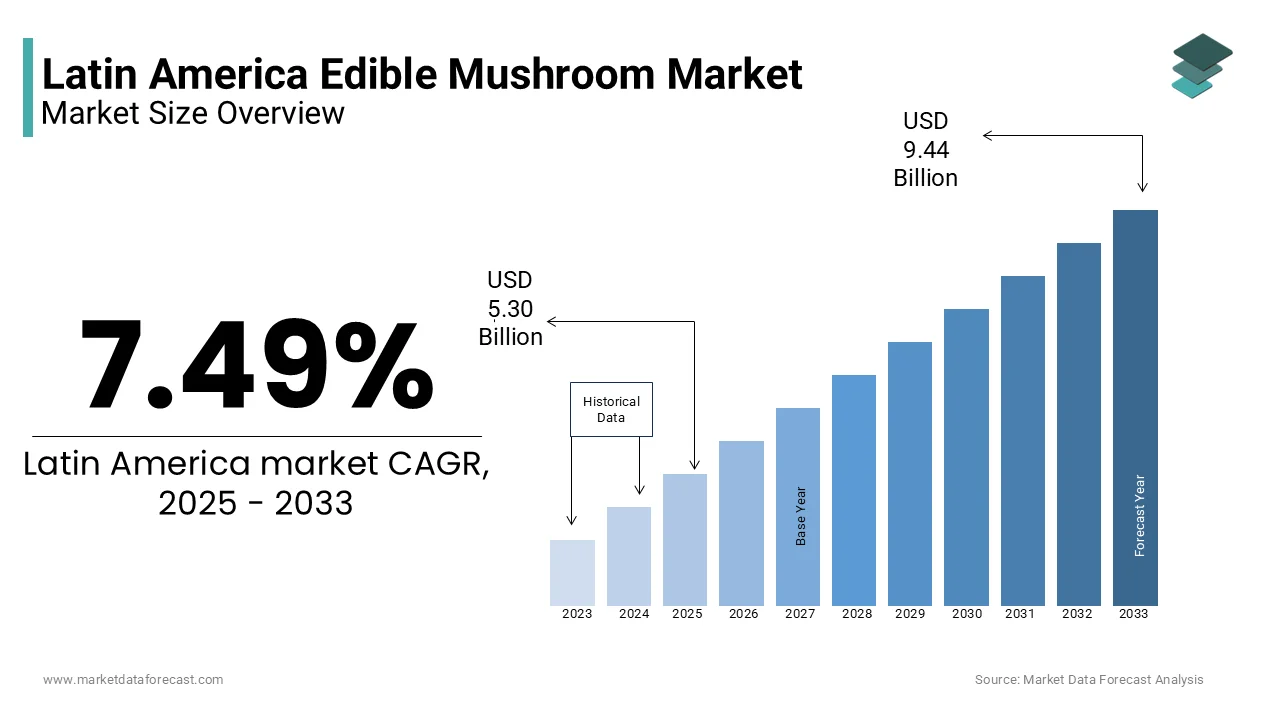
The Latin America edible mushroom market size was valued at USD 5.31 billion in 2025, and the market size is expected to reach USD 10.18 billion by 2034 from USD 5.71 billion in 2026. The market's promising CAGR for the predicted period is 7.49%.
The edible mushroom is fungi species, such as Agaricus, bisporus, Pleurotus, ostreatus, and Lentinula edodes, across nations, including Brazil, Mexico, and Chile. According to the Food and Agriculture Organization of the United Nations, the region has seen a steady increase in vegetable protein consumption driven by health consciousness and environmental awareness. In 2023, the per capita availability of vegetables in Latin America reached approximately 130 kilograms annually, as per data from the Pan American Health Organization. This shift supports the integration of mushrooms into daily diets due to their low caloric density and high micronutrient content. Furthermore, the World Bank indicates that agricultural innovation in the region has improved yield efficiency by 15% over the last decade. These advancements facilitate better substrate utilization and climate controlled growing environments. The cultural acceptance of fungi varies significantly across the region with higher adoption rates in urban centers where international culinary influences are prominent. As consumers seek alternatives to meat products the edible mushroom sector benefits from its versatility in various cuisines. The regulatory landscape also evolves to support safe production standards ensuring product quality and consumer trust.
MARKET DRIVERS
Rising Prevalence of Lifestyle Related Health Conditions Drives Demand for Nutrient Dense Functional Foods
The increasing incidence of chronic diseases, such as diabetes hypertension and obesity is bolstering the growth of Latin America edible mushroom market. Consumers are actively seeking dietary interventions that offer therapeutic benefits alongside basic nutrition. Mushrooms are rich in beta glucans antioxidants and essential vitamins which contribute to immune system regulation and metabolic health. According to the International Diabetes Federation, the number of adults living with diabetes in South and Central America reached 49 million in 2021 and is projected to rise to 68 million by 2045. This alarming trend prompts healthcare providers and nutritionists to recommend plant-based diets that include functional ingredients like mushrooms. Additionally, the Pan American Health Organization states that overweight and obesity affect more than 50% of the adult population in several countries within the region. The low calorie and high fiber profile of mushrooms makes them an ideal substitute for high fat meats in weight management programs. Clinical studies cited by the National Institutes of Health indicate that regular consumption of mushrooms can improve lipid profiles and reduce inflammation markers. Retailers respond to this demand by expanding fresh and processed mushroom offerings in supermarkets and health food stores.
Expansion of Vegetarian and Vegan Demographics Fuels Substitution of Animal Proteins with Fungal Alternatives
The rapid growth of the vegetarian and vegan populations, is additionally leveraging the growth of Latin America edible mushroom market. Ethical concerns regarding animal welfare and environmental sustainability are prompting consumers to reduce or eliminate meat from their diets. Mushrooms provide a umami flavor and meaty texture that closely mimics animal products making them a preferred ingredient in plant based recipes. According to a survey conducted by Euromonitor International in 2022, approximately 10% of consumers in Brazil and Mexico identified as flexitarian indicating a conscious effort to reduce meat consumption. This demographic shift is supported by the availability of diverse mushroom varieties such as oyster shiitake and portobello which are widely cultivated in the region. The Brazilian Vegetarian Society estimates that there are over 30 million vegetarians in Brazil alone representing a substantial portion of the population. This large consumer base creates a stable demand for mushroom products in both household and food service sectors. Restaurants and fast-food chains are increasingly incorporating mushroom based dishes into their menus to cater to this growing segment. For instance, major food service providers in Chile and Argentina have introduced mushroom burgers and stir fries as permanent menu items. The versatility of mushrooms allows them to be used in various culinary applications from soups to grilled entrees.
MARKET RESTRAINTS
Limited Availability of Specialized Technical Expertise Hinders Efficient Large Scale Cultivation Practices
The scarcity of skilled personnel trained in advanced mycology and controlled environment agriculture is restricting the growth of Latin America edible mushroom market. Efficient mushroom production requires precise management of temperature humidity ventilation and substrate composition to ensure optimal yield and quality. However, many small and medium sized producers lack access to formal training programs or technical assistance. According to the Inter American Institute for Cooperation on Agriculture, there is a notable gap in agricultural extension services specifically tailored to fungal cultivation in rural areas of the Andean region and Central America. This knowledge deficit leads to inconsistent product quality and higher rates of crop failure due to contamination or environmental stress. Without proper expertise growers struggle to implement standardized protocols that are essential for scaling operations and meeting commercial standards. This limitation restricts the ability of local producers to compete with imported products that often benefit from more advanced production technologies. Furthermore, the lack of certified training institutions means that knowledge transfer relies heavily on informal networks which may propagate outdated or inefficient practices. As a result, the overall productivity of the sector remains below its potential capacity. Addressing this skills gap requires targeted educational initiatives and partnerships between academic institutions and industry stakeholders to develop a competent workforce capable of driving modernization in mushroom farming.
Inadequate Cold Chain Infrastructure Compromises Product Freshness and Extends Distribution Limitations
The fragility of edible mushrooms necessitates a robust cold chain infrastructure to maintain freshness and prevent spoilage during transportation and storage. The inadequate cold chain infrastructure is also restricting the growth of Latin America edible mushroom market. However, many countries in Latin America face significant challenges in maintaining consistent temperature control throughout the supply chain. According to the survey, only 40% of perishable goods in the region are transported under adequate refrigeration conditions compared to 90% in developed economies. This infrastructural deficit results in high levels of post-harvest waste and limits the geographical reach of fresh mushroom products. Producers in remote agricultural areas often struggle to deliver their harvest to urban areas, within the short shelf life window of fresh fungi, which typically ranges from 7 to 10 days. The logistics costs in Latin America are approximately 20% higher than the global average due to inefficiencies in transportation and storage facilities, as per recent survey. These elevated costs erode profit margins for growers and increase prices for consumers thereby reducing market accessibility. Additionally, the lack of standardized packaging solutions exacerbates the problem by failing to provide sufficient protection against physical damage and moisture loss. Retailers are consequently hesitant to stock large volumes of fresh mushrooms due to the risk of unsold inventory spoiling.
MARKET OPPORTUNITIES
Integration of Mushroom Cultivation into Circular Economy Models Presents Significant Growth Potential
The alignment of mushroom production with circular economy principles is one of the primary factors to enhance new opportunities for the growth of Latin America edible mushroom market. Mushrooms can be cultivated on agricultural by products, such as straw sawdust, coffee grounds, and corn cobs, which are abundant in Latin America. This process not only reduces waste but also creates value from materials that would otherwise be discarded or burned. According to the United Nations Environment Programme, the region generates approximately 140 million tons of agricultural waste annually much of which remains underutilized. This approach appeals to environmentally conscious consumers and investors who prioritize sustainable business practices. Furthermore, the spent mushroom substrate can be repurposed as organic fertilizer or animal feed creating additional revenue streams. The Economic Commission for Latin America and the Caribbean emphasizes the importance of bioeconomy strategies in promoting resource efficiency and rural development. Several startups in Colombia and Peru have already demonstrated the viability of this model by establishing farms that utilize local agricultural waste for mushroom production. These initiatives receive support from government agencies and non-governmental organizations focused on sustainable agriculture. As regulatory frameworks increasingly encourage waste reduction and resource recovery the mushroom sector is well positioned to benefit from incentives and grants.
Development of Value Added Processed Mushroom Products Caters to Evolving Consumer Convenience Preferences
The creation of value-added mushroom products, such as dried powders extracts snacks and ready to eat meals is additionally to level up the growth of Latin America edible mushroom market. Urban consumers in Latin America are increasingly seeking convenient and healthy food options that fit into busy lifestyles. Processed mushroom products offer extended shelf life and ease of preparation making them attractive to this demographic. According to the survey, the sales of packaged healthy snacks in the region grew by 12% in 2023 reflecting a strong preference for nutritious and portable food items. Mushroom based snacks such as crispy chips and jerky alternatives are gaining popularity as they provide a savory taste without the high sodium or fat content associated with traditional snacks. Additionally mushroom extracts are being incorporated into functional beverages and supplements due to their perceived health benefits. Companies can leverage this trend by developing innovative formulations that highlight the immune boosting and cognitive enhancing properties of specific mushroom species. Partnerships with food manufacturers and retail chains can facilitate wider distribution of these products. Moreover, the export potential for high quality processed mushroom goods is substantial particularly in markets with strict quality standards.
MARKET CHALLENGES
Vulnerability to Climate Variability Disrupts Substrate Availability and Cultivation Conditions
The susceptibility to climate change and extreme weather events is one of the major challenges for the growth of Latin America edible mushroom market. Mushroom cultivation is highly sensitive to fluctuations in temperature and humidity, which are becoming increasingly unpredictable due to global warming. According to the Intergovernmental Panel on Climate Change, the frequency of heatwaves and droughts in Latin America has increased by 25% over the past two decades affecting agricultural productivity. These climatic shifts impact the availability and quality of raw materials used for substrate preparation such as straw and wood chips. Drought conditions can reduce crop yields for these agricultural residues leading to higher input costs for mushroom growers. Additionally, extreme heat can compromise the integrity of controlled growing environments requiring increased energy consumption for cooling systems. Small scale producers who lack the financial resources to invest in climate resilient infrastructure are particularly vulnerable to these disruptions. Crop failures due to unexpected temperature spikes or humidity drops can result in significant economic losses. Furthermore, the spread of pests and diseases is exacerbated by changing climatic conditions posing additional risks to production stability. Adapting to these challenges requires substantial investment in technology and infrastructure which may be prohibitive for many market participants. Consequently, climate variability remains a persistent threat to the consistency and profitability of mushroom cultivation in the region.
Stringent Regulatory Compliance Requirements Impose Barriers to Market Entry and Expansion
Navigating the complex regulatory landscape for food safety and agricultural standards is also to decline the growth of Latin America Edible Mushroom Market. Each country in the region has distinct regulations regarding pesticide use labeling hygiene and import-export procedures, which can hinder cross border trade. According to the World Trade Organization, non-tariff measures, such as sanitary and phytosanitary requirements account for a significant portion of trade barriers in the agricultural sector. Compliance with these regulations often requires extensive documentation testing and certification which can be costly and time consuming for producers. Small and medium enterprises frequently lack the resources to meet these stringent standards limiting their ability to access premium markets or export opportunities. The Pan American Health Organization emphasizes the need for harmonized food safety standards to facilitate regional trade but progress in this area has been slow. Inconsistencies in enforcement and interpretation of regulations, across different jurisdictions create uncertainty for businesses operating in multiple countries. Additionally frequent changes in regulatory frameworks require continuous monitoring and adaptation increasing administrative burdens. Failure to comply can result in product recalls fines or bans which damage brand reputation and financial stability. Producers must therefore invest in robust quality assurance systems and legal expertise to navigate these complexities effectively. This regulatory burden acts as a barrier to entry for new players and restricts the growth potential of existing businesses.
REPORT COVERAGE
| REPORT METRIC | DETAILS |
| Market Size Available | 2025 to 2034 |
| Base Year | 2025 |
| Forecast Period | 2026 to 2034 |
| CAGR | 7.49% |
| Segments Covered | By Type, Application, and Region. |
| Various Analyses Covered | Global, Regional & Country Level Analysis, Segment-Level Analysis, DROC, PESTLE Analysis, Porter’s Five Forces Analysis, Competitive Landscape, Analyst Overview of Investment Opportunities |
| Regions Covered | Brazil, Mexico, Argentina, Chile & Rest of Latin America |
| Market Leaders Profiled | Costa Group, Okechamp S.A, Monterey Mushrooms Inc, Monaghan Mushrooms, Drinkwater’s Mushroom Ltd, The Mushroom Company, Shanghai Finc Bio-Tech Inc, CMP Mushrooms Greenyard NV (Lutèce), Bonduelle SA. |
SEGMENTAL ANALYSIS
By Type Insights
The button mushrooms segment was the largest by holding 55.4% of the Latin America Edible Mushroom Market share in 2025 owing to the deep rooted consumer familiarity with this variety which has been a staple in regional cuisine for decades. The widespread availability of button mushrooms in mainstream supermarkets and local markets ensures consistent accessibility for households across urban and semi urban areas. According to data from the Food and Agriculture Organization of the United Nations, button mushrooms represent the most cultivated fungal species globally due to their adaptable growing conditions and shorter production cycles. In Latin America specifically the infrastructure for cultivating Agaricus bisporus is more developed compared to exotic varieties allowing for stable supply chains. The versatility of button mushrooms in various culinary applications ranging from salads to cooked entrees further cements their market leadership. Retailers prioritize stocking this variety due to its high turnover rate and lower risk of spoilage compared to more delicate species. Additionally, the cost effectiveness of button mushroom production makes them affordable for a broad demographic including lower income segments. As per industry observations from Euromonitor International the price stability of button mushrooms encourages regular consumption patterns among families. The established distribution networks for this segment minimize logistical challenges ensuring that fresh products reach consumers efficiently. This combination of affordability availability and culinary acceptance sustains the commanding market share of button mushrooms in the region.

The shiitake mushrooms segment is lucratively to grow at fastest CAGR of 8.5% during the forecast period owing to the increasing perception of shiitake as a functional food with significant health benefits including immune support and cholesterol management. As middle-class populations in countries like Brazil and Mexico expand there is a growing willingness to pay premium prices for nutritious and exotic food items. Shiitake mushrooms are rich in lentinan a polysaccharide known for its anti tumor properties which appeals to health conscious consumers seeking preventive healthcare solutions through diet. Furthermore, the influence of Asian culinary traditions particularly Japanese and Chinese cuisines has introduced shiitake to a broader audience in the region. High end restaurants and gourmet food stores are increasingly featuring shiitake in their offerings thereby enhancing its visibility and desirability. The ability of shiitake to be marketed as both a culinary delicacy and a health supplement creates a dual demand driver. Producers are responding by investing in specialized cultivation facilities to meet the rising demand for high quality fresh and dried shiitake products.
By Application Insights
The fresh mushrooms segment was accounted in holding a significant share of the Latin America Edible Mushroom Market in 2025 with the strong cultural preference for using fresh ingredients in daily cooking across the region. Consumers in Latin America, generally perceive fresh produce as superior in terms of taste texture and nutritional value compared to processed alternatives. The vibrant culinary traditions in countries, such as Mexico and Argentina emphasize the use of fresh vegetables and fungi in traditional dishes, which supports steady demand for fresh mushrooms. According to the Pan American Health Organization, the consumption of fresh fruits and vegetables is actively promoted as part of public health initiatives to combat chronic diseases reinforcing the preference for unprocessed foods. Retail infrastructure in major cities has improved significantly with modern supermarkets offering dedicated sections for fresh produce that maintain optimal storage conditions. This enhanced retail environment ensures that fresh mushrooms remain available and appealing to shoppers. Additionally, the short supply chain from local farms to urban markets helps preserve the freshness and quality of the product. The immediate usability of fresh mushrooms in home cooking without the need for rehydration or extensive preparation also contributes to their popularity.
The processed mushrooms segment is swiftly emerging at a fastest CAGR of 7.2% from 2026 to 2034 with the rapid urbanization and the changing lifestyles of consumers who seek convenient and ready to eat food options. The increasing participation of women in the workforce and the busy schedules of urban professionals have led to a higher demand for shelf stable and easy to prepare food products. Processed mushrooms including canned dried and frozen varieties offer extended shelf life and ease of storage making them ideal for modern households. According to the survey, the packaged food sector in Latin America is experiencing robust growth with convenience foods seeing a double digit increase in sales volume. The development of innovative processed mushroom products such as mushroom powders snacks and ready to cook mixes is attracting younger consumers, who are open to experimenting with new formats. Furthermore, the expansion of e commerce platforms has facilitated the distribution of processed mushroom products to remote areas where fresh produce may not be readily available.
REGIONAL ANALYSIS
Brazil Edible Mushroom Market Analysis
Brazil was the top performer in the Latin America Edible Mushroom Market by accounting for 35.3% of share in 2025 with its large population and expanding agricultural sector which supports diverse mushroom cultivation activities. The southeastern region of Brazil particularly the state of Sao Paulo is the hub for mushroom production benefiting from favorable climatic conditions and advanced farming technologies. The growing middle class in Brazil is increasingly adopting healthier dietary habits which boosts the consumption of nutrient rich foods like mushrooms. Additionally, the presence of a large Japanese Brazilian community has influenced the culinary landscape promoting the use of shiitake and other exotic varieties. The government has implemented initiatives to support small scale farmers through technical assistance and credit programs enhancing production capacity. The retail sector in Brazil is highly developed with extensive supermarket chains ensuring wide distribution of fresh and processed mushrooms. Furthermore, the rise of organic farming practices in the country appeals to environmentally conscious consumers, who prefer sustainably produced food items.
Mexico Edible Mushroom Market Analysis
Mexico edible mushroom market was ranked second by holding 25.4% of share in 2025 with a strong tradition of fungal consumption rooted in indigenous cultures where wild mushrooms have been harvested for centuries. According to the study, the consumption of vegetables and legumes has increased by 8% in urban areas reflecting a shift towards healthier diets. The proximity to the United States provides Mexico with access to advanced cultivation technologies and export opportunities which stimulate local production. Mexican producers are increasingly focusing on high value varieties such as oyster and shiitake mushrooms to cater to both domestic and international markets. The tourism sector also plays a significant role in driving demand as hotels and restaurants incorporate mushrooms into their menus to appeal to international visitors. Additionally, the government supports agricultural innovation through research institutions that develop improved substrate formulations and pest management strategies.
Argentina Edible Mushroom Market Analysis
Argentina edible mushroom market growth is likely to witness a fastest CAGR in coming years with the increasing health awareness and culinary diversification. The strong agricultural base and high standards of food safety, which enhance consumer confidence in locally produced mushrooms is driving the growth of the market in this country. According to the National Institute of Agricultural Technology in Argentina, the adoption of sustainable farming practices has improved the quality and yield of mushroom crops significantly. The urban population in Buenos Aires and other major cities is increasingly seeking alternative protein sources due to rising health concerns and environmental awareness. This trend supports the demand for mushrooms as a versatile and nutritious food option. The Argentine government has implemented policies to promote agro ecological production which aligns with the preferences of environmentally conscious consumers. Additionally, the influence of European culinary traditions in Argentina has introduced a variety of mushroom based dishes that are gaining popularity in restaurants and homes. The expansion of retail chains and specialty food stores facilitates the distribution of fresh and processed mushrooms to a wider audience.
Chile Edible Mushroom Market Analysis
Chile Edible Mushroom Market growth is driven by the focus on high quality production and export orientation. The advanced agricultural infrastructure and strict regulatory standards, which ensure the production of safe and premium mushroom products is accelerating the growth of the market. According to the study, the export of fresh fruits and vegetables has increased by 18% driven by demand from North American and European markets. Chilean producers leverage the country's unique climate conditions to cultivate mushrooms year round ensuring a consistent supply for both domestic and international consumers. The growing interest in healthy eating among Chileans has led to increased consumption of mushrooms in urban households. The government supports agricultural innovation through funding for research and development projects that improve cultivation techniques and substrate efficiency. Additionally, the presence of multinational retail chains in Chile facilitates the efficient distribution of mushroom products across the country. The emphasis on organic and sustainable production methods appeals to discerning consumers, who prioritize quality and environmental responsibility.
COMPETITIVE LANDSCAPE
The competition in the Latin America Edible Mushroom Market is characterized by a mix of established international corporations and emerging local producers vying for market dominance. International players leverage their advanced technological capabilities and extensive distribution networks to offer consistent high quality products across the region. Local producers compete by capitalizing on their understanding of regional culinary preferences and ability to provide fresh products at competitive prices. The market sees intense rivalry in terms of product differentiation with companies introducing exotic varieties and value added processed items to attract diverse consumer segments. Price sensitivity remains a critical factor influencing competitive dynamics particularly in price conscious markets. Strategic collaborations between producers and retailers are common as firms seek to enhance supply chain efficiency and reduce post-harvest losses. Innovation in sustainable farming practices serves as a key differentiator with companies highlighting eco friendly credentials to appeal to environmentally conscious consumers. The entry of new startups focusing on niche markets such as organic and medicinal mushrooms further intensifies competition. Regulatory compliance and food safety standards also play a pivotal role in shaping competitive advantages as consumers increasingly prioritize trust and quality in their food choices.
Key Market Players
Key Players Latin America edible mushroom market are
- Costa Group
- Okechamp S.A.
- Monterey Mushrooms Inc.
- Monaghan Mushrooms
- Drinkwater’s Mushroom Ltd
- The Mushroom Company
- Shanghai Finc Bio-Tech Inc.
- CMP Mushrooms Greenyard NV (Lutèce)
- Bonduelle SA
Top 3 Players in the Latin America Edible Mushroom Market
- Monmouth Mushrooms operates as a significant producer within the global edible fungi sector with a notable presence in international markets. The company focuses on cultivating high quality button and specialty mushrooms using advanced agricultural technologies. In the Latin American context Monmouth Mushrooms contributes by supplying premium products to upscale retail chains and food service providers. Recent actions to strengthen its market position include the implementation of sustainable farming practices that reduce water usage and carbon emissions. The company has also invested in research and development to improve substrate efficiency and yield consistency. These strategic initiatives enhance brand reputation and ensure compliance with stringent food safety standards. The company continues to expand its distribution network through partnerships with local distributors thereby increasing accessibility for diverse consumer segments across Latin America.
- Costa Group Holdings is a leading diversified fresh food company with extensive operations in mushroom cultivation globally. The organization leverages its expertise in controlled environment agriculture to produce consistent and high quality mushroom varieties. In Latin America Costa Group Holdings strengthens its position by introducing innovative mushroom products tailored to local culinary preferences. The company recently upgraded its production facilities with automated harvesting systems to enhance operational efficiency and reduce labor costs. Additionally Costa Group Holdings has focused on expanding its portfolio to include exotic mushroom types such as shiitake and oyster mushrooms. Strategic collaborations with regional retailers have facilitated broader market penetration and improved supply chain reliability. The company emphasizes sustainability by utilizing renewable energy sources in its farming operations. These efforts demonstrate a commitment to long term growth and environmental stewardship while meeting the evolving demands of health-conscious consumers in the Latin American market.
- Greenyard NV is a major global supplier of fresh fruits vegetables and prepared foods including a significant mushroom division. The company plays a crucial role in the Latin America Edible Mushroom Market by providing a wide range of fresh and processed mushroom products. Greenyard NV recently strengthened its market position by optimizing its logistics network to ensure faster delivery and reduced spoilage rates. The company has also introduced new value added mushroom products such as marinated and ready to cook options to cater to busy urban consumers. Investments in digital tracking systems allow for better inventory management and quality control throughout the supply chain. Greenyard NV actively engages in corporate social responsibility initiatives supporting local farming communities and promoting sustainable agricultural practices.
Top Strategies Used by the Key Market Participants
Key players in the Latin America Edible Mushroom Market primarily employ strategies focused on product innovation and supply chain optimization to maintain competitive advantage. Companies are increasingly investing in research and development to introduce exotic mushroom varieties that appeal to health conscious consumers seeking diverse nutritional benefits. Expansion of distribution networks through strategic partnerships with local retailers and e commerce platforms enhances market accessibility and reach. Sustainability initiatives such as adopting organic farming practices and reducing carbon footprints are central to building brand loyalty among environmentally aware demographics. Additionally, firms are leveraging advanced agricultural technologies including automated harvesting and climate controlled growing environments to improve yield efficiency and product quality. Marketing campaigns emphasizing the health benefits and culinary versatility of mushrooms further drive consumer engagement. These combined strategies enable market participants to address evolving consumer preferences while ensuring operational resilience and long term growth in the dynamic Latin American landscape.
MARKET SEGMENTATION
This Research Report on Latin America edible mushroom market is segmented and sub segmented into the following categories.
By Type
- Button
- Shiitake
- Oyster
By Application
- Fresh Mushrooms
- Processed Mushrooms
By Country
- Brazil
- Argentina
- Mexico
- Chile
- Rest of Latin America