- Product Description Description
- Table of Contents TOC
- List of Table & Figure LOT
- Get Free Sample PDF Sample PDF
Market Size, 2025
$5.70 BnMarket Estimate, 2026
$7.78 BnMarket Forecast, 2034
$93.77 BnCAGR, 2026–2034
36.5%Executive Summary: Latin America Gum Market
- Market Scope: Comprehensive Latin America confectionery gum market evaluation covering sugar types, product variations, distribution channels, and country-level geographic frameworks.
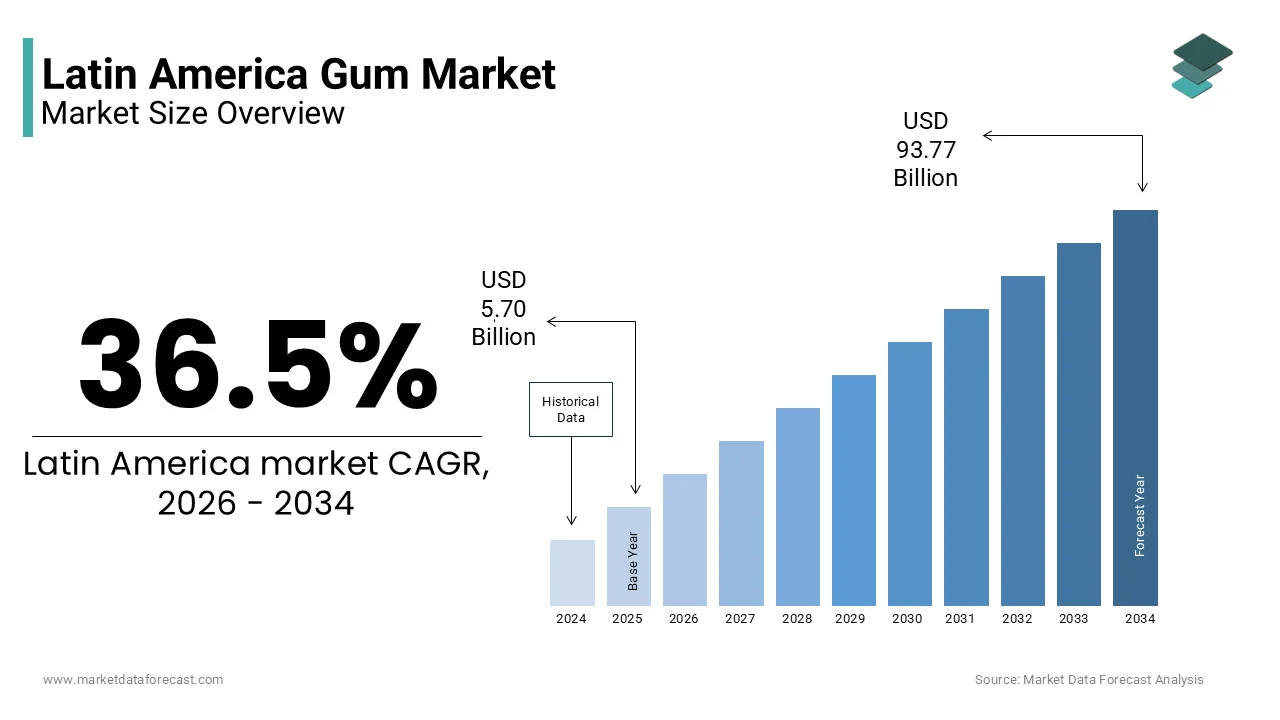
- Market Valuation: Valued at USD 5.70 billion (2025), estimated at USD 7.78 billion (2026), and projected to reach USD 93.77 billion by 2034, registering a CAGR of 36.5% (2026–2034).
- Primary Growth Drivers: Rising consumer preference for socially approved dental-benefit products (e.g., xylitol sugar-free gums reducing cavities and plaque), increasing impulse purchase behaviors, product innovations in unique flavor offerings, and rising popularity of natural gum formulations.
Key Market Segment Metrics (2026–2034)
| Category | Leading Segment (2025 Position) | Fastest-Growing Segment |
|---|---|---|
| By Sugar Type | Sugared Gums (holding the major market share across traditional confections) | Sugar-free Gums (expected to grow the fastest due to heightened dental health concerns and functional gum demand) |
| By Product Type | Chewing Gum & Bubble Gum (holding major market share due to popularity among children, casual chewing, and rising disposable income) | Functional and Energy Gums (expanding through targeted health and wellness product innovation) |
| By Distribution Channel | Supermarkets (holding the major market share in retail volume) | Online Retailers (expected to grow the fastest as e-commerce penetration expands across the region) |
| By Country | Brazil (holds the major share due to key market leaders and a large population of gum-consuming individuals) | Argentina (fastest-growing region driven by rising demand, product innovations, and increasing disposable income) |
Major Market Players & Market Structure
Market Structure: Highly competitive regional market space populated by global confectionery giants and specialty brands focusing on functional variants, innovative flavor profiles, and natural ingredients.
Key Companies: Mondeléz International Inc, Kraft Foods Inc., Mars Inc., Wrigley’s, Perfetti, Howell Foods, Hershey, Think Gum, Zapp Gum, ZOFT Gum, and Super Mouth.
 Download Free Sample Report
Latin America Gum Market Size
The Latin America gum market size was valued at USD 5.70 billion in 2025 and is projected to reach USD 93.77 billion by 2034 from USD 7.78 billion in 2026, growing at a CAGR of 36.5%.
The market covers the production, distribution, and consumption of chewing gum and bubble gum products across countries. This sector is characterised by a mix of traditional confectionery preferences and evolving health-conscious trends that influence product formulation and marketing strategies. According to sources, sugar consumption in Latin America remains high due to the widespread intake of ultra-processed foods and sugary beverages, which has increasingly driven the demand for sugar-free alternatives like sugar-free confectionery and gum. As per studies, urban consumers across Latin America are actively moderating their sugar intake and seeking reduced-sugar snacking options, prompting confectionery and gum manufacturers to reformulate their product portfolios. These facts highlight the critical tension between traditional sweet preferences and modern health awareness that defines the current market dynamics. The industry relies heavily on local raw material sourcing such as chicle from sustainable forests in Central America while also importing synthetic bases to meet volume demands. As disposable incomes rise in emerging economies within the region, the market sees increased penetration of premium and functional gum varieties. The interplay of cultural affinity for oral freshness and regulatory pressure on sugar content shapes the competitive landscape for both multinational and local players operating in this vibrant confectionery segment.
MARKET DRIVERS
Rising Health Consciousness and Demand for Sugar-Free Options
The growing awareness of dental health and obesity risks is one of the main reasons behind the growth of the Latin American gum market. This awareness is shifting consumer preference toward sugar-free variants. Public health campaigns across the region have highlighted the link between excessive sugar intake and chronic diseases, prompting individuals to seek healthier snacking alternatives. As per sources, obesity rates across Latin America have risen substantially over the past several decades, contributing to evolving dietary public health guidelines and shifts in consumer awareness. This health crisis drives demand for gums sweetened with xylitol or stevia, which offer dental benefits without caloric load. As per studies, chewing sugar-free gum can stimulate salivary flow and assist in cavity prevention when used alongside routine oral hygiene practices. Such medical backing enhances consumer trust and accelerates adoption beyond niche health stores into mainstream retail channels. Manufacturers respond by launching extensive sugar-free lines that cater to diabetic populations and fitness enthusiasts who monitor carbohydrate intake. The availability of affordable sweeteners like erythritol has lowered production costs, enabling competitive pricing that appeals to price-sensitive demographics. This convergence of medical advice and product accessibility ensures sustained growth for sugar-free segments as they become the default choice for health-aware consumers seeking oral hygiene benefits alongside fresh breath.
Urbanisation and Lifestyle Changes Driving Convenience Snacking
Rapid urbanisation and busy lifestyles in major cities in the region further boost the expansion of the Latin America gum market. This growth increases the consumption of convenient, on-the-go snacks, including chewing gum. As more people migrate to urban centres for employment opportunities, their daily routines become faster-paced, leaving less time for traditional meals and more reliance on portable refreshments. According to the United Nations Economic Commission for Latin America and the Caribbean (ECLAC), the urban population in Latin America and the Caribbean has surpassed 81%, making it the most urbanised developing region in the world. This demographic shift correlates with a higher frequency of small ticket purchases such as single-serve gum packs at convenience stores and transit hubs. As per reports, urban commuters in major Latin American metropolitan areas face extended transit times, frequently turning to portable confectionery products like chewing gum for breath freshening and casual consumption. Such behavioural patterns embed gum into daily rituals, ensuring consistent repeat purchases regardless of economic fluctuations. Retailers capitalise on this by placing gum displays at checkout counters and fuel stations where visibility drives impulse buys. The portability and low cost of gum make it an ideal product for urban dwellers seeking quick satisfaction without significant financial commitment. This structural lifestyle change provides a stable demand base that supports market resilience even during periods of broader economic uncertainty.
MARKET RESTRAINTS
Stringent Regulatory Taxes on Sugary Confectionery
Government-imposed taxes on sugary foods and beverages impede the growth of the Latin American gum market. This factor increases retail prices and dampens consumer demand for traditional, sugar-based gums. Several countries in the region have implemented fiscal policies aimed at reducing sugar consumption to combat public health crises, which directly affect confectionery pricing structures. According to the World Bank and public health studies, Mexico implemented an 8% tax on nonessential energy-dense foods in 2014, which successfully led to a significant and sustained decline in the purchase of taxed foods. This price sensitivity forces consumers to switch to cheaper alternatives or reduce purchase frequency, thereby shrinking the overall market size for standard products. As per studies, Chile's comprehensive front-of-package warning label law and sweetened beverage taxation resulted in a significant reduction in the purchase of high-sugar and energy-dense foods across Chilean households. Such regulatory burdens squeeze profit margins for companies that cannot fully pass costs to consumers without losing market share. Small and medium enterprises struggle to absorb these taxes due to limited economies of scale compared to multinational corporations. The uncertainty surrounding future tax expansions creates a cautious investment environment where companies delay new product launches or marketing campaigns. This fiscal pressure restricts market growth and forces a rapid pivot to sugar-free options, which may not appeal to all consumer segments, particularly in lower-income brackets.
Economic Volatility and Currency Fluctuations
Economic instability and volatile exchange rates also restrain the Latin American gum market. These constraints increase input costs and reduce consumer purchasing power across key countries. Many nations in the region rely on imported raw materials such as gum base and flavourings, which become significantly more expensive when local currencies depreciate against the US dollar. According to the International Monetary Fund, inflation rates in Argentina and Venezuela have exceeded 100% annually in recent years, severely eroding household purchasing power across the region. This reduction in disposable income leads to trading down from premium brands to lower-cost private label products or complete abstention from purchase. As per reports, currency fluctuations in Brazil impact import costs for raw materials and packaging, affecting the overall operating margins of local confectionery manufacturers. Such cost pressures compel companies to raise prices, further exacerbating demand suppression in an already price-sensitive market. Supply chain disruptions caused by economic unrest also lead to stockouts and inconsistent availability, which damages brand loyalty. Consumers may switch to local substitutes or alternative breath fresheners that are less affected by global commodity price swings. This economic fragility creates an unpredictable business environment where long-term planning becomes difficult, and market growth remains constrained by macroeconomic headwinds.
MARKET OPPORTUNITIES
Expansion of Functional Gums with Added Health Benefits
The introduction of functional gums infused with vitamins, minerals, and herbal extracts paves the way for the growth of the Latin American gum market. This innovation directly appeals to health-focused consumers seeking added value. Modern shoppers are increasingly interested in products that offer therapeutic benefits beyond basic freshness such as energy boosting immune support or digestive aid. According to research, consumer interest in functional confectionery and multifunctional snacks has grown across Latin American markets, encouraging product development with added functional attributes. Ingredients like caffeine, ginseng and probiotics are being incorporated into gum formulations to target specific wellness needs of busy urban professionals. As per sources, younger demographic segments across Latin America increasingly display an interest in functional nutrition and value-added food products. This willingness allows manufacturers to command higher margins and differentiate their offerings in a crowded market. Partnerships with healthcare brands can enhance credibility and drive trial among sceptical consumers. The versatility of gum as a delivery vehicle for active ingredients enables innovation in categories previously dominated by pills and powders. As health literacy improves and preventive care gains traction, functional gums can capture share from traditional supplements by offering a convenient and enjoyable consumption experience. This trend aligns with broader wellness movements and provides a clear path for product differentiation and revenue growth.
Growth of E-commerce and Digital Marketing Channels
The rapid expansion of e-commerce platforms and digital marketing capabilities offers a major opportunity for the Latin American gum market. This digital growth facilitates direct consumer engagement and enables a much wider distribution reach. Online retail channels allow brands to bypass traditional logistical barriers and reach remote areas where physical store presence is limited. According to studies, internet and smartphone adoption across Latin America has expanded significantly, facilitating a growing digital audience for brand engagement and marketing channels. As per reports, online grocery and packaged snack purchases experienced accelerated growth across Latin America following the widespread adoption of digital shopping during pandemic lockdowns. According to reports, mobile transactions account for a substantial share of total regional online retail activity, enabling brands to utilise app-based promotional strategies and loyalty schemes. Digital platforms provide valuable data on consumer preferences, enabling personalised marketing and efficient inventory management. Subscription models for gum deliveries ensure steady revenue streams and enhance customer retention. Social media influencers play a crucial role in promoting new flavours and functional benefits to younger demographics who trust peer recommendations over traditional advertising. By investing in digital infrastructure and omnichannel strategies, companies can tap into underserved markets. These investments allow them to build stronger brand connections that ultimately translate into sustained sales growth.
MARKET CHALLENGES
Counterfeit Products and Informal Trade Networks
The prevalence of counterfeit goods and informal trade networks presents a significant challenge to the Latin American gum market. This pervasive illicit activity actively undermines brand integrity and reduces legitimate sales volumes. In many countries, a large portion of confectionery sales occurs through unregulated street vendors and informal markets where fake or substandard products are sold at lower prices. According to the study, the large informal economy across Latin America significantly shapes retail dynamics, presenting pricing and distribution challenges for established commercial brands. Counterfeit gums often use inferior ingredients that fail safety standards, posing health risks to consumers and damaging the reputation of genuine brands. As per research, illicit trade and intellectual property infringements present persistent financial hurdles for legitimate confectionery brands operating within fragmented regional markets. Lack of strict enforcement allows these parallel markets to thrive, depriving governments of tax revenue and companies of fair competition. Consumers in lower-income segments are particularly vulnerable to price-driven switches to counterfeit products. Efforts to educate retailers and consumers about the dangers of fake goods face logistical hurdles due to the sheer scale of informal distribution. This challenge requires coordinated action between industry bodies and law enforcement agencies to protect market integrity and ensure consumer safety.
Supply Chain Disruptions and Raw Material Sourcing Issues
Disruptions in global supply chains and difficulties in sourcing consistent quality raw materials are also a major obstacle to the Latin American gum market by affecting production stability and cost efficiency. The region depends on imports for key ingredients such as synthetic gum bases and specialised flavourings, which are subject to global logistical bottlenecks and geopolitical tensions. According to the World Bank Logistics Performance Index, several Latin American countries rank low in supply chain efficiency due to inadequate infrastructure and customs delays, leading to increased lead times and inventory costs. According to sources, logistical bottlenecks and infrastructure challenges at major Latin American maritime hubs frequently introduce variability in delivery timelines for manufacturing supply chains. Local sourcing of natural gums like chicle faces environmental regulations and seasonal variability, which limits scalability and consistency. Climate change impacts on agricultural yields further exacerbate supply uncertainty for natural ingredients. Manufacturers must maintain higher safety stocks, which ties up capital and increases storage expenses. Inability to secure timely supplies leads to stockouts and lost sales opportunities, especially for promotional items. Diversifying suppliers and investing in local processing capabilities are costly endeavours that strain resources. These logistical vulnerabilities hinder the ability of companies to respond quickly to market demands and maintain competitive pricing in a volatile economic environment.
 REPORT COVERAGE
| REPORT METRIC | DETAILS |
| Market Size Available | 2025 to 2034 |
| Base Year | 2025 |
| Forecast Period | 2026 to 2034 |
| CAGR | 36.5% |
| Segments Covered | By Sugar Type, Product Type, Distribution Channel, and Region |
| Various Analyses Covered | Global, Regional, & Country Level Analysis; Segment-Level Analysis; DROC; PESTLE Analysis; Porter’s Five Forces Analysis; Competitive Landscape; Analyst Overview of Investment Opportunities |
| Regions Covered | Latin America include Brazil, Argentina, Mexico, and the Rest of Latin America |
| Market Leaders Profiled | Mondeléz International Inc, Kraft Foods Inc., Mars Inc., Wrigley’s, Perfetti, Howell Foods, Hershey, Think Gum, Zapp Gum, ZOFT Gum, and Super Mouth |
SEGMENTAL ANALYSIS
By Sugar Type Insights
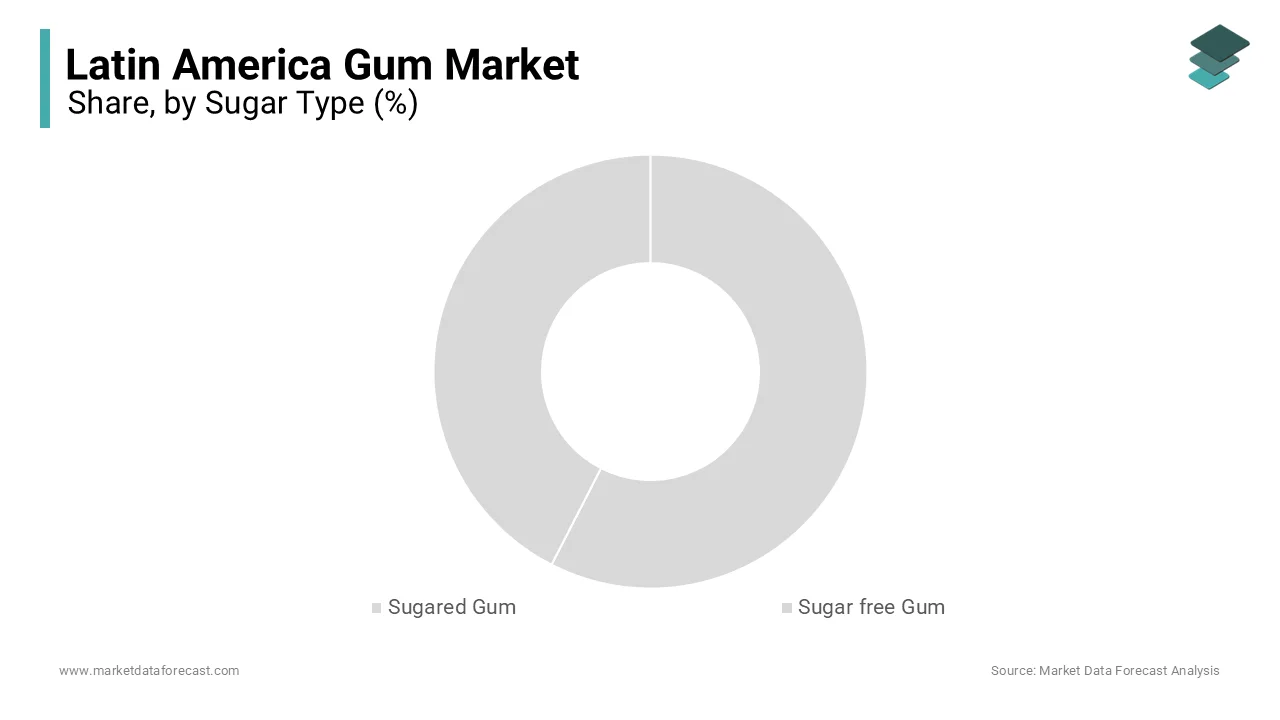
The sugared gum segment continued its dominance in the Latin American gum market and accounted for a substantial share in 2025. This dominance was driven by deeply ingrained cultural preferences for sweet flavours that align with traditional confectionery habits across the region. Consumers in countries like Brazil and Mexico have historically favoured high sugar content in snacks, which creates a natural affinity for standard sugared gum varieties over alternative options. According to the Food and Agriculture Organisation of the United Nations (FAO), Latin America records among the highest levels of per capita sugar and caloric sweetener consumption globally, which continues to drive demand for regional confectionery products. This widespread acceptance ensures that sugared gum remains the default choice for mass market consumers who prioritise taste familiarity over health considerations. As per reports, traditional sugared variants account for a significant portion of total gum sales volume in Latin America, driven by enduring consumer preference for established flavour profiles. Manufacturers leverage this preference by offering affordable single-serve packs that cater to price-sensitive demographics in rural and urban areas alike. The lower production cost of sucrose compared to specialised sweeteners allows companies to maintain competitive pricing strategies that drive high volume turnover. This economic advantage, combined with cultural habit, forms a resilient barrier against rapid shifts to sugar-free alternatives, ensuring continued market leadership for sugared products.
The affordability of sugared gum significantly drives its market domination by making it accessible to low-income populations who constitute a large portion of the regional consumer base. Economic constraints in many Latin American countries force households to prioritise essential goods while seeking low-cost indulgences such as cheap chewing gum. According to research, lower-income consumers in emerging markets prioritise essential household goods over discretionary items, heavily favouring low-priced and single-serve retail products. Sugared gum fits this criterion perfectly, allowing manufacturers to achieve massive penetration through informal retail networks and small kiosks. As per studies, informal retail channels command a substantial share of consumer transactions in Latin America, ensuring widespread access to low-cost confectionery items across fragmented local markets. This widespread availability ensures constant visibility and impulse purchases among working-class consumers who view gum as an affordable daily treat. The simplicity of supply chains for sugar-based products further reduces logistical costs, enabling deeper market penetration into remote areas. As long as economic disparity persists, sugared gum will remain the primary option for the majority of consumers seeking immediate gratification without financial strain.
The sugar-free gum segment is likely to experience the fastest growth, with a CAGR of 7.8% from 2026 to 2034, due to increasing dental health awareness and active promotion by healthcare professionals across Latin America. Public health initiatives have successfully educated consumers about the link between sugar intake and tooth decay, prompting a shift toward safer alternatives. According to reports, regional oral health awareness campaigns supported by health authorities encourage the consumption of sugar-free confectionery to aid in cavity prevention and improve dental hygiene. This educational push has created a knowledgeable consumer base that actively seeks xylitol- and sorbitol-based gums for their protective benefits. As per research, professionals frequently advise patients to chew sugar-free gum after meals to stimulate saliva flow and help neutralise plaque acids. Such professional endorsement builds trust and accelerates trial among health-conscious individuals who value preventive care. Manufacturers respond by highlighting dental benefits on packaging, which resonates with parents purchasing for children. The growing middle class is willing to pay a premium for health-oriented products, driving value growth in this segment. As dental insurance coverage expands and oral hygiene becomes a status symbol, sugar-free gum captures share from traditional variants through superior health positioning.
Strict government regulations and the implementation of sugar taxes act as powerful catalysts for the growth of sugar-free gum by making sugared alternatives less economically attractive. Several Latin American nations have introduced fiscal measures to combat obesity and diabetes, which directly impact the pricing and competitiveness of high-sugar confectionery. According to the World Bank, Mexico implemented an 8 per cent ad valorem tax on non-essential, high-calorie foods of low nutritional value to curb rising obesity rates, which prompted an overall decline in purchases of taxed food products. This price disparity makes sugar-free options relatively more affordable despite higher initial production costs. As per research, the implementation of mandatory front-of-package warning labels on high-sugar items in Chile has altered consumer purchasing behaviour and decreased demand for products carrying the labels. These regulatory pressures force manufacturers to reformulate portfolios and promote sugar-free lines to avoid penalties and maintain shelf space. Retailers also prefer stocking compliant products to simplify inventory management and avoid consumer backlash. The combination of fiscal disincentives for sugar and supportive policies for healthy alternatives creates a favourable environment for sugar-free gum expansion. This structural shift ensures long-term growth as companies align with public health goals to secure market relevance.
By Product Type Insights
The chewing gum segment led the Latin America gum market and captured a controlling share in 2025. This leading position of the segment was attributed to its universal appeal and integration into daily routines as a breath freshener and stress reliever. Unlike niche products, chewing gum serves a functional purpose that transcends age and demographic boundaries, ensuring consistent demand across all consumer segments. According to sources, chewing gum represents a major segment of total gum consumption in Latin America, serving as a prominent and staple item within the regional confectionery market. Its versatility allows usage in various settings, from professional meetings to social gatherings, making it an indispensable accessory for personal grooming. As per studies, a large proportion of urban adults in Mexico regularly consume chewing gum to maintain oral freshness and focus during their daily work routines. This habitual usage creates a stable revenue stream that is less susceptible to seasonal fluctuations compared to novelty items. Manufacturers benefit from high repeat purchase rates as consumers replenish supplies regularly. The wide variety of flavours ranging from mint to fruit caters to diverse palates, ensuring broad acceptance. This entrenched habit loop combined with functional utility secures the dominance of chewing gum over other specialised types in the regional market.
The top position of this segment is reinforced by its extensive distribution network and strong performance as an impulse purchase item in high-traffic retail locations. Small pack formats are strategically placed at checkout counters in supermarkets, convenience stores, and gas stations where visibility drives spontaneous buying decisions. According to reports, impulse purchases drive a substantial percentage of total confectionery sales, with chewing gum remaining a primary category due to its highly accessible price point and portable design. This placement strategy maximises exposure to millions of shoppers daily, ensuring high turnover volumes. As per studies, optimising retail placements such as checkout lanes and end-cap displays significantly accelerates sales of fast-moving confectionery items like chewing gum. Retailers prioritise chewing gum because it requires minimal storage space and has a long shelf life, reducing operational risks. The ease of access allows consumers to buy single sticks or small packs without planning ahead, fitting seamlessly into busy lifestyles. This retail synergy between product characteristics and store layout creates a self-sustaining cycle of visibility and sales that solidifies chewing gum as the market leader.
The functional gum segment is expected to exhibit a noteworthy CAGR of 9.5% during the forecast period, owing to rising consumer demand for wellness-oriented snacking solutions that offer added health benefits beyond basic freshness. Modern consumers seek products that contribute to their overall well-being, such as energy-boosting, immune support, or digestive aid, through convenient formats. According to sources, the introduction of functional confectionery across Latin America has increased in recent years, aligning with growing consumer demand for products that serve multiple dietary purposes. Ingredients like caffeine, vitamins, and probiotics are being incorporated into gum formulations to target specific health needs of busy professionals and athletes. As per research, millennial consumers in the region frequently demonstrate a higher willingness to pay premium prices for food and snack items that offer functional or verified health advantages. This willingness allows manufacturers to command higher margins and differentiate their offerings in a crowded market. Partnerships with healthcare brands enhance credibility and drive trial among sceptical consumers. The versatility of gum as a delivery vehicle for active ingredients enables innovation in categories previously dominated by pills. As health literacy improves, functional gums capture share from traditional supplements by offering a convenient and enjoyable consumption experience.
Advancements in ingredient technology and flavour masking techniques enable the rapid growth of functional gum by overcoming previous sensory limitations associated with active compounds. Early functional gums often suffered from bitter tastes or unpleasant textures, but modern encapsulation methods ensure smooth delivery of beneficial ingredients without compromising flavour. According to reports, advancements in microencapsulation technologies have enhanced the stability and survival rate of active ingredients like probiotics and vitamins when incorporated into commercial gum bases. This technical breakthrough allows manufacturers to create effective products that taste good, encouraging repeat purchases. As per research, the development of specialised masking agents and natural flavour modulators helps reduce bitter off-notes in active herbal or functional chewing gums, improving consumer taste acceptance. Such innovations expand the range of possible functional ingredients, including adaptogens and nootropics, that appeal to health-savvy consumers. Manufacturers invest heavily in research and development to stay ahead of trends and launch novel products that capture media attention. Social media marketing amplifies these innovations by educating consumers on benefits and usage occasions. As technology lowers production costs and improves sensory profiles, functional gum becomes increasingly accessible to mainstream audiences, driving accelerated growth.
By Distribution Channel Insights
In 2025, the convenience stores segment held the majority share in the Latin America Gum Market because of its high-density network and proximity to consumers in urban and semi-urban areas. These small-format retailers are ubiquitous in Latin American cities, providing easy access to single-serve gum packs for immediate consumption. According to sources, convenience outlets and proximity stores throughout Latin America serve as essential physical touchpoints for spontaneous and high-frequency impulse purchases. Their strategic location near transit hubs, offices, and schools ensures constant foot traffic from consumers seeking quick refreshments. As per studies, small-format retail establishments and neighbourhood shops account for a substantial majority of fast-moving confectionery sales, where checkout visibility drives immediate consumer demand. This accessibility is crucial in regions where car ownership is low, and walking is the primary mode of transport. Convenience stores operate with extended hours catering to late-night workers and students who form a significant customer base. The ability to stock limited SKUs efficiently allows these stores to focus on high turnover items like gum. This structural advantage ensures that convenience stores remain the dominant channel for volume sales despite the rise of larger retail formats.
The alignment of convenience store offerings with impulse buying behaviour and low price points strongly favours their dominance in gum distribution. Gum is typically a low-involvement purchase decided at the point of sale, making visibility and accessibility key drivers of sales. According to reports, a major proportion of confectionery and snack purchases in the convenience store channel are unplanned, reinforcing the structural importance of strategic in-store product placement. Checkout counter displays maximise exposure to every customer, ensuring high conversion rates for small ticket items. As per research, cross-category promotional bundling and multi-buy strategies can elevate volume sales by leveraging complementary consumer consumption habits. Convenience stores excel at such tactical promotions due to their agile inventory management systems. The low cost of gum fits perfectly within the typical transaction value of convenience store visits, making it an easy add-on item. Consumers appreciate the convenience of buying gum alongside coffee or snacks without visiting multiple stores. This behavioural fit between product nature and retail format creates a sustainable competitive advantage for convenience stores in the gum market.
The online retailers segment is predicted to witness the highest CAGR of 12.3% between 2026 and 2034. This expansion is propelled by the rapid expansion of e-commerce infrastructure and increasing digital penetration across Latin America. Improved logistics networks and smartphone adoption have made online shopping accessible to a broader demographic, including those in remote areas. Major platforms like Mercado Libre and Amazon have expanded their grocery sections, offering bulk packs of gum that appeal to families and offices. As per sources, online grocery and confectionery sales accelerated significantly as consumers established remote purchasing habits for snacks during pandemic-induced lockdowns. This shift in habit has persisted post-pandemic, with many users preferring the convenience of home delivery. Online channels allow for wider product selection, including niche and imported gums not available in local stores. Subscription models ensure regular replenishment, reducing the effort for consumers. As last-mile delivery improves and costs decrease, online retail becomes a viable channel for even low-value items like gum.
The growth of online retail is further accelerated by targeted marketing capabilities and data-driven personalisation that enhance customer engagement and retention. Digital platforms use algorithms to recommend gum products based on past purchases and browsing history, increasing conversion rates. According to studies, personalised email flows and targeted consumer campaigns for food and beverage brands typically yield higher subscriber engagement compared to non-segmented broadcast messages. Social media advertising allows brands to target specific demographics such as health-conscious users for sugar-free gums or gamers for energy gums. As per research, retargeting campaigns tailored to specific consumer snack preferences generate improved click-through rates compared to generic top-of-funnel digital display ads. Online reviews and ratings build trust for new brands, encouraging trial among cautious buyers. Influencer partnerships on platforms like Instagram and TikTok create buzz around novel flavours and functional benefits. Data analytics enable brands to optimise pricing and promotions in real time, responding quickly to market trends. This precision marketing approach makes online retail a powerful growth engine for the gum market by connecting directly with engaged consumers.
REGIONAL ANALYSIS
Brazil Market Analysis
Brazil led the Latin American gum market and captured a significant share in 2025. This leading position was supported by a massive consumer base and a strong cultural affinity for confectionery products that drove consistent volume growth. According to sources, Brazil remains an essential global market for the chewing gum category, driven by the product's widespread affordability and strong accessibility across diverse demographic groups. As per studies, the sugar-free gum segment in Brazil attracts health-conscious urban consumers who increasingly seek dental benefits and lower-calorie options compared to traditional sugary alternatives. This shift prompts major manufacturers to reformulate existing lines and introduce new functional variants enriched with vitamins or natural sweeteners. The widespread presence of informal retail channels ensures deep market penetration in rural areas where modern trade is limited. Local production capabilities reduce dependency on imports and keep prices competitive against other snack categories. Marketing campaigns often leverage local celebrities and music festivals to maintain brand relevance among younger demographics. Economic fluctuations influence purchasing power, but gum remains a resilient low-cost indulgence. Innovation focuses on long-lasting flavours and unique textures to differentiate brands in a crowded marketplace. The market is highly competitive with both multinational and domestic players vying for shelf space. Sustainability initiatives regarding packaging waste are beginning to shape consumer preferences.
Mexico Market Analysis
Mexico was positioned second in the Latin America gum market in 2025. This growth was driven by its proximity to the United States and a robust manufacturing infrastructure that supports both domestic consumption and exports. According to research, Mexico produces a substantial volume of confectionery products annually, with chewing gum representing a major sector supported by strong domestic demand from a large youthful demographic. As per reports, functional chewing gums, including energy-boosting and caffeinated options, are seeing increased consumer interest as urban professionals seek portable and convenient alternatives to traditional beverages. This trend encourages innovation in product development and premium pricing strategies. The prevalence of small independent retailers known as tianguis facilitates widespread distribution even in remote communities. Trade agreements facilitate the import of raw materials such as chicle and synthetic bases, keeping production costs stable. Cultural traditions involving sweet treats support steady baseline demand. Health regulations mandate clear labelling of sugar content, influencing consumer choices. Digital marketing plays an increasing role in engaging millennial and Gen Z consumers. The market benefits from a strong tourism sector that introduces international brands to local buyers. Competition is intense, leading to frequent promotional activities and bundle offers.
Argentina Market Analysis
Argentina holds an economically sensitive position in the Latin American gum market. In this region, inflation and currency volatility significantly impact pricing strategies and consumer purchasing behaviour. According to sources, the chewing gum category in Argentina exhibits economic resilience as consumers looking for cost-effective choices treat affordable gum options as substitutes for more expensive snacks. As per studies, private label gums have experienced notable traction within supermarkets and hypermarkets as budget-conscious shoppers prioritise retail brand value amid rising economic challenges. This shift forces established brands to introduce economy packs and competitive pricing models to retain customers. The tradition of mate drinking often complements gum consumption, creating unique pairing opportunities for marketers. Local manufacturers focus on sourcing indigenous ingredients to reduce reliance on imported raw materials subject to exchange rate fluctuations. Sugar-free variants are popular due to rising diabetes awareness and government health campaigns. Distribution networks are well developed in urban centres like Buenos Aires but face logistical hurdles in provincial areas. Product innovation slows due to cost constraints, but flavour diversity remains high. Consumer loyalty is fragile and highly price-dependent. The market adapts quickly to macroeconomic shifts through agile supply chain management.
Chile Market Analysis
Chile is a highly mature player in the Latin American gum market. The country is known for its high regulatory standards and a consumer base that strongly prioritises wellness and premium quality attributes. According to research, strict nutritional labelling regulations in Chile have contributed to a significant market shift away from high-sugar options toward sugar-free and xylitol-enriched chewing gums. As per reports, premium and imported brand variations in the chewing gum segment have attracted interest from affluent consumer brackets looking for distinct flavour profiles and sustainable packaging options. This preference drives retailers to expand their assortments of niche and artisanal gum products. The high literacy rate and digital connectivity enable effective educational campaigns about oral health benefits associated with sugar-free chewing. Supermarket chains dominate distribution, ensuring high visibility for compliant products. Local producers invest in clean label formulations to meet discerning consumer expectations. Tourism contributes to exposure to international trends and flavours. The market is smaller in volume compared to neighbours but higher in value per unit. Innovation focuses on functional benefits such as stress relief or breath freshening. Regulatory compliance is a key barrier to entry for new players.
COMPETITIVE LANDSCAPE
The competitive landscape of the Latin America Gum Market features a mix of global giants and strong regional players vying for dominance through differentiation and scale. Multinational corporations leverage their extensive resources and brand recognition to offer diverse product portfolios that cater to various consumer segments. Local companies compete by focusing on affordability and deep distribution networks that reach remote areas often overlooked by international brands. Intense rivalry drives continuous innovation in flavors textures and functional benefits to attract health conscious buyers. Price competition remains fierce due to the presence of informal markets and counterfeit products that undercut legitimate sales. Regulatory pressures regarding sugar content and labeling force all participants to adapt quickly to comply with new standards. Sustainability initiatives are becoming key differentiators as consumers increasingly prefer eco friendly packaging and ethical sourcing. Mergers and acquisitions help larger entities consolidate market power and expand geographic reach. The absence of significant barriers to entry encourages new entrants but success requires substantial investment in branding and distribution. Overall competition fosters efficiency and innovation benefiting consumers through wider choices and improved product quality.
KEY MARKET PLAYERS
- Mondeléz International Inc
- Kraft Foods Inc.
- Mars Inc.
- Wrigley’s
- Perfetti
- Howell Foods
- Hershey
- Think Gum
- Zapp Gum
- ZOFT Gum
- Super Mouth
Top Players in the Market
- Mondelez International maintains a strong presence in the Latin America Gum Market through its iconic brands such as Trident and Bubbaloo which resonate deeply with local consumers. The company leverages its extensive distribution network to ensure product availability across both modern retail and informal channels in key markets like Brazil and Mexico. Recent strategic initiatives include launching sugar free variants infused with natural sweeteners to align with regional health trends and regulatory pressures. Mondelez has also invested in sustainable packaging solutions to address environmental concerns raised by eco conscious shoppers. Their focus on digital marketing campaigns targeting younger demographics helps maintain brand relevance and drive engagement. By continuously innovating flavor profiles that reflect local tastes the company strengthens its connection with diverse consumer bases. These efforts collectively enhance brand loyalty and secure a competitive edge in the dynamic confectionery landscape of Latin America.
- Perfetti Van Melle plays a pivotal role in the Latin America Gum Market by offering a diverse portfolio of chewing and bubble gum products under brands like Mentos and Chupa Chups. The company focuses on high quality ingredients and innovative textures to differentiate its offerings from competitors. Recent actions to strengthen market position include expanding production facilities in Colombia to improve supply chain efficiency and reduce costs. Perfetti Van Melle has also introduced functional gum lines with added vitamins and energy boosting properties to cater to health oriented consumers. Strategic partnerships with local distributors enable deeper penetration into rural areas where traditional retail dominates. The company emphasizes sustainability by sourcing raw materials responsibly and reducing plastic waste in packaging. These initiatives enhance operational resilience and appeal to environmentally aware buyers. By balancing global brand strength with local adaptation Perfetti Van Melle continues to grow its influence in the region.
- Arcor Group stands as a leading regional player in the Latin America Gum Market with a strong foothold in Argentina and neighboring countries. The company produces a wide range of affordable gum products that cater to mass market consumers seeking value for money. Recent strategies involve modernizing manufacturing processes to improve product consistency and shelf life. Arcor has launched new fruit flavored gums that appeal to children and teenagers who drive impulse purchases. The group actively engages in community programs to build brand trust and loyalty among local populations. Investments in logistics infrastructure ensure timely delivery to remote locations despite challenging geographic conditions. Arcor also collaborates with local retailers to optimize shelf placement and visibility. By focusing on affordability and accessibility the company maintains a robust presence in price sensitive segments. These efforts solidify its position as a key contributor to the regional confectionery industry.
Top Strategies Used by Key Market Participants
Key players in the Latin America Gum Market employ several strategic approaches to maintain competitive advantage and drive growth. Product innovation remains central as companies develop sugar free and functional variants to meet rising health consciousness among consumers. Strategic partnerships with local distributors enhance reach into informal retail channels which account for a significant portion of sales. Expansion of production facilities within the region reduces dependency on imports and mitigates currency fluctuation risks. Investment in sustainable packaging addresses environmental concerns and appeals to eco conscious shoppers. Digital marketing campaigns target younger demographics through social media platforms to build brand engagement. Companies also focus on flavor localization to cater to diverse regional preferences and cultural tastes. Price optimization strategies ensure affordability for mass market segments while premium offerings capture higher margins. These combined strategies enable participants to navigate economic volatility and regulatory changes while capitalizing on evolving consumer trends.
MARKET SEGMENTATION
This research report on the Latin America gum market has been segmented and sub-segmented into the following categories.
By Sugar Type
- Sugared Gum
- Sugar free Gum
By Product Type
- Chewing Gum
- Bubble Gum
- Functional Gum
- Energy Gum
By Distribution Channel
- Supermarkets,
- Convenience Stores
- Departmental Stores
- Online Retailers
By Country
- Argentina
- Brazil
- Mexico
- Rest of Latin America