- Product Description Description
- Table of Contents TOC
- List of Table & Figure LOT
- Get Free Sample PDF Sample PDF
Market Size, 2025
$1.03 BnMarket Estimate, 2026
$1.11 BnMarket Forecast, 2034
$2.04 BnCAGR, 2026–2034
7.9%Executive Summary: Guar Gum Market
- Market Scope: Global guar gum market analysis covering application segments, functional uses, regional dynamics, hydraulic fracturing demand, and bio-based hydrocolloid adoption metrics.
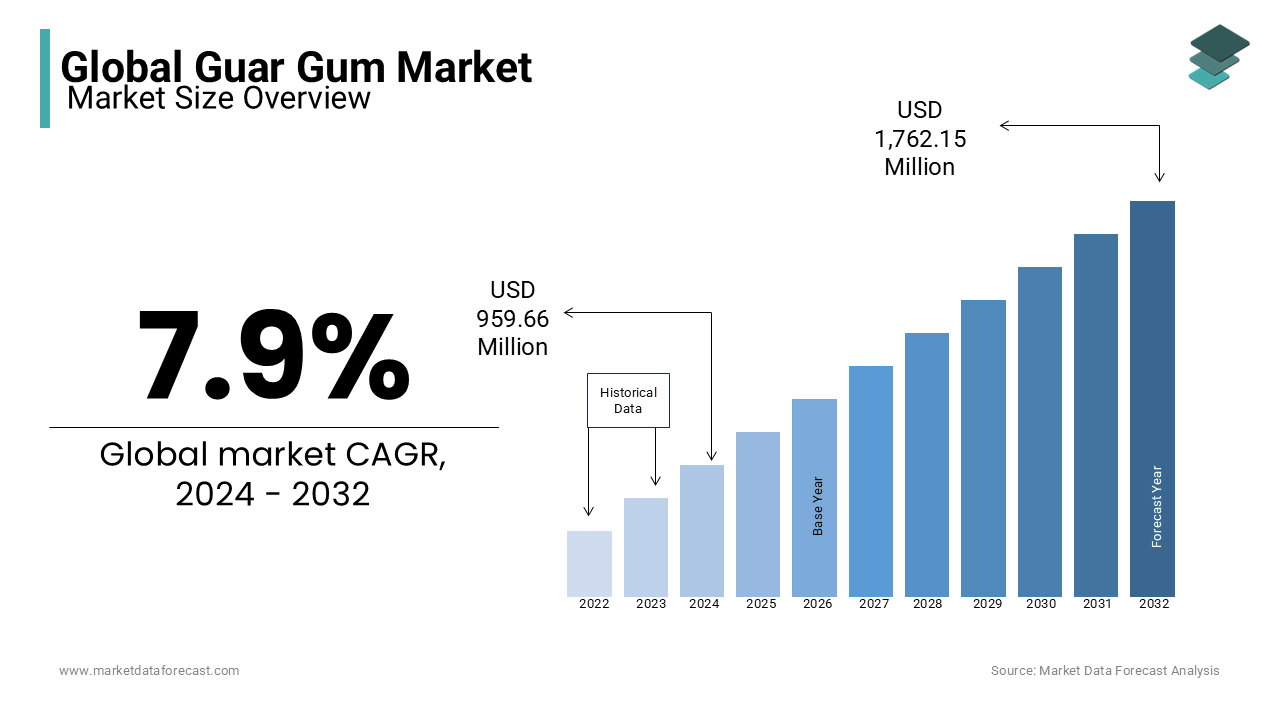
- Market Valuation: Valued at USD 1.03 billion in 2025, estimated at USD 1.11 billion in 2026, and projected to reach USD 2.04 billion by 2034, registering a CAGR of 7.90% from 2026 to 2034.
- Primary Growth Drivers: Surging demand from the hydraulic fracturing industry for viscosity enhancement and the global shift toward clean-label, plant-based food ingredients.
Key Market Segment Metrics (2026–2034)
| Category | Leading Segment (Position) | Fastest-Growing / Key Growth Segment |
|---|---|---|
| By Application & Function | Industrial-grade segment (dominated by application in 2025) & Thickening function (held largest share) | Pharmaceutical-grade segment (8.4% CAGR) & Friction-reducing functions (highest CAGR at 9.1%) |
| By Technology & Innovation | Standard milling and conventional hydrocolloid processing techniques | Water-efficient processing technologies, vertical integration models, and value-added personal care derivatives |
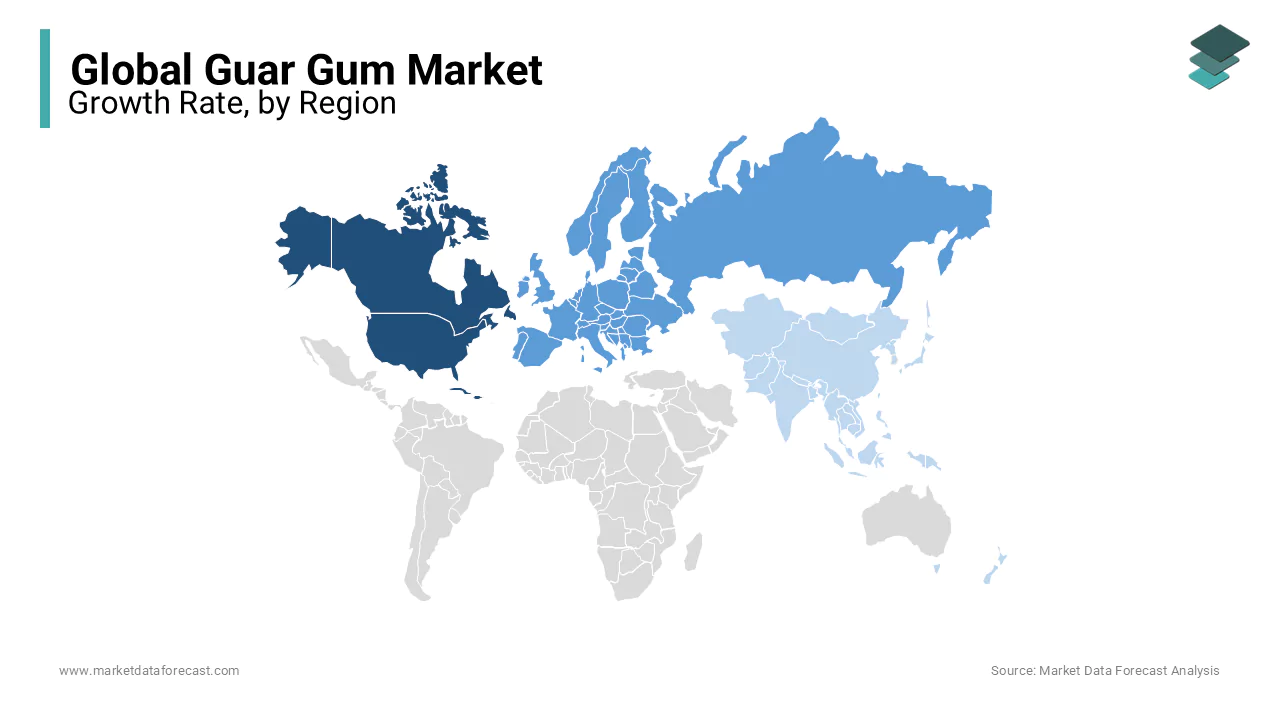
| By Region Segment | North America (led regionally in 2025 due to extensive shale oil operations) | Asia-Pacific (key growth area supported by dominant production capacities in India) |
Major Market Players & Market Structure
Market Structure: Highly competitive global hydrocolloid sector characterized by supply chain vertical integration to secure monsoon-dependent raw materials, specialized derivative developments, and sustainable water-efficient manufacturing investments.
Key Companies: Cargill, E.I. Dupont De Nemours and Company, Ingredion Incorporated, Shree Ram Industries, Dabur India Ltd, Hindustan Gums and Chemical Limited, Lucid Group, Supreme Gums Private Limited, Rama Gum Industries, and Guangrao Liuhe Chemical Co., Ltd.
Global Guar Gum Market Size
The global guar gum market size was calculated to be USD 1.03 billion in 2025 and is anticipated to be worth USD 2.04 billion by 2034, from USD 1.11 billion in 2026, growing at a CAGR of 7.90% during the forecast period.
Guar gum is a natural polysaccharide derived from the endosperm of guar beans, primarily cultivated in arid and semi-arid regions. This hydrocolloid serves as a vital thickening, stabilizing, and emulsifying agent across diverse industries, including food and beverage, oil and gas, pharmaceuticals, and textiles. Its unique ability to form high-viscosity solutions at low concentrations makes it indispensable for industrial applications. India and Pakistan collectively account for over 80% of global guar bean production, due to their favorable climatic conditions. As per the Food and Agriculture Organization of the United Nations, global pulse production has seen steady growth, with guar being a critical component in sustainable agriculture systems. According to the United States Geological Survey, the hydraulic fracturing industry consumes a significant portion of high-viscosity guar derivatives, highlighting its strategic importance in energy extraction. As per the World Bank, climate change impacts are altering agricultural patterns, making drought-resistant crops like guar increasingly valuable for farmer livelihoods in South Asia. According to the European Food Safety Authority, guar gum is recognized as a safe food additive under code E412, facilitating its widespread use in processed foods. Rising consumer preference for clean-label and plant-based ingredients further propels demand. The versatility of guar gum allows it to replace synthetic additives, aligning with global sustainability goals. This multifaceted utility ensures its continued relevance in both traditional and emerging industrial sectors, driving consistent global trade flows.
MARKET DRIVERS
Surging Demand from the Hydraulic Fracturing Industry
The robust expansion of hydraulic fracturing, or fracking, is one of the key factors driving the growth of the global guar gum market, particularly in North America. Guar gum derivatives, such as hydroxypropyl guar, are essential components in fracturing fluids used to extract oil and natural gas from shale formations. These derivatives increase the viscosity of water, enabling the transport of proppants like sand into rock fissures to keep them open. According to the United States Energy Information Administration, crude oil production in the United States reached record highs in recent years, driven largely by shale plays in Texas and North Dakota. This surge in drilling activities directly correlates with increased consumption of friction reducers and gelling agents. According to the American Petroleum Institute, thousands of new wells are drilled annually, each requiring substantial volumes of specialized chemicals. Guar-based fluids are preferred due to their cost-effectiveness and biodegradability compared to synthetic alternatives. As global energy demands rise and nations seek energy independence, investment in unconventional oil and gas resources intensifies. This industrial dependency creates a stable and high-volume demand stream for guar processors. Although renewable energy transitions are underway, fossil fuels remain dominant in the immediate future, ensuring sustained market growth. The technical superiority of guar derivatives in high-temperature and high-pressure environments further cements their position in the energy sector.
Growing Preference for Clean Label and Plant-Based Food Ingredients
The shifting consumer landscape towards clean-label and plant-based food products is further aiding the expansion of the global guar gum market. Consumers are increasingly scrutinizing ingredient lists, seeking natural alternatives to synthetic thickeners and stabilizers. Guar gum fits this requirement perfectly, as it is a natural, plant-derived hydrocolloid. According to the International Food Information Council, a majority of consumers actively try to avoid artificial ingredients in their diets, prompting manufacturers to reformulate products. The global rise in veganism and vegetarianism further boosts demand for plant-based dairy alternatives, such as almond milk and oat milk, where guar gum prevents phase separation and improves texture. According to data from the Plant Based Foods Association, retail data shows positive growth in sales of plant-based dairy alternatives, necessitating effective stabilizers. Additionally, the gluten-free trend relies heavily on hydrocolloids to mimic the elasticity and structure provided by gluten in baked goods. According to the World Health Organization, reduced intake of ultra-processed foods is advocated, encouraging the use of simple, natural additives. Guar gum’s ability to enhance mouthfeel and shelf life, without compromising nutritional profiles, makes it a preferred choice for food technologists. This alignment with health and wellness trends ensures long-term adoption across various food categories, including sauces, dressings, and ice creams.
MARKET RESTRAINTS
Volatility in Raw Material Supply and Weather Dependence
The heavy reliance on specific geographic regions for guar bean cultivation exposes the global market to significant supply chain risks driven by climatic variability, which is a significant market restraint. Approximately 80% of the world’s guar is grown in the Thar Desert region, spanning northwest India and parts of Pakistan. According to the India Meteorological Department, monsoon rainfall patterns in these areas are becoming increasingly erratic due to climate change, leading to fluctuating crop yields. A poor monsoon season can result in a drastic reduction in bean availability, causing sharp spikes in global prices. For instance, historical data shows that drought conditions have previously led to price increases of over 50% within a single quarter. This volatility disrupts planning for downstream industries, such as food processing and oil drilling, which require consistent supply and predictable pricing. Farmers often switch to more profitable crops like cotton if guar prices drop, leaving the market undersupplied when demand rebounds. The lack of diversified growing regions means there are few alternatives to buffer against regional crop failures. As per the World Bank, climate resilience in agriculture is a critical challenge for South Asian economies. This structural vulnerability makes the guar gum market susceptible to external shocks, affecting global trade stability. Buyers face difficulties in securing long-term contracts at fixed rates due to this inherent unpredictability.
Stringent Regulatory Standards and Quality Consistency Issues
Navigating complex regulatory frameworks and maintaining consistent product quality are further hampering the expansion of the global guar gum market. Different regions have varying standards for purity, residual solvent limits, and microbial counts, which complicates international trade. According to the European Food Safety Authority, strict limits are imposed on contaminants, such as pesticide residues and heavy metals, in food-grade guar gum. Meeting these standards requires advanced processing technologies and rigorous quality control measures, which many small-scale processors in producing countries lack. In the oil and gas sector, specifications for viscosity and particle size must be met precisely to ensure operational efficiency. Variability in raw bean quality due to differing harvest conditions leads to inconsistencies in the final powder. According to the United States Food and Drug Administration, Good Manufacturing Practices are mandated, which require detailed documentation and traceability. Non-compliance can result in shipment rejections and legal penalties, damaging brand reputation. As per industry reports, batch-to-batch variation remains a common complaint among industrial buyers, affecting process reliability. The cost of upgrading facilities to meet international certifications is prohibitive for smaller exporters, limiting market participation. Furthermore, changing regulations regarding genetically modified organisms or allergen labeling add layers of complexity. These regulatory hurdles increase operational costs and create barriers to entry for new players striving for global competitiveness.
MARKET OPPORTUNITIES
Expansion into Pharmaceutical and Personal Care Applications
The growing utilization of guar gum in pharmaceutical and personal care formulations is a lucrative opportunity for market expansion beyond traditional industrial uses. In pharmaceuticals, guar gum acts as a binder, disintegrant, and controlled-release agent in tablet formulations. According to the World Health Organization, the demand for generic medicines is rising globally, particularly in developing nations where cost-effective excipients are crucial. Guar gum’s biocompatibility and non-toxic nature make it ideal for drug delivery systems. In the personal care industry, it is widely used in shampoos, conditioners, and lotions as a thickener and film former. The global cosmetics market, valued at hundreds of billions of dollars, is shifting towards natural and organic ingredients. According to data from the Personal Care Products Council, a strong consumer preference for plant-based formulations is indicated, driving demand for natural hydrocolloids. Guar gum provides excellent conditioning properties and enhances product stability without synthetic polymers. The rise of men’s grooming products and premium hair care segments offers new avenues for growth. Manufacturers are developing specialized grades with higher purity and specific functional properties, tailored for these sensitive applications. Regulatory approval for pharmaceutical use adds value and opens high-margin markets. Innovation in derivative chemistry allows for customized solutions, meeting specific formulation needs. This diversification reduces dependence on the volatile oil and gas sector, stabilizing revenue streams.
Development of Value-Added Derivatives and Modified Starches
The innovation and development of value-added guar derivatives, such as carboxymethyl guar and hydroxypropyl guar, offer significant opportunities for the global market growth. Standard guar gum faces competition from other hydrocolloids, but modified derivatives possess unique properties suited for specialized industrial applications. According to chemical industry analysts, the demand for cationic guar in hair care and paper manufacturing is growing, due to its superior substantiation and retention capabilities. In the textile industry, modified guar gums improve printing quality and reduce water usage, aligning with sustainability goals. The oil and gas sector increasingly prefers chemically modified guar for high-temperature and high-salinity reservoirs, where native gum fails. Research institutions in India and abroad are investing in enzymatic modification techniques to produce eco-friendly derivatives with lower environmental impact. As per the Journal of Industrial and Engineering Chemistry, novel modifications enhance solubility and stability, expanding application ranges. These specialized products command premium prices and offer better margins than commodity-grade powder. Companies investing in research and development can capture niche markets with less price sensitivity. The shift towards high-performance materials in various industries supports the adoption of advanced derivatives. Strategic partnerships with end-users facilitate the co-development of tailored solutions. This focus on innovation drives long-term growth and technological leadership in the global market.
MARKET CHALLENGES
Environmental Concerns Regarding Water Usage in Processing
The environmental impact associated with the water-intensive processing of guar beans is significantly challenging the expansion of the global guar gum market. Extracting gum from the bean requires substantial amounts of water for soaking, grinding, and purification. According to the United Nations Water Reports, water scarcity is a critical issue in the primary producing regions of India and Pakistan, where groundwater levels are depleting rapidly. The discharge of effluent from processing units containing organic load and chemicals poses pollution risks to local water bodies. Regulatory authorities are imposing stricter wastewater treatment norms, increasing operational costs for processors. Small-scale units often lack the infrastructure to treat effluents properly, leading to environmental degradation and community backlash. As per the Central Pollution Control Board in India, compliance with zero-liquid-discharge policies is becoming mandatory for many industrial clusters. This transition requires significant capital investment, which many traditional processors cannot afford. Consumer awareness regarding the water footprint of agricultural products is also rising, influencing purchasing decisions. Brands may face reputational risks if their supply chains are linked to unsustainable water practices. Developing water-efficient processing technologies and recycling systems is essential but costly. Balancing economic viability with environmental stewardship remains a complex hurdle for the industry. Failure to address these concerns could lead to stricter regulations and supply disruptions.
Competition from Alternative Hydrocolloids and Synthetic Polymers
The intense competition from alternative hydrocolloids, such as xanthan gum, locust bean gum, and synthetic polymers that offer similar functional properties, is further challenging the global market expansion. Xanthan gum, produced through fermentation, provides consistent quality and is less dependent on agricultural weather conditions. According to market data, the production capacity for xanthan gum has expanded significantly in China, creating a reliable and often cheaper alternative for industrial users. In the food industry, manufacturers may switch to starches or cellulose derivatives, depending on price fluctuations and functional requirements. Synthetic polymers like polyacrylamide are preferred in certain oilfield applications due to their thermal stability, despite environmental concerns. The availability of substitutes limits the pricing power of guar gum producers. When guar prices spike due to crop shortages, buyers quickly reformulate using alternatives to manage costs. As per the Food and Agriculture Organization, the global production of competing pulses and hydrocolloids is rising, increasing market saturation. Innovation in biotechnology is also yielding new bio-based thickeners that challenge traditional guar applications. The lack of unique proprietary status for standard guar gum makes it a commodity subject to fierce price competition. Processors must constantly demonstrate value through quality, consistency, and service to retain customers. This competitive landscape pressures margins and necessitates continuous strategic adaptation to maintain market share.
REPORT COVERAGE
| REPORT METRIC | DETAILS |
| Market Size Available | 2025 to 2034 |
| Base Year | 2025 |
| Forecast Period | 2026 to 2034 |
| CAGR | 7.9% |
| Segments Covered | By Grade, Function, Application, Food &Beverage Application, And Region |
| Various Analyses Covered | Global, Regional, and Country-Level Analysis; Segment-Level Analysis; DROC; PESTLE Analysis; Porter’s Five Forces Analysis; Competitive Landscape; Analyst Overview of Investment Opportunities |
| Regions Covered | North America, Europe, APAC, Latin America, Middle East & Africa |
| Market Leaders Profiled | Cargill, E.I. Dupont De Nemours and Company, Ingredion Incorporated, Shree Ram Industries, Dabur India Ltd, Hindustan Gums and Chemical Limited, Lucid Group, Supreme Gums Private Limited, Rama Gum Industries, and Guangrao Liuhe Chemical Co., Ltd. |
SEGMENTAL INSIGHTS
By Grade Insights
The industrial-grade segment held the dominant share in the global market by capturing the highest share of the global market in 2025. The dominance of the industrial-grade segment in the global market is primarily due to its extensive utilization in the oil and gas sector for hydraulic fracturing operations. This grade is characterized by high viscosity and is used as a gelling agent in fracturing fluids to transport proppants into shale formations. The indispensable role of industrial-grade guar gum in the hydraulic fracturing industry remains a cornerstone of global energy production, which is further supporting the dominance of this segment in the global market. Hydroxypropyl guar, which is a derivative of industrial-grade gum, is preferred for its ability to withstand high temperatures and shear forces during drilling. According to the United States Energy Information Administration, the United States remains a top global oil producer, with a significant portion originating from shale plays requiring fracturing. Each well requires thousands of gallons of fracturing fluid, where guar gum acts as the primary viscosifier. According to the American Petroleum Institute, despite the rise of renewable energy, fossil fuels continue to account for over 80% of global energy consumption, ensuring sustained demand for extraction technologies. Industrial-grade gum is cost-effective compared to synthetic polymers, making it the default choice for large-scale operations. The efficiency of guar-based fluids in carrying sand and keeping fractures open directly impacts well productivity. As exploration activities expand in North America and emerging markets like Argentina and China, the volume of industrial-grade guar consumed rises proportionally. This deep integration into the energy supply chain cements its market leadership.
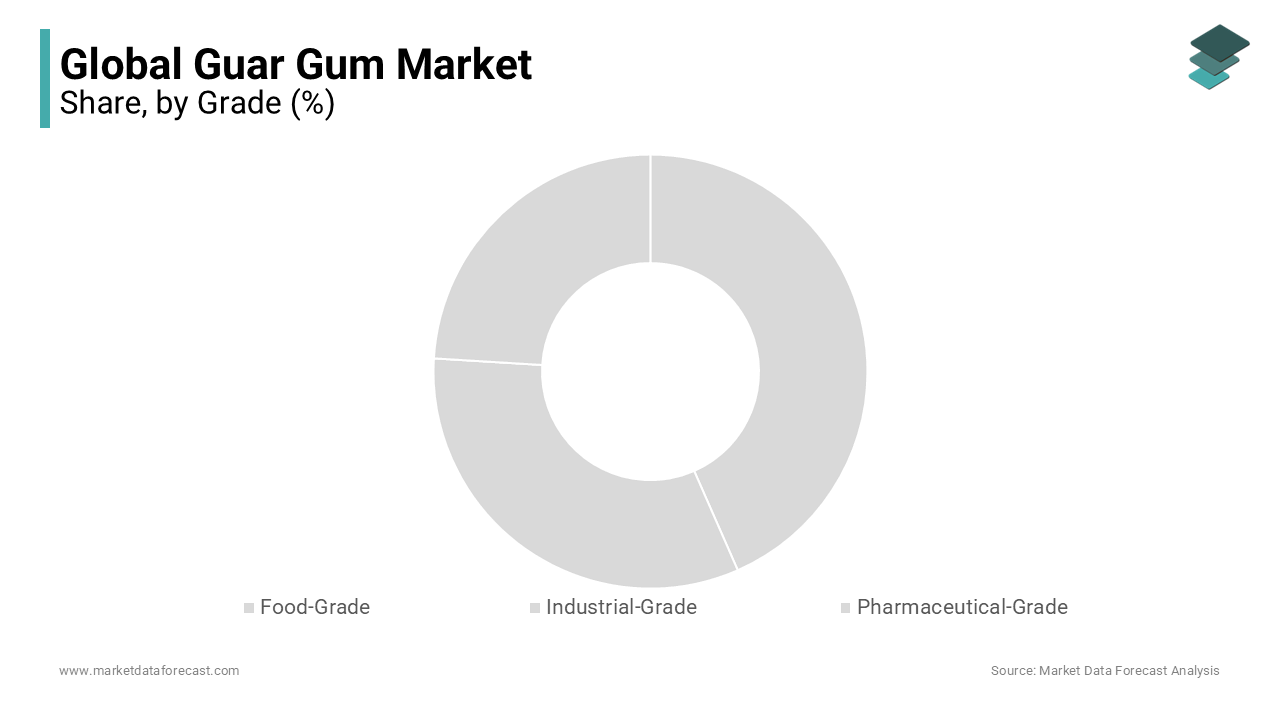
However, the pharmaceutical-grade guar gum segment is projected to register the highest CAGR of 8.4% during the forecast period, owing to the increasing demand for controlled drug delivery systems and excipients in tablet formulations. The escalating need for advanced drug delivery mechanisms that ensure precise dosage and prolonged therapeutic effects is further fuelling the expansion of the pharmaceutical-grade guar gum segment in the global market. This grade meets stringent purity standards required for human consumption and medical use. Guar gum acts as a binder, disintegrant, and matrix former in tablets, controlling the release rate of active ingredients. According to the World Health Organization, the global burden of chronic diseases, such as diabetes and hypertension, is rising, necessitating long-term medication regimens. Controlled-release formulations improve patient compliance by reducing dosing frequency. According to data from the International Federation of Pharmaceutical Manufacturers and Associations, the market for generic and branded medicines is expanding, particularly in emerging economies. Pharmaceutical companies are increasingly utilizing natural polymers like guar gum to replace synthetic excipients due to safety concerns. The biocompatibility and non-toxic nature of pharmaceutical-grade guar make it ideal for oral drug delivery. Research published in the Journal of Controlled Release highlights the efficacy of guar-based matrices in sustaining drug release over extended periods. This scientific validation drives formulation scientists to incorporate guar gum into new drug products. The shift towards personalized medicine further boosts demand for specialized excipients.
By Function Analysis
The thickening segment was the leading function segment in the global guar gum market and accounted for the highest share of the global market in 2025, as it represents the most fundamental and widespread application of the hydrocolloid across food, beverage, and industrial sectors. Its ability to increase viscosity at low concentrations makes it highly efficient and cost-effective. The critical role of thickening in enhancing texture, mouthfeel, and stability in a wide array of food products is further boosting the dominance of this segment by function in the global market. Guar gum prevents ingredient separation and provides a creamy consistency in items such as ice cream, sauces, and dressings. According to the Institute of Food Technologists, texture is a key determinant of consumer acceptance in processed foods. In dairy alternatives like almond and soy milk, guar gum prevents sedimentation and ensures a uniform appearance. According to data from the Plant Based Foods Association, sales of plant-based dairy alternatives indicate a robust marketplace, requiring effective stabilizers to mimic the texture of dairy. In gluten-free baking, guar gum replaces the structural properties of gluten, preventing crumbly textures. According to the World Health Organization, the reduction of fat and sugar in diets is promoted, leading manufacturers to use thickeners to maintain sensory qualities in reduced-calorie products. Guar gum’s neutral taste allows it to be used without altering flavor profiles. Its efficiency means only small amounts are needed, reducing overall formulation costs. This versatility and functionality make thickening the most demanded function globally.
On the other hand, the friction-reducing function segment is experiencing the fastest growth and is predicted to record a CAGR of 9.1% during the forecast period, owing to its critical application in hydraulic fracturing and enhanced oil recovery techniques, and the increasing complexity of shale gas and tight oil extraction requires advanced friction reducers to minimize pressure losses during pumping operations. Guar gum derivatives, such as hydroxypropyl guar, are engineered to reduce turbulence and friction in high-velocity fluids. According to the United States Energy Information Administration, the number of horizontal wells drilled in shale plays continues to rise, requiring efficient fluid systems to reach greater depths. Friction reducers allow for higher pump rates and lower surface pressures, reducing equipment wear and energy consumption. Data from major service companies indicates that optimizing friction can lead to significant cost savings in drilling operations. As reservoirs become deeper and more complex, the demand for high-performance friction reducers grows. Guar-based additives offer a balance between viscosity building and friction reduction, making them versatile. The shift towards larger fracture stages in modern wells increases the volume of chemicals required. This operational necessity drives the rapid adoption of friction-reducing guar products. Innovation in chemical modification enhances their performance in high-salinity brines.
By Application Analysis
The oil & gas segment dominated the market by holding the highest share of the global market in 2025 due to the massive volume of guar derivatives consumed in hydraulic fracturing and drilling operations worldwide. The sheer volume of guar gum required for hydraulic fracturing in shale formations is further contributing to the dominance of the oil & gas segment in the global market. Each well consumes thousands of pounds of guar derivatives to create the viscous fluids needed for proppant transport. According to the United States Energy Information Administration, the United States remains a leading producer of crude oil, largely due to shale technology. The Permian Basin and other key plays rely heavily on guar-based fracturing fluids. According to the American Petroleum Institute, tens of thousands of new wells are completed annually, each representing a significant demand point for guar gum. The technical superiority of guar in creating high-viscosity fluids at low cost makes it irreplaceable in many operations. Even as efficiency improves, the total number of wells ensures high aggregate consumption. Global energy demand continues to grow, particularly in Asia, supporting ongoing exploration activities. The reliance on unconventional resources in North America and emerging markets sustains this leadership. The scale of industrial usage far exceeds that of food or pharmaceutical applications. This volumetric dominance defines the market structure.
However, the food & beverages segment is estimated to showcase a CAGR of 7.2% during the forecast period, owing to the changing consumer preferences and the expansion of processed food markets. Manufacturers are reformulating products to remove synthetic additives, replacing them with plant-based alternatives like guar gum. According to the International Food Information Council, a majority of consumers check ingredient lists for artificial components, prompting industry changes. Guar gum is perceived as a safe and natural thickener, aligning with this trend. According to data from Euromonitor International, sales of natural and organic food products are outpacing conventional categories. In beverages, guar gum stabilizes emulsions and prevents separation in fruit juices and dairy drinks. The rise of functional beverages containing fiber and protein relies on guar for texture. Regulatory approvals in major markets facilitate its use. This shift in consumer preference drives innovation and adoption. Brands leverage guar gum to meet clean-label claims while maintaining product quality. This dynamic creates sustained growth momentum.
REGIONAL ANALYSIS
Asia Pacific Guar Gum Market Analysis
The Asia Pacific region is poised to accelerate its agricultural production yields and witness significant growth across its regional chemical processing sectors over the next few years. India accounts for the majority of global production, providing a strategic advantage. According to the Ministry of Commerce and Industry in India, exports of guar gum are a significant contributor to agricultural revenue. Domestic consumption is rising due to growth in the food processing and pharmaceutical sectors. China is a major importer of its textile and paper industries. According to the Asian Development Bank, rapid industrialization is highlighted as driving demand for industrial chemicals. Japan and South Korea have advanced food and pharmaceutical markets, consuming high-quality grades. Urbanization and changing diets increase demand for processed foods. Government initiatives in India support farmer livelihoods through minimum support prices. The region’s growth is fueled by both production capacity and expanding domestic applications. Infrastructure improvements facilitate logistics. The market is price-sensitive but volume-driven. Emerging economies contribute to steady expansion.
North America Guar Gum Market Analysis
North America had the leading share of the global guar gum market in 2025 and is anticipated to drive substantial trade volumes and expand its oilfield chemical usage patterns aggressively over the next few years. The United States is the largest consumer of industrial-grade guar for hydraulic fracturing. According to the United States Energy Information Administration, the country’s shale oil production drives massive demand for fracturing fluids. The presence of major oilfield service companies facilitates efficient distribution and usage. In the food sector, the demand for clean-label and gluten-free products supports the consumption of food-grade guar. According to the United States Department of Agriculture, the growing trend of health-conscious eating is noted. Canada also contributes with its active energy sector and food manufacturing base. Regulatory frameworks by the Food and Drug Administration ensure safety standards. The region’s technological advancement in drilling enhances efficiency but maintains high-volume usage. Economic stability supports consistent import levels from producing countries. The mature market focuses on quality and supply chain reliability. Innovation in fracking technologies continues to drive industrial demand.
Europe Guar Gum Market Analysis
Europe is projected to strengthen its clean-label food manufacturing compliance and refine its specialty pharmaceutical ingredient networks over the coming years. According to the European Food Safety Authority, the use of guar gum as a food additive is regulated, ensuring high safety levels. According to Eurostat, the demand for processed and convenience foods is steady, supporting food-grade consumption. The region’s commitment to sustainability drives the use of bio-based materials in various industries. Germany, France, and the United Kingdom are key markets for pharmaceutical and food applications. The European Green Deal promotes eco-friendly industrial practices, benefiting natural hydrocolloids. The oil and gas sector is smaller compared to North America, limiting industrial demand. However, the personal care and pharmaceutical sectors are significant consumers. High disposable income supports premium natural products. Import dependencies on India and Pakistan shape trade dynamics. Regulatory compliance is a key factor for market entry. The market values quality and certification over price.
Latin America Guar Gum Market Analysis
Latin America is expected to ramp up its energy extraction operations and escalate its food stabilization technology adoption over the coming years. Brazil and Argentina are key contributors due to their shale reserves and agricultural industries. According to the Economic Commission for Latin America and the Caribbean, investment in energy infrastructure is increasing. Hydraulic fracturing activities in the Vaca Muerta formation in Argentina drive industrial demand. The food processing sector is expanding with rising urbanization. Mexico imports guar for its manufacturing industries. Economic volatility can impact purchasing power, but long-term trends are positive. Local production is limited, leading to reliance on imports. Government policies promoting bio-based materials support market growth. The region offers opportunities for suppliers to establish local partnerships. Awareness of natural ingredients is rising among consumers. The market is in a development phase with significant upside potential. Trade agreements facilitate access to global supplies.
Middle East and Africa Market Analysis
The Middle East and Africa region is anticipated to heighten its investments in unconventional energy reserves and expand its specialty chemical import pipelines over the next few years. Saudi Arabia and the United Arab Emirates invest heavily in energy extraction, requiring fracturing fluids. According to the Organization of the Petroleum Exporting Countries, oil production levels remain high, supporting industrial demand. The food sector is developing with increasing imports of processed goods. Africa has limited industrial usage but potential in agriculture and mining. South Africa is a key market for industrial applications. Water scarcity issues may influence the choice of hydrocolloids. The region relies on imports from Asia. Economic diversification efforts in the Gulf support broader industrial growth. Regulatory frameworks are evolving to standardize quality. The market is influenced by global oil prices. Investment in downstream industries creates new opportunities. Logistics and distribution networks are improving.
COMPETITION OVERVIEW
The competition in the global guar gum market is characterized by a fragmented landscape with numerous small and medium-sized processors alongside established large-scale exporters. Price volatility remains a key competitive factor due to the agricultural nature of raw materials and dependence on monsoon patterns in primary producing regions. Major players differentiate themselves through consistent quality, reliable supply chains, and technical support services rather than price alone. Innovation in derivative chemistry allows companies to offer specialized solutions for specific industrial applications, creating barriers to entry for smaller competitors. Compliance with international food safety and environmental regulations serves as a critical differentiator in accessing premium markets like Europe and North America. Strategic alliances with end users in the oil and gas and food industries ensure long-term contracts and stability. Geographic diversification of customer bases reduces reliance on single markets. Companies investing in sustainable sourcing and transparent supply chains gain a competitive advantage among ethically conscious buyers. The market dynamics require agility in responding to crop fluctuations and changing industrial demands.
KEY MARKET PLAYERS
A few major players of the global guar gum market include
- Cargill
- E.I. Dupont De Nemours and Company
- Ingredion Incorporated
- Shree Ram Industries
- Dabur India Ltd
- Hindustan Gums and Chemical Limited
- Lucid Group
- Supreme Gums Private Limited
- Rama Gum Industries
- Guangrao Liuhe Chemical Co., Ltd.
Top Strategies Used by Key Market Participants
Key players in the global guar gum market primarily focus on vertical integration to secure raw material supplies and control production costs. Companies invest in contract farming and direct procurement from growers to mitigate weather-related risks. Product diversification through the development of specialized derivatives caters to niche industrial and pharmaceutical needs. Strategic partnerships with international distributors expand geographic reach and market penetration. Quality certification and compliance with global food safety standards build brand credibility and trust. Investment in research and development drives innovation in extraction technologies and application-specific formulations. Sustainable practices, including water conservation and waste reduction, align with environmental regulations. Digital transformation enhances supply chain visibility and operational efficiency. Competitive pricing strategies balanced with value-added services retain customer loyalty.
Leading Players in the Global Guar Gum Market
- Jagatjit Industries Limited stands as a prominent processor and exporter of guar gum products based in India. The company focuses on producing high-quality food-grade and industrial-grade derivatives for global markets. It recently expanded its manufacturing capacity to meet rising international demand for hydrocolloids. Jagatjit Industries invests heavily in research and development to create customized solutions for the food and oil sectors. The firm strengthens its position by obtaining international certifications such as ISO and HACCP, ensuring compliance with global standards. Strategic partnerships with multinational corporations enhance its distribution network. By prioritizing sustainable sourcing from local farmers, the company ensures raw material security. These initiatives reinforce its reputation for reliability and quality in the competitive global landscape.
- Vikas WSP Limited is a leading integrated player in the guar value chain with extensive operations in processing and export. The company produces a wide range of guar split powder and derivatives serving diverse industries. Vikas WSP recently upgraded its technology infrastructure to improve yield efficiency and product consistency. It actively engages in contract farming initiatives to secure steady supplies of high-quality guar beans. The firm expands its global footprint by participating in international trade fairs and establishing direct client relationships. Investment in waste management systems demonstrates a commitment to environmental sustainability. By offering tailored logistical solutions, Vikas WSP enhances customer satisfaction. These actions solidify its status as a trusted supplier in the global hydrocolloid market.
- Shree Ram Group is a major contributor to the global guar gum market, known for its robust production capabilities and export excellence. The company specializes in manufacturing premium-grade guar gum for food, pharmaceutical, and industrial applications. Shree Ram Group recently implemented advanced quality control measures to meet stringent regulatory requirements in Europe and North America. It focuses on innovation by developing new derivative formulations that offer superior performance. The group strengthens its market position through strategic alliances with global distributors and end users. Commitment to ethical sourcing and community development supports long-term sustainability. By maintaining transparent supply chains, the company builds trust with international buyers. These efforts ensure consistent growth and competitiveness in the dynamic global market.
SEGMENTAL ANALYSIS
This research report on the global guar gum market has been segmented and sub-segmented based on grade, function, application & region.
By Grade
- Food-Grade
- Industrial-Grade
- Pharmaceutical-Grade
By Function
- Thickening
- Gelling
- Binding
- Friction Reducing
- Other Functions
By Application
- Oil & Gas
- Food & Beverages
- Bakery & Confectionery Products
- Dairy & Frozen Products
- Beverages
- Sauces & Dressings
- Others
- Mining & Explosives
- Paper Manufacturing
- Others
By Region
- North America
- Europe
- Asia Pacific
- Latin America
- Middle East and Africa