- Product Description Description
- Table of Contents TOC
- List of Table & Figure LOT
- Get Free Sample PDF Sample PDF
Market Size, 2025
$18.71 BnMarket Estimate, 2026
$20.23 BnMarket Forecast, 2034
$37.72 BnCAGR, 2026–2034
8.64%Latin America Over the Counter (OTC) Drugs Market Size, Share, & Growth Analysis (2025–2034)
The Latin America over the counter drugs market was valued at USD 18.71 billion in 2025, estimated at USD 20.23 billion in 2026, and is projected to reach USD 37.72 billion by 2034, registering a robust CAGR of 8.64% during the forecast period from 2026 to 2034. The market acts as a vital first line of defense for minor ailments, addressing uneven physician access across rural sectors and high out-of-pocket healthcare expenses.
- Market Valuation: USD 20.23 billion (2026) to USD 37.72 billion by 2034 (8.64% CAGR).
- Primary Growth Drivers: Entrenched self-medication culture, long public health waiting times, and rising demand for preventive wellness and lifestyle-related chronic care products.
- Key Market Restraints: Stringent regulatory fragmentation across borders and the proliferation of counterfeit or substandard pharmaceutical products.
Latin America OTC Drugs Market Segment Metrics (2026–2034)
| Category | Leading Segment Focus | Segment Overview & Key Details | Alternative / Growth Focus |
|---|---|---|---|
| By Product Type | Analgesics | Holds the leading market share due to widespread musculoskeletal disorders, chronic pain, and lower back pain complaints. | Vitamins and minerals (fast-growing via preventive wellness trends). |
| By Formulation Type | Tablets | Accounts for the largest share driven by convenience, dosage accuracy, stability in tropical climates, and cost-effective production. | Liquids (fast-growing demand from pediatric and geriatric segments). |
| By Country | Mexico | Dominates the regional market with a 26.5% share in 2025, supported by strong nearshoring manufacturing advantages and high domestic consumption. | Brazil, Argentina, Chile, and the Rest of Latin America. |
Major Market Players & Market Structure
Market Structure: Highly competitive landscape characterized by fierce rivalry between global multinational corporations and strong local manufacturers focusing on affordability and distribution reach.
Key Companies: GlaxoSmithKline, Johnson & Johnson, Novartis, Bayer, Pfizer, Sanofi, and Takeda.
 Download Free Sample Report
Latin America Over the Counter Drugs Market Size
The Latin America over the counter drugs market size was valued at USD 18.71 billion in 2025 and is anticipated to reach USD 20.23 billion in 2026 from USD 37.72 billion by 2034, growing at a CAGR of 8.64%. during the forecast period from 2026 to 2034.
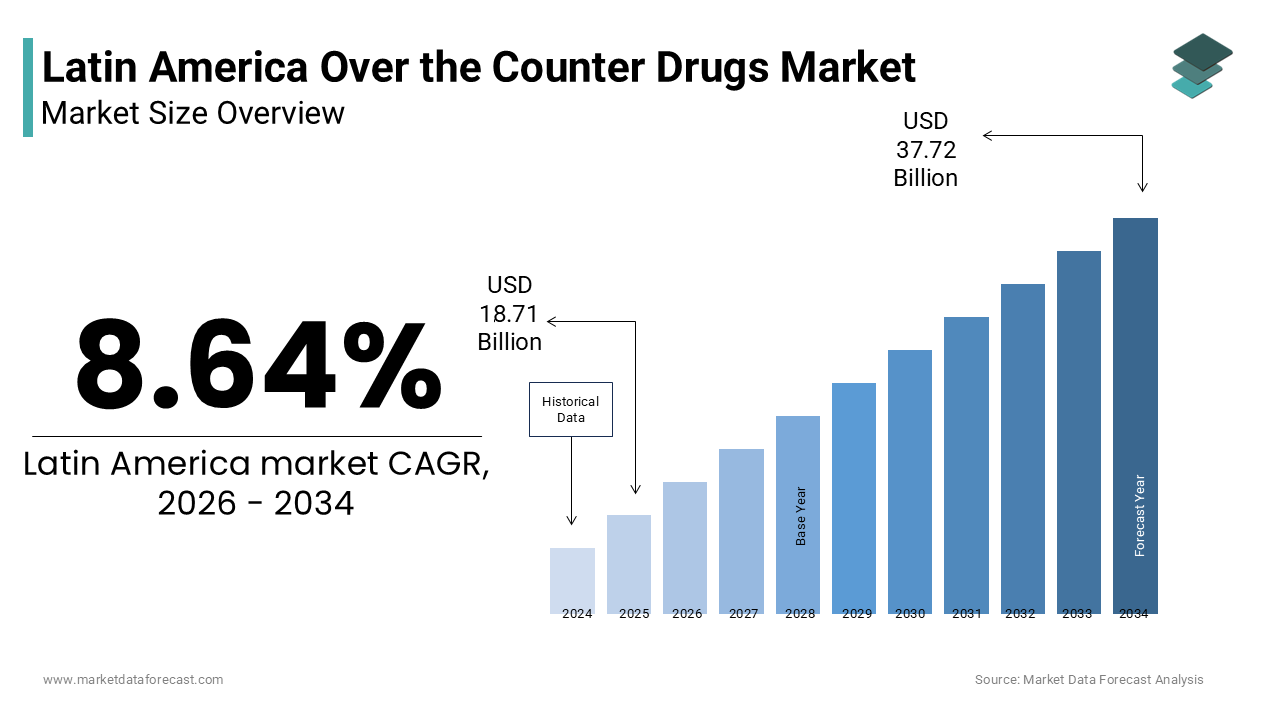
The Latin America over the counter drugs market serves as a critical first line of defense for minor ailments in a region where access to primary healthcare remains uneven. According to the Pan American Health Organization, approximately 40% of the population in rural Latin America lacks regular access to a physician, driving reliance on self-medication for common health issues. The World Health Organization states that respiratory infections account for nearly 15% of all outpatient consultations in Brazil and Mexico, creating sustained demand for symptomatic relief medications. As per data from the United Nations Economic Commission for Latin America and the Caribbean, out of pocket health expenditure represents over 35% of total health spending in countries like Peru and Colombia, incentivizing consumers to choose affordable over the counter alternatives over costly doctor visits. Furthermore, according to the International Labour Organization, informal employment affects a significant portion of the workforce in the region, limiting access to employer sponsored health insurance and reinforcing the habit of self-care. These socioeconomic and structural realities define the functional scope of the market, where product availability and affordability are paramount. The market is not merely a commercial entity but a vital component of public health infrastructure, bridging gaps in formal medical coverage through accessible pharmacological solutions.
MARKET DRIVERS
High Prevalence of Self Medication Culture Driving Volume Demand
The deeply entrenched culture of self-medication across Latin America is majorly driving the Latin American over the counter (OTC) drugs market forward. According to the Pan American Health Organization, surveys indicate that a high percentage of individuals in countries like Argentina and Chile regularly self-medicate for minor ailments such as headaches, fever, and digestive discomfort. This behavior is driven by long waiting times in public health facilities and the high cost of private consultations. The World Bank notes that average wait times for general practitioner appointments in public hospitals can be extended in major urban centers like São Paulo and Bogotá, prompting patients to seek immediate relief through pharmacy purchases. In Mexico, the National Institute of Public Health reported that a vast majority of households keep a stock of common over the counter medications for emergency use. This habitual reliance ensures consistent baseline demand regardless of seasonal fluctuations. Additionally, the widespread availability of pharmacies facilitates easy access. Cultural norms often view minor illnesses as manageable without professional intervention, further reinforcing this trend. Consequently, manufacturers benefit from a loyal consumer base that prioritizes convenience and speed, which is making self-medication a structural driver of market volume rather than a transient behavior.
Rising Incidence of Lifestyle Related Chronic Conditions
The increasing prevalence of lifestyle related chronic conditions such as hypertension, diabetes, and obesity is expanding the scope of over the counter drugs beyond acute care, which is further contributing to the regional market expansion. According to the International Diabetes Federation, approximately 32 million adults in South and Central America were living with diabetes, many of whom require ongoing management of associated symptoms like neuropathy or digestive issues. As per the World Health Organization, obesity rates in Latin America have risen significantly among adults, leading to higher incidence of joint pain and gastrointestinal disorders that is often managed with over the counter analgesics and antacids. In Brazil, the Ministry of Health reported a year on year increase in sales of topical pain relief gels and oral anti-inflammatories. Consumers increasingly view these products as part of their daily wellness routine rather than just emergency remedies. Furthermore, the aging population, which is projected to grow substantially according to the United Nations, drives demand for supplements and mild therapeutic agents that support quality of life. This shift transforms over the counter drugs into essential maintenance tools for chronic disease management, creating a stable and growing revenue stream for manufacturers who can offer targeted solutions for long term symptom control.
MARKET RESTRAINTS
Stringent Regulatory Fragmentation across Borders
Divergent regulatory frameworks across Latin American nations create significant barriers to efficient market entry and product standardization for over the counter drug manufacturers. According to the Pan American Health Organization, only a limited number of countries in the region have achieved advanced levels of regulatory harmonization for pharmaceutical products, resulting in inconsistent approval timelines and labeling requirements. A product approved in Brazil may require separate clinical data and packaging modifications to be sold in Argentina or Colombia, increasing compliance costs. The World Health Organization highlights that a lack of mutual recognition agreements forces companies to maintain multiple dossier formats, delaying time to market. In Peru, the General Directorate of Medicines reported review periods for new over the counter formulations compared to more streamlined markets. This fragmentation discourages smaller players from entering the region and limits consumer access to innovative global brands. Even when approvals are granted, post market surveillance requirements vary widely, complicating supply chain management. The absence of regional standardization means that economies of scale are difficult to achieve, forcing manufacturers to operate with higher operational overheads. Until regulatory convergence improves, market expansion will remain uneven and slower than potential, perpetuating disparities in product availability across borders.
Proliferation of Counterfeit and Substandard Products
The widespread presence of counterfeit and substandard over the counter medications severely undermines consumer trust and market integrity across Latin America, which is further impeding the regional market growth. According to the World Health Organization, it is estimated that a notable percentage of medical products circulating in low and middle income countries are falsified or substandard, with over the counter drugs being particularly vulnerable due to their high volume and lower scrutiny. In countries like Venezuela and Honduras, weak enforcement mechanisms allow illicit networks to distribute fake analgesics and antibiotics that contain incorrect dosages or harmful substances. Operations by law enforcement agencies have seized massive numbers of counterfeit pharmaceutical units in Latin America, highlighting the scale of the problem. These illegitimate products not only pose serious health risks but also erode brand loyalty for legitimate manufacturers who struggle to compete on price. Consumers in price sensitive segments may inadvertently choose cheaper, unsafe alternatives, leading to treatment failure and adverse events. The lack of robust track and trace systems in many jurisdictions exacerbates the issue, making it difficult to monitor supply chains. This pervasive threat forces reputable companies to invest heavily in authentication technologies and legal actions, diverting resources from innovation and marketing. Until enforcement strengthens, the shadow market will continue to distort competition and endanger public health.
MARKET OPPORTUNITIES
Expansion of Digital Pharmacy Platforms and E Commerce
The rapid growth of digital pharmacy platforms and e commerce channels is a prominent opportunity for the Latin American over the counter (OTC) drugs market. According to the Inter-American Development Bank, online pharmaceutical sales in Latin America grew significantly, driven by increased internet penetration and smartphone adoption. In Brazil, major retailers reported that a substantial share of over the counter drug transactions now occur through mobile apps, allowing consumers to compare prices and read reviews before purchasing. The World Bank notes that digital platforms reduce transaction costs and improve supply chain efficiency, enabling faster delivery to remote areas where physical pharmacies are scarce. In Mexico, the integration of telemedicine services with e pharmacy platforms has created a seamless ecosystem where patients can receive quick consultations and immediate product recommendations. This digital leapfrogging allows manufacturers to reach younger demographics who prefer online shopping and personalized health solutions. Furthermore, data analytics from these platforms provide valuable insights into consumer preferences and emerging health trends, enabling targeted marketing and product development. By embracing digital transformation, companies can expand their reach beyond traditional brick and mortar limitations, tapping into new customer segments and driving sustainable growth in an increasingly connected region.
Growing Focus on Preventive Health and Wellness Products
The shifting consumer mind set toward preventive health and wellness offers significant opportunities for diversification within the over the counter drugs market. According to the Global Wellness Institute, the wellness economy in Latin America is projected to grow steadily, with consumers increasingly investing in vitamins, minerals, and herbal supplements to boost immunity and overall well-being. The Pan American Health Organization states that awareness campaigns during recent health crises have heightened public interest in immune support products, leading to a surge in sales of vitamin C and zinc supplements. In Chile, the Ministry of Health promoted healthy lifestyle initiatives that encouraged the use of natural remedies and probiotics for digestive health. This trend aligns with the rising middle class who have greater disposable income to spend on premium wellness products. Manufacturers can capitalize on this demand by introducing scientifically backed nutraceuticals and functional foods that bridge the gap between medicine and nutrition. Additionally, the popularity of traditional herbal medicine in countries like Peru and Bolivia provides a foundation for developing hybrid products that combine local botanical knowledge with modern pharmaceutical standards. This convergence of tradition and science creates a unique value proposition that resonates with culturally conscious consumers, opening new avenues for innovation and market differentiation.
MARKET CHALLENGES
Inadequate Pharmacovigilance and Consumer Education
A significant challenge facing the Latin America over the counter drugs market is the inadequate system for pharmacovigilance and limited consumer education regarding safe usage. According to the World Health Organization, many countries in the region lack robust national centers for monitoring adverse drug reactions specifically for non-prescription medications, leading to underreporting of side effects. The Pan American Health Organization estimates that a minimal percentage of adverse events related to over the counter drugs are formally reported in most Latin American nations. This data gap hinders the ability of regulators and manufacturers to identify safety signals and take timely corrective actions. In Argentina, studies have found that many consumers do not read package inserts before using over the counter medicines, increasing the risk of misuse and interactions with prescription drugs. The lack of clear labeling in indigenous languages further exacerbates the problem in multicultural societies. Without effective education campaigns, consumers may misuse products, leading to complications that burden the healthcare system. Manufacturers face the challenge of balancing commercial interests with public health responsibilities, needing to invest in educational initiatives that promote rational use. Until pharmacovigilance systems strengthen, the safety profile of the market remains partially obscured, posing reputational and legal risks.
Economic Volatility Impacting Pricing and Affordability
Persistent economic volatility and currency fluctuations in several Latin American countries pose a major challenge to pricing stability and affordability of over the counter drugs. According to the International Monetary Fund, inflation rates in countries like Argentina and Venezuela reached extreme levels, drastically eroding consumer purchasing power and forcing manufacturers to frequently adjust prices. Central bank reports across the region note that local currencies experienced significant depreciation against the dollar, increasing the cost of imported active pharmaceutical ingredients and packaging materials. This financial uncertainty makes it difficult for companies to maintain consistent profit margins while keeping products affordable for price sensitive consumers. In Ecuador, the Ministry of Public Health noted that low income households reduced their spending on over the counter medications during periods of high inflation, opting for cheaper and potentially less effective alternatives. Manufacturers must navigate complex pricing regulations in some countries that cap increases, squeezing margins further. This economic fragility disrupts supply chains and inventory planning, leading to occasional stockouts or delayed launches. Consequently, the market faces pressure to innovate cost effective formulations and local sourcing strategies to mitigate external shocks. Without macroeconomic stability, consistent access to quality over the counter drugs remains vulnerable to financial disruptions.
REPORT COVERAGE
| REPORT METRIC | DETAILS |
| Market Size Available | 2025 to 2034 |
| Base Year | 2025 |
| Forecast Period | 2026 to 2034 |
| CAGR | 8.64% |
| Segments Covered | By Product Type, End-user Industry, Load Type, Automation Level, Service and Region. |
| Various Analyses Covered | Global, Regional & Country Level Analysis, Segment-Level Analysis, DROC, PESTLE Analysis, Porter’s Five Forces Analysis, Competitive Landscape, Analyst Overview of Investment Opportunities |
| Country Covered | Mexico, Brazil, Argentina, Chile, and the Rest of Latin America. |
| Market Leaders Profiled | GlaxoSmithKline, Johnson and Johnson, Novartis, Bayer, Pfizer, and Sanofi Takeda. |
SEGMENTAL ANALYSIS
By Product Type Insights
The analgesics segment had the leading share of the Latin American over the counter (OTC) drugs market in 2025 due to the widespread prevalence of chronic pain and musculoskeletal disorders across the region. According to the World Health Organization, lower back pain is a leading cause of disability in Latin America, affecting a significant portion of the adult population. As per the Pan American Health Organization, osteoarthritis affects millions of people in the region, driving consistent demand for non-steroidal anti-inflammatory drugs and topical analgesics. In Brazil, the Ministry of Health reported that pain management accounts for a major share of all self-medication instances, reflecting the high burden of physical discomfort among workers in labor intensive industries. The aging population further exacerbates this trend, with the United Nations projecting that the number of individuals over 60 will increase substantially, which is raising the incidence of age related joint pain. Consequently, households maintain steady stocks of ibuprofen, acetaminophen, and diclofenac for daily use. This habitual consumption ensures that analgesics remain the highest volume category, supported by both acute injury treatment and long term chronic pain management needs in a region with limited access to specialized physiotherapy services.
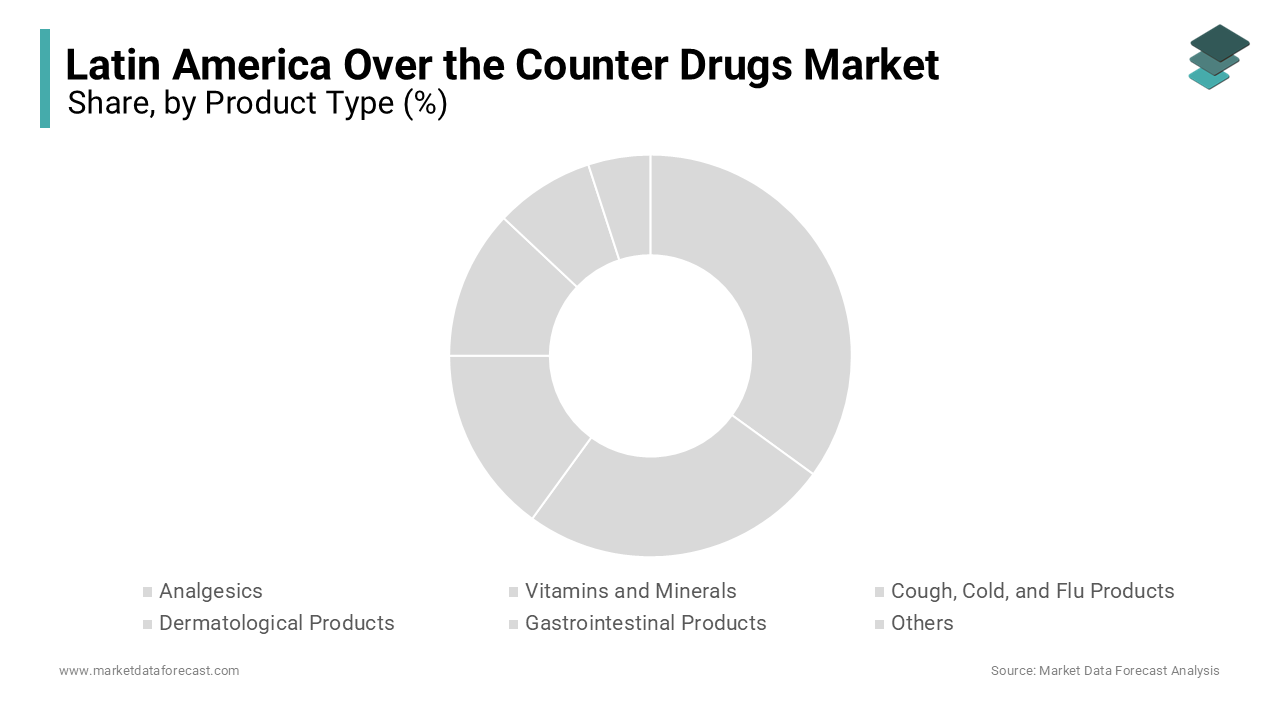
However, the vitamins and minerals segment is predicted to showcase a healthy CAGR in this regional market over the forecast period owing to a significant shift toward preventive health and wellness. According to the Global Wellness Institute, the wellness economy in Latin America is expanding rapidly, with consumers increasingly investing in immune support and nutritional supplements. The Pan American Health Organization highlights that awareness campaigns during recent global health crises have heightened public interest in vitamin C, D, and zinc supplementation, leading to a notable increase in sales. In Chile, the Ministry of Health promoted healthy lifestyle initiatives that encouraged the use of multivitamins to address micronutrient deficiencies, particularly among children and the elderly. The rising middle class, which represents a substantial portion of the population according to the World Bank, has greater disposable income to spend on premium wellness products. This demographic is more likely to view vitamins as essential daily supplements rather than optional extras, driving recurring purchases. The integration of wellness into daily routines ensures sustained growth, positioning vitamins and minerals as a dynamic and rapidly expanding category within the broader over the counter landscape.
By Formulation Type Insights
The tablets segment held the largest share of the Latin American over the counter (OTC) drugs market in 2025 due to their unparalleled convenience, stability, and dosage accuracy. According to the Pan American Health Organization, tablets account for a vast majority of all oral solid dose prescriptions and over the counter sales in the region, reflecting strong consumer preference for easy to carry and administer formats. The World Health Organization highlights that tablets have a longer shelf life compared to liquids, making them ideal for distribution in tropical climates where humidity can degrade other formulations. In Brazil, sanitary agencies reported that tablet formulations are preferred by a large percentage of consumers for chronic conditions such as hypertension and pain management due to their precise dosing. Manufacturing efficiency also plays a role, as tablets are cheaper to produce and transport than liquids or ointments, allowing manufacturers to offer competitive pricing. This cost advantage is crucial in price sensitive markets like Argentina and Venezuela, where affordability drives purchasing decisions. The widespread familiarity with tablet usage across all age groups further cements their dominance, ensuring they remain the default choice for most over the counter therapies.
However, the liquids segment is estimated to grow at a healthy CAGR in this regional market over the forecast period owing to the growing demand from pediatric and geriatric populations who struggle with swallowing solid doses. According to the United Nations Children's Fund, children under five make up a key demographic of the Latin American population, and liquid formulations are the standard for administering cough syrups, fever reducers, and vitamins to them. The World Health Organization states that dysphagia affects a significant share of older adults, driving preference for liquid analgesics and digestive aids in aging societies like Uruguay and Chile. In Brazil, the Ministry of Health reported an increase in sales of pediatric liquid paracetamol, reflecting heightened parental focus on safe and effective medication administration. Additionally, liquids allow for flexible dosing based on weight or age, enhancing safety and efficacy. This adaptability makes them indispensable for family healthcare kits, ensuring steady growth. As the population ages and birth rates remain stable in certain areas, the demand for user friendly liquid formats continues to rise, outpacing traditional solid forms.
COUNTRY ANALYSIS
Mexico Over the Counter Drugs Market Analysis
Mexico dominated the market by accounting for 26.5% of the Latin American over the counter (OTC) drugs market share in 2025 and is likely to experience continued expansion driven by strong nearshoring manufacturing advantages and robust domestic consumer demand over the next few years. The country serves as a major production hub for North and Central America, benefiting from trade agreements that facilitate export and import activities. According to the Mexican Ministry of Health, self medication is practiced by a large percentage of the population, driven by high out of pocket expenses and long wait times in public healthcare facilities. The National Institute of Public Health reports that analgesics and gastrointestinal products are the most consumed categories, reflecting common health issues such as stress related digestive disorders and chronic pain. The presence of large pharmacy chains ensures widespread availability and competitive pricing. Regulatory reforms by health authorities have streamlined approval processes for new over the counter products, encouraging innovation. Furthermore, the growing middle class is increasingly investing in vitamins and wellness supplements, diversifying demand. This combination of high consumption volume, strong manufacturing capacity, and evolving consumer preferences ensures Mexico’s continued leadership in the regional market.
Brazil Over the Counter Drugs Market Analysis
Brazil is likely to maintain steady market growth supported by ongoing healthcare digitization and expanding domestic manufacturing capabilities throughout the coming years. The country benefits from a large domestic market and a strong tradition of self care. According to the Brazilian Ministry of Health, the public health system covers primary care but often faces shortages, prompting citizens to rely on over the counter medications for minor ailments. Sanitary surveillance agencies reported an increase in over the counter sales, driven by rising awareness of preventive health and immunity boosting products. Local manufacturers play a significant role in producing affordable generics and herbal remedies. The expansion of digital pharmacy platforms in major urban centers like São Paulo and Rio de Janeiro has also boosted online sales. Additionally, high prevalence of tropical diseases drives demand for specific over the counter treatments such as antihistamines and topical antifungals. This diverse demand profile, supported by a resilient local industry, sustains Brazil’s strong standing as a key growth engine in the regional pharmaceutical landscape.
Argentina Over the Counter Drugs Market Analysis
Argentina is likely to undergo gradual structural adaptation while managing ongoing inflation and currency stabilization over the next few years. Despite economic volatility, the country maintains high per capita consumption of over the counter medications, particularly analgesics and vitamins. According to the National Administration of Drugs, Food and Medical Technology, the local pharmaceutical industry produces a large share of the medicines consumed domestically, ensuring steady supply. Professional pharmacist associations highlight that consumers heavily rely on pharmacist recommendations, fostering strong brand loyalty. Economic challenges have led to increased demand for affordable generic alternatives, benefiting local manufacturers. However, inflation and currency devaluation pose pricing challenges, forcing companies to adjust strategies frequently. The government’s focus on public health campaigns has also boosted sales of preventive supplements. Furthermore, the presence of well-established pharmacy chains ensures wide distribution. This blend of industrial capability and consumer sophistication allows Argentina to maintain its influential position in the regional market despite macroeconomic headwinds.
COMPETITIVE LANDSCAPE
The competition in the Latin America over the counter drugs market is characterized by intense rivalry among global multinational corporations and strong local manufacturers who strive to capture share through brand loyalty and affordability. Major participants compete on the basis of product efficacy pricing strategies and distribution reach rather than innovation alone. The market features a mix of established leaders with broad portfolios and niche players focusing on specific therapeutic areas like herbal remedies or dermatology. Competitive dynamics are influenced by varying regulatory environments across countries which necessitate agile compliance strategies. Companies differentiate themselves by offering comprehensive consumer education programs and digital health tools to enhance user experience. The rise of private label brands from large pharmacy chains has added pressure on premium brands to justify higher prices. Local manufacturing initiatives are becoming a key differentiator as they reduce costs and improve supply reliability. This evolving landscape demands continuous adaptation and investment in customer relationships to maintain competitive advantage in a price sensitive yet growing regional market.
KEY MARKET PLAYERS
Some of the prominent companies leading in the Latin America counter drugs market include
- GlaxoSmithKline
- Johnson and Johnson
- Novartis
- Bayer
- Pfizer
- Sanofi
- Takeda
Top Players in the Market
Bayer
Bayer maintains a strong presence in Latin America through its Consumer Health division which offers a wide portfolio of over the counter products including analgesics vitamins and dermatological treatments. The company recently launched new digital health initiatives in Brazil and Mexico to educate consumers on self-care practices and product usage. Bayer actively collaborates with local pharmacies to enhance product visibility and accessibility in rural areas. Its introduction of innovative formulations such as chewable vitamins and fast acting pain relief gels has resonated well with modern consumers. The company also supports public health campaigns focusing on respiratory health and immunity boosting during seasonal changes. These strategic efforts strengthen its brand loyalty and ensure consistent demand across diverse demographic segments in the region.
GlaxoSmithKline Consumer Healthcare
GlaxoSmithKline Consumer Healthcare strengthens its position in Latin America by leveraging its extensive portfolio of trusted brands in respiratory care oral health and skin care. The company recently expanded its manufacturing capabilities in Argentina to improve supply chain efficiency and reduce dependency on imports. It partners with regional distributors to ensure widespread availability of its products in both urban and remote markets. GlaxoSmithKline invests heavily in consumer education programs that promote proper hygiene and preventive care practices. Its launch of eco friendly packaging for popular cough and cold remedies aligns with growing environmental awareness among Latin American consumers. These actions enhance brand reputation and drive adoption of its high quality over the counter solutions across the region.
Johnson and Johnson
Johnson and Johnson serves the Latin American market with a diverse range of over the counter products including wound care baby care and pain management solutions. The company recently upgraded its distribution network in Colombia and Chile to improve delivery speed and product availability for retail partners. It focuses on providing affordable and reliable healthcare products that meet the needs of families across different income levels. Johnson and Johnson engages in extensive professional training programs for pharmacists to ensure accurate product recommendations and customer support. Its participation in regional health fairs helps build strong relationships with healthcare providers and consumers. The company also supports community health initiatives aimed at improving access to basic medical supplies in underserved areas. These initiatives reinforce its commitment to public health and expand its footprint in emerging markets.
Top Strategies Used by the Key Market Participants
Key players in the Latin America over the counter drugs market primarily employ strategic partnerships with local distributors and pharmacy chains to enhance market penetration and ensure product availability. Companies increasingly invest in digital marketing and e commerce platforms to reach younger demographics and facilitate convenient purchasing options. Product innovation focused on natural ingredients and preventive wellness is another major strategy to align with growing health consciousness among consumers. Manufacturers also prioritize local production facilities to mitigate currency volatility and reduce logistics costs. Educational campaigns promoting rational self medication and disease prevention help build consumer trust and brand loyalty. Additionally firms adopt sustainable packaging solutions to address environmental concerns and comply with evolving regulatory standards. These multifaceted approaches enable sustained growth and deeper engagement with diverse consumer bases across the region.
MARKET SEGMENTATION
This research report on the Latin America Over the Counter Drugs Market has been segmented and sub-segmented into the following categories.
By Product Type
- Analgesics
- Vitamins and Minerals
- Cough, Cold, and Flu Products
- Dermatological Products
- Gastrointestinal Products
- Others
By Formulation Type
- Tablets
- Liquids
- Ointments
- Spray
By Distribution Channels
- Pharmacies
- Supermarkets/Hypermarkets
- Convenience store
- Others (online drug store)
By Country
- Mexico
- Brazil
- Argentina
- Chile
- Rest of Latin America