- Product Description Description
- Table of Contents TOC
- List of Table & Figure LOT
- Get Free Sample PDF Sample PDF
Market Size, 2025
$6.18 BnMarket Estimate, 2026
$7.28 BnMarket Forecast, 2034
$27 BnCAGR, 2026–2034
17.8%Executive Summary: Latin America ePharmacy Market
- Market Scope: Comprehensive Latin American ePharmacy industry analysis covering product categories, drug types, regional leadership frameworks, and competitive landscaping.
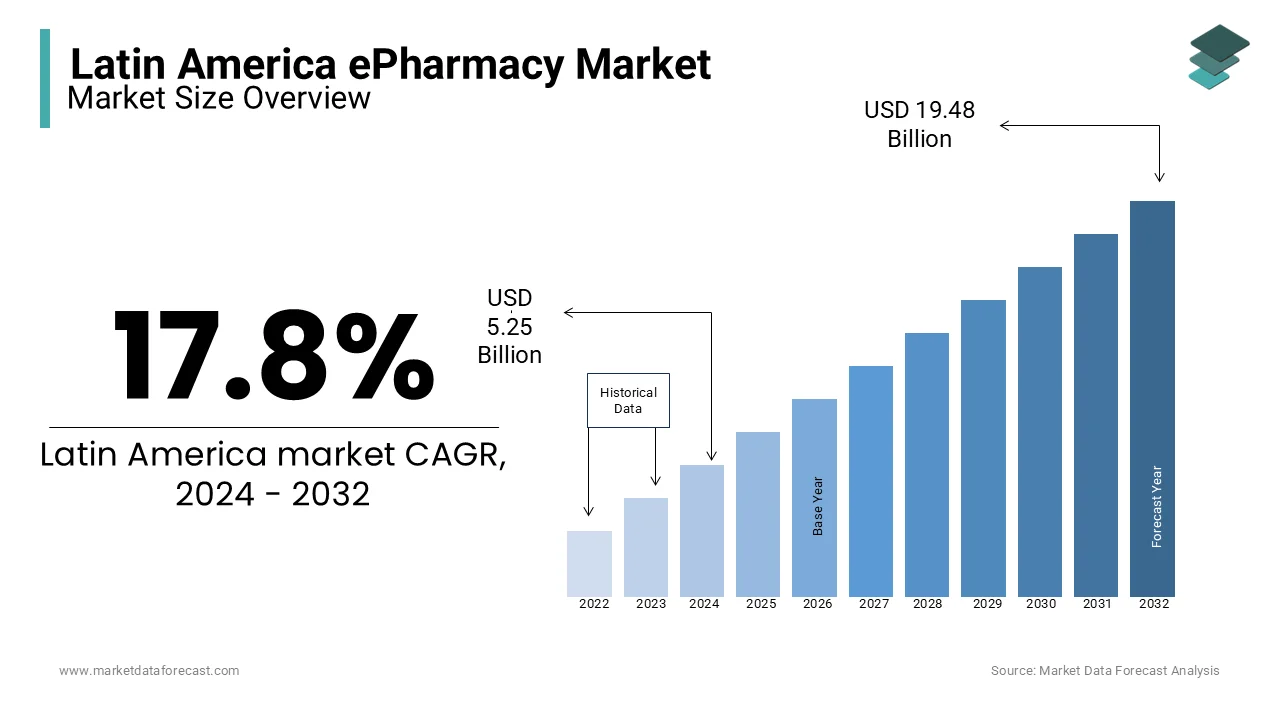
- Market Valuation: Valued at USD 6.18 billion (2025), estimated at USD 7.28 billion (2026), and projected to reach USD 27 billion by 2034, registering a robust CAGR of 17.8% (2026–2034).
- Primary Growth Drivers: Increasing smartphone penetration with high-speed internet connectivity, rising utilization of IoT technologies in healthcare delivery, cloud-based platform adoption, and growing government investments in online pharmacy infrastructure. Restraints include lack of standardization and increased fraud activities.
Key Market Segment Metrics (2026–2034)
| Category | Leading Segment (2025 Position) | Fastest-Growing / Forecasted Segment |
|---|---|---|
| By Product / Segment | Skincare (accounted for the largest share in 2025 due to growing government investments in online stores) | Prescription drugs (predicted to lead the market based on drug type during the forecast period) |
| By Region / Country | Brazil (predicted to lead the regional market driven by pharmacy sales, internet users, and government investments) | Mexico (key contributor operating 24/7 via phone/email orders with reduced prescription taxes and fees) |
Major Market Players & Market Structure
Market Structure: Evolving Latin American digital pharmacy landscape driven by major international and regional retail healthcare brands expanding digital platforms and service accessibility.
Key Companies: Rowlands Pharmacy, OptumRx Inc, The Kroger Co., Walgreen Co., Wal-Mart Stores, Inc., CVS Health, Express Scripts Holding Company, Giant Eagle, Inc., and DocMorris (Zur Rose Group AG).
 Download Free Sample Report
Latin American ePharmacy Market Size
The size of the Latin American ePharmacy market was valued at USD 6.18 billion in 2025. This market is expected to grow at a CAGR of 17.8% from 2026 to 2034 and be worth USD 27 billion by 2034, from USD 7.28 billion in 2026.
An ePharmacy (electronic or online pharmacy) is a digital service that lets people buy prescription drugs and health items over the internet and get them delivered straight to their home. This market operates at the intersection of pharmaceutical retail, logistics technology, and telemedicine, serving as a critical bridge for populations in underserved areas where physical pharmacy density remains low. According to the Pan American Health Organization, persistent structural barriers in the Americas limit basic medical access across decentralized health systems, necessitating a regional expansion of community-oriented healthcare networks. As per the World Bank, the proportion of individuals using the internet across Latin America and the Caribbean reached approximately 83%, underpinning broader regional dynamics in consumer connectivity. Unlike mature markets defined primarily by convenience, the Latin American ePharmacy ecosystem is fundamentally shaped by access gaps, regulatory heterogeneity across national jurisdictions, and the integration of fintech solutions to address financial inclusion barriers that affect medication affordability and purchasing behavior.
MARKET DRIVERS
Chronic Disease Prevalence Creates Recurring Medication Demand
The rising global burden of persistent health conditions is a primary, continuous driver of the Latin America ePharmacy market. According to the Pan American Health Organization, noncommunicable diseases are responsible for 81% of all deaths in Latin America and the Caribbean, representing a critical public health challenge that necessitates long-term disease management strategies. As per the International Diabetes Federation, approximately 35 million adults were living with diabetes in the South and Central America region, with the total number projected to rise to 52 million by 2050. According to Brazil's Ministry of Health, national public health strategies focus heavily on expanding access to pharmaceutical care and distributing free essential medications to citizens through targeted primary care networks. This epidemiological reality transforms ePharmacies from discretionary convenience channels into healthcare infrastructure components where missed deliveries carry clinical consequences rather than mere commercial losses. The chronic nature of these conditions ensures customer lifetime values exceed acute care segments.
Fintech Integration Overcomes Financial Exclusion Barriers
Fintech integration bridges critical gaps in traditional banking access, which in turn accelerates the expansion of the Latin America ePharmacy market. This unlocks digital pharmacy services for underbanked populations across the region. According to the World Bank, adult ownership of formal financial accounts globally increased to 79%, driving broader integration of the population into formal financial services. As per sources, payment processing channels across Latin America have seen a surge in digital financial wallet adoption, changing regional electronic transaction volume dynamics. According to Colombia’s Superintendence of Finance, macro-prudential reports show that specialized digital credit formats have diversified local financial inclusion strategies across target market segments. The financial infrastructure integration addresses the fundamental affordability constraint that historically limited ePharmacy growth to affluent demographics. Unlike credit card-dependent models in North America, Latin American ePharmacies succeed by accommodating cash-dominant economies through alternative payment rails that align with actual consumer financial behaviors rather than aspirational banking penetration metrics.
MARKET RESTRAINTS
Regulatory Fragmentation Impedes Cross-Border Scalability
Diverse and unpredictable regulatory frameworks exist across individual nations in the region, which hampers the growth of the Latin America ePharmacy market. These differences create severe compliance barriers that prevent ePharmacies from scaling uniformly across borders. According to the Inter-American Drug Abuse Control Commission, regional frameworks prioritize the reinforcement of regulatory institutional capacities and multilateral alignment to monitor the safe distribution of pharmaceutical controlled substances across borders. As per Argentina’s National Administration of Drugs, Foods and Medical Devices (ANMAT), recent regulatory updates modernize front-of-pack health labeling standards and the integration of technical safety criteria into domestic food and drug monitoring systems. According to Brazil’s National Health Surveillance Agency (ANVISA), pharmaceutical commerce guidelines mandate the physical presence of a qualified pharmacist throughout all operating hours. This regulatory mosaic means scaling from one country to another requires near-complete operational duplication rather than marginal adaptation.
Last-Mile Logistics Infrastructure Deficits Limit Geographic Reach
Inadequate road networks and unreliable distribution channels in remote areas heavily restrict ePharmacy home deliveries outside major metropolitan hubs across the region, which hinders the expansion of the Latin American market. According to the Inter-American Development Bank, infrastructural investments in regional transport networks are critical for reducing logistical friction and expanding rural connectivity beyond primary tier-one metropolitan corridors. As per Brazil’s National Confederation of Transport, structural security evaluations highlight the continuous operational challenges that localized cargo theft poses to competitive heavy transport and national supply chain margins. According to Colombia’s National Planning Department, national development strategies prioritize expanding multi-modal shipping connections to remote departments to ensure equitable regional access to vital healthcare supplies. These infrastructure deficits create two-tier service ecosystems where ePharmacies effectively serve only affluent urban enclaves while perpetuating access gaps in precisely the underserved communities where digital health solutions theoretically offer greatest social value. Public infrastructure investment and drone delivery rules must improve first to fix last-mile reliability. Until that happens, ePharmacy growth will stay limited no matter how good the platforms or demand are.
MARKET OPPORTUNITIES
Telemedicine Integration Creates Closed-Loop Care Ecosystems
Integrating virtual consultations with digital pharmacies creates a seamless, end-to-end healthcare journey, which is expected to propel the Latin America ePharmacy market. This approach drives both prescription compliance and customer retention. According to the Pan American Health Organization, comprehensive telehealth initiatives across the Americas focus on integrating digital health infrastructure to systematically improve the monitoring and primary healthcare management of noncommunicable diseases. As per Brazil’s Federal Medical Board (CFM) Resolution 2.314/2022, legally defined parameters establish the structural and regulatory frameworks under which standard medical practitioners are authorized to perform synchronous and asynchronous telemedicine acts nationwide. According to regional healthcare digital network analyses, the digital optimization of outpatient clinical consultation platforms aims to streamline administrative processes and minimize total scheduling bottlenecks for acute medical treatments. The vertical integration captures value currently lost to fragmentation between diagnosis and treatment. Platforms combining licensed teleconsultation with guaranteed medication delivery create defensible moats through clinical workflow lock-in that pure-play retailers cannot replicate. The opportunity extends beyond transaction volume to outcome-based contracting where payers reimburse integrated platforms based on adherence metrics rather than fee-for-service, creating sustainable unit economics aligned with health system efficiency goals.
Generic Medication Substitution Programs Address Affordability Crisis
Automated generic substitution programs empower digital platforms to offer lower-cost therapeutic alternatives, which is predicted to expand the Latin American ePharmacy market. This direct approach mitigates severe healthcare affordability challenges for regional households. According to the World Health Organization, public health interventions are structurally focused on reinforcing the local deployment of essential generic medications to expand demographic accessibility and reduce overall out-of-pocket patient expenditures. As per the Brazilian Health Regulatory Agency (ANVISA), structural health rules approved under official regulatory frameworks govern how licensed pharmacies and drugstores coordinate with digital platforms to execute the logistics and delivery of consumer medicines. According to Argentina’s Comprehensive Medical Care Program (PAMI), national social security frameworks ensure 100 percent coverage guarantees for a specialized list of essential therapies, including oncology, diabetes treatments, and chronic clinical medications for its retired beneficiaries. This affordability-driven value proposition resonates powerfully in the region. ePharmacies leveraging data transparency and educational content can shift consumer behavior at scale, capturing margin from high-volume generic sales while building loyalty through demonstrated cost savings that branded-focused competitors cannot match.
MARKET CHALLENGES
Counterfeit Medication Proliferation Undermines Consumer Trust
The pervasive infiltration of illicit, counterfeit drugs into online channels severely threatens patient safety and erodes public confidence in legitimate ePharmacy platforms in the Latin American market. According to the World Health Organization, at least 1 in 10 medical products circulating in low- and middle-income nations is estimated to be substandard or falsified, affecting vulnerable global populations across regional distribution frameworks. As per the Federal Commission for the Protection against Sanitary Risks (COFEPRIS), public medical enforcement operations in Mexico systematically track and penalize illegal distribution establishments selling unauthorized healthcare goods to enforce sanitary standards. According to the National Administration of Drugs, Foods and Medical Devices (ANMAT) of Argentina, administrative food safety evaluations and medical monitoring programs are continuously adjusted to regulate trace elements across municipal consumer centers. The trust deficit creates an asymmetric burden where legitimate operators invest heavily in authentication technologies, serialization, and third-party verification yet still suffer guilt-by-association from bad actors exploiting regulatory gaps. Rebuilding confidence requires sustained public education campaigns and visible enforcement actions that have not materialized at sufficient scale. Consumers cannot reliably distinguish verified platforms from fraudulent ones. Therefore, ePharmacy penetration will remain suppressed below potential regardless of price advantages or service quality improvements offered by compliant operators.
Pharmacist Workforce Shortages Constrain Clinical Service Expansion
A severe deficit of licensed pharmacists restricts the rollout of remote clinical counseling and therapy management within the Latin America ePharmacy Market. According to the Pan American Health Organization, regional human resource models emphasize expanding multi-disciplinary healthcare teams and primary care practitioner placement to meet community health coverage goals. As per the Federal Council of Pharmacy of Brazil, national professional regulations outline structural requirements for clinical pharmaceutical services to maintain standardization and patient safety across dispensing establishments. According to Colombia’s Ministry of Health, national workforce deployment guidelines dictate the mandatory allocation of certified administrative and technical healthcare professionals within centralized urban distribution networks. This human capital constraint limits differentiation opportunities through clinical excellence, forcing platforms to compete primarily on price and delivery speed where margins compress rapidly. Regulatory requirements mandating pharmacist oversight for prescription validation create hard capacity ceilings that cannot be solved through automation alone. Educational institutions must expand digital pharmacy curricula and compensation parity must improve. Otherwise, workforce scarcity will bottleneck service quality evolution and prevent realization of integrated care models that depend on clinical expertise.
REPORT COVERAGE
| REPORT METRIC | DETAILS |
| Market Size Available | 2025 to 2034 |
| Base Year | 2025 |
| Forecast Period | 2026 to 2034 |
| Segments Covered | By Product Type, Drug Type, and Region. |
| Various Analyses Covered | Global, Regional, and Country-Level Analysis, Segment-Level Analysis, Drivers, Restraints, Opportunities, Challenges; PESTLE Analysis; Porter’s Five Forces Analysis, Competitive Landscape, Analyst Overview of Investment Opportunities |
| Countries Covered |
|
| Market Leaders Profiled | Rowlands Pharmacy, OptumRx Inc, The Kroger Co., Walgreens Co., Wal-Mart Stores, Inc., CVS Health, Mercado Libre Inc, Express Scripts Holding Company, Raia Drogasil SA, Giant Eagle, Inc., Farmacias Benavides SA de CV, DocMorris (Zur Rose Group AG), and Others. |
SEGMENTAL ANALYSIS
By Product Type Insights
The skin care segment remained the largest in 2025 and occupied a 34.6% share of the Latin America ePharmacy market. This supremacy of the segment was credited to a high prevalence of dermatological conditions requiring ongoing topical treatment regimens that align perfectly with digital refill models. According to the Pan American Health Organization, chronic non-communicable and infectious conditions across Latin America drive regional disease burdens, forcing patients to navigate severe backlogs in public healthcare infrastructure. As per Brazil’s Society of Dermatology, acne vulgaris represents one of the primary drivers of clinical consultations among adolescents and young adults nationwide, demanding sustained dermatological treatment regimens. Unlike acute categories like cold and flu which are episodic, skin care generates recurring monthly purchases with average customer lifetime value higher than other OTC segments. This chronicity creates predictable revenue streams enabling subscription models and personalized recommendation engines that reinforce platform loyalty.
The rapid rise of beauty influencers and viral trends on digital platforms continuously exposes consumers to niche formulations, driving premium product discovery within the skin care segment. According to the Pan American Health Organization, digital social platforms shape consumer exploration of beauty and wellness methodologies across Latin American demographics. As per Brazil’s Abihpec cosmetics industry association, consumer interest in active clinical formulations continues to outpace traditional mass-market personal care lines. This digital-first discovery mechanism bypasses traditional retail merchandising constraints where shelf space favors established mass brands over emerging premium labels. ePharmacies leveraging algorithmic recommendations based on social engagement data capture a disproportionate share of high-margin innovation segments while building category authority through curated assortments aligned with real-time trend cycles.

The weight loss segment is anticipated to witness the fastest CAGR of 41.2% between 2026 and 2034 due to regulatory approvals and supply chain normalization of GLP-1 receptor agonists semaglutide and tirzepatide transforming obesity from a lifestyle issue to a treatable medical condition. As per Brazil’s ANVISA, marketing authorizations for advanced metabolic therapies like semaglutide trigger localized pharmaceutical rollout and alter domestic supply chains. According to Mexico’s COFEPRIS, the evaluation and approval of metabolic regulatory filings expand available therapeutic alternatives within the domestic pharmaceutical ecosystem. This pharmaceutical legitimacy converts weight loss from a discretionary wellness category to a prescription-driven therapeutic segment with recurring monthly demand and high unit economics.
Skyrocketing regional body mass index (BMI) trends and related chronic disease spikes have transformed the weight loss segment from a lifestyle preference into a critical, defensive healthcare category. According to the World Obesity Federation, rising regional rates of adult overweight and obesity present critical long-term structural public health challenges across Latin America. As per Chile’s Ministry of Health, public health frameworks emphasize the long-term clinical management of metabolic conditions over individual behavioral models. According to Brazil’s Ministry of Health, chronic non-communicable risk surveillance systems document an escalating multi-year trajectory in national adult weight averages. The severity transforms weight loss medications from elective enhancements to essential health investments with willingness-to-pay exceeding other therapeutic categories. ePharmacies benefit from this urgency because patients seek immediate access, bypassing traditional healthcare system delays, where endocrinologist appointments average 6-month wait times according to a Latin American Endocrine Society access study.
By Drug Type Insights
In 2025, the prescription drugs segment held a 62.5% majority share in the Latin American ePharmacy market because of structural dominance driven by a noncommunicable disease burden requiring continuous pharmacological intervention, which digital platforms fulfill through automated refill programs and adherence support. According to the Pan American Health Organization, long-term non-communicable illnesses represent prominent cardiovascular and endocrine health crises across Latin America, expanding the clinical requirement for persistent therapy distribution frameworks. As per Mexico’s Social Security Institute, public medical infrastructure platforms integrate electronic data protocols to improve organizational workflows and optimize prescription management for registered beneficiaries. Unlike OTC categories subject to discretionary spending fluctuations during economic downturns, prescription demand remains inelastic because treatment interruption carries immediate clinical consequences. This stability makes prescription drugs a foundational revenue anchor, enabling ePharmacies to invest in logistics infrastructure and technology development that subsequently benefits lower-margin OTC segments through shared fixed cost absorption.
Recent updates to regional healthcare frameworks have established secure frameworks for electronic authentication, unlocking sustainable growth for online fulfillment within the prescription drugs segment. According to the Inter-American Drug Abuse Control Commission, regional health frameworks evaluate harmonized tracking guidelines and safety metrics to secure public healthcare delivery models. As per Argentina’s National Administration of Drugs, Food and Medical Devices, national drug traceability updates coordinate specific registration protocols to govern medical product validation across certified health channels. The regulatory digitization eliminates friction points that historically forced patients to visit physical pharmacies regardless of digital platform convenience. Unlike voluntary adoption models, government-mandated electronic prescription systems create compulsory migration paths, ensuring sustained prescription volume growth independent of consumer preference evolution or marketing expenditure.
The over-the-counter (OTC) segment is on the rise and is expected to be the fastest-growing segment in the market by witnessing a CAGR of 24.8% during the forecast period. This rapid growth of the segment is fuelled by healthcare system overload pushing consumers toward self-treatment for minor ailments, combined with expanded OTC switches of previously prescription-only molecules. As per Brazil’s Association of the Self-Medication Industry, standard non-prescription therapeutics offer essential public pathways for managing common mild pathological symptoms independently. As per Colombia’s National Food and Drug Surveillance Institute, technical classifications governing the clinical availability of pharmacological treatments undergo regulatory review to maximize patient public safety standards. According to Chile’s National Consumer Service, consumer evaluation strategies reflect an active reliance on alternative digital distribution channels to access essential medical commodities. This cultural shift transforms OTC from a supplementary category to a primary healthcare access point for millions lacking timely physician access. ePharmacies capture this growth through algorithmic symptom checkers and bundled treatment recommendations that replicate clinical guidance digitally.
A shifting consumer focus toward proactive health management is rapidly pulling dietary supplements, functional vitamins, and immunity boosters into the core offerings of the over-the-counter (OTC) ePharmacy segment. According to the Pan American Health Organization, nutrition-driven public awareness programs modify regional lifestyle selections regarding proactive wellness habits. As per Brazil’s National Association of Nutritional Products, functional nutritional segments experience evolving customer purchasing habits across modern consumer markets. According to Argentina’s Ministry of Health, domestic distribution pathways for dietary supplements adjust alongside changing consumer preferences for standard metabolic nutrients. As per Mexico’s Federal Consumer Attorney Office, standard transparent validation techniques assist consumers in verifying commercial retail claims across local networks. This preventive orientation expands OTC beyond illness treatment into daily lifestyle integration, increasing purchase frequency and basket size. Unlike acute symptom relief, which is episodic, wellness consumption becomes a habitual ritual embedded in morning and evening routines, generating subscription-worthy recurring revenue streams that stabilize cash flows against seasonal illness fluctuations.
COUNTRY LEVEL ANALYSIS
Brazil ePharmacy Market Analysis
Brazil led the Latin American ePharmacy market and captured a 48.6% share in 2025. It serves as the undisputed regional leader due to its massive domestic scale, sophisticated regulatory framework, and unique public-private integration model, which is unmatched elsewhere in the hemisphere. Government-backed chronic medication subsidies through approved online pharmacies create a hybrid public-private demand model. This shields the market from swings in consumer spending. According to Brazil’s Ministry of Health, the federal government allocated BRL 232 million (USD 43 million) for the first stage of the My Digital SUS Program to provide network diagnostics, telehealth expansion, and digital health planning services across participating municipal entities. As per the National Health Surveillance Agency (ANVISA), Collegiate Board Resolution RDC 864/2024 temporarily authorized the electronic prescription of controlled medicines subject to special notification requirements to guarantee treatment continuity during public emergencies. According to the Brazilian Health Regulatory Agency (ANVISA), the maximum price framework places an upper price limit on prescription medicines dispensed at private pharmacies, while public Unified Health System channels provide medications at no cost in most cases. Despite monetary challenges, Brazil’s regulatory sophistication, public system integration and demographic scale ensure continued regional dominance, attracting disproportionate vendor investment and serving as an innovation testbed for technologies later exported to neighboring markets.
Mexico ePharmacy Market Analysis
Mexico followed closely behind in the Latin American ePharmacy market and accounted for a 24.3% share in 2025. This expansion of the Mexican market was propelled by fintech integration and nearshore BPO healthcare services serving US Hispanic populations alongside domestic modernization, creating dual demand streams. Digital pharmacies leverage unique positioning by serving Mexico's domestic market while providing cross-border telehealth-pharmacy bundles via a bilingual workforce. According to data reported by MercadoLibre, Inc., the loan portfolio managed by its fintech division Mercado Pago reached USD 1.5 billion in Mexico by the end of the second quarter of 2024. As per Mexico's official trade figures, the country imported USD 8.27 billion of pharmaceutical products in 2024, making it the 21st largest importer of pharmaceuticals globally. However, security concerns persist. Despite challenges, Mexico’s fintech penetration nearshore advantage and regulatory modernization create a sustainable growth trajectory complementary to Brazil’s scale leadership.
Argentina ePharmacy Market Analysis
Argentina contributes notably to the regional market. The market operated under extreme macroeconomic volatility while maintaining technology adoption through crisis-driven innovation and inflation-hedging consumer behaviors. According to Argentina's National Institute of Statistics and Censuses (INDEC), the annual consumer price inflation rate accelerated sharply to end the 2024 calendar year at 211.4%. Consumers use digital platforms for price comparison, stockpile prevention, and installment financing to preserve purchasing power amid economic instability. As per the National Comprehensive Medical Care Program for Pensioners and Retirees (PAMI), the institute expanded its digital infrastructure in 2024 to issue over 90% of its regular outpatient prescriptions via an integrated electronic network connecting regional clinics directly with neighborhood pharmacies. According to Argentina's Executive Decree 345/2024, the federal government updated the national framework for Law No. 27,553 to enforce the mandatory migration from handwritten paper prescriptions to digital and electronic prescription systems across all national healthcare sub-sectors. However, import restrictions and foreign exchange controls complicate international product sourcing, with 6-month delays common for specialty medications. Despite obstacles Argentina’s educated consumer base crisis-proven digital resilience and public system integration ensure continued relevance beyond current economic turbulence.
Chile ePharmacy Market Analysis
Chile maintains a significant presence in the Latin America ePharmacy market. It functions as a regulatory trendsetter and quality standards leader whose frameworks propagate across the region, influencing vendor compliance strategies and consumer trust benchmarks. The market prioritizes sophistication over scale due to high specialist density, strict consumer protection, and strong institutional credibility. Consequently, this environment creates a premium positioning for compliant operators. According to Chile’s Ministry of Health, the National Electronic Prescription System expanded digital connectivity to public primary care clinics and private health centers to handle cross-validations for standard and controlled medication distribution. As per Chile’s National Consumer Service (SERNAC), public complaints filed within the broad e-commerce and retail categories are subject to institutional mediation procedures to enforce legal resolution mandates on local retail companies. However, a small domestic market limits vendor revenue potential, with many treating Chile as a reference account rather than a profit center. Despite scale constraints, Chile’s regulatory influence, quality consciousness, and stable business environment make it an indispensable strategic market for vendors seeking regional credibility and compliance validation transferable to larger but less mature jurisdictions.
COMPETITIVE LANDSCAPE
Competition in the Latin America ePharmacy market is characterized by fragmentation between traditional pharmacy chains digitizing operations, pure-play digital natives, and generalist e-commerce platforms adding health categories, each leveraging distinct advantages across heterogeneous national markets. Raia Drogasil and Farmacias Benavides dominate through physical infrastructure and regulatory relationships but face margin pressure from asset-light marketplace models. Mercado Libre and Rappi compete through ecosystem scale and logistics networks yet lack clinical credibility and pharmacist oversight required for prescription segments. Pure-play digital pharmacies differentiate through specialized services and niche assortments but struggle with customer acquisition costs and last-mile economics outside major metropolitan areas. Competition increasingly occurs at the trust and compliance level rather than price parity as counterfeit proliferation makes verification capabilities the primary differentiator for prescription drugs. Fintech integration creates competitive moats where platforms offering embedded financial services capture unbanked consumers inaccessible to traditional retailers. Regulatory complexity favors incumbents with established compliance teams and government relationships, preventing rapid disruption by international entrants unfamiliar with local requirements. Future consolidation is likely as infrastructure investments and authentication costs exceed the resources of smaller operators, but regional diversity ensures multiple viable competitive positions persist rather than a single dominant platform emerging across all jurisdictions and consumer segments.
KEY MARKET PLAYERS
The leading companies operating in the Latin America ePharmacy market include:
- Rowlands Pharmacy
- OptumRx Inc.
- The Kroger Co.
- Walgreen Co.
- Wal-Mart Stores, Inc.
- CVS Health
- Mercado Libre Inc.
- Express Scripts Holding Company
- Raia Drogasil SA
- Giant Eagle, Inc.
- Farmacias Benavides SA de CV
- DocMorris (Zur Rose Group AG)
TOP PLAYERS IN THE MARKET
- Raia Drogasil SA maintains extensive involvement across Latin America through an integrated physical and digital pharmacy network spanning Brazil with an expanding regional footprint. The company expands its omnichannel healthcare services within Brazil through its extensive pharmacy network and retail digital applications. Strategic partnership with Brazil’s Farmácia Popular program enabled subsidized chronic disease medication dispensing through digital channels. Recent warehouse automation investments in São Paulo and Recife reduced fulfillment times while improving temperature-controlled logistics for biologics. These omnichannel initiatives strengthen market position through service integration rather than price competition alone, addressing both access gaps and consumer trust barriers unique to the regional healthcare landscape.
- Mercado Libre Inc. contributes significantly to the Latin American ePharmacy market through a marketplace platform connecting thousands of verified pharmacy sellers with millions of monthly health category visitors across numerous countries. The company expanded buy-now-pay-later options for pharmaceutical purchases, enabling installment payments that increased average basket size among unbanked consumers. Its ecosystem strategies leverage existing commerce infrastructure to solve healthcare-specific friction points without requiring standalone pharmacy operations.
- Farmacias Benavides SA de CV strengthens Latin America ePharmacy presence through Mexico-focused digital transformation combining traditional retail strength with modern e-commerce capabilities serving millions of customers annually. Its localized adaptations address specific Mexican regulatory requirements and consumer preferences, distinguishing Benavides from multinational platforms offering standardized solutions.
TOP STRATEGIES USED BY KEY MARKET PARTICIPANTS
Key players prioritize telemedicine integration, creating closed-loop care ecosystems that convert virtual consultations directly to medication orders, capturing value currently lost to fragmented diagnosis and dispensing systems. Anti-counterfeiting technologies, including AI-powered listing verification, blockchain serialization, and third-party authentication, build consumer trust essential for prescription drug adoption where safety concerns suppress legitimate platform growth. Public health program participation through government subsidy schemes like Brazil’s Farmácia Popular creates guaranteed demand streams insulated from consumer spending volatility while fulfilling social mission objectives. Omnichannel strategies combining physical pharmacy networks with digital platforms address last-mile logistics deficits and enable click-and-collect models, reducing delivery costs in infrastructure-constrained regions. Generic substitution algorithms and price comparison tools address the affordability crisis driving volume through demonstrated savings rather than marketing expenditure. Regulatory compliance investments in electronic prescription systems, data privacy frameworks, and sanitary registrations create barriers to entry, protecting incumbents from less-resourced competitors unable to meet complex multi-jurisdictional requirements.
MARKET SEGMENTATION
This Latin America ePharmacy market research report is segmented and sub-segmented into the following categories.
By Product Type
- Skin Care
- Cold And Flu
- Vitamin
- Dental Care
- Weight Loss
- Others
By Drug Type
- Prescription Drugs
- Over-the-Counter (OTC)
By Country
- Brazil
- Mexico
- Argentina
- Chile
- Rest of Latin America