- Product Description Description
- Table of Contents TOC
- List of Table & Figure LOT
- Get Free Sample PDF Sample PDF
Market Size, 2025
$160 MnMarket Estimate, 2026
$171.84 MnMarket Forecast, 2034
$304 MnCAGR, 2026–2034
7.4%Executive Summary: Latin America Robotic Prosthetics Market
- Market Scope: Comprehensive Latin American robotic prosthetics market analysis covering technology types, product lines, clinical applications, end-user settings, and country-level landscapes.
- Market Valuation: Valued at USD 160 million in 2025, estimated at USD 171.84 million in 2026, and projected to reach USD 304 million by 2034, registering a compound annual growth rate (CAGR) of 7.40% from 2026 to 2034.
- Primary Growth Drivers: Rising amputation cases due to a high prevalence of diabetes and vascular disorders, increasing incidence of road traffic accidents, advanced technological developments in microprocessor-controlled (MPC) and myoelectric limbs, and expanding government healthcare investments. Key market restraints include the high initial cost of robotic prosthetics, expensive ongoing maintenance, and low awareness in lower-income settings.
Key Market Segment Metrics (2026–2034)
| Category | Leading Segment (2025 Position) | Fastest-Growing Segment |
|---|---|---|
| By Technology | Microprocessor-Controlled & Myoelectric Technology (dominated as core mechanisms for near-natural movement) | Bluetooth & Advanced Sensor Integration (expanding rapidly via smart connectivity features) |
| By Products | Prosthetic Ankles or Feet (held major market shares owing to high rates of lower-limb amputations from diabetic foot conditions) | Prosthetic Arms (experiencing robust growth driven by advanced upper-extremity research initiatives) |
| By Application | Lower Body Extremity (dominated the regional market due to high frequency of vascular and diabetic lower-limb loss) | Upper Body Extremity (growing steadily backed by neuro-prosthetic innovations) |
| By End User | Hospitals (captured the largest share as primary surgical and rehabilitation centers) | Specialized Clinics (growing alongside outpatient rehabilitation networks) |
| By Country / Region | Brazil (dominated the regional market backed by expanding healthcare infrastructure and rising amputations) | Mexico (projected to witness substantial growth shares driven by rising diabetic ulcers and supportive medical tech spaces) |
Major Market Players & Market Structure
Market Structure: Specialized medical technology market characterized by global and regional innovators focusing on advanced robotics, sensor accuracy, and user-friendly prosthesis control systems.
Key Companies: Shadow Robot Company (UK), Touch Bionics (UK), Ossur (America), HDT Global (USA), Endolite (USA), SynTouch Inc., iRobot (USA), Northrop Grumman (USA), Qbotix (USA), and Prox Dynamics (USA).
Latin America Robotic Prosthetics Market Size
The Latin American robotic prosthetics market was valued at USD 160 million in 2025. This market is expected to grow at a CAGR of 7.4% from 2026 to 2034, reaching USD 304 million by 2034, up from USD 171.84 million in 2026.

The Latin America robotic prosthetics market addresses the critical needs of amputees resulting from trauma, congenital conditions, and vascular diseases across the region. According to the World Health Organization, approximately 15% of the global population lives with some form of disability, with a significant portion requiring assistive mobility devices in developing nations. According to the Pan American Health Organization, diabetes affects over 60 million people in Latin America, leading to a high incidence of lower limb amputations due to poor circulation and neuropathy. These health metrics create a substantial base of potential users for robotic solutions. Traditional passive prosthetics often fail to provide the dexterity required for daily activities, driving demand for bionic alternatives. Governments and healthcare providers are increasingly recognizing the socioeconomic benefits of restoring independence to amputees. The integration of myoelectric sensors allows users to control prosthetic hands and legs through muscle signals. This technological advancement transforms rehabilitation outcomes and quality of life. Consequently, the market is evolving from basic mechanical replacements to sophisticated neural interface systems that enhance user autonomy and physical capability.
MARKET DRIVERS
Rising Prevalence of Diabetes and Vascular Diseases
The escalating prevalence of diabetes and associated vascular complications is propelling the Latin America robotic prosthetics market expansion. Poorly managed blood sugar levels often lead to peripheral artery disease and neuropathy, which significantly increase the risk of non-traumatic lower limb amputations. According to the International Diabetes Federation, Latin America has one of the fastest-growing rates of diabetes globally, with prevalence expected to rise by 45% by 2045. This surge directly correlates with an increased volume of amputation procedures requiring advanced rehabilitative solutions. According to the Pan American Health Organization, diabetes is the leading cause of lower extremity amputations in countries like Mexico and Brazil, accounting for over 50% of such cases. Patients undergoing these procedures require durable and functional prosthetics to regain mobility and prevent secondary health issues. Robotic prosthetics offer superior gait stability and energy efficiency compared to traditional devices, reducing the physical strain on users. Healthcare systems are prioritizing interventions that reduce long-term care costs associated with immobility. The demographic shift toward an aging population further exacerbates the burden of vascular diseases. This clinical reality creates a consistent and growing demand for high-performance robotic limbs that can support active lifestyles and improve patient outcomes.
Technological Advancements in Myoelectric Control Systems
The rapid development of myoelectric control systems and neural interface technologies further contributes to the Latin American robotic prosthetics market growth. These innovations allow amputees to control prosthetic limbs using electrical signals generated by their remaining muscles, providing intuitive and precise movement. According to the Institute of Electrical and Electronics Engineers, modern myoelectric sensors can detect subtle muscle contractions with 95% accuracy, enabling complex gestures and grip patterns. This level of functionality restores a sense of normalcy and independence for users, driving demand among younger and active demographics. According to the Journal of NeuroEngineering and Rehabilitation, users of advanced myoelectric hands report a 40% improvement in performing daily living activities compared to those using body-powered hooks. Such tangible benefits encourage patients to seek out robotic solutions despite higher costs. Local research institutions in countries like Argentina and Chile are collaborating with international firms to adapt these technologies for regional needs. Training programs for prosthetists are expanding to include certification in fitting and maintaining electronic devices. The availability of modular components allows for customization based on individual user requirements. These technological strides make robotic prosthetics a viable and attractive option for a broader segment of the amputee population in the region.
MARKET RESTRAINTS
High Cost of Advanced Robotic Devices
The prohibitive cost of advanced robotic prosthetic devices is a significant restraint on their widespread adoption in Latin America. Unlike passive mechanical limbs, robotic systems incorporate expensive components such as microprocessors, batteries, and sophisticated sensors, leading to high initial purchase prices. According to the World Bank, average household income in many Latin American countries remains below the threshold required to afford out-of-pocket payments for high-end medical devices. A single robotic arm can cost between 20,000 and 50,000 USD, which is equivalent to several years of income for the average citizen. This financial barrier limits access primarily to wealthy individuals or those with comprehensive private insurance coverage. Public healthcare systems often lack the budgetary resources to subsidize such expensive treatments for all eligible patients. According to the Inter-American Development Bank, out-of-pocket health expenditure in the region accounts for over 30% of total health spending, placing a heavy burden on families. Consequently, many amputees settle for basic mechanical prosthetics that offer limited functionality. Manufacturers face challenges in pricing their products competitively for this market without compromising quality. The high maintenance and repair costs further deter potential users. This economic reality restricts market penetration and slows the transition from traditional to robotic solutions.
Limited Insurance Coverage and Reimbursement Policies
The inadequate insurance coverage and restrictive reimbursement policies for robotic prosthetics is another major restraint on market growth in Latin America. Most public health insurance schemes in the region classify robotic limbs as experimental or luxury items rather than essential medical equipment. According to the Pan American Health Organization, less than 10% of public health budgets in Latin America are allocated to rehabilitative technologies and assistive devices. This lack of funding forces patients to bear the full cost of acquisition and maintenance. Private insurance plans often impose strict caps on prosthetic benefits, excluding advanced electronic features from coverage. According to the Latin American Health Insurance Association, only a few premium policies cover myoelectric devices, leaving the majority of the insured population without access. Bureaucratic hurdles and lengthy approval processes further delay access to necessary devices. Clinics struggle to justify the investment in robotic technology when reimbursement rates do not reflect the true cost of care. This financial uncertainty discourages healthcare providers from stocking advanced inventory. Patients often face denial of claims based on rigid criteria that do not account for individual functional needs. These systemic barriers hinder the integration of robotic prosthetics into standard care pathways.
MARKET OPPORTUNITIES
Expansion of Public-Private Partnerships
The establishment of public-private partnerships is a substantial opportunity in the Latin America robotic prosthetics market. Governments are increasingly seeking collaborations with technology providers to enhance healthcare infrastructure and improve patient outcomes without bearing the full financial burden. According to the World Health Organization, innovative financing models leverage private sector expertise and resources to deliver affordable medical technologies. In Brazil, recent initiatives have facilitated agreements between state health departments and international prosthetic manufacturers to provide subsidized robotic limbs for veterans and accident victims. These partnerships enable bulk purchasing and localized assembly, reducing costs and improving supply chain efficiency. The Inter-American Development Bank supports projects that integrate digital health solutions into public hospitals, creating platforms for remote monitoring and adjustment of robotic devices. Such collaborations also facilitate knowledge transfer and training for local clinicians. By sharing risks and rewards, stakeholders can develop sustainable models for delivering high-tech care. These efforts align with national goals to reduce disability-related poverty and improve workforce participation. The success of pilot programs encourages wider adoption across other countries in the region. This collaborative approach opens new revenue streams for manufacturers while addressing social equity concerns.
Growth of Medical Tourism and Specialized Rehabilitation Centers
The growing trend of medical tourism and the emergence of specialized rehabilitation centers is another major opportunity in the Latin American market. Countries like Costa Rica, Mexico, and Colombia are becoming hubs for high-quality, affordable healthcare, attracting patients from North America and Europe. According to the Medical Tourism Association, Latin America sees over 1 million medical tourists annually, many seeking orthopedic and reconstructive surgeries including amputations. These facilities often invest in state-of-the-art technology to compete globally, including advanced robotic prosthetic fitting services. The presence of skilled surgeons and therapists drives demand for complementary high-tech rehabilitation tools. Specialized centers offer comprehensive packages that include surgery, prosthetic fitting, and physical therapy, ensuring optimal outcomes for patients. According to the Journal of Travel Medicine, cost savings of up to 60% drive patients to choose Latin American providers for complex procedures. This influx of international patients supports the local ecosystem for advanced prosthetics. Domestic patients also benefit from the improved infrastructure and expertise developed through medical tourism. Manufacturers can partner with these centers to showcase their latest innovations. This dynamic environment fosters innovation and raises standards of care across the region.
MARKET CHALLENGES
Shortage of Trained Prosthetists and Technicians
The acute shortage of trained prosthetists and technicians capable of fitting and maintaining robotic devices is a significant challenge to the market in Latin America. Robotic prosthetics require specialized knowledge in electronics, software, and biomechanics that goes beyond traditional prosthetic training. According to the International Society for Prosthetics and Orthotics, there is a deficit of over 5,000 certified prosthetists in the region, with even fewer specializing in bionic technologies. This gap limits the ability of healthcare facilities to provide adequate support for robotic limb users. Patients often travel long distances to access qualified professionals, increasing the overall cost and complexity of care. Universities in the region are slowly updating curricula to include mechatronics and digital health, but graduation rates remain low. The lack of continuing education programs hinders the adoption of new technologies by existing practitioners. Manufacturers face difficulties in providing technical support due to the scattered distribution of skilled personnel. Incorrect fitting or calibration can lead to device rejection and user frustration. This human resource constraint slows down the scaling of robotic prosthetic services. Addressing this educational gap requires significant investment in training infrastructure and international collaboration.
Complex Regulatory Approval Processes
Navigating the complex and fragmented regulatory approval processes for medical devices presents a persistent challenge for robotic prosthetic manufacturers in Latin America. Each country has its own regulatory agency with varying requirements for safety, efficacy, and clinical data submission. According to the Pan American Health Organization, regulatory harmonization in the region is still in early stages, leading to delays in product launches. Obtaining approval from agencies such as ANVISA in Brazil or COFEPRIS in Mexico can take several years, delaying market entry. Manufacturers must conduct separate clinical trials or submit extensive documentation for each jurisdiction, increasing development costs. The lack of mutual recognition agreements means that approvals in one country do not automatically apply to others. This fragmentation discourages smaller innovators from entering the market due to high compliance burdens. Changes in regulatory policies can further disrupt supply chains and planning. Companies must maintain dedicated regulatory affairs teams to manage these complexities. Delays in approval prevent patients from accessing the latest technologies promptly. This regulatory uncertainty creates an uneven playing field and hinders the rapid diffusion of innovative robotic solutions across the region.
REPORT COVERAGE
| REPORT METRIC | DETAILS |
| Market Size Available | 2025 to 2034 |
| Base Year | 2025 |
| Forecast Period | 2026 to 2034 |
| Segments Covered | By Technology, Products, Application, End Users, and Country. |
| Various Analyses Covered | Global, Regional and Country-Level Analysis, Segment-Level Analysis, Drivers, Restraints, Opportunities, Challenges; PESTLE Analysis; Porter’s Five Forces Analysis, Competitive Landscape, Analyst Overview of Investment Opportunities |
| Countries Covered | India, China, Japan, South Korea, Australia, New Zealand, Thailand, Malaysia, Vietnam, Philippines, Indonesia, Singapore, Rest of APAC |
| Market Leaders Profiled | Shadow Robot Company, Touch Bionics, Ottobock, Ossur, HDT Global, Endolite, Syn Touch Inc, Össur, Irobot, Northrope Grumman, Qbotix, Prox Dynamics. |
SEGMENTAL ANALYSIS
By Technology Insights
The myoelectric technology segment led the market by capturing the leading share of the Latin America robotic prosthetics market in 2025 due to its ability to provide intuitive control and natural movement patterns for upper limb amputees. This technology translates muscle signals into mechanical actions, offering a significant functional advantage over body-powered devices. The dominance of myoelectric technology is primarily driven by its capacity to offer intuitive control mechanisms that closely mimic natural limb movements, thereby enhancing user acceptance and daily functionality. According to the Journal of Rehabilitation Medicine, users of myoelectric hands demonstrate a 50% improvement in performing fine motor tasks compared to those using traditional hook prosthetics. This functional gain is crucial for regaining independence in personal care and professional activities. According to the International Society for Prosthetics and Orthotics, over 60% of upper limb amputees in clinical trials prefer myoelectric options due to the reduced cognitive load required for operation. Unlike body-powered systems that require harnesses and specific body movements, myoelectric devices allow for seamless integration into daily life. Patients in urban centers across Brazil and Mexico are increasingly demanding these advanced solutions as they become more aware of their benefits. The ability to perform multiple grip patterns with simple muscle contractions makes these devices highly versatile. Healthcare providers recommend myoelectric technology for patients seeking higher quality of life outcomes. This preference drives consistent demand despite higher costs. The psychological benefit of controlling a device through one’s own muscle signals also contributes to higher satisfaction rates. These factors solidify the leading position of myoelectric technology in the regional market.
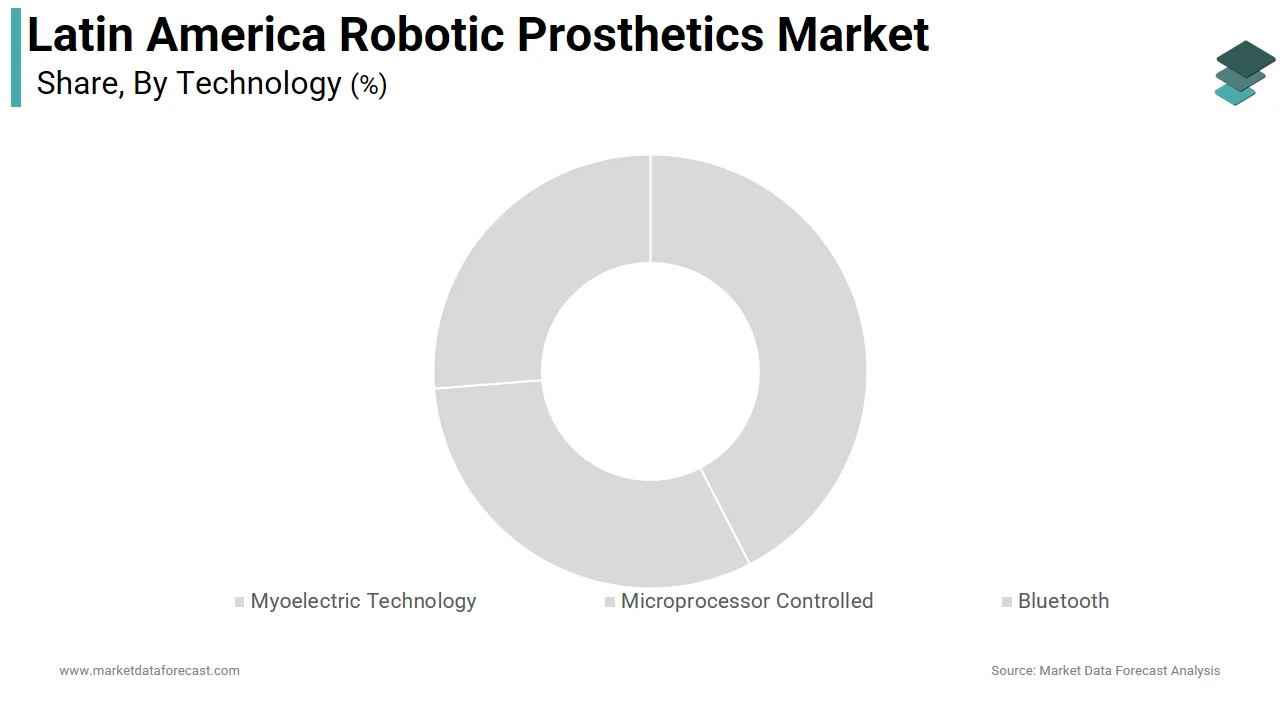
On the other side, the microprocessor-controlled segment is projected to witness a promising CAGR of 15.4% over the forecast period in the Latin American market owing to the superior adaptability and safety features offered for lower limb amputees. The rapid growth of microprocessor-controlled prosthetics is fueled by their ability to automatically adjust resistance and alignment in real time, providing enhanced gait stability and safety for users. These devices use sensors to detect terrain changes and walking speed, modifying knee or ankle behavior instantly to prevent falls. According to the American Academy of Orthotists and Prosthetists, microprocessor knees reduce the risk of stumbling by 70% compared to mechanical hydraulic knees. This safety benefit is particularly valuable for elderly amputees and those with limited balance. According to the Pan American Health Organization, fall-related injuries among amputees account for a significant portion of hospital admissions in Latin America, driving demand for safer mobility solutions. Microprocessor-controlled legs allow users to walk on uneven surfaces, stairs, and slopes with greater confidence. This versatility expands the range of activities users can engage in, improving their overall quality of life. Clinicians in Argentina and Chile are increasingly prescribing these devices for active patients who wish to maintain an independent lifestyle. The data logging capabilities of these prosthetics also allow therapists to monitor progress and adjust settings remotely. These clinical advantages justify the higher investment for many patients and insurers.
By Products Insights
The prosthetic ankles or feet segment led the market with the leading share of the Latin America robotic prosthetics market in 2025 due to the high incidence of lower limb amputations in Latin America, largely driven by diabetes and peripheral vascular disease. According to the International Diabetes Federation, diabetes affects over 60 million people in the region, with complications leading to thousands of amputations annually. This large patient pool creates a sustained demand for lower limb prosthetic solutions. According to the Pan American Health Organization, lower limb amputations account for approximately 75% of all amputation procedures in public hospitals across Brazil and Mexico. Consequently, the volume of replacements and upgrades for ankles and feet far exceeds that of upper limbs. Robotic ankles and feet offer significant benefits in terms of energy return and gait symmetry, which are critical for mobility. Users of these devices experience less fatigue and joint pain compared to those using passive prosthetics. The functional necessity of walking drives prioritization of lower limb solutions in healthcare budgets. Insurance schemes are more likely to cover lower limb prosthetics due to their essential role in basic mobility. This clinical reality ensures that the ankles and feet segment remains the largest component of the market.
However, the prosthetic arms segment is experiencing the fastest growth and is estimated to record a CAGR of 14.4% over the forecast period in the global market owing to the breakthroughs in dexterity and multi-articulation capabilities that allow for complex hand movements and gestures. Modern robotic hands can perform individual finger movements, enabling users to grasp objects of various shapes and sizes with precision. According to the Institute of Electrical and Electronics Engineers, new multi-articulating hands offer up to 14 different grip patterns, significantly expanding functional utility. This level of sophistication appeals to younger amputees and professionals who require fine motor skills for their jobs. According to the Journal of Hand Therapy, patients using multi-articulating prosthetic hands report a 35% increase in satisfaction with their ability to perform household tasks. Such improvements drive demand among patients who previously settled for basic hooks or passive hands. Manufacturers are introducing lightweight materials that reduce the weight of robotic arms, making them more comfortable for prolonged use. The aesthetic customization options also attract users who desire a natural appearance. These technological enhancements transform prosthetic arms from simple tools into sophisticated extensions of the body. As awareness of these capabilities spreads through social media and patient networks, demand accelerates across the region.
COUNTRY LEVEL ANALYSIS
Brazil Robotic Prosthetics Market Analysis
Brazil held the largest share in the Latin America robotic prosthetics market in 2025 due to its large population, established healthcare infrastructure, and government support for disability rights. The country has a robust network of public and private hospitals that perform a high volume of amputation surgeries. The Brazilian Ministry of Health includes prosthetic devices in its public health coverage list, although access to advanced robotic options remains limited to specific reference centers. The National Agency for Sanitary Surveillance has streamlined approval processes for innovative medical devices, encouraging international manufacturers to enter the market. The high prevalence of diabetes and traffic accidents creates a substantial demand for both upper and lower limb prosthetics. Local research institutes are collaborating with global companies to develop cost-effective robotic solutions tailored to the Brazilian context. The growing middle class is increasingly investing in private health insurance that covers advanced prosthetics. Urban centers like São Paulo and Rio de Janeiro serve as hubs for specialized rehabilitation clinics. Government initiatives to improve accessibility in public spaces also drive demand for functional mobility aids. These factors combine to maintain Brazil’s leadership in the regional market.
Mexico Robotic Prosthetics Market Analysis
Mexico represents a significant and rapidly growing market for robotic prosthetics, characterized by strong medical tourism and increasing private healthcare investment. The country serves as a destination for patients from the United States seeking affordable, high-quality prosthetic care. The Mexican Social Security Institute provides basic prosthetic coverage, but there is a growing trend toward private purchases of advanced robotic devices. According to the National Institute of Statistics and Geography, there is a rising incidence of diabetes-related complications, driving demand for lower limb solutions. Medical tourism agencies promote packages that include surgery, robotic fitting, and rehabilitation, attracting international clients. Local distributors are expanding their portfolios to include leading global brands of myoelectric and microprocessor-controlled prosthetics. The presence of skilled prosthetists in major cities like Mexico City and Guadalajara supports the adoption of complex technologies. Government efforts to harmonize regulatory standards with international norms facilitate faster product launches. The increasing awareness of disability rights and inclusion drives demand for functional and aesthetic prosthetic solutions. These dynamics contribute to the robust growth of the market in Mexico.
Argentina Robotic Prosthetics Market Analysis
Argentina maintains a mature market for robotic prosthetics, supported by a strong tradition of medical education and specialized rehabilitation services. The country has a high density of trained prosthetists and orthotists per capita, ensuring quality care for amputees. The National Administration of Drugs, Food and Medical Technology regulates the import and sale of medical devices, ensuring safety and efficacy. Public health programs provide basic prosthetics, but there is a vibrant private sector for advanced robotic solutions. The Argentine Society of Physical Medicine and Rehabilitation promotes the use of evidence-based practices in prosthetic fitting. Economic fluctuations impact purchasing power, leading to a preference for durable and maintainable devices. Despite challenges, the demand for high-quality robotic arms and legs remains steady among affluent segments. Local universities research biomechanics and prosthetic design, fostering innovation. The cultural emphasis on social participation drives users to seek functional devices that enable active lifestyles. Collaborations with European manufacturers facilitate access to cutting-edge technologies. These factors sustain Argentina’s prominent position in the regional market.
Chile Robotic Prosthetics Market Analysis
Chile features a developed and efficient market for robotic prosthetics, driven by high healthcare spending and strong regulatory frameworks. The country has one of the highest per capita health expenditures in Latin America, enabling greater access to advanced medical technologies. The Superintendency of Health ensures that insurance providers cover essential prosthetic devices, including some robotic options for specific cases. The Chilean Society of Orthotics and Prosthetics sets high standards for professional practice and continuing education. The low incidence of infectious diseases means that most amputations are due to trauma or vascular issues, creating a predictable demand profile. Private clinics in Santiago offer state-of-the-art robotic fitting services, attracting patients from neighboring countries. The government supports research and development in biomedical engineering, fostering local innovation. High internet penetration facilitates the use of connected prosthetic devices and remote monitoring services. The aging population increases the need for mobility aids that offer stability and safety. These structural advantages make Chile a key market for premium robotic prosthetic products.
COMPETITIVE LANDSCAPE
The competition in the Latin American robotic prosthetics market is characterized by the presence of global leaders competing with emerging local manufacturers and specialized distributors. Major international players dominate the high-end segment with advanced myoelectric and microprocessor-controlled devices, leveraging their technological superiority and brand reputation. Local firms compete primarily on price and accessibility, offering basic robotic solutions and maintenance services tailored to regional needs. The market sees intense rivalry in urban centers where purchasing power is higher and awareness of advanced technologies is greater. Companies differentiate themselves through after-sales support, training programs, and financing options that address the high cost barrier. Strategic alliances with public health systems are crucial for securing large tenders and expanding reach into rural areas. The lack of standardized reimbursement policies creates an uneven playing field, favoring companies with flexible payment models. Innovation in durability and battery life is key to addressing the specific challenges of the Latin American environment. Continuous investment in local talent and infrastructure is essential for maintaining competitive advantage and driving market growth in this developing region.
KEY MARKET PLAYERS
The leading companies operating in the Latin American robotic prosthetics market include:
- Shadow Robot Company
- Touch Bionics
- Ottobock
- Össur
- HDT Global
- Endolite
- SynTouch Inc.
- iRobot
- Northrop Grumman
- QBotix
- Prox Dynamics
TOP PLAYERS IN THE MARKET
- Ottobock contributes significantly to the Latin America robotic prosthetics market by providing advanced bionic limbs and comprehensive rehabilitation services. The company focuses on integrating myoelectric technology with durable materials suitable for diverse climates. Recently, Ottobock expanded its training centers in Brazil and Mexico to certify more local prosthetists in fitting complex robotic devices. This initiative strengthens their position by ensuring high-quality care and support for users. They also collaborate with public health institutions to pilot subsidized programs for lower-income amputees. These efforts enhance accessibility and brand loyalty across the region. Their robust supply chain ensures consistent availability of spare parts and batteries. This reliability makes them a trusted partner for hospitals and clinics seeking long-term solutions for patients requiring sophisticated mobility aids.
- Össur plays a vital role in the Latin American robotic prosthetics market through its innovative microprocessor-controlled knees and smart prosthetic feet. Their products emphasize natural gait patterns and energy efficiency for active users. Össur recently launched targeted marketing campaigns in Argentina and Chile to highlight the benefits of its bionic technologies for trauma victims. This strategy increases awareness among younger demographics and healthcare providers. The company also partners with local distributors to streamline logistics and reduce delivery times. These collaborations improve service responsiveness and customer satisfaction. Össur invests in clinical research within the region to validate product performance in real-world settings. This evidence-based approach builds trust with insurers and regulatory bodies. Their focus on user-centric design drives adoption among individuals seeking to maintain an active and independent lifestyle.
- Touch Bionics supports the Latin American robotic prosthetics market with its highly dexterous multi-articulating hands and intuitive control systems. The company specializes in upper limb solutions that restore fine motor skills and aesthetic appearance. Touch Bionics recently established technical support hubs in major cities like São Paulo and Bogotá to assist with device maintenance and software updates. This expansion addresses the challenge of limited specialized technicians in the region. They also engage in educational workshops for therapists to demonstrate the functional capabilities of their robotic hands. These initiatives promote proper usage and maximize patient outcomes. The company collaborates with non-governmental organizations to provide devices to accident survivors. This social responsibility enhances their reputation and market presence. Their commitment to innovation and local support strengthens their competitive position in the growing upper limb prosthetics segment.
TOP STRATEGIES USED BY KEY MARKET PARTICIPANTS
Key players in the Latin America robotic prosthetics market employ strategic partnerships with local distributors and healthcare providers to enhance market penetration and navigate regulatory complexities. Companies frequently invest in training programs for prosthetists and therapists to build a skilled workforce capable of fitting and maintaining advanced devices. This approach ensures high-quality care and improves user satisfaction. Another prevalent strategy involves collaborating with government agencies and non-governmental organizations to create subsidized access programs for low-income patients. Firms focus on adapting their products to local environmental conditions and cultural preferences to increase acceptance. Acquisitions of regional clinics allow established companies to integrate vertical services and capture direct patient relationships. Furthermore, participants actively engage in clinical research and data collection to demonstrate cost-effectiveness and functional benefits to insurers. These combined strategies enable companies to overcome financial and logistical barriers while building strong brand loyalty in the diverse Latin American market.
MARKET SEGMENTATION
This Latin America mattress market research report is segmented and sub-segmented into the following categories.
By Technology
- Myoelectric Technology
- Microprocessor Controlled
- Bluetooth
By Products
- Prosthetic Ankles Or Feet
- Prosthetic Arms
By Application
- Upper Body Extremity
- Lower Body Extremity
By End Users
- Hospitals
- Clinics
By Country
- Brazil
- Mexico
- Argentina
- Chile
- Rest of Latin America