- Product Description Description
- Table of Contents TOC
- List of Table & Figure LOT
- Get Free Sample PDF Sample PDF
Market Size, 2025
$35.56 BnMarket Estimate, 2026
$39.00 BnMarket Forecast, 2034
$81.61 BnCAGR, 2026–2034
9.67%Latin America Biopharmaceuticals Market Size, Share, & Growth Analysis (2026–2034)
The Latin America biopharmaceuticals market was valued at USD 35.56 billion in 2025, estimated at USD 39.00 billion in 2026, and is projected to reach USD 81.61 billion by 2034, registering a strong CAGR of 9.67% from 2026 to 2034. This comprehensive report covers product types, therapeutic categories, and country-level frameworks across Latin America.
- Market Valuation: USD 39.00B (2026) to USD 81.61B by 2034 (9.67% CAGR).
- Primary Growth Drivers: Escalating prevalence of chronic diseases (cancer, diabetes), expanding healthcare infrastructure, and rising government support for universal health coverage and biosimilars.
- Key Market Restraints: Stringent and fragmented regulatory approval hurdles along with high overall costs of biologics limiting accessibility.
Latin America Biopharmaceuticals Market Segment Metrics (2026–2034)
| Category | Leading Segment Focus | Segment Overview & Key Details | Alternative / Growth Focus |
|---|---|---|---|
| By Product Type | Monoclonal Antibodies | Dominates market share due to widespread application in treating complex chronic conditions like cancer and autoimmune diseases. | Biotech vaccines segment is estimated to showcase a strong CAGR of 10.4% driven by preventive healthcare focus. |
| By Therapeutic Type | Oncology | Holds the major market share credited to the rising incidence of cancer and increasing availability of advanced targeted therapies and immunotherapies. | Diabetes segment registers robust growth due to escalating disease prevalence and shift toward biologic insulins and GLP-1 agonists. |
| By Country | Brazil | Captures a commanding 40.5% market share in 2025, driven by ongoing infrastructure investments, modernization initiatives, and the public SUS framework. | Mexico follows as the second-largest market, with Argentina holding a strong position backed by biotechnology expertise. |
Major Market Players & Market Structure
Market Structure: Highly dynamic market featuring a balance of global pharmaceutical giants competing via deep product pipelines and regional manufacturers providing cost-effective alternatives and biosimilars.
Key Companies: Pfizer Inc., Merck & Co., Inc., F. Hoffmann-La Roche AG, Eli Lilly and Company, Sanofi, Amgen Inc., AbbVie Inc., Biogen Inc., Bayer AG, Johnson & Johnson Services, and Novartis AG.
Latin America Biopharmaceuticals Market Size
The Latin America biopharmaceuticals market size was valued at USD 35.56 billion in 2025 and is anticipated to reach USD 39.00 billion in 2026 from USD 81.61 billion by 2034, growing at a CAGR of 9.67% during the forecast period from 2026 to 2034.
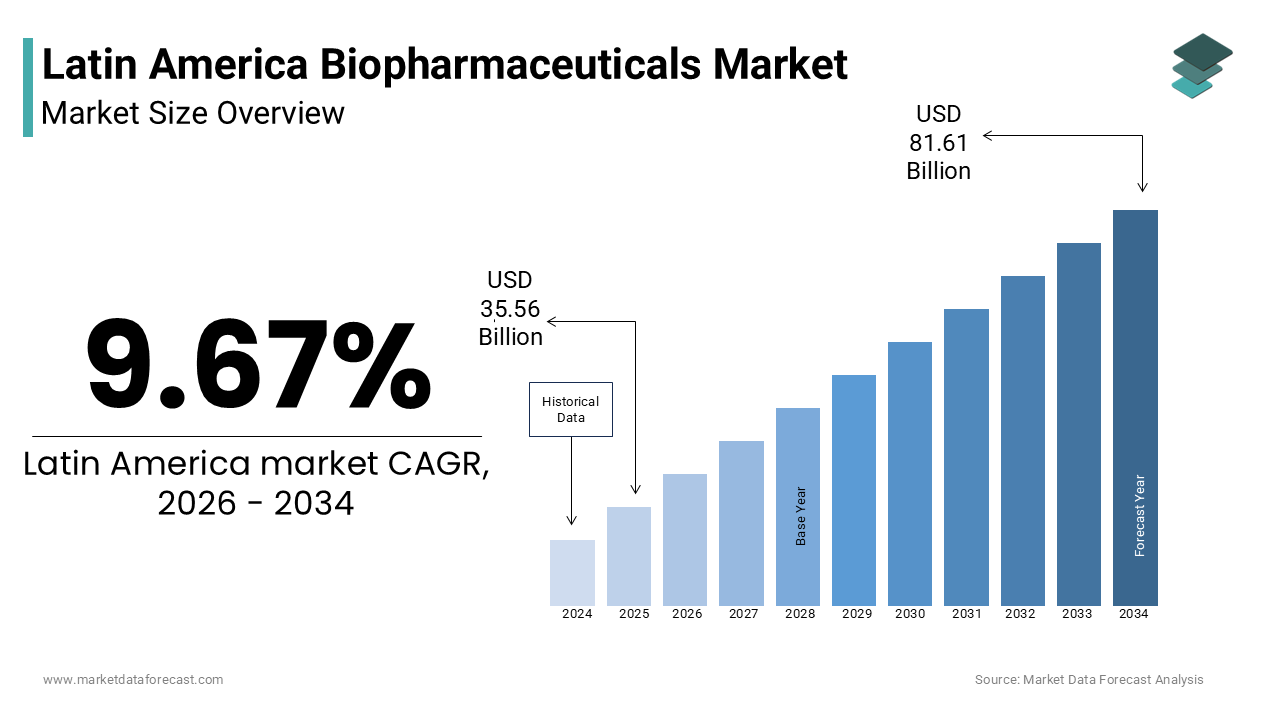
According to the Pan American Health Organization, non-communicable diseases account for a major share of all deaths in the Americas, creating an urgent clinical need for targeted biologic interventions. As per the World Bank, life expectancy in Latin America has risen significantly, leading to an aging population that requires sophisticated management of conditions such as cancer, diabetes, and autoimmune disorders. The regulatory landscape is also maturing, with agencies like ANVISA in Brazil and COFEPRIS in Mexico aligning their approval processes with international standards to accelerate patient access. This market is not merely about importation but involves growing local manufacturing capabilities and clinical trial participation. The integration of biosimilars further expands accessibility, offering cost effective alternatives to originator biologics. These dynamics position the region as a pivotal growth area where healthcare infrastructure improvements intersect with rising demand for innovative therapeutic solutions, driving both public health outcomes and economic investment in the life sciences sector.
MARKET DRIVERS
Rising Prevalence of Chronic Diseases Driving Demand for Targeted Therapies
The escalating burden of chronic diseases is a significant factor driving the Latin American biopharmaceuticals market forward. Conditions such as cancer, cardiovascular diseases, and diabetes require long term management and often respond better to biologic agents than conventional treatments. According to the International Diabetes Federation, approximately 32 million adults in the South and Central America region were living with diabetes in recent years, a figure projected to rise significantly by 2045. This demographic reality necessitates advanced therapeutic options that can mitigate complications and improve quality of life. As per the Global Cancer Observatory, cancer incidence in Latin America has increased substantially over the past decade, with breast and prostate cancers being particularly prevalent. Biopharmaceuticals, including monoclonal antibodies and checkpoint inhibitors, offer targeted mechanisms that enhance survival rates and reduce side effects compared to chemotherapy. The aging population further amplifies this demand, as older individuals are more susceptible to multiple chronic conditions simultaneously. Governments are increasingly recognizing the economic impact of these diseases, which strain public healthcare systems through hospitalizations and long term care costs. Consequently, there is a strategic shift towards preventive and precise treatments that can reduce the overall disease burden. The adoption of biologics is also supported by growing clinical evidence demonstrating their efficacy in managing resistant forms of chronic illnesses. This driver is reinforced by patient advocacy groups pushing for broader insurance coverage and access to innovative therapies, ensuring that the market continues to expand in response to unmet medical needs.
Expansion of Healthcare Infrastructure and Insurance Coverage Enhancing Access
The improvement of healthcare infrastructure and the expansion of insurance coverage are pivotal factors driving the adoption of biopharmaceuticals across Latin America. Many countries in the region are implementing universal health coverage initiatives aimed at reducing out of pocket expenses and ensuring equitable access to essential medicines. According to the Inter American Development Bank, public health spending in Latin America has increased notably in real terms over recent years, allowing for greater procurement of high cost biologic treatments. As per the Ministry of Health in Brazil, the incorporation of new technologies into the public formulary has accelerated, with several monoclonal antibodies recently approved for reimbursement under the national health system. Private insurance penetration is also growing, particularly in urban centers, providing patients with faster access to innovative therapies that may not yet be covered by public plans. The establishment of specialized treatment centers and hospitals equipped with cold chain storage facilities enables the proper handling and administration of temperature sensitive biologics. Furthermore, regional collaborations facilitate knowledge sharing and best practices in clinical management, enhancing the capability of healthcare providers to prescribe and monitor biologic treatments. This structural improvement reduces barriers to entry for new products and encourages pharmaceutical companies to launch their latest innovations in the region. The combination of public and private funding mechanisms creates a more sustainable ecosystem for the long term growth of the biopharmaceuticals market.
MARKET RESTRAINTS
Stringent Regulatory Hurdles Delaying Product Launches and Approvals
Navigating the complex and often fragmented regulatory landscape is a significant restraint to the rapid growth of the biopharmaceuticals market in Latin America. Each country maintains its own regulatory authority with distinct requirements for clinical data, manufacturing standards, and pricing controls, leading to prolonged approval timelines. According to the Pan American Health Organization, the average time for regulatory approval of new biologics in some Latin American countries can be lengthy compared to more harmonized markets. This delay prevents patients from accessing lifesaving treatments in a timely manner and discourages manufacturers from prioritizing the region for early launches. As per the Brazilian Health Regulatory Agency, the backlog of pending applications for biological products remains high due to limited resources and technical expertise within the regulatory bodies. The lack of regional harmonization means that companies must submit separate dossiers for each country, increasing administrative burdens and costs. Additionally, frequent changes in regulatory guidelines create uncertainty for investors and developers. The requirement for local clinical trials, while intended to ensure safety and efficacy for the local population, often duplicates global studies and adds significant time and expense to the development process. These regulatory inefficiencies hinder the competitiveness of the local market and limit the diversity of available treatments. Until greater alignment and resource allocation are achieved, the pace of innovation adoption will remain constrained by bureaucratic obstacles.
High Costs of Biologics Limiting Affordability and Reimbursement
The substantial cost associated with biopharmaceutical products is another major restraint on their widespread adoption in Latin America, where healthcare budgets are often limited. Biologics are significantly more expensive to develop and manufacture than small molecule drugs due to their complex production processes and stringent quality control requirements. According to IQVIA, the average annual cost of biologic treatments for chronic conditions can range widely per patient, placing a heavy financial burden on both public and private payers. As per the World Health Organization, out of pocket health expenditure in many Latin American countries exceeds 30% of total health spending, making high cost therapies inaccessible to a large portion of the population. Public healthcare systems struggle to allocate sufficient funds for these premium treatments, often leading to restrictive formularies and prior authorization requirements that limit patient access. Private insurers also face pressure to manage costs, resulting in higher premiums or exclusions for certain biologic therapies. The limited availability of biosimilars, which offer lower cost alternatives, further exacerbates the affordability issue. While some countries have initiated price negotiation mechanisms, the lack of transparent pricing frameworks complicates efforts to reduce costs. This financial barrier restricts market penetration and forces many patients to rely on less effective conventional treatments. Without sustainable financing models and increased competition from biosimilars, the high cost of biologics will continue to impede market growth.
MARKET OPPORTUNITIES
Growing Adoption of Biosimilars Creating Cost Effective Alternatives
The increasing acceptance and regulatory support for biosimilars is a significant opportunity for expanding access to biopharmaceuticals in Latin America. Biosimilars are highly similar versions of original biologic drugs that offer comparable efficacy and safety at a lower cost, making them an attractive option for healthcare systems facing budget constraints. According to the Generic Pharmaceutical Association, the introduction of biosimilars can reduce treatment costs by 20% to 40%, enabling broader patient access to advanced therapies. As per the Mexican Federal Commission for Protection against Sanitary Risk, several biosimilars for insulin and monoclonal antibodies have been approved in recent years, signaling a shift towards more affordable treatment options. Governments are actively promoting the use of biosimilars through procurement policies and reimbursement incentives, aiming to alleviate the financial pressure on public health systems. The growing manufacturing capacity in countries like Brazil and Argentina supports local production of biosimilars, reducing dependency on imports and lowering logistics costs. Clinical confidence in biosimilars is also rising among physicians and patients, driven by robust real world evidence demonstrating their reliability. This trend opens up new market segments for manufacturers who can produce high quality biosimilars efficiently. The opportunity extends beyond cost savings to include improved supply chain stability and greater treatment continuity for patients. As regulatory pathways become clearer and more streamlined, the biosimilar segment is poised for substantial growth, transforming the accessibility landscape of biopharmaceuticals in the region.
Increasing Investment in Local Manufacturing and Research Capabilities
The surge in investment towards local manufacturing and research infrastructure offers a promising opportunity for the Latin American biopharmaceuticals market. Countries are recognizing the strategic importance of domestic production to ensure supply security and reduce reliance on imports. According to the United Nations Economic Commission for Latin America and the Caribbean, foreign direct investment in the pharmaceutical sector has shown notable annual growth over past years, with a significant portion directed towards biotechnology facilities. As per the Brazilian Association of Pharmaceutical Industries, several multinational companies have established or expanded manufacturing plants in the region to produce biologics locally, benefiting from favorable tax incentives and skilled labor pools. This localization effort reduces lead times and mitigates risks associated with global supply chain disruptions. Additionally, academic institutions and research centers are collaborating with industry partners to conduct clinical trials and develop novel therapies tailored to the genetic profiles of the local population. Government initiatives supporting innovation hubs and technology transfer programs further stimulate this growth. The development of local expertise in cell culture and purification technologies enhances the region’s capability to produce complex biologics. This opportunity not only strengthens the domestic market but also positions Latin America as a potential export hub for biopharmaceuticals to other emerging markets. By fostering a robust ecosystem of research, development, and manufacturing, the region can achieve greater self-sufficiency and contribute to global health innovation.
MARKET CHALLENGES
Supply Chain Vulnerabilities Affecting Product Availability and Quality
Maintaining the integrity of the cold chain and ensuring consistent supply of biopharmaceuticals pose significant challenges in Latin America due to logistical complexities and infrastructure gaps. Biologics are highly sensitive to temperature fluctuations, requiring strict adherence to cold storage protocols from manufacturing to administration. According to the World Logistics Passport, inadequate cold chain infrastructure in rural and remote areas results in a notable portion of temperature sensitive medical products being compromised before reaching patients. As per the Pan American Health Organization, supply chain disruptions during recent global crises highlighted the fragility of distribution networks in the region, leading to shortages of critical biologic treatments. The vast geographical diversity and varying levels of infrastructure development across countries complicate last mile delivery. Poor road conditions, limited refrigerated transport options, and inconsistent electricity supply in certain areas increase the risk of product degradation. Furthermore, customs delays and bureaucratic hurdles at borders can prolong transit times, exposing products to unfavorable conditions. These vulnerabilities not only affect product availability but also raise concerns about efficacy and patient safety. Manufacturers and distributors must invest heavily in monitoring technologies and backup systems to mitigate these risks. The lack of standardized logistics protocols across the region further exacerbates the challenge. Addressing these supply chain weaknesses is crucial to ensuring reliable access to high quality biopharmaceuticals for all patients.
Limited Skilled Workforce Hindering Advanced Therapy Administration
The shortage of healthcare professionals trained in the administration and monitoring of biopharmaceuticals is another critical challenge for the market in Latin America. Biologics often require specialized handling, precise dosing, and careful monitoring for adverse reactions, necessitating a workforce with advanced clinical skills. According to the World Health Organization, the region faces a distinct deficit of healthcare workers, with particular shortages in specialized fields such as oncology and immunology. As per the Latin American Society of Clinical Pharmacology, many healthcare providers lack adequate training in the latest biologic therapies, leading to suboptimal prescribing practices and patient management. This skills gap is more pronounced in rural areas and smaller healthcare facilities, where access to continuing education and professional development opportunities is limited. The complexity of biopharmaceuticals also requires pharmacists and nurses to understand intricate mechanisms of action and potential drug interactions. Without sufficient trained personnel, the safe and effective use of these therapies cannot be guaranteed, potentially leading to poor patient outcomes and reduced confidence in biologic treatments. Educational institutions and professional bodies are working to address this issue through targeted training programs, but progress is slow. The retention of skilled professionals is further challenged by migration to countries with better remuneration and working conditions. Bridging this workforce gap is essential to fully realizing the benefits of biopharmaceutical advancements in the region.
REPORT COVERAGE
| REPORT METRIC | DETAILS |
| Market Size Available | 2025 to 2034 |
| Base Year | 2025 |
| Forecast Period | 2026 to 2034 |
| CAGR | 9.67% |
| Segments Covered | By Product Type, Therapeutic Type and Region. |
| Various Analyses Covered | Global, Regional & Country Level Analysis, Segment-Level Analysis, DROC, PESTLE Analysis, Porter’s Five Forces Analysis, Competitive Landscape, Analyst Overview of Investment Opportunities |
| Country Covered | Brazil, Mexico, Argentina, Chile, and the Rest of Latin America. |
| Market Leaders Profiled | Merck & Co., Inc., F. Hoffmann-La Roche AG, Eli Lilly and Company, Inc., Sanofi, Amgen Inc., AbbVie Inc., Biogen Idec, Bayer AG, Johnson & Johnson Services, Pfizer, Inc. and Novartis AG. |
SEGMENTAL ANALYSIS
By Product Type Insights
The monoclonal antibodies segment accounted for the dominating share of the Latin American market in 2025 due to their widespread application in treating complex chronic conditions such as cancer, autoimmune disorders, and inflammatory diseases. The versatility of these molecules allows for precise targeting of specific antigens, resulting in higher efficacy and fewer side effects compared to traditional therapies. According to the Pan American Health Organization, cancer is a leading cause of death in the region, with millions of new cases diagnosed annually, driving substantial demand for targeted biologic treatments. As per the Brazilian Society of Clinical Oncology, the adoption of monoclonal antibodies like trastuzumab and rituximab has increased by 25% in public healthcare facilities over recent years, reflecting improved access and reimbursement policies. The expansion of biosimilar monoclonal antibodies further accelerates market penetration by offering cost effective alternatives to originator products. Pharmaceutical companies are increasingly focusing on launching these therapies in Latin America, supported by streamlined regulatory pathways in key markets like Brazil and Mexico. The growing awareness among physicians regarding the clinical benefits of monoclonal antibodies also contributes to their dominance. Additionally, patient advocacy groups play a crucial role in pushing for insurance coverage, ensuring that a broader population can access these lifesaving treatments. The continuous pipeline of new monoclonal antibody approvals for various indications sustains this segment’s leadership position, making it the cornerstone of the regional biopharmaceuticals landscape.
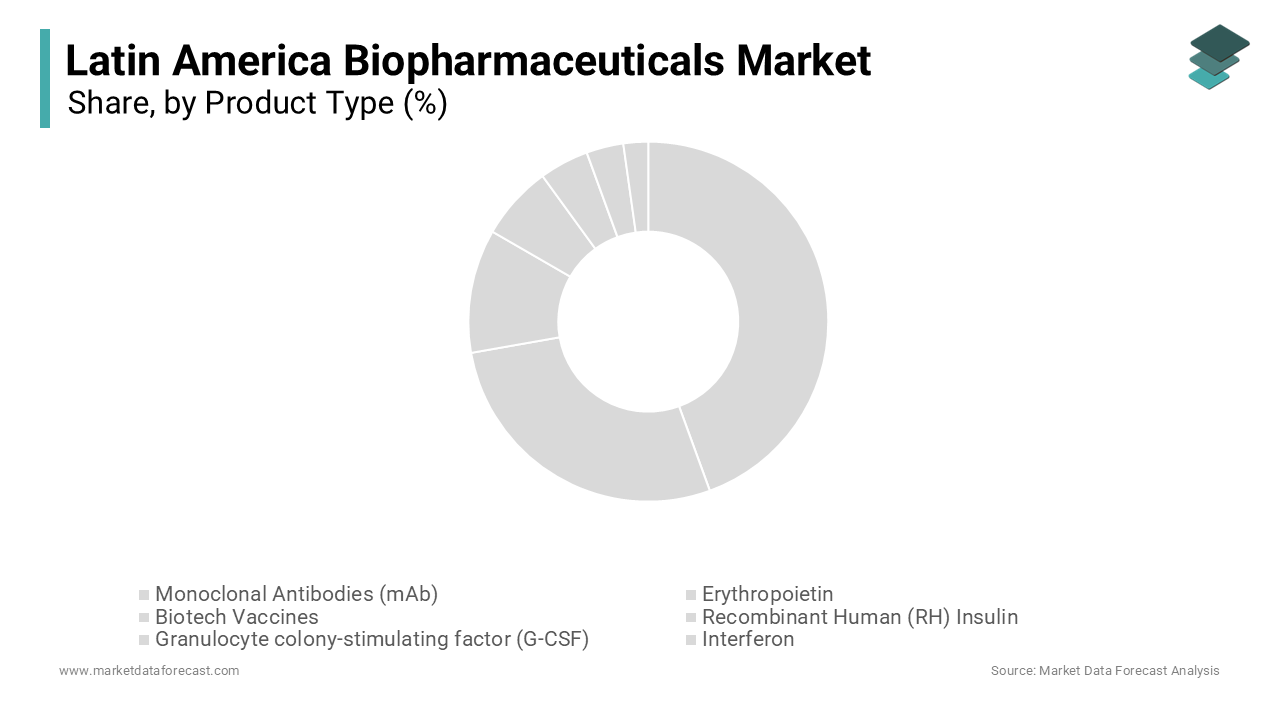
On the other side, the biotech vaccines segment is estimated to showcase a CAGR of 10.4% over the forecast period in the Latin American market owing to the increased awareness of preventive healthcare, government immunization programs, and the recent global focus on pandemic preparedness. According to the World Health Organization, vaccination coverage in Latin America has improved significantly, with routine immunization rates reaching high levels for key childhood diseases in several countries. As per the Inter-American Development Bank, public investment in vaccine procurement increased notably following recent health crises, highlighting the strategic priority placed on preventive measures. The introduction of novel vaccines for diseases such as human papillomavirus, dengue, and respiratory syncytial virus further fuels market expansion. Local manufacturing capabilities in countries like Brazil and Cuba enable the production of affordable vaccines, reducing dependency on imports and ensuring supply security. Regional collaborations facilitate technology transfer and joint development initiatives, accelerating the availability of advanced vaccine formulations. The aging population also contributes to this growth, as older adults require booster shots and vaccines for age related conditions. Government mandates and school entry requirements ensure high uptake rates, creating a stable demand base. Furthermore, private sector participation in distributing travel and occupational vaccines adds another layer of growth. The combination of public health initiatives and private market dynamics positions biotech vaccines as a high growth area within the biopharmaceuticals sector.
By Therapeutic Type Insights
The oncology segment had the major share of the Latin American biopharmaceuticals market in 2025. The dominance of oncology segment in the Latin American market can be credited to the rising incidence of cancer and the increasing availability of advanced biologic treatments. The region faces a significant burden of cancer cases, with breast, prostate, and lung cancers being the most prevalent types. According to the Global Cancer Observatory, approximately 1.5 million new cancer cases were reported in Latin America in recent years, necessitating robust therapeutic interventions. As per the Latin American Society of Medical Oncology, the adoption of targeted therapies and immunotherapies has transformed patient outcomes, leading to higher survival rates and improved quality of life. Public healthcare systems are increasingly incorporating expensive biologic drugs into their formularies, supported by government funding and international aid programs. Private insurance providers also cover a wide range of oncology treatments, enabling faster access to innovative therapies for insured patients. The establishment of specialized cancer centers equipped with modern diagnostic and treatment facilities enhances the delivery of biopharmaceuticals. Clinical trials conducted in the region contribute to the early availability of new drugs, attracting investment from global pharmaceutical companies. Patient support programs offered by manufacturers help manage the high costs associated with cancer treatments, improving adherence and accessibility. The continuous development of new biologics for various cancer types ensures sustained growth in this segment. Furthermore, awareness campaigns and screening programs lead to earlier detection, increasing the number of patients eligible for biologic interventions. This comprehensive ecosystem supports the dominance of oncology in the regional biopharmaceuticals market.
However, the diabetes therapeutic segment is anticipated to register a promising CAGR in the Latin American market over the forecast period owing to the escalating prevalence of the disease and the shift towards advanced biologic treatments such as recombinant human insulin and glucagon like peptide 1 agonists. According to the International Diabetes Federation, more than 82 million adults in Latin America were living with diabetes in recent assessments, a figure expected to rise sharply in the coming decades. As per the Pan American Health Organization, diabetes accounts for a substantial percentage of all deaths in the region, highlighting the urgent need for effective management strategies. The adoption of biologic insulins offers better glycemic control and reduced risk of hypoglycemia compared to animal derived insulins, driving their preference among clinicians and patients. Government initiatives aimed at improving diabetes care include subsidized access to insulin and regular monitoring supplies. The growing obesity epidemic further exacerbates the diabetes burden, creating a larger patient pool requiring treatment. Local manufacturing of recombinant insulin in countries like Brazil and Argentina helps reduce costs and ensures steady supply. Awareness campaigns promote early diagnosis and lifestyle modifications, but pharmacological intervention remains critical for many patients. The introduction of long acting insulin analogs and combination therapies provides more flexible treatment options, enhancing patient compliance. Private sector involvement in distributing diabetes care products also contributes to market expansion. With the disease burden continuing to rise, the demand for advanced biologic treatments for diabetes will remain strong, driving rapid segment growth.
COUNTRY ANALYSIS
Brazil Biopharmaceuticals Market Analysis
Brazil had 40.5% of the Latin American market share in 2025 and is likely to experience robust expansion and maintain its leadership position in the biopharmaceutical sector over the next few years, driven by ongoing infrastructure investments and modernization initiatives. The country’s public health system, known as SUS, provides free access to a wide range of essential medicines, including several biologic treatments for cancer and autoimmune diseases. According to the Brazilian Ministry of Health, public spending on high cost medications exceeded billions of dollars recently, reflecting the government’s commitment to expanding access. As per ANVISA, the national health regulatory agency, the approval timeline for new biologics has been reduced notably in recent years, encouraging faster market entry for international players. The presence of major pharmaceutical companies and local producers fosters competition and innovation. Brazil is also a hub for clinical trials, attracting global investment in drug development. The growing middle class and increasing private insurance penetration further boost demand for premium biopharmaceuticals. Government programs supporting local production of biosimilars aim to reduce costs and enhance supply security. The country’s extensive distribution network ensures that products reach remote areas, although challenges remain in logistics and cold chain management. Brazil’s leadership in the region is reinforced by its proactive regulatory environment and significant healthcare investments, making it a critical market for biopharmaceutical stakeholders.
Mexico Biopharmaceuticals Market Analysis
Mexico is expected to steadily increase its market footprint and strengthen its strategic trade position within the regional life sciences landscape over the next few years. Mexico represents the second largest market for biopharmaceuticals in Latin America, characterized by a mixed healthcare system comprising public institutions and private providers. The country serves as a strategic gateway for North American pharmaceutical companies due to its proximity and trade agreements. According to the Mexican Federal Commission for Protection against Sanitary Risk, the registration of new biologic products has increased annually, indicating a dynamic regulatory environment. As per the National Institute of Statistics and Geography, out of pocket expenditure on health remains high, prompting many patients to seek affordable biosimilar options. The public sector, through institutes like IMSS and ISSSTE, procures large volumes of biologics for chronic disease management, particularly for diabetes and cancer. Local manufacturing capabilities are expanding, with several companies investing in production facilities for recombinant proteins and vaccines. The growing prevalence of noncommunicable diseases drives consistent demand for advanced therapies. Private hospitals in urban centers offer cutting edge treatments, attracting medical tourism from neighboring countries. Regulatory harmonization efforts with other Latin American nations aim to streamline approval processes and reduce barriers to entry. Mexico’s strategic location and integrated supply chains make it an attractive destination for pharmaceutical investments. The government’s focus on improving healthcare access and reducing costs through biosimilars supports sustainable market growth. These factors collectively position Mexico as a key player in the regional biopharmaceuticals landscape.
Argentina Biopharmaceuticals Market Analysis
Argentina is poised to maintain its scientific edge and leverage local biotechnology strengths to navigate economic shifts and sustain steady growth over the next few years. Argentina holds a significant position in the Latin America Biopharmaceuticals Market, distinguished by its strong scientific base and historical expertise in biotechnology research. The country is a leader in the production of recombinant human insulin and monoclonal antibodies, with several local companies exporting products to neighboring regions. According to the Argentine Chamber of Pharmaceutical Laboratories, the biotechnology sector contributes substantially to the national economy, with substantial export revenues generated annually. As per the National Administration of Drugs, Food and Medical Technology, regulatory reforms have facilitated the approval of biosimilars, enhancing competition and lowering prices. Economic volatility and currency fluctuations pose challenges, but they also drive the demand for locally produced affordable alternatives to imported biologics. The public healthcare system provides coverage for essential biologic treatments, although access can be uneven across provinces. Private insurance plans offer broader access to innovative therapies, catering to the urban middle class. Research institutions collaborate with industry partners to develop novel therapies, fostering innovation. The government supports the biopharmaceutical sector through tax incentives and funding for research and development. Despite economic hurdles, Argentina’s skilled workforce and established infrastructure maintain its competitive edge. The focus on self sufficiency in critical medicines ensures continued investment in local production capabilities. This resilience and scientific prowess keep Argentina as a vital contributor to the regional market.
COMPETITIVE LANDSCAPE
The competition in the Latin America Biopharmaceuticals Market is characterized by a mix of global pharmaceutical giants and emerging local manufacturers who strive to balance innovation with affordability. Major international players compete on the basis of product pipeline depth, clinical efficacy, and established distribution networks. They leverage their global expertise to introduce advanced biologics and personalized medicine solutions to the region. Local companies compete by offering cost effective biosimilars and leveraging their understanding of regional regulatory and reimbursement landscapes. The market sees increasing collaboration between public and private sectors to improve access to high cost treatments. Price sensitivity remains a key factor, prompting companies to adopt flexible pricing strategies and participate in government procurement tenders. Regulatory complexity across different countries creates barriers to entry but also opportunities for firms with strong compliance capabilities. Intellectual property protections vary, influencing the speed at which biosimilars enter the market. Patient advocacy groups play a growing role in shaping competitive dynamics by demanding broader access to innovative therapies. Overall, the market is evolving towards greater integration of local production and regional cooperation, with success depending on the ability to deliver value through both innovation and accessibility.
KEY MARKET PLAYERS
A few of the prominent companies operating in the Latin America biopharmaceuticals market include
- Merck & Co., Inc.
- F. Hoffmann-La Roche AG
- Eli Lilly and Company
- Sanofi
- Amgen Inc.
- AbbVie Inc.
- Biogen Idec
- Bayer AG
- Johnson & Johnson Services
- Pfizer, Inc.
- Novartis AG
Top Players in the Market
Pfizer Inc
Pfizer Inc maintains a strong presence in the Latin America Biopharmaceuticals Market through its extensive portfolio of vaccines and oncology treatments. The company actively collaborates with local governments to enhance immunization programs and improve access to critical biologics. Recent actions include expanding manufacturing partnerships in Brazil to produce mRNA vaccines locally, which strengthens supply chain resilience and reduces dependency on imports. Pfizer also invests in clinical trials across the region to generate real world evidence for its biologic therapies. These initiatives demonstrate a commitment to addressing regional health challenges while building long term relationships with healthcare providers. By focusing on preventive care and advanced therapeutics, Pfizer reinforces its role as a key contributor to public health outcomes. The company’s engagement in patient support programs further ensures that complex treatments remain accessible to diverse populations. This strategic approach allows Pfizer to maintain relevance and trust in a dynamic healthcare landscape.
Roche Holding AG
Roche Holding AG is a leading provider of personalized healthcare solutions in Latin America, with a strong focus on oncology and diagnostics. The company integrates diagnostic tools with therapeutic offerings to enable precise treatment decisions for patients with complex diseases. Recent actions involve launching new monoclonal antibody therapies for breast and lung cancer in major markets like Mexico and Argentina. Roche also partners with local institutions to train healthcare professionals on the administration of biologic drugs. The establishment of digital health platforms facilitates remote monitoring and data collection, improving patient management. By emphasizing precision medicine, Roche differentiates itself from competitors and addresses unmet medical needs. The company’s investment in local research capabilities supports the development of tailored solutions for the Latin American population. These efforts enhance clinical outcomes and strengthen Roche’s reputation as an innovator in the biopharmaceuticals sector.
Novartis AG
Novartis AG contributes significantly to the Latin America Biopharmaceuticals Market through its diverse portfolio of innovative medicines and biosimilars. The company focuses on transforming care in areas such as immunology and rare diseases by providing advanced biologic treatments. Recent actions include the launch of several biosimilar products in Brazil and Colombia, offering cost effective alternatives to originator biologics. Novartis also engages in access programs that provide subsidized medications to low income patients. The company collaborates with regulatory agencies to streamline approval processes for new therapies. By investing in local manufacturing and distribution networks, Novartis ensures reliable product availability. Its commitment to sustainability and ethical practices resonates with regional stakeholders. These strategic moves enable Novartis to expand its reach and impact in the Latin American healthcare system. The focus on affordability and innovation positions the company as a vital partner in improving health equity across the region.
Top Strategies Used by Key Market Participants
Key players in the Latin America Biopharmaceuticals Market primarily employ strategies centered on local manufacturing partnerships, regulatory harmonization advocacy, and expanded access programs. Companies increasingly collaborate with regional producers to establish local production facilities for biologics and biosimilars, which reduces costs and mitigates supply chain risks. This localization strategy aligns with government priorities for healthcare self sufficiency and creates economic value within the region. Advocating for regulatory harmonization is another critical strategy, as it streamlines approval processes across different countries and accelerates patient access to new therapies. Firms actively participate in regional health forums to promote standardized guidelines and mutual recognition agreements. Expanding access through patient assistance programs and tiered pricing models helps overcome affordability barriers in diverse economic contexts. Additionally, companies invest in clinical research and real world evidence generation to demonstrate the value of their products to payers and regulators. Building strong relationships with public health institutions ensures inclusion in national formularies. These combined approaches enable participants to navigate complex market dynamics while sustaining growth and improving health outcomes in Latin America.
MARKET SEGMENTATION
This research report on the Latin America Biopharmaceuticals Market has been segmented and sub-segmented into the following categories
By Product Type
- Monoclonal Antibodies (mAb)
- Erythropoietin
- Biotech Vaccines
- Recombinant Human (RH) Insulin
- Granulocyte colony-stimulating factor (G-CSF)
- Interferon
- Human growth hormones (HGH)
By Therapeutic Type
- Neurology
- Infectious Diseases
- Diabetes
- Oncology
- Cardiovascular
- Other Therapeutic Areas
By Country
- Brazil
- Argentina
- Chile
- Mexico
- Rest of Latin America