- Product Description Description
- Table of Contents TOC
- List of Table & Figure LOT
- Get Free Sample PDF Sample PDF
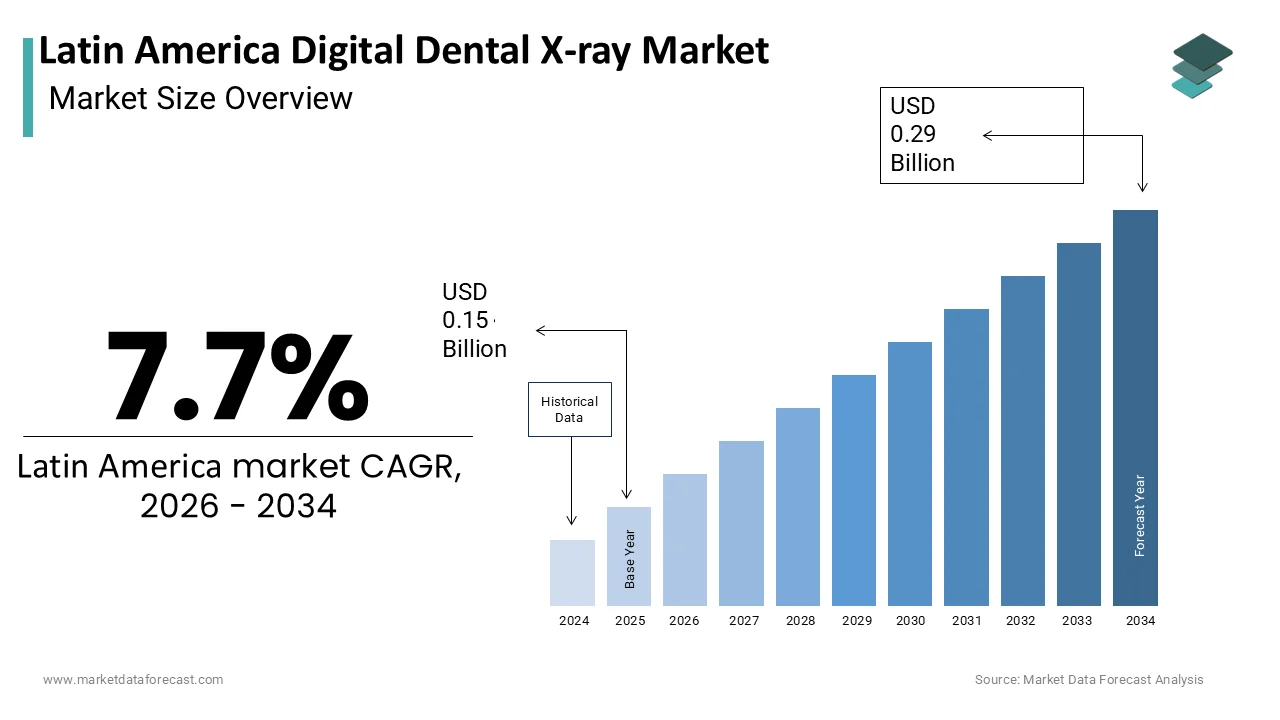
Market Size, 2025
$0.15 BnMarket Estimate, 2026
$0.16 BnMarket Forecast, 2034
$0.29 BnCAGR, 2026–2034
7.7%Latin America Digital Dental X-ray Market Report Summary
The Latin America Digital Dental X-ray Market was valued at USD 0.15 billion in 2025 and is projected to reach USD 0.29 billion by 2034, growing from USD 0.16 billion in 2026 at a CAGR of 7.7% during the forecast period. Growth is driven by the rising prevalence of dental disorders, government initiatives promoting oral health infrastructure, and expansion of teledentistry, enabling remote diagnostic consultations. High initial investment costs and limited technical training are shaping market dynamics.
Key Market Trends
- Rising adoption of cone beam computed tomography for dental implant planning
- Growing integration of AI algorithms for automated cavity and bone loss detection
- Expansion of teledentistry supported by improving broadband coverage
- Increasing demand for cosmetic dental imaging driven by social media influence
- Growing outsourcing of digital design work to dental laboratories
Segmental Insights
- Based on product, X-ray systems held the largest share in 2025 at 44.3%, driven by their essential role in routine dental diagnostics.
- Based on method, extraoral imaging led the market in 2025 by capturing 34.6% of the market share, supported by orthodontic and oral surgery applications.
- Based on application, diagnostic applications held the largest share in 2025 at 42.7%, driven by the high prevalence of untreated dental decay in the region.
Regional Insights
- Brazil led the market in 2025 by holding 35.3% of the regional market share, supported by extensive healthcare infrastructure and a large dentist population.
- Mexico holds a significant share of 25.3%, driven by strong dental tourism and cross-border healthcare demand.
- Argentina is a prominent market supported by high dental professional density and strong educational institutions in radiology.
- Chile contributes notably due to its stable economy and high per capita dentist density.
- Cone beam computed tomography is the fastest-growing product segment, projected at a CAGR of 12.5%, driven by rising implant procedure volumes.
Competitive Landscape
The market is highly competitive, with global manufacturers and regional distributors competing on innovation and localized service support. Companies are investing in AI integration, cloud-based teledentistry platforms, and reduced-radiation imaging systems to expand accessibility.
Prominent players in the market include Danaher Corporation, Carestream Health Inc., Dentsply Sirona Inc., Planmeca Oy, Midmark Corporation, LED Medical Diagnostics Inc., Vatech Co. Ltd., and Yoshida Dental Mfg. Co. Ltd., and Flow Dental Corporation.
Latin America Digital Dental X-ray Market Size
The Latin America Digital Dental X-ray Market is projected to grow from USD 0.15 billion in 2025 to USD 0.16 billion in 2026 and reach USD 0.29 billion by 2034, registering a CAGR of 7.7% during the forecast period from 2026 to 2034.
The digital dental x-ray is a healthcare infrastructure characterized by the adoption of advanced imaging technologies that replace traditional film-based radiography. The transition toward digital solutions is driven by the need for enhanced diagnostic accuracy and operational efficiency in dental practices across countries, such as Brazil, Mexico, and Argentina. Furthermore, the Ministry of Health in Brazil reported that oral diseases affect nearly 80% of the adult population, highlighting the critical need for precise diagnostic equipment. The integration of digital systems allows for immediate image processing and storage,e which aligns with the growing emphasis on electronic health records in the region. These technological advancements support early detection of dental pathologies, es thereby reducing long-term treatment costs and improving overall public health outcomes in Latin America.
MARKET DRIVERS
Rising Prevalence of Dental Disorders Drives Demand for Accurate Diagnostic Tools
The escalating burden of oral diseases is solely attributed to fuelling the growth of the Latin American digital dental X-ray market. According to the World Health Organization, untreated dental caries affects approximately 2.3 billion people globally, with a significant portion residing in developing regions,s including Latin America. In Brazil, alone,ne the Ministry of Health states that over 90% of the population has experienced tooth decay at some point in their lives, creating an urgent need for precise diagnostic interventions. Digital radiography offers superior image quality compared to conventional methods, enabling dentists to detect early-stage cavities, periodontal disease,se and other anomalies with greater accuracy. This diagnostic precision is crucial for effective treatment planning and minimizing invasive procedures. Consequently, urban clinics are increasingly investing in digital imaging technologies to differentiate their services and attract patients seeking comprehensive care. The ability to store and share digital images facilitates referrals and second opinions, which is particularly valuable in regions with uneven distribution of specialist care.
Government Initiatives Promoting Oral Health Infrastructure Development
The strategic government programs aimed at improving oral health infrastructure are additionally boosting the growth of the Latin American digital X-ray market. The Brazilian government launched the National Oral Health Policy, which aims to expand access to dental services through the establishment of specialized clinics equipped with modern technology. Similarly, the Mexican Institute of Social Security has prioritized the modernization of dental units in its network, which serves over 60 million beneficiaries. These initiatives often include provisions for acquiring digital radiography systems that offer faster processing times and lower maintenance costs compared to traditional film-based systems. Such policy-driven investments reduce the financial burden on private practitioners and encourage widespread adoption of advanced imaging tools. Additionally, international collaborations with organizations like the Pan American Health Organization provide technical assistance and funding for equipment procurement. These concerted efforts ensure that digital dental X-ray systems become integral components of the regional healthcare framework, thereby driving sustained market growth.
MARKET RESTRAINTS
High Initial Investment Costs Limit Accessibility for Small Practices
The substantial upfront capital required for advanced systems, particularly among small and independent dental practices,s is impeding the growth of the Latin America digital X-ray market. A complete digital radiography setup, including sensors, software, and computers, can cost between 15000 and 30000 dollars, which represents a considerable financial burden for practitioners in economies with fluctuating currency values. In countries like Argentina, where inflation rates exceeded 100% in 2023, the real cost of imported medical equipment increases dramatically due to exchange rate volatility. These smaller practices often prioritize essential consumables over major equipment upgrades, delaying the adoption of digital technologies. Furthermore, the lack of localized manufacturing means that most systems must be imported, subjecting buyers to additional tariffs and logistics costs.
Limited Technical Expertise and Training Gaps Hinder Effective Utilization
A shortage of skilled personnel capable of operating and maintaining systems restricts the effective deployment of these technologies, which is also declining the growth of thLatinin America digital dental X-ray market. Many dental professionals in the region received their training on conventional film-based radiography and lack familiarity with digital image processing software and hardware troubleshooting. This educational gap results in suboptimal use of equipment where practitioners may not leverage advanced features such as image enhancement or three-dimensional reconstruction. In remote areas, the situation is more acute with limited access to continuing education programs. Additionally, the scarcity of biomedical engineers specializing in dental equipment means that maintenance delays are common, leading to prolonged downtime. The average repair times for digital systems can exceed four weeks due to reliance on international service providers.
MARKET OPPORTUNITIES
Expansion of Tele Dentistry Services Creates New Application Avenues
The rapid growth of tele dentistry by enabling remote diagnostic consultations is creating new opportunities for the growth of the Latin American digital dental X-ray market. Digital images can be easily transmitted to specialists located in different cities or countries, facilitating expert opinions without requiring patient travel. In Colombia, the Ministry of Information Technologies reported that broadband coverage reached 75% of households in 202,5 enabling seamless data transfer for medical purposes. Digital radiography systems produce files that are compatible with cloud-based platforms, allowing secure storage and sharing among healthcare providers. This trend is particularly beneficial in rural areas where specialist access is limited. Manufacturers are responding by developing systems with enhanced compression algorithms and security features tailored for telehealth applications.
Integration with Artificial Intelligence Enhances Diagnostic Capabilities
The incorporation of artificial intelligence offers transformative potential for improving diagnostic accuracy and workflow efficiency, which will promote new opportunities for the growth of the Latin American digital dental X-ray market. AI algorithms can automatically detect cavities, bone loss,s and other pathologies, es reducing the likelihood of human error and speeding up interpretation times. Several startups in the region are developing localized AI models trained on diverse patient demographics to ensure relevance for Latin American populations. These innovations appeal to high-volume practices seeking to optimize patient throughput without compromising quality. The large clinics in São Paulo have begun piloting AI-integrated imaging systems. Furthermore, insurance companies are increasingly recognizing AI-validated diagnoses, which may lead to faster claim approvals and reimbursement. The Colombian Dental Federation is working on guidelines for AI usage,e ensuring ethical implementation and data privacy. As computational power becomes more affordable, the integration of AI with digital radiography will likely become standard practice, driving demand fornext-generationn imaging systems.
MARKET CHALLENGES
Regulatory Fragmentation Complicates Market Entry and Compliance
The lack of harmonized regulatory standards for manufacturers and distributors is a key challenge for the growth of the Latin American dental X-ray market. Each nation maintains distinct approval processes, certification requirements, and safety standards, which increase the complexity and cost of market entry. The Sanitary Risk has different labeling and documentation requirements, ts necessitating separate submissions. This regulatory divergence forces companies to maintain multiple compliance teams and adapt products for each area, thus increasing operational overhead. The Andean Community attempts to harmonize standards, but implementation remains inconsistent among member states. The imported dental equipment faced delays due to documentation discrepancies in 2024, as per the study. Small and medium-sized enterprises often lack the resources to navigate these complex regulatory landscapes, limiting competition and innovation.
Inconsistent Reimbursement Policies Affect Adoption Rates
The absence of standardized reimbursement policies for digital dental procedures undermines the financial viability of adopting advanced imaging technologies for many practitioners. The inconsistent reimbursement policies affect adoption rates, which is also a challenge for the growth of the Latin American digital ddental X-raymarket. In most countries, dental care is largely paid out of pocket with limited coverage from public or private insurance schemes. In Brazil, the Unified Health System covers basic extractions and fillings but does not reimburse for digital radiography, forcing patients to pay extra for these services. This financial disconnect discourages dentists from investing in expensive equipment when they cannot guarantee adequate returns. Private insurers in Colombia and Peru have begun introducing tiered plans that include digital diagnostics, but uptake remains low due to high premiums. Without consistent reimbursement frameworks, the economic incentive for widespread digital adoption remains weak,k particularly in price-sensitive markets.
REPORT COVERAGE
| REPORT METRIC | DETAILS |
| Market Size Available | 2025 to 2034 |
| Base Year | 2025 |
| Forecast Period | 2026 to 2034 |
| Segments Covered | By Product, Method, Application, End-user, and Region |
| Various Analyses Covered | Global, Regional and Country-Level Analysis, Segment-Level Analysis, Drivers, Restraints, Opportunities, Challenges; PESTLE Analysis; Porter’s Five Forces Analysis, Competitive Landscape, Analyst Overview of Investment Opportunities |
| Countries Covered | Brazil, Argentina, Chile, Mexico, Rest of Latin America |
| Market Leaders Profiled | Danaher Corporation, Carestream Health, Inc., Dentsply Sirona Inc., Planmeca Oy, Midmark Corporation, LED Medical Diagnostics Inc., Vatech Co., Ltd., Yoshida Dental Mfg. Co., Ltd., Flow Dental Corporation. |
SEGMENTAL ANALYSIS
By Product Insights
The X-ray systems segment was the largest, holding 44.3% of the Latin America Digital Dental X-ray market share in 2025 due to their itsmental role in routine dental diagnostics and widespread acceptance among practitioners. These systems include intraoral sensors and panoramic units that are essential for detecting caries, periodontal disease, and bone loss. Furthermore, the cost-effectiveness of these systems compared to advanced imaging modalities makes them accessible to a broader range of clinics, including small private practices. The newly established clinics prioritize the acquisition of digital X-ray systems as their primary imaging investment. The longevity of these devices, with an average lifespan of 10 years, also contributes to their dominance, as clinics seek reliable long-term investments.
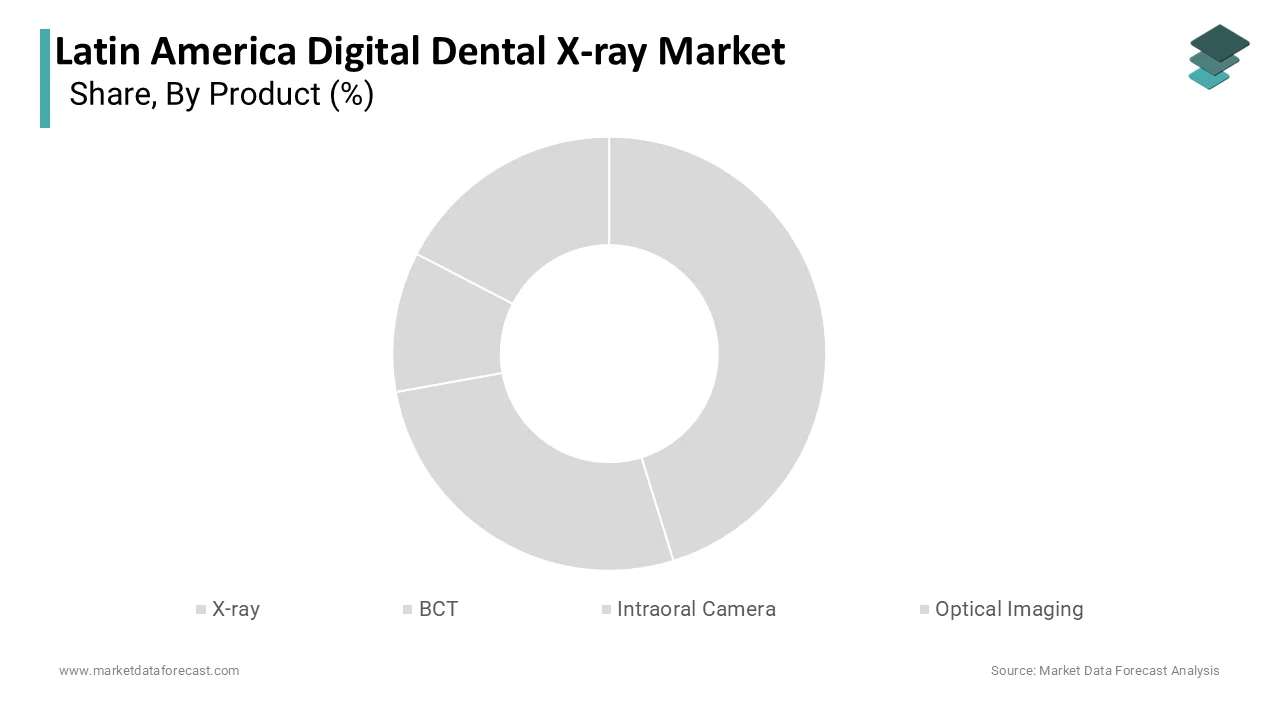
The cone beam computed tomography segment is projected to expand at a CAGR of 12.5% from 2026 to 2034 owing to the increasing prevalence of dental implant procedures, which require precise three-dimensional imaging for safe placement. CBCT systems provide critical anatomical details such as bone density and nerve location that two-dimensional X-rays cannot offer, reducing surgical risks and improving outcomes. Additionally, the aging population in the region is driving demand for restorative procedures that benefit from advanced imaging. The population aged 65 and above in Latin America will grow by 2030, creating a larger pool of patients requiring complex dental interventions. Manufacturers are responding by introducing compact and affordable CBCT units tailored for mid-sized clinics.
By Method Insights
The extraoral imaging methods segment was the largest by capturing 34.6% of the Latin America Digital DentaX-Ray Market share in 2025 due to their ability to capture comprehensive views of the jaws, teeth,h and surrounding structures. These methods are essential for orthodontic treatment planning,g oral surgery, and assessment of temporomandibular joint disorders. The Brazilian Board of Orthodontics mandates cephalometric analysis for all complex malocclusion cases, ensuring consistent demand for these systems. Extraoral units also serve as primary screening tools for impacted teeth and jaw pathologies, es which are prevalent in the region. Furthermore, these systems are integral to forensic dentistry applications, which are gaining traction in legal and identification contexts. The durability and low maintenance requirements of extraoral units make them cost-effective for high-volume clinics.
The intraoral imaging segment is expected to register the fastest CAGR of 11.8% from 2026 to 2034 owing to the increasing emphasis on early detection of dental caries and periodontal disease, which requires high-resolution close-up images. Intraoral sensors offer superior image clarity for detecting small cavities and early bone loss that extraoral methods may miss. The general practitioners now use intraoral sensors as their primary diagnostic tool for routine checkups. The compact size and portability of modern intraoral units make them suitable for mobile dental clinics serving remote areas. The mobile health initiatives equipped with digital intraoral systems to improve access in rural communities. Additionally, the decreasing cost of intraoral sensors has made them affordable for small practices. Growing patient awareness regarding radiation safety and comfort is fueling the
By Application Insights
The diagnostic applications segment accounted for 42.7% of the Latin America Digital Dental X-Ray Market share in 2925. These applications include detection of caries, periodontal disease,e oral cancers, rs and temporomandibular joint disorders. According to the World Health Organization, oral diseases affect 3.5 billion people globally, with Latin America experiencing high prevalence rates of untreated decay. DigitalX-rayss enable early detection of pathologies, allowing for less invasive and more cost-effective treatments. Diagnostic imaging is also crucial for monitoring the progression of chronic conditions, such as periodontitis, which affects 30% of the adult population in Argentina. The routine diagnostic screenings are essential for maintaining oral health in aging populations. The widespread necessity of diagnostic services across all age groups ensures their continued market growth. Furthermore, the integration of diagnostic data with electronic health records supports longitudinal patient care, enhancing clinical outcomes.
The cosmetic applications segment is estimated to register the fastest CAGR of 13.2% from 2026 to 2034, with increasing consumer interest in aesthetic dental procedures. Digital X-rays play a crucial role in planning these procedures by providing detailed images of tooth structure and bone support. Many cosmetic cases now utilize digital imaging for precise treatment simulation. Patients are increasingly demanding preview images of potential outcomes, which digital systems can generate through software integration. Social media influence is also driving demand for perfect smiles, particularly among younger demographics. The individuals aged 18 to 30 consider aesthetic improvements important for self-confidence. Manufacturers are developing specialized software for cosmetic planning that integrates with digital X-ray data, enhancing visualization capabilities.
By End User Insights
The dental clinics segment was the large, accounting for 34.2% of the Latin America Digital Dental X-Ray market share in 2025, as they serve as the primary locations for patient diagnosis and treatment. These facilities range from small private practices to large multi-specialist centers that require reliable imaging equipment for daily operations. Dental clinics benefit from direct patient interaction, allowing for immediate imaging and diagnosis,s which enhances treatment efficiency. Furthermore, clinics are increasingly adopting comprehensive digital workflows that integrate X-ray data with practice management software. Public health clinics in Argentina and Colombia are also upgrading their imaging equipment, supported by government funding initiatives. The central role of clinics in delivering dental care ensures their continued dominance as the primary consumers of digital X-ray systems.
The dental laboratories segment is likely to exhibit the fastest CAGR of 10.5% during the forecast period, with the increasing outsourcing of digital design and manufacturing services by dental clinics. Labs utilize digital X-ray data to design crowns, bridges, and implants with high precision usingcomputer-aidedd design and manufacturing technologies. This shift allows clinics to focus on patient care while leveraging specialized lab expertise for complex restorations. Furthermore, labs are investing in advanced scanning and milling equipment that integrates seamlessly with digital XX-rayfiles. Collaborative platforms enable secure transfer of X-ray data between clinics and labs, enhancing coordination.
COUNTRY LEVEL ANALYSIS
Brazil Digital DentalX-Rayy Market Analysis
Brazil was the top performer in the Latin America Digital Dental X-Ray Market by accounting for 35.3% of the share in 2025, with its extensive healthcare infrastructure and large population. The country boasts over 200000 registered dentists and a robust network of public and private dental clinics that actively adopt digital technologies. The private sector is equally vibrant,nt with major cities like Sao Paulo and Rio de Janeiro hosting advanced dental facilities that utilize cone beam computed tomography and intraoral sensors. Furthermore, the country hosts several international dental trade fairs that showcase the latest imaging technologies, fostering innovation and adoption. The Federal Council of Dentistry mandates continuing education on digital radiography,y ensuring that professionals remain updated with technological advancements.
Mexico Digital DentaX-Ray Market Analysis
Mexico Digital Dental X-Ray Market was ranked second by holding 25.3% of the share in 2025, with strong cross-border healthcare interactions and domestic demand. The private sector is thriving with dental tourism attracting thousands of patients annually, who seek cost-effective treatments using state-of-the-art digital X-ray technology. Local distributors are expanding their service networks to support maintenance and training, ensuring reliable operation of equipment.
Argentina Digital Dental X-Ray Market Analysis
Argentina's digital dental X-ray market growth is driven by the high density of dental professionals and strong educational institutions. The country has a long tradition of excellence in dentistry, with numerous universities offering specialized training in digital radiography. Economic challenges have prompted clinics to seekcost-effectivee digital solutions, leading to increased adoption of affordable intraoral sensors and software. The Argentine Society of Oral Radiology promotes best practices in digital imaging through regular workshops and certifications. Private insurance plans are expanding coverage for digital diagnostics,s encouraging patient uptake.
Chile Digital DentaX-Ray Market Analysis
Chile's digital dental X-raymarketh is likely to grow with its stable economy and high healthcare standards. The country has one of the highest densities of dentists per capita in the region, ensuring widespread access to dental care. The public health system has integrated digital radiography into its primary care network,s improving diagnostic accuracy for millions of patients. The adoption of low-radiation digital systems aligning with global safety standards is also fuelling the growth of the market. Private clinics in Santiago and other major cities are early adopters of advanced technologies such as cone beam computed tomography for implant planning. The country benefits from favorable trade agreements that reduce tariffs on imported medical devices, making digital X-ray systems more affordable.
COMPETITIVE LANDSCAPE
The competition in the Latin America Digital Dental X-Ray Market is characterized by the presence of established global manufacturers and emerging local distributors who strive to capture market share through innovation and service excellence. Major international companies leverage their technological expertise and brand reputation to offer high-end imaging solutions such as cone beam computed tomography and advanced intraoral sensors. These firms often engage in strategic collaborations with local entities to navigate regulatory hurdles and enhance distribution efficiency. Meanwhile, regional players compete by providingcost-effectivee alternatives and personalized customer support tailored to the specific needs of small and medium-sized dental clinics. Companies frequently launch new products with enhanced diagnostic tools to differentiate themselves from competitors. Additionally, the rise of teledentistry has prompted manufacturers to develop cloud-compatible systems that facilitate remote consultations.
KEY MARKET PLAYERS
Some of the companies that are playing a dominant role in the Latin American Digital Dental X-ray Market include
- Danaher Corporation
- Carestream Health, Inc.
- Dentsply Sirona Inc.
- Planmeca Oy
- Midmark Corporation
- LED Medical Diagnostics Inc.
- Vatech Co., Ltd.
- Yoshida Dental Mfg. Co., Ltd.
- Flow Dental Corporation
TOP LEADING PLAYERS IN THE MARKET
- Planmeca maintains a strong presence in the Latin American Digital Dental X-Ray Market through its comprehensive portfolio of digital imaging solutions, including intraoral sensors and cone beam computed tomography units. The company focuses on deliveringhigh-qualityy diagnostic tools that integrate seamlessly with practice management software used by dental clinics across Brazil and Mexico. Recently, Planmeca launched new low-radiation CBCT models specifically designed for mid-sized practices to enhance accessibility. The firm has expanded its service network in Argentina to provide faster maintenance support and technical training for local dentists. These initiatives demonstrate its commitment to improving patient safety and operational efficiency, while strengthening relationships with healthcare providers in the region.
- Dentsply Sirona contributes significantly to the market by offering advanced digital radiography systems that cater to both general practitioners and specialists in Latin America. The company emphasizes innovation through artificial intelligence integration, which aids in faster and more accurate diagnosis of dental conditions. In recent developments, Dentsply Sirona partnered with local distributors in Colombia and Peru to enhance product availability and after-sales support. It also introduced cloud-based imaging platforms that facilitate tele-dentistry services, allowing remote consultations using high-resolution digital X-rays. These strategic moves help the company address the growing demand for connected healthcare solutions and improve diagnostic capabilities for dental professionals throughout the region.
- Carestream Health plays a vital role in the Latin American Digital Dental X-Ray Market by providing robust intraoral and extraoral imaging devices known for their durability and image quality. The company actively engages in educational programs to train dental professionals on the effective use of digital imaging technologies in countries like Chile and Brazil. Recently, Carestream Health unveiled compact panoramic units suitable for small clinics with limited space, thereby expanding its customer base. It also strengthened its supply chain logistics to ensure timely delivery of equipment and spare parts across the region. These efforts reflect its dedication to supporting diverse clinical needs and enhancing the overall standard of dental care in Latin America.
TOP STRATEGIES USED BY KEY MARKET PARTICIPANTS
Key players in the Latin America Digital DentalX-Rayy Market primarily focus on strategic partnerships and localized distribution networks to enhance their reach. Companies collaborate with regional distributors to navigate complex regulatory environments and ensure efficient product delivery. Another major strategy involves continuous product innovation, such as integrating artificial intelligence and reducing radiation doses to meet evolving clinical demands. Manufacturers also invest heavily in training programs for dental professionals to ensure proper utilization of advanced imaging systems. Additionally, firms are expanding their service centers to provide timely maintenance and support, which builds trust among customers. Pricing strategies are adapted to local economic conditions,s making digital solutions more accessible to small and medium-sized clinics.
MARKET SEGMENTATION
This research report on the Latin American digital dental X-ray market has been segmented and sub-segmented into the following categories:
By Product
- X-ray
- BCT
- Intraoral Camera
- Optical Imaging
By Method
- Extraoral
- Intraoral
By Application
- Diagnostic
- Therapeutic
- Cosmetic
- Forensic
By End-user
- Dental Clinic
- Dental Labs
By Country
- Brazil
- Argentina
- Chile
- Mexico
- Rest of Latin America