- Product Description Description
- Table of Contents TOC
- List of Table & Figure LOT
- Get Free Sample PDF Sample PDF
Market Size, 2025
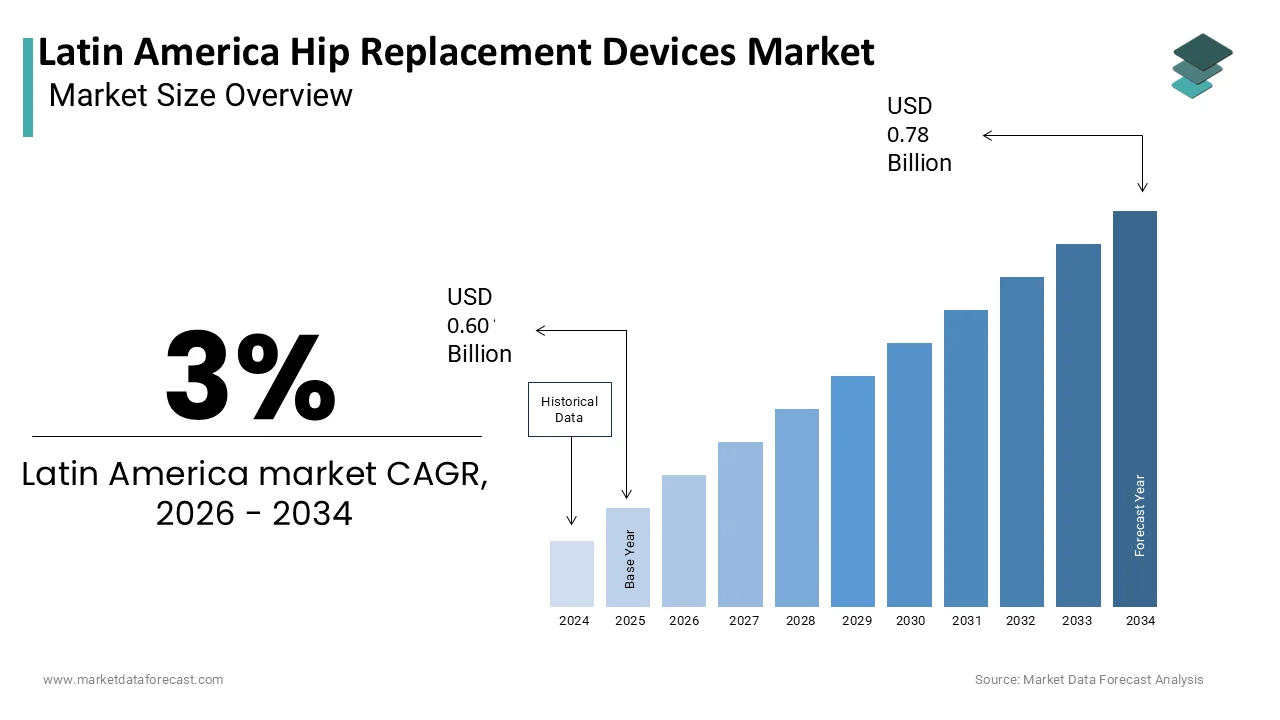
$0.60 BnMarket Estimate, 2026
$0.62 BnMarket Forecast, 2034
$0.78 BnCAGR, 2026–2034
3%Executive Summary: Latin America Hip Replacement Devices Market Report (2026–2034)
- Market Scope: Detailed analysis of the Latin American hip replacement market examining product types, bearing materials, end-user settings, and country-level developments, alongside regulatory challenges and economic factors.
- Market Valuation: Valued at USD 0.60 billion (2025), estimated at USD 0.62 billion (2026), and projected to reach USD 0.78 billion by 2034, registering a stable CAGR of 3% (2026–2034).
- Primary Growth Drivers: Accelerated aging of the regional population, increasing prevalence of osteoarthritis and obesity, and the expansion of private health insurance coverage.
Key Latin America Hip Replacement Devices Market Segment Metrics (2026–2034)
| Category | Leading Segment (2025 Position) | Fastest-Growing Segment |
|---|---|---|
| By Product | Total hip replacement segment (dominant share in 2025) | Revision hip replacement (projected at a 9.2% CAGR) |
| By Material | Metal-on-polyethylene bearings (led in 2025) | Ceramic-on-ceramic bearings (projected at an 8.5% CAGR) |
| By End-User | Hospitals (held majority share in 2025) | Ambulatory surgical centres (projected at a 7.8% CAGR) |
| By Region | Brazil (top performer with commanding share in 2025) | Mexico, Chile, and Argentina medical hubs |
Major Industry Players & Market Structure
Market Structure: Highly competitive landscape characterized by rivalry between global multinational corporations and localized manufacturers addressing public tenders versus private healthcare channels.
Key Market Leaders: B. Braun Melsungen AG, Exactech, Inc., DJO Global, Inc., and Johnson & Johnson.
Latin America Hip Replacement Devices Market Size
The Latin America Hip Replacement Devices Market is projected to grow from USD 0.60 billion in 2025 to USD 0.62 billion in 2026 and reach USD 0.78 billion by 2034, registering a CAGR of 3% during the forecast period from 2026 to 2034.
Hip replacement devices are artificial implants used to substitute a damaged or diseased human hip joint, consisting of key components like the stem, ball, and socket cup. They are designed to restore mobility and relieve severe joint pain. This domain is fundamentally shaped by distinct demographic transitions and healthcare infrastructure disparities rather than uniform regional growth. As per the United Nations Economic Commission for Latin America and the Caribbean, the regional population segment composed of individuals aged 60 years and older is projected to reach approximately 14.8% by 2030, driving up clinical demand for age-related musculoskeletal interventions. According to the Pan American Health Organisation, chronic noncommunicable diseases remain the leading causes of death throughout the region, accounting for approximately 80% of all annual fatalities. Furthermore, as per the World Health Organization, road traffic injuries remain a leading cause of death globally, with a significant concentration of trauma cases involving motorcycles throughout Latin American countries. Regulatory harmonisation efforts through the Pan American Network for Drug Regulatory Harmonisation are slowly standardising approval pathways, yet significant variations persist between national agencies like ANVISA in Brazil and COFEPRIS in Mexico. These structural elements define a market where demand is clinically high, but access remains stratified by socioeconomic status and geographic location within the continent.
MARKET DRIVERS
Rising Geriatric Population and Osteoarthritis Prevalence
The accelerating ageing trajectory across the nations in the region is the primary biological engine for hip replacement device utilisation, which drives the growth of the Latin America hip replacement devices market. As per the United Nations Economic Commission for Latin America and the Caribbean, the population segment composed of individuals aged 60 years and older is on track to hit approximately 14.8% of the regional population by 2030, fueling the commercial demand for age-related orthopaedic interventions. This demographic expansion coincides with rising obesity rates, which exacerbate joint degeneration. According to the World Obesity Federation, adult overweight and obesity trends are projected to affect nearly 50% of the world's adult population by 2030, exacerbating mechanical stress and leading to serious medical or orthopaedic interventions. As per the Global Burden of Disease dataset, osteoarthritis accounts for roughly 8.16% of all causes of total health prevalence in Latin America and the Caribbean, displaying substantial increases in caseloads over successive decades. Unlike developed markets where age is the sole predictor, this region sees compounded risk factors including sedentary lifestyles and delayed diagnosis. Public health systems in countries like Colombia and Argentina are consequently witnessing longer waiting lists for elective joint replacements as the eligible patient pool expands faster than surgical capacity. This irreversible demographic momentum ensures baseline demand growth regardless of short-term economic fluctuations, making geriatric care a permanent fixture in regional healthcare planning.
Expansion of Private Healthcare Insurance Coverage
The proliferation of private health insurance and prepaid medical plans is also fuelling the expansion of the Latin America hip replacement devices market. This unlocks latent demand for premium hip replacement devices among middle-class populations. According to the National Supplementary Health Agency (ANS), the private medical insurance framework in Brazil expanded its structural footprint to exceed 53 million active individual ties or corporate beneficiaries. According to public-private health sector indicators published in Medwave, orthopaedics and traumatology generate the highest volume of long-term surgical delays within the regional public framework, making arthroplasty procedures a major target for structural waitlist reduction. As per the Pan American Health Organization, average out-of-pocket health expenditures across individual households exceed 28% of total healthcare spending in Latin America and the Caribbean. Private hospitals in metropolitan areas like São Paulo, Buenos Aires, and Monterrey serve as primary adoption points for next-generation implants because reimbursement policies favour shorter hospital stays and better functional outcomes. This payer diversification reduces reliance on underfunded public tenders, which typically procure only the lowest-cost generic devices. Consequently, manufacturers are tailoring product portfolios specifically for private channel dynamics where clinical value propositions outweigh pure price competition, thereby expanding the addressable market beyond state-funded minimums.
MARKET RESTRAINTS
Currency Volatility and Import Dependency
Extreme currency instability across major regional economies severely constrains purchasing power for imported hip replacement systems, which restricts the growth of the Latin America hip replacement devices market. According to the International Monetary Fund, major macroeconomic foreign exchange misalignments and sharp exchange rate adjustments disrupted cross-border commercial transactions throughout the region during 2023 and 2024. As per regional investment analyses from the Inter-American Development Bank, local healthcare entities are actively expanding regional medical product manufacturing and export footprints to optimise Latin American healthcare supply lines. Hospitals operating in local currencies often delay procurement cycles or downgrade specifications when exchange rates spike mid-fiscal year. According to the Brazilian Health Regulatory Agency (ANVISA), medical tech distributors are reconfiguring commercial inventory strategies ahead of newly mandated Unique Device Identification (UDI) compliance rules for Class III medical devices. The financial unpredictability discourages long-term supply agreements and limits the introduction of newer technologies that carry higher price tags. Public tender prices are frequently set months before delivery, creating losses for suppliers when devaluation occurs. Consequently, market penetration of advanced devices remains artificially suppressed not by clinical need but by macroeconomic fragility that decouples regional pricing from global benchmarks and forces rationing of care based on fiscal availability rather than patient benefit.
Bureaucratic Delays in Regulatory Approvals
Regulatory processes are prolonged and fragmented across regional jurisdictions, which further constrains the expansion of the Latin America hip replacement devices market. Consequently, it creates major hurdles for new hip replacement devices trying to enter the market on time. As per sources, technical review timelines for registering a Class III medical device with Brazil's ANVISA typically average between 12 and 18 months based on compliance depth. ANVISA requires extensive local clinical evidence even for devices already approved by the FDA or CE marking, adding redundant testing burdens. Colombia’s INVIMA has improved turnaround times recently, but backlog issues persist for complex orthopaedic submissions. These delays mean that patients in Latin America access new bearing surfaces or fixation technologies years after global launch. Distributors must maintain parallel registration dossiers for each country, preventing regional scale efficiencies. Small and medium-sized innovators often abandon the market entirely due to compliance costs exceeding potential returns. This regulatory fragmentation perpetuates technological lag and forces clinicians to use older-generation devices despite superior alternatives being available globally, ultimately compromising patient outcomes and stifling competitive dynamics within the regional marketplace.
MARKET OPPORTUNITIES
Medical Tourism for Cost-Effective Arthroplasty
The region is emerging as a destination for affordable hip replacement surgery, which offers a strong opening for the Latin America hip replacement devices market. It is attracting international patients and generating specialised demand for premium devices. According to the Medical Tourism Association, U.S. patients save between 40% and 80% on overall medical procedures by travelling to Latin American hubs, which drives a significant influx of cross-border healthcare seekers. As per regional healthcare market statistics from the Medical Tourism Association, Mexico alone hosts the highest volume in the region by receiving between 1.2 million and 3 million international medical travellers annually. According to the Medical Tourism Association, the total Latin American medical tourism industry is projected to expand substantially by 2034. This segment operates outside domestic reimbursement constraints, allowing hospitals to procure high-margin devices directly from manufacturers. Governments actively promote this sector through visa facilitation and marketing campaigns, recognising foreign exchange earnings potential. For device companies, this creates a parallel distribution channel insulated from local currency volatility and public tender pressures. Surgeons catering to international patients demand the latest generation technology to compete globally, creating demonstration sites for advanced products. This niche opportunity enables manufacturers to establish premium brand positioning and generate reference cases that can eventually influence domestic private payer adoption strategies despite broader market limitations.
Digital Surgical Planning and Navigation Integration
Integration of preoperative planning software and intraoperative navigation systems provides untapped growth potential for the Latin America hip replacement devices market. As per clinical integration reports compiled by the Inter-American Development Bank, comprehensive digital transformation across regional healthcare operations significantly reduces operational waste and lowers institutional treatment costs. The technologies improve implant sizing accuracy, reducing revision rates and optimising inventory management for hospitals facing budget constraints. Manufacturers offering bundled solutions combining implants with proprietary planning platforms create sticky customer relationships beyond commodity pricing. According to the Inter-American Development Bank, a dedicated $85 million funding operation launched in late 2024 finances the deployment and scaling of a modernised digital health agenda across public healthcare infrastructure networks. Private hospital networks view navigation as a differentiator for attracting insured patients willing to pay premiums for precision outcomes. Training programs sponsored by device companies build surgeon loyalty and technical competency simultaneously. This shift toward integrated solutions transforms hip replacement from an isolated hardware sale to a comprehensive service model. Early adopters demonstrate reduced complication rates, providing real-world evidence to justify reimbursement upgrades. As digital literacy improves among younger surgeons, this technological convergence will redefine competitive advantage away from pure price toward outcome-based value propositions.
MARKET CHALLENGES
Uneven Distribution of Skilled Orthopaedic Surgeons
Severe maldistribution of trained orthopaedic specialists across the region limits actual procedural volumes, which challenges the growth of the Latin America hip replacement devices market. This trend persists despite existing device availability. As per the Pan American Health Organisation, severe geographical imbalances restrict medical access as individual countries struggle with stark health workforce distribution gaps between urban centres and rural territories. Within countries, specialists cluster in major cities, leaving rural regions underserved. According to regional surgical trend monitoring in Revista Brasileira de Ortopedia, primary total hip arthroplasties under the public healthcare framework display a high concentration within the Southeast region due to concentrated clinical infrastructure. Training programs produce insufficient graduates to meet growing demand, with fellowship spots limited to elite institutions. Rural hospitals lack both personnel and supporting infrastructure like anaesthesia teams and rehabilitation services necessary for safe joint replacement. This human resource bottleneck means devices sit unused in peripheral facilities while urban centres face backlogs. Manufacturers struggle to provide adequate training coverage across vast territories, increasing support costs. Telemedicine initiatives attempt to bridge gaps but cannot replace hands-on surgical skill. Until workforce development aligns with demographic needs, device market growth will remain capped by procedural capacity rather than product availability or patient demand, creating persistent inefficiencies in healthcare delivery systems.
Postoperative Rehabilitation Infrastructure Deficits
Inadequate postoperative rehabilitation infrastructure undermines clinical success and dampens repeat demand for these devices across the region, which slows down the expansion of the Latin America hip replacement devices market. As per the World Health Organisation, integrating physical therapy directly into health systems ensures optimal postoperative recovery and prevents ongoing chronic complications following complex surgical interventions. Patients discharged without structured therapy protocols experience higher complication rates, including dislocation, infection, and poor functional recovery. Poor outcomes generate negative word of mouth, deterring eligible candidates from pursuing surgery. Device longevity suffers when patients fail to strengthen musculature properly, leading to premature loosening and revision burden on already strained systems. Private facilities offer better rehab but at additional cost, excluding the majority of the population. Manufacturers recognise this gap yet lack incentives to invest in downstream services traditionally outside their scope. Some companies now partner with outpatient clinics to create referral networks, ensuring proper follow-up. Without systemic improvement in rehabilitation access, device performance will continue falling short of potential, limiting market expansion through compromised patient satisfaction and suboptimal long-term results.
REPORT COVERAGE
| REPORT METRIC | DETAILS |
| Market Size Available | 2025 to 2034 |
| Base Year | 2025 |
| Forecast Period | 2026 to 2034 |
| Segments Analysed | By End User, Product, Material and Region |
| Various Analyses Covered | Regional & Country Level Analysis, Segment-Level Analysis, Drivers, Restraints, Opportunities, Challenges; PESTLE Analysis; Porter’s Five Forces Analysis, Competitive Landscape; Analyst Overview of Investment Opportunities |
| Countries Analysed | Mexico, Brazil, Argentina, Chile, Peru and Rest of Latin America |
| Market Leaders Profiled | B. Braun Melsungen AG, Exactech, Inc., DJO Global, Inc., Johnson & Johnson |
SEGMENTAL ANALYSIS
By Product Insights
The total hip replacement segment dominated the Latin America hip replacement devices market and accounted for a substantial share in 2025. Its status as the gold standard treatment for end-stage osteoarthritis and severe joint degeneration has contributed to the dominance of this segment. This procedure involves replacing both the acetabulum and femoral head, providing comprehensive pain relief and functional restoration, which is critical for an ageing population with limited alternative therapies. As per the Pan American Health Organisation, chronic musculoskeletal conditions rank as a primary global contributor to long-term physical impairment, significantly accelerating the regional need for medical and rehabilitative services. The clinical superiority of total hip arthroplasty over partial replacement or resurfacing in terms of longevity and reduced revision rates makes it the preferred choice for surgeons in public and private sectors. According to the Revista Brasileira de Ortopedia, cementless total hip arthroplasty stands as the most frequently utilised surgical method across the public health system (SUS), accounting for approximately 66.4% of tracked procedures. Public health systems prioritise this intervention because it significantly improves quality of life and reduces long-term care costs associated with immobility. The availability of diverse implant designs ranging from cemented to uncemented options allows customisation for varying bone qualities found in the regional demographic. Furthermore, medical tourism facilities in Mexico and Costa Rica heavily market total hip replacement to international patients, driving volume through high-quality accredited centres. This combination of clinical efficacy, demographic necessity and economic viability ensures total hip replacement remains the dominant product category across Latin America.
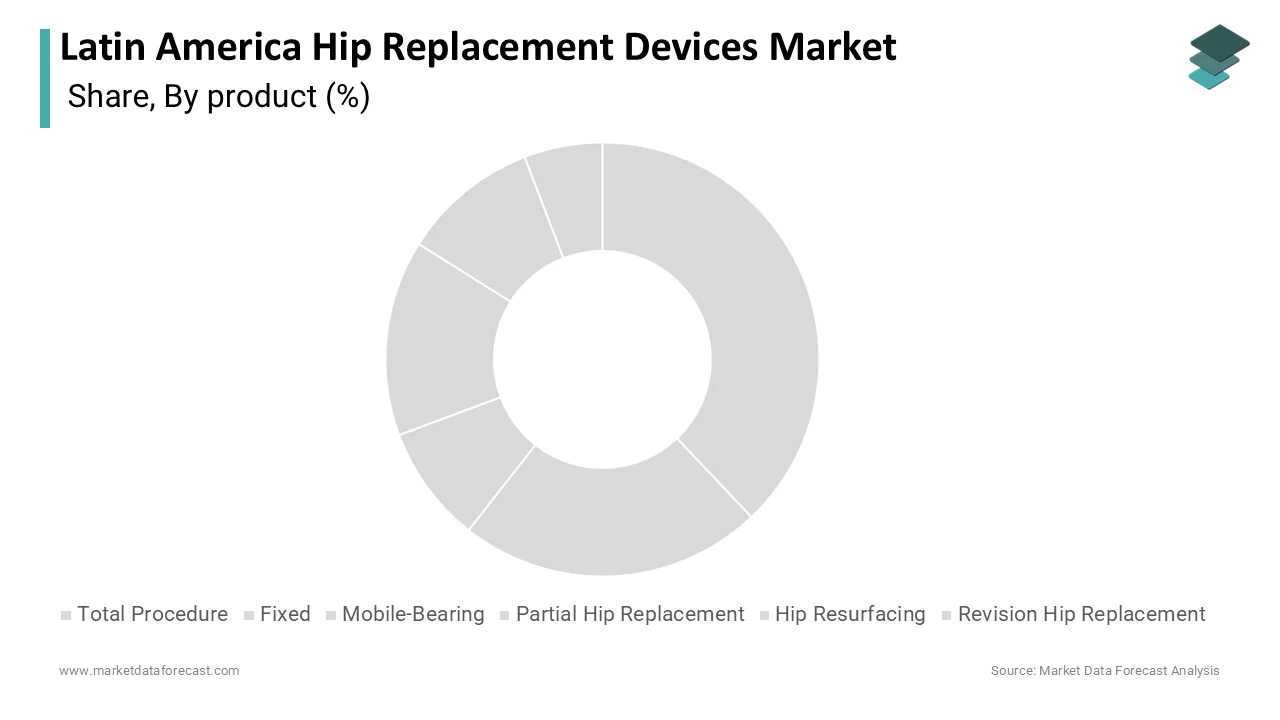
The revision hip replacement segment is predicted to witness the highest CAGR of 9.2% during the forecast period owing to the increasing volume of primary surgeries performed in previous decades and the subsequent wear of those implants. As the cohort of patients who received hip replacements in the early 2000s ages, the need for secondary interventions due to aseptic loosening, infection,n or dislocation rises significantly. As per Orthopaedic Reviews, evaluating the precise long-term revision rate remains the definitive performance index for analysing structural component durability in total joint arthroplasty. The improvement in diagnostic imaging technologies in countries like Chile and Argentina allows for earlier detection of implant failure, prompting timely revision procedures. Surgeons are increasingly trained in specialised revision techniques requiring advanced modular implants and augments, which command higher prices. The lack of standardised follow-up protocols in public systems often leads to late presentations requiring more extensive revisions. Additionally, the rise in obesity rates contributes to premature implant wear, accelerating the need for replacement. This cumulative effect of past surgical volumes and improving access to complex care drives the rapid expansion of the revision segment.
By Material Insights
The metal-on-polyethylene bearings segment led the Latin America hip replacement devices market and captured a significant share in 2025. Cost-effectiveness and a proven long-term clinical track record drove the segment. This material combination offers a balance of durability and affordability, which is crucial for price-sensitive public healthcare systems and out-of-pocket payers prevalent in the region. According to the Revista da Associação Médica Brasileira, long-term clinical evaluation of total hip arthroplasties directly measures linear wear rates and revision outcomes to compare the performance of metal-on-polyethylene designs against alternative bearing surfaces. The technical maturity of highly cross-linked polyethene has significantly reduced wear rates, making this bearing surface reliable for a broad patient demographic, including older adults with lower activity levels. As per the Revista Brasileira de Ortopedia, ten-year Kaplan-Meier survival curves for cementless total hip replacements verify high implant structural integrity for metal-on-polyethene, ceramic-on-ceramic, and metal-on-metal designs. Reimbursement policies in many Latin American countries favour standard implants, limiting the uptake of premium materials unless justified by specific clinical indications. The robust supply chain for metal and polyethene components ensures consistent availability even in remote areas where logistics are challenging. Furthermore, the lower risk of intraoperative fracture associated with ceramic liners makes metal on polyethene a safer option for surgeons with varying levels of expertise. This economic and practical alignment ensures metal on polyethene remains the workhorse of hip arthroplasty in Latin America.
The ceramic-on-ceramic bearings segment is estimated to register the fastest CAGR of 8.5% from 2026 to 2034 due to increasing demand for durable, low-wear solutions among younger and more active patients. As life expectancy increases in Latin America, patients are seeking implants that can withstand higher activity levels without generating wear debris that causes osteolysis. According to PubMed Central, structural changes in public and private healthcare access continue to redefine clinical volumes and patient demographics for complex orthopaedic interventions across regional Chilean medical facilities. Advances in fourth-generation alumina matrix composites have mitigated historical concerns about brittleness and squeaking, enhancing surgeon confidence. The superior biocompatibility of ceramic reduces inflammatory responses, making it ideal for patients with metal sensitivities. Marketing efforts by major manufacturers emphasise the longevity benefits, appealing to value-conscious consumers willing to pay upfront for reduced revision risk. As training programs disseminate best practices for ceramic implantation, the barrier to entry lowers. This shift towards premium materials in the private sector and among affluent demographics propels the rapid growth of ceramic-on-ceramic bearings.
By End-User Insights
In 2025, the hospitals segment held the majority share in the Latin America hip replacement devices market because of its capacity to handle complex surgical procedures requiring multidisciplinary support and intensive care units. Most hip replacements, especially in the public sector, are performed in large general or specialised orthopaedic hospitals that possess the necessary infrastructure for anaesthesia, sterilisation, and postoperative monitoring. According to the World Health Organisation, the absolute global volume of major joint reconstructions continues to rise rapidly as ageing demographics expand the programmatic footprint of centralised hospital-based surgeries. Public hospitals in countries like Colombia and Peru serve as the primary access point for the majority of the population relying on government-funded procurement programs. As per the Pan American Health Organisation, long-term physical impairments caused by chronic musculoskeletal conditions stand as a dominant driver of regional therapeutic and surgical hospital service requirements. Hospitals also benefit from economies of scale, allowing them to negotiate better pricing with device manufacturers through bulk purchasing agreements. The ability to manage comorbidities common in elderly patients such as diabetes and hypertension makes hospitals the safest setting for arthroplasty. Accreditation standards like Joint Commission International are predominantly held by hospitals, enhancing trust among medical tourists. This structural dominance ensures hospitals remain the primary channel for device distribution and surgical volume.
The ambulatory surgical centres segment is anticipated to witness the fastest CAGR of 7.8% over the forecast period. This rapid growth of the segment is propelled by the shift towards minimally invasive techniques and cost containment strategies in the private healthcare sector. These facilities offer same-day discharge capabilities, which reduce hospital-acquired infection risks and lower overall procedure costs, appealing to private insurers and self-paying patients. According to research, ambulatory surgery centres across regional markets such as Mexico are registering steady growth due to escalating demand for minimally invasive interventions. Advances in spinal anaesthesia and pain management protocols enable safe early mobilisation, making hip replacement feasible in an outpatient setting for selected healthy patients. The convenience of shorter stays and personalised care attracts middle-class patients who value time efficiency. Device manufacturers are supporting this trend by providing specialised instruments and training for minimally invasive approaches suited for ambulatory settings. Regulatory frameworks in countries like Chile are adapting to recognise and reimburse outpatient joint replacement, further accelerating adoption. This operational efficiency and patient preference drive the rapid expansion of ambulatory surgical centres in the hip replacement market.
COUNTRY LEVEL ANALYSIS
Brazil Hip Replacement Devices Market Analysis
Brazil was the top performer in the Latin America hip replacement devices market and occupied a commanding share in 2025. This supremacy of the segment was propelled by a dual system of extensive public healthcare and a robust private insurance sector. The country’s ageing population and high prevalence of obesity drive significant demand for joint reconstruction procedures. According to the public health system (SUS), national hip arthroplasty rates in Brazil expanded from 1.85 to 28.23 per 100,000 inhabitants between 2014 and 2024, driving surgical volumes upward despite notable regional disparities. As per the National Supplementary Health Agency (ANS), the total number of private health insurance ties within Brazil's medical-hospital framework scaled up to surpass 53 million active beneficiaries. According to the Brazilian Institute of Geography and Statistics, the proportion of elderly citizens aged 60 and over within the national population escalated from 8.7% to 15.6% between 2000 and 2023. Local manufacturing incentives under the Prodemed program encourage domestic production of certain orthopaedic components, reducing import dependency. Major multinational companies maintain strong distribution networks in São Paulo and Rio de Janeiro, ensuring wide product availability. The presence of renowned orthopaedic training centres fosters adoption of advanced surgical techniques. Government initiatives to upgrade hospital infrastructure in rural areas aim to decentralise care. This combination of scale, demographic pressure and mixed payer dynamics positions Brazil as the central pillar of the regional market.
Mexico Hip Replacement Devices Market Analysis
Mexico occupies a significant position in the Latin America hip replacement devices market, fuelled by its proximity to the United States and a thriving medical tourism industry. The country has invested heavily in accredited hospitals in cities like Tijuana, Cancun, and Mexico City that cater to international patients seeking affordable, high-quality joint replacement surgery. According to the Mexican Social Security Institute, public hospital networks scaled up active medical care volumes during 2025 but continued to face infrastructure deficits relative to overall institutional coverage targets. The private sector benefits from cross-border patients who contribute to higher utilisation of advanced devices. As per the National Institute of Statistics and Geography, the total domestic health sector value increased its economic footprint to comprise 5.2% of Mexico's gross domestic product in 2024. According to the National Institute of Statistics and Geography, private medical establishment statistics track cross-border clinical demand for specialised surgical treatments and inpatient morbidity services across Mexican municipalities. The harmonisation of regulatory standards with international norms facilitates the introduction of new technologies. Local distributors collaborate closely with US-based manufacturers, ensuring supply chain efficiency. The growing middle class is increasingly investing in private health insurance, expanding the addressable market. This unique blend of domestic social security coverage and international medical tourism sustains Mexico’s strong market presence.
Argentina Hip Replacement Devices Market Analysis
Argentina is a mature player in the Latin America hip replacement devices market due to a highly educated medical workforce and established orthopaedic traditions. Despite economic volatility, the country maintains high standards of clinical care with surgeons widely recognised for their expertise in complex joint reconstruction. According to the International Trade Administration, Argentina's complex healthcare landscape operates across fragmented public, private, and social security networks, concentrating high-volume surgical technologies within prominent urban provinces. The private prepaid medicine system covers a significant portion of the population, allowing access to imported premium devices. As per official notices from the National Administration of Drugs, Food and Medical Technology (ANMAT), a sweeping regulatory reform framework introduced between 2025 and 2026 establishes a modernised paradigm for registering, distributing, and monitoring commercial medical devices. Economic challenges have led to increased local assembly of certain orthopaedic products to mitigate currency fluctuations. The cultural emphasis on maintaining mobility and active lifestyles among the elderly drives demand for joint preservation and replacement. Professional societies actively participate in global conferences, keeping practitioners updated on the latest innovations. This resilience and clinical excellence ensure Argentina remains a key contributor to regional device consumption despite macroeconomic headwinds.
Chile Hip Replacement Devices Market Analysis
Chile holds a prominent position in the Latin America hip replacement devices market owing to its stable regulatory environment and high per capita healthcare spending. The country’s mixed healthcare system combines public FONASA coverage with private ISAPRE plans, enabling broad access to orthopaedic services. According to Medwave, orthopaedics and traumatology account for a high volume of pending procedures within the Chilean public health system, with total knee arthroplasty representing the most frequently delayed surgery on institutional waiting lists. The country boasts one of the highest densities of orthopaedic surgeons per capita in the region, facilitating higher procedural volumes. As per the Global Burden of Disease dataset, osteoarthritis cases generate a substantial national healthcare burden in Chile, where knee osteoarthritis and hip osteoarthritis represent leading drivers of years lived with disability (YLD). The regulatory agency ISP ensures rapid approval of CE-marked and FDA-approved devices, accelerating technology adoption. Private insurers often cover advanced bearing surfaces, encouraging the use of ceramic and dual mobility implants. The compact geography allows for efficient distribution logistics reaching remote southern regions. Government programs targeting elderly care include provisions for joint replacement, enhancing accessibility. This structural stability and commitment to quality care position Chile as a leader in market sophistication and device utilisation.
COMPETITIVE LANDSCAPE
The competitive landscape of the Latin America hip replacement devices market is characterized by intense rivalry between global multinational corporations and emerging local manufacturers vying for dominance in both public and private sectors. Established players leverage their technological superiority,y brand reputation, and extensive distribution networks to capture premium segments in private hospitals and medical tourism facilities. Local competitors often compete on price, targeting public tenders and budget-constrained institutions with cost-effective generic implants. Competition extends beyond product features to include after-sales support, surgeon training, and financing options,s which are critical for market penetration in resource-limited settings. Regulatory heterogeneity across countries creates barriers to entry, favoring companies with robust compliance capabilities and local presence. Strategic alliances with regional distributors enhance market reach and logistical efficiency. Price sensitivity remains a key factor influencing procurement decisions, particularly in public healthcare systems. Innovation in materials and surgical robotics differentiates leaders while smaller players focus on niche applications. The dynamic interplay of economic volatility, demographic shifts, and healthcare reforms shapes competitive strategies requiring agility and localized approaches to sustain growth and profitability in this diverse regional market.
KEY MARKET PLAYERS
Some of the companies that are playing a dominant role in the Latin America Hip Replacement Devices Market include:
- B. Braun Melsungen AG
- Exactech, Inc.
- DJO Global, Inc.
- Johnson & Johnson
- MicroPort Scientific Corporation
- OMNIlife Science, Inc.
- Smith & Nephew plc
- Zimmer Biomet Holdings, Inc.
- Stryker Corporation
TOP LEADING PLAYERS IN THE MARKET
- Zimmer Biomet maintains a robust presence in the Latin America hip replacement devices market through its comprehensive portfolio of primary and revision systems tailored for diverse patient anatomies. The company actively supports regional surgeons via extensive training programs at its international education centers focusing on minimally invasive techniques and robotic-assisted surgery. Recently, Zimmer Biomet expanded its distribution network in Brazil and Mexico to enhance product availability and reduce lead times for critical implants. They collaborate with local healthcare providers to implement value-based care models that emphasize long-term patient outcomes and cost efficiency. Their commitment to innovation is evident in the launch of advanced bearing surfaces designed to reduce wear and extend implant longevity. This strategic focus on education and supply chain optimization strengthens their reputation as a trusted partner for orthopedic excellence across the region.
- Stryker Corporation serves as a key innovator in the Latin American hip replacement devices market by introducing advanced technologies such as the Mako robotic arm assisted surgery system. The company leverages its strong brand recognition to penetrate private hospital networks in Chile, Argentina, i India, and Colombia,mbia where precision and rapid recovery are highly valued. Stryker recently invested in local regulatory affairs teams to accelerate the approval process for new hip implant designs and surgical instruments. They partner with leading orthopedic associations to sponsor clinical research and surgeon fellowships that promote best practices in joint reconstruction. Their integrated approach combines high-quality implants with digital solutions for preoperative planning and postoperative monitoring. This holistic strategy enhances clinical confidence and drives adoption of premium devices among elite surgical communities throughout Latin America.
- Johnson & Johnson, through its DePuy Synthes division, holds a significant position in the Latin American hip replacement devices market, offering a wide range of cemented and uncemented hip systems. The company focuses on building long-term relationships with public health institutions by participating in government tenders and providing reliable supply chains for essential orthopedic needs. Recently, Johnson & Johnson launched initiatives to improve access to care in underserved regions by partnering withnon-governmentall organizations to support trauma and elective surgery programs. They emphasize sustainability in manufacturing and packaging, aligning with global corporate responsibility goals. Their extensive product portfolio allows customization for complex cases,s including revisions and tumor reconstructions. This combination of broad accessibility, clinical versatility,y and social impact initiatives reinforces their leadership and deepens market penetration across diverse healthcare settings in Latin America.
TOP STRATEGIES USED BY KEY MARKET PARTICIPANTS
Key players in the Latin America hip replacement devices market prioritize strategic partnerships with local distributors and healthcare providers to navigate complex regulatory landscapes and ensure efficient product distribution. Companies invest heavily in surgeon education and training programs to build brand loyalty and promote the adoption of advanced surgical techniques such as robotic assistance. Expansion into medical tourism hubs allows manufacturers to target international patients seeking high-quality, affordable care, thereby bypassing domestic reimbursement limitations. Product localization strategies involve adapting implant designs to suit regional anatomical variations and economic constraints, ensuring broader market acceptance. Digital health integration offers remote monitoring and preoperative planning tools that enhance value propositions for private hospitals. Compliance with stringent regulatory requirements in major markets like Brazil and Mexico remains central to maintaining market access. These strategies collectively enable participants to overcome infrastructure challenges and capitalize on growing demand for orthopedic solutions in the region.
MARKET SEGMENTATION
This research report on the Latin America hip replacement devices market has been segmented and sub-segmented into the following categories:
By product
- Total Procedure
- Fixed
- Mobile-Bearing
- Partial Hip Replacement
- Hip Resurfacing
- Revision Hip Replacement
By Material
- Metal
- Metal on Polyethylene
- Ceramic on Metal
- Ceramic on Polyethylene
- Ceramic on Ceramic
By End-user
- Ambulatory Surgical Centres
- Hospitals
- Orthopedic Clinics
By Country
- Brazil
- Argentina
- Chile
- Mexico
- Rest of Latin America