- Product Description Description
- Table of Contents TOC
- List of Table & Figure LOT
- Get Free Sample PDF Sample PDF
Market Size, 2025
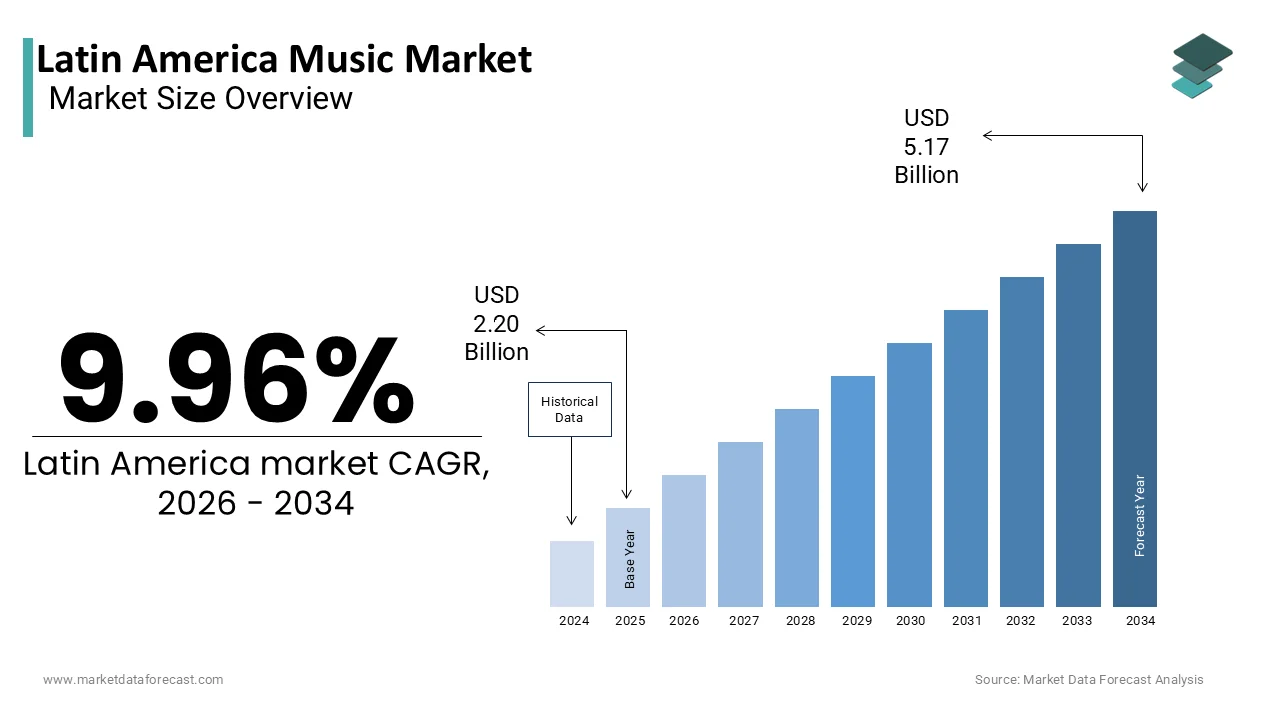
$2.20 BnMarket Estimate, 2026
$2.42 BnMarket Forecast, 2034
$5.17 BnCAGR, 2026–2034
9.96%Latin America Music Market Report: Size, Share, Trends & Forecast (2026–2034)
- Market Scope: Comprehensive regional industry assessment covering digital vs. entity music formats, live performance applications (concerts, albums), and key country-level markets including Brazil, Mexico, Argentina, and Chile.
- Market Valuation: Valued at USD 2.20 billion to USD 2.42 billion in 2025, estimated at USD 2.42 billion in 2026, and projected to reach USD 5.17 billion by 2034, registering a compound annual growth rate (CAGR) of 9.96% from 2026 to 2034.
- Primary Growth Drivers: Proliferation of digital streaming platforms with hyper-localized content, a tech-savvy youth demographic with deep cultural affinities for music, and the rapid post-pandemic resurgence of live concerts and music festivals.
Latin America Music Market Segment Metrics (2026–2034)
| Category | Leading Segment / Position | Fastest-Growing Segment |
|---|---|---|
| By Type | Digital Music (holds a substantial revenue share driven by on-demand streaming and high mobile data penetration) | Entity Music (experiencing a strong resurgence via live performance tours, vinyl collectibles, and merchandise sales) |
| By Application | Concerts (commanded an estimated 62% market share in 2025 fueled by major stadium tours and regional music festivals) | Album Application (growing at a fast CAGR of 11.2% driven by cohesive digital album releases and collector editions) |
| By Country | Brazil (leads the regional landscape with a 34.5% share backed by a massive population, streaming adoption, and cultural exports) | Mexico & Argentina (expanding rapidly supported by thriving live event sectors and a strong appetite for Latin pop/reggaeton) |
Major Latin America Music Market Players & Industry Structure
Market Structure: A dynamic and culturally vibrant market dominated by major global music conglomerates alongside specialized regional entities, focusing on localized talent acquisition, digital platform partnerships, and live entertainment integrations.
Key Companies: Universal Music Group, Warner Music Group, Sony Music Entertainment, CUBE Entertainment, YG Entertainment, Huayi Brothers Media Group, Pledis Entertainment, HIM International Music Inc., Emperor Entertainment Group Limited, S.M. Entertainment, and EE-Media.
Latin America Music Market Size
The size of the Latin America music market was worth USD 2.20 billion in 2025. The regional market is anticipated to grow at a CAGR of 9.96% from 2026 to 2034 and be worth USD 5.17 billion by 2034 from USD 2.42 billion in 2025.
Latin America has long been a cultural hotspot for music, with genres like reggaeton, samba, cumbia, salsa, and regional Latin pop gaining global recognition. The market has seen a transformation in recent years due to the proliferation of digital platforms and increasing internet penetration, especially among younger demographics. According to the International Federation of the Phonographic Industry (IFPI), music streaming in Latin America grew by over 25% in 2022, outpacing the global average. Countries like Brazil, Mexico, and Colombia have emerged as key growth engines, driven by a vibrant youth population and a strong affinity for music consumption through platforms like Spotify, YouTube, and local services.
MARKET DRIVERS
Rising Popularity of Digital Streaming Platforms
Rapid adoption of digital streaming platforms, which have revolutionized how consumers access and engage with music, is one of the primary drivers of the Latin American music market. Services such as Spotify, Apple Music, Deezer, and YouTube Music have expanded their presence in the region, offering localized content and tailored playlists that resonate with Latin American audiences. According to the International Federation of the Phonographic Industry (IFPI), Latin America recorded the fastest growth in music streaming consumption in 2022, with a year-on-year increase of over 25%, significantly higher than the global average. The appeal of on-demand access to vast music libraries, coupled with the rise of curated playlists and algorithm-driven recommendations, has significantly boosted streaming adoption across the region, making it a key growth engine for the LatinAmericana music market.
Youth Demographics and Cultural Affinity for Music
The region’s young and music-loving population, which fuels demand for both local and international music content, is another significant driver of the LatiAmericanca music market. This youthful population is highly engaged with digital media and music consumption, particularly through social media platforms like TikTok, Instagram, and YouTube, which play a crucial role in music discovery and virality. In Brazil, as per the National Union of Phonographic Producers (UNIVERSOMUSICA), 90% of music listeners under 25 years old consume music primarily through digital platforms, indicating a strong generational shift toward digital engagement. In Argentina, the Argentine Chamber of Phonograms and Videograms (CAPIF) observed that reggaeton and Latin pop dominated music charts in 2023, reflecting a growing preference for Spanish and Portuguese-language content. Additionally, the popularity of live concerts, festivals, and artist meet-and-greets continues to rise, especially among younger audiences eager to connect with their favorite musicians. This deep-rooted cultural affinity for music, combined with a tech-savvy youth base, is a powerful catalyst for the continued expansion of the LatAmericanica music market.
MARKET RESTRAINTS
Piracy and Unauthorized Music Distribution
The persistent issue of music piracy and unauthorized distribution, which undermines revenue generation for artists and record labels, is a major restraint affecting the LaAmericanrica music market. Despite the growth of legal streaming platforms, many consumers continue to access music through illegal downloads, peer-to-peer file sharing, and unlicensed streaming sites. According to the International Federation of the Phonographic Industry (IFPI), over 40% of Latin American internet users accessed music through unauthorized sources in 2022, significantly impacting the formal music industry’s ability to monetize content. In countries like Peru and Bolivia, where enforcement of digital copyright laws remains weak, piracy continues to be a widespread challenge. As per the Mexican Association of Phonogram Producers (AMPROFON), illegal streaming sites accounted for nearly 30% of all music consumption in Mexico in 2023, despite the availability of licensed alternatives. Additionally, in Brazil, where mobile internet usage is high but income disparities persist, many users opt for pirated content due to cost constraints. While government agencies and industry stakeholders have launched anti-piracy campaigns, enforcement remains inconsistent, limiting the effectiveness of these efforts.
Limited Monetization Opportunities for Independent Artists
The limited monetization opportunities available to independent and emerging artists, particularly those outside major urban centers, are another significant challenge restraining the American music market. While global streaming platforms have democratized music distribution, many local musicians struggle to generate substantial income due to low royalty payouts, a lack of marketing support, and limited access to professional production resources. According to a 2023 report by the Latin Grammy Cultural Foundation, over 60% of independent artists in Latin America earn less than USD 5,000 annually from digital streaming, making it difficult to sustain a full-time music career. Additionally, in rural areas of Brazil and Central America, many musicians rely on live performances and physical sales, which have been disrupted by economic instability and shifting consumer habits.
MARKET OPPORTUNITIES
Expansion of Social Media and Short-Form Video Platforms
The expanding influence of social media and short-form video platforms such as TikTok, Instagram Reels, and YouTube Shorts, which have become powerful drivers of music discovery and virality, is a major opportunity for the Latin America music market. These platforms enable artists to reach global audiences organically, bypassing traditional gatekeepers like radio and record labels. According to a 2023 report by Meta, over 70% of music trends in Latin America originate from Instagram Reels and TikTok, with viral challenges and dance routines significantly boosting song popularity. Additionally, platforms like YouTube Shorts have enabled independent musicians to gain traction without major label backing, fostering a more inclusive and diverse music ecosystem.
Growth of Live Music and Festival Culture
The rapid growth of live music events, concerts, and music festivals, which have become key revenue drivers and audience engagement platforms for artists, is another significant opportunity for the Latin America music market. The region has seen a resurgence in large-scale music gatherings following the easing of pandemic restrictions, with cities like São Paulo, Mexico City, Bogotá, and Buenos Aires hosting major international and regional festivals. According to the International Live Music Conference (ILMC), Latin America witnessed a 40% increase in live music events in 2023 compared to the previous year, signaling a strong recovery and growing consumer demand. Additionally, in Colombia, the Estéreo Picnic festival expanded its lineup to include more local and indie artists, reinforcing the growing influence of regional talent.
MARKET CHALLENGES
Regulatory and Licensing Complexities Across Countries
The fragmented regulatory and licensing landscape across different countries, which complicates rights management and revenue distribution for artists and labels, is one of the foremost challenges facing the Latin America music market. Each nation has its own set of copyright laws, royalty collection agencies, and broadcasting regulations, making it difficult to establish a unified framework for digital music licensing and performance rights. In Brazil, the National Council of Rights Collecting Societies (CNCD) has struggled to enforce uniform royalty rates across streaming platforms, while in Argentina, the Argentine Society of Composers (SADAIC) has faced legal disputes over digital licensing fees. Additionally, in smaller markets such as Ecuador and Paraguay, the lack of robust intellectual property enforcement mechanisms has resulted in widespread unauthorized use of music content. While some regional bodies have attempted to harmonize regulations, progress remains slow due to differing national policies and bureaucratic inefficiencies.
Economic Instability and Its Impact on Consumer Spending
The region’s ongoing economic instability, which affects consumer spending power and limits investment in music consumption, is a critical challenge impeding the Latin America music market. Many Latin American countries face high inflation rates, currency devaluation, and fluctuating disposable incomes, making it difficult for consumers to consistently invest in paid music services or live events. According to the World Bank, in 2023, inflation in Argentina exceeded 100%, while Venezuela continued to experience hyperinflation, severely restricting consumer purchasing capacity. Additionally, in countries like Colombia and Peru, where informal economies play a significant role, many consumers opt for free or pirated music sources rather than paying for legal alternatives.
REPORT COVERAGE
| REPORT METRIC | DETAILS |
| Market Size Available | 2025 to 2034 |
| Base Year | 2025 |
| Forecast Period | 2026 to 2034 |
| Segments Covered | By Type, Application, and Region. |
| Various Analyses Covered | Global, Regional, and Country-Level Analysis, Segment-Level Analysis, Drivers, Restraints, Opportunities, Challenges; PESTLE Analysis; Porter’s Five Forces Analysis, Competitive Landscape, Analyst Overview of Investment Opportunities |
| Countries Covered | Brazil, Mexico, Argentina, Chile, Rest of Latin America |
| Market Leaders Profiled | CUBE Entertainment (South Korea), YG Entertainment (South Korea), Huayi Brothers Media Group (China), EMI (United Kingdom/United States), Universal Records (United States), Sony Music Entertainment (United States), Pledis Entertainment (South Korea), HIM International Music Inc. (Taiwan), Emperor Entertainment Group Limited (Hong Kong), S.M. Entertainment (South Korea), Warner Music Group (United States), and EE-Media, |
SEGMENTAL ANALYSIS
By Type Insights
The Digital Music segment holds a substantial share in 2025. The widespread adoption of online streaming platforms and changing consumer preferences toward on-demand access are driving the digital music segment ahead. The proliferation of smartphones, increasing internet penetration, and affordability of mobile data have collectively accelerated the shift from physical music formats to digital consumption. According to the International Federation of the Phonographic Industry (IFPI), Latin America recorded a 26% year-on-year increase in digital music consumption in 2022, outpacing global growth trends. Additionally, local artists are leveraging social media and short-form video platforms like TikTok to reach audiences organically, further strengthening the digital music ecosystem.
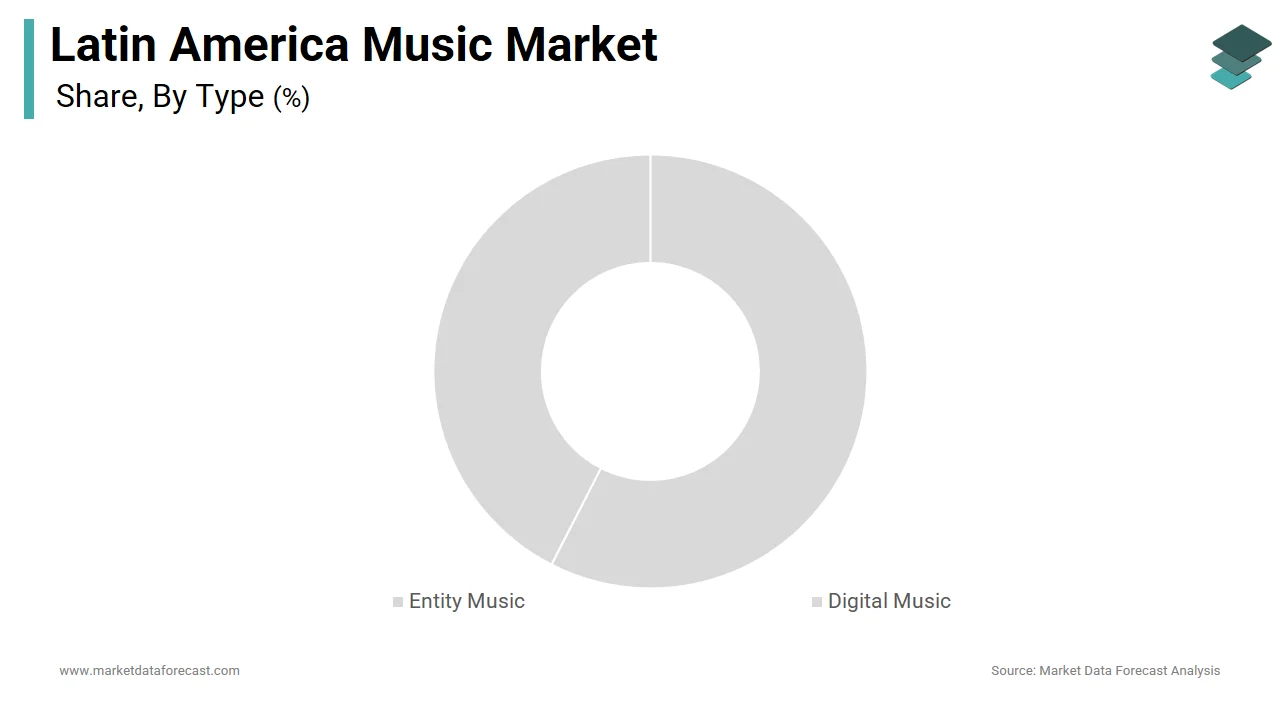
The Entity Music segment is emerging as the fastest-growing and is projected to expand at a CAGR of 9.4% between 2025 and 2033. This growth is primarily attributed to a Resurgence in live performances, concert attendance, and merchandise sales following the easing of pandemic-related restrictions is propelling the growth of the entity music segment. According to the International Live Music Conference (ILMC), live music events in Latin America increased by nearly 40% in 2023 compared to the previous year, with major festivals drawing large crowds in Brazil, Mexico, and Argentina. Additionally, limited edition vinyl records and exclusive artist merchandise have gained popularity among collectors and dedicated fans, contributing to a revival of physical music formats. In Chile, specialty record stores pointed out a 15% rise in vinyl purchases in 2023, particularly among younger consumers seeking tangible connections to their favorite artists.
By Application Insights
The Concerts segment dominated the Latin America music market by accounting for an estimated share of 62% in 2025. A vibrant live music culture and increasing investment in event infrastructure contributed to the rise of the concerts segment. Latin America has long been known for its enthusiastic audience base, with cities like São Paulo, Mexico City, Buenos Aires, and Bogotá hosting numerous international and regional concerts throughout the year. According to the International Live Music Conference (ILMC), Latin America saw a 35% rebound in live music attendance in 2023 compared to 2022, with major tours generating substantial revenue across the region. In Brazil, the São Paulo Trip Festival and Lollapalooza Brazil attracted over 300,000 attendees combined, demonstrating the country’s strong appetite for live performances. Additionally, Argentina’s Buenos Aires Jazz Festival and Chile’s Lollapalooza Santiago have expanded their lineups to include more local talent, further boosting domestic engagement.
The Album application segment is the fastest-growing in the Latin America music market and is anticipated to expand at a CAGR of 11.2% from 2025 to 2033. Renewed interest in full-length musical projects and digital album releases is largely fuelling the growth of the Album application segment. While singles continue to dominate streaming charts, there is a growing trend among both artists and listeners to appreciate cohesive artistic narratives offered by albums. Also, album streams in Latin America grew by 18% in 2023, with genres like reggaeton, Latin pop, and regional folk music leading the way. Additionally, special edition digital and vinyl albums have seen increased traction among collectors and dedicated music enthusiasts.
COUNTRY-WISE ANALYSIS
Brazil Music Market Insights
Brazil commanded the largest share at 34.5% in the Latin America music industry, which is driven by its vast population, rich musical heritage, and strong digital music adoption. The country is home to diverse genres such as samba, funk carioca, MPB (Música Popular Brasileira), and Brazilian pop, which continue to gain traction both domestically and internationally. Additionally, as per Spotify, Brazil ranked among the top five countries globally in terms of playlist creation and sharing, highlighting a deeply engaged listener base. Government initiatives promoting cultural exports, coupled with rising investments in music technology startups, have further strengthened Brazil’s position as the dominant force in the regional music landscape.
Mexico Music Market Insights
Mexico holds a significant share of the Latin America music industry and is propelled by a thriving live music scene, increasing digital platform usage, and a strong presence of regional Latin pop and reggaeton artists. Additionally, the country hosted major music festivals such as Corona Capital and Pepsi Music Festival, which saw record-breaking ticket sales and international artist participation.
Argentina Music Market Insights
Argentina is another key player in the Latin America music market, which is supported by a deep-rooted cultural appreciation for music and increasing digital consumption. Buenos Aires remains a cultural hotspot, hosting major concerts and festivals that attract both local and international audiences.
Chile Music Market Insights
Chile holds a notable share of the Latin America music market, benefiting from a well-developed digital infrastructure and a growing live music sector. Also, digital music consumption in Chile increased in 2023, with streaming platforms becoming the primary source of revenue for artists and labels. The country’s stable internet connectivity and high smartphone penetration have contributed to the rapid adoption of services like Spotify, YouTube Music, and Deezer. Additionally, the Chilean government has actively supported music export initiatives, enabling local artists to gain international exposure.
Rest of Latin America Music Market Insights
The Rest of Latin America, including Colombia, Peru, Ecuador, Central America, and the Caribbean, collectively holds a descent share, indicating strong growth potential due to increasing digital music adoption and vibrant live performance scenes. Live music is also gaining traction, with festivals like Estéreo Picnic in Colombia and Viña del Mar in Chile drawing large audiences. Additionally, in Central America, countries like Costa Rica and Panama are witnessing early-stage growth in digital music consumption, supported by expanding mobile internet access.
KEY MARKET PLAYERS
Noteworthy Companies dominating the Latin America music market profiled in the report are
- CUBE Entertainment
- YG Entertainment
- Huayi Brothers Media Group
- EMI
- Universal Records
- Sony Music Entertainment
- Pledis Entertainment
- HIM International Music Inc.
- Emperor Entertainment Group Limited
- S.M. Entertainment
- Warner Music Group
- EE-Media
TOP LEADING PLAYERS IN THE MARKET
Universal Music Group (UMG) is a dominant force in the Latin America music market, leveraging its vast artist roster and distribution network to shape the region’s evolving music landscape. The company has strategically invested in local Latin and Spanish-language talent, strengthening its presence across Brazil, Mexico, Colombia, and Argentina. UMG’s partnerships with digital platforms and streaming services have enabled deeper market penetration, ensuring broad access to regional content globally.
Warner Music Group (WMG) plays a crucial role in advancing Latin American music on the global stage by signing top-tier artists from the region and supporting independent creators through localized initiatives. WMG has been instrumental in integrating Latin genres into mainstream international playlists, helping reggaeton, Latin pop, and regional folk gain global traction through strategic marketing and digital collaborations.
Sony Music Entertainment maintains a strong foothold in Latin America by fostering relationships with emerging and established artists, particularly in urban and tropical music genres. With a deep understanding of cultural trends, Sony Music has expanded its influence through live event sponsorships, digital rights management, and co-publishing deals that enhance revenue streams for both artists and the company across the region.
TOP STRATEGIES USED BY KEY MARKET PARTICIPANTS
A key strategy adopted by leading players in the Latin America music market is localization and artist development, where companies invest in nurturing regional talent and producing culturally relevant content. This includes signing emerging artists, funding local production studios, and tailoring marketing strategies to resonate with specific country audiences.
Another major approach is strategic partnerships with digital platforms, including Spotify, YouTube, and Apple Music, to ensure greater visibility and accessibility of Latin music content. These collaborations often involve playlist curation, exclusive releases, and algorithm-driven recommendations that help boost regional artists' exposure on a global scale.
Lastly, companies are increasingly focusing on live event integration and brand monetization, where they collaborate with concert promoters, festivals, and sponsorship agencies to expand revenue beyond recorded music. By aligning with high-profile live performances and branded experiences, key players strengthen their market position while offering fans immersive engagement opportunities.
COMPETITION OVERVIEW
The competition in the Latin America music market is marked by a dynamic interplay between global record labels, independent music companies, and digital platforms vying for dominance in an increasingly digitized and culturally rich environment. While Universal Music Group, Warner Music Group, and Sony Music continue to lead through extensive artist rosters and strategic acquisitions, independent labels and local distributors are gaining traction by focusing on niche genres and grassroots artist development. Streaming services such as Spotify, Deezer, and YouTube Music further intensify competition by directly engaging with artists and leveraging data analytics to tailor content to regional preferences. Additionally, social media platforms like TikTok and Instagram Reels have emerged as powerful tools for music discovery, challenging traditional industry gatekeepers and enabling organic virality. As consumer behavior shifts toward digital consumption and live experiences, market participants must continuously innovate through licensing models, direct-to-fan engagement, and cross-industry collaborations to maintain relevance and capture growing audience segments across diverse musical landscapes in Latin America.
RECENT MARKET DEVELOPMENTS
- In February 2023, Universal Music Group launched a dedicated Latin music division in Mexico City, aiming to accelerate artist development and enhance regional content distribution tailored specifically to Mexican and Central American audiences.
- In June 2023, Warner Music Group signed a strategic partnership with a leading Brazilian live entertainment agency to integrate music releases with concert tours, enhancing fan engagement and expanding monetization avenues beyond streaming.
- In October 2023, Sony Music Entertainment acquired a stake in a Colombian digital marketing firm specializing in social media promotion for Latin artists, strengthening its ability to drive viral success and global reach for new talent.
- In March 2025, a major global streaming platform entered into an exclusive licensing agreement with several Latin American independent labels to offer region-specific playlists and original content, reinforcing its dominance in local music consumption.
- In September 2025, a European-based music publishing house expanded its operations into Chile by forming a joint venture with a local artist management firm, focusing on sync licensing and placement of Latin music in international film and television projects.
MARKET SEGMENTATION
This Latin America music market research report is segmented and sub-segmented into the following categories.
By Type
- Entity Music
- Digital Music
By Application
- Concerts
- Album
- Others
By Country
- Brazil
- Mexico
- Argentina
- Chile
- Rest of Latin America