- Product Description Description
- Table of Contents TOC
- List of Table & Figure LOT
- Get Free Sample PDF Sample PDF
Market Size, 2025
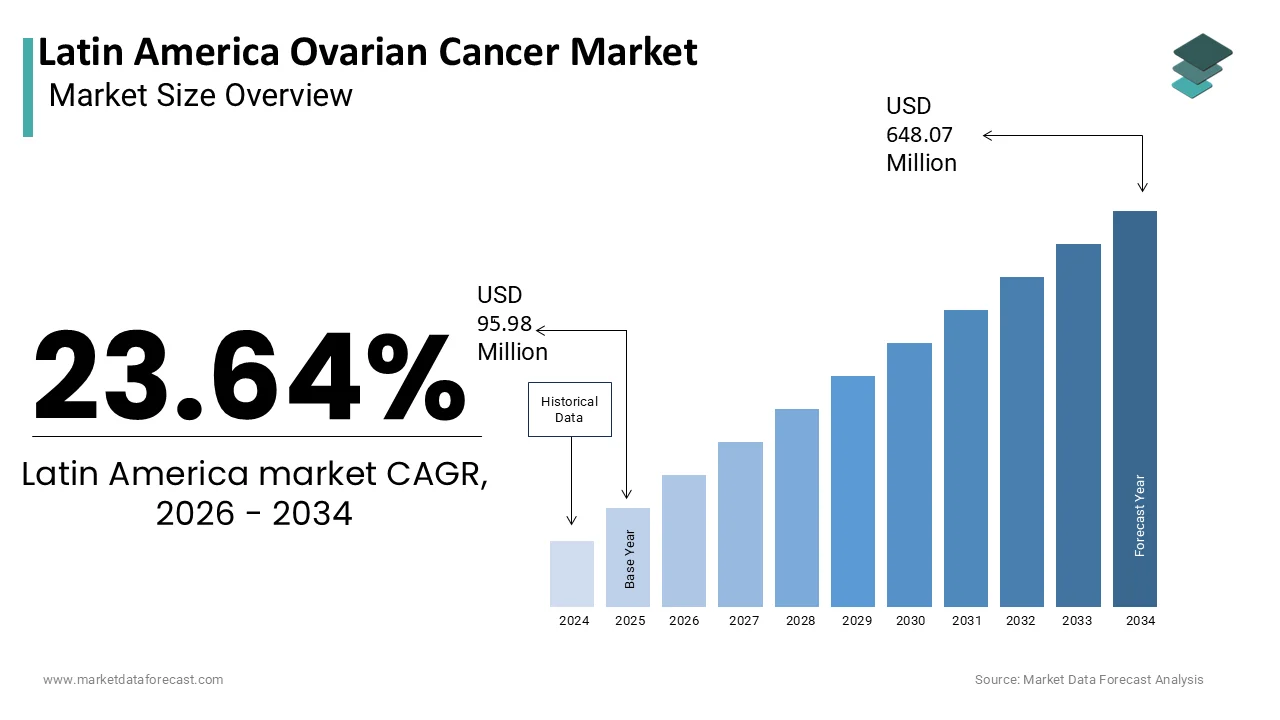
$95.98 MnMarket Estimate, 2026
$118.67 MnMarket Forecast, 2034
$648.07 MnCAGR, 2026–2034
23.64%Executive Summary: Latin America Ovarian Cancer Market
- Market Scope: Comprehensive Latin American ovarian cancer market analysis covering rising disease incidence, geriatric population growth, combination drug pharmaceutical investments, and biological interventions.
- Market Valuation: Valued at USD 95.98 million (2025), estimated at USD 118.67 million (2026), and projected to reach USD 648.07 million by 2034, registering a robust CAGR of 23.64% (2026–2034).
- Primary Growth Drivers: Increasing ovarian cancer case prevalence, aging demographics, rising healthcare expenditure in Brazil and Mexico, and healthcare infrastructure improvements. Key challenges include high late-stage diagnosis rates and drug replacements by targeted biologics.
Key Market Segment Metrics (2026–2034)
| Category | Leading Segment (Position) | Fastest-Growing Segment |
|---|---|---|
| By Therapeutics & Region | Generics like paclitaxel and carboplatin alongside newer agents like Bevacizumab and Pazopanib & Mexico (significant share in therapeutics market due to disease burden and innovation) | Combination drugs and targeted biological interventions designed to improve medication concordance and patient outcomes |
| By Regional Leadership | Mexico (significant share backed by rising ovarian cancer burden and innovative combination drug adoption) | Brazil (contributes significantly through pharmaceutical R&D investments and healthcare expenditure growth) |
Major Market Players & Market Structure
Market Structure: Competitive Latin American oncology and pharmaceutical landscape featuring major global enterprise leaders driving therapeutic innovations, combination drug development, and targeted biological treatments.
Key Companies: Aetera Zenteris Inc., Eli Lilly and Company, Roche, Amgen, Janssen Pharmaceuticals Inc., Bristol Myers Squibb Company, Novogen GlaxoSmithKline, Boehringer Ingelheim, AstraZeneca, and Genentech Inc.
 Download Free Sample Report
Latin America Ovarian Cancer Market Size
The Latin America Ovarian Cancer Market is projected to grow from USD 95.98 million in 2025 to USD 118.67 million in 2026 and reach USD 648.07 million by 2034, registering a CAGR of 23.64% from 2026 to 2034.
Ovarian cancer is a disease in which abnormal cells in the ovaries, fallopian tubes, or the lining of the abdominal cavity (peritoneum) grow out of control and form tumors. The ovaries are a vital part of the female reproductive system that produce eggs and female hormones. This market is defined not by uniform commercial dynamics but by profound epidemiological and systemic heterogeneity where access to standard of care varies dramatically between private urban centers and public rural facilities. According to the International Agency for Research on Cancer, newly released data show a rising annual incidence of malignant ovarian neoplasms across Latin America, compelling regional health systems to prioritize oncological resource allocation. As per the Pan American Health Organization, late-stage diagnoses for gynecologic tumors are actively driving up mortality figures in developing territories, accelerating regional initiatives to distribute standardized early-screening diagnostic protocols. According to the World Bank, high household out-of-pocket health expenditures are actively limiting patient compliance with complex multi-month oncology medication plans throughout Central America. Consequently, this market operates within a complex matrix of evolving regulatory frameworks, fragmented reimbursement landscapes, and persistent socioeconomic barriers that collectively shape clinical outcomes and commercial viability distinct from global averages.
MARKET DRIVERS
Rising Adoption of PARP Inhibitors as Maintenance Therapy
The integration of poly ADP ribose polymerase inhibitors into first-line maintenance protocols is the main clinical driver of the Latin America ovarian cancer market. This transforms treatment paradigms and expands pharmaceutical expenditure across major regional economies. According to the European Society for Medical Oncology, international clinical practice guidelines heavily advocate for PARP inhibitor maintenance therapy following platinum-based responses, driving regional gynecologic oncology networks to increasingly update their local therapeutic strategies across Latin America. As per Argentina's Ministry of Health, specialized oncology drug financing frameworks are expanding across national therapeutic programs to meet rising clinical demands for targeted maintenance solutions in advanced cancers. According to the Superintendencia de Salud guidelines, private health insurers in South American markets are updating medical coverage policies to reduce administrative delays and streamline early initiation for oncology interventions. This therapeutic shift fundamentally alters demand curves,s creating sustained multi-year treatment durations rather than episodic chemotherapy cycles, thereby establishing predictable revenue streams despite higher per-patient costs and necessitating parallel investments in biomarker testing infrastructure to identify eligible populations accurately.
Expansion of Molecular Diagnostic Infrastructure Enabling Precision Medicine
Growing availability and affordability of genomic testing platforms across the region further contribute to the expansion of the Latin American ovarian cancer market. This growth directly enables appropriate patient stratification for targeted therapies, driving concomitant demand for companion diagnostics and personalized treatment regimens. According to the Latin American Cooperative Oncology Group, regional clinical research consortia are accelerating molecular diagnostics adoption to cut turnaround times and reduce structural reliance on overseas tumor sample processing. As per the Global Alliance for Genomics and Health, cross-border open-access databases are expanding data-sharing networks to validate localized genetic variants and improve diagnostic test sensitivities for underrepresented Hispanic populations. According to Mexico's National Institute of Genomic Medicine, state-backed preventive medicine frameworks are broadening regional access to hereditary gene testing to map familial mutation patterns and improve preventative care. These diagnostic advancements convert theoretical precision medicine concepts into actionable clinical decisions, enabling physicians to prescribe PARP inhibitors, antiangiogenic agents, and immunotherapies based on tumor biology rather than empirical selection. Without this infrastructure expansion, targeted therapy adoption would remain constrained regardless of drug availability. As a result, diagnostic capability serves as the foundational enabler of modern ovarian cancer management across the region.
MARKET RESTRAINTS
Fragmented Reimbursement Systems Limiting Therapeutic Access
Severe fragmentation across public, private, and social security health systems creates unequal access to approved ovarian cancer therapies, which restricts the growth of the Latin America ovarian cancer market. This constrains effective market size despite regulatory approvals. As per the Inter-American Development Bank, fragmented pools and uneven distribution lines across regional medical plans continue to generate severe disparities in clinical resource accessibility throughout Central America. According to the Brazilian Unified Health System reports, the incorporation framework for advanced biological medicines and oncology technologies relies heavily on rigorous budgetary impact assessments to optimize public healthcare spending. The reimbursement mosaic means that identical drug approvals translate to vastly different real-world accessibility depending on payer type, employment status,s and geographic location. Manufacturers must navigate multiple pricing tiers and access pathways simultaneously, ly often accepting steep discounts in public segments while maintaining premium pricing in private markets, creating complex commercial operations that suppress overall volume potential compared to unified payer systems.
Delayed Diagnosis and Advanced Stage Presentation Reducing Treatment Eligibility
Persistent diagnostic delays lead to advanced-stage presentation and disqualify many patients from curative surgery and optimal maintenance therapy, which impedes the expansion of the Latin American ovarian cancer market. Consequently, this dynamic limits the addressable market for premium interventions. According to the Pan American Health Organization, strategic action plans are prioritizing the expansion of primary care facilities to cut down overall diagnostic lag and improve early identification of non-communicable diseases. As per regional gynecologic oncology data published in The Lancet Regional Health, the adoption rates of standardized surgical guidelines fluctuate significantly across South American public and private tertiary networks, driving efforts to harmonize training protocols. Late presentation stems from nonspecific symptoms, lack of validated screening tools, ls primary care physician awareness gaps, and referral pathway inefficiencies rather than drug unavailability alone. Until early detection improves through symptom awareness campaigns and rapid diagnostic protocols, the pool of patients remains artificially suppressed. This limitation affects those who can benefit from expensive novel therapeutics, regardless of regulatory progress or formulary inclusion.
MARKET OPPORTUNITIES
Public-Private Partnerships Expanding Biosimilar Access
Emerging public-private partnership models provide a significant opportunity for the Latin America ovarian cancer market. This paves the way to expand affordable access to biologic therapies, including bevacizumab biosimilars, through shared-risk arrangements and pooled procurement mechanisms. According to the Pan American Health Organization Strategic Fund, joint procurement mechanisms are actively lowering the financial burden of advanced biological solutions, allowing member countries to benefit from bulk-purchasing discounts and improve public therapeutic access for high-cost chronic diseases. As per the Brazilian Ministry of Health, specialized health technology management frameworks rely heavily on structured clinical guidelines to regulate the distribution of complex biosimilar medicines across public healthcare institutions. These collaborative models address dual challenges of budget constraints and supply security that historically limited biologic penetration in public systems. Manufacturers willing to engage in innovative contracting gain preferential market access and long-term volume visibility in exchange for acceptable margins, creating sustainable commercial pathways in price-sensitive segments. As more countries adopt value-based procurement frameworks, opportunities expand for companies demonstrating a commitment to access. This growth relies on flexible pricing and outcomes accountability rather than traditional transactional sales approaches.
Regional Clinical Trial Hub Development Attracting Investment
The region’s growing reputation as an efficient clinical trial destination opens the door for the expansion of the Latin America ovarian cancer market. This momentum helps accelerate local access to investigational therapies, build research infrastructure, and retain talent through multinational sponsorship. According to the U.S. National Institutes of Health ClinicalTrials.gov database, multi-center global oncology trial registrations frequently utilize medical infrastructure in major Latin American metropolitan hubs to enroll diverse participant populations. As per Peru’s National Institute of Neoplastic Sciences, institutional alignment with international advanced care protocols is giving patients early therapeutic options while building local safety profiles. This research ecosystem development creates a virtuous cycle where trial experience builds investigator capacity, improves diagnostic standards,s and establishes relationships facilitating post-trial compassionate use and early launch programs. Countries actively investing in regulatory streamlining, ethics committee harmonization,n and site certification are positioning themselves as preferred partners, rs capturing both direct trial investment and indirect benefits of advanced care infrastructure that persists beyond study completion, benefiting broader patient populations.
MARKET CHALLENGES
Regulatory Heterogeneity Delaying Market Entry
Extreme regulatory divergence across the national authorities creates prohibitive compliance burdens, which slows down the growth of the Latin American ovarian cancer market. This delays drug approvals and fragments commercial strategies despite regional harmonization aspirations. According to the Pan American Health Organization, strategic coordination among national medicine regulatory authorities emphasizes moving toward higher maturity level frameworks to enhance regional reliance, ensure safety, and streamline therapeutic approvals across member countries. As per the Agência Nacional de Vigilância Sanitária, biological medicine and oncology generic validation rules require localized bioequivalence documentation to meet stringent internal quality assurances and protect consumer safety profiles. The fragmentation prevents regional registration strategies, forcing country-by-country navigation with varying documentation fees and local representative requirements, multiplying operational complexity. Until mutual recognition agreements mature and reliance pathways strengthen, each jurisdiction remains an isolated silo. This sustains inefficiencies that delay patient access to innovation and increase development costs, ultimately borne by health systems through higher prices or restricted availability.
Workforce Shortages in Gynecologic Oncology Specialization
Critical shortage of trained gynecologic oncologists, pathologists, and genetic counselors fundamentally constrains delivery of complex ovarian cancer care, which obstructs the expansion of the Latin America ovarian cancer market. This limits effective utilization of available therapies regardless of formulary status. According to the regional oncology framework guidelines, specialized gynecologic oncology subspecialty practices face acute geographic distribution imbalances, leading to concentrated medical expertise within major metropolitan healthcare networks. As per the World Health Organization, developing long-term professional oncology clinical pipelines remains a paramount health policy focus to counteract growing chronic disease burdens and fulfill complex care requirements. The human capital deficit means that even fully reimbursed drugs cannot be appropriately prescribed, monitored, ed or managed without adequate specialist oversight, creating bottlenecks independent of drug supply or regulatory approval. Addressing this requires sustained investment in fellowship programs, telemedicine-enabled task shifting, and retention incentives to prevent brain drain to the private sector or international markets; otherwise,e therapeutic advances will fail to reach intended beneficiaries at scale.
REPORT COVERAGE
| REPORT METRIC | DETAILS |
| Market Size Available | 2025 to 2034 |
| Base Year | 2025 |
| Forecast Period | 2026 to 2034 |
| Segments Covered | By Stage of Cancer, Cancer Type, Diagnosis, Type of Treatment, and Region. |
| Various Analyses Covered | Global, Regional, and Country-Level Analysis, Segment-Level Analysis, Drivers, Restraints, Opportunities, Challenges; PESTLE Analysis; Porter’s Five Forces Analysis, Competitive Landscape, Analyst Overview of Investment Opportunities |
| Countries Covered | Mexico, Brazil, Argentina, Chile, Rest of Latin America |
| Market Leaders Profiled |
|
SEGMENTAL ANALYSIS
By Stage of Cancer Insights
The stage III segment dominated the Latin America ovarian cancer market and accounted for a 57.9% share in 2025. This dominance of the segment was driven by pervasive systemic failures in early detection and nonspecific symptom presentation at initial clinical contact. According to the Pan American Health Organization, public health initiatives across Latin America emphasize the integration of comprehensive cancer awareness programs within primary care networks to systematically identify early indicators of gynecologic malignancies and reduce broad diagnostic delays. As per regional oncology indicators, clinical guidelines emphasize the implementation of standardized triage procedures in first-level clinics to improve the early detection of pelvic and abdominal symptoms associated with gynecologic tumors. This epidemiological reality makes Stage III the de facto entry point for most therapeutic interventions, thus creating sustained demand for cytoreductive surgery, platinum-based chemotherapy, radiotherapy, and maintenance therapies calibrated to advanced disease burden rather than curative-intent approaches applicable to earlier stages.
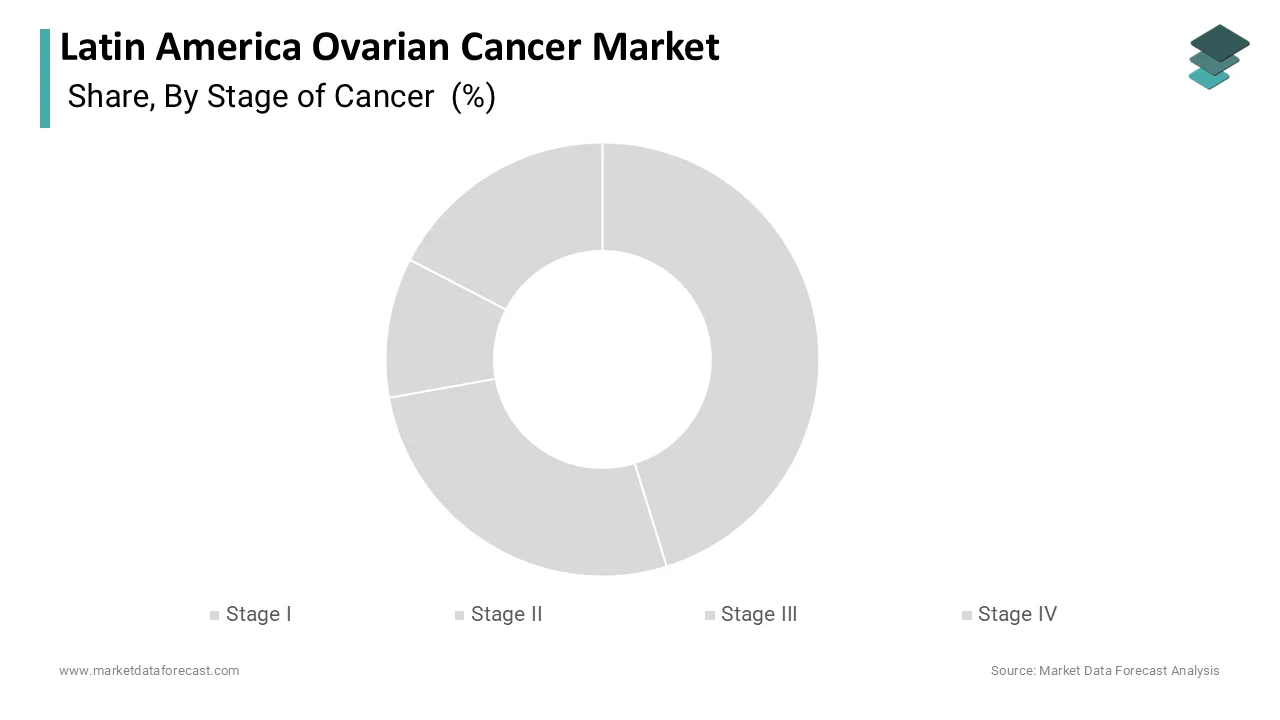
Stage III maintains market leadership through intensive multimodal treatment requirements, generating disproportionate expenditure per patient compared to earlier stages despite poorer long-term outcomes. According to the Inter-American Development Bank, the financial burden of managing late-stage non-communicable diseases remains a primary cost driver for national health systems, requiring significant resource allocation for complex inpatient therapies and specialized surgical interventions. As per sources, specialized high-cost oncology funds historically dedicated a large share of their budget to managing advanced-stage tumors due to the clinical demands of high-intensity inpatient care and toxicity management. This economic concentration means that even modest improvements in Stage III survival translate to significant lifetime value creation supporting continued investment in this segment. Manufacturers consequently prioritize indications, dosing regimens,s and supportive care products aligned with advanced disease management,nt recognizing that Stage III represents both the highest unmet need and the most commercially viable population across heterogeneous Latin American health systems.
The stage IV segment is expected to exhibit a noteworthy CAGR of 7.8% during the forecast period owing to demographic aging and increasing comorbidity burdens that delay diagnosis and limit surgical candidacy, pushing more patients into the metastatic category at presentation. According to the United Nations Population Division demographic indicators, the region of Latin America is experiencing a pronounced shift toward an aging population structure, expanding the total size of older age cohorts traditionally exposed to higher rates of chronic conditions. As per the World Health Organization, rising rates of obesity and metabolic conditions among regional populations are altering overall public health risk profiles and adding layers of diagnostic complexity for non-communicable diseases. The demographic shift transforms Stage IV from a rare terminal presentation into an increasingly common clinical scenario requiring palliative systemic therapies, hospice integration,n and caregiver support services distinct from curative paradigms. Growth reflects structural population changes rather than temporary fluctuations, thus creating durable demand expansion for end-of-life care infrastructure and symptom management therapeutics across the region.
Multiple factors accelerate this growth, including expanding palliative care coverage and hospice integration, enabling formal documentation and active management of metastatic disease previously unrecorded or abandoned due to perceived futility. According to the Pan American Health Organization, the legislative expansion of supportive care networks across member nations is increasingly embedding specialized symptom management and pain relief services into public health benefit frameworks. As per the Ministerio de Salud y Protección Social de Colombia, integrating comprehensive administrative registries into the statutory system improves the statistical tracking and clinical documentation of advanced care medical visits. The policy-driven visibility converts previously hidden mortality into measurable service demand, supporting pharmaceutical device and human resource planning for advanced disease. Growth accelerates as cultural acceptance of palliative approaches increases and provider training expands, ds making Stage IV management a legitimate clinical domain rather than therapeutic abandonment.
By Cancer Type Insights
In 2025, the epithelial ovarian tumors segment held the majority share in the Latin America ovarian cancer market. Because of this overwhelming majority, it is virtually synonymous with ovarian cancer in both clinical practice and commercial strategy. According to the International Agency for Research on Cancer, statistical tracking models highlight epithelial histologies as the predominant structural subtype within regional gynecologic oncology burdens, motivating regional health networks to focus intensive care management strategies on these presentations. As per the Latin American Cooperative Oncology Group, multicenter clinical research networks design the vast majority of their protocols around epithelial tumor lines to maintain close alignment with international targeted drug discovery frameworks. The epidemiological dominance means that virtually all approved therapeutics, diagnostic platforms, and clinical guidelines are optimized for epithelial biology, creating a self-reinforcing cycle where research investment follows prevalence, which further improves outcomes and detection rates for this subtype. Non-epithelial tumors remain niche entities managed through extrapolated protocols or pediatric adaptations lacking dedicated commercial infrastructure.
The leading position of this segment is bolstered by exclusive association with validated predictive biomarkers, including BRCA mutations, homologous recombination deficiency, and PD-L1 expression, that enable targeted therapy selection and justify premium pricing. According to the Global Alliance for Genomics and Health, multinational genomic database initiatives track a high frequency of deleterious BRCA mutations specifically within epithelial cohorts, driving localized efforts to expand access to precision screening tools. As per the Brazilian National Cancer Institute, standardizing hereditary genetic screenings for advanced malignant epithelial conditions remains a core policy objective to optimize public patient stratification for novel targeted molecules. The biomarker infrastructure exists almost entirely for epithelial tumors, leaving non-epithelial subtypes without molecular guidance tools, forcing reliance on historical chemotherapy regimens with a limited innovation pipeline. Consequently, pharmaceutical R&D, diagnostic company partnerships,s and payer coverage decisions concentrate overwhelmingly on epithelial populations where return on investment is demonstrable through companion diagnostic linkage and outcomes-based contracting models unavailable for rarer histologies.
The primary peritoneal carcinoma segment is predicted to witness the highest CAGR of 9.2% from 2026 to 2034 due to improved pathological differentiation and immunohistochemical standardization reclassifying cases previously coded as unspecified ovarian cancer. According to the World Health Organization Classification of Tumours, updated histological criteria utilize specific immunohistochemical marker profiles to separate primary peritoneal malignancies from ovarian origins, altering how regional medical centers classify abdominal cancers. As per studies, the dissemination of specialized antibody staining panels across accredited laboratory networks is actively improving baseline tracking accuracy and removing historic coding ambiguities in serous tumors. The nosological refinement creates apparent growth as existing cases receive correct classification, enabling appropriate treatment alignment, since primary peritoneal carcinoma shares identical therapeutic protocols with epithelial ovarian cancer but requires distinct staging documentation and genetic counseling considerations. Growth reflects maturation of diagnostic infrastructure rather than an emerging epidemic, creating opportunities for education and standardized reporting.
The swift expansion of this segment gains further momentum from shared therapeutic protocols with epithelial ovarian cancer, which enable cross-indication drug access and reimbursement, expanding treatment options as diagnostic clarity improves. According to the European Society for Medical Oncology, international therapeutic recommendations harmonize the management of primary peritoneal tumors with advanced epithelial protocols, encouraging clinicians to utilize identical cytoreductive and systemic maintenance approaches. As per the Agência Nacional de Vigilância Sanitária, product monograph wording for advanced oncological medications is structured to align related peritoneal and gynecologic indications, which supports uniform access across institutional health networks. The regulatory alignment means diagnostic improvement directly translates to therapeutic access without lag, creating immediate market expansion as each reclassified case activates existing drug utilization. Growth accelerates as pathologists gain confidence in differentiation and clinicians recognize that correct diagnosis unlocks rather than restricts treatment options, reversing the historical tendency toward nonspecific coding that obscured true disease burden.
By Diagnosis Insights
The CT scan segment led the Latin America ovarian cancer market and captured a significant share in 2025. It serves as a mandatory staging modality for virtually all confirmed or suspected cases, regardless of healthcare setting or payer type. According to the National Comprehensive Cancer Network, standard clinical practice guidelines emphasize cross-sectional chest, abdominal, and pelvic imaging to guide baseline staging and monitor therapeutic responses across epithelial ovarian cancer cohorts. As per the Brazilian Unified Health System reports, the volume of diagnostic tomography procedures for complex pelvic and abdominal conditions requires major resource allocations to track advanced disease progression. The procedural entrenchment stems from CT’s unique combination of wide availability, rapid acquisition time,e and adequate resolution for detecting peritoneal implants, lymphadenopathy, and visceral metastases, essential for surgical planning and RECIST response criteria. Despite the emergence of superior modalities for specific questions, CT remains the workhorse due to installed base, radiologist familiarity,y and reimbursement certainty, ensuring continued dominance even as complementary technologies gain niche roles in problem-solving scenarios.
The prominence of this segment is further reinforced by unmatched infrastructure penetration and consistent reimbursement coverage across all Latin American health systems, making it the default choice regardless of the theoretical superiority of alternative modalities. According to the Pan American Health Organization, deep inequalities in advanced diagnostic infrastructure availability persist between primary cities and rural territories, driving specialized technical convergence programs. As per Chile’s Explicit Health Guarantees program, state-enforced maximum wait times regulate the execution of prioritized oncology imaging to safeguard rapid diagnostic transitions. The infrastructure and payment alignment creates a powerful lock-in effect where switching costs include not only capital investment but also retraining, workflow redesign,g,n and negotiation of new reimbursement agreements. Consequently,l,y CT retains dominance through systemic inertia and economic rationality rather than pure diagnostic performance, maintaining volume leadership despite acknowledged limitations in characterizing small-volume peritoneal disease or distinguishing benign from malignant adnexal masses.
The biopsy segment is anticipated to witness the fastest CAGR of 11.4% over the forecast period. This swift expansion of the segment is propelled by mandatory tissue acquisition requirements for biomarker testing that have become a prerequisite for targeted therapy eligibility. According to the Latin American Cooperative Oncology Group, regional clinical consensus guidelines strongly support establishing a definitive histological and molecular diagnosis before finalizing precision therapeutic strategies. As per the Brazilian National Cancer Institute, expanding access to targeted therapies drives institutional changes in interventional radiology requests to document patient mutation states. The paradigm shift transforms biopsy from an optional confirmatory test to an essential therapeutic gateway, where failure to obtain adequate tissue precludes access to standard-of-care maintenance therapies. Growth reflects a fundamental change in diagnostic purpose from anatomical characterization to molecular stratification, creating new utilization drivers independent of traditional imaging-based staging workflows and establishing biopsy as a critical node in precision medicine pathway.
The rapid development of this segment, heightened by the rising adoption of neoadjuvant chemotherapy protocols, necessitates preoperative histological confirmation, reversing the historical preference for primary debulking surgery without tissue diagnosis. According to the regional gynecologic oncology data, the adoption of neoadjuvant chemotherapy protocols is expanding to limit the morbidity of extensive upfront cytoreductive attempts in patients presenting with widespread intra-abdominal disease. As per implementing strict institutional care pathways requires clear histological verification before introducing cytotoxic or targeted drug regimens. The clinical practice evolution creates structural demand for biopsy services independent of diagnostic uncertainty, since even obvious malignancies require tissue sampling when treatment sequence changes. Growth accelerates as multidisciplinary tumor boards standardize neoadjuvant decision-making and payers require biopsy documentation for chemotherapy authorization, embedding tissue acquisition into routine care pathways rather than exceptional circumstances.
COUNTRY LEVEL ANALYSIS
Brazil Ovarian Cancer Market Analysis
Brazil was the top performer in the Latin American ovarian cancer market and held a 38.7% share in 2025. This supremacy was fueled by universal health coverage, a sophisticated private sector, and domestic pharmaceutical manufacturing capacity, which enabled broad therapeutic access. According to Brazil’s National Cancer Institute, epidemiological projections outline a substantial public health requirement for female reproductive system care, driving continuous adaptations across the Unified Health System to maintain accessible, entry-level chemotherapy regimens for vulnerable diagnostic groups. As per the Agência Nacional de Vigilância Sanitária, administrative reliance models and technical evaluation frameworks are actively modifying review timelines to optimize safety validation speeds for highly critical oncological therapeutic categories. However, significantNorth-Southh disparities persist. Private supplementary health plans covering a notable portion of the population drive premium segment growth through faster access to international drugs and robotic surgery options. Brazil’s market leadership stems from an integrated public-private ecosystem and regulatory maturity, though sustainability depends on addressing geographic inequities and maintaining fiscal commitment amid competing health priorities.
Mexico Ovarian Cancer Market Analysis
Mexico was the next prominent country in the Latin American ovarian cancer market and captured a 24.2% share in 2025. The country’s market has segmented health system complexity, growing clinical trial activity, and strategic proximity to the United States, enabling cross-border care and regulatory alignment. According to international epidemiological databases, the domestic burden of malignant ovarian neoplasms in Mexico requires major collaborative routing across institutional public health systems to manage complex therapeutic cycles for active patient groups. As per the Comisión Federal para la Protección contra Riesgos Sanitarios regulatory updates, the introduction of formalized technical reliance pathways aims to utilize recognized international dossiers to reduce local development backlogs and streamline high-cost medicine entry. Out-of-pocket spending remains a significant portion of total health financing, creating financial toxicity for uninsured populations despite nominal coverage expansions. Mexico’s market reflects a transition phase where regulatory modernization and research infrastructure advance faster than system integration, creating islands of excellence amid persistent structural gaps requiring coordinated reform to realize full potential.
Argentina Ovarian Cancer Market Analysis
Argentina shows notable growth in the Latin America ovarian cancer market because of a strong academic oncology tradition, robust biosimilar adoption, and innovative risk-sharing agreements enabling access despite macroeconomic volatility. According to the Argentine National Cancer Registry data, the domestic burden of malignant ovarian neoplasms requires continuous coordination of public, provincial, and private prepaid medical coverage to secure baseline medication supply chains for affected patient populations. As per the Administración Nacional de Medicamentos, Alimentos y Tecnología Médica, national regulatory guidelines prioritize technical alignment mechanisms to systematically authorize complex bioequivalent and biosimilar oncology drugs to expand therapeutic market availability. However, inflation exceeding annual rates and foreign exchange restrictions create import vulnerabilities requiring constant renegotiation and local production incentives. Argentina’s market demonstrates resilience and innovation, where economic adversity drives creative access solutions,s though sustainability depends on macroeconomic stabilization and equitable distribution of diagnostic infrastructure beyond major urban centers.
Chile Ovarian Cancer Market Analysis
Chile grew steadily in the Latin American ovarian cancer market, owing to the most advanced regulatory framework, the highest per capita health expenditure, and a pioneering explicit guarantees system ensuring timely access to standardized ovarian cancer care. According to the Chilean National Cancer Registry indicators, the Explicit Health Guarantees program establishes enforceable legal timelines for the coverage of prioritized chronic conditions, optimizing therapeutic access guidelines within the state system. As per the Instituto de Salud Pública de Chile, the formalized implementation of regulatory reliance mechanisms allows the agency to accept validated technical reviews from high-surveillance international bodies to streamline national biologic drug approvals. However, an aging population and rising chronic disease burden strain GES fiscal sustainability, requiring continuous priority reassessment. Chile’s market exemplifies how regulatory discipline and outcome-focused financing can achieve developed-country standards in a middle-income context, though scalability to larger, more heterogeneous neighbors remains challenging.
COMPETITIVE LANDSCAPE
Competition inthe Latin American ovarian cancer market occurs across distinct tiers, reflecting extreme heterogeneity in regulatory maturity, ty reimbursement capacity,ity and healthcare infrastructure across 33 sovereign nations. Multinational innovators compete primarily in private insurance segments and advanced public systems like Chile, Brazil, and Mexico, co where premium pricing is viable and regulatory pathways are established, hed leveraging global clinical data and brand recognition. Biosimilar manufacturers from India, China, and domestic producers dominate public sector tenders through cost leadership and local production capabilities, capturing volume in price-constrained environments where originator products face reimbursement barriers. Regional pharmaceutical companies leverage distribution networks, regulatory relationships, and cultural understanding to servemid-tierr markets inaccessible to multinationals lacking ground-level presence. Competition increasingly centers on access enablers, including diagnostic partnerships, outcomes-based contracting,g and supply chain reliability, rather than product differentiation alone,e since most approved therapies share similar mechanisms and efficacy profiles. Public procurement agencies function as monopsony buyers in many countries, creating winner-take-all dynamics where single tender awards determine multi-year market access. Regulatory fragmentation prevents pan-regional strategies, forcing participants to maintain country-specific approaches, increasing operational complexity. Success requires balancing innovation with affordability, global scale with local responsiveness, and commercial objectives with access equity,y making this market uniquely challenging compared to homogeneous regions where standardized approaches suffice.
KEY MARKET PLAYERS
Some of the companies that are playing a dominating role in the Latin America Ovarian Cancer Market include:
- Aeterna Zentaris Inc.
- Eli Lilly and Company
- Roche
- Amgen Inc.
- Janssen Pharmaceuticals, Inc.
- Bristol-Myers Squibb Company
- Novogen Limited
- GlaxoSmithKline plc
- Boehringer Ingelheim
- AstraZeneca plc
- Genentech Inc.
TOP LEADING PLAYERS IN THE MARKET
- AstraZeneca maintains significant involvement in the Latin America ovarian cancer market through its comprehensive PARP inhibitor portfolio and commitment to expanding biomarker testing infrastructure across the region. Its initiativesdemonstrate ae strategy prioritizing diagnostic ecosystem development alongside drug commercialization, ion recognizing that therapeutic access depends on parallel infrastructure investment. AstraZeneca also established local clinical trial sites in Peru and Ecuador,uador expanding research capacity beyond traditional hubs while generating region-specific safety data supporting future regulatory submissions and payer negotiations across diverse Latin American health systems.
- GlaxoSmithKline contributes specialized expertise to the Latin American ovarian cancer market through niraparib maintenance therapy and innovative access models addressing budget constraints in public health systems. Its actions reflect a differentiated approach balancing commercial objectives with access equity,y recognizing that sustainable market development requires flexible pricing and outcomes accountability. The company also invested in local pharmacovigilance capacity to strengthen post-marketing safety monitoring aligned with evolving regional regulatory expectations for targeted therapies.
- Pfizer Inc strengthens Latin America ovarian cancer market presence through bevacizumab biosimilar portfolio and strategic manufacturing partnerships supporting affordable biologic access across price-sensitive public sectors. Recent partnership with Argentine academic centers generatedreal-worldd effectiveness data for biosimilar bevacizumab in Hispanic populations, supporting regulatory confidence and payer formulary inclusion across Southern Cone markets. These initiatives demonstrate commitment to supply chain resilience and affordability, recognizing that biologic penetration in Latin America depends on local production capabilities and streamlined access pathways rather than premium pricing strategies. Pfizer also supports nursing education programs on antiangiogenic therapy management,t improving safe administration capacity in resource-constrained settings.
TOP STRATEGIES USED BY KEY MARKET PARTICIPANTS
Key players in the Latin American ovarian cancer market prioritize diagnostic infrastructure investment,t including subsidized biomarker testing, laboratory partnerships,s and physician education programs, recognizing that therapeutic adoption depends on parallel capability development rather than drug availability alone. Companies increasingly implement innovative access models such as performance-based contracting, risk-sharing agreements,s and tiered pricing structures, es aligning commercial returns with health system budget constraints and outcome expectations across fragmented payer landscapes. Strategic focus on local manufacturing and technology transfer reduces currency exposure and import vulnerabilities and enables competitive pricing in public tenders while supporting national industrial policy objectives, creating favorable regulatory and procurement treatment. Manufacturers actively engage in regional clinical trials,s generating locally relevant evidence supporting regulatory approvals, payer negotiations,s and physician confidence in diverse Hispanic populations underrepresented in global studies. Regulatory alignment strategies leverage international reliance pathways and harmonization initiatives, accelerating market entry while reducing development costs across multiple jurisdictions simultaneously. Patient support programs addressing financial toxicity, navigation assistance,e and caregiver resources improve treatment persistence and real-world effectiveness, demonstrating value beyond clinical trial endpoints. Workforce development investments,s including fellowship sponsorships, telemedicine-enabled specialist training,g and multidisciplinary tumor board support,, rt address critical human capital shortages constraining therapeutic delivery regardless of drug formulary status.
MARKET SEGMENTATION
This research report on the Latin American ovarian cancer market has been segmented and sub-segmented into the following categories.
By Stage of Cancer
-
Stage I
-
Stage IA
- Stage IB
- Stage IC
-
- Stage II
- Stage IIA
- Stage IIB
- Stage IIC
- Stage III
- Stage IIIA
- Stage IIIB
- Stage IIIC
- Stage IV
By Cancer Type
- Primary Peritoneal Carcinoma
- Ovarian Stromal Tumors
- Ovarian Germ Cell Tumors
- Epithelial Ovarian Tumors
By Diagnosis
- Physical Examination
- Blood Tests
- Ultrasound
- PET
- CT Scan
- MRI
- Human Chorionic Gonadotropin Test
- Biopsy
By Type of Treatment
- Chemotherapy
- Radiation Therapy
- Hormonal Therapy
- Surgery
- Immunotherapy
- Targeted Therapy
By Country
- Mexico
- Brazil
- Argentina
- Chile
- Rest of Latin America