- Product Description Description
- Table of Contents TOC
- List of Table & Figure LOT
- Get Free Sample PDF Sample PDF
Market Size, 2025
$1.36 BnMarket Estimate, 2026
$1.49 BnMarket Forecast, 2034
$2.99 BnCAGR, 2026–2034
9.1%Latin America Pharmaceutical Membrane Filtration Market Size
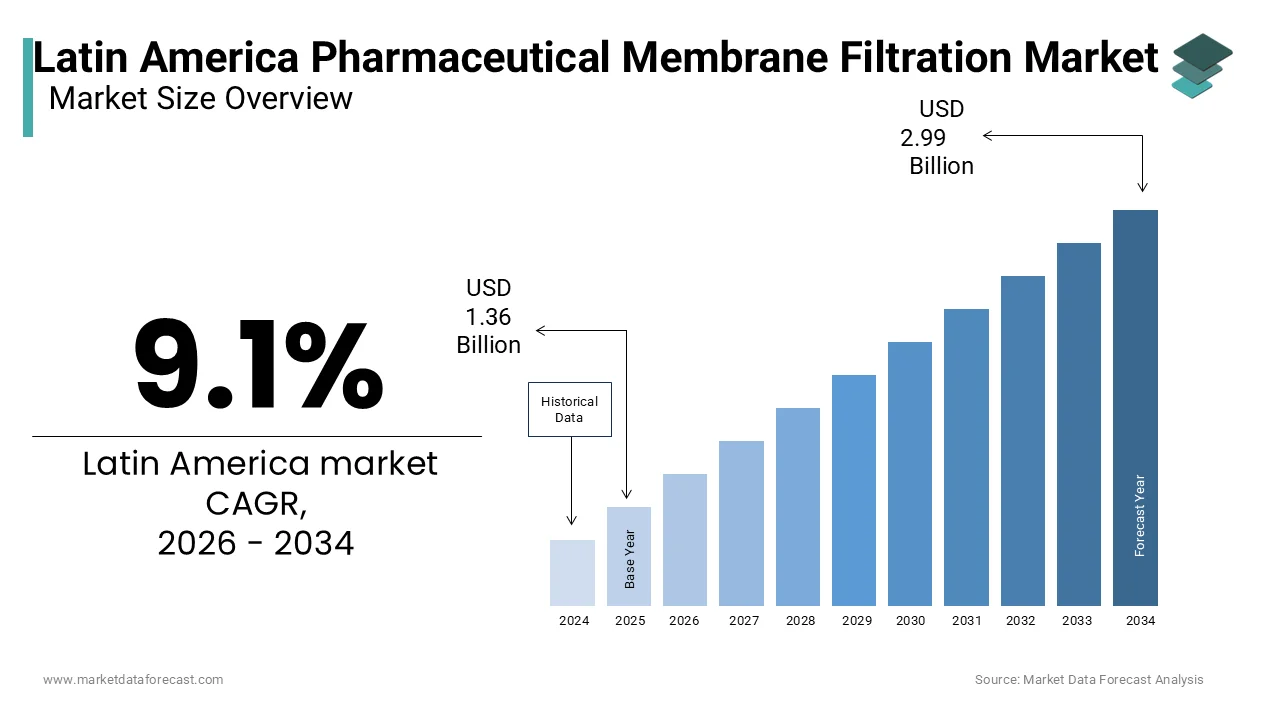
The Latin American pharmaceutical membrane filtration market was valued at USD 1.36 billion in 2025 and increased to USD 1.49 billion in 2026. The market is projected to reach USD 2.99 billion by 2034, growing at a CAGR of 9.1% from 2026 to 2034.
Pharmaceutical membrane filtration is a critical, pressure-driven separation technique using thin, porous membranes to remove contaminants, microbes, or specific molecules from liquid/gas streams, ensuring sterility and purity of drug products. These critical components, crafted from polymers such as polyethersulfone, polyvinylidene fluoride, and regenerated cellulose, serve as the cornerstone for sterile filtration, virus removal, and buffer exchange in biopharmaceutical manufacturing. The region is witnessing a paradigm shift toward advanced biologics and biosimilars, necessitating robust filtration infrastructures that comply with stringent international quality standards. According to sources, Latin America relies heavily on imported medicines, with local production covering only a small fraction of regional needs, prompting new initiatives to strengthen domestic manufacturing and supply chain resilience. The regulatory landscape is also evolving, with agencies like ANVISA in Brazil and COFEPRIS in Mexico aligning their Good Manufacturing Practices more closely with United States Food and Drug Administration guidelines. International financial institutions report that while healthcare spending in the region is increasing, it faces constraints from broader economic conditions, with investment priorities largely focused on expanding coverage and improving system efficiency rather than solely on industrial equipment. Furthermore, the rise of contract development and manufacturing organizations in countries like Argentina and Chile is creating a fertile ground for membrane integration. Clinical nutrition societies in Latin America emphasize the critical importance of sterile compounding and filtration during the administration of parenteral nutrition to ensure patient safety and prevent complications in hospital settings.
MARKET DRIVERS
Expansion of Biologics and Biosimilar Manufacturing Capabilities
The burgeoning production of biologics and biosimilars across Latin America serves as a key driver for the adoption of advanced membrane filtration systems within the Latin American pharmaceutical membrane filtration market. Unlike small molecule drugs, biological products such as monoclonal antibodies, vaccines, and recombinant proteins require highly sophisticated purification processes to remove host cell proteins, DNA, and viruses while maintaining structural integrity. Multiple studies note that the infrastructure for biotechnology has expanded in the region, with major national economies leading the development of new manufacturing sites to bolster local production capabilities. These facilities rely heavily on tangential flow filtration and depth filtration membranes to achieve the necessary purity levels mandated by global regulatory bodies. As per data from the Brazilian Association of Biotechnology Companies, the domestic market for biosimilars is projected to grow at a double-digit rate, driven by government initiatives to reduce healthcare costs through locally produced alternatives to expensive originator drugs. This surge in production volume directly correlates with an increased consumption of single-use membrane capsules and cassettes, which offer flexibility and reduced cross-contamination risks. Furthermore, the complexity of biological molecules necessitates precise pore size distributions and specific surface chemistries that only advanced membrane technologies can provide. Research indicates that a vast majority of new bioprocessing installations in the region are adopting disposable technologies to streamline production and reach the market more quickly. The strategic focus on self-sufficiency in critical therapeutics ensures a sustained and growing demand for high-performance filtration solutions tailored to the nuances of biological manufacturing.
Stringent Regulatory Harmonization and Quality Compliance Standards
The rigorous alignment of Latin American regulatory frameworks with international Good Manufacturing Practices is boosting the uptake of premium membrane filtration technologies in the Latin American pharmaceutical membrane filtration market. Regulatory agencies across the region, including ANVISA in Brazil, INVIMA in Colombia, and ISP in Chile, have progressively tightened their requirements for sterility assurance and viral clearance in pharmaceutical production. As per guidelines issued by the Pan American Health Organization, member states are increasingly adopting standards comparable to those of the United States and European Union to facilitate drug exports and ensure public safety. This regulatory convergence compels pharmaceutical manufacturers to upgrade their existing filtration infrastructure, replacing older, less reliable methods with validated membrane systems that offer consistent performance and documented integrity. Global health audits suggest that facilities utilizing certified purification and protective technologies experience fewer production failures related to contamination, leading to more reliable manufacturing outcomes. The necessity for comprehensive validation protocols, including bubble point testing and diffusion tests, further favors advanced membrane solutions that come with extensive supplier documentation and support. Sources emphasize that the financial risks associated with regulatory failures and product withdrawals have increased, encouraging manufacturers to invest in advanced equipment to maintain high-quality standards. Moreover, the push for data integrity and traceability in manufacturing processes encourages the adoption of smart filtration systems capable of real-time monitoring. This regulatory pressure creates a mandatory market environment where high-quality membrane filtration is not merely an option but a fundamental prerequisite for operational continuity and market access.
MARKET RESTRAINTS
Economic Volatility and Currency Fluctuation Impacts
Persistent economic instability and erratic currency fluctuations across several nations in the region pose substantial financial barriers to the Latin American pharmaceutical membrane filtration market. The region has historically grappled with inflationary pressures and exchange rate volatility, particularly in countries like Argentina and Venezuela, which significantly inflate the cost of importing high-tech filtration materials and equipment. According to the International Monetary Fund, currency devaluations in key markets have occasionally exceeded 30 percent within a single fiscal year, drastically increasing the capital expenditure required for purchasing imported membrane modules and associated hardware. This financial uncertainty forces many local pharmaceutical manufacturers to delay critical upgrades or opt for lower-cost, less efficient alternatives that may compromise product quality. As per the Economic Commission for Latin America and the Caribbean, the rising cost of raw materials denominated in foreign currencies has squeezed profit margins for domestic producers, limiting their ability to invest in cutting-edge technologies. Furthermore, the unpredictability of import duties and taxation policies adds another layer of complexity, making long-term budgeting for filtration infrastructure exceedingly difficult. Surveys suggest that a significant portion of pharmaceutical firms in the region have delayed major expansion projects in response to broader economic uncertainty and shifting market conditions. The reliance on imported polymers and specialized manufacturing equipment means that any disruption in global supply chains or adverse currency movements immediately translates into higher operational costs. Consequently, economic fragility acts as a potent brake on market growth, preventing many potential users from accessing the latest advancements in membrane filtration technology.
Limited Technical Expertise and Skilled Workforce Shortages
The scarcity of highly skilled technical personnel capable of operating and maintaining complex filtration systems further limits the expansion of the Latin American pharmaceutical membrane filtration market. The successful implementation of advanced membrane technologies requires specialized knowledge in fluid dynamics, membrane chemistry, and process validation, areas where the regional workforce often lacks sufficient depth. According to the Inter-American Development Bank, there is a notable gap in STEM education and vocational training specifically tailored to biopharmaceutical manufacturing processes in many Latin American countries. This skills deficit leads to suboptimal operation of filtration equipment, resulting in premature membrane fouling, reduced throughput, and increased downtime. Internal reviews within the industry suggest that a notable portion of technical inefficiencies in filtration processes is linked to operational handling and maintenance routines rather than the equipment itself. The lack of localized training programs and certified expertise further exacerbates the issue, forcing companies to rely on expensive expatriate consultants or extensive overseas training for their staff. The Latin American Federation of Pharmaceutical Industries shows that the shortage of qualified engineers and technicians is a primary bottleneck in scaling up bioprocessing operations. Additionally, the rapid evolution of filtration technologies means that continuous professional development is essential, yet resources for such training are often limited. This human capital challenge restricts the ability of manufacturers to fully leverage the capabilities of modern membrane systems, thereby slowing down the overall adoption rate and market penetration of advanced filtration solutions.
MARKET OPPORTUNITIES
Surge in Contract Manufacturing and Outsourcing Trends
The accelerating trend toward contract development and manufacturing organizations provides a big boost to the Latin America Pharmaceutical Membrane Filtration Market. As global pharmaceutical giants seek to diversify their supply chains and reduce production costs, they are increasingly turning to Latin American CDMOs for the manufacturing of generic drugs, biosimilars, and sterile formulations. These contract manufacturers must adhere to the highest international quality standards, necessitating the installation of robust and versatile membrane filtration systems to handle diverse client portfolios. The flexibility of single-use membrane systems makes them particularly attractive for CDMOs that need to switch between different products rapidly without the risk of cross-contamination. Furthermore, the establishment of regional centers of excellence for biologics production creates a sustained demand for high-performance filtration consumables. Industry observers note that CDMOs are often early adopters of new technologies to maintain their competitive edge, thereby driving innovation in the membrane sector. This shift toward outsourcing not only expands the customer base for membrane suppliers but also fosters a culture of quality and efficiency that permeates the broader regional pharmaceutical landscape.
Government Initiatives for Local Vaccine and Essential Medicine Production
Strategic government initiatives aimed at achieving self-sufficiency in vaccine and essential medicine production create major possibilities for growth in the Latin American pharmaceutical membrane filtration market. In the wake of global health crises, several Latin American governments have launched ambitious programs to bolster domestic manufacturing capabilities and reduce reliance on imports. According to research, substantial funding has been allocated to expand the production capacity of the Oswaldo Cruz Foundation and other public laboratories, with a specific focus on vaccine formulation and fill-finish operations. These expansions inherently require advanced membrane filtration systems for virus removal, buffer exchange, and sterile filtration to meet international potency and safety standards. The push for localizing the supply chain for critical care medications also drives demand for reliable filtration solutions in small molecule manufacturing. Furthermore, regulatory incentives for locally produced vaccines encourage private sector participation, further amplifying the need for filtration infrastructure. This concerted political will and financial backing create a stable and growing market segment for membrane suppliers who can align their offerings with national health security objectives.
MARKET CHALLENGES
Complex Supply Chain Logistics and Import Dependencies
Persistent logistics challenges, paired with heavy dependence on imported raw materials and finished products, continue to constrain the Latin American pharmaceutical membrane filtration market. A significant portion of high-performance membrane polymers and specialized filtration hardware is sourced from North America, Europe, and Asia, making the regional market vulnerable to global shipping disruptions and customs delays. These logistical uncertainties complicate inventory management for manufacturers who rely on just-in-time delivery models for critical filtration consumables. The reliance on imports also exposes buyers to fluctuating freight costs and potential trade barriers, which can suddenly escalate operational expenses. Additionally, the fragmentation of customs regulations across different Latin American countries creates a cumbersome environment for distributors attempting to serve the entire region efficiently. Case studies from major filtration suppliers indicate that supply chain interruptions have led to production stoppages in several facilities, highlighting the fragility of the current logistics network. Significant improvements in regional infrastructure and harmonization of trade procedures are needed. Until then, supply chain volatility will remain a formidable obstacle to market stability and growth.
High Operational Costs and Maintenance Complexity
High operational costs associated with the maintenance and validation of advanced membrane filtration systems are a significant obstacle for manufacturers in the Latin American pharmaceutical membrane filtration market. The deployment of sophisticated filtration technologies requires not only substantial initial capital investment but also ongoing expenditures for cleaning agents, integrity testing equipment, and skilled labor. The complexity of maintaining sterile conditions and performing regular validation tests adds to the operational burden, particularly for smaller manufacturers with limited resources. Additionally, the lack of standardized protocols for maintenance across different facilities leads to inefficiencies and increased downtime. Surveys reveal that unplanned maintenance events account for a significant portion of production losses in the regional biopharmaceutical sector. The financial strain of adhering to rigorous validation requirements while managing high operational expenses discourages some players from upgrading to newer, more efficient technologies. This economic barrier limits the widespread adoption of advanced filtration solutions and hampers the overall modernization of the pharmaceutical manufacturing landscape in Latin America.
REPORT COVERAGE
| REPORT METRIC | DETAILS |
| Market Size Available | 2025 to 2034 |
| Base Year | 2025 |
| Forecast Period | 2026 to 2034 |
| Segments Covered | By Product, Technique, Application, and Region. |
| Various Analyses Covered | Global, Regional, and Country-Level Analysis, Segment-Level Analysis, Drivers, Restraints, Opportunities, Challenges; PESTLE Analysis; Porter’s Five Forces Analysis, Competitive Landscape, Analyst Overview of Investment Opportunities |
| Countries Covered | Mexico, Brazil, Argentina, Chile, the Rest of Latin America |
| Market Leaders Profiled | Merck KGaA (Germany), General Healthcare Company (U.K.), Pall Corporation (U.S.), Sartorius Stedim Biotech Group (France), Alfa Laval (Sweden), Graver Technologies, LLC (U.S.), Koch Membrane Systems Inc. (U.S.), GEA Group (Germany), and Novasep (U.S.)
|
SEGMENTAL ANALYSIS
By Product Insights
The Polyvinylidene Fluoride (PVDF) membrane segment was the largest segment in the Latin America Pharmaceutical Membrane Filtration Market and occupied a 38.1% share in 2025. This supremacy of the segment is driven by the material's exceptional chemical resistance and thermal stability, which are critical for the harsh cleaning and sterilization protocols required in modern biopharmaceutical manufacturing. The main driver for the dominance of PVDF membranes is their unparalleled ability to withstand aggressive cleaning agents and repeated sterilization cycles without degradation, a necessity for complying with stringent Good Manufacturing Practices in the region. Unlike other polymers, PVDF exhibits high resistance to strong acids, bases, and organic solvents, allowing manufacturers to use rigorous Clean-in-Place procedures that ensure absolute sterility. The material can endure steam sterilization at temperatures up to 140 degrees Celsius, which is essential for eliminating endotoxins and viruses in vaccine production. Furthermore, the hydrophobic nature of PVDF makes it ideal for venting applications in fermenters and storage tanks, preventing microbial ingress while allowing gas exchange. The operational reliability reduces the risk of batch failures and product loss, making PVDF the preferred choice for high-value biological manufacturing across the continent. PVDF membranes dominate the market due to their protein-binding characteristics and broad compatibility with diverse biological fluids, which is crucial for maximizing yield in the production of monoclonal antibodies and recombinant proteins. In the Latin American market, where the biosimilar sector is expanding rapidly, maintaining high product recovery rates is economically vital. The efficiency is particularly important for expensive biologic drugs, where even minor losses translate to substantial financial impacts. Besides, the material's inherent stability also ensures that it does not leach extractables into the product stream, a key concern for regulatory compliance. Additionally, the versatility of PVDF allows it to be used in both aqueous and organic solvent applications, providing a unified solution for complex multi-step processes. This adaptability supports the growing trend of integrated continuous manufacturing in the region, further solidifying the segment's market leadership.
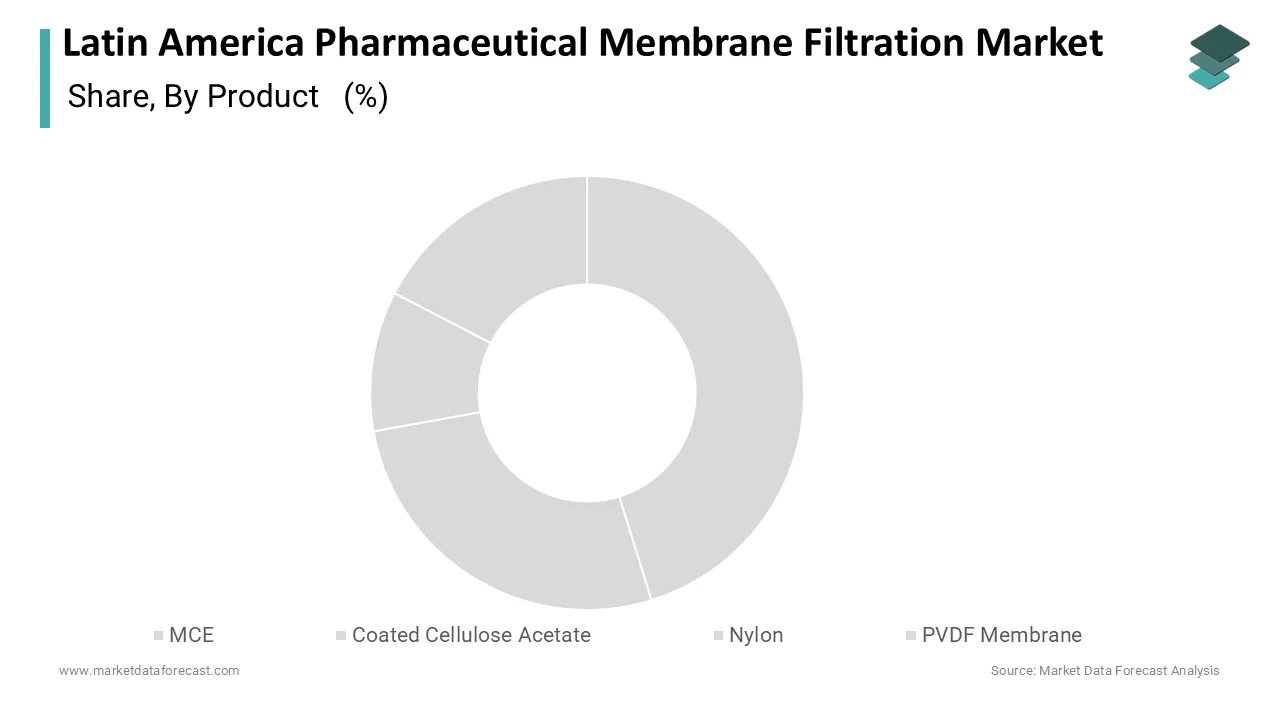
The Nylon membrane segment is predicted to witness the highest CAGR of 9.2% between 2026 and 2034 due to its unique affinity for polar solvents and its increasing application in specific analytical and preparative processes within the pharmaceutical sector. In addition, the accelerated growth of the Nylon segment is primarily driven by its superior performance in filtering polar solvents and its widespread adoption in quality control laboratories across Latin America. Nylon membranes possess excellent wettability and high tensile strength, making them ideal for sample preparation and sterilization of solvent-based drug formulations that other materials cannot handle effectively. The material's ability to retain fine particulates without significant flow restriction makes it indispensable for High Performance Liquid Chromatography sample filtration, a routine procedure in drug development. Furthermore, Nylon's compatibility with a wide pH range allows it to be used in diverse extraction processes for active pharmaceutical ingredients derived from natural sources, a growing niche in Latin America. The cost-effectiveness of Nylon compared to fluoropolymer alternatives also appeals to mid-sized pharmaceutical companies looking to optimize operational expenses without compromising quality. This combination of technical superiority in specific applications and economic viability propels the Nylon segment forward at a remarkable pace. The booming generic drug sector in Latin America serves as a significant catalyst for the rapid adoption of Nylon membranes in various formulation and clarification steps. Generic manufacturers often deal with a wide array of chemical entities that require robust filtration solutions capable of handling diverse solvent systems used in crystallization and precipitation processes. Nylon membranes are increasingly preferred for clarifying fermentation broths and filtering intermediate solutions where high mechanical strength is required to withstand pressure fluctuations. The material's hydrophilic nature allows for immediate wetting without the need for pre-treatment solvents, streamlining workflow in high-volume production environments. Additionally, the rise of fixed-dose combination drugs, which often involve complex solvent mixtures, further boosts the demand for Nylon's broad chemical compatibility. The ability of Nylon to provide consistent retention ratings across different batches ensures product uniformity, a critical factor for regulatory approval. These factors collectively drive the Nylon segment to become the fastest-growing category in the product landscape.
By Technique Insights
The Microfiltration segment held the majority share of 45.9% of the Latin America Pharmaceutical Membrane Filtration Market in 2025 because of its fundamental role as the primary step for sterile filtration and clarification in almost all pharmaceutical manufacturing processes. Microfiltration dominates the market because it is the mandatory final barrier for ensuring the sterility of injectable drugs, ophthalmic solutions, and vaccines, a requirement strictly enforced by regional health authorities. The technique utilizes membranes with pore sizes typically ranging from 0.1 to 0.45 micrometers to physically remove bacteria and fungi without altering the chemical composition of the drug. The ubiquity of this technique across small-molecule and large-molecule manufacturing ensures a consistent and high volume of demand. Furthermore, the technique is essential for clarifying cell culture harvests and buffer solutions, serving as a pre-treatment for more advanced filtration stages. The critical nature of this step means that manufacturers prioritize reliability and validation support, fostering strong loyalty to established microfiltration providers. This universal application and regulatory necessity cement Microfiltration as the undisputed leader in the technique segment. Beyond sterile filtration, the dominance of Microfiltration is reinforced by its extensive use in clarification and pre-filtration applications, which protect downstream equipment and extend the life of more expensive ultrafiltration membranes. In the complex manufacturing of biologics and vaccines, removing coarse particulates and cell debris is a crucial first step that relies heavily on microfiltration technology. The technique's ability to handle high turbidity feeds makes it suitable for processing herbal extracts and traditional medicines, a growing sector in Latin America. The flexibility of microfiltration allows it to be configured in various formats, including cartridge filters, plate and frame systems, and hollow fiber modules, adapting to diverse scale requirements from pilot plants to commercial production. Besides, the cost-effectiveness of microfiltration compared to other techniques also drives its widespread adoption in the generic drug sector, where margin optimization is critical. This broad applicability across multiple process stages ensures its continued leadership.
The Ultra Filtration segment is estimated to register the fastest CAGR of 10.5% over the forecast period, owing to the exponential rise in biopharmaceutical production, where concentration and diafiltration of proteins and viruses are essential steps that only ultrafiltration can perform efficiently. Moreover, the primary engine for the rapid growth of Ultra Filtration is the expanding biopharmaceutical sector in Latin America, which relies on this technique for the concentration and purification of large biomolecules like monoclonal antibodies and vaccines. Unlike microfiltration, ultrafiltration separates components based on molecular weight, making it indispensable for isolating therapeutic proteins from fermentation broths. The technique allows manufacturers to concentrate dilute protein solutions without thermal denaturation, preserving product efficacy. Moreover, the shift toward single-use ultrafiltration cassettes further accelerates adoption, as it reduces cross-contamination risks and cleaning validation burdens. The complexity of biological drugs necessitates precise molecular weight cutoffs that ultrafiltration membranes provide, making it a non-substitutable technology. This alignment with the high-growth biotech sector ensures that Ultra Filtration remains the fastest-expanding technique segment. Ultra Filtration is experiencing rapid growth due to the industry-wide shift toward continuous manufacturing and process intensification, where it plays a central role in integrating upstream and downstream operations. Traditional batch processing is being replaced by continuous flows that utilize ultrafiltration for real-time concentration and buffer exchange, significantly reducing facility footprints and production times. Ultrafiltration enables the recycling of perfusion media in cell culture processes, enhancing cell density and product yield. The technology's scalability allows seamless transition from clinical trial volumes to commercial production, accelerating time to market for new drugs. Furthermore, the development of high-flux ultrafiltration membranes has improved throughput, making the technique more attractive for large-scale operations. This technological evolution positions Ultra Filtration as the dynamic growth leader in the market.
By Application Insights
The Final Product application segment dominated the Latin American market and captured a 65.3% share in 2025. This dominance of the segment is driven by the critical regulatory requirement to ensure the sterility and safety of the finished pharmaceutical dosage form before it reaches the patient. Mandatory pre-filling sterile filtration, a critical regulatory hurdle for injectables and ophthalmic preparations, ensures the sustained dominance of the final product segment. This final barrier step is the last line of defense against microbial contamination, making it the most critical application of membrane filtration in the pharmaceutical value chain. The sheer volume of injectable drugs produced in the region, including vaccines, antibiotics, and analgesics, ensures a massive and consistent demand for filtration systems in this application. Furthermore, the trend toward prefilled syringes and auto-injectors, which have zero tolerance for particulates, has heightened the importance of this step. The critical nature of this application means that manufacturers invest heavily in high-quality membranes and redundant systems to guarantee safety. This regulatory and safety imperative secures the Final Product segment as the largest consumer of membrane filtration technology. Beyond sterility, the Final Product segment leads the market due to the extensive use of membrane filtration for removing particulates and ensuring clarity in liquid oral and topical formulations. Regulatory agencies require that all liquid drugs be free from visible and sub-visible particles that could affect patient safety or drug stability. The technique is also crucial for removing precipitates that may form during storage, ensuring shelf-life stability. In addition, the versatility of membrane filtration allows it to handle viscous solutions and complex emulsions common in pediatric and geriatric medicines. Furthermore, the move toward preservative-free formulations increases the reliance on sterile filtration as the sole method of preservation, amplifying the demand in this segment. The direct link between final filtration and product release makes this application the cornerstone of the pharmaceutical filtration market.
The Raw Material application segment is anticipated to witness the fastest CAGR of 8.8% from 2026 to 2034. This swift expansion of the segment is fueled by the increasing complexity of Active Pharmaceutical Ingredient synthesis and the need for high-purity inputs in biopharmaceutical manufacturing. Apart from these, the rapid growth of the Raw Material segment is also propelled by the escalating complexity of Active Pharmaceutical Ingredient synthesis, which increasingly relies on membrane filtration for purification and separation steps. Modern drug discovery involves complex chemical reactions and biocatalytic processes that generate intricate mixtures requiring precise separation to isolate the desired API. Membrane filtration is used to remove catalysts, by-products, and unreacted starting materials, ensuring high purity levels before crystallization. The shift toward enzymatic synthesis, which operates in aqueous environments, further boosts the demand for membrane-based separation in raw material processing. Moreover, the need to comply with international impurity limits, such as those for genotoxic impurities, forces manufacturers to incorporate multiple filtration steps in their raw material workflows. This trend toward higher purity standards and more complex synthesis routes propels the Raw Material segment to the forefront of market growth. The burgeoning biopharmaceutical sector is a key driver for the fast growth of the Raw Material segment, specifically in upstream processing, where membrane filtration is used for media preparation and feed clarification. The production of biologics requires vast quantities of highly purified buffers and culture media, which must be filtered to remove contaminants before contacting living cells. Tangential flow filtration is increasingly used to concentrate and diafilter cell culture media components, optimizing nutrient delivery and cell growth. The sensitivity of cell lines to trace impurities necessitates rigorous filtration of all input materials, creating a high-volume demand for membranes in this application. Furthermore, the trend toward single-use upstream technologies relies heavily on disposable membrane filters for media and feed streams. This alignment with the high-growth biotech upstream sector ensures rapid expansion for this segment.
COUNTRY LEVEL ANALYSIS
Brazil Pharmaceutical Membrane Filtration Market Analysis
Brazil led the Latin American Pharmaceutical Membrane Filtration Market and accounted for a 42.7% share in 2025. The demand for these systems in Brazil is driven by its massive domestic pharmaceutical industry and robust biotechnology sector. The country serves as the regional hub for drug manufacturing, hosting the highest number of pharmaceutical plants and research centers in Latin America. Besides, the presence of global giants like Eurofarma and Hypera Pharma, alongside state-owned entities like Fiocruz, ensures continuous investment in advanced manufacturing infrastructure. The regulatory framework enforced by ANVISA is among the strictest in the region, mandating high standards of sterility and purity that drive the adoption of premium filtration solutions. Furthermore, Brazil's leadership in bioethanol and renewable chemicals has spurred cross-industry innovation in membrane technologies that benefit the pharmaceutical sector. The country's extensive network of universities and research institutes fosters innovation in membrane materials, supporting local adaptation and customization. This combination of scale, regulatory rigor, and strategic investment cements Brazil's position as the primary market force.
Mexico Pharmaceutical Membrane Filtration Market Analysis
Mexico was the next prominent country in the Latin American Pharmaceutical Membrane Filtration Market and occupied a share of 22.8% in 2025. This growth of the Mexican market is fuelled by its strong integration with the North American supply chain and a thriving generic drug sector. The country benefits significantly from its proximity to the United States, serving as a key manufacturing base for export-oriented pharmaceutical companies. The presence of numerous contract manufacturing organizations catering to the US market drives the demand for world-class filtration systems that meet United States Food and Drug Administration standards. The government's commitment to health sovereignty has also led to increased public investment in vaccine production, notably through the Birmex institute, which expands the market for sterile filtration. The robust regulatory oversight by COFEPRIS ensures that local manufacturers maintain high-quality standards, further stimulating the demand for advanced filtration. Additionally, the growing prevalence of chronic diseases in Mexico is driving domestic consumption of pharmaceuticals, reinforcing the need for efficient manufacturing processes. This strategic location and dual focus on export and domestic markets propel Mexico's significant market standing.
Argentina Pharmaceutical Membrane Filtration Market Analysis
Argentina maintains a major share of the Latin American Pharmaceutical Membrane Filtration Market due to its highly educated workforce and strong tradition in chemical and pharmaceutical research. Despite economic challenges, the country maintains a sophisticated pharmaceutical industry capable of developing and manufacturing complex drugs, including biologics and oncology treatments. The presence of renowned research institutions like CONICET fosters innovation in biotechnology, leading to the development of indigenous vaccines and therapies that require specialized membrane filtration. The regulatory agency ANMAT enforces rigorous quality standards, compelling manufacturers to adopt state-of-the-art filtration systems to ensure product safety. Observers note that Argentina is a leader in the production of biosimilars in the region, a segment that heavily utilizes ultrafiltration and tangential flow filtration. The country's focus on high-value-added products rather than volume commodity drugs drives the demand for premium filtration solutions. This emphasis on quality and innovation sustains Argentina's important role in the regional market landscape.
Chile Pharmaceutical Membrane Filtration Market Analysis
Chile is moving ahead steadfastly in the Latin American Pharmaceutical Membrane Filtration Market by leveraging its stable economy and strategic focus on becoming a regional hub for clinical trials and high-tech manufacturing. The country's pharmaceutical sector sees a high degree of modernization and adherence to international standards, attracting multinational corporations to establish regional headquarters and distribution centers. According to research, the country has seen a steady increase in the localization of fill-and-finish operations for imported drugs, which drives demand for sterile filtration equipment. The government's proactive support for the life sciences sector, through agencies like Corfo, has facilitated investments in biotechnology parks and innovation clusters. ALSO, the country's rigorous regulatory framework, managed by the Public Health Institute, aligns closely with international norms, encouraging the adoption of advanced membrane technologies. Furthermore, the country's stability makes it a preferred location for regional training centers and technical support hubs for filtration suppliers. This combination of stability, innovation, and strategic positioning supports Chile's steady market growth.
COMPETITIVE LANDSCAPE
The competition in the Latin American Pharmaceutical Membrane Filtration Market is characterized by a dynamic interplay between established multinational corporations and emerging regional distributors who compete on technology and service quality. The landscape is moderately consolidated,d with global leaders leveraging their extensive portfolios and technical expertise to dominate the high-end biopharmaceutical segment. Intense rivalry exists in the area of product innovation, where companies strive to offer higher flux membranes and integrated single-use systems to attract cost-conscious manufacturers. Price sensitivity remains a factor, particularly in the generic drug sector,r but is often outweighed by the need for regulatory compliance and validated performance. New entrants face significant barriers due to the high capital investment required for research and development and the strict validation processes mandated by local health authorities. However, er the growing demand for biosimilars and vaccines creates opportunities for niche players to thrive by offering specialized solutions for specific applications. Overall,l the market dynamics favor those who can combine operational efficiency with strong local support networks while adapting quickly to shifting regulatory requirements and economic conditions in the region.
KEY MARKET PLAYERS
Some of the leading Latin American Pharmaceutical Membrane Filtration Market include
- Merck KGaA
- GE Healthcare
- Pall Corporation
- Sartorius Stedim Biotech
- Alfa Laval
- Graver Technologies LLC
- Koch Membrane Systems Inc.
- GEA Group
- Novasep
TOP LEADING PLAYERS IN THE MARKET
- Merck KGaA operates as a global science and technology leader with a profound impact on the Latin American Pharmaceutical Membrane Filtration Market through its extensive portfolio of process solutions. The company provides advanced membrane technologies, including Pellicon cassettes and Millipore filters, that are essential for biopharmaceutical purification and sterile filtration across the region. Their contribution to the global market involves setting benchmarks for single-use processing and continuous manufacturing efficiency. Recently, Merck has expanded its technical support centers in Brazil and Mexico to offer localized training and rapid service delivery to pharmaceutical clients. The firm also launched new high-flux ultrafiltration membranes designed specifically for the complex biosimilar formulation, gaining traction in Latin America. By partnering with local contract manufacturers,e rs Merck ensures seamless technology transfer and compliance with regional regulatory standards. These strategic initiatives reinforce their commitment to advancing bioprocessing capabilities and supporting the growing demand for high-quality medicines throughout Latin America while maintaining their status as a preferred innovation partner globally.
- Danaher Corporation stands as a pivotal innovator in the life sciences sector with a robust presence in the Latin American Pharmaceutical Membrane Filtration Market via its Cytiva and Pall brands. The company delivers comprehensive filtration solutions ranging from depth filters to sterilizing-grade membranes that cater to diverse pharmaceutical applications. Their global contribution centers on integrating digital tools with hardware to enable smart manufacturing and real-time process monitoring. In recent developments, Danaher has strengthened its supply chain resilience in the region by establishing strategic warehousing hubs in Argentina and Chile to ensure consistent product availability. The firm also introduced next-generation tangential flow filtration systems that reduce processing time and enhance yield for vaccine producers. By focusing on sustainability, Danaher promotes reusable and single-use options that align with the environmental goals of Latin American manufacturers. These efforts demonstrate their dedication to providing reliable, efficient, and eco-friendly filtration technologies that empower customers to accelerate drug development and production scales effectively across the continent.
- Sartorius AG is a renowned German supplier specializing in biopharmaceutical manufacturing equipment with a significant footprint in the Latin American Pharmaceutical Membrane Filtration Market. The company offers a wide array of membrane products,s including virus filtration modules and sterile filter capsules that are critical for ensuring product safety and purity. Their contribution to the global market is defined by engineering excellence and a strong focus on single-use bioprocessing technologies. Recently, Sartorius has expanded its manufacturing capacity for disposable bag systems and filters in facilities serving the Latin American region to reduce lead times. The firm also enhanced its digital ecosystem by launching cloud-based software for monitoring filtration performance and predicting maintenance needs. By collaborating with regional biotech clusters, Sartorius facilitates knowledge exchange and skill development among local scientists and engineers. Additionally,y the company actively supports sustainability initiatives by optimizing material usage and promoting circular economy practices in packaging. These strategic actions underscore their position as a trusted partner dedicated to supporting the evolving needs of modern pharmaceutical manufacturers and driving innovation in the Latin American market.
TOP STRATEGIES USED BY KEY MARKET PARTICIPANTS
Key players in the Latin America Pharmaceutical Membrane Filtration Market primarily employ strategies focused on localization and technological advancement to secure competitive advantages. Companies are increasingly establishing regional manufacturing and distribution centers to mitigate supply chain disruptions and reduce delivery times for critical filtration products. Another major strategy involves investing in research and development to create specialized membranes tailored for the unique requirements of biosimilars and vaccines produced in the region. Strategic partnerships with local contract manufacturing organizations help firms expand their customer base and facilitate technology transfer initiatives. Manufacturers are also deploying digital solutions such as Internet of Things sensors and predictive analytics to enhance process efficiency and provide value-added services to clients. Furthermore, firms are prioritizing sustainability by developingeco-friendly single-usee systems and reducing plastic waste through innovative design. These collective efforts aim to deliver superior reliability and performance while adapting to the specific regulatory and economic landscapes of Latin American countries.
MARKET SEGMENTATION
This research report on the Latin America Pharmaceutical Membrane Filtration Market has been segmented and sub-segmented into the following categories.
By Product
- MCE
- Coated Cellulose Acetate
- Nylon
- PVDF Membrane
By Technique
- Microfiltration
- Ultra Filtration
- Nanofiltration.
By Application
- Final Product
- Raw Material.
By Country
- Mexico
- Brazil
- Argentina
- The rest of Latin America