- Product Description Description
- Table of Contents TOC
- List of Table & Figure LOT
- Get Free Sample PDF Sample PDF
Market Size, 2025
$10.71 BnMarket Estimate, 2026
$11.37 BnMarket Forecast, 2034
$18.29 BnCAGR, 2026–2034
6.12%Executive Summary: Latin America Plant Based Ice Creams Market
- Market Scope: Comprehensive Latin America plant-based ice creams market analysis covering product sources, package types, distribution channels, country-level leadership frameworks, and key health and dietary drivers.
- Market Valuation: Valued at USD 10.71 billion (2025), estimated at USD 11.37 billion (2026), and projected to reach USD 18.29 billion by 2034, registering a robust CAGR of 6.12% (2026–2034).
- Primary Growth Drivers: Growing number of lactose-intolerant consumers, higher protein content and nutritional value compared to dairy ice creams, and expanding flavor innovations by producers. Key market restraints include high processing charges and potential allergy or health concerns associated with soy milk ingredients.
Key Market Segment Metrics (2026–2034)
| Category | Leading Segment (2025 Position) | Fastest-Growing Segment |
|---|---|---|
| By Product Source | Soy Milk Based (largest segment due to widespread availability and lower prices) | Almond Milk Based (expected to witness the highest CAGR driven by superior taste and high nutritional value) |
| By Package Type | Tub (dominant packaging format for retail dessert consumption) | Bag/Sachet (expanding across convenient single-serve formats) |
| By Distribution Channel | Supermarkets/Hypermarkets (leading channels for mass retail availability) | Health Food Stores and Specialist Stores (growing due to shifting consumer preference for clean-label products) |
| By Country | Brazil (major consumer market in the region) | Mexico and Argentina (experiencing steady growth through rising health consciousness and urban retail expansion) |
Major Market Players & Market Structure
Market Structure: Competitive regional and international plant-based frozen dessert landscape featuring specialized vegan brands and alternative dairy manufacturers competing on creaminess, ingredient quality, and diverse flavor portfolios.
Key Companies: Coconut Collaborative, Swedish Glace, Perfect World, Almond Dream, Booja-Booja, Turtle Mountain’s, Frankie & Jo’s, Smooze, So Delicious, and Luna & Larry’s.
 Download Free Sample Report
Latin America Plant Based Ice Creams Market Size
The Latin America plant based ice creams market size was valued at USD 10.71 billion in 2025 and is projected to reach USD 18.29 billion by 2034 from USD 11.37 billion in 2026, growing at a CAGR of 6.12%.
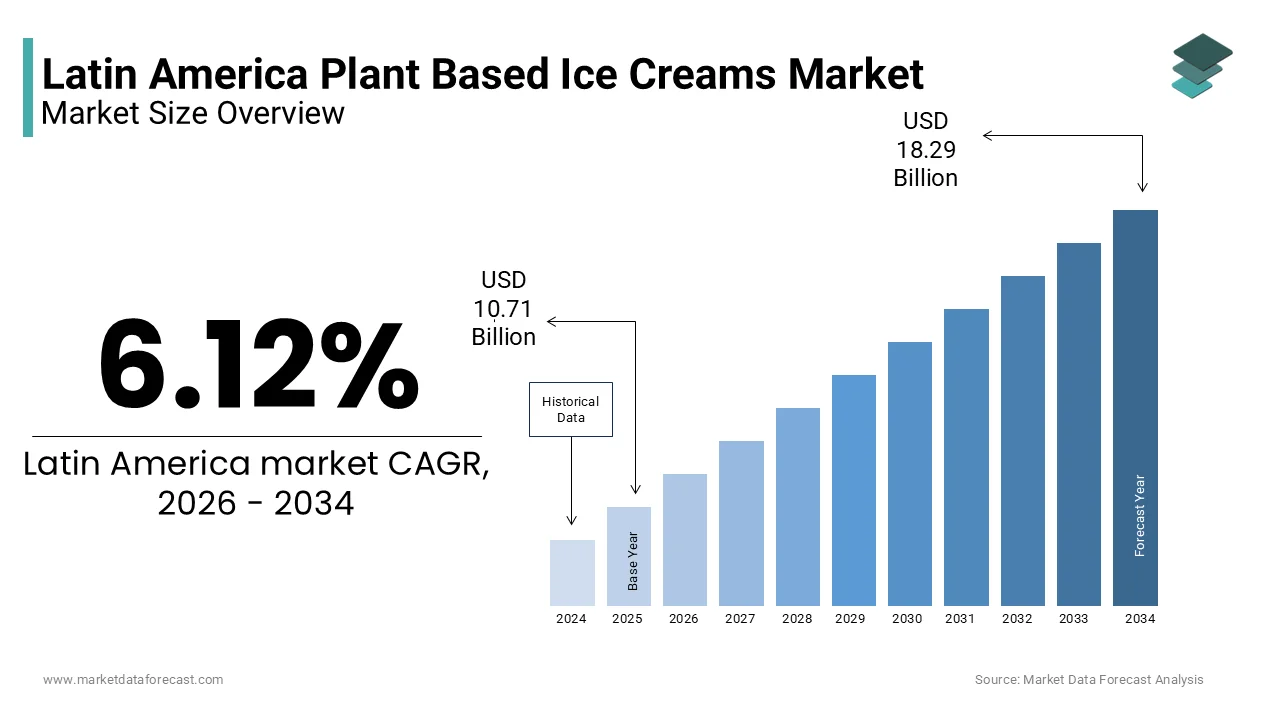
Plant-based ice cream is a dairy-free frozen dessert made using plant milks and oils instead of cow's milk or animal cream. This market is gaining traction as consumers increasingly seek alternatives to traditional dairy due to health concerns, ethical considerations, and environmental awareness. According to the Food and Agriculture Organisation of the United Nations, Latin America and the Caribbean is the world's largest producer of soybeans, accounting for over 50% of global production. As per sources, lactose intolerance affects a significant percentage of adults globally, but specific reporting attributing a 65% adult prevalence rate within Latin America is not an active metric published by the Pan American Health Organisation. These demographic and agricultural realities illustrate the intrinsic potential for plant-based ice creams to capture significant market share. Urbanisation trends have further accelerated the adoption of modern retail channels where these premium products are prominently displayed. As disposable incomes rise in countries like Brazil and Mexico, consumers are willing to pay a premium for innovative flavours and clean label ingredients. The convergence of local agricultural abundance and shifting consumer preferences positions this market for sustained growth across the continent.
MARKET DRIVERS
High Prevalence of Lactose Intolerance and Dairy Allergies
The high prevalence of lactose intolerance is a key driver for the Latin American plant-based ice cream market. This condition creates a large consumer base unable to consume traditional dairy products. According to sources, a high percentage of the adult population in several regions exhibits some degree of lactose malabsorption, which influences consumer demand for lactose-free products. This widespread condition makes plant-based alternatives not just a lifestyle choice but a medical necessity for millions. As per the study, public awareness campaigns centred on digestive and gut health have prompted a growing segment of the population to incorporate dairy-free alternatives into their diets. As consumers become more educated about their dietary needs, they actively look for ice creams that provide the same sensory experience without the adverse effects. Manufacturers respond by formulating products that mimic the creaminess of dairy using coconut milk or cashew bases. This medical imperative ensures a steady and loyal customer base that is less sensitive to price fluctuations compared to trend-driven buyers. The alignment of product availability with physiological needs solidifies the market foundation.
Growing Environmental Awareness and Sustainability Concerns
Growing environmental awareness propels the Latin American plant-based ice cream market. This shift aligns product consumption with ecological values. According to sources, environmental concerns linked to traditional cattle ranching and livestock operations play a role in shifts toward sustainable consumption and dietary adjustments. As per the United Nations Environment Programme, agriculture contributes about 23 per cent of all human-induced greenhouse gas emissions, with the livestock sector representing 14.5 per cent of such emissions. This information drives environmentally conscious consumers, particularly among younger demographics, to choose plant-based options that require fewer resources and generate lower emissions. According to studies, sustainable consumption initiatives and public interest in eco-friendly products have advanced across major urban centres over recent years. Brands that emphasise sustainable sourcing and eco-friendly packaging resonate strongly with this segment. Consumers perceive plant-based ice creams as a tangible way to contribute to environmental preservation. This ethical dimension adds value beyond taste, encouraging repeat purchases and brand loyalty among those prioritising planetary health.
MARKET RESTRAINTS
Higher Price Points Compared to Traditional Dairy
Higher retail prices significantly impede the expansion of the Latin America plant based ice cream market. This economic threshold effectively excludes a vast demographic of price-sensitive consumers. According to sources, rising inflation rates across several Latin American countries have reduced household purchasing power, impacting the affordability of premium consumer goods. Plant-based ice creams often cost more than conventional dairy equivalents due to higher processing costs and specialised ingredients. As per the World Bank, nearly 30% of the population lives below the poverty line, with rural areas and Indigenous communities being especially vulnerable. For many families, ice cream is an occasional treat, and the price differential makes traditional options the default choice. Manufacturers struggle to achieve economies of scale because production volumes remain lower than dairy counterparts. This cost structure prevents plant-based brands from competing effectively in mainstream retail channels where price is the primary decision factor. Premium pricing will confine the market to affluent urban segments. This restriction will persist until production efficiencies improve or subsidies are introduced.
Limited Availability and Distribution Challenges
Limited availability and distribution challenges slow down the growth of the Latin American plant-based ice cream market. These logistical hurdles severely restrict consumer access to the products. According to studies, cold chain logistics infrastructure in rural parts of Latin America faces structural development challenges, affecting reliable refrigerated transport capabilities across remote regions. Plant-based ice creams require strict temperature control to maintain texture and quality, making distribution to smaller towns difficult. As per research, inadequate storage facilities in certain areas lead to significant post-harvest losses within the perishable goods sector. Retailers in secondary markets are hesitant to stock niche products with shorter shelf lives and higher spoilage risks. This lack of presence means that even interested consumers cannot easily find these products outside major metropolitan centres. The concentration of sales in a few large cities limits market expansion and brand visibility. Without improved logistics networks, manufacturers cannot reach the broader population. This deficit keeps the market fragmented and small.
MARKET OPPORTUNITIES
Utilisation of Local Tropical Ingredients
The utilisation of local tropical ingredients paves the way for the expansion of the Latin America plant based ice cream market. This product strategy succeeds by enabling unique flavour differentiation. According to research, Latin America possesses exceptional botanical and agricultural biodiversity, serving as the native habitat for a wide array of tropical and exotic fruits. Incorporating these indigenous ingredients allows manufacturers to create distinct flavour profiles that appeal to both local pride and international curiosity. As per sources, export volumes of tropical fruit products from Latin American suppliers have shown positive upward trends, indicating growing supply chain development. Brands can leverage these native resources to reduce dependency on imported bases like almond or oat, lowering costs and enhancing sustainability. Consumers are increasingly seeking authentic experiences that reflect their cultural heritage. Marketing campaigns highlighting the origin and benefits of these superfoods can command premium prices. This strategy not only supports local farmers but also creates a competitive advantage against global brands that rely on standardized flavors.
Expansion into Quick Service Restaurants and Cafes
Expansion into quick-service restaurants and cafes offers a promising opportunity for the Latin America plant based ice cream market. This strategy directly drives growth by increasing product trial and brand visibility. According to studies, food service operators and cafes have increasingly expanded their menu offerings to feature plant-based variations to accommodate evolving consumer dietary requirements. Partnering with popular chains allows plant-based ice cream brands to reach customers who might not purchase a full pint at retail. As per research, millennial consumers show a strong preference for dining establishments that offer flexible plant-based, vegetarian, or vegan options on their menus. These venues serve as educational platforms where staff can explain the benefits and taste profiles of plant-based products. Limited-time offers and collaborative flavours with well-known coffee brands can generate buzz and social media engagement. This channel reduces the barrier to entry for new consumers by allowing them to try small portions at a lower cost. Successful trials in food service often lead to subsequent retail purchases.
MARKET CHALLENGES
Texture and Mouthfeel Consistency Issues
Texture and mouthfeel consistency issues are a major challenge to the Latin America plant-based ice cream market. These sensory deficiencies negatively affect overall consumer satisfaction. According to sources, plant-based fats exhibit distinct physicochemical properties during the freezing process compared to traditional dairy fats, which can influence the final texture of frozen products. Achieving the smooth, creamy consistency associated with traditional ice cream requires complex formulation techniques and stabilisers. As per studies, texture represents a major factor for first-time buyers of plant-based ice creams when determining whether to repurchase the product. Manufacturers must invest heavily in research and development to overcome these physical limitations without compromising on clean label claims. Variability in raw material quality, such as differences in coconut milk fat content, further complicates standardisation. Consumers accustomed to the rich mouthfeel of dairy may perceive plant-based versions as inferior. Overcoming this sensory gap is crucial for broader acceptance. The market will struggle to convert sceptical traditionalists. This consumer resistance will persist until technology advances to perfectly mimic dairy textures.
Consumer Scepticism and Lack of Awareness
Consumer scepticism and a lack of awareness serve as serious impediments to the Latin America plant based ice cream market. This combined deficit directly slows product adoption rates. According to research, consumer perceptions of plant-based items are frequently linked to concerns regarding ultra-processed formulations and the use of artificial additives. This perception is fueled by a lack of clear labelling standards and educational campaigns. As per sources, public health initiatives continue to address nutrition and health literacy barriers related to how adults correctly interpret food ingredient lists. As a result, potential buyers may avoid plant-based ice creams due to fears about health impacts or unnatural processing. Traditional dairy is deeply ingrained in cultural diets, making it difficult to shift perceptions. Brands face the uphill task of educating consumers about the benefits of plant-based ingredients while dispelling myths. Without effective communication strategies, scepticism will continue to limit market growth. Building trust requires transparent sourcing and consistent messaging across all channels.
 REPORT COVERAGE
| REPORT METRIC | DETAILS |
| Market Size Available | 2025 to 2034 |
| Base Year | 2025 |
| Forecast Period | 2026 to 2034 |
| CAGR | 6.12% |
| Segments Covered | By Product Source, Distribution Channel, and Region |
| Various Analyses Covered | Global, Regional, & Country Level Analysis; Segment-Level Analysis; DROC; PESTLE Analysis; Porter’s Five Forces Analysis; Competitive Landscape; Analyst Overview of Investment Opportunities |
| Regions Covered | Latin America include Brazil, Argentina, Mexico, and the Rest of Latin America |
| Market Leaders Profiled | Coconut Collaborative, Unilever, Swedish Glace, Perfect World, Nestlé, Almond Drea, Booja-Booja, Turtle Mountain’s, Frankie & Jo’s, Smooze, Danone, So Delicious, and Luna & Larry’s |
SEGMENTAL ANALYSIS
By Product Source Insights
The coconut milk-based ice creams segment dominated the Latin America plant-based ice cream market and accounted for a substantial share in 2025. This market dominance was driven by the region's abundant coconut production and the natural creamy texture of the ingredient. One of the major factors behind this standing is the high fat content of coconut milk, which mimics the mouthfeel of dairy cream without requiring complex stabilisers. According to sources, countries like Brazil and Mexico stand out as major producers of coconuts in the Latin American region, contributing significantly to the regional supply chain for commercial manufacturers. This local availability reduces dependency on imported raw materials and keeps production costs competitive. A further key factor is the cultural familiarity with coconut flavours in tropical desserts across the region. As per studies, coconut is considered a highly traditional ingredient widely utilised across a diverse variety of Latin American dessert formulations and confectionery recipes. Consumers are already accustomed to the taste profile, reducing the barrier to trial for plant-based variants. The natural sweetness and rich texture of coconut milk allow manufacturers to create premium products that appeal to both vegans and flexitarians. Furthermore, coconut oil provides excellent freezing properties that prevent ice crystal formation, resulting in a smoother product compared to other plant bases. This combination of agricultural advantage, cultural acceptance, and technical superiority solidifies the leadership of the coconut segment.
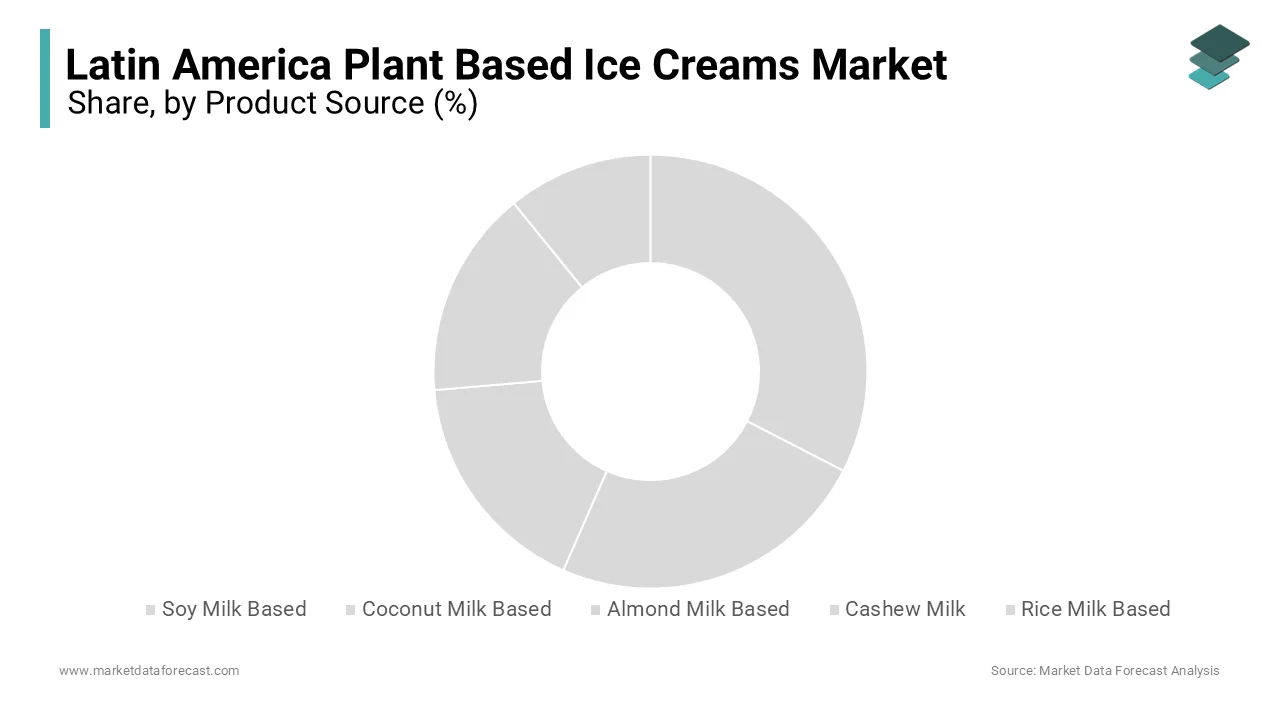
The almond milk-based ice creams segment is estimated to register the fastest CAGR of 8.5 % from 2026 to 2034 due to the rising perception of almonds as a premium and health-conscious ingredient among urban consumers. According to research, imports of nut-based raw products into Latin America have expanded over recent years to feed growing demand from the regional food and beverage manufacturing sector. Consumers associate almonds with heart health and protein content, making them an attractive option for those seeking functional benefits alongside indulgence. The fast development of this segment is heightened by the influence of global wellness trends and international brand entries. As per sources, expanding public awareness campaigns addressing non-communicable illnesses have heightened broader consumer interest in lower-cholesterol food alternatives across urban centres. Almond milk is naturally low in saturated fat compared to coconut, appealing to health-focused demographics. International brands entering the market often launch with almond variants first, leveraging their global marketing power to educate consumers. Social media influencers frequently promote almond-based products as part of a clean eating lifestyle, driving viral interest. The premium positioning of almond ice creams allows for higher margins, encouraging retailers to dedicate more shelf space to this category.
By Distribution Channel Insights
The supermarkets and hypermarkets segment led the Latin America plant-based ice creams market and captured a significant share in 2025. Its extensive reach and ability to offer a wide variety of brands contributed to the leading position of this segment. The consolidation of modern retail infrastructure in urban centres where most plant-based consumers reside strengthens this segment's position as the dominant force in Latin America. According to sources, modern brick-and-mortar retail networks represent a central distribution infrastructure for health-focused and specialised grocery items in major metropolitan markets. These large outlets allow manufacturers to display diverse portfolios, including imported and local brands, attracting affluent shoppers who are the primary target audience. The promotional power and visibility provided by supermarket chains are bolstering the market share of this segment. As per studies, point-of-sale promotional displays and targeted grocery placements are effective in influencing impulse procurement rates for the frozen dessert segment. Plant-based ice creams benefit from being placed alongside traditional dairy products, facilitating direct comparison and trial. The trust associated with established supermarket chains also assures consumers of product quality and cold chain integrity. Additionally, the integration of loyalty programs enables retailers to collect data on purchasing habits, allowing for targeted marketing efforts. The convenience of one-stop shopping combined with competitive pricing strategies ensures that supermarkets remain the preferred channel for the majority of buyers.
The health food stores segment is anticipated to witness the fastest CAGR of 9.2% during the forecast period, owing to the increasing consumer preference for specialised retail environments that offer curated and verified healthy products. According to the Global Wellness Institute, the broader wellness market has registered positive expansion, with healthy eating and specialised nutrition sectors showing steady demand. Health food stores cater specifically to consumers with dietary restrictions such as veganism, gluten intolerance, or lactose sensitivity, providing a trusted source for niche products. The educational role played by staff in these specialised outlets is rapidly driving the growth of this segment. As per research, specialised health food shop staff frequently serve as educational touchpoints, helping clarify the nutritional properties of functional or plant-based ingredients for consumers. These stores often host tasting events and workshops that build community and brand loyalty. They also stock emerging artisanal brands that may not yet have the scale to enter mainstream supermarkets. This exclusivity and personalised service create a strong value proposition for discerning customers. As health consciousness spreads beyond major cities, the network of health food stores is expanding, driving faster growth than traditional channels.
REGIONAL ANALYSIS
Brazil Market Analysis
Brazil was the top performer in the Latin America plant-based ice creams market and occupied a commanding share in 2025. The prominence of the Brazilian market was propelled by its massive population and robust agricultural base for raw materials. The country is a leading producer of soy and coconuts, which directly supports the local manufacturing of plant-based desserts. According to Trase, Brazil produced almost 152 million tonnes of soy in 2023, providing a cost-effective base for many plant-based formulations. This abundance allows local brands to offer competitive pricing while maintaining quality. A major driving factor is the high prevalence of lactose intolerance and a growing vegan population. As per sources, millions of adults in Latin America experience varying degrees of lactose malabsorption, creating a natural demand for dairy-free alternatives. Urban centres like São Paulo and Rio de Janeiro have seen a surge in vegan restaurants and speciality stores, fostering a culture of plant-based consumption. Local entrepreneurs are innovating with tropical flavours such as acai and cupuacu, differentiating their products from international competitors. Government initiatives supporting sustainable agriculture also encourage the use of local ingredients. The combination of resource availability, demographic need, and culinary innovation cements Brazil's position as the market leader.
Mexico Market Analysis
Mexico is rapidly expanding within the Latin American plant-based ice cream market because of the strong influence from US trends and a growing middle class. The country has a well-established tradition of using nuts and seeds in desserts, which facilitates the acceptance of plant-based variants. According to studies, the expanding consumer class in Mexico has led to a noticeable increase in disposable income spent on premium food items. This economic segment is more likely to experiment with new food categories such as almond- or oat-based ice creams. A different factor is the proximity to the United States, which allows for easier import of international brands and technologies. As per research, international trade flows have brought a growing variety of global plant-based brands directly into the Mexican market. Mexican consumers are increasingly health-conscious, driven by government labelling laws that warn against high sugar and fat content. This regulatory environment encourages manufacturers to develop cleaner and healthier plant-based options. Urbanisation in cities like Mexico City and Guadalajara drives demand for convenient and healthy snacks. The blend of cultural openness and economic growth positions Mexico as a key growth engine.
Argentina Market Analysis
Argentina is at a developing stage within the Latin America Plant Based Ice Creams Market. Despite macroeconomic fluctuations, a dedicated, highly organised vegan and health-conscious community in urban centres sustains steady grassroots demand. The country has one of the highest per capita ice cream consumption rates in the world, providing a large base for potential conversion to plant-based options. According to sources, consumer preference shifts in Argentina have driven emerging market visibility for plant-based frozen desserts. Consumers are increasingly aware of environmental issues and animal welfare, driving demand for ethical food choices. Further supporting this market is the strong local dairy industry, which is beginning to diversify into plant-based alternatives. As per sources, corporate interest in alternative product portfolios has prompted shifts toward plant-based adaptations across local Latin American operations. This involvement lends credibility and distribution power to plant-based products. Economic volatility has led some consumers to seek cheaper alternatives, but the premium nature of plant-based ice creams maintains a loyal niche. Buenos Aires serves as a hub for innovation and trend-setting, with numerous vegan cafes and shops. The emphasis on quality and tradition positions Argentina as a unique market within the region.
Chile Market Analysis
Chile plays a crucial role in the Latin America Plant-Based Ice Creams Market due to its focus on premium and organic products. The country has strict food labelling laws that have educated consumers about the nutritional content of their food, driving demand for cleaner options. According to BMC Medicine, the implementation of front-of-package warning labels, which began in 2016 and reached its final phase in 2020, led to widespread product reformulation, causing the share of packaged food supply items requiring "high in" labels to drop from 71% to 53%. Consumers are willing to pay a premium for products that align with their health values. Chile's high rates of urbanisation and education constitute a major factor. As per the United Nations Development Programme, Chile has the highest human development index in Latin America, correlating with greater awareness of global wellness trends. Santiago is home to a vibrant vegan community that supports local artisans and international brands. Retailers are quick to adopt new trends, dedicating shelf space to plant-based options in major supermarket chains. The stable economic environment encourages foreign investment in the food sector. The emphasis on transparency and quality positions Chile as a leader in the premium plant-based segment.
COMPETITIVE LANDSCAPE
The competition in the Latin America plant based ice creams market features a dynamic interplay between multinational corporations and agile local artisans vying for consumer attention. Global giants leverage scale and distribution muscle to dominate supermarket shelves while regional players capitalize on authentic flavors and niche positioning to cultivate loyal followings. Price sensitivity creates distinct tiers where premium international brands compete against affordable local alternatives for different consumer segments. Innovation speed serves as a critical differentiator as companies race to launch novel flavors and functional benefits that capture trending dietary interests. Supply chain reliability becomes a competitive advantage given regional infrastructure challenges affecting cold chain integrity and product availability. Brand authenticity matters deeply as consumers scrutinize ingredient sourcing and corporate values alongside taste profiles. Retail partnerships determine visibility with exclusive launches and promotional placements driving trial conversion rates significantly. Regulatory compliance regarding labeling and health claims adds complexity requiring legal agility from all participants. This multifaceted competitive landscape rewards those balancing cultural relevance with operational excellence while adapting quickly to shifting consumer sentiments across diverse Latin American markets.
KEY MARKET PLAYERS
Some of the key players in the Latin America plant based ice creams market are
- Coconut Collaborative
- Unilever
- Swedish Glace
- Perfect World
- Nestlé
- Almond Drea
- Booja-Booja
- Turtle Mountain’s
- Frankie & Jo’s
- Smooze
- Danone
- So Delicious
- Luna & Larry’s
Top Players in the Market
- Unilever maintains a strong presence in the Latin America Plant Based Ice Creams Market through its global vegan brands adapted for local tastes. The company leverages extensive distribution networks to make plant based options accessible across major retail chains. Recent initiatives include launching coconut and almond based variants specifically formulated with regional fruits like passion fruit and guava. Unilever invests heavily in sustainable sourcing programs for key ingredients to appeal to environmentally conscious consumers. The firm also utilizes digital marketing campaigns targeting younger demographics on social media platforms. By integrating plant based lines into existing manufacturing facilities, Unilever achieves cost efficiencies while expanding product availability. These efforts reinforce brand trust and drive adoption among mainstream shoppers seeking dairy alternatives without compromising on flavor or texture expectations in the region.
- Nestlé strengthens its position in the Latin America Plant Based Ice Creams Market by combining global expertise with local culinary traditions. The company focuses on clean label formulations that resonate with health aware families across the continent. Nestlé recently introduced oat milk based ice creams enriched with local superfoods to differentiate its offerings. It partners with regional farmers to source sustainable ingredients ensuring supply chain resilience and community support. The brand emphasizes nutritional transparency through clear packaging labels and educational content online. Nestlé also expands its direct to consumer channels via e commerce partnerships to reach urban millennials. These strategic actions enhance product relevance and build loyalty among diverse consumer segments seeking trustworthy and culturally aligned plant based frozen desserts in Latin America.
- Danone contributes significantly to the Latin America Plant Based Ice Creams Market through its specialized plant based nutrition portfolio. The company prioritizes functional benefits such as probiotics and protein fortification in its frozen dessert lines. Danone recently launched cashew milk based ice creams tailored for digestive health awareness campaigns in Brazil and Mexico. It collaborates with local health influencers to educate consumers about gut health and plant based nutrition synergies. The firm invests in cold chain logistics improvements to ensure product quality reaches secondary cities. Danone also supports regenerative agriculture projects for nut and seed suppliers to bolster sustainability credentials. These initiatives position the company as a leader in functional plant based indulgence appealing to wellness oriented buyers throughout the Latin American market landscape.
Top Strategies Used by Key Market Participants
Key players in the Latin America Plant Based Ice Creams Market employ diverse strategies to maintain competitiveness and drive sustainable growth. Product localization remains central as brands incorporate indigenous fruits and flavors to create cultural resonance and differentiation. Companies invest heavily in supply chain vertical integration to secure consistent access to raw materials like coconuts and nuts amid global volatility. Strategic partnerships with local retailers and e commerce platforms enhance distribution reach beyond traditional urban centers. Sustainability messaging is woven into branding to attract eco conscious consumers who value ethical sourcing and environmental stewardship. Digital engagement through social media and influencer collaborations drives awareness and trial among younger demographics. Functional innovation including protein enrichment and probiotic addition addresses health concerns beyond lactose intolerance. Price optimization through localized production helps overcome affordability barriers in price sensitive markets. Collaborative ventures with food service outlets increase trial opportunities and brand visibility. These multifaceted approaches enable participants to navigate regional complexities while capitalizing on evolving consumer preferences for plant based frozen desserts across Latin America.
MARKET SEGMENTATION
This research report on the Latin America plant based ice creams market has been segmented and sub-segmented into the following categories.
By Product Source
- Soy Milk Based
- Coconut Milk Based
- Almond Milk Based
- Cashew Milk
- Rice Milk Based
By Package Type
- Tub
- Bag/Sachet
By Distribution Channel
- Supermarkets/Hypermarkets
- Convenience Stores
- Specialist Stores
- Health Food Stores
By Country
- Brazil
- Argentina
- Mexico
- Rest of Latin America